Panama Canal Partial Transit vs Full Transit: Which Are You Actually Booking?
A Panama Canal partial transit enters from the Caribbean, reaches Gatun Lake, and returns through the same side. A full transit crosses the isthmus from one ocean to the other.
Both deliver a real lock experience, but only the full transit includes the entire waterway and Pacific side. The itinerary map, lock lane, excursion transfer, and cruise endpoints tell you which one you are buying.
My quick take
If the canal itself is the reason you are booking, the full transit is the only version that delivers all of it. You cross the whole isthmus, including Gatun Lake and the Culebra Cut, then arrive in a different ocean.
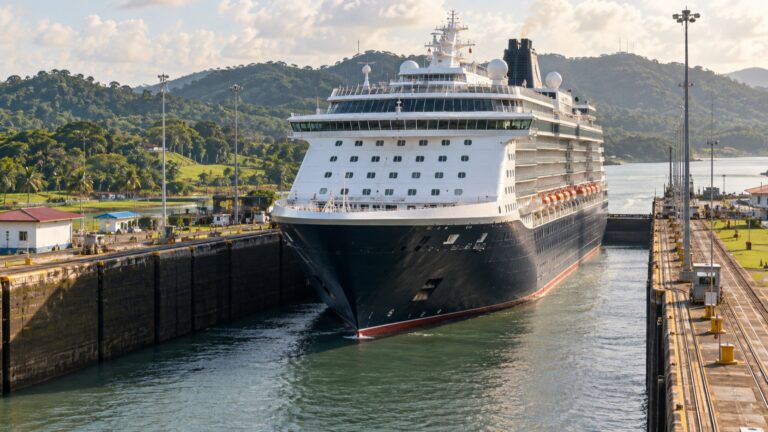
Smaller ships generally use the three original lock complexes, while larger vessels can use the two Neopanamax complexes.
That said, I do not think the partial transit is a con. You still go through a full lock flight, you still climb about 85 feet above the sea, and you still spend hours inside the working canal.
What you are really choosing is an itinerary shape, not a canal experience. Full transits are usually repositioning or long voyages that end in a different country, and partial transits slot into a normal week out of Florida.
My default is this: if you have the time and want the whole thing, do the full transit once and treat it as the point of the cruise. If you are traveling with people who would rather be on a beach, book the partial and stop apologizing for it.
The quick facts
- What a full transit is: ocean to ocean, roughly 50 miles across the isthmus. A ship uses either the original lock route with Gatun, Pedro Miguel, and Miraflores or the Neopanamax route with Agua Clara and Cocoli. The Panama Canal Authority gives the waterway at approximately that distance between the Atlantic and the Pacific.
- What a partial transit is: up through the Atlantic-side locks into Gatun Lake, then back out through the same locks later the same day. The ship never reaches the Pacific and never leaves the Caribbean itinerary.
- The lock names: Gatun on the Atlantic side, then Pedro Miguel and Miraflores on the Pacific side. The Canal Authority describes all three as water lifts that raise ships to the level of Gatun Lake at about 85 feet above sea level.
- The other lock set: Agua Clara and Cocoli, opened 26 June 2016, at roughly 1,400 by 180 by 60 feet. The original chambers are about 1,000 by 110 feet.
- How long the day runs: a full transit is a whole daylight day on deck, and a partial is usually a morning up and an afternoon back down. Neither is a port day in any normal sense.
- Where you go ashore: some partial-transit itineraries tender excursion guests from Gatun Lake, while others keep everyone aboard. A full transit is normally a sea day, and any port before or after it can be a berth or tender depending on the published itinerary.
- Currency and language: The US dollar circulates alongside the balboa at par, and Spanish is the language, with English common around the canal.
What a full transit actually involves
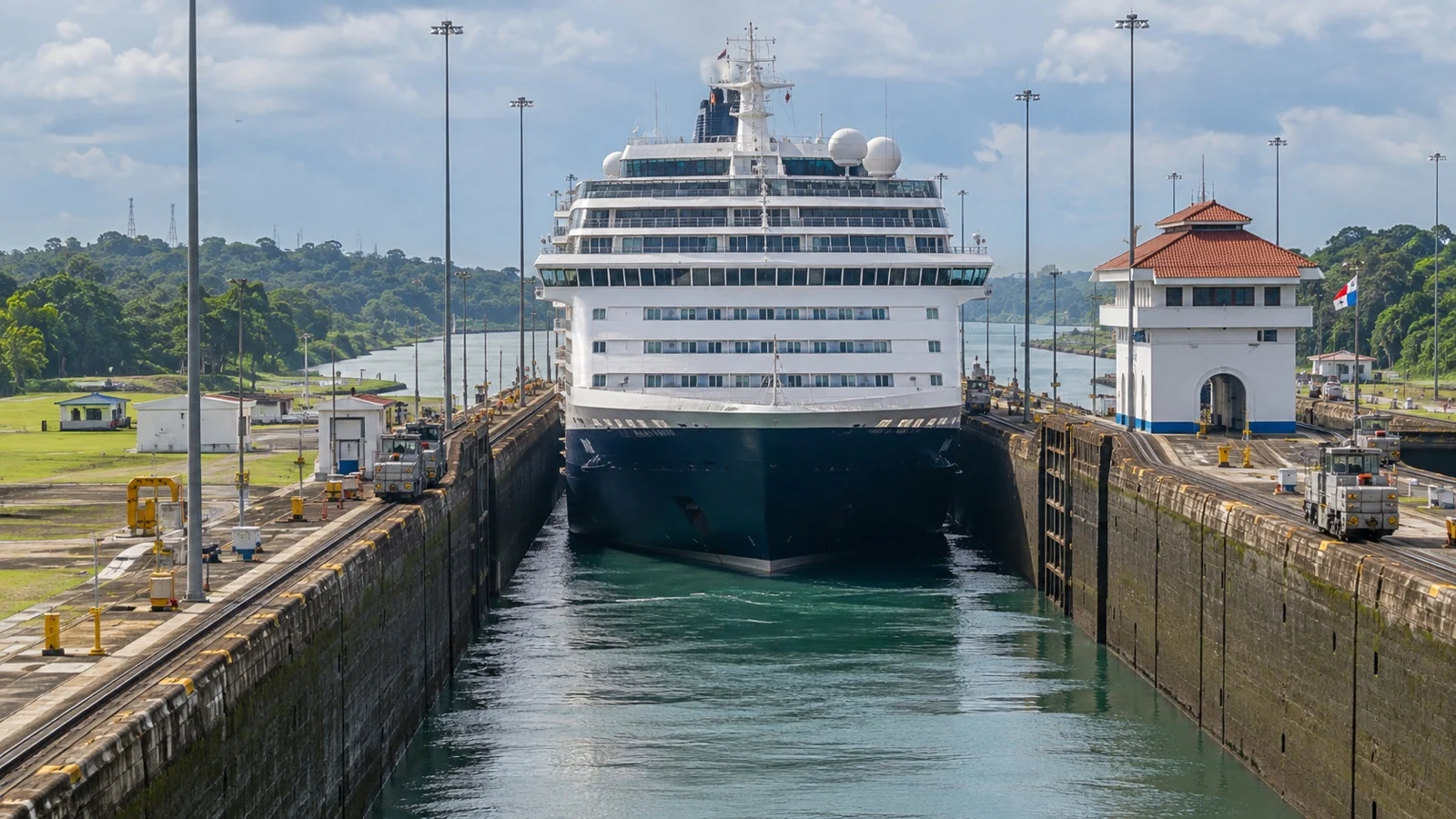
Southbound from the Caribbean, you enter at Limon Bay near Colon and go straight into the first lock flight. Gatun raises you in steps to the lake, and it is the single most theatrical part of the day.
Then comes Gatun Lake, which is not a scenic filler section but the largest part of the crossing. The lake was created by damming the Chagres River and it does the heavy lifting of getting ships across the isthmus without cutting a sea-level ditch.
At the far end you reach the Culebra Cut, also called the Gaillard Cut, which is the excavated channel through the continental divide.
The Canal Authority puts it at roughly 8.5 miles from Pedro Miguel Locks up to Gamboa.
Pedro Miguel drops you partway, a short reach of Miraflores Lake follows, and then Miraflores lets you down to the Pacific. You exit under the Bridge of the Americas with Panama City on your left.
What a Panama Canal partial transit actually involves
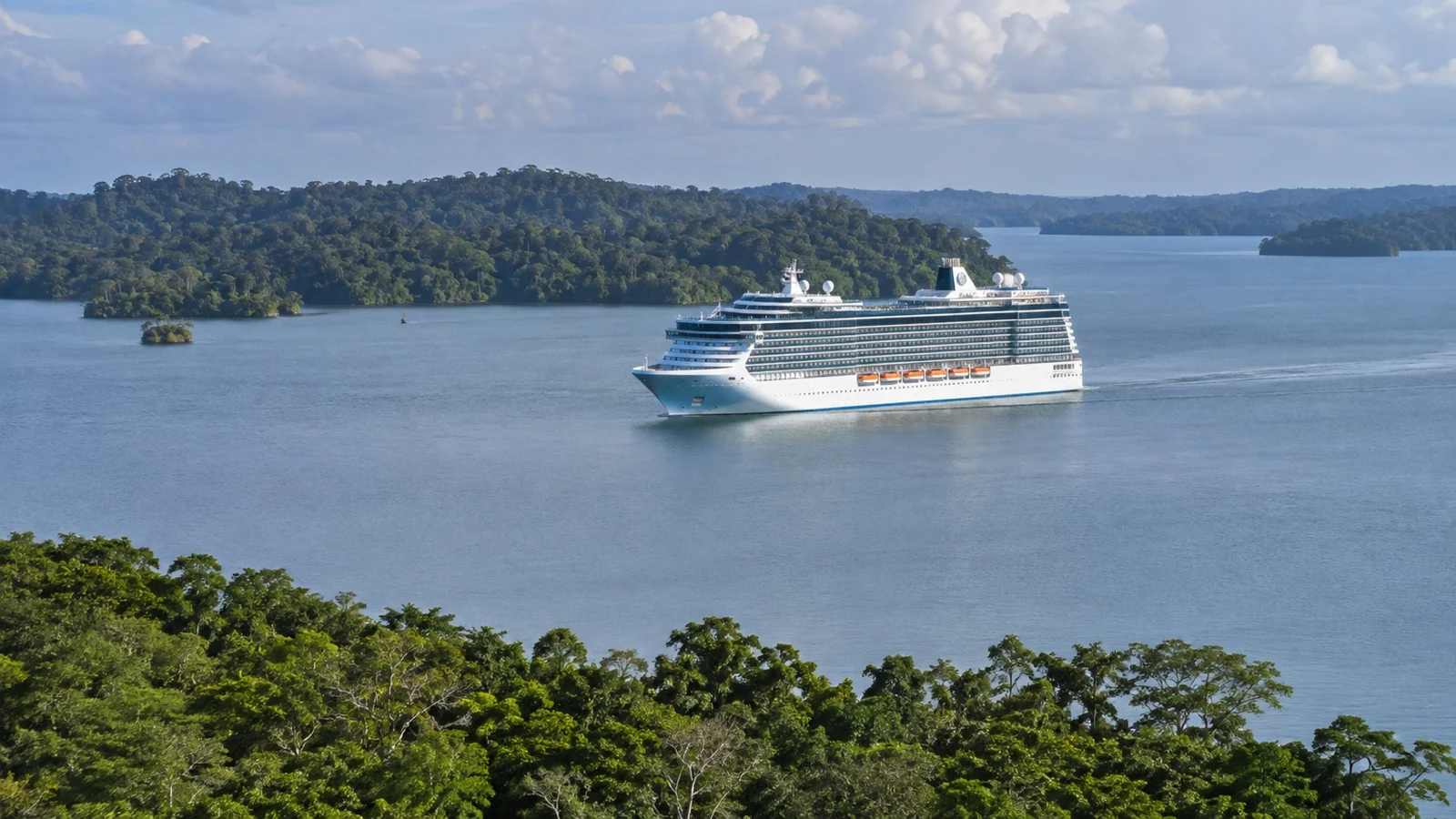
The classic cruise-ship partial transit uses the Atlantic-side locks to enter Gatun Lake, then returns through the same lock complex to the Caribbean. Many itineraries anchor in the lake for excursions, but the exact operating plan and passenger transfer point belong to the dated sailing.
The passengers who booked an excursion usually leave by tender in the lake, then travel overland by motorcoach. That is how people end up at the Agua Clara or Miraflores visitor centers, or on a small boat doing their own lake crossing, while the ship sits at anchor.
Panama’s tourism board describes exactly this kind of trip, with partial canal crossings running from the Amador Causeway and from Gamboa, and lake excursions among the islands. It is a real product with real operators, not a consolation prize.
The catch is the tendering. Getting a few thousand people off a ship at anchor takes time, and if you have read my explainer on what a tender port actually means, you already know the arithmetic works against late risers.
Staying aboard is a legitimate choice here and quite a lot of people make it. You still see the lock flight twice, from the best possible seat, with no motorcoach and no line.
The old locks, the new locks, and which one you want
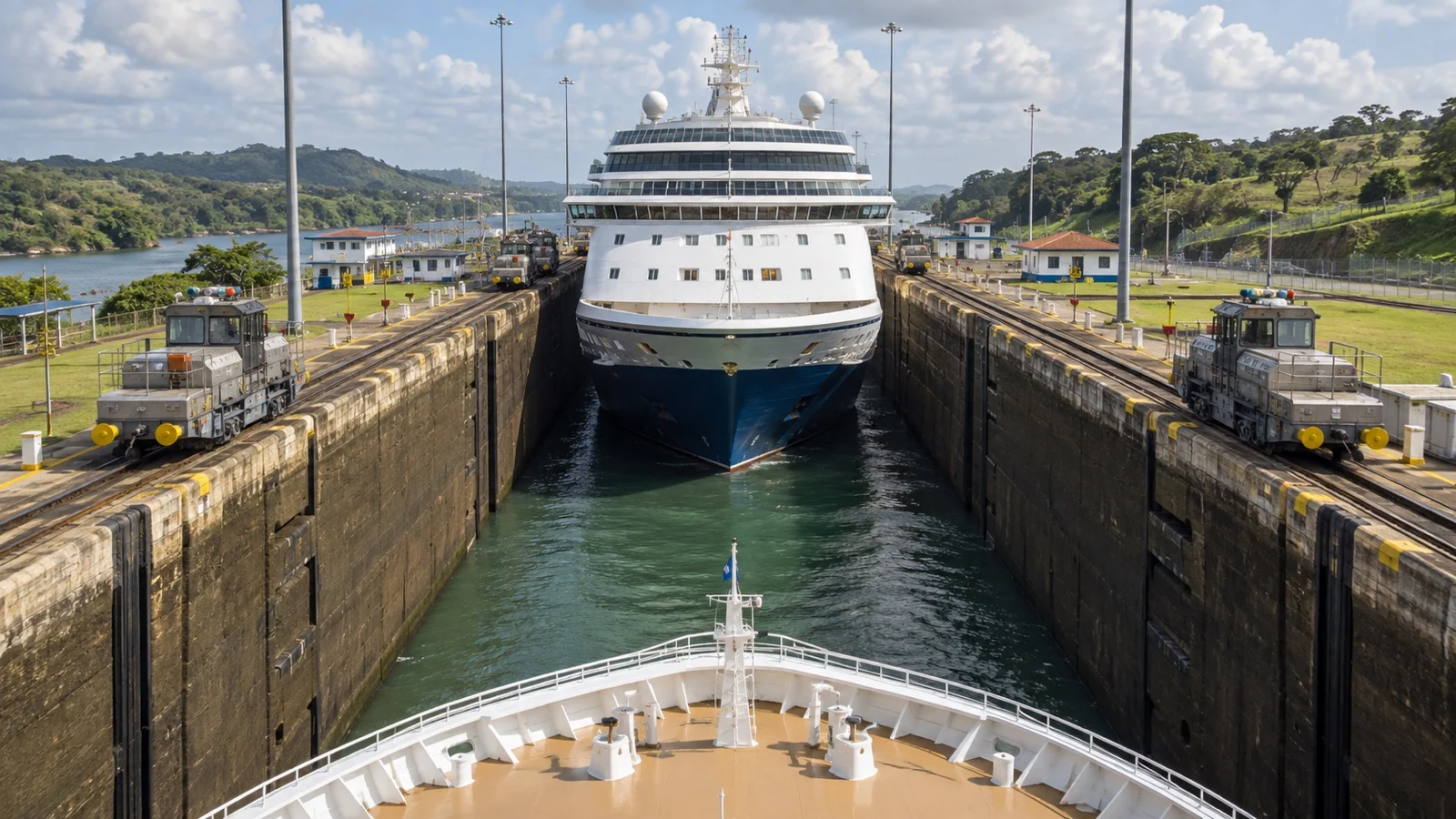
There are effectively two canals now running side by side. The original 1914 chambers measure about 1,000 by 110 feet, and they are the ones with the famous towing locomotives.
Those locomotives are the mules, and they are one of the best reasons to be on deck early. Encyclopaedia Britannica describes them as electric towing locomotives that assist ships through the locks, running on toothed rack track along the lock walls.
The neopanamax locks at Agua Clara and Cocoli work differently. The Panama Canal Authority gives them as roughly 1,400 by 180 feet and 60 feet deep, with water reclamation basins at each chamber, and ships there are handled by tugboats rather than locomotives.
If your ship exceeds the original Panamax limits, it must use the new locks, and you will get sliding rolling gates and tugs instead of mitre gates and mules. Smaller and older ships get the original chambers, which is the more photogenic experience by a distance.
Timing, slots, and where to stand
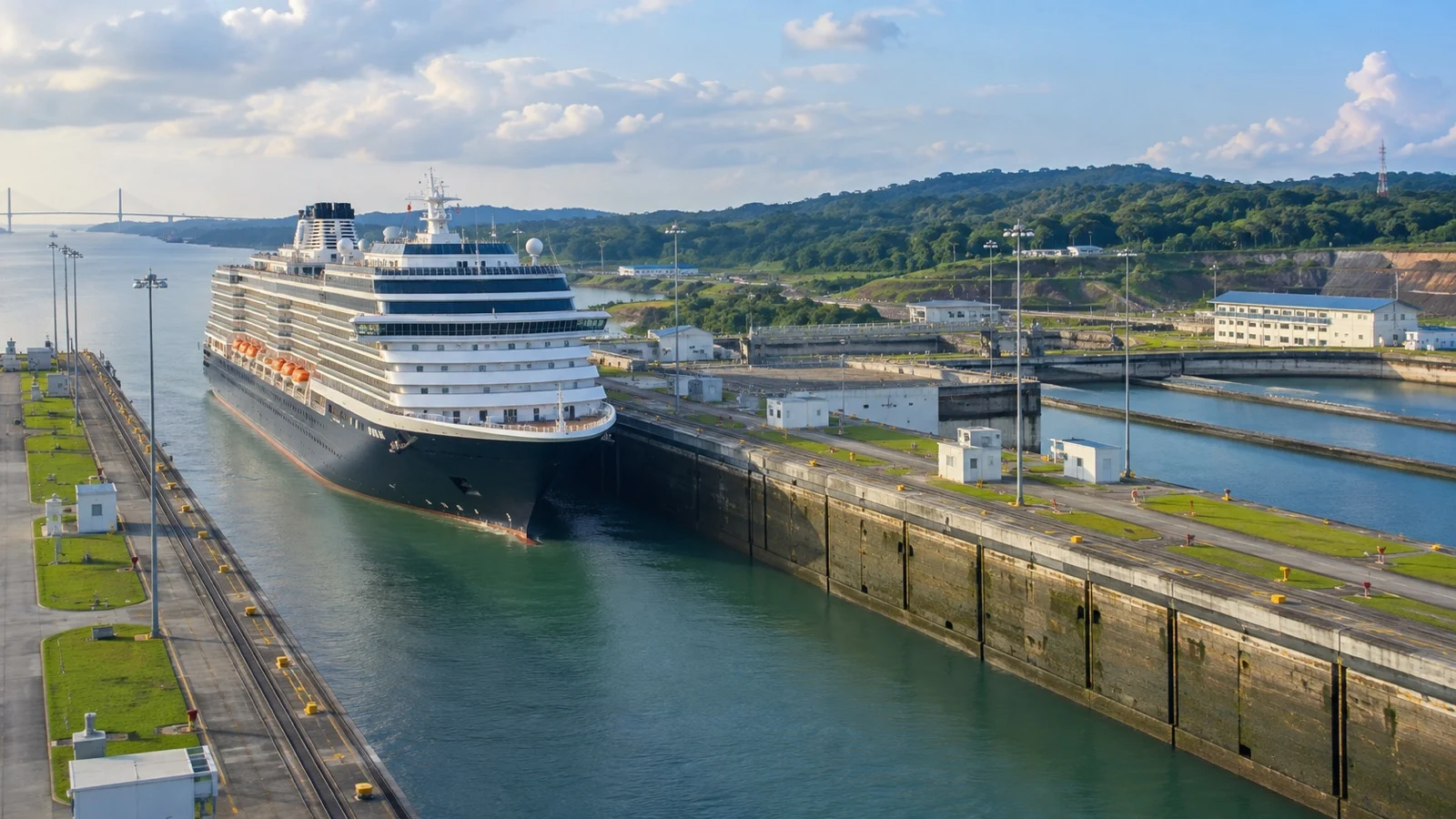
The canal is not first come, first served. Vessels reserve transit slots in advance through the Canal Authority’s booking system, and there is an auction mechanism for slots that come free.
Cruise lines book their slots a long way ahead, because a late transit wrecks a schedule and there is no line-jumping on the day. It also means your arrival time is a plan, not a promise.
The daily rhythm is convoy-based rather than continuous, and you can see it in the public information. The Panama Canal visitor centers publish the day’s expected viewing windows, typically a morning block and an afternoon block at both Miraflores and Agua Clara.
The forward-facing open deck beats a balcony in the locks, and where the ship has a bow viewing area it fills absurdly early. I would be up there before the first chamber and accept that breakfast is a coffee and a pastry.
The moments I would actually be on deck for
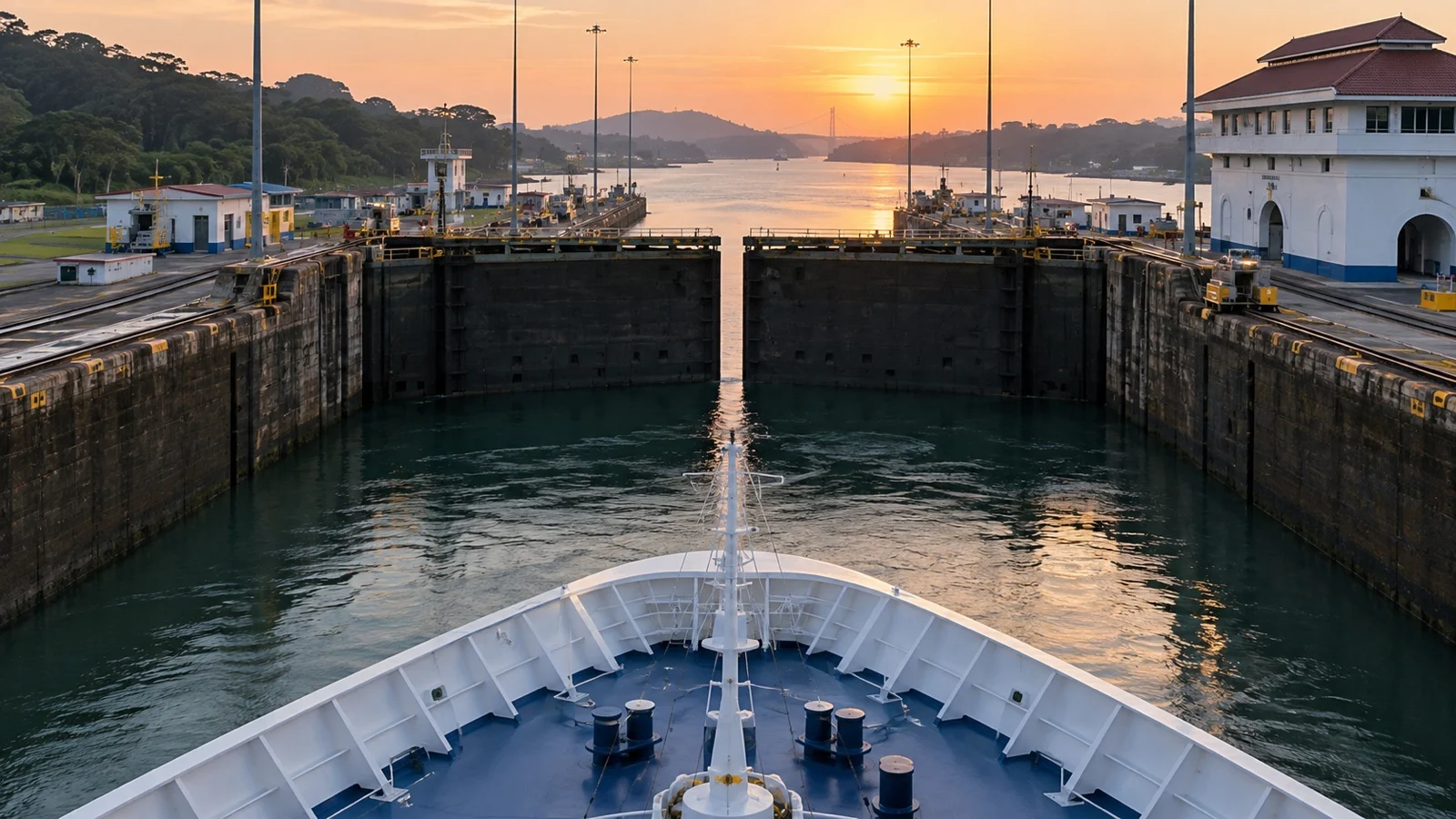
This is a day where the schedule matters more than the venue. These are the parts worth interrupting anything else for.
- The approach to the first lock flight: the ship lines up, the mules or tugs take position, and the scale finally lands. Both transit types give you this one.
- The first chamber filling: water arrives by gravity from Gatun Lake through culverts beneath the chambers, with no pumps involved anywhere. Watching a cruise ship rise on nothing but gravity is the whole trick in one shot.
- The gates closing behind you: best from aft, and the clearest illustration of how little room there is. On the original locks it is a matter of a few feet on each side.
- Gatun Lake: forested islands, anchored ships waiting their turn, and genuinely good birdlife. On a partial transit this is where you stop.
- The Culebra Cut: full transits only, and the section I would set an alarm for. The channel is cut through the continental divide and the terracing on the banks is visible from the deck.
- The Bridge of the Americas: the Pacific exit, with the Panama City skyline appearing on the port side. It is a proper end-of-something moment.
Fun fact: the canal’s watershed supplies drinking water to about half of Panama’s population, which the Panama Canal Authority states directly. Every lockage that lifts your ship is spending the same water the country drinks, which is why the newer locks were built with basins that reuse up to 60 percent of it.
How I would actually decide
Start with the map, not the brochure. If the cruise starts and ends in the same Caribbean port, it is a partial transit, whatever the marketing implies.
If it starts in Florida and ends in California, or the reverse, it is a full transit and the canal day is the spine of the trip. Anything ending in Panama itself is worth a direct question to the line.
The second question is the ports, because the two shapes give you completely different ones. A partial keeps you in the Caribbean, near Colon on Panama’s Caribbean coast and the usual western Caribbean calls.
A full transit typically adds Pacific Central America, and it usually calls on the Pacific side of Panama near the Amador Causeway. Some lines list that call as Fuerte Amador and tender, so check with your line rather than assuming a berth.
A realistic word on accessibility
The good news is that a transit day needs no gangway at all if you stay aboard. That makes it one of the easier days of any cruise for anyone with limited mobility.
The bad news is the deck competition. Open forward decks fill early, sightlines are over railings, and wheelchair users can find themselves parked behind three rows of standing passengers for hours.
Ask the guest services desk on day one where accessible viewing will be, and get up there absurdly early. Some ships reserve a section, and none of them advertise it well.
On a partial transit, the tender is the hard part, because tendering at anchor involves a step down into a moving boat. Most lines will not carry powered scooters into tenders, and in swell they may decline wheelchairs entirely.
When to go, and the weather
Panama is hot and humid year round, and the transit season for cruise ships runs mainly from fall through spring. There is no cool month to aim for.
According to Encyclopaedia Britannica, the mean temperature of the coldest month seldom drops below about 78 Fahrenheit on either coast. Daytime highs sit above that, and the humidity does the rest.
Rainfall is the real seasonal variable, and the two coasts behave differently. The Caribbean side sees rain almost throughout the year, while the Pacific side has a clearer dry season in the first months of the year.
For deck comfort, the drier months are the better bet, though a tropical downpour can arrive on any of them. Sun protection matters more than a raincoat, because you will be standing in direct sun for hours with no shade forward.
Quick answers
What is a Panama Canal partial transit?
The ship enters from the Caribbean, locks up into Gatun Lake, anchors, and then locks back down and leaves the way it came.
It never reaches the Pacific.
Do you get off the ship on a partial transit?
Some cruise itineraries tender booked excursion guests from Gatun Lake, while others do not offer a ship-to-shore transfer there.
Read the excursion details and never arrange an independent pickup unless the line confirms the landing point.
How many lock complexes do you use?
A partial transit normally uses one Atlantic complex twice.
A full transit uses three original complexes or two Neopanamax complexes, depending on the ship and assigned lane.
Will my ship use the old locks or the new ones?
It depends on the ship’s size and the slot booked for it, and the two give quite different views.
Ask your line which lane the ship is scheduled for.
Is a full transit worth the extra time and money?
If the canal is the reason you booked, yes, because the Culebra Cut and the Pacific locks are the half you miss otherwise.
If you want a beach week, no.
For a canal day with no locks at all, see how the Suez transit compares.
The last word
The canal is the rare attraction that lives up to the billing, and both versions of the day deliver something worth having. The mistake is only ever expectation, not the product.
If you are building the wider trip, my overview of Panama’s cruise ports covers what sits at either end of the waterway. Partial transits usually pair it with somewhere like Cartagena in Colombia, which is a fine consolation for missing the Pacific.
Either way, get on deck early and stay there. You have paid a great deal of money to watch a boat go up some stairs, and it would be a shame to miss it.
How this guide was researched: Unless a first-hand visit is explicitly identified above, this guide is based on independent research using official port, tourism, transit, government, and attraction sources where available. Lock dimensions, canal length and expansion details were checked against the Panama Canal Authority’s own pages, viewing windows against the official Panama Canal visitor center site, and climate against Encyclopaedia Britannica.
Logistics and time-sensitive details were reviewed in September 2026. See our Editorial Policy.
More on this topic: browse every guide on expedition and alternative cruises.