Suez Canal Cruise Transit: What the Day Is Actually Like
A Suez Canal transit is a full day of watching desert slide past your balcony at walking pace.
It is one of the strangest sea days in cruising, and right now it is also one of the least certain.
My quick take
This day suits travelers who enjoy slow scenery and maritime operations more than scheduled entertainment. You are crossing between continents through a narrow desert waterway, with traffic and life on the banks close enough to study.
Do not book solely for the Suez transit while Red Sea routing remains volatile. A cruise line can reroute around Africa or change the voyage before sailing, and the canal day may disappear without the rest of the cruise being canceled.
Treat the transit as a valuable bonus on a repositioning voyage you would still enjoy after a route change. The tradeoff is accepting less certainty in exchange for a rare and memorable day if the passage operates.
What the canal actually is
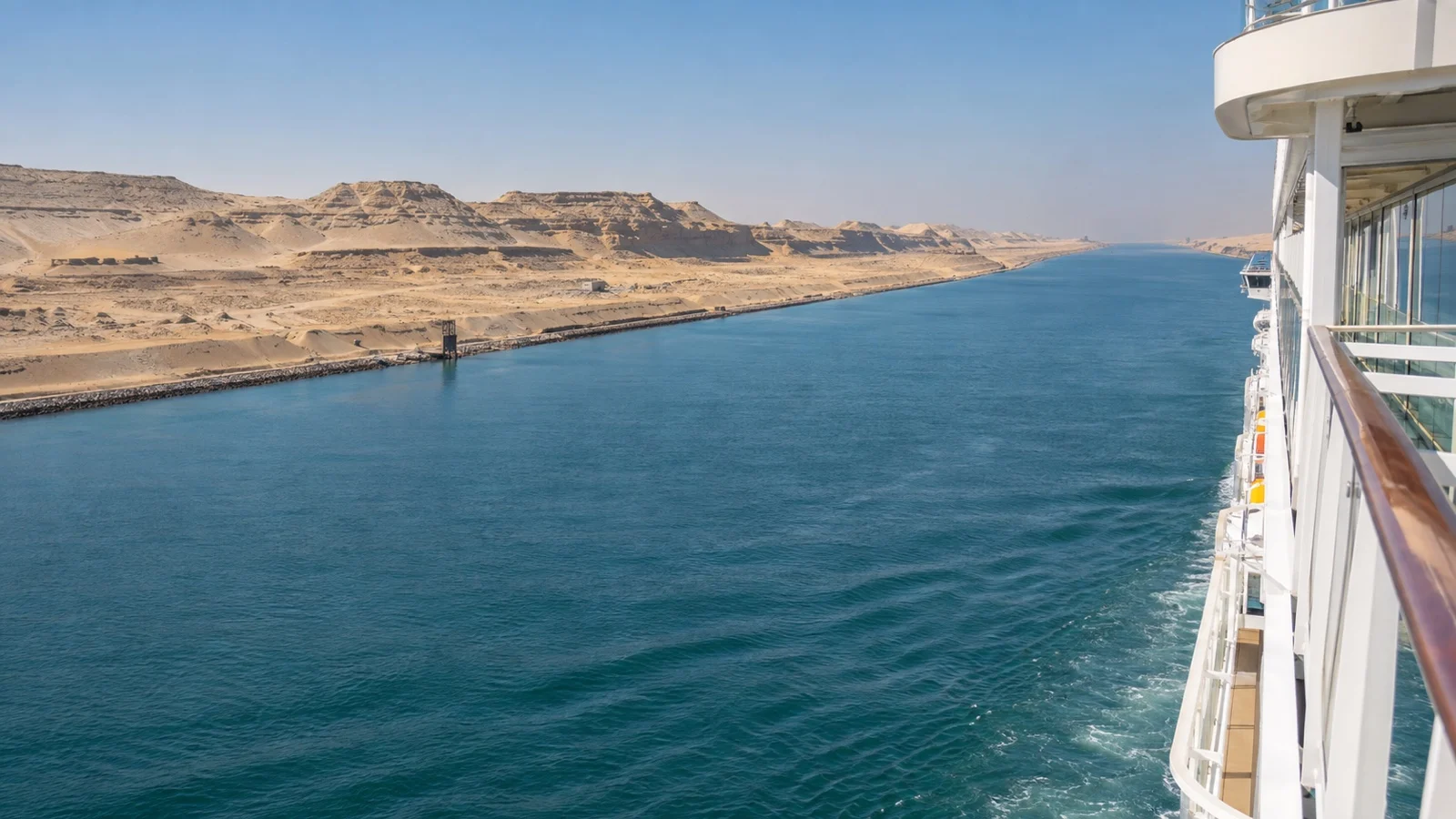
The Suez Canal runs about 120 miles (193 km) between Port Said on the Mediterranean and Suez on the Red Sea. It links two seas that sit at effectively the same level, which is why it has no locks at all.
That single fact changes the whole character of the day. There is no theater of water rising and falling, no gates, no crowd on the forward deck at a lock chamber.
Instead you get continuous motion for hours. The Suez Canal Authority lists a maximum water depth of about 79 feet (24 m) and a permissible vessel draft of 66 feet, but the authority and ship operator still determine whether a vessel can transit.
The authority’s 205-to-225-meter figure is the width at an 11-meter depth, not a simple bank-to-bank width everywhere. What you notice from deck is how close the engineered banks and passing traffic can feel.
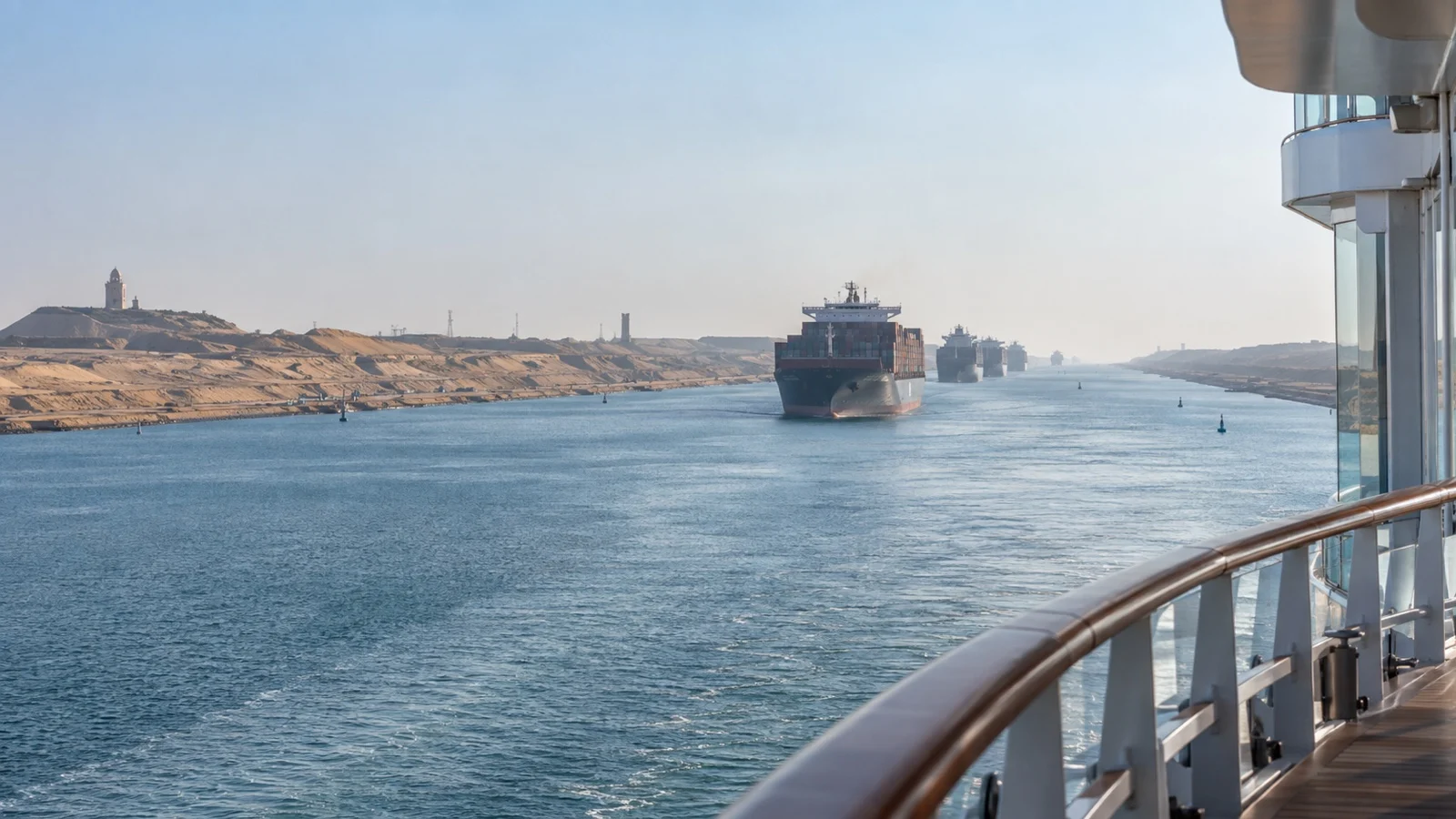
A second lane opened in 2015 along part of the route, which lets convoys pass in opposite directions rather than one waiting. The rest of the canal still relies on bypasses and the Great Bitter Lake to sort traffic out.
How the transit day actually runs
Ships do not simply drive through. Traffic is organized into northbound and southbound movements under Suez Canal Authority rules, and the daily sequence can change with traffic and operating conditions.
Your ship reaches the canal approach at Port Said or Suez, takes on the required pilots, and waits for its assigned movement. A delayed arrival can mean a much longer wait, which is why captains protect the approach schedule.
Steaming time through the canal itself is roughly 11 to 16 hours. Add the assembly, the anchorage and the pilot transfers, and the practical answer is that the canal owns your entire day.
Speeds are deliberately low, generally around 8 knots, to limit the wash that erodes the banks. You will genuinely watch cars on the parallel road overtake your ship.
The Great Bitter Lake in the middle is the one place the canal opens out. Historically it was where convoys passed each other, and it still functions as the breathing space in the day.
The part your itinerary will not tell you
The honest current situation is that Red Sea security can change faster than cruise brochures. Since 2024, many commercial and cruise operators have avoided the approach at different times, while others have returned selectively.
Canal traffic has shown periods of recovery but remains sensitive to regional security and operator risk decisions. A month-old traffic figure cannot tell you whether your cruise will use Suez.
Several cruise ships transited in 2026 while other lines continued to route around Africa. That mixed behavior is more useful than any blanket claim that cruising has either fully returned or completely stopped.
A Cape of Good Hope reroute can add many sea days, force port changes, or split a repositioning voyage into a new schedule. Read the line’s change notice for your exact sailing because another company’s decision is not a forecast.
Use your cruise line’s operational notices first, then check Suez Canal Authority navigation circulars and a current government travel advisory. Reports about another ship’s completed transit provide context, but they do not confirm yours.
The practical consequence for you is simple. A booked Suez transit is a plan, not a promise, and lines have been rerouting with relatively short notice.
Before paying for a Suez itinerary, read the current US State Department advisory for Egypt and the cruise line’s latest routing update. Also compare cancellation terms and insurance coverage, because a route change alone may not trigger a refund.
The money, and why the canal cares about you
Suez Canal tolls depend on vessel measurements, type, load, and applicable circulars, so there is no reliable flat cruise-ship fee to quote. The amount is an operating cost for the line rather than a separate toll collected from passengers on deck.
It also explains the alternative. Routing around the Cape of Good Hope avoids the fee entirely, and when the calculation includes war-risk insurance premiums the long way round can pencil out.
Egypt has an obvious interest in getting traffic back, and canal revenue is a significant share of national foreign currency earnings. That pressure is worth understanding, because it shapes how confidently the canal is promoted.
Convoy timings shift with traffic and are published rather than fixed. Agencies such as GAC post updated schedules, which is a useful sanity check if your ship’s daily program looks optimistic.
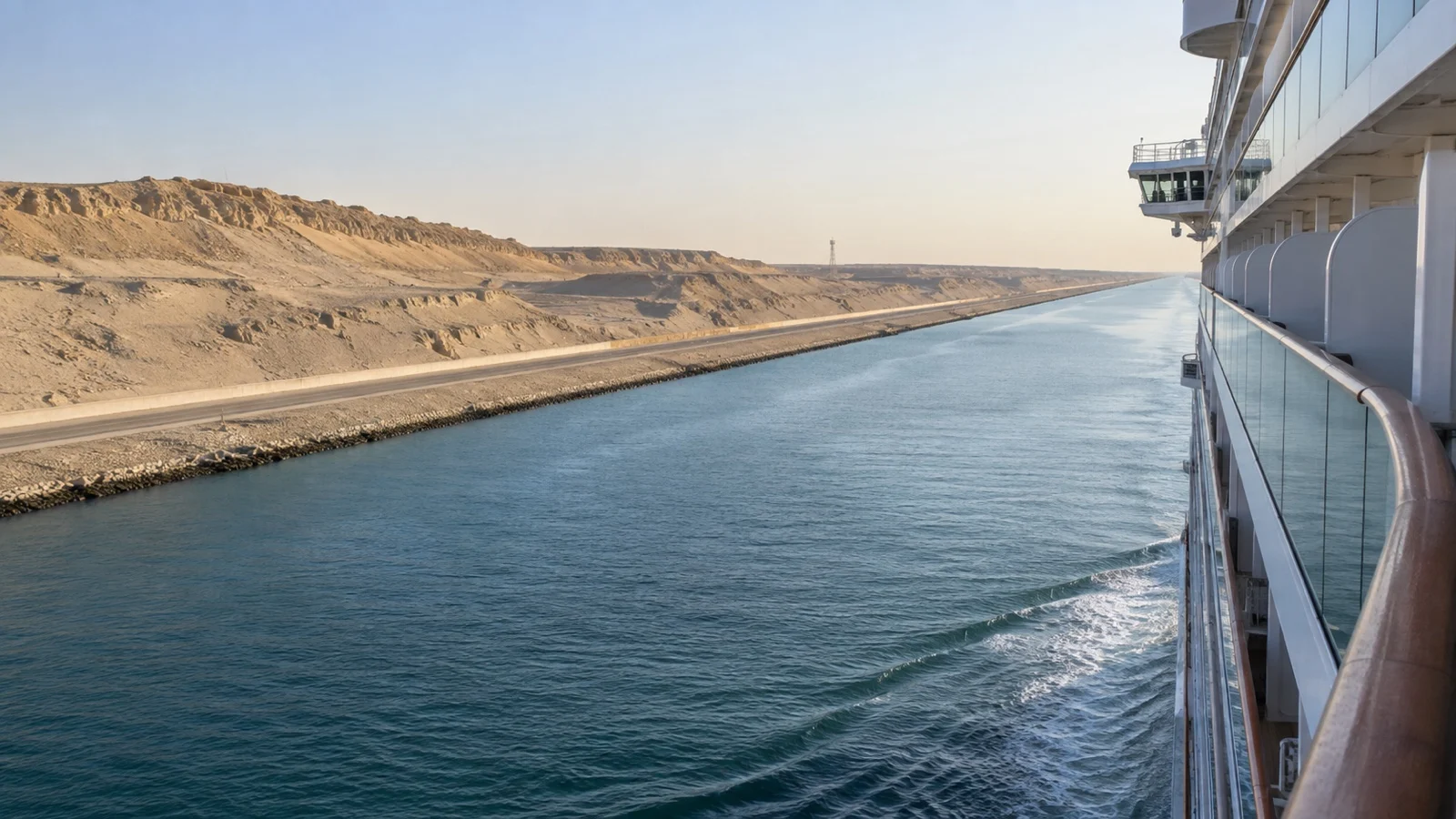
What you actually see from the rail
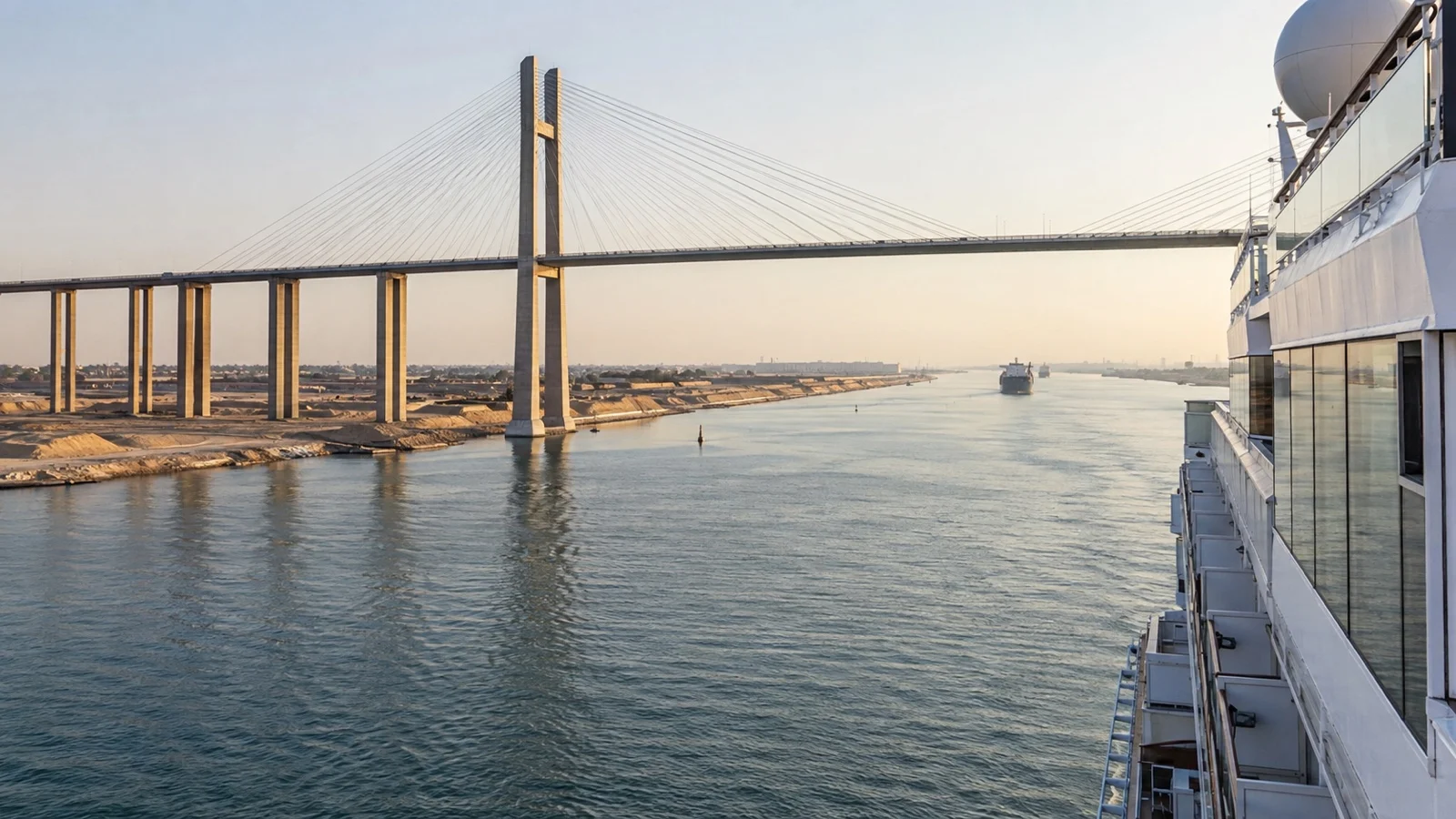
The two banks are not the same, and nobody warns you about this. The west side is green and populated, with farmland, towns, mosques and a road running alongside you for miles.
The east side is Sinai and is much more desert-dominated, though it is not literally empty. Crossing the ship can shift the view from towns, farms, and roads to long stretches of sand and military or canal infrastructure.
The moments people remember are the small ones. Ferries waiting to cross, kids on the bank, a container ship appearing above the dunes from the second lane as though it is sailing across sand.
Sunrise often gives the softest light, but entry time depends on direction and the day’s traffic. Check the ship’s program the night before and set an alarm only after the bridge has published the expected sequence.
Where to be, and when
Get high and forward for the entry, because the approach through Port Said and the first stretch of the canal is the most concentrated hour of interest. After that, altitude matters less than shade.
A balcony earns its money on this day in a way it rarely does. You can dip in and out for eight hours without claiming a deck chair at dawn.
Heat is the thing that catches people out. Transits in summer can be brutal on open decks, and our guide to extreme heat on a cruise covers how to plan around the middle of the day in this region.
Bring binoculars if you own them. The distances are short but the detail on the banks rewards a closer look.
How it compares to the other great canal days
The Panama Canal is the more dramatic day, no argument. Locks give you engineering you can watch happen, and our guide to a full versus partial Panama transit explains why the choice there matters so much.
The Kiel Canal transit is the closest cousin in feel, all slow scenery and low banks, but with locks at both ends and cows instead of desert.
Suez is the one that feels historic rather than mechanical. Nothing is being lifted or lowered, and that quietness is either the appeal or the problem depending on your temperament.
The ports on either end
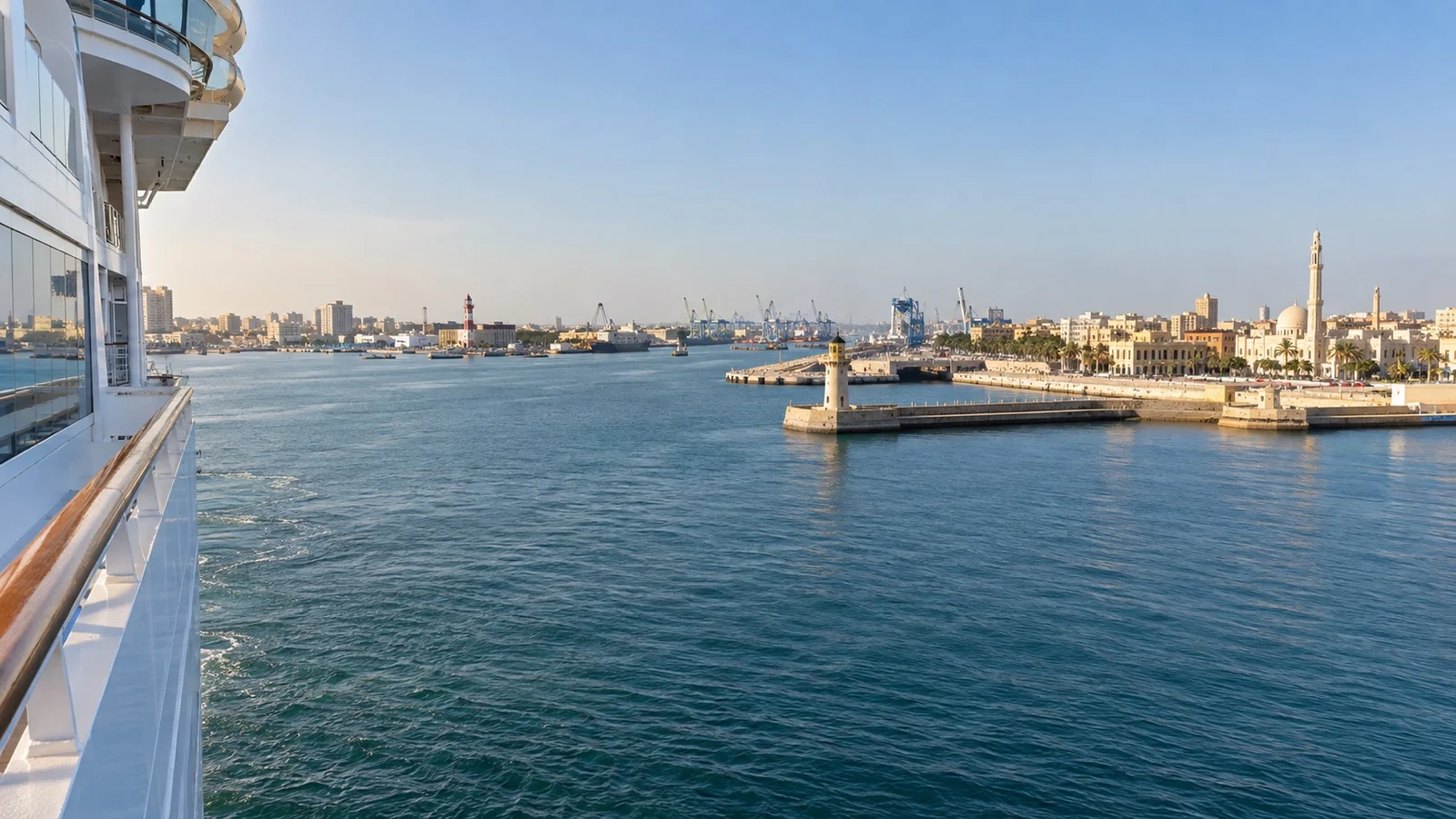
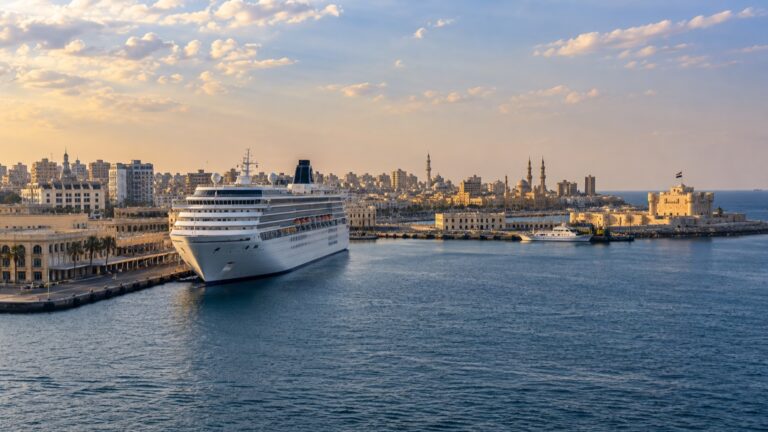
A Suez transit rarely travels alone. Northern itineraries usually pair it with Alexandria, and our Alexandria cruise port guide covers the long day trip to Cairo that most people attempt from there.
South of the canal, Sharm el-Sheikh and Aqaba are the usual calls. Our Egypt cruise ports guide explains how the Mediterranean and Red Sea sides of the country fit together on a single itinerary.
Worth knowing: the canal is a transit, not a port call. You do not go ashore, you do not clear immigration, and there is no excursion to book.
Quick answers
How long does a Suez Canal transit take?
Around 11 to 16 hours of steaming, plus convoy assembly and pilot transfers at each end. Plan for the whole day.
Are there locks in the Suez Canal?
None. The Mediterranean and the Red Sea sit at close enough to the same level that the canal is a straight open channel.
Can I get off the ship during the transit?
No. It is a sea day that happens to have land on both sides of it.
Is the transit likely to be canceled?
The risk is materially higher than on a routine sea day because Red Sea security can force a major reroute. Confirm the current plan with your cruise line, but remember that even a confirmed route can change later.
The last word
The Suez Canal is a slow, strange, quietly extraordinary day, and it rewards the kind of passenger who is happy to watch a country go by without a schedule.
Book it as a bonus rather than the only reason for the trip while routing stays unsettled. If it operates, check the night-before program, find shade, and leave the morning free to watch the canal unfold.
More on this topic: browse every guide on expedition and alternative cruises.