Sortland Cruise Port Guide: The Blue Town of Vesterålen
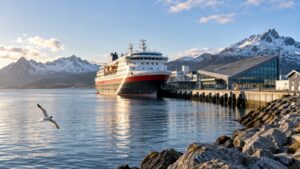
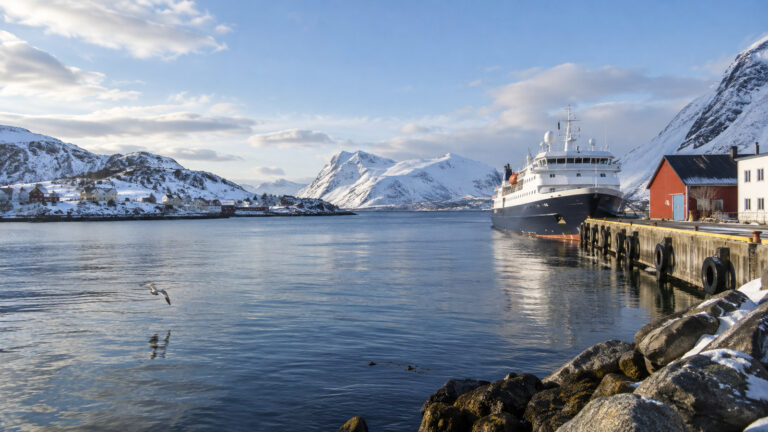
Sortland is a compact northern Norwegian port with a wonderfully distinctive identity. Known as the Blue Town, it combines painted buildings, poetry on walls, a busy regional center, and wide views across the sound toward the mountains of Vesterålen.
The first question is not what to see but how long your ship actually stays. A conventional cruise may allow several hours, while a Norwegian coastal vessel can make only a brief operational call that leaves no time for independent exploring.
My quick take
Sortland works best when you treat it as either a relaxed town walk or a gateway to a carefully timed Vesterålen excursion. The blue buildings and waterfront are close enough for a simple visit, but whale trips and outer-coast villages require transportation and far more schedule protection.
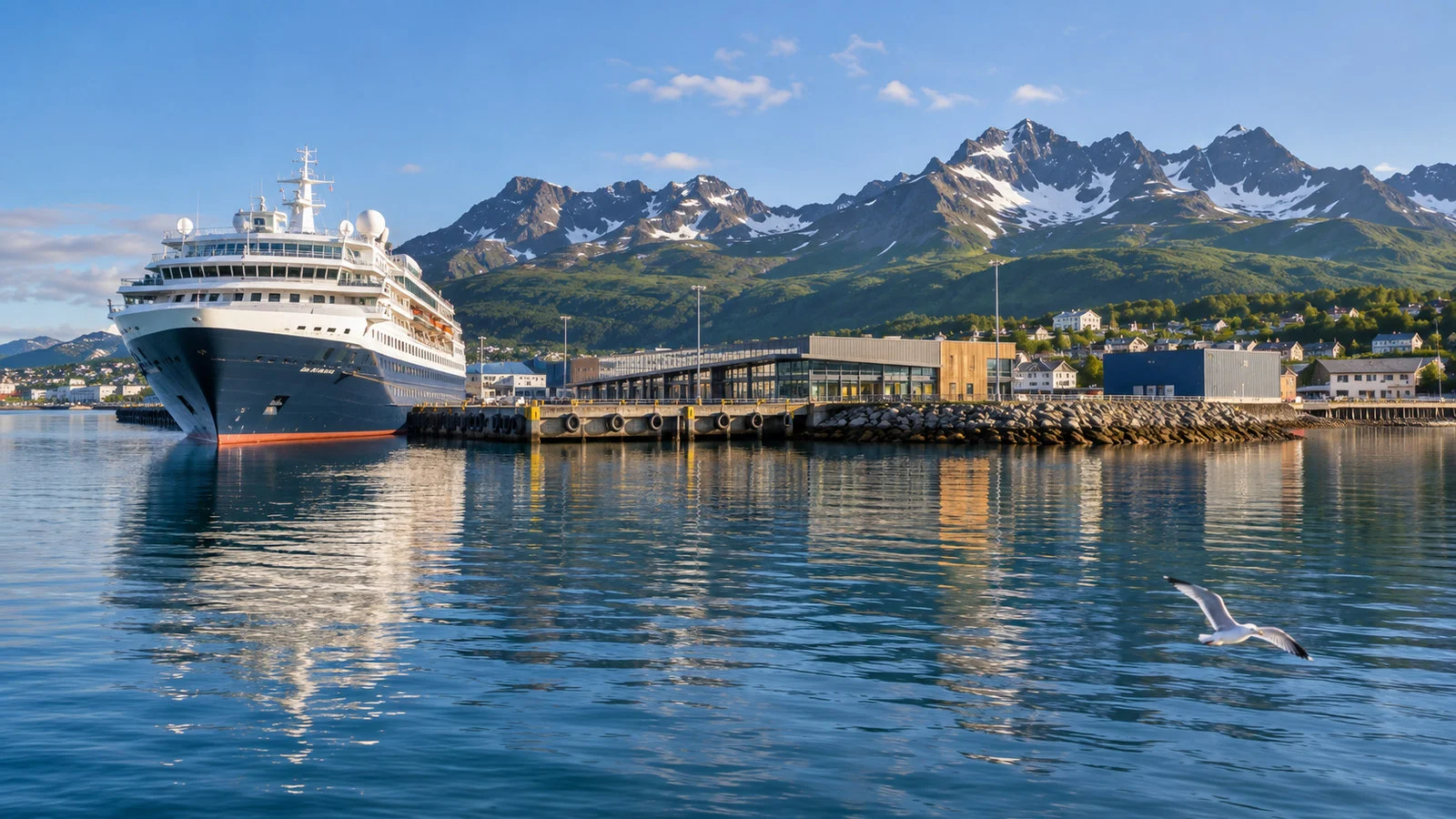
I would not force a distant excursion into a short call. The harbor, blue facades, church, bridge views, cafes, and ordinary life of a regional town can make an appealing few hours without the anxiety of a long return drive.
Quick Facts
- Country: Norway
- Region: Vesterålen in Nordland
- Island: Langøya
- Port type: Working town harbor used by coastal passenger ships and cruise vessels
- Town nickname: Blåbyen, meaning the Blue Town
- Currency: Norwegian krone, abbreviated NOK
- Time zone: Central European Time, with daylight saving in season
- Best short-call plan: Waterfront, blue buildings, bridge views, and central cafes
- Best long-call options: Guided regional scenery, Nyksund, or a properly timed whale experience
- Accessibility: Generally manageable in the center, with weather, curbs, gradients, and individual gangways affecting access
Understanding your Sortland call
Sortland is an established stop on Norway’s coastal route as well as a destination for other passenger vessels. Those two types of call can look identical on an itinerary while offering completely different amounts of time ashore.
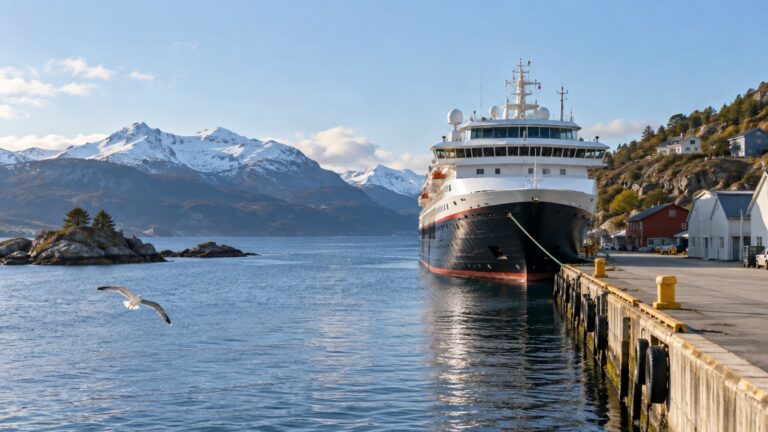
Hurtigruten’s current port page lists only 15 minutes in Sortland northbound and 30 minutes southbound for its regular coastal schedule. That is an operational stop, not a sightseeing visit, so passengers should remain guided by onboard announcements.
A cruise ship with a longer berth can support a genuine town day or regional excursion. Check arrival time, all-aboard time, berth information, and whether the vessel uses a gangway or shuttle before making plans.
Do not copy another traveler’s schedule without confirming the ship and date. Weather, harbor traffic, route changes, and the needs of a working coastal service can alter the practical window.
Getting off the ship and into town
The central harbor places many visitors within a straightforward walk of Sortland’s commercial center. The exact distance depends on the assigned berth, so use the map and access notes supplied by your ship rather than a generic pin.
The gangway may be steeper at some tide levels, and wet metal can become slippery. Keep one hand free, follow crew instructions, and ask for help before the line becomes crowded.
Once beyond the port area, the town is compact enough for an unhurried loop. Traffic is calmer than in a large city, but normal curbs, crossings, service vehicles, and winter ice still require attention.
If a shuttle is offered, confirm both the drop-off point and final return. A short ride can be useful for limited mobility, but waiting for a bus may consume more time than walking during a brief call.
Why Sortland is called the Blue Town
The Blue Town project began in the late 1990s with artist Bjørn Elvenes and a vision of the center as a three-dimensional artwork. Buildings gradually adopted different shades of blue, creating a townscape that feels coordinated without being uniform.
The useful expectation is that many buildings are blue, not that every wall in Sortland has been painted. The regional tourism site Arctic Norway notes that the project inspired enthusiasm and debate, which makes it part of local civic history rather than a simple decorative theme.
Look closely for lines of text placed on some blue walls. The Writing on the Blue Wall project connected local young people and writers, turning an architectural color scheme into a small literary trail.
Photographs work best when the weather contributes contrast. Blue facades can glow against green hills, fresh snow, gray rain, or low Arctic light, so a cloudy day is not a failed visit.
A simple independent walking route
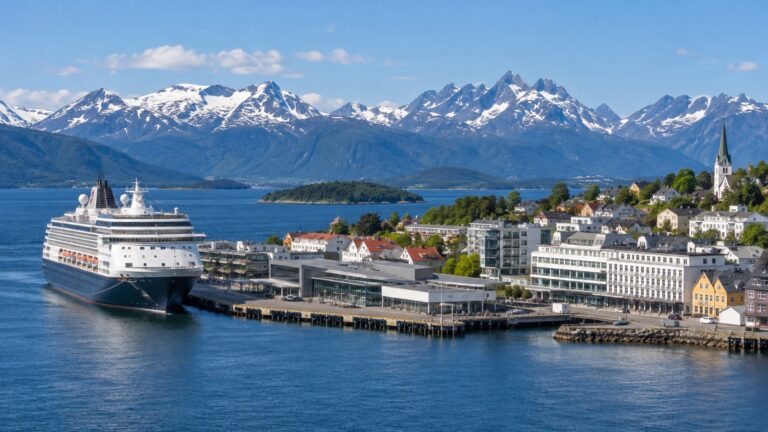
Begin at the harbor and pause for the view across Sortlandssundet. The bridge, ships, houses, and layered mountains immediately explain why the town developed as a transport and trading center.
Continue into the central streets and look for blue facades and wall texts rather than chasing a single landmark. The pleasure is cumulative, with ordinary shops and civic buildings sharing the same visual idea.
Allow time for Sortland Church if it is open and your route passes nearby. Hurtigruten identifies the present white-steepled building as dating from 1901, while the site has much older church associations.
Finish with a cafe or another waterfront view before returning to the ship. This route stays flexible, costs little, and can be shortened quickly if rain, wind, or an updated boarding time changes the day.
Sortlandsbrua and the sound
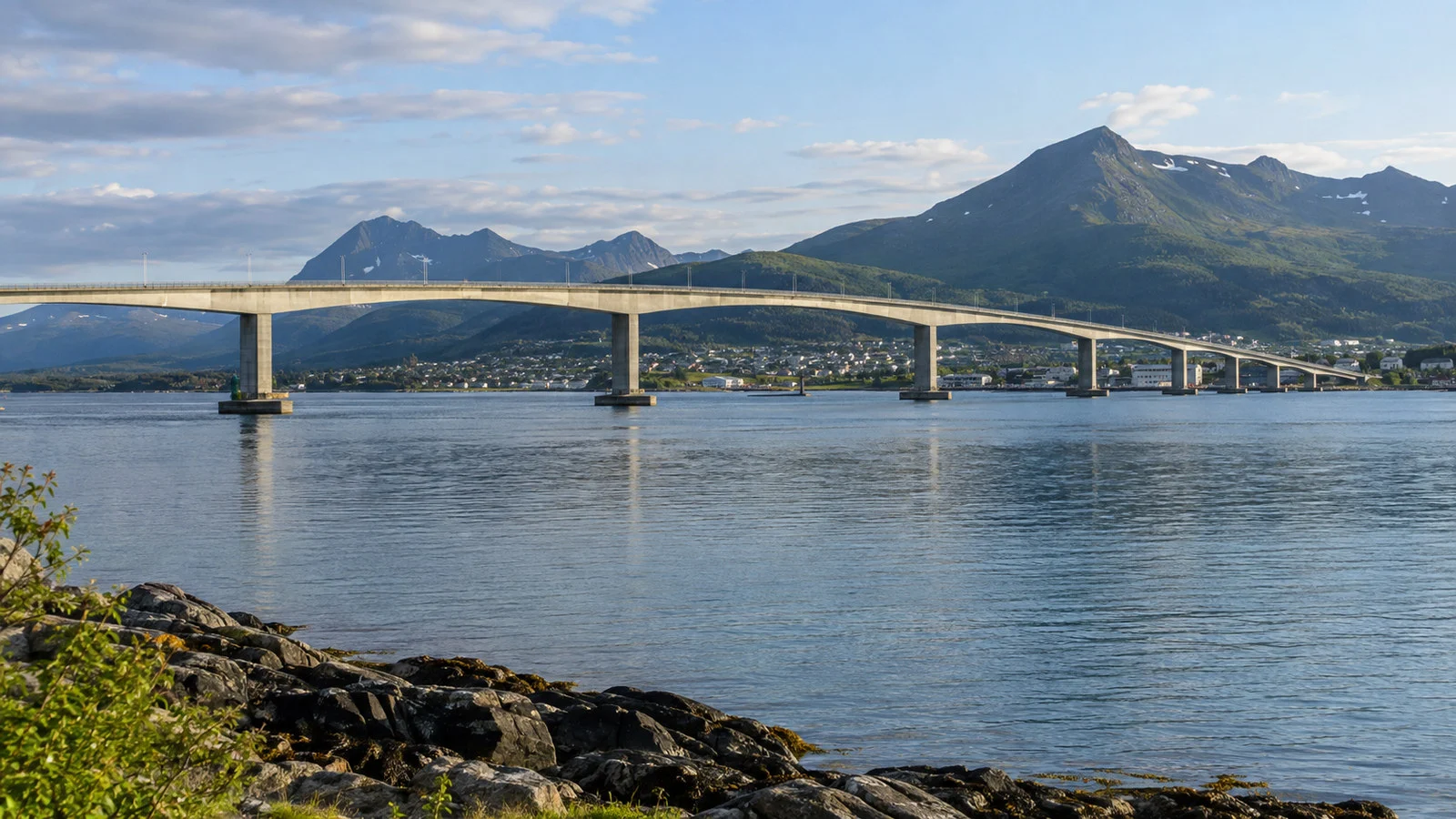
Sortlandsbrua is the long bridge linking Langøya and Hinnøya across the sound. Opened in 1975, it transformed road access and remains one of the defining structures in the harbor view.
The bridge is usually better appreciated as part of the landscape than as a walking objective during a cruise call. Distances, wind, traffic, and the need to return on time make a central viewpoint the more sensible choice.
Photographers should watch how ships, bridge lines, and mountains overlap as the vessel arrives or departs. A slightly elevated deck often gives a cleaner composition than a street-level viewpoint.
The working harbor
Sortland is not a museum village created for cruise visitors. Ferries, coastal ships, commercial activity, local transport, and everyday errands all share the waterfront.
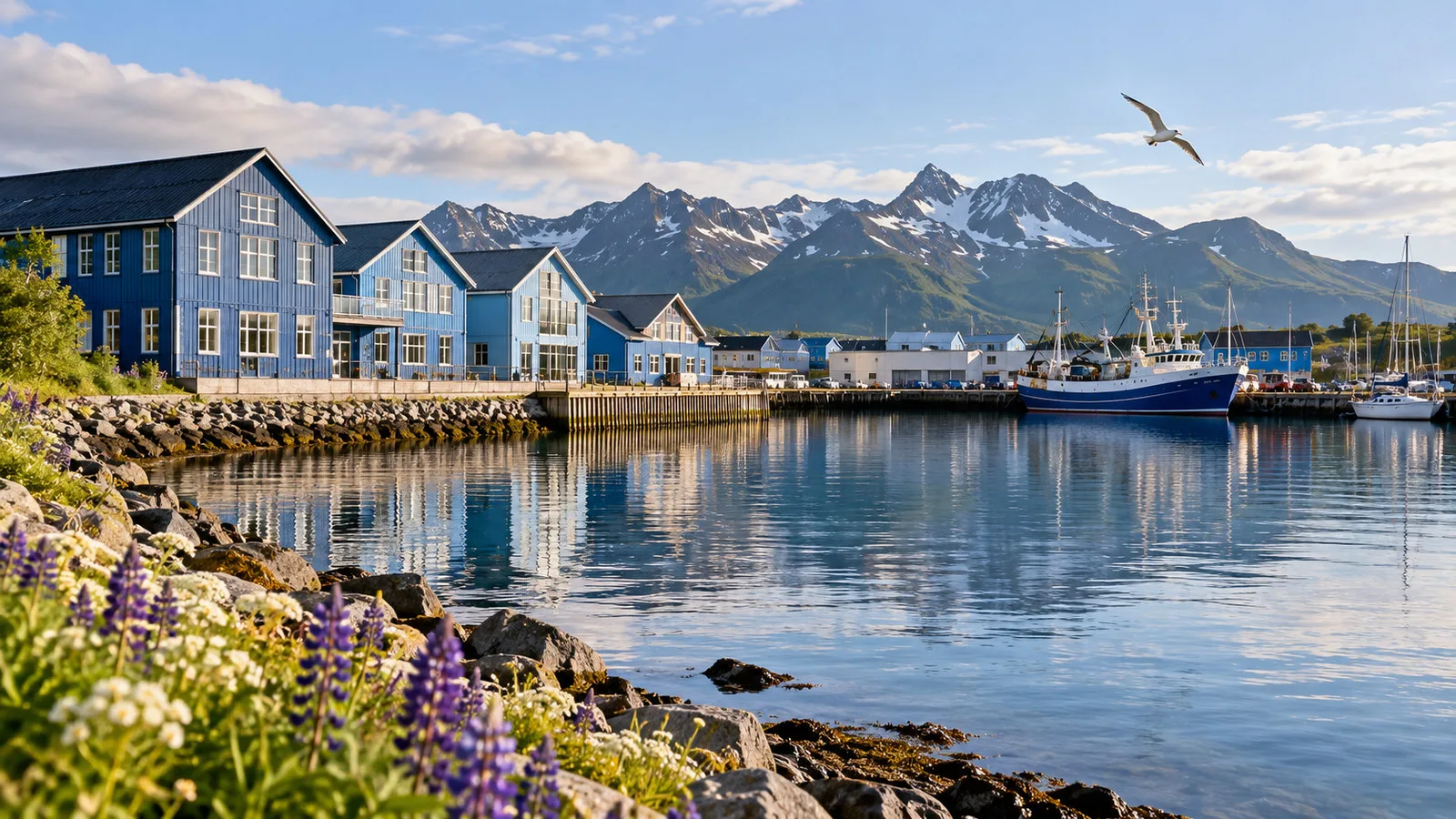
That working character is part of the appeal, but it requires awareness around restricted areas and moving vehicles. Stay on marked pedestrian routes and do not enter operational zones for a better ship photograph.
Port infrastructure changes over time, and not every vessel uses the same berth or connection. Treat the gangway and shuttle information in the daily program as the authoritative plan for your call.
Whale safaris from the Vesterålen region
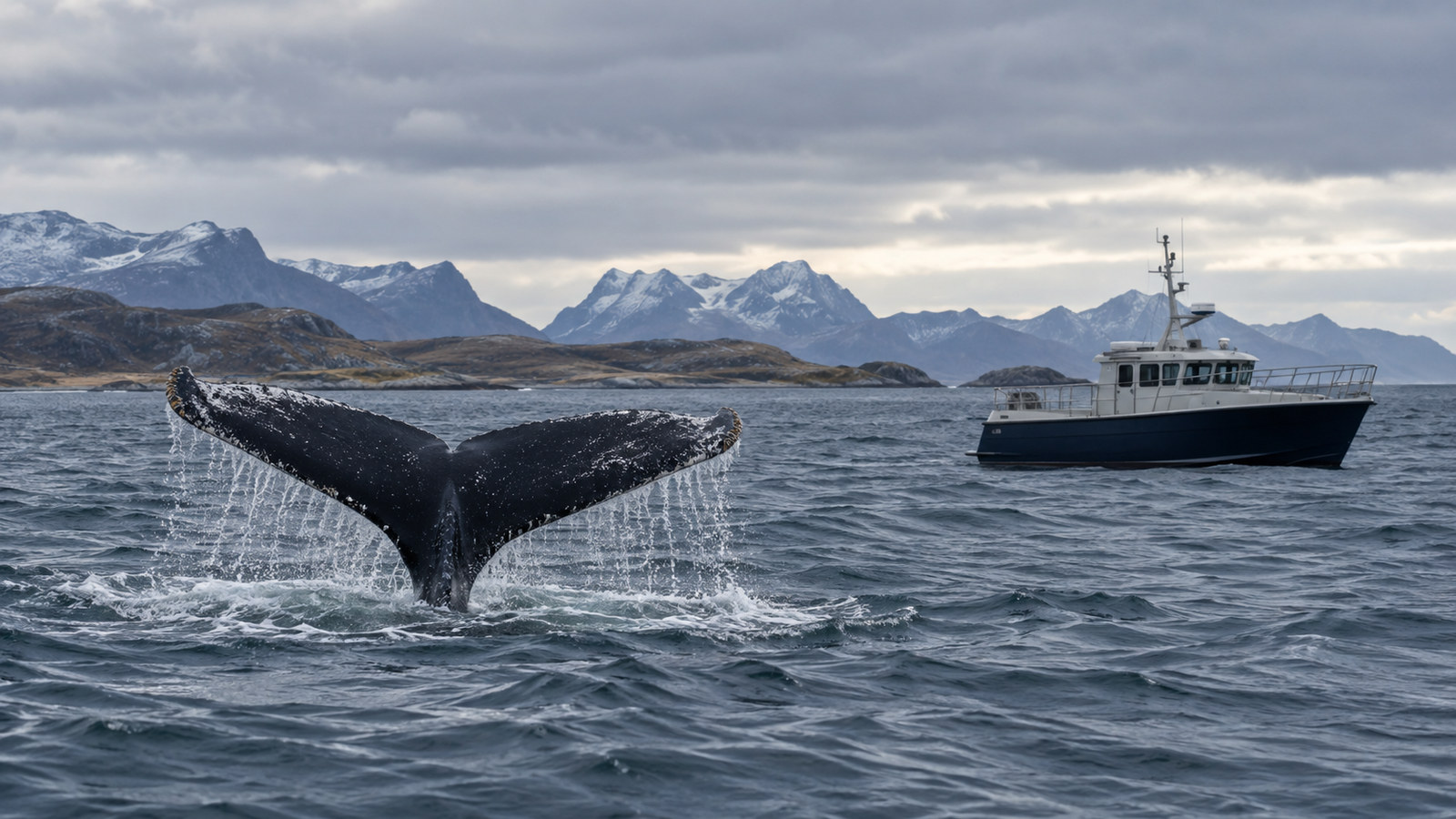
Vesterålen is strongly associated with whale watching, especially from communities closer to the outer coast. Sortland can serve as a regional starting point, but it is not a place where cruise visitors should expect whales beside the central pier.
A whale safari may require a long road transfer followed by several hours on a smaller vessel. The full excursion must fit the ship’s schedule with a generous buffer, which makes a cruise-line tour the safest option on a port day.
Wildlife is never guaranteed, and sea conditions can alter or cancel a departure. Ask about the actual boat, enclosed seating, restrooms, flotation equipment, minimum age, health restrictions, and seasickness risk before booking.
Independent travelers should not combine a tight coastal transfer with a nonrefundable boat trip unless the operator explicitly understands the cruise schedule. A missed safari is disappointing, but a missed ship is far worse.
Nyksund and the outer coast
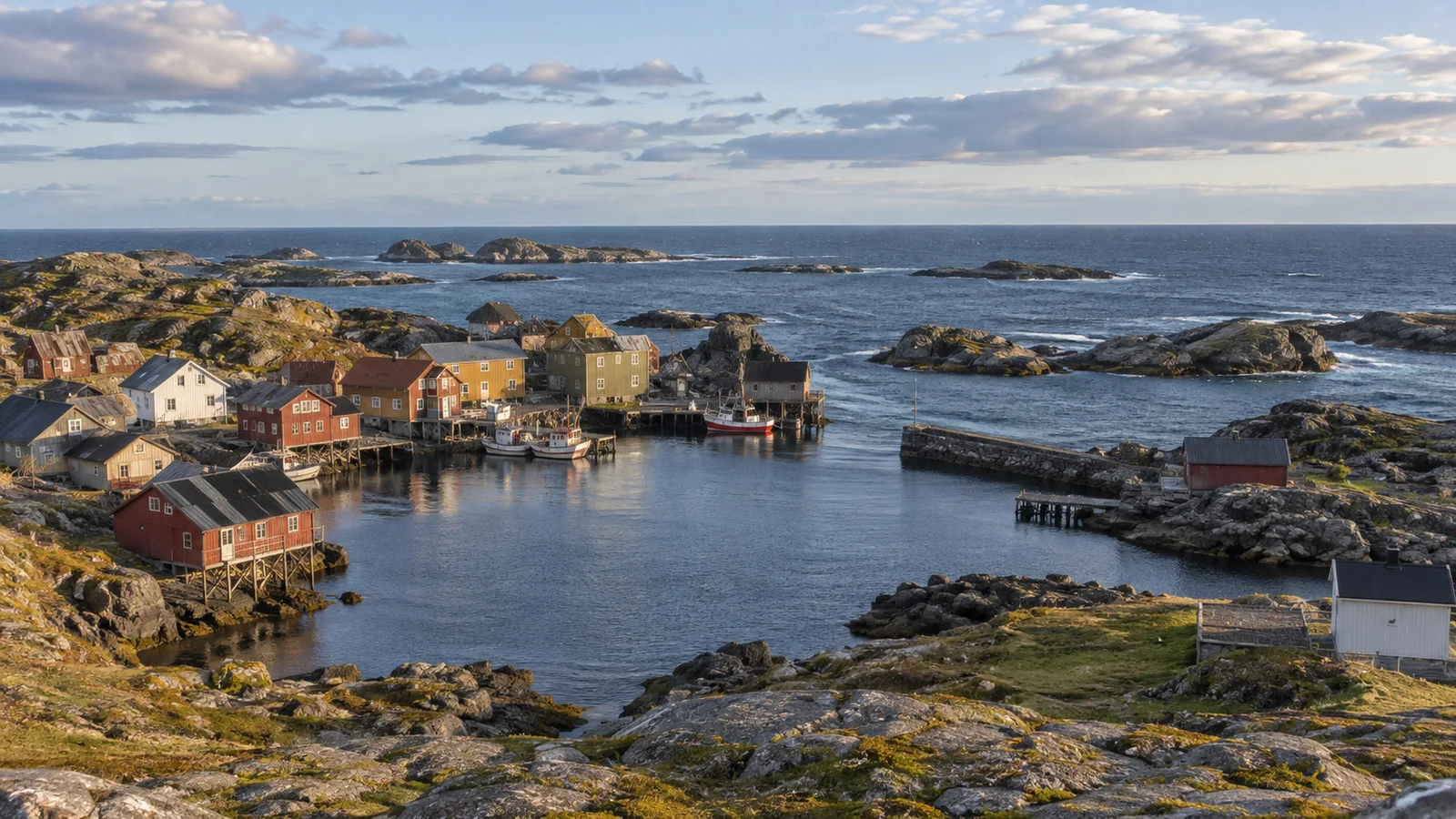
Nyksund is an atmospheric fishing village on the outer side of Langøya and a popular regional excursion idea. Its setting, restored buildings, and coastal history contrast nicely with Sortland’s role as a modern service center.
The drive is part of the commitment, and the final approach can be slower than a simple map suggests. Choose it only when your ship offers enough time or when a reputable guide has built the return margin into the itinerary.
Weather on the outer coast can feel colder and more exposed than in Sortland. Bring a wind-resistant layer, secure your hat, and wear shoes that handle wet surfaces.
Ship excursion or independent exploring?
Independent exploring is ideal for the Blue Town, church area, waterfront, and a cafe. These sights keep you near the harbor and allow you to shorten the day without losing prepaid transportation.
A ship excursion earns its value when it travels beyond town. Coordinated transport, a guide, and direct communication with the vessel reduce the risk created by long distances and changing conditions.
A private local tour can provide more flexibility, but verify the vehicle, route, duration, and cancellation terms. Make sure the driver knows the exact ship and berth, not simply that you are a cruise passenger in Sortland.
Never plan around the published departure time alone. All-aboard is earlier, and some port operations require passengers to clear the gangway before final cargo or service work begins.
Accessibility, honestly
Sortland’s compact center can work well for travelers who manage ordinary sidewalks and short distances. The main variables are the ship’s gangway, berth location, curb transitions, gradients, weather, and winter surface conditions.
Wheelchair users should ask whether the gangway is approved for their device at the expected tide. A port described as accessible can still become difficult when a steep ramp or strong wind affects safe movement.
Central shops and cafes vary, especially in older buildings. Request step information and restroom access directly rather than relying on a general map symbol.
Regional excursions need more detailed questions. Confirm step-free vehicle entry, storage for a mobility device, walking surfaces at every stop, and whether the schedule allows extra boarding time.
A relaxed harbor view from the ship can be a good alternative when going ashore is unsafe. Upper lounges and open decks often reveal the bridge, town, and mountains without the physical demands of the gangway.
Weather and seasonal light
Sortland’s weather can change quickly in any season. Wind, rain, cool air, and sudden brighter intervals are all normal reasons to dress in layers rather than trust the sky at breakfast.
Summer brings very long daylight, which can make an early arrival or late departure especially beautiful. Winter brings limited daylight, snow, ice, and the possibility of northern lights, but cloud cover and timing control what you actually see.
A northern lights image represents a possibility, not a promise. You need darkness, clear enough sky, solar activity, and good timing, and a brief port call may not align with all four.
For the current forecast, check a reliable Norwegian weather service and compare it with the ship’s announcements. Conditions at a distant excursion stop may differ from the harbor.
What to wear and carry
A waterproof and wind-resistant outer layer is more useful than a heavy coat that cannot handle rain. Add a warm midlayer, hat, and light gloves, then adjust as conditions change.
Wear shoes with grip for wet decks, painted surfaces, and possible ice. Smooth dress soles are a poor choice even if you plan only a short walk into town.
Bring a compact umbrella only if the wind is calm, since a hood is usually more practical. Protect cameras and phones from rain, and use a strap when photographing near the water.
Save the ship contact, berth location, and all-aboard time offline. Mobile coverage is generally useful in town, but a dead battery should never become a return-time problem.
Money, food, and practical services
Norway uses the Norwegian krone, and cards are widely accepted. A backup card is more useful than carrying a large amount of cash, although every traveler should confirm foreign transaction settings before departure.
Sortland is a regional center with ordinary shops and services, not just seasonal tourism businesses. That makes it practical for a simple meal, pharmacy purchase, or forgotten travel item during a longer call.
Opening hours vary by weekday and season, while Sunday choices may be more limited. Check current hours rather than assuming a business will open because a ship is in port.
Safety and returning on time
The most common port-day problems are likely to be weather exposure, slippery surfaces, and a plan that reaches too far beyond town. Build a return buffer that reflects road distance and winter conditions rather than the ideal travel time shown by an app.
Norway’s emergency numbers are 110 for fire, 112 for police, and 113 for medical emergencies. On a ship-sponsored tour, notify the guide first so the operator can coordinate the local response and inform the vessel.
Photograph the gangway notice before leaving and confirm whether ship time matches local time. If the captain changes departure, use official announcements or direct messages from the cruise line instead of social media.
How Sortland fits a Norway cruise
Sortland provides a useful contrast to Norway’s headline fjords and larger Arctic cities. It is a working regional center whose identity comes from transport, art, coastal life, and its position among islands.
The municipality had 10,787 residents in the second quarter of 2026 according to Statistics Norway. That scale helps explain why the town offers practical services while still feeling compact from the harbor.
On a coastal voyage, the bridge and blue buildings may be the memory even if you never go ashore. On a longer cruise call, the town becomes a base for seeing a broader part of Vesterålen.
Common questions
Is the whole town blue?
No, not every building is blue. Dozens of facades participate in the project, and part of the fun is noticing the different shades and written text among ordinary streets.
Can I see whales from the pier?
You should not expect a whale sighting from the central harbor. Dedicated safaris operate elsewhere in the region and require transportation, suitable weather, and enough time for a boat trip.
Do I need cash?
Cards are commonly used, so most short-call visitors will not need much cash. Carry a backup payment method and check fees charged by your card provider.
Will I see the northern lights?
Only if darkness, weather, solar activity, and your schedule align. Summer is too bright for normal aurora viewing, while a cloudy winter night can hide a strong display.
The last word
Sortland does not need a famous monument to justify a port call. The blue facades, poetry, bridge, sound, and mountains create a distinctive sense of place that is easy to appreciate without an exhausting plan.
Start with your actual time ashore, then choose the smallest plan that feels satisfying. A calm walk through the Blue Town is often a better cruise memory than spending the entire call watching the clock on a distant road.
Official planning resources
Use the Hurtigruten Sortland page for current coastal-route timings and harbor context, and Arctic Norway for the Blue Town story. Always confirm final arrival and departure details with your own ship.
How this guide was researched: This guide was checked against current information from Hurtigruten, Arctic Norway, and Statistics Norway. Time-sensitive details were reviewed in September 2026; see our Editorial Policy.
More on this topic: browse every guide on expedition and alternative cruises.