Stokmarknes Cruise Port: Norway’s Hurtigruten Hometown, Explained
Stokmarknes is the small Vesterålen town where the Norwegian shipping company that became Hurtigruten was founded in 1881.
If it’s on your itinerary, here’s the honest version: a working harbor, one genuinely excellent museum, and real limits on how far you can wander before the ship leaves.
My quick take
I like Stokmarknes precisely because it undersells itself. There’s no blockbuster fjord view here, just a working coastal town that happens to be where the map of Norwegian coastal shipping got redrawn.
The museum alone is worth the walk from the dock. If you’ve read our full breakdown of the Hurtigruten route and its ports, you already know this is one of the shorter, quieter calls on the line.
Go in expecting a good hour or two ashore, not a day trip. You’ll leave satisfied instead of shortchanged, and that’s really the whole trick to Stokmarknes.
Stokmarknes quick facts
- Docking: Ships dock alongside the town quay at Nordnesveien 1, central Stokmarknes on Hadseøya island, Vesterålen; no tendering.
- Into town: Flat, roughly five-minute walk from the quay to the Hurtigruten Museum and the town center.
- Currency: Norwegian krone (NOK); cards are widely accepted, so little cash is needed.
- Language: Norwegian is the local language, but English is spoken fluently at the museum, shops, and cafes.
- Time zone: Central European Time, UTC+1, shifting to UTC+2 (CEST) under Norway’s summer clock.
- Operational caution: Wind, winter weather, berth operations, and itinerary changes can shorten or alter the call.
- Best independent plan: Walk straight to the Hurtigruten Museum, tour MS Finnmarken, then work the harborside on your own before reboarding.
Getting off the ship: dock, quay, and the walk into town
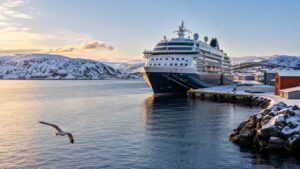
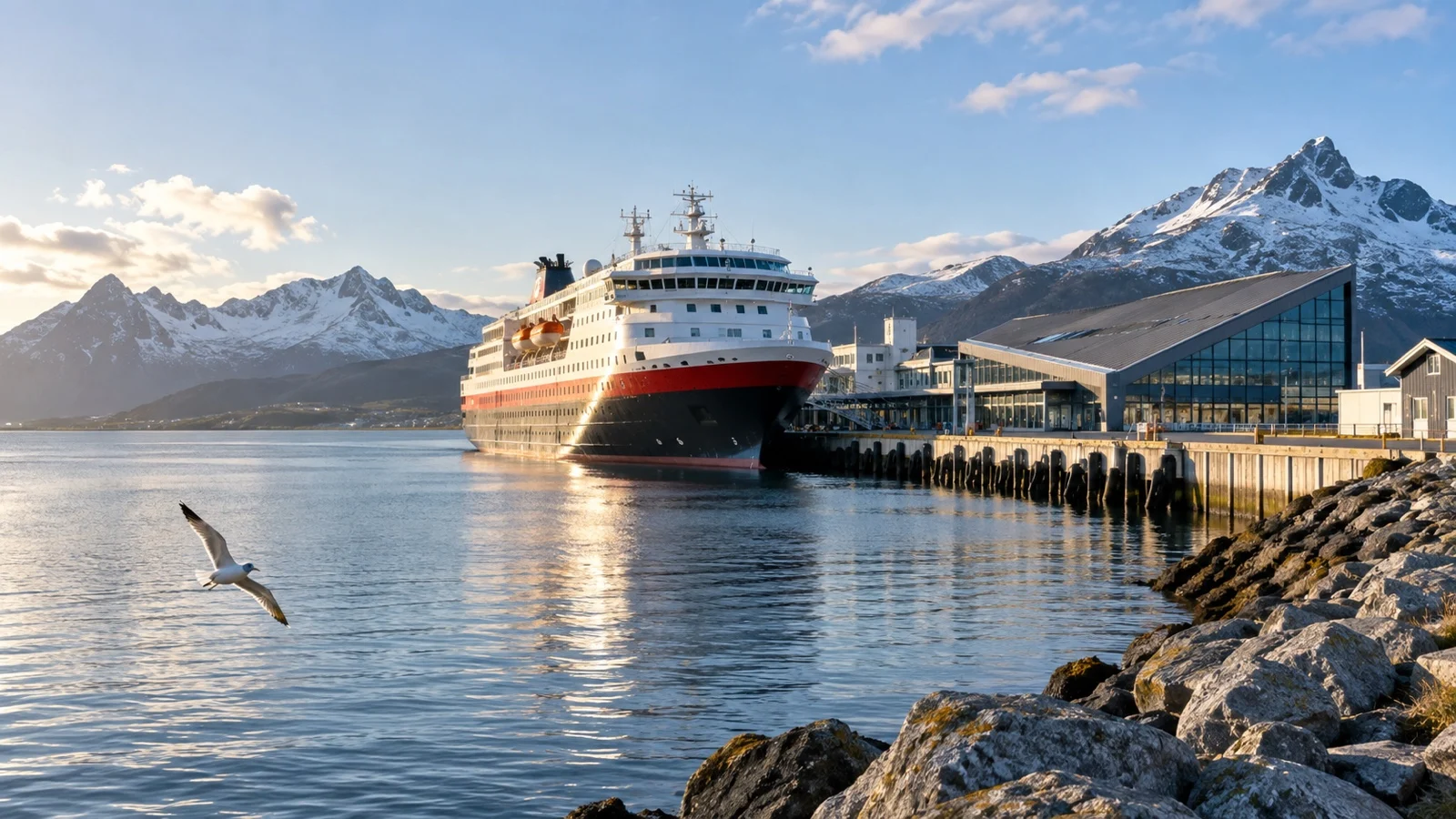
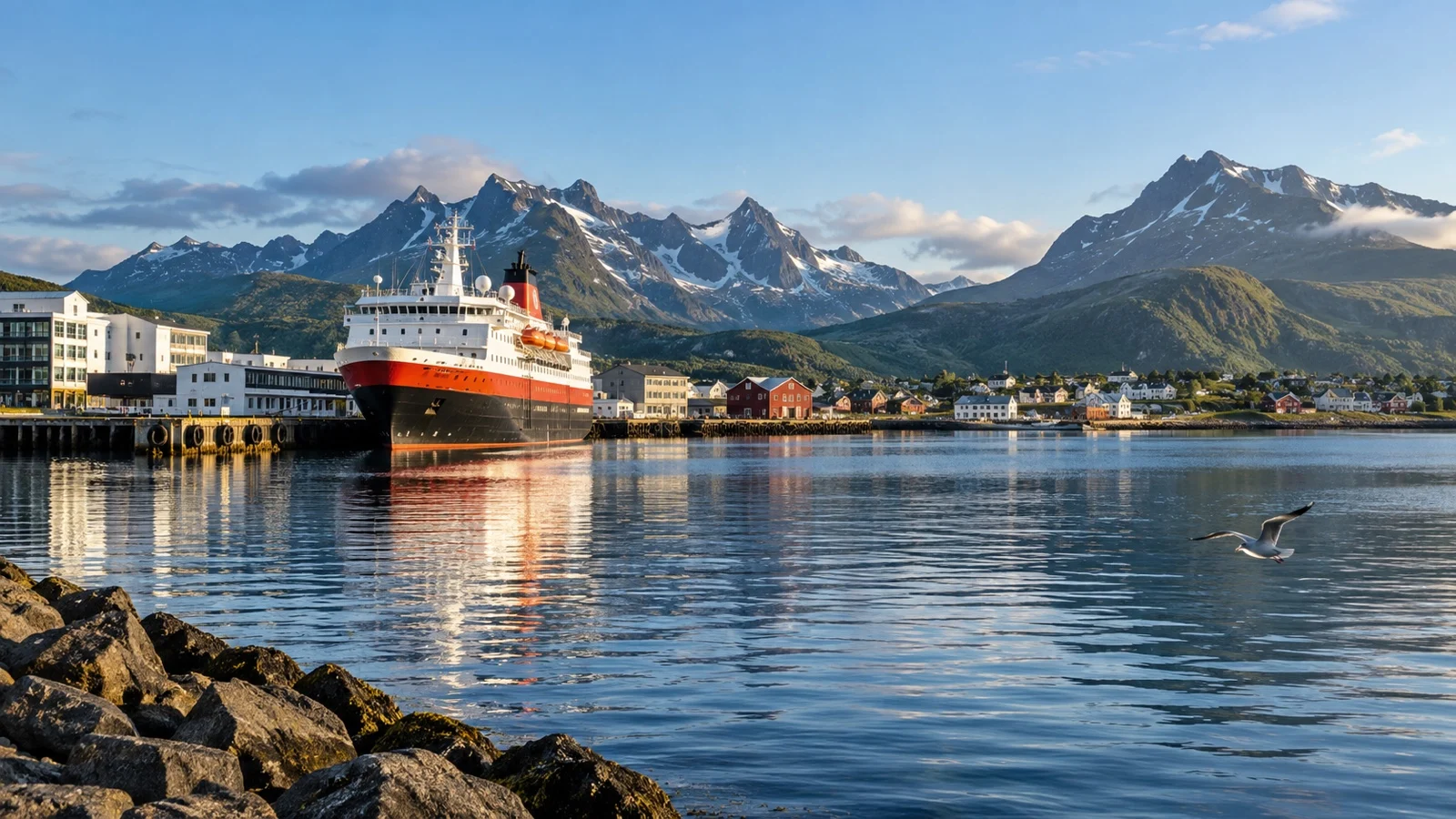
Ships calling at Stokmarknes tie up alongside the quay at Nordnesveien 1, right against the town rather than out in a roadstead. There’s no tender ride to plan around and no weather-dependent landing to worry about once you’re berthed.
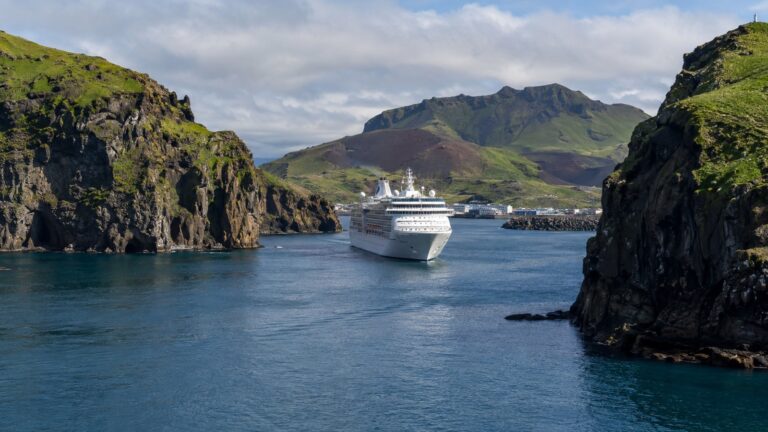
The approach itself is part of the show, with Hurtigruten’s port guide describing ships passing beneath Hadsel Bridge before the harbor, green hills, grazing sheep, and red-roofed wooden houses.
From the gangway, the Hurtigruten Museum is visible almost immediately and sits about a five-minute walk away. There’s no shuttle bus laid on because none is needed.
The quay itself is a working harbor, not a purpose-built cruise terminal, so don’t expect duty-free shops or a welcome tent. What you get instead is a genuine small-town waterfront, which is arguably the more honest introduction to this stretch of Norway.
The standout local sights
The Hurtigruten Museum and MS Finnmarken
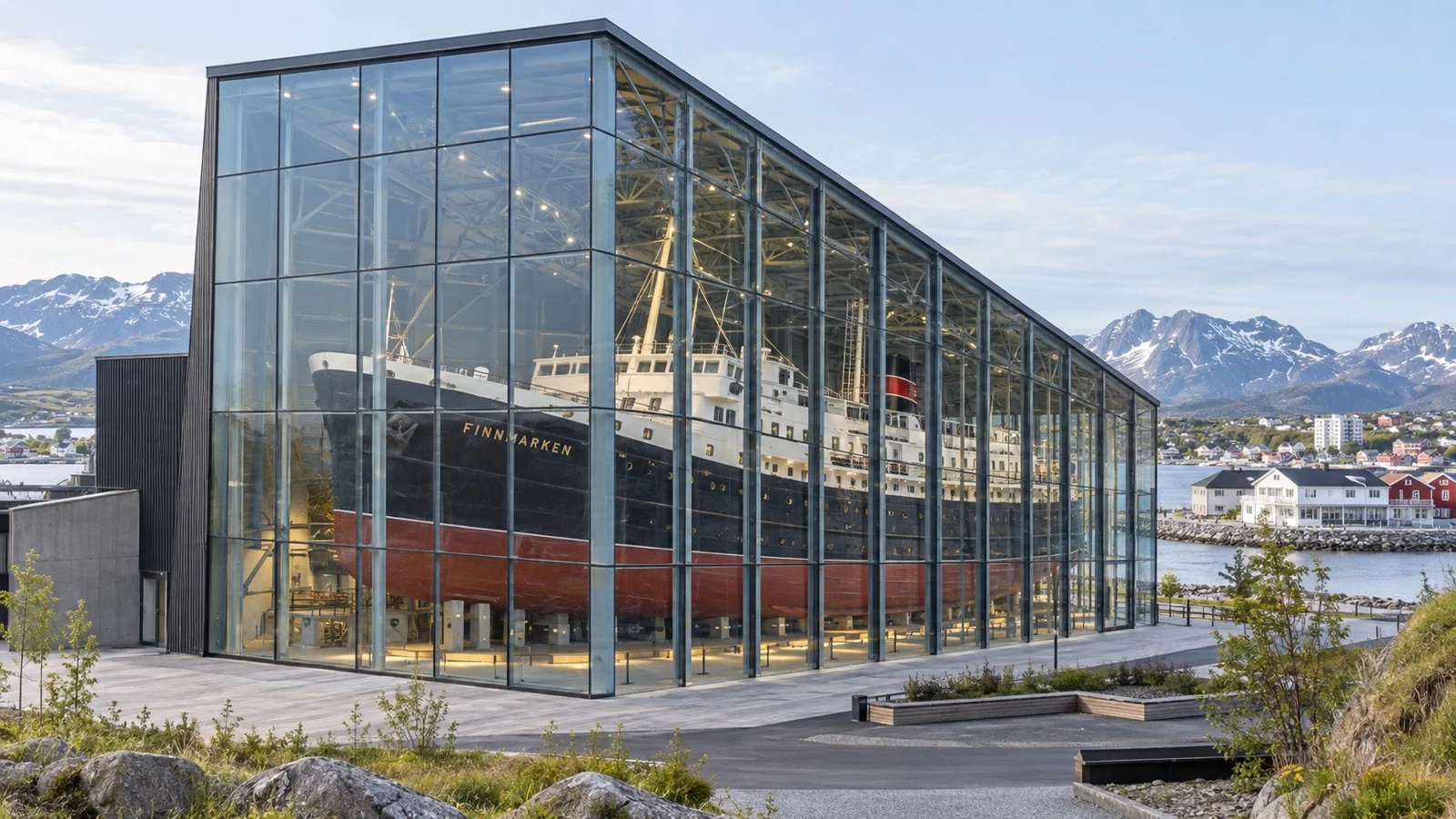
This is the reason Stokmarknes appears on cruise itineraries at all. The shipping company that grew into Hurtigruten, Vesteraalens Dampskibsselskab, was founded here in 1881 by Richard With, and the coastal route it launched in 1893 is still sailing today.
The Museum Nord visitor page centers the experience on the genuine 1956 Hurtigruten ship MS Finnmarken, permanently displayed inside the museum building. It is the world’s only exhibited complete Hurtigruten ship.
The museum currently lists adult admission at NOK 205, with lower rates for children, students, and seniors. Recheck the official page for seasonal hours and prices, and allow extra time if you also want the guided engine-room tour.
Storheia and the Børøy bridge walk
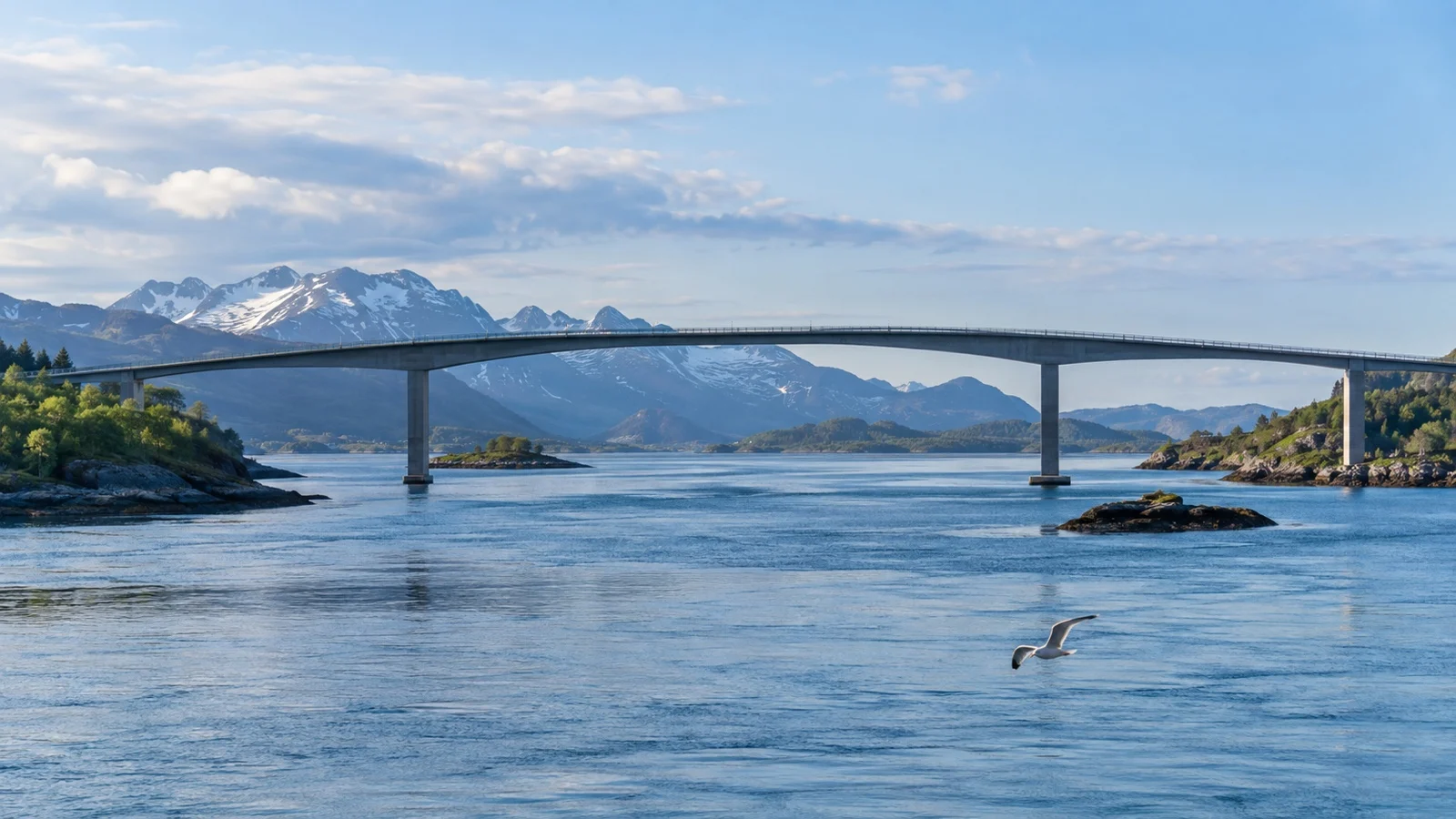
If you’d rather stretch your legs than read museum placards, Storheia is a short, easy hike above town, generally quoted at around an hour round trip. It’s not officially waymarked for cruise passengers, so treat timing as approximate and turn back with margin to spare.
A flatter alternative is simply walking out onto the Børøy bridge for the island views, no hiking boots required. Either option pairs well with the museum if your call is long enough for both.
Ship excursion or do it yourself
For the museum itself, I’d skip the organized excursion. It’s a five-minute unmissable walk, tickets are sold at the door, and you control your own pace instead of a group’s.
Whale watching is a different story: the real whale-watching hub for this stretch of coast is Andenes, roughly 93 miles and two and a half hours by road from Stokmarknes. That is not a realistic independent add-on during a port call measured in hours.
If whales matter to you and your ship sells a Stokmarknes-linked whale safari, it’s almost certainly bussing you to Andenes or a similar departure point and guaranteeing your return. That logistics guarantee, not the wildlife itself, is what you’re actually paying for.
Bird watching for puffins and white-tailed eagles works the same way. Treat any shipboard listing for these as excursions to a nearby colony, not activities you can casually improvise from the quay.
Accessibility: stairs, terrain, and honest limits
The dock-to-town walk is flat, paved, and short, which makes Stokmarknes an easier call than most for mobility-limited travelers. That’s the good news, and it’s a real advantage over tender ports.
The bad news is MS Finnmarken herself. She’s a real 1956 ship with narrow stairwells, sills, and deck-level changes, so full interior access is realistically limited for wheelchair and mobility-device users even though the surrounding museum halls are level.
Storheia is an unpaved hillside trail and not accessible. If mobility is a concern, the museum’s ground-floor exhibits plus the harborside walk make a complete, satisfying visit on their own.
Weather and safety
Stokmarknes sits well above the Arctic Circle, but the Gulf Stream keeps things milder than the latitude suggests. Expect cool, changeable weather with wind and rain possible in any season, plus a real chance of snow from late autumn through early spring.
Summer brings the midnight sun for several weeks around the solstice, roughly late May into July, while the darkest weeks of winter mean only a few hours of gray daylight. Pack layers and a real rain shell regardless of when you sail.
For emergencies anywhere in Norway, the numbers are 112 for police, 110 for fire, and 113 for medical emergencies. These are nationwide numbers, not specific to Hadsel Municipality, so save them before you sail rather than looking them up in a hurry.
Nordland Hospital’s Vesterålen unit is based right in Stokmarknes, which is a genuine practical plus for a small town this far north. It’s not a reason to skip travel insurance, but it is one less thing to worry about if something minor comes up ashore.
Timing your return to the ship
Calls here tend to be short. Classic Coastal Express sailings often list around an hour in port, while expedition-style itineraries on operators like HX or Hapag-Lloyd may schedule longer, but I’d verify the exact window on your daily program rather than assume.
The museum’s own posted hours run later than most short calls will use, so the ship’s all-aboard time, not the museum’s closing time, is what actually governs your day. Build in a ten-minute buffer for the walk back and any gangway line.
How Stokmarknes fits a Norway cruise
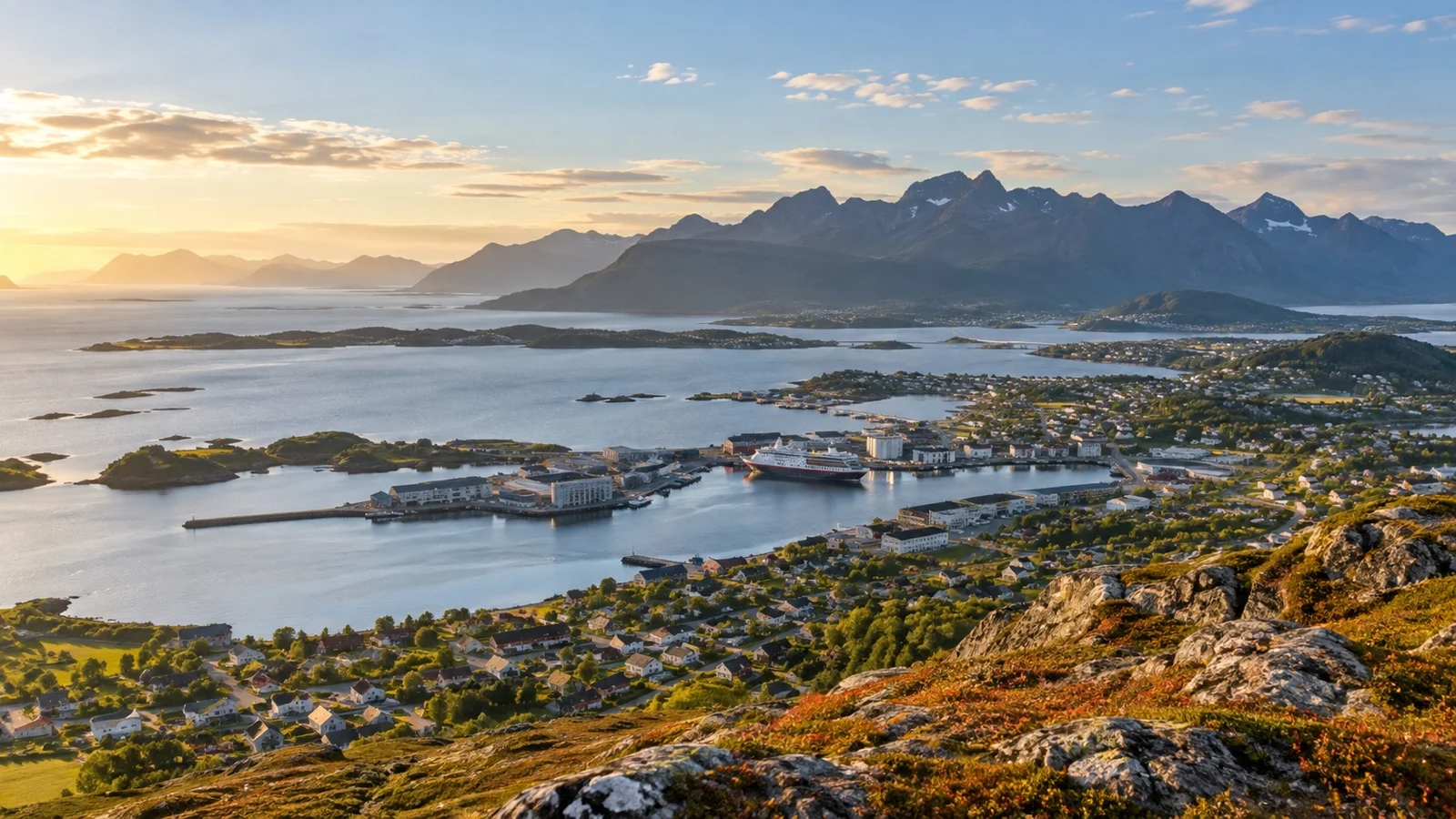
Stokmarknes is a Vesterålen call, which puts it a step off the more famous Lofoten and Geiranger circuit and squarely inside the small-ship and expedition side of Norwegian cruising. That’s the territory our small-ship cruise ports guide covers in more depth.
It also sits well north of the Arctic Circle, which is exactly the latitude band that matters if aurora sightings are part of your reason for sailing. Our northern lights cruise guide covers what actually improves your odds beyond just picking a northern port.
If Stokmarknes is one stop among many on a full coastal itinerary, our Hurtigruten ports overview maps all 34 calls so you can see how this one compares to the rest of the route.
Some HX and Hapag-Lloyd itineraries also pair Vesterålen calls with a Svalbard extension further north. If that’s on your radar, our Svalbard cruise rules guide covers the passenger caps and landing rules that don’t apply down here.
Quick answers
Is Stokmarknes a tender port?
No. Ships dock alongside the town quay at Nordnesveien 1, so there’s no tender ride involved.
How long do ships actually stay?
It varies by operator and itinerary, with classic Coastal Express calls often around an hour. Always check your ship’s own daily program rather than a general estimate.
Can I see whales directly from Stokmarknes?
Not realistically on your own. The main whale-watching departure point, Andenes, is about 93 miles and two and a half hours away by road.
Is the Hurtigruten Museum worth the time?
Yes, especially if you have any interest in maritime history. Walking a complete, full-sized 1956 coastal ship is not something you can do anywhere else.
What money should I bring ashore?
Norwegian krone is the currency, but cards are accepted almost everywhere, including the museum and cafes. There’s little practical need to carry much cash.
What’s the single best plan if my call is short?
Walk to the Hurtigruten Museum, tour MS Finnmarken, and spend whatever time is left on the harborside. It’s a complete, low-stress plan that doesn’t depend on transport or good weather.
The last word
Stokmarknes won’t be the headline stop on your Norway cruise, and it isn’t trying to be. It’s a short, straightforward call built around one excellent museum and a walkable harbor.
Treat it that way, skip the temptation to chase whales you can’t reach in the time you have, and check our full Hurtigruten ports guide and small-ship cruise ports guide to see where it fits in the bigger route.
How this guide was researched: Unless a first-hand visit is explicitly identified above, this guide uses official cruise-line, museum, hospital, port, tourism, and government sources where available. Logistics and time-sensitive details were reviewed on September 12, 2026; see our Editorial Policy.
More on this topic: browse every guide on expedition and alternative cruises.