Hurtigruten Ports: All 34 Norwegian Coastal Express Stops
Norway’s Coastal Express is the rare voyage where the timetable is part of the adventure, with local passengers, freight, and cruise travelers sharing the same working route.
The trick is choosing the direction and season that put your favorite ports at useful hours instead of assuming every one of the 34 stops will feel like a traditional cruise day.
The quick take
Choose the 12-day round-trip if port timing matters more than saving time. Calls that happen overnight in one direction often return at more convenient hours on the way back, although actual daylight still depends on the season.
The seven-day northbound voyage has the best daytime windows for Trondheim, Bodø, Tromsø, Honningsvåg, and the standard North Cape excursion. The six-day southbound voyage gives you stronger timing in Lofoten, Hammerfest, Brønnøysund, and Kristiansund.
Do not plan an independent outing during a 10- or 15-minute stop. Those quick calls are wonderful for watching the ship’s working rhythm, but the longer city calls are where you should build your time ashore.
The quick facts
- Route: Bergen to Kirkenes and back, covering roughly 2,500 nautical miles on the official route.
- Operators: Hurtigruten and Havila Voyages both sail the state-contracted coastal route.
- Voyage length: 12 days round-trip, seven days northbound, or six days southbound.
- Port count: 34 contracted ports. Geiranger and Hjørundfjord are seasonal fjord detours rather than two additional year-round route ports.
- Port calls: Some last only 10 to 15 minutes, while the most useful city calls run two to four hours.
- Bergen terminal: Jekteviksterminalen at Nøstegaten 30, not the main ocean-cruise quay.
- Getting ashore: The ships normally berth alongside and use a gangway rather than tenders.
- Cabins: Hurtigruten does not require one for port-to-port trips under 23 hours, although an overnight cabin can be worth the extra comfort.
- Currency: Norwegian krone. English is widely spoken aboard and in the larger ports.
- Missed calls: No trustworthy route-wide percentage is published. Weather and operating conditions can delay or cancel individual calls.
Why this is both a ferry and a cruise
The Bergen-Kirkenes service exists under Norwegian public-service contracts, but both companies also sell the route as a cruise vacation. That is why you can be enjoying a three-course dinner while pallets, vehicles, and local passengers move through the car deck below.
The current contracts began in 2021 and run through December 31, 2030. Hurtigruten operates seven route assignments and Havila operates four, providing daily service along the coast.
Havila’s four ships carry up to 640 passengers in 179 cabins and can sail for several hours on battery power. Hurtigruten’s Coastal Express fleet varies more by age and layout, so compare the specific ship as carefully as the itinerary.
If you want the authentic working route, look for Hurtigruten’s Original Coastal Express or Havila’s regular coastal voyages. Hurtigruten’s Signature voyages are a separate premium product with fewer, longer port calls and should not be confused with the 34-port service.
All 34 Coastal Express ports, in order
This is the complete contracted port sequence from Bergen to Kirkenes. The times are based on the current published sailing plan, but always download the plan for your own departure before making independent arrangements.
Day 1: Bergen
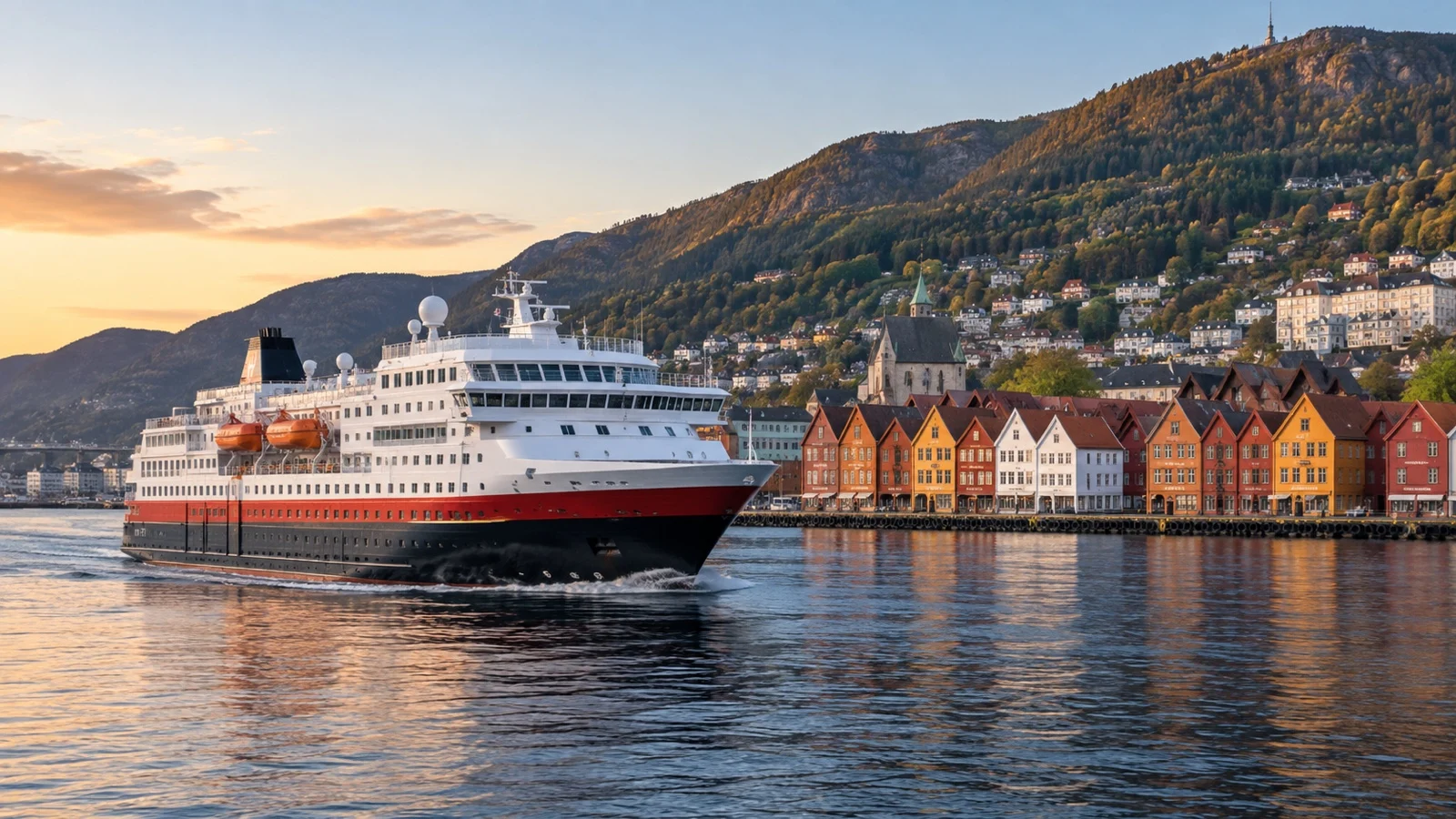
- Bergen: The route begins at Jekteviksterminalen with an evening departure, currently scheduled for 8:30 p.m. Arrive early enough to enjoy Bryggen or the harbor before checking in, but do not mistake the 2:45 p.m. round-trip arrival time for the northbound departure.
Day 2: Western Norway and the seasonal fjords
- Florø: The westernmost town in Norway appears around 2:45 a.m. northbound, making this more of a working call than a sightseeing stop for most through passengers.
- Måløy: This 15-minute call lands around 5:15 a.m. northbound. It returns around 5:45 a.m. southbound, so the season determines whether either visit happens in true daylight.
- Torvik: The ship pauses here for about 10 minutes in the morning northbound and during the night southbound. Stay close to the quay if the crew permits a quick step ashore.
- Ålesund: The ship reaches Ålesund around 9:45 a.m. northbound. From April through August it soon leaves for Geiranger and returns in the evening, while September and October bring a Hjørundfjord detour; the long uninterrupted Ålesund stay is generally a winter feature.
- Molde: The northbound call is late in the evening and lasts roughly 30 minutes. Southbound, it arrives a little earlier but remains another brief working stop rather than a full port day.
Seasonal note: Geiranger and Hjørundfjord are important highlights, but they are not extra year-round ports added to the official count of 34. The current schedule sends northbound ships toward Geiranger from April through August and Hjørundfjord in September and October.
Day 3: Kristiansund, Trondheim, and Rørvik
- Kristiansund: Northbound travelers reach the city in the middle of the night, while southbound sailings receive a more useful late-afternoon hour. This is one of the clearest examples of why direction changes the experience.
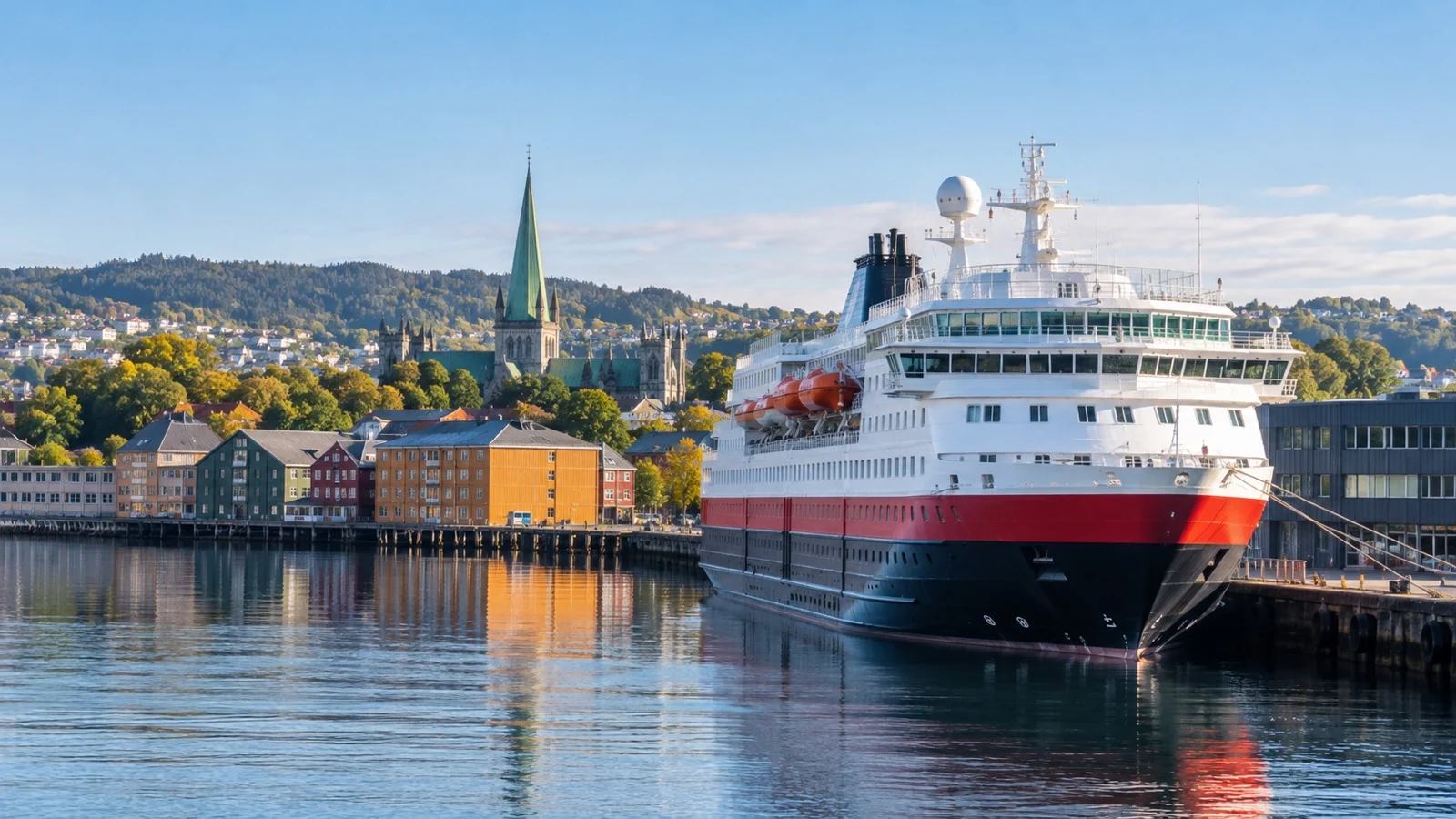
- Trondheim: The three-hour northbound call, roughly 9:45 a.m. to 12:45 p.m., is long enough for a focused walk toward Nidaros Cathedral. Southbound ships also stop for about three hours, but earlier in the morning.
- Rørvik: The northbound and southbound coastal ships usually meet near Rørvik in the evening. The call is short, but seeing both route ships together is part of the fun.
Day 4: The Helgeland Coast and Lofoten
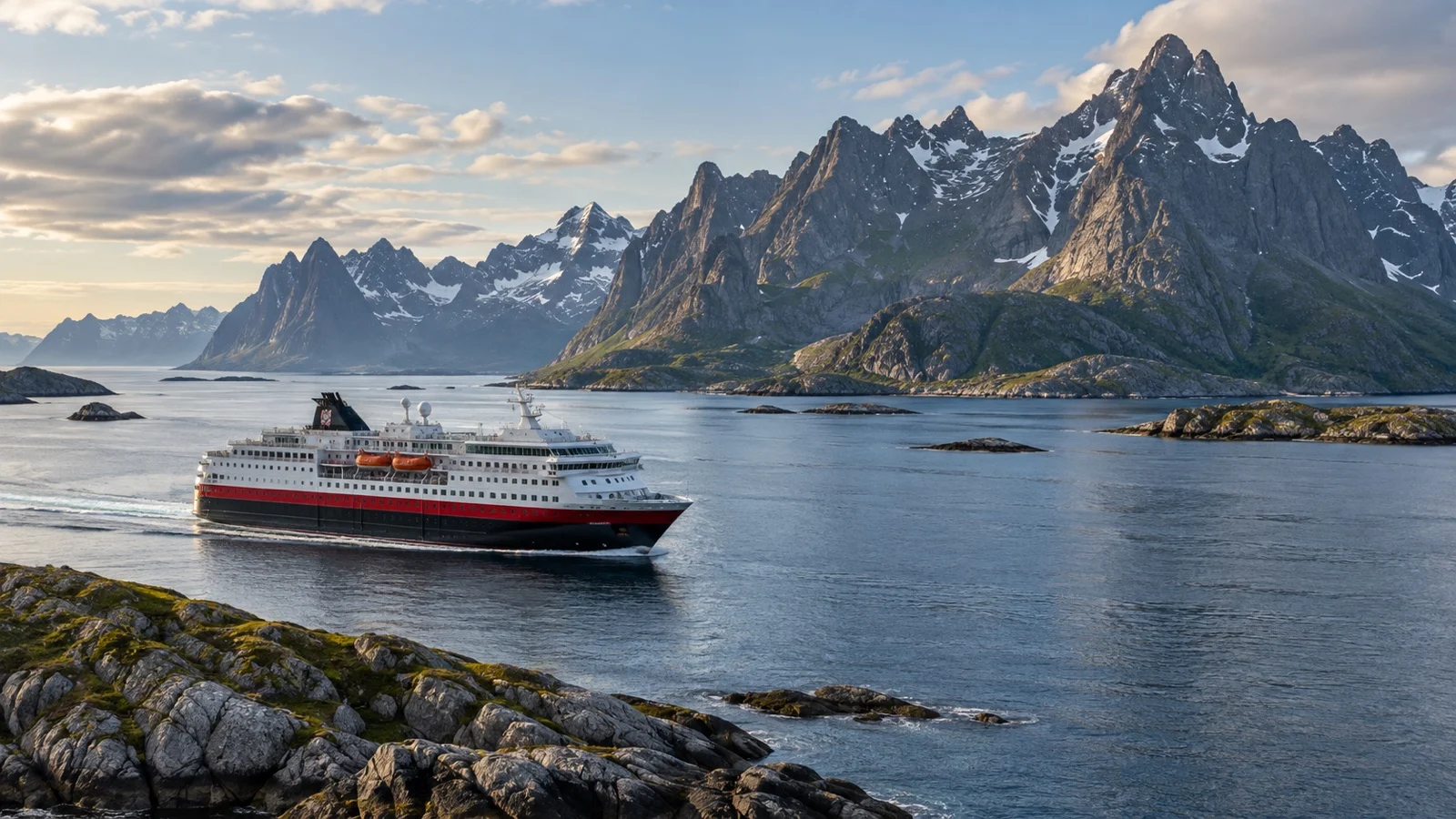
- Brønnøysund: Northbound arrival is around 1:35 a.m., but the southbound stop runs for more than two hours in midafternoon. Choose southbound if Brønnøysund itself is important to you.
- Sandnessjøen: This is another northbound predawn call that returns around lunchtime southbound. The Seven Sisters mountains provide the memorable backdrop when visibility cooperates.
- Nesna: Both calls are only about 10 minutes. It is a perfect example of a port that matters to the transport network without becoming a conventional shore day.
- Ørnes: The ship calls for roughly 10 minutes in late morning northbound and early morning southbound. Enjoy the approach from deck rather than planning time in town.
- Bodø: The northbound stop runs from about 1:05 p.m. to 3:20 p.m., giving you time for the center but not a comfortable independent trip to Saltstraumen. Southbound arrival is overnight.
- Stamsund: This fishing community is your first Lofoten port northbound, with a short evening call. Southbound it arrives later at night.
- Svolvær: Northbound timing is roughly 9:20 p.m. to 10:15 p.m., while southbound brings a more generous two-hour early-evening call. If Lofoten is your priority, southbound usually gives you the stronger window ashore.
Day 5: Vesterålen, Tromsø, and Skjervøy
- Stokmarknes: The birthplace of Hurtigruten arrives around 1:30 a.m. northbound but in midafternoon southbound. The longer southbound hour is the better match for the Hurtigruten Museum.
- Sortland: Northbound timing falls near 3:00 a.m.; southbound arrives around lunchtime. Blue-painted buildings give Sortland its nickname, the Blue City.
- Risøyhamn: The ship pauses for around 15 minutes before dawn northbound and in late morning southbound. This is another call to appreciate from the ship unless the crew specifically invites a quick walk on the quay.
- Harstad: The route stops for roughly 30 minutes in the morning in both directions. That is enough for fresh air on the quay, not a trip to sights outside the center.
- Finnsnes: The gateway to Senja receives a short late-morning call northbound and a predawn call southbound. A longer Senja visit works better as a separate stopover than as an improvised excursion.
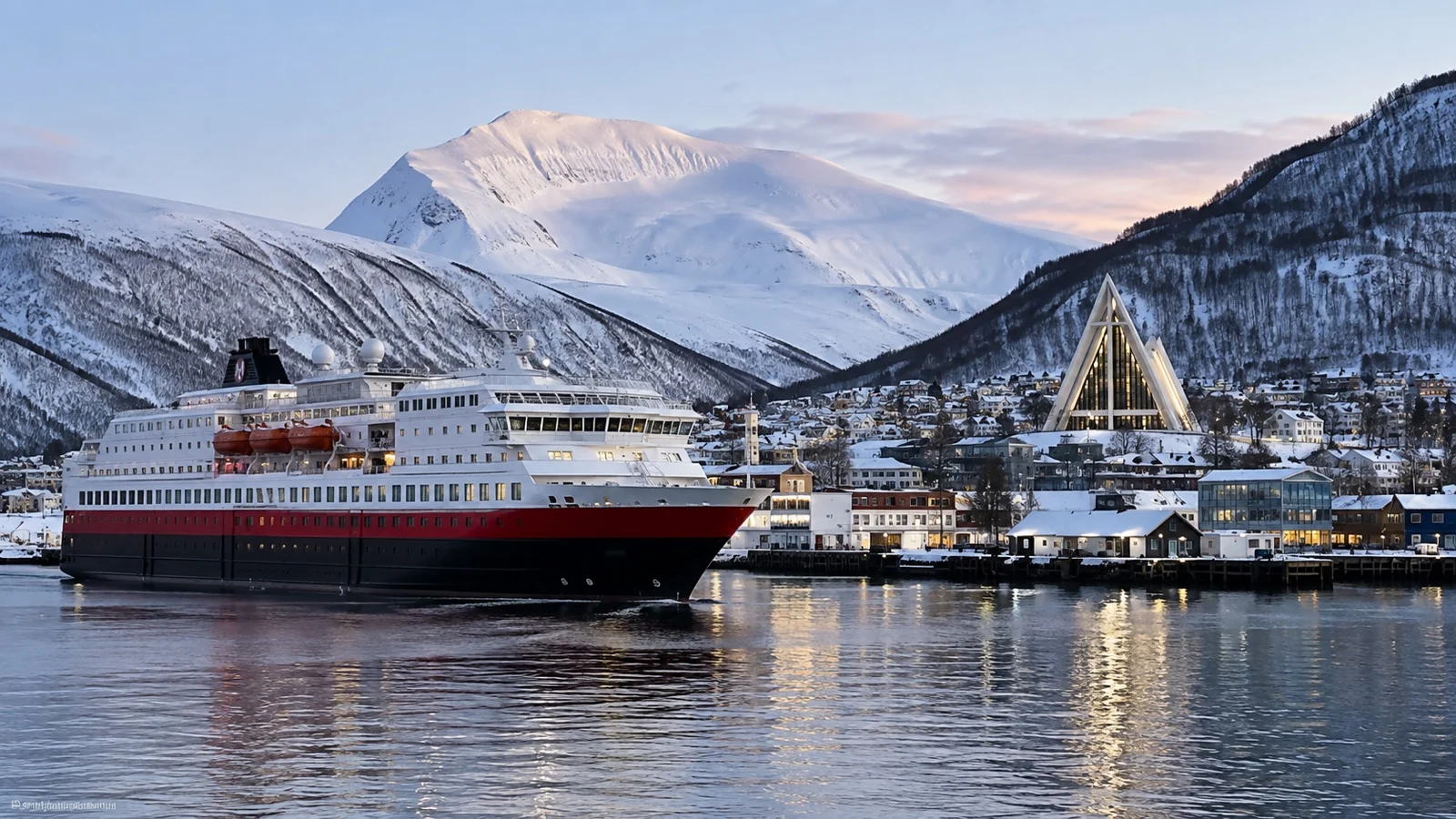
- Tromsø: The northbound call lasts about four hours in the afternoon, making it one of the route’s best independent sightseeing windows. Southbound ships arrive close to midnight and remain until after 1:00 a.m.
- Skjervøy: Both calls are brief, with northbound arriving late in the evening and southbound in early evening. Winter wildlife excursions require careful coordination with the operator rather than a spontaneous dash ashore.
Day 6: Finnmark and the North Cape
- Øksfjord: The northbound call occurs around 1:50 a.m.; southbound arrives in midafternoon. The dramatic surrounding terrain is best enjoyed from deck during the approach.
- Hammerfest: Northbound travelers arrive shortly after 5:00 a.m., while southbound receives a much easier late-morning stop of almost two hours.
- Havøysund: Both directions pause for only about 15 minutes in the morning. It feels unmistakably like a working fishing-port call.
- Honningsvåg: The northbound call from about 10:55 a.m. to 2:30 p.m. supports the standard motorcoach trip to the North Cape. The southbound ship stops for only 15 minutes, but Hurtigruten may offer a seasonal six-hour Breakfast at the North Cape excursion that travels overland and rejoins the ship later.
- Kjøllefjord: The 20-minute northbound call falls in late afternoon; southbound arrives overnight. Finnkirka sea cliff is one of the scenic markers to watch for from the ship.
- Mehamn: Northbound arrival is in early evening, while the southbound call occurs after 1:00 a.m. Both are short operational stops.
- Berlevåg: The ship pauses for around 10 minutes late in the evening in either direction. Wind and exposed coastal conditions are part of the character here.
Day 7: The far northeast and Kirkenes
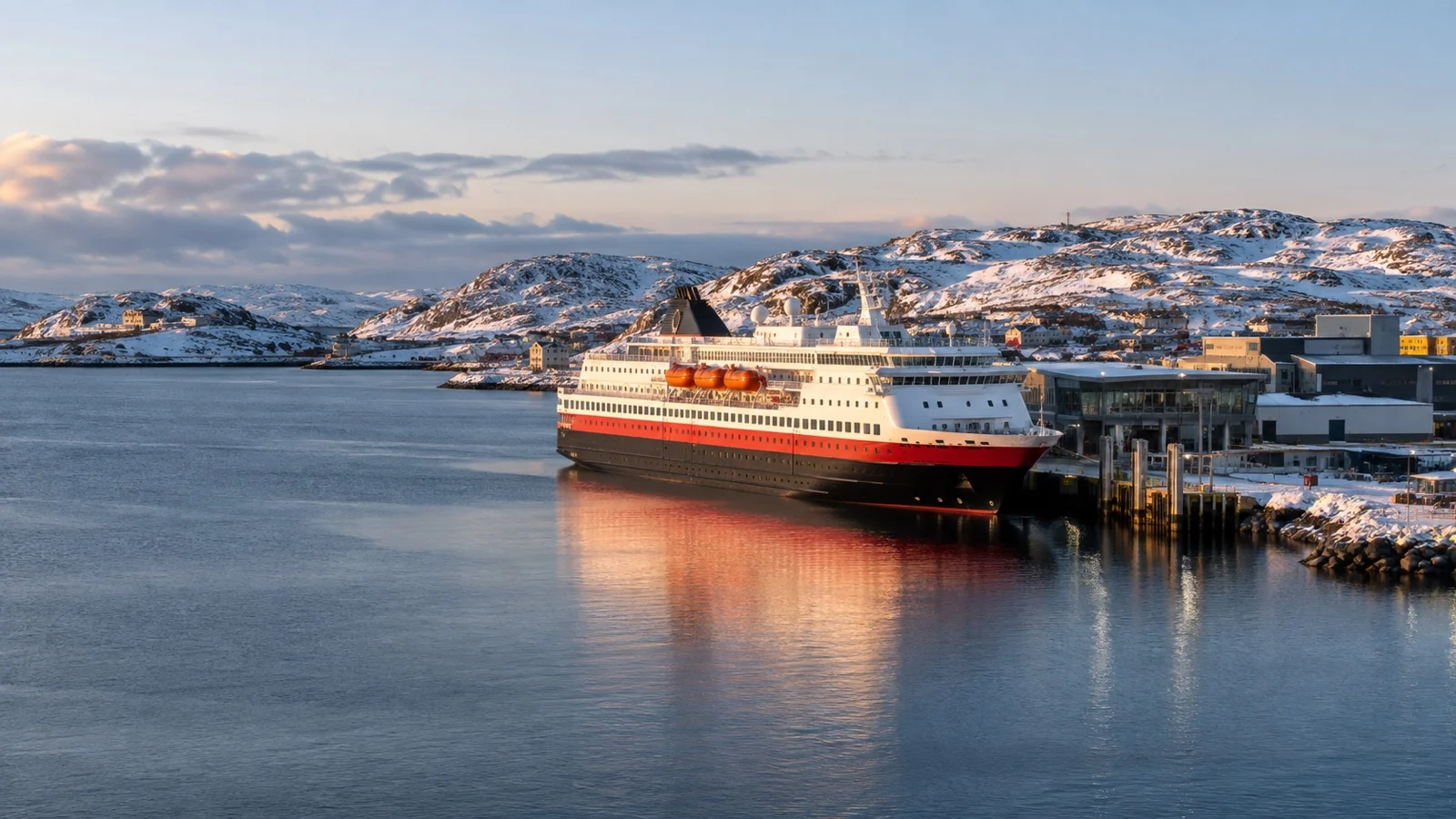
- Båtsfjord: Northbound arrival is at midnight, but the southbound ship reaches the port around 8:00 p.m. Both calls last roughly 30 minutes.
- Vardø: The current northbound plan lists about 3:00 a.m. to 3:45 a.m., while southbound arrives in late afternoon for nearly an hour.
- Vadsø: Vadsø is a northbound-only call, currently scheduled for about 20 minutes shortly before 7:00 a.m. It is the reason the southbound itinerary has 33 calls rather than 34.
- Kirkenes: The ship reaches the turnaround port around 9:00 a.m. and departs southbound around 12:30 p.m. Through passengers can join an organized outing, while one-way travelers should allow time for transfers because the airport is outside town.
Northbound or southbound: which is better?
Northbound is the easier first choice if Trondheim, Bodø, Tromsø, or the standard North Cape excursion leads your list. Those major calls arrive during useful daytime hours, and the ship’s seasonal Geiranger or Hjørundfjord detour also happens on the northbound leg.
Southbound is better for travelers who care most about Vesterålen, Lofoten, Hammerfest, Brønnøysund, and Kristiansund. The route also sails through Trollfjord when conditions and season allow, giving the return leg its own scenery rather than simply repeating the northbound voyage.
The full round-trip gives you the best balance because the clock times flip. It does not guarantee daylight, especially during polar night, but it greatly improves your odds of seeing more communities at convenient hours.
Which ports are you likely to sleep through?
About a dozen northbound calls fall between midnight and 6:00 a.m. They include Florø, Måløy, Kristiansund, Brønnøysund, Sandnessjøen, Stokmarknes, Sortland, Risøyhamn, Øksfjord, Hammerfest, Båtsfjord, and Vardø.
You do not need to set an alarm for every one. Pick one or two that genuinely interest you, then let the southbound schedule cover several others at kinder hours.
Remember that a 3:00 a.m. summer call may happen under the midnight sun, while an 11:00 a.m. winter call in the far north may still be dark. Use “daytime” for the clock and check sunrise information separately.
Original Coastal Express versus Signature
Hurtigruten’s Original Coastal Express is the classic working route with frequent short calls, local passengers, and cargo. This is the product to choose if the 34-port rhythm is the reason you want to travel.
The North Cape Line and Svalbard Line are Hurtigruten’s premium Signature voyages. They visit fewer ports for longer periods, include more food and drinks, and feel more like conventional destination cruises.
Havila operates the classic coastal route rather than a separate Signature-style network. Its newer ships feel modern and quiet, but the same practical timetable of quick and long calls still shapes the trip.
Cabins, short hops, and life with local passengers
You can book the complete voyage, one direction, or a port-to-port segment. Hurtigruten allows trips under 23 hours without a cabin, while Havila offers reservable recliners in its port-to-port lounge.
A cabin is still the better choice for an overnight segment if your budget allows it. Public lounges are comfortable for watching the coast, but they are not a substitute for a private place to shower, sleep, and leave your luggage.
The mixed passenger list is part of what makes the route special. A family may board for two ports, a delivery may roll off before sunrise, and round-trip travelers may be settling in for nearly two weeks.
The stops worth planning around
Bergen: Give yourself at least one night before departure if this is your first visit. Bryggen, the harbor, and the funicular are far more enjoyable without watching the boarding clock.
Ålesund and the seasonal fjords: Read the seasonal schedule carefully. During fjord months, the wide 9:45 a.m. to 8:00 p.m. span does not mean the ship stays beside the Ålesund quay all day.
Trondheim: The northbound three-hour call is enough for a purposeful city walk, but keep your turnaround conservative. Nidaros Cathedral opening hours change, so check them before deciding whether it will anchor your visit.
Bodø: Stay in the center unless you book a ship-coordinated excursion. The northbound call is not long enough for a relaxed independent journey to Saltstraumen.
Svolvær: The southbound call is the better of the two, but two hours still disappears quickly. A ship excursion that begins in one Lofoten port and rejoins in another can make better use of the timetable.
Tromsø: Four northbound hours provide the most flexible independent stop on the Arctic portion of the route. Choose one main goal rather than trying to combine the cable car, Arctic Cathedral, museums, and a long meal.
Honningsvåg: Use the operator’s excursion for the North Cape because the drive is designed around the ship. On southbound departures, look specifically for the seasonal breakfast excursion instead of assuming the 15-minute port call rules it out.
Kirkenes: Treat Kirkenes as a turnaround and transfer day unless you add a hotel night. Organized excursions work because the operator controls the reconnection, but an independent traveler ending here must take every bag ashore.
How to plan each day without missing the ship
Save the official sailing plan to your phone before departure and mark every call longer than two hours. Those are your realistic independent sightseeing windows.
For anything under 45 minutes, stay on the quay and return well before departure. Coastal Express ships follow a transport schedule and will not wait for someone exploring beyond the harbor.
Ship excursions make the most sense when they travel overland and rejoin the vessel at another port. That is an advantage no ordinary independent walk can reproduce safely.
Build flexibility into every plan. Wind, visibility, berth availability, winter roads, and operational needs can change a call even when the overall route continues.
A realistic word on accessibility
Accessibility varies by operator, ship, cabin, berth, and weather. Havila’s newer vessels have accessible cabins and elevators, while Hurtigruten’s individual ships differ enough that you should confirm the exact vessel rather than relying on a fleet-wide assumption.
Ask for written confirmation of doorway widths, bathroom setup, elevator access, boarding help, and mobility-equipment arrangements. The operator also needs advance notice if a traveler cannot use stairs during an emergency.
The quay matters as much as the ship. Gangway angles change with tide and berth, snow or ice can affect surfaces, and a 10-minute call offers little margin for a slow disembarkation.
When to go
Summer: Long days and the midnight sun make even late calls visually rewarding. This is also the season for Geirangerfjord, but it brings the highest demand and the least darkness for northern-lights viewing.
Early fall: September and early October balance useful daylight, autumn color, Hjørundfjord sailings, and a growing chance of aurora activity. Weather becomes less predictable, so pack waterproof layers.
Winter: Snow, blue-hour light, and northern lights can make the coast extraordinary, but polar night changes what “daytime call” means. Excursions face a greater chance of weather-related adjustments.
Spring: Longer days return while snow remains on the mountains. April begins the Geiranger season on the current Havila plan, although road and excursion availability may lag behind the ship’s seasonal sailing change.
For reference, the North Cape experiences midnight sun from roughly May 14 to July 29 and polar night from about November 21 to January 21. Those dates explain why clock time alone cannot tell you what you will see.
Quick answers
How many ports are on the Coastal Express?
There are 34 contracted ports between Bergen and Kirkenes. Vadsø is northbound only, so the southbound itinerary contains 33 port calls.
Are Geiranger and Hjørundfjord included in the 34?
No. They are seasonal northbound fjord detours connected to the Ålesund schedule rather than additional year-round contracted ports.
Is this a ferry or a cruise?
It is both: a state-contracted transport service carrying local passengers and cargo, and a commercially sold cruise voyage with cabins, restaurants, and excursions.
Do I need a cabin?
Not for every short port-to-port trip. Hurtigruten makes cabins mandatory beyond 23 hours, and both operators offer alternatives for shorter journeys.
Which direction is better for the North Cape?
Northbound provides the standard daytime visit from Honningsvåg. Some southbound Hurtigruten sailings offer a longer seasonal Breakfast at the North Cape excursion that reconnects with the ship later.
Can I visit Saltstraumen independently from Bodø?
The northbound call is too tight for a relaxed independent trip. Use a coordinated excursion or add a separate stay in Bodø.
The last word
The Coastal Express is best when you stop judging every call as a miniature cruise day. The short nighttime ports, local passengers, and cargo movements are the reason this route feels different from a conventional Norwegian fjords itinerary.
If you want several long days ashore, compare it with our guide to Norway’s cruise ports. If you want the coast itself, the full round-trip gives the timetable enough room to work in your favor.
Our guides to Bergen cruise port and Tromsø cruise port can help with the longer city calls. The guide to Norway’s fjord rules explains why battery capability now matters on this coast.
How this guide was researched: This guide was checked against the current Hurtigruten and Havila Coastal Express route pages and sailing plans, Norway’s coastal-service contract information, official destination guidance, UNESCO’s Bryggen listing, and official attraction information. Exact port times can change by date, operator, season, weather, and operational needs, so the sailing plan for your departure remains the final authority.
Core route and schedule details were reviewed on September 23, 2026. See our Editorial Policy.
More on this topic: browse every guide on expedition and alternative cruises.