Ørnes Cruise Port: Arctic Circle Gateway to Svartisen Glacier
Ørnes is a Hurtigruten call that most cruisers have never heard of, right up until it turns out to be the closest the ship gets to Svartisen, Norway’s second largest glacier. It is a brief stop on paper and a real decision point in practice, because the glacier is not something you casually squeeze into a coffee break.
The quay, and why it is smaller than it sounds
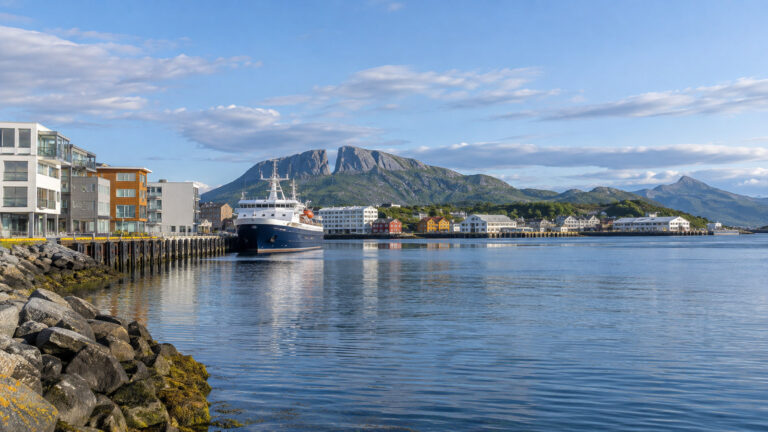
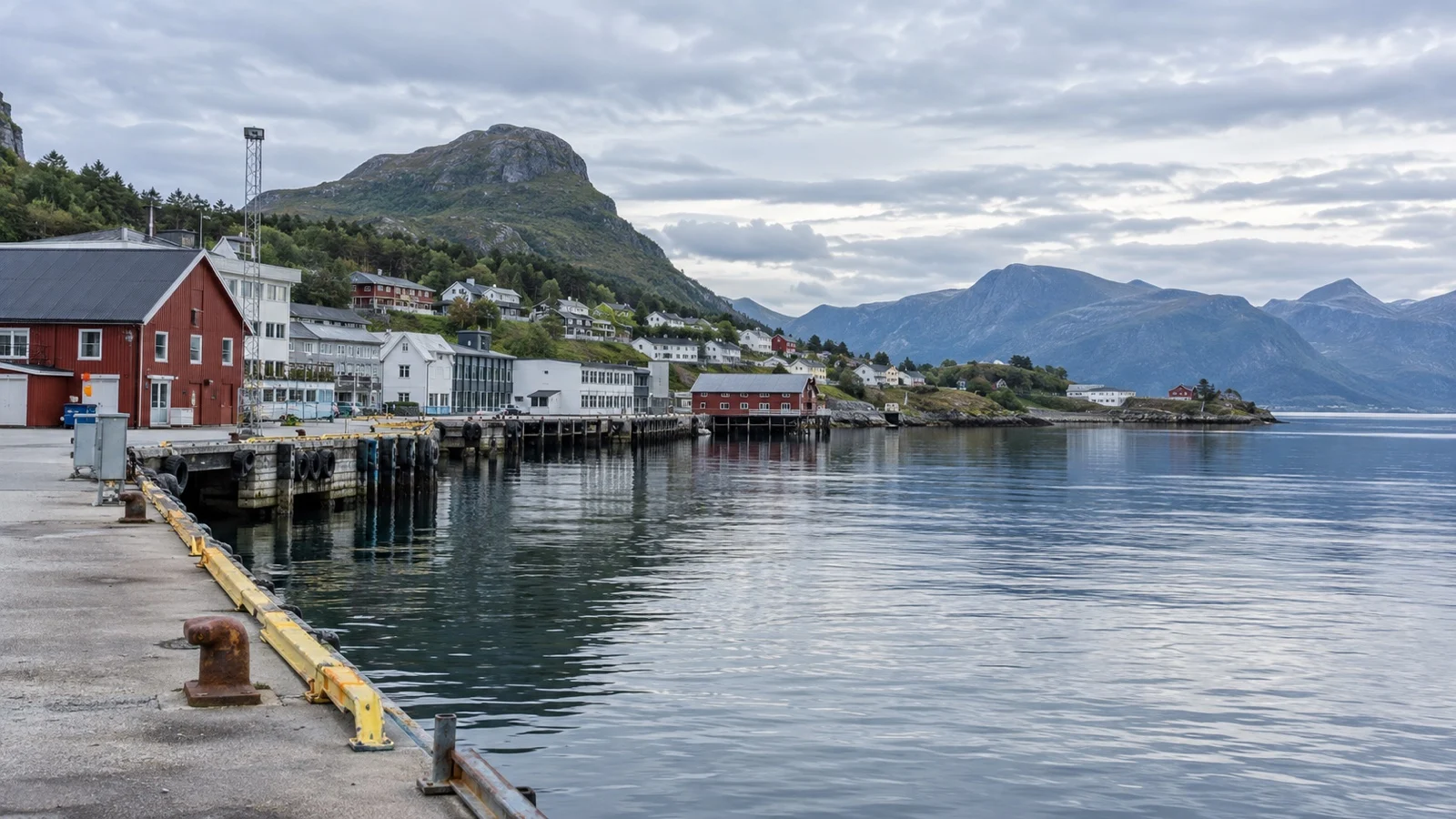
Hurtigruten’s Coastal Express ties up alongside at Ørnes, with no tender transfer. The official port address is Havnevn. 7, 8150 Ørnes, in the village center.
This is a working ferry stop first and a cruise attraction second. Freight and local passengers use the same gangway you do, and the ship is not lingering for your convenience.
The village sits on Meløyfjorden with steep peaks behind it, red warehouses clustered near the pier. It is small enough to take in the whole waterfront from the ship’s rail before you even walk down the gangway.
Ørnes cruise port quick facts
- Dock or berth: Alongside at the town pier, Havnevn. 7, in the middle of Ørnes village; no tender transfer.
- Into town: You are already there: the Ørnes Trade Post and village center are a short walk from the gangway.
- Currency and language: Norwegian krone (NOK); Norwegian is spoken locally, though English is common almost everywhere in port.
- Time zone: Central European Summer Time (CEST, UTC+2) in the cruise season, CET (UTC+1) in winter.
- Schedule: This is a short working-port call, so use the ship’s daily program and treat weather or operational changes as possible.
Getting your bearings in a village this size
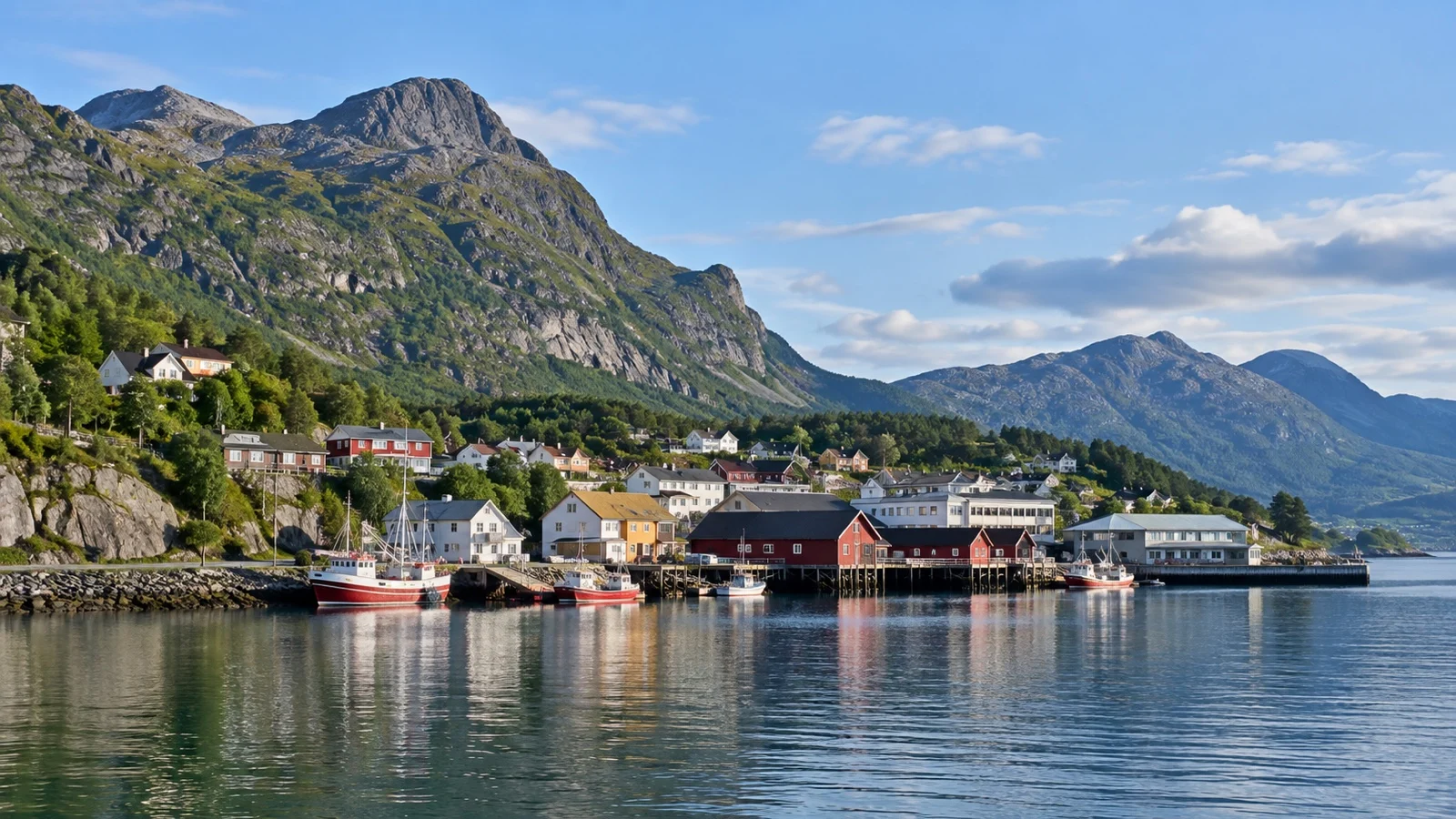
Ørnes is the administrative center and largest settlement in Meløy municipality, with just over 1,700 residents according to Hurtigruten’s current port guide. Its compact size is part of the appeal during a brief stop.
The historic Ørnes Trade Post sits close to the pier, with three preserved buildings covering trade history, everyday life, and the area’s wartime resistance story. A museum café and shop may also be available, but confirm opening hours before relying on them during a short call.
Meløya island lies just offshore to the west, and Meløyfjorden itself is the reason the village feels tucked away rather than exposed. There is no real promenade here, so treat Ørnes as a viewpoint and a departure point rather than a browsing destination.
The ship’s Svartisen excursion leaves Ørnes by bus for Holandsvik, while independent visitors need substantially more time than the routine port call allows. If glacier logistics are not part of your booking, stay close to the trade post and waterfront.
Svartisen, the glacier that makes the stop worth it
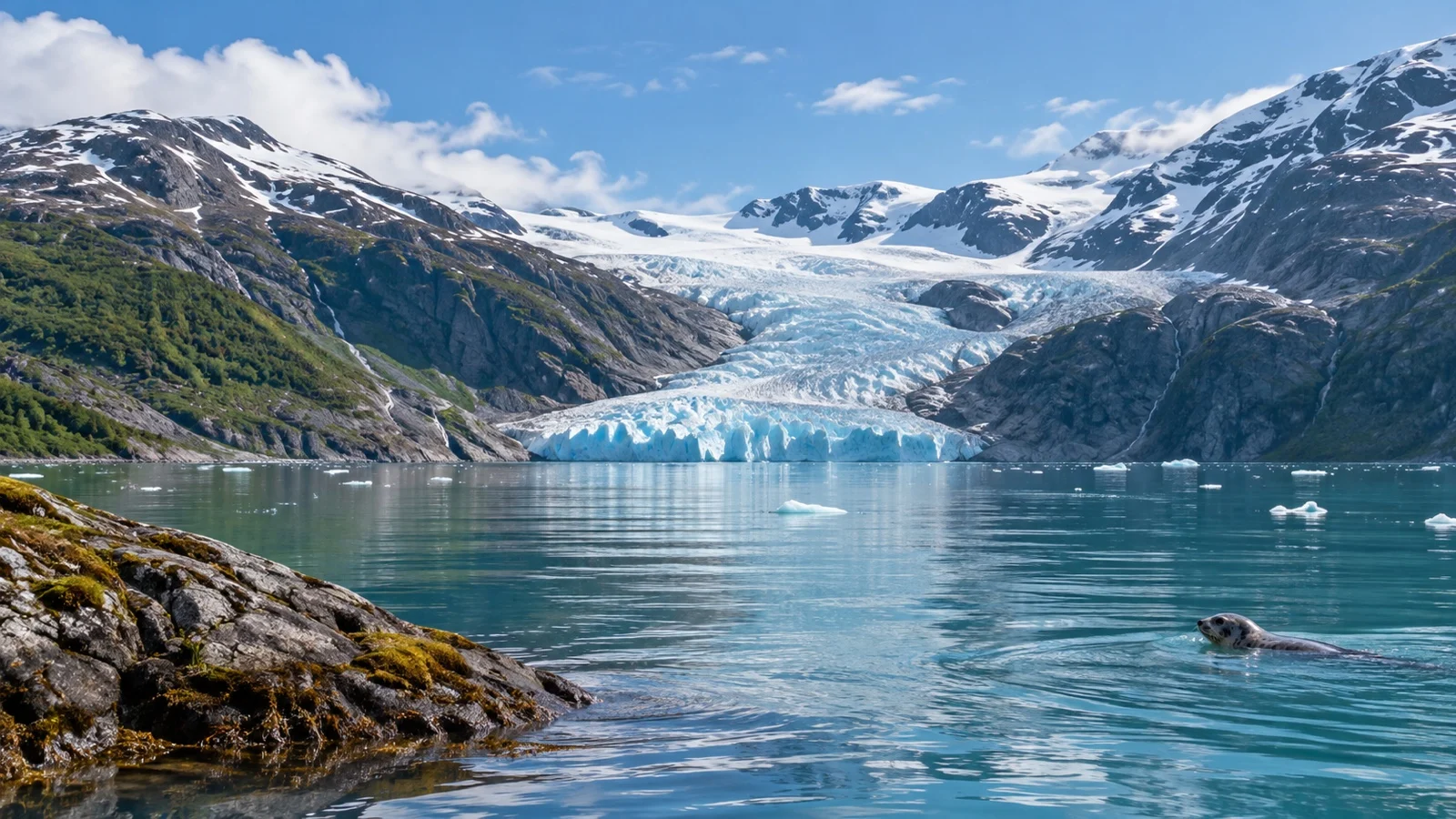
Svartisen is Norway’s second largest glacier and the largest ice cap in northern Scandinavia, widely regarded as Europe’s most accessible glacier. The name means black ice, for the deep blue-black color the compressed ice takes on in certain light.
The arm nearest Ørnes is Engabreen, reached across Holandsfjorden from the small settlement of Holandsvika. This guide to Engabreen and Austerdalsisen covers both arms of the ice cap, and Svartisen sits just south of Ørnes as the port’s headline reason to come ashore at all.
You are also, technically, inside the Arctic Circle here. The line is a stretch of coast rather than a single marker, and Ørnes’ position in Nordland puts the whole village on the Arctic side of it.
None of this is a hike you improvise from the pier. Getting from the ship to actual ice involves a bus, a boat, and a walk, and each leg has its own timing.
The bus, the boat, and the walk to the ice
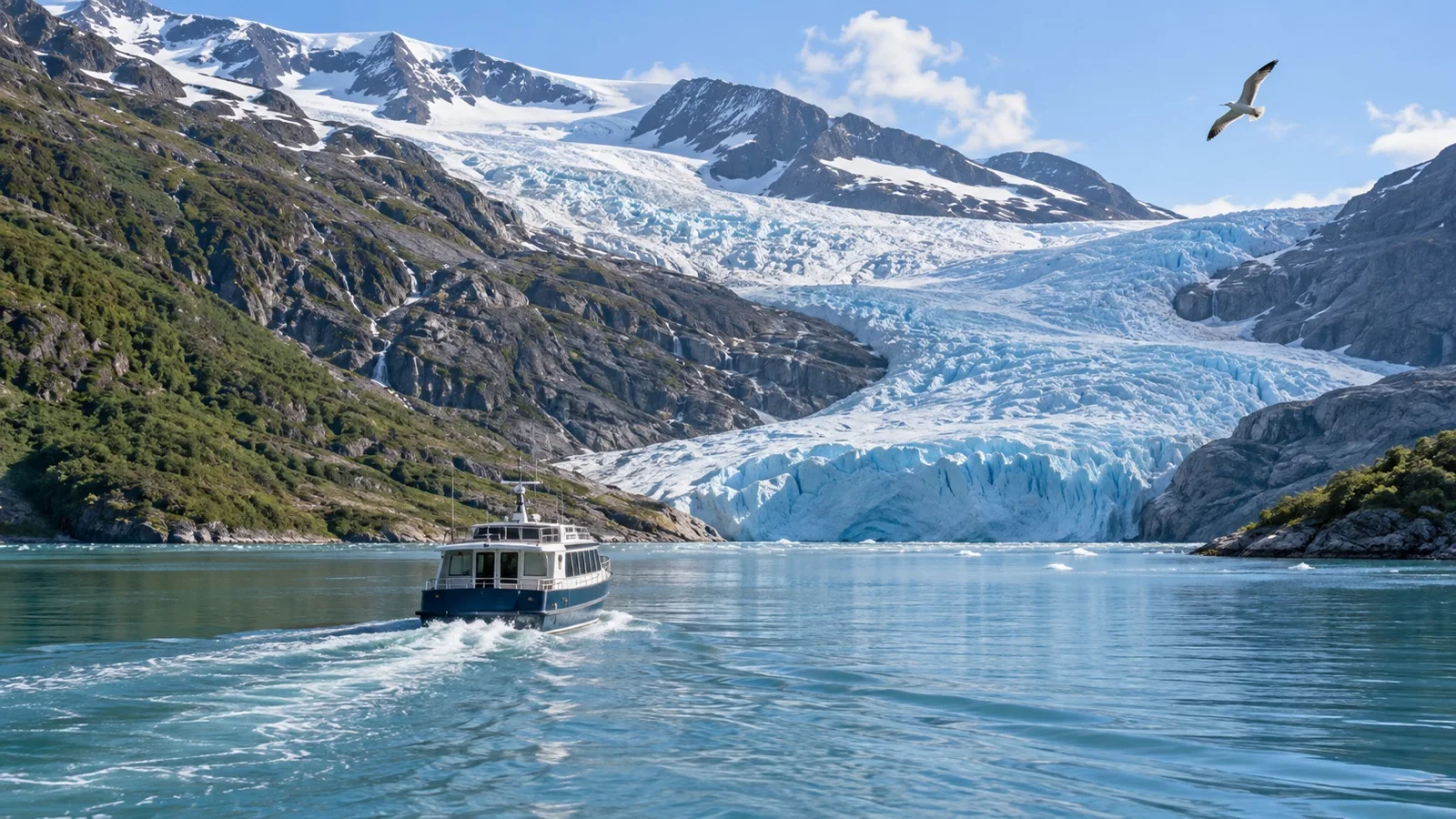
The ship excursion uses a guided bus to Holandsvik and a boat across Holandsfjorden, while independent visitors can use the tilSvartisen shuttle in season. Official sources describe the crossing as about 10 to 15 minutes.
From the Svartisen-side pier, tilSvartisen describes an approximately 3-kilometer gravel road before the climb toward the glacier begins. Good footwear is essential because the route beyond the pier is not a short paved stroll.
Hurtigruten currently sells this as a five-hour summer excursion starting from €299. The standard tour visits the tourist center and glacier viewpoint, and the operator explicitly says it does not go all the way up to the ice.
For actual ice contact, guided operators such as Meløy Adventure and Explore Svartisen run proper glacier treks with crampons, ice axes, and roped safety harnesses. Never approach the glacier’s edge without one of these guides, since large blocks of ice at the margin are unstable and can shift without warning.
Choose land, harbor, or glacier
Land: Walk the short village waterfront, visit the Ørnes Trade Post, and watch the ship from a bench rather than the gangway. This is the plan for a short call, or a day when the weather has already made the decision for you.
Harbor: Read the fjord, photograph the mountains behind the pier, and treat the stop as scenery rather than an itinerary. It costs almost nothing and is honestly enough for most passengers doing this coast for the views.
Glacier: Book the Svartisen excursion, in season, and let it own the entire call. Because the excursion returns you to the ship in Bodø rather than Ørnes, this option only works if your itinerary genuinely supports that handoff, so confirm it with the ship rather than assuming.
A realistic word on accessibility
The Svartisen excursion is not suitable for persons with limited mobility. That is not overcaution, it reflects an uneven boat landing, gravel underfoot, and a walk with no paved alternative.
Ørnes itself, right at the pier, is a gentler proposition. The trade post and the immediate waterfront are close and reasonably flat by Norwegian coastal standards, manageable for most visitors who can handle a modest walk.
The gap between those two facts is the whole story of this port. A short, easy village stop sits right next to a genuinely strenuous glacier excursion, and there is not much comfortable middle ground between them.
If mobility is a serious concern, treat the glacier as a view from the fjord rather than a destination underfoot, and confirm any tour’s terrain directly with the operator before booking.
Weather and safety
Ørnes sits on Meløyfjorden, but weather can still change quickly. Layers, a waterproof shell, and shoes with grip are sensible in any season.
Glacier travel adds a second layer of risk on top of ordinary Norwegian weather. Rain and snow make the approach to Engabreen slick, and the ice margin itself sheds unstable blocks without warning, which is exactly why guided access with proper equipment matters.
Norway’s emergency numbers are 112 for police, 113 for medical emergencies, and 110 for fire. Save them before you go ashore, glacier excursion or not.
Return timing
For a village-only visit, Ørnes gives you almost no buffer to lose. Coastal Express calls here run to a schedule measured in tens of minutes, not hours, so stay within easy sight of the pier unless you are on the ship’s own excursion.
The Svartisen excursion is the exception that proves the rule, because Hurtigruten builds the whole trip around a different rejoining point. Follow the excursion’s own instructions for where and when you meet the ship again, in Bodø rather than Ørnes, and do not treat the printed departure time at Ørnes as your deadline if you are on that tour.
If you are exploring independently near the pier, work back from all-aboard with the same margin you would use anywhere else on this coast. A quiet fjord village is an easy place to lose track of time looking at mountains.
How Ørnes fits a Norway cruise
Ørnes belongs to the working-ferry logic of the whole Coastal Express, and our guide to Hurtigruten’s ports explains why some of these Arctic calls are this short by design. Pair it with our broader Norway cruise ports overview if you are weighing this route against the fjord-country classics further south.
Northbound, Ørnes is one of the last calls before Bodø, so read our Bodø cruise port guide if your excursion, or your itinerary, lands you there next. And if you are sailing in the darker months instead of summer, our northern lights cruise guide covers what a stop this far north is actually worth for aurora odds.
The practical checks I would make before Ørnes
Confirm the alongside quay, direction, call length, and excursion code because the short port stop and the Svartisen tour are different operations. Hurtigruten’s official five-hour summer excursion leaves at Ørnes and rejoins the ship later in Bodø, so it is not an independent round trip from the quay.
Book the protected excursion if Svartisen is the priority and accept that it visits the tourist-center viewpoint rather than walking onto the glacier. The operator rates it moderate and unsuitable for limited mobility, with bus and boat transfers, so read the live price, clothing list, and cancellation terms before paying.
Do not approach or walk on glacier ice without an authorized specialist guide, and follow closures around protected terrain. Check Norway and Schengen entry rules, wind and boat conditions, wet surfaces, gangway access, and the exact reboarding point in Bodø.
Ørnes cruise port FAQs
Do cruise ships dock or tender at Ørnes?
Ships berth alongside at the town pier. There is no tender operation at Ørnes.
Can I visit Svartisen glacier without booking a tour?
Independently, you would need to arrange your own transport to Holandsvika and buy a ticket on the Isprins shuttle boat yourself, which is realistic if you have far more time than a cruise call allows. In practice nearly everyone doing this from the ship books the shore excursion, because the timing is built to fit a Coastal Express call.
Is the Svartisen excursion the same as walking on the glacier?
Not with Hurtigruten’s own standard shore excursion, which explicitly stops short of the ice itself. For actual glacier walking with crampons and a guide, book separately through a specialist local operator such as Meløy Adventure or Explore Svartisen.
How far is Ørnes from the Arctic Circle?
Ørnes sits inside the Arctic Circle already, rather than approaching it from the south. The Coastal Express crosses the official Arctic Circle line on the approach to this stretch of coast, so by the time you reach Ørnes you are already north of it.
The case for a short stop
Ørnes will never be the headline photo of a Norway cruise, and that is fine. It earns its place on the itinerary by being the closest the ship comes to a genuinely enormous piece of ice, not by being pretty at the pier.
Whether you book the glacier excursion or just watch Meløyfjorden go by, this is a stop that rewards knowing exactly what you are, and are not, going to get done in the time available.
How this guide was researched: This guide was independently checked on September 12, 2026, against Hurtigruten’s Ørnes guide, the official Svartisen excursion, the 2026 tilSvartisen timetable, and Visit Bodø. Reconfirm the quay, call length, excursion reboarding, boat schedule, weather, accessibility, costs, and final departure because live operations can change.