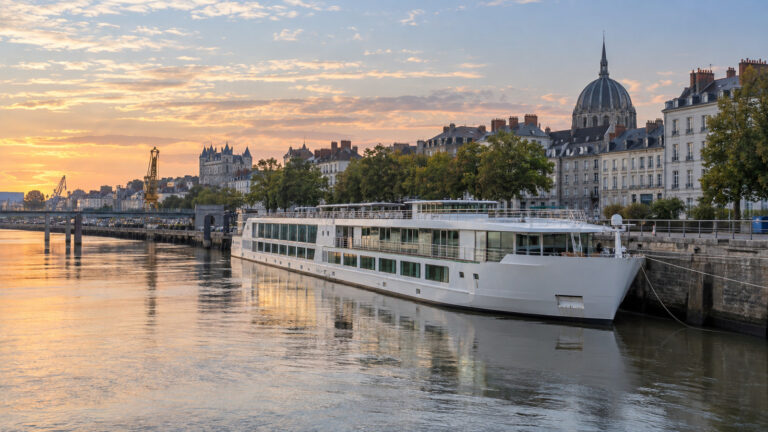
Strasbourg River Cruise Port: Kehl, Tram D and the Cathedral
Strasbourg river itineraries can use French port berths or a landing across the Rhine near Kehl, so the city name does not provide the transit route. Get the exact quay, then match it to Tram D, a ship transfer, accessibility needs, attraction reservations, and a safe return.
My quick take
Strasbourg is one of the best independent days on an Upper Rhine cruise. Once you reach the historic center, the cathedral, canals, Petite France, lunch and a sightseeing boat all fit into a compact loop.
The port is the awkward bit. Strasbourg’s official cruise facilities are east of the center, while a Kehl assignment puts you in another country and makes Tram D your new favorite piece of public infrastructure.
I would skip the panoramic motorcoach unless walking is difficult or your call is unusually short. The center rewards wandering, and no one needs a bus window between them and a warm tarte flambée.
If your itinerary also includes Breisach, read my guide to Breisach and Strasbourg’s cross-border berths. That article compares the two calls, while this one stays focused on building a practical Strasbourg day.
Strasbourg river cruise port quick facts
- Country: France, unless your assigned landing is in Kehl, Germany.
- River: Rhine port basins and connecting waterways rather than the postcard canals around Petite France.
- Main Strasbourg berths: Quai des Belges for ships up to about 360 feet, plus the Commerce and Industry basins around Rue de la Minoterie for ships up to about 443 feet.
- Kehl: Some boarding documents use a German-side landing. Trust the address supplied by your cruise line, not the city name printed in the brochure.
- Into Town: Tram, ship shuttle, or taxi. Quai des Belges is five minutes from Place d’Islande; other berths require a longer transfer.
- Currency and Language: Euro (€). French is official in Strasbourg; German is spoken in Kehl, and English is common at major visitor sites.
- Time Zone: Central European Time, UTC+1 in winter and UTC+2 during daylight saving time.
- Call reliability: Rhine water levels and operational changes can occasionally shorten, relocate, or cancel the call; no verified missed-call percentage is published.
- Tenders: None. River ships use a gangway, although you may cross another vessel when ships are rafted together.
- Best independent plan: Cathedral and astronomical clock first, Petite France on foot, lunch, then Batorama if time and energy allow.
Where river cruise ships dock in Strasbourg
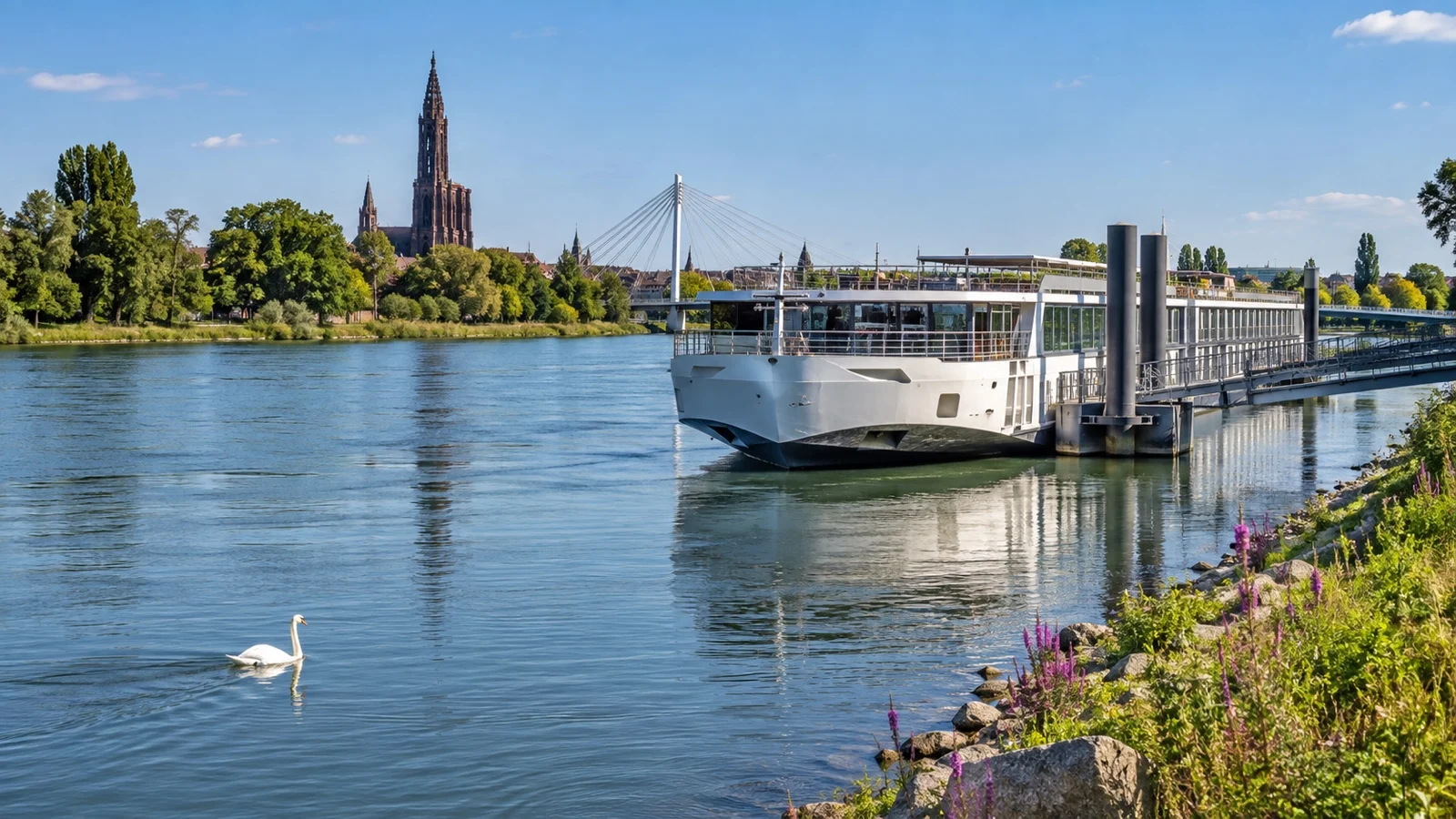
The reassuring answer is that Strasbourg has real river cruise infrastructure, not one lonely bollard and a hopeful sign. The less reassuring answer is that the infrastructure is spread across several basins.
The Port of Strasbourg lists three berths for vessels up to about 360 feet at the Remparts and Dusuzeau basins along Quai des Belges. It also lists berths for ships up to about 443 feet at the Commerce basin on Rue de la Minoterie and in the Industry basin.
That split matters because the river ship you can see on a map is not necessarily the ship you will board. Berths are assigned operationally, so your final documents and the information at reception outrank every blog, map pin and taxi driver’s educated guess.
Quai des Belges and Place d’Islande
For the smaller-vessel landing area, the port says the Place d’Islande tram stop is about a five-minute walk away. This is the simplest Strasbourg-side arrival for independent travelers because public transit is close and clearly identified.
Do not confuse “close to public transit” with “beside the cathedral.” You still need to ride toward the center, and you should leave enough time to reverse the journey without sprinting down the quay.
Rue de la Minoterie and the larger-ship basins
The larger-ship facilities sit around the Commerce and Industry basins. The port places urban bus 2 about 0.4 mile from Rue de la Minoterie and the nearest tram toward the center a little over half a mile away.
Use the cruise-line shuttle when one is offered. If you are going independently, ask reception for the nearest stop and the exact gate you must use on the return.
What if the ship is in Kehl?
Kehl sits directly across the Rhine in Germany, and the border is far less dramatic than the itinerary makes it sound. There is no routine passport booth between the two cities, but temporary checks can occur, so carry the identification your cruise line requires.
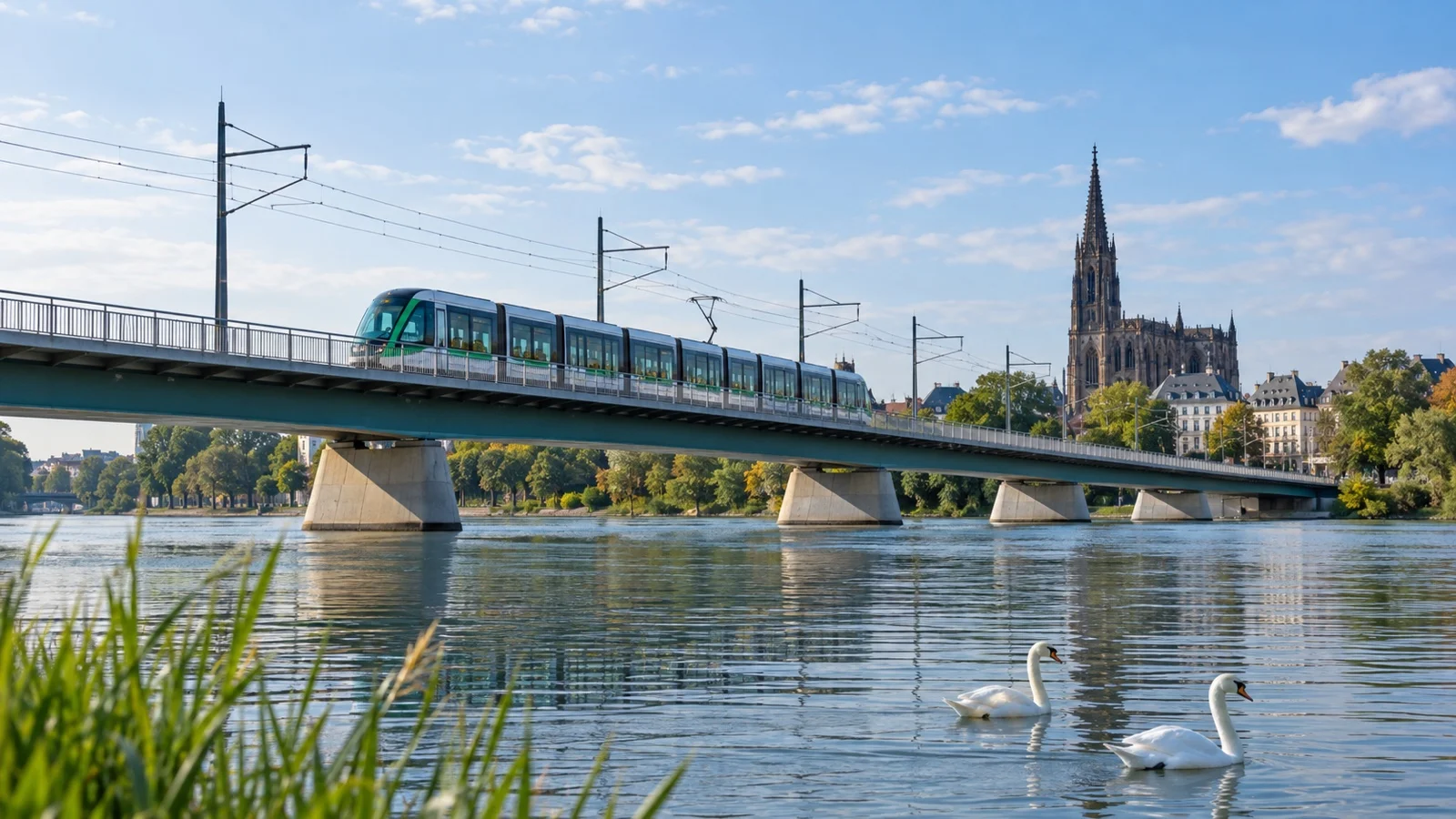
Tram D crosses the river and continues into central Strasbourg. The official CTS fare page says a one-way ticket is valid for one hour, including transfers, throughout the Strasbourg metropolitan network and as far as Kehl on Line D.
As of August 2026, that single journey costs €1.90 through the CTS app, on a Badgéo card or when reloading a contactless ticket. Buying aboard a bus costs more, and tram tickets should be bought before boarding.
The German Deutschlandticket is not a substitute for a cross-border Strasbourg ticket. CTS states that it is valid on Tram D only between Kehl Bahnhof and Kehl Rathaus, not for the ride into France.
How to get from the berth to the old town
Your useful target is not “Strasbourg center” but a specific stop near the sights. From Kehl, Langstross Grand’Rue is convenient for the cathedral, while Homme de Fer is the usual central interchange when the full Line D route is operating.
A ship shuttle is often the easiest answer from Rue de la Minoterie. From Quai des Belges, the nearby tram is usually more flexible because you can return when you choose instead of planning your afternoon around a motorcoach timetable.
From Kehl, use Tram D and check the live CTS journey planner before leaving the vessel. Engineering work, demonstrations and large events can alter central tram service, and a screenshot taken at breakfast ages better than a vague memory at four o’clock.
A taxi makes sense for limited mobility, heavy luggage or an early embarkation. Have the full berth address ready because “Strasbourg river cruise port” describes a collection of facilities, not one terminal door.
The Strasbourg port day I would actually do
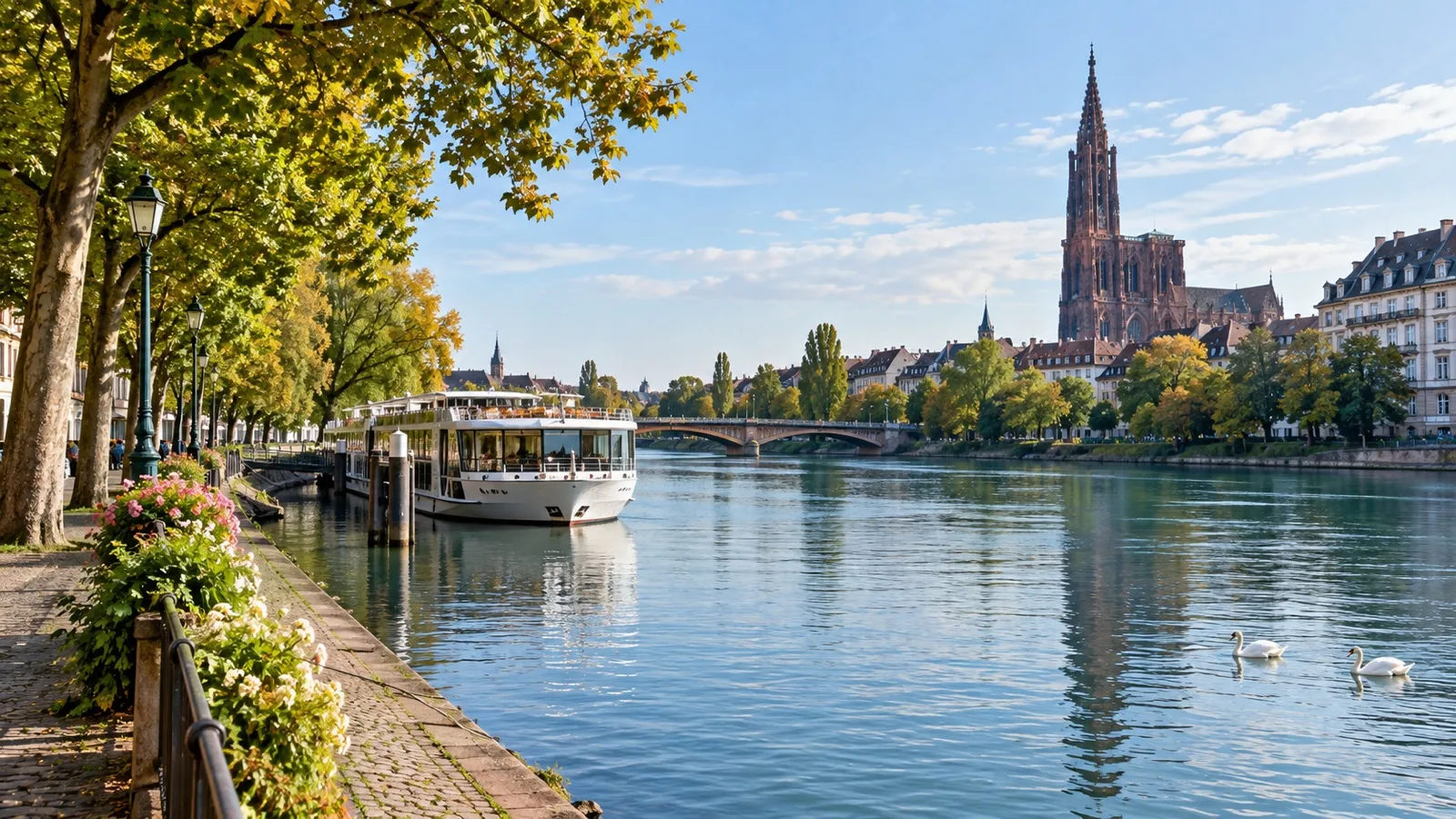
Go to the cathedral first, especially if you want the astronomical clock presentation. The cathedral’s current instructions say clock access begins at the Saint-Michel entrance at 11:30, followed by a multilingual film at noon and the automata at 12:30.
The adult contribution is currently €4, with same-day tickets and no advance reservations. The presentation does not run on Sundays, specified feast days or during the Christmas-market period, so check the official page rather than treating 12:30 as a law of physics.
After the cathedral, walk west through the lanes of Grande-Île toward Petite France. You do not need a rigid route because the center is compact, the cathedral spire is an excellent compass and getting mildly lost here is more pleasant than following a numbered paddle.
Have lunch before the peak crowd if you can. A winstub is the traditional choice, and this is the place for choucroute, baeckeoffe or tarte flambée rather than a sandwich eaten while glaring at your watch.
Use the afternoon for a Batorama circuit or the Neustadt, depending on your legs. The boat is restful and scenic, while the Neustadt gives better context for Strasbourg’s complicated French and German history.
Set a firm departure time from the center, then add a cushion for the tram and the walk through the port. River ships wait for their own excursions, not for independent travelers who discovered one last pastry.
What is worth your limited time
Strasbourg Cathedral
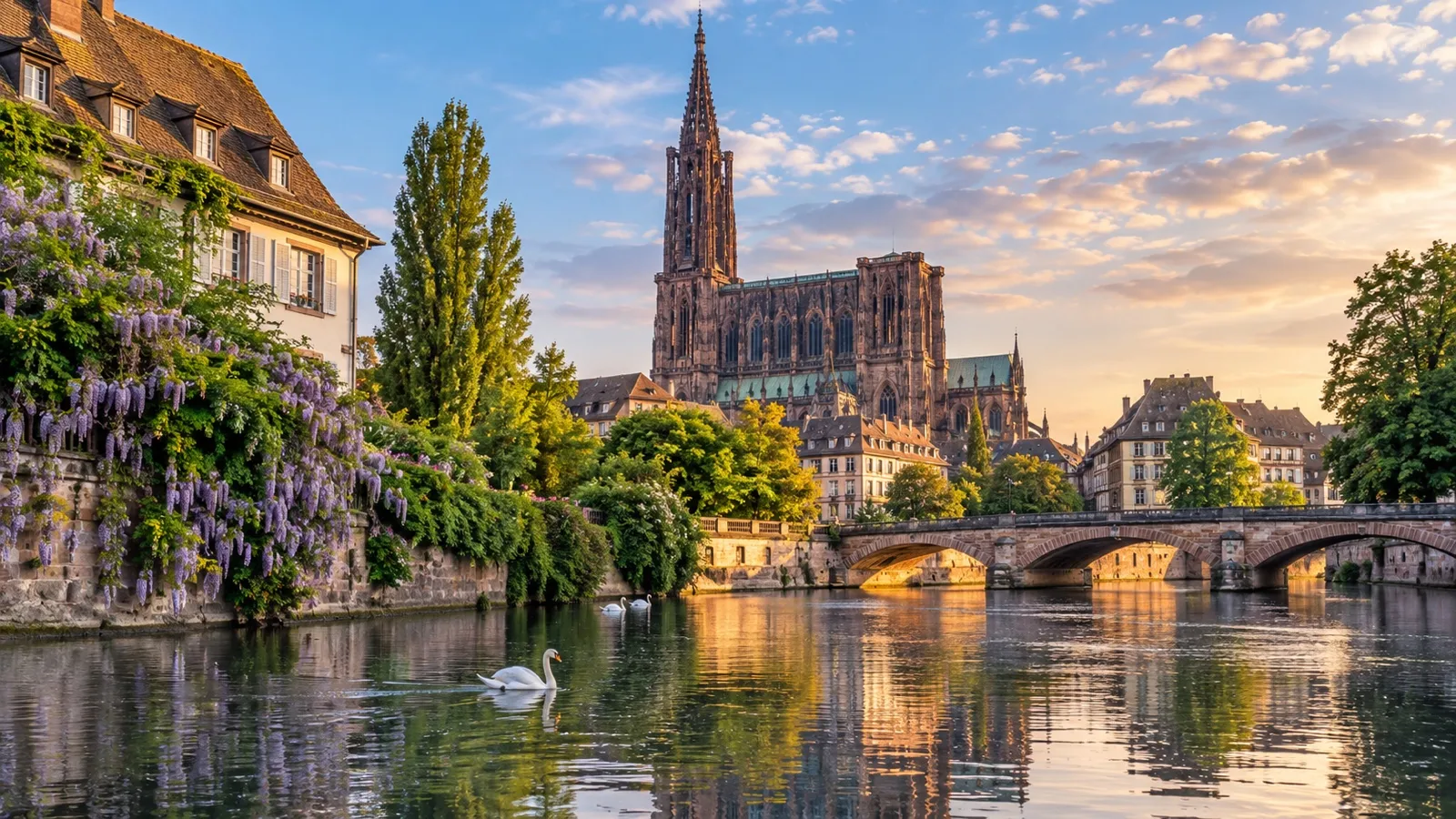
Notre-Dame de Strasbourg is the non-negotiable sight. Its pink sandstone west front is almost indecently detailed, and the viewing platform sits about 215 feet above the square after 330 steps.
Entry to the nave is free, while the clock presentation and platform are separate experiences. The platform is stairs-only and separately ticketed, so read the day’s signs before joining a line.
Grande-Île and Petite France
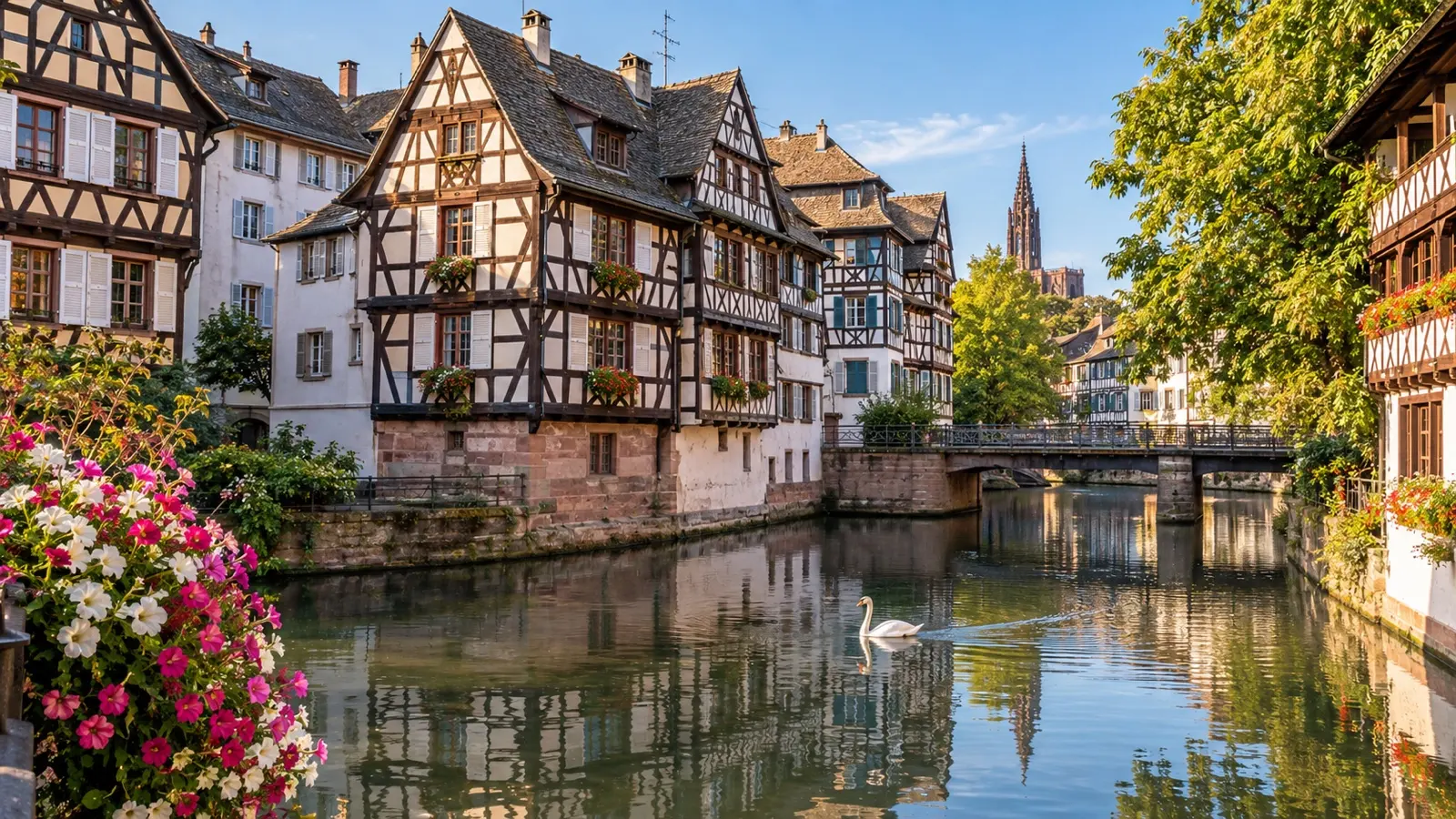
Grande-Île is the historic center enclosed by branches of the Ill. Petite France occupies its southwestern corner, where half-timbered houses, former mills and covered bridges cluster around the water.
The whole area photographs beautifully, which is another way of saying it becomes busy. Walk it before lunch or late in the call, when tour groups have moved on and the bridges belong to people rather than selfie sticks.
A Batorama city cruise
Yes, taking another boat during a river cruise sounds like ordering toast for dessert. It works because Batorama’s smaller vessels enter the central waterways your Rhine ship cannot reach.
The standard circuit generally lasts 60 to 70 minutes and passes the historic center, Neustadt and European institutions. Batorama says its cathedral-area boarding point is about 500 feet from Notre-Dame, although pier works in 2026 mean your ticket may direct you to Quai au Sable instead.
Neustadt
Strasbourg is not only medieval lanes and timbered houses. The Neustadt was planned under German administration after 1871, with broad avenues, monumental public buildings and a very different idea of what an important city should look like.
UNESCO extended Strasbourg’s World Heritage property in 2017 to include the Neustadt alongside Grande-Île. The combined listing is the reason the city makes more sense when you walk beyond the postcard quarter.
The European quarter
The European Parliament, Council of Europe and European Court of Human Rights sit northeast of the center. Their architecture is interesting, but I would choose the cathedral and Petite France first on a short inaugural visit.
Visit the quarter when politics is your particular interest or your call extends into evening. Otherwise, see it from the Batorama boat and keep your walking time for the historic center.
Ship excursion or Strasbourg on your own?
Strasbourg is well suited to an independent day because the main sights are close together and public transit is straightforward. The official walking tour is useful for history, but a panoramic motorcoach adds little once it drops you near the center.
Choose the ship excursion if you need guaranteed transport from a remote berth, if walking on cobbles is difficult or if the call is short enough that one tram problem would consume the morning. The other good reason is an excursion beyond Strasbourg to the Alsace wine villages.
Do not try to combine central Strasbourg, Colmar and several wine villages in one normal port day. That is not an itinerary, it is a collection of motorcoach seats.
Accessibility at Strasbourg river cruise port
The tram is the strongest part of the day for many travelers with limited mobility. The historic center is mostly flat, but cobbles, crowded lanes and the cathedral platform stairs still require realistic planning.
The unpredictable part is rafting. If your vessel is outside another ship, reaching land may require crossing a neighboring lobby or sun deck, and mismatched deck heights can introduce steps that the crew cannot remove.
Ask the cruise line about the actual berth and rafting arrangement as close to arrival as possible. My guide to river cruise rafting and double docking explains why no operator can guarantee the inside position months ahead.
Batorama departure piers can shift during works, and accessibility depends on the assigned vessel and boarding point. Check the pier shown on your ticket and contact the operator before building the boat trip into your day.
For the wider reality of gangways, motorcoaches and mobility equipment, see my guide to accessible river cruising. The honest answer is that the city may be step-free while the route from cabin to quay is not.
Strasbourg station and airport transfers
Strasbourg-Ville train station is the useful transport hub for pre-cruise stays, onward trains and airport connections. It is not beside the river berths, so budget for a tram, taxi or cruise-line transfer between the station and ship.
The official airport site says regional trains run up to five times per hour and take eight minutes between Strasbourg Airport and the main station. A covered footbridge connects the airport terminal with the rail platform.
This makes Strasbourg one of the easier European river embarkation cities by air, but only after you separate the journey into two parts. First reach the central station, then continue to your precise berth address.
If your cruise begins farther south, my Basel river cruise port guide covers the other major Upper Rhine gateway. Basel also rewards travelers who separate the published city name from the exact place their ship is tied up.
When to visit Strasbourg by river
The main Rhine season runs from spring through the Christmas markets. May, June and September offer the best balance for walking, with longer days and less heat than the middle of summer.
July and August can feel hot in the Rhine plain, particularly on exposed quays and crowded tram platforms. Carry water and remember that cathedral dress rules and summer heat are not natural allies.
December is the famous season, and Strasbourg treats Christmas less like a holiday than a municipal operating system. Expect crowds, security controls, altered tram movements near Grande-Île and the need to leave more time for every short walk.
High or low Rhine levels can change sailing schedules even when Strasbourg itself looks perfectly calm. Treat the printed itinerary as a plan, then read the daily program as the version that actually matters.
Quick answers
Do river cruises dock in central Strasbourg?
Not in the historic center, because the main cruise berths are in port basins east of Grande-Île or, on some assignments, across the Rhine in Kehl.
Can I walk from the Strasbourg river cruise port to the cathedral?
It may be physically possible from a Strasbourg-side berth, but a tram or shuttle is usually a better use of limited port time.
How do I reach Strasbourg from a berth in Kehl?
Use Tram D with a CTS ticket valid across the border, and check the live service before leaving the ship.
Do I need my passport to take the tram from Kehl to Strasbourg?
There is normally no routine border control inside the Schengen area, but carry the identification specified by your cruise line because spot checks remain possible.
Is Strasbourg river cruise port wheelchair accessible?
The city and tram network are comparatively manageable, but gangway gradient, rafting and the exact berth can prevent a fully step-free route.
Can I see Strasbourg Cathedral and Petite France in one port call?
Usually, because they are within the same compact historic center. Confirm your all-aboard time before adding lunch or a sightseeing boat.
Is Batorama worth doing when I am already on a river cruise?
Yes, because its small sightseeing boats enter the Ill waterways around the old city that a Rhine cruise vessel cannot navigate.
How I would turn the exact quay into a Strasbourg plan
Port of Strasbourg lists river-cruise context, but the line’s address decides whether you begin in Port du Rhin, another French quay, or Kehl. Save the street name and nearest Tram D stop instead of relying on “Strasbourg port.”
The cathedral, Grande Île, and Petite France make a strong independent day, while the astronomical clock and popular museums may need timed planning. Both France and Germany are in Schengen, but travelers still need current entry permission for the itinerary and should carry the documents requested by the line.
From either side of the Rhine, choose a return that reaches the gangway at least 45 minutes before all-aboard and keep a taxi backup. Rafting can add stairs between ships, so confirm step-free tram stops, cobblestones, attraction elevators, and the actual gangway route.
The last word
Strasbourg is easy once you stop pretending the port and the city center are the same place. Find the berth, choose the correct transfer and save your walking energy for somewhere with gargoyles.
If the ship is in Kehl, Tram D turns the international complication into an ordinary city ride. If it is in Strasbourg’s port, the shuttle or nearby tram does the same job with less passport-related comedy.
Go to the cathedral before the clock crowd, walk Petite France and take the little boat if your feet vote for it. Then leave one pastry’s worth of spare time for the trip back to the gangway.
How this guide was researched: Unless a first-hand visit is explicitly identified above, this guide is based on independent research using official port, transit, tourism, airport, UNESCO and attraction sources. Berths were checked against the Port of Strasbourg, fares against CTS, cathedral details against the Strasbourg tourism office, Batorama arrangements against the operator, and airport transfers against Strasbourg Airport.
Logistics and time-sensitive details were reviewed on September 12, 2026. See our Editorial Policy.