Ajaccio Cruise Port Guide: Corsica & Napoleon’s Home
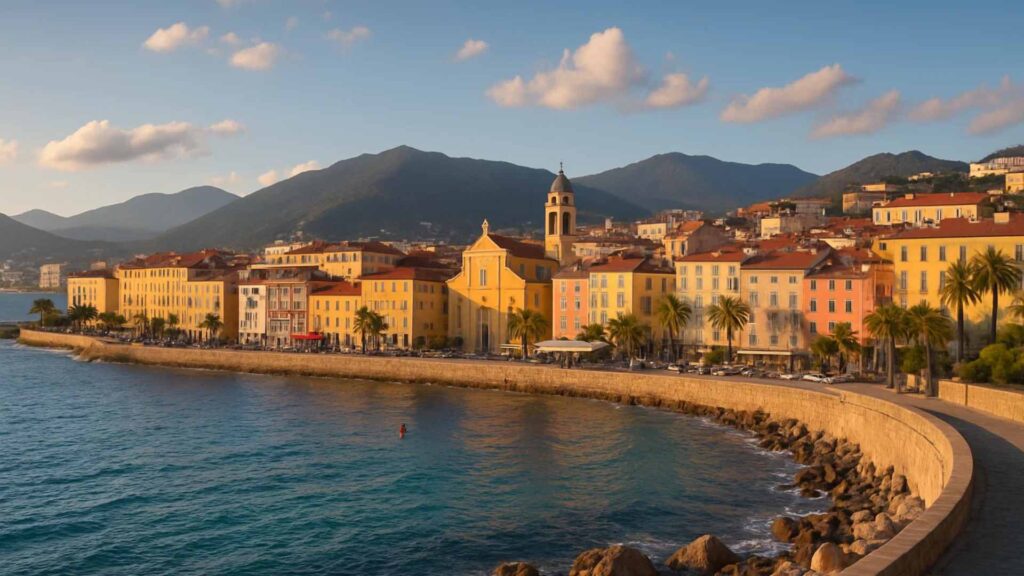
Step off the ship and Ajaccio is already at your feet. Napoleon’s hometown hands you a walkable old town, warm beaches, and the Sanguinaires islands, all inside one easy Corsican port day.
My quick take
Ajaccio can be one of the Mediterranean’s easiest port days when the ship gets a central berth. Confirm the landing first, then build a relaxed history-and-waterfront plan around the short old-town distances.
It rewards a slow morning of history and an afternoon by the water. If you like your port days walkable and unhurried, this one is a gift.
Ajaccio Cruise Port Quick Facts
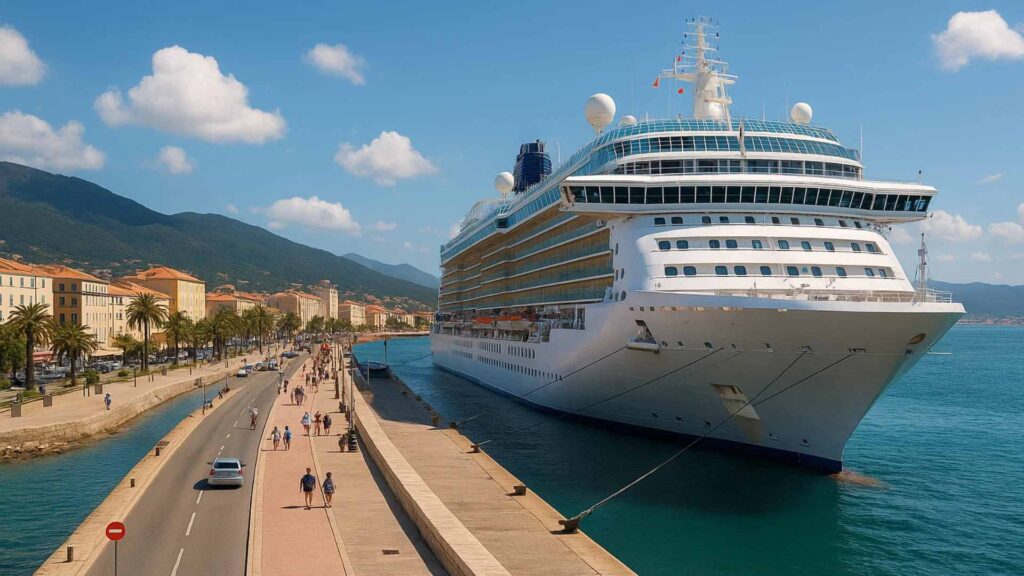
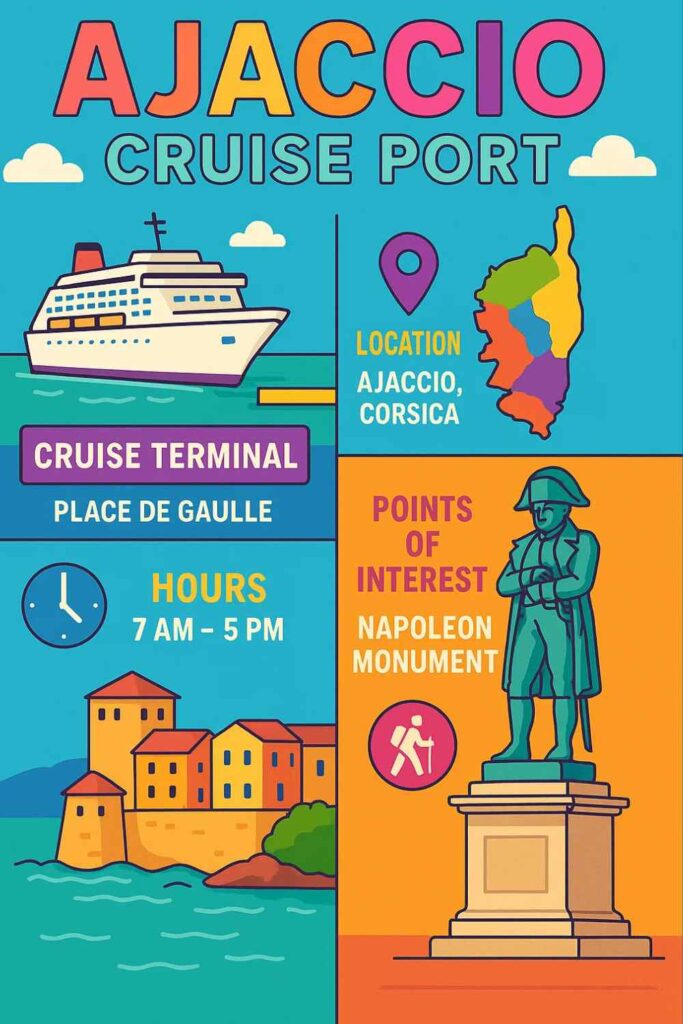
- Where you land: usually at a central Port of Ajaccio berth near the old town, although the assigned quay or an occasional tender changes the first mile. Check the ship’s daily notice and Ajaccio Tourisme before planning to walk.
- Dock or tender: Most calls berth alongside, but berth availability and ship size can require a different quay or tender. Use the port and ship assignment for your date.
- Into town: A flat 3 to 5 minute walk puts you in the old town.
- Currency and language: The euro (EUR), and French, with Corsican spoken alongside it and English common in the tourist trade.
- Time zone: Central European Summer Time (CEST, UTC+2) through the cruise season, CET (UTC+1) in winter.
- Weather resilience: The sheltered harbor often allows ships to berth, but every captain makes the final call based on conditions and port instructions.
Where you actually dock, and how easy the walk in is
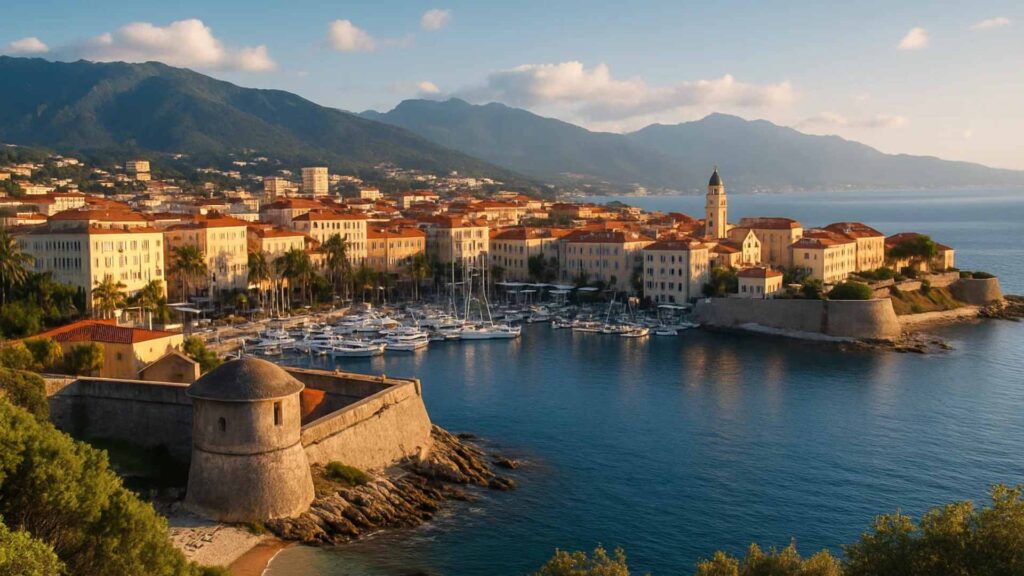
Many ships berth centrally near the old town, but Ajaccio can assign other quays and occasionally a tender. Confirm the daily landing before relying on a three-minute walk, especially when several ferries and cruise ships share the harbor.
From the gangway it is a short, level stroll to the first cafes and shady squares. The tourist information desk near the port hands out city maps if you want your bearings before you wander.
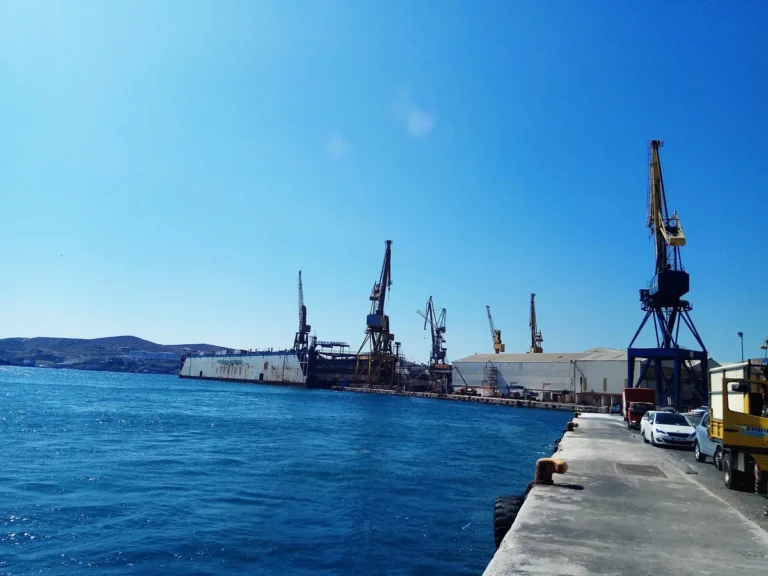
The quay is shared with ferries to Marseille, Nice, and Sardinia, so expect a busy working harbor. That mix is part of the charm, and it means taxis and services cluster right where you land.
A small terminal building covers the basics with restrooms and a taxi rank just outside the gate. You will not need to arrange transport simply to start exploring, because the town begins right there.
Getting around
Ajaccio is one of the most walkable ports you will ever call at. Nearly everything in the historic center sits within a 10 to 15 minute stroll of the ship.
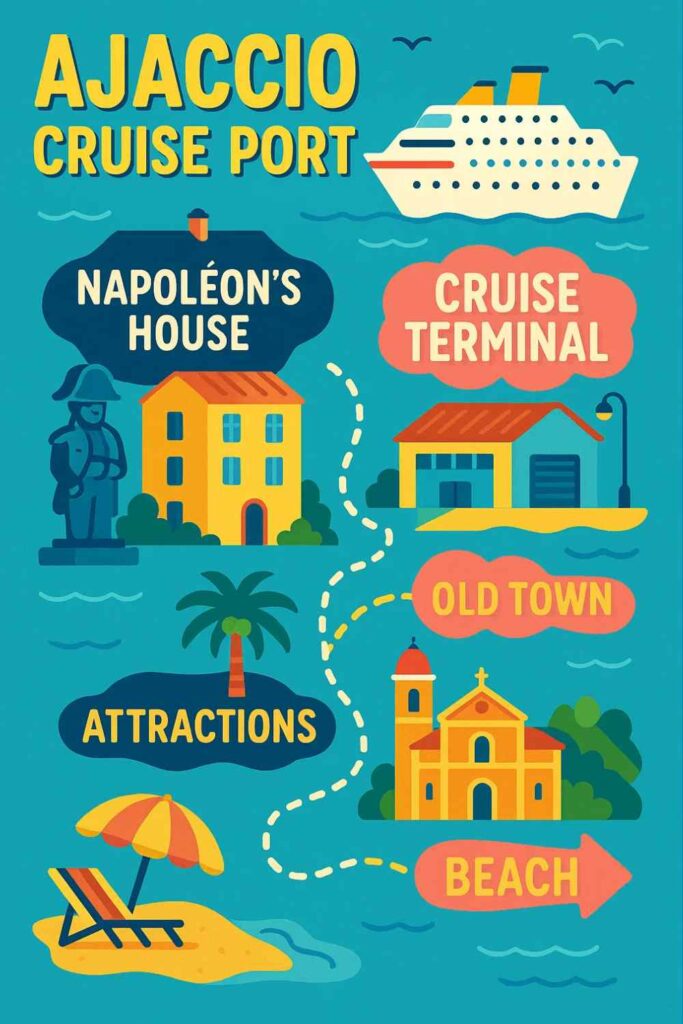
Maison Bonaparte is about a 5 minute walk, the cathedral a couple of minutes more, and the seafront promenade opens up almost as soon as you step off. Rue Fesch, the pedestrian shopping street, runs just a block or two up from the water.
Taxis wait right outside the terminal for trips further afield, like the Sanguinaires headland or the beaches south of town. City buses also run, and a seasonal service links the center with the Parata peninsula for the islands.
For most one-day visitors, though, your own two feet do the job. Wear comfortable shoes, since the old town lanes are handsome but uneven.
The stops I would actually spend time on
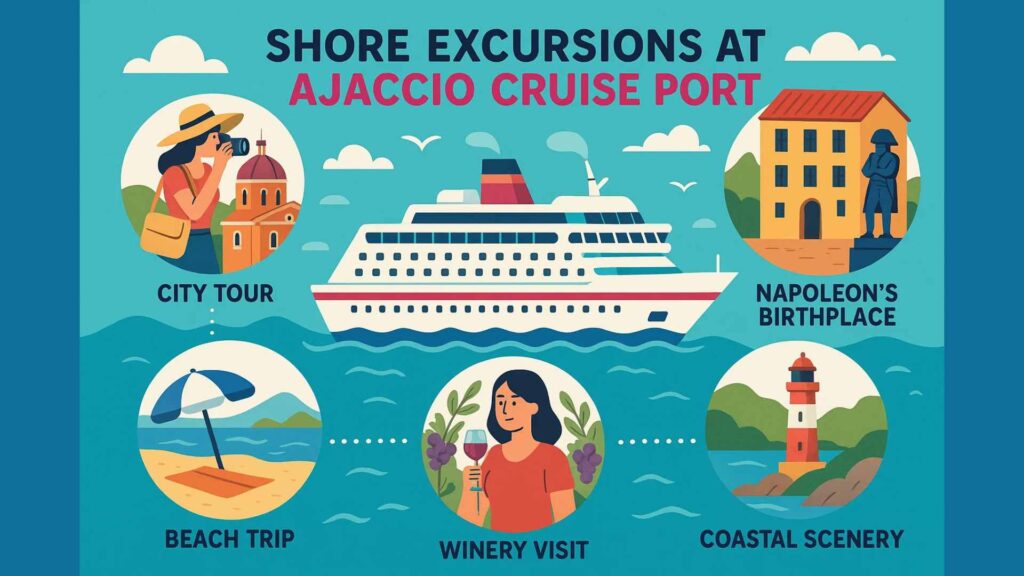
You cannot do all of Corsica in a day, so I focus on the handful of places that make Ajaccio feel like Ajaccio. Here is where I would put my hours.
Ajaccio packs a surprising amount into a compact center, so you can mix history and beach without rushing. Pick two or three of these and you will still have time to linger over a long lunch.
Maison Bonaparte
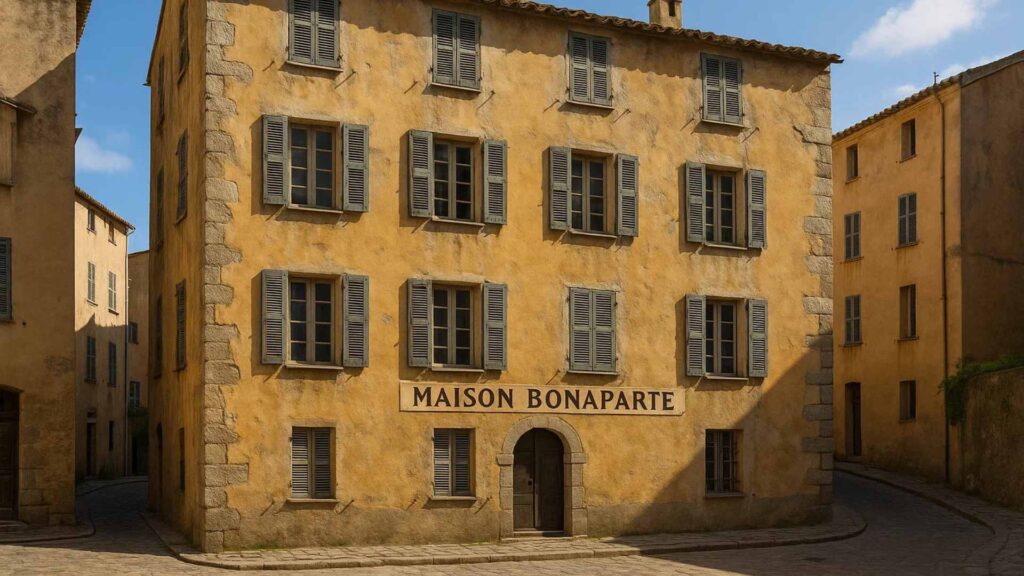
This is the family townhouse where Napoleon grew up, now a national museum of period rooms and Bonaparte history. It is a short walk from the quay and a lovely, cool escape on a hot morning.
Allow about 45 to 60 minutes and reserve when the national museum’s current system requires it, because hours and weekly closures vary by season. The historic house has stairs and constrained rooms, so check current accessibility before buying.
Fun fact: Napoleon was born in this very house on 15 August 1769, and his birth bedroom is still the centerpiece of the visit.
Place Foch and the cathedral
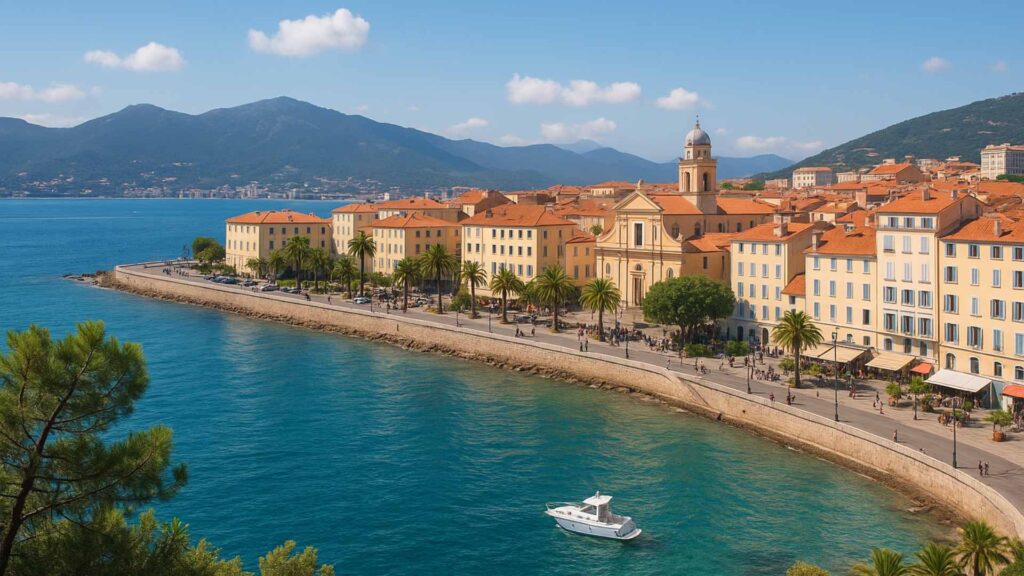
Place Foch is the leafy heart of town, lined with palms, cafes, and a fountain topped by a statue of Napoleon. It is my favorite spot to sit for ten minutes and just watch Ajaccio go about its day.
A couple of minutes away stands the cathedral where Napoleon was baptized. It is small and dim and worth a quiet look inside.
Les Sanguinaires and Pointe de la Parata
West of the city, the Parata headland points out toward the Sanguinaires, a little archipelago famous for its flamboyant sunsets. Boats run out to the islands seasonally, and the coastal walk alone is worth the taxi fare.
The headland is worthwhile even when a boat does not fit, because a taxi or current city-bus route reaches Pointe de la Parata. Allow 90 minutes to return from the headland or a coastal boat, and do not use the last public departure.
Fun fact: A 16th-century Genoese watchtower still stands on the largest island, Mezzu Mare, on the very site of today’s lighthouse.
Plage de Ricanto and the city beaches
If sand is what you are after, the long Plage de Ricanto stretches along the bay southeast of town toward the airport. Closer in, Plage Saint-Francois sits within an easy walk of the port for a quick dip.
Bring a towel and reef-safe sun cream, because shade is limited. The water here is calm and gloriously clear on a settled summer day.
Palais Fesch Museum
Founded on the collection of Napoleon’s uncle, Cardinal Fesch, this fine-arts museum sits on Rue Fesch a few minutes from the quay. It is a genuine surprise for a town this size.
You can browse the museum’s story on the official Corsican tourism website before you go. Allow an hour if Italian old masters are your thing.
Fun fact: The Palais Fesch holds the largest collection of Italian paintings in France after the Louvre, with works by Botticelli and Titian.
How I would plan the day
I like to front-load the history while the town is cool and quiet. Walk off the ship, grab a coffee on Place Foch, then head straight to Maison Bonaparte before the tour groups arrive.
Mid-morning is for the cathedral, Rue Fesch, and the Palais Fesch if you fancy it. Many small shops and museums pause from roughly 12:30 to 2:30, so time your lunch around that lull.
Lunch is a highlight in its own right, so look for Corsican charcuterie, brocciu cheese, and a plate of fresh seafood. A shaded terrace near the covered market is my idea of a perfect midday pause.
Afternoons belong to the water, whether that is a beach lounge or a taxi out to Pointe de la Parata. Leave a comfortable buffer and aim to be back at the quay well before all-aboard.
A central walking day needs a 60-minute return margin, while Parata, Ricanto, or a seasonal boat deserves 90 minutes. Keep a nearby fallback such as Saint-François Beach or Palais Fesch for wind, heat, or a shortened call.
A realistic word on accessibility
The port side of Ajaccio is genuinely kind to slower walkers. The quay is flat, the town is close, and you avoid the tenders that make so many other ports tricky.
Inland, the picture is more mixed. Old-town lanes are cobbled and uneven, and historic sites like Maison Bonaparte include stairs with limited step-free access.
Wheelchair and stroller users can still enjoy the seafront promenade and the main squares with ease. If mobility is a concern, a flat waterfront morning plus a taxi to a viewpoint is a fine plan.
When to go, and the weather
Ajaccio has a classic Mediterranean climate with warm, dry summers and mild winters. Summer highs commonly reach roughly 82 to 90°F, so shade and water matter.
My sweet spot is May, June, or September, when the days are warm but the crowds thin out. For more on Corsica’s seasons and beaches, the official France tourism site is a solid starting point.
Check the Port of Ajaccio schedule because simultaneous ships, ferries, and independent visitors determine the real crowd level. Reserve Maison Bonaparte first, then use the flexible beach or waterfront portion around it.
Quick answers
Do cruise ships dock or tender in Ajaccio?
Most berth alongside near the old town, but a different quay or tender can be assigned, so check the daily notice.
How far is the old town from the ship?
It is a flat 3 to 5 minute walk, with the main squares and Maison Bonaparte only a few minutes beyond.
Can I visit the Sanguinaires islands on a port day?
Yes, if your ship stays late enough, since seasonal boats run out from town and the coast road reaches Pointe de la Parata by taxi.
What currency do I need?
The euro, and cards work almost everywhere, though a little cash is handy for cafes and short taxi rides.
How Ajaccio compares
If you love a walk-off-the-ship port, Ajaccio beats most of its neighbors for sheer convenience. Compare it with Marseille, where the terminal sits well outside the Old Port and you lean on a shuttle to reach the sights.
It also feels calmer than the Riviera call at Nice and Villefranche, which usually means a tender into the bay. For the bigger picture, browse our guide to cruise ports across Europe.
Whichever way you slice it, Corsica rewards a relaxed pace over a rushed checklist. Ajaccio is the port that actually lets you slow down and enjoy it.
How this guide was researched: Unless a first-hand visit is explicitly identified above, this guide is based on independent research using official port, tourism, transit, government, and attraction sources where available. Logistics and time-sensitive details were reviewed on September 11, 2026; see our Editorial Policy.