Mediterranean Cruise Ports: Plan Your Trip by Region
The Mediterranean is really a dozen very different port days stitched together. Here is how I’d sort the main cruise ports by region, what each one is actually like (dock or tender, and the city it serves), and which guide to open next.
My quick take
Pick your region first, then your ports. The Western Med and Italy give you big, walkable or train-linked cities; the Adriatic and Greek Isles trade some of that for scenery, smaller towns, and more tendering.
The single most useful thing to know before you book: several famous “cities” are really named after their port. Rome means Civitavecchia, Florence means Livorno, and Athens means Piraeus, each covered in its own section below.
Western Mediterranean: Spain and France
This stretch combines city docks, industrial terminals, and smaller Riviera anchorages. Palma’s main cruise berths are several miles from the old town, while Villefranche-sur-Mer is a separate tender call often marketed for Nice.
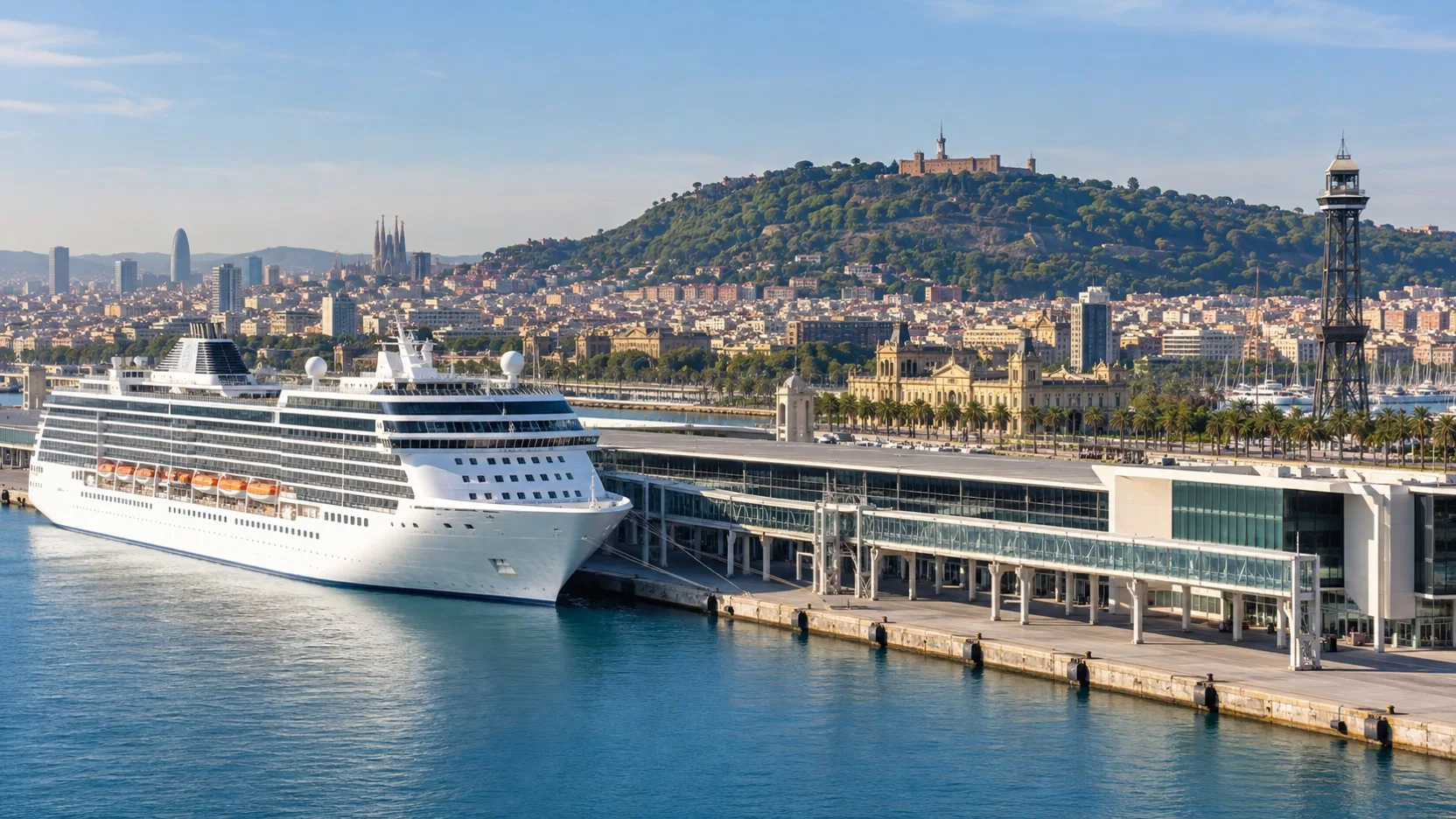
- Barcelona, Spain: Ships dock at the Adossat (Moll Adossat) quay terminals southwest of the city, so this is not a tender port. A port shuttle or short taxi drops you near the foot of La Rambla and the Gothic Quarter. You can confirm your terminal on the Port de Barcelona site.
- Marseille, France: Large ships berth at the Marseille Provence Cruise Terminal in industrial docks north of the center. Port and cruise-line shuttles vary by berth and schedule, so confirm the last return before choosing Marseille, Aix-en-Provence, or a longer Provence trip.
Italy: Rome, Florence, and Naples
Italy is where the port-identity trap bites hardest. Two of its headline “cities” are inland, so you spend real time getting to them and back.
- Civitavecchia (Rome), Italy: You dock roughly 50 miles northwest of Rome, then need a port shuttle or walk plus a train, bus, or road transfer. Schedule the full chain in both directions and aim to be back in Civitavecchia at least 90 minutes before all aboard. The Ports of Rome authority publishes port information.
- Livorno (Florence and Pisa), Italy: Ships dock at Livorno on the Tuscan coast. Florence is about 56 miles inland and Pisa around 12.5 miles away, so a “Florence” call is really a Livorno day with a long excursion attached.
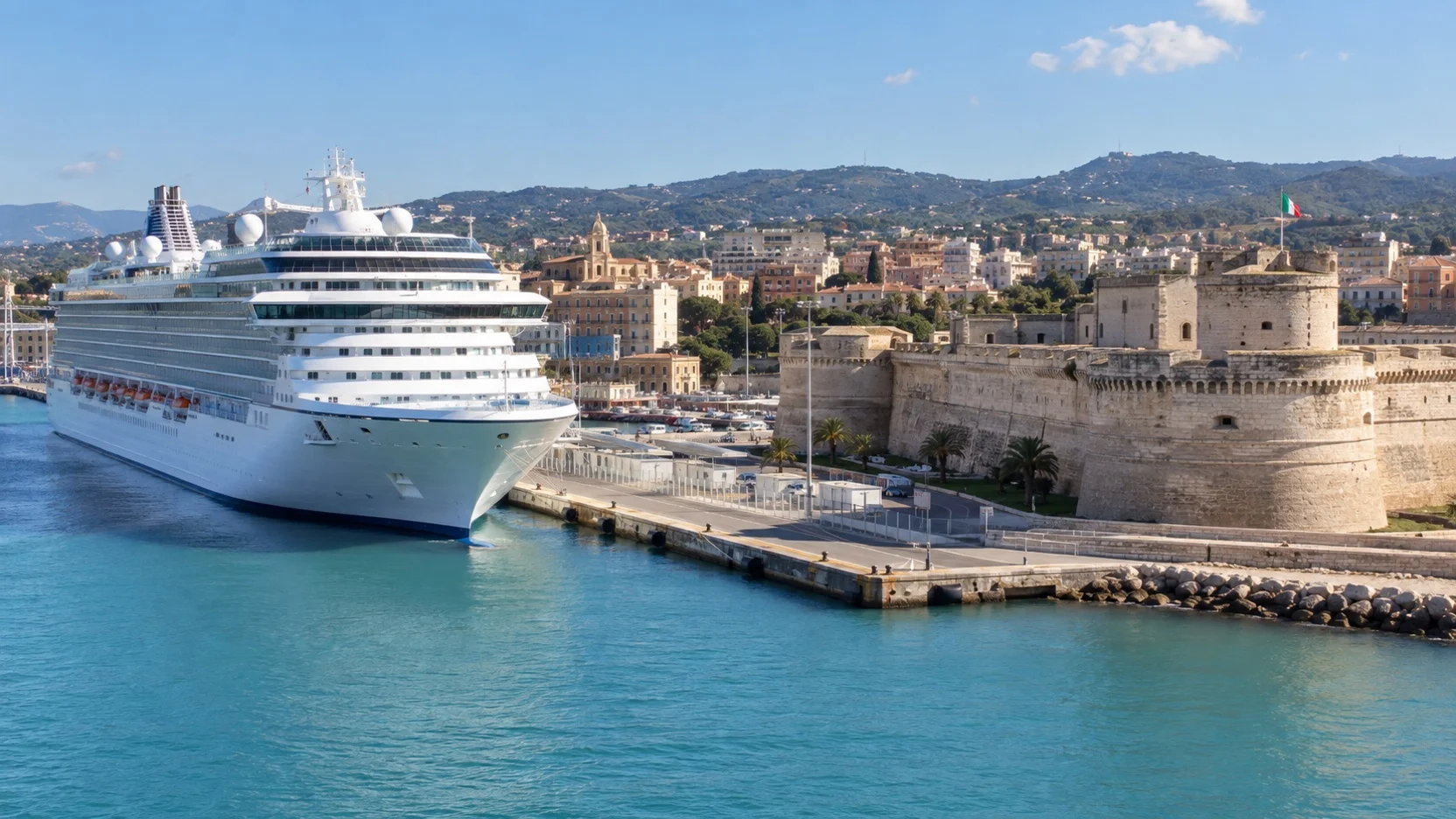
- Naples, Italy: The happy exception. Ships dock right in the city at the Stazione Marittima, walkable to the historic center and steps from the hydrofoils to Capri, and it is the gateway to Pompeii and the Amalfi Coast.
Adriatic and Montenegro
The Adriatic is smaller-scale and more scenic, and it is where tender operations become more common. Read the fine print on your itinerary for Venice especially.
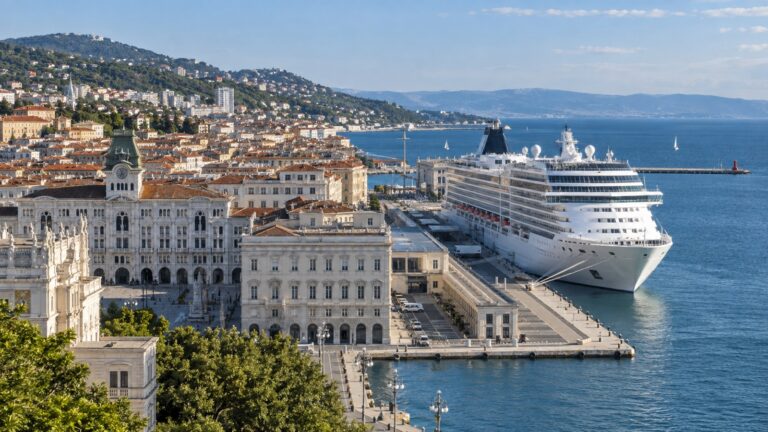
- Venice, Italy: Large ships no longer sail through the Giudecca Canal and St. Mark’s Basin, and itineraries may use Marghera, Fusina, Ravenna, or Trieste. Confirm the named terminal because Ravenna and Trieste are separate cities with long transfers, not Venice berths.
- Dubrovnik, Croatia: Ships dock at the Port of Gruz, about 2 miles from the walled Old Town, so you shuttle, bus, or taxi in. On the busiest days some ships tender instead, so check your daily program.
- Kotor, Montenegro: Ships either use the small town quay or anchor and tender, based on size and berth allocation. Both arrivals are close to the Old Town, but an anchor call adds tender tickets, loading time, and a return line.
The Greek Isles and Athens
Greece is the most tender-dependent region on this list. If you or anyone in your group has mobility concerns, this is the section to plan carefully.
- Athens (Piraeus), Greece: You dock at Piraeus, roughly 6 miles southwest of central Athens and the Acropolis, so budget transfer time each way. Piraeus is the port; Athens is the city, and the Piraeus Port Authority operates the cruise terminals.
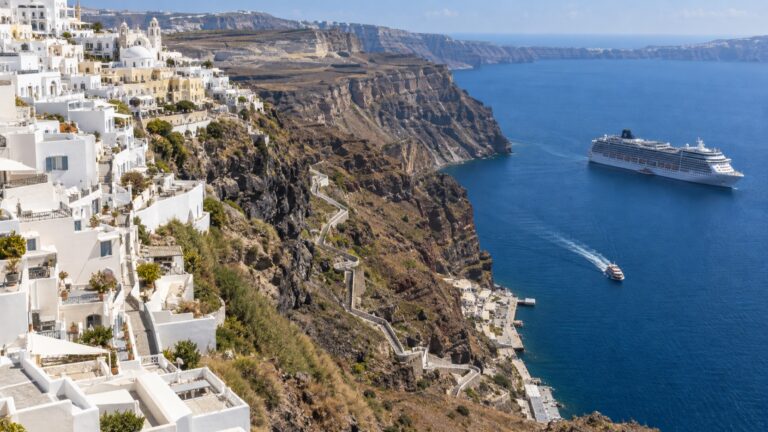
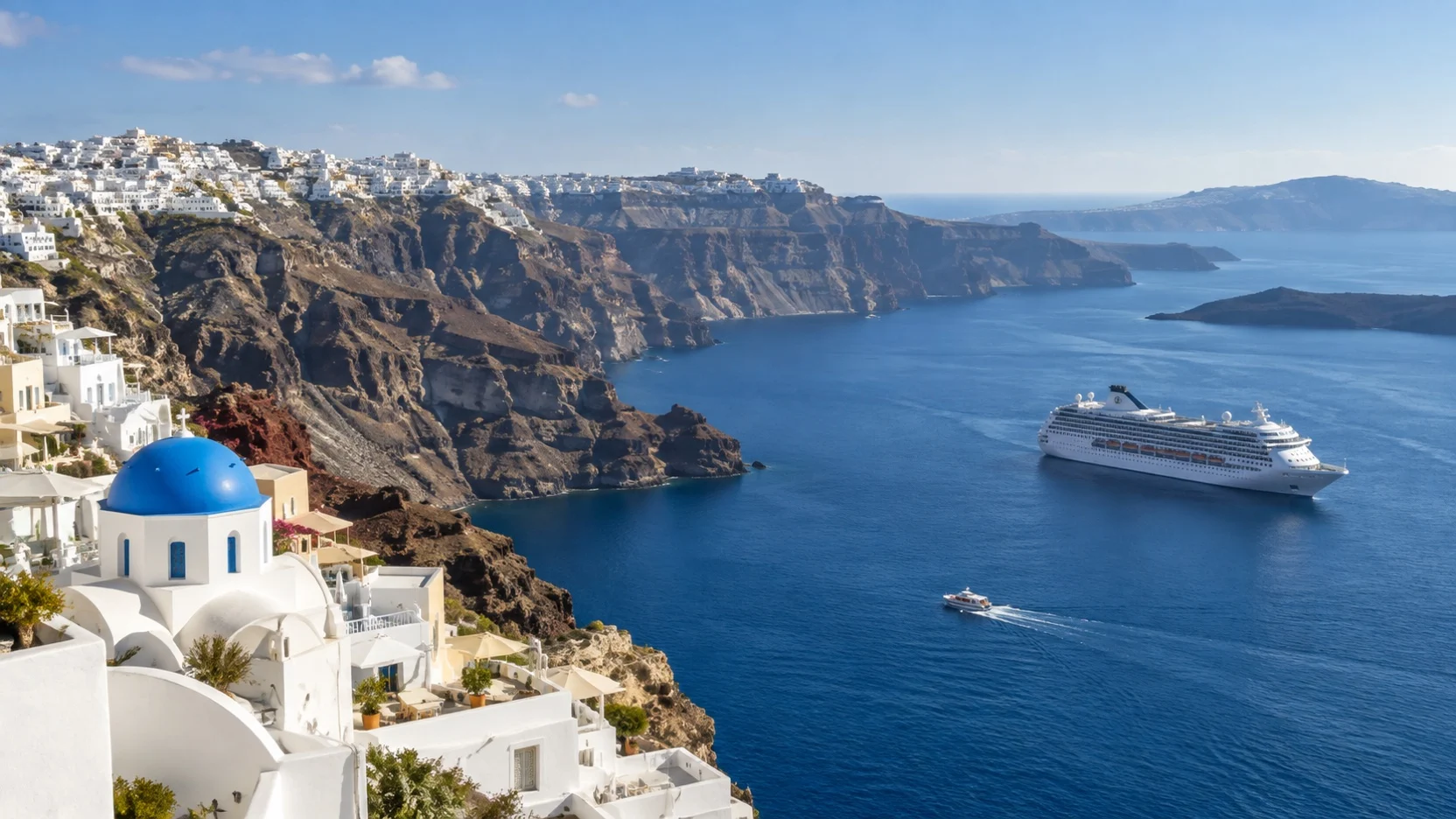
- Santorini, Greece: Cruise ships anchor in the caldera; independent tenders normally use the Old Port below Fira, while organized excursions may use a different landing and buses. The cable car and tender queues can each consume time, so do not plan the day from the ship’s arrival hour alone.
- Mykonos, Greece: A ship may berth at Tourlos or anchor and tender to the Old Port, and the assignment can change. From Tourlos, use the sea bus, ship shuttle, public bus, or taxi rather than assuming the narrow waterfront road is a comfortable walk.
Malta: an easy add-on
- Valletta, Malta: Ships dock along the Valletta Waterfront in the Grand Harbour, right beneath the city walls. A panoramic lift or a short climb takes you up into the fortified capital, so this is one of the more walkable big-name ports.
How I’d choose between them
For a first Mediterranean cruise, the Western Mediterranean and Italy offer several straightforward city days, but not every headline city is close. Barcelona, Naples, and Valletta are simpler than Rome from Civitavecchia or Florence from Livorno.
If scenery is the priority, compare the Adriatic and Greek islands. Santorini always uses boats, while Kotor, Mykonos, and occasional Dubrovnik calls depend on the assigned berth or anchorage.
At Civitavecchia or Livorno, a ship excursion costs more but protects a tightly connected long-distance day and coordinates with the vessel. Independent rail is cheaper and flexible for a simple plan, but leave at least one earlier train than you think you need for the return.
Timed plans and return buffers
With four to six hours, stay in the port city or choose one nearby attraction. With eight to ten hours, make one gateway city the anchor and cut the final stop before you cut the return buffer.
Plan to reach an alongside terminal about 60 minutes before all aboard and a distant gateway port about 90 minutes before. At Santorini or another tender call, return to the boat queue earlier because the last tender time may precede all aboard.
When to go, and the weather
Spring and fall usually bring milder temperatures, while July and August add heat and crowds at exposed ruins, tender queues, and walled towns. Strong seasonal winds can stop small boats even on a sunny day, and autumn storms can change a berth or cancel a call.
Wheelchair access depends on the gangway, mandatory shuttles, tender policy, and the old town or attraction rather than the country. Ask about the exact terminal, accessible vehicle, and step-free entrance for the date of your call.
Quick answers
- Which Mediterranean ports are tender ports?
Santorini uses boats, while Kotor, Mykonos, Villefranche-sur-Mer, and occasional Dubrovnik calls vary by berth, ship, and schedule. - Why does my cruise say Rome, Florence, or Athens but stop somewhere else?
Those city labels use the gateway ports of Civitavecchia, Livorno, and Piraeus, each requiring its own rail, road, or transit plan. - Are the ports wheelchair accessible?
Access varies by berth, gangway, shuttle, tender, street surface, and attraction, so confirm each call and mobility device with the line before booking.
How this guide was researched: Berths, gateway distances, and transport options were checked in September 2026 against the official port sources linked above and current operator information. Assignments and schedules change, so verify the terminal and daily program and see our Editorial Policy.