Mykonos, Santorini, Rhodes or Kusadasi: Which Port Needs More Planning?
Mykonos, Santorini, Rhodes, and Kusadasi arrive under the same blue-sky marketing, then behave like four unrelated logistics exercises. I plan Santorini’s bottlenecks first, Kusadasi’s inland goal next, and let the easier old towns breathe.
One is shaped by tender lines, one by an archaeological transfer, one by berth uncertainty, and one can be wonderfully simple.
The short answer
Santorini needs the most advance planning because tendering, the Old Port, cliff access, crowds, and the distance to Oia compress the usable day. Kusadasi comes next when Ephesus is the priority, since transportation, tickets, heat, and interpretation need coordination.
Mykonos needs moderate planning because a ship may dock at Tourlos or tender and because Delos requires a boat. Rhodes is the easiest when you stay in Medieval Old Town, which sits close to the cruise area.
Quick Facts: planning order at a glance
- Most planning-sensitive: Santorini.
- Most useful guided excursion: Kusadasi for Ephesus.
- Most dependent on docking versus tendering: Mykonos.
- Easiest strong independent day: Rhodes Old Town.
- Biggest crowd bottleneck: Santorini’s cliff access and Oia routes.
The order can change with berth assignment, ship hours, mobility, heat, wind, crowd volume, and whether you want the headline day trip. A traveler staying in Fira needs less planning than one chasing Oia, just as a Kusadasi visitor skipping Ephesus can remain near the waterfront.
Santorini: Logistics come first
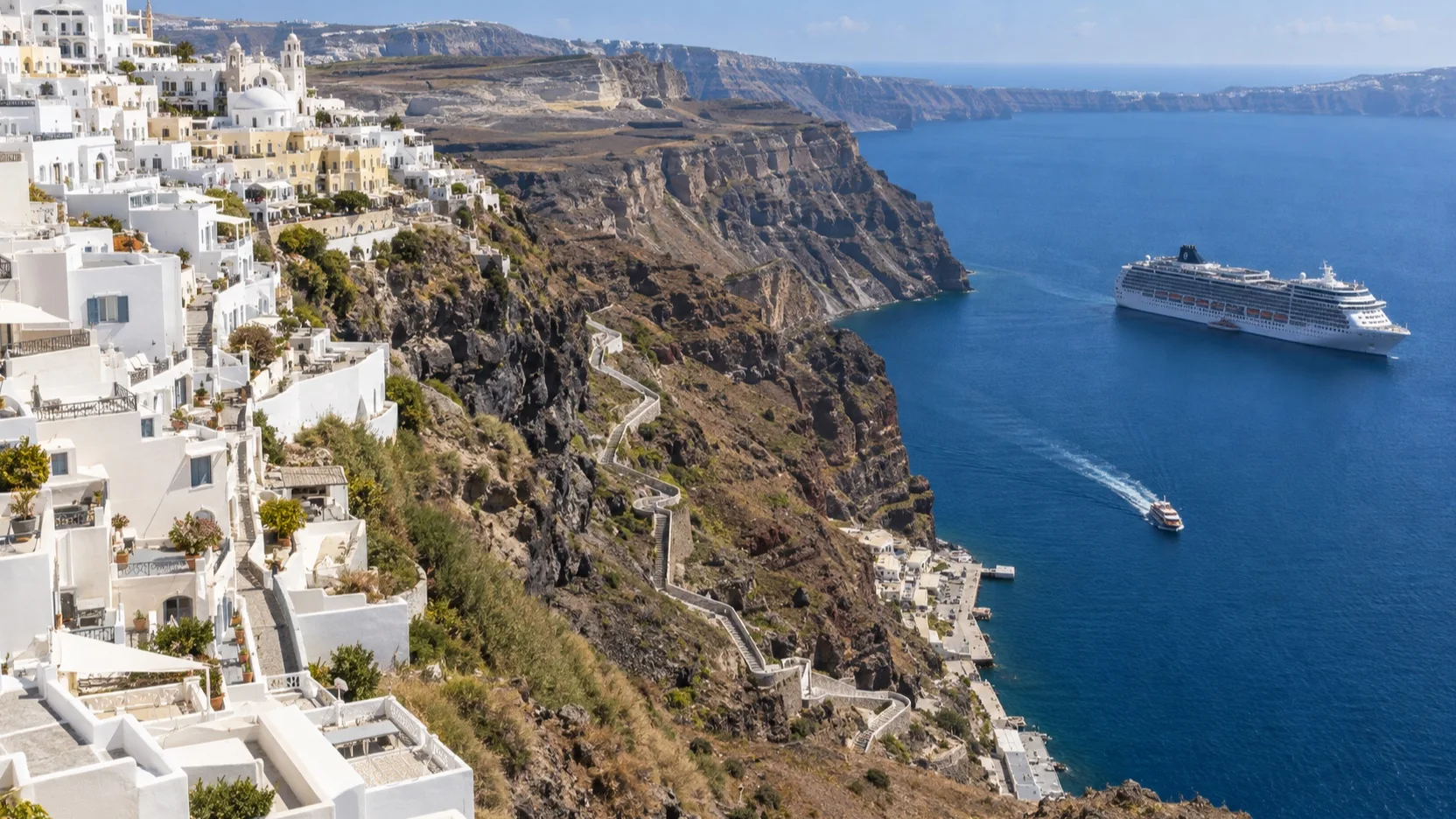
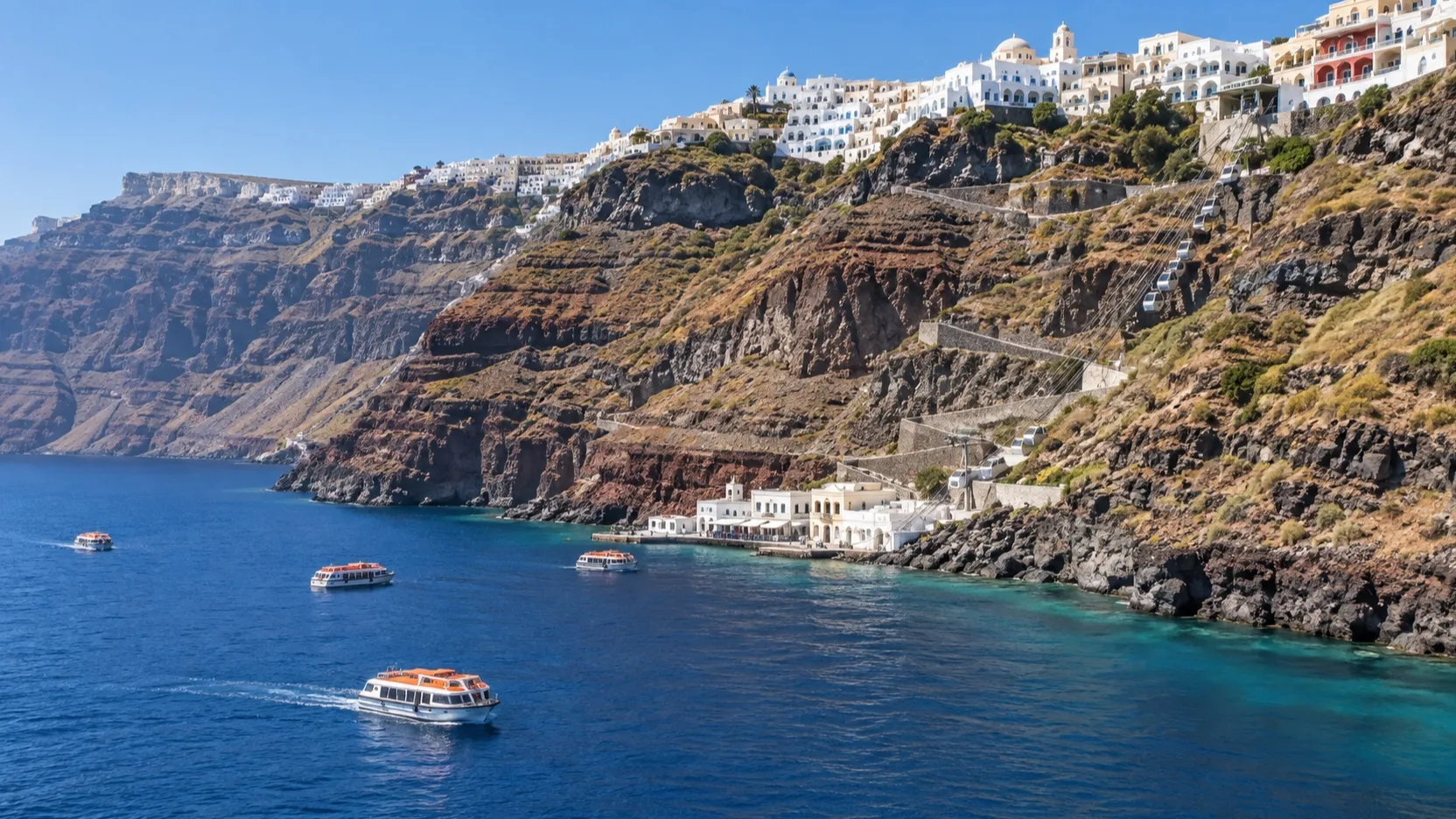
Santorini’s famous caldera views begin with an unusual cruise-day sequence. Many passengers tender to the Old Port below Fira, then reach the cliff top by cable car, steps, or an excursion arrangement that may use a different landing and vehicle plan.
Read our Santorini cruise port guide before booking anything. Tender procedures, local operations, and crowd management can vary by ship and day.
The cliff-access bottleneck
The Old Port is physically separated from Fira above, and the cable car has finite capacity. Lines can form when several ships move passengers through the same access point, especially near popular return times.
Walking the steps is physically demanding and can involve heat, slippery surfaces, crowding, and animals. Do not treat it as a casual backup unless your group understands the route and is comfortable with the conditions.
Check current information through the Santorini Cable Car’s official site and follow your cruise line’s instructions. Hours, fares, lines, tender timing, and operating conditions should not be assumed from a past season.
Oia adds another layer
Oia sits away from Fira and attracts a large share of cruise visitors, so transportation and return timing matter. A tour can coordinate movement, but it cannot guarantee uncrowded lanes or erase the transfer back toward the ship.
If your call is short or begins later in the day, choosing Fira plus one nearby experience may be more satisfying than racing through Oia. The best Santorini plan protects the return before adding the final viewpoint.
When a Santorini excursion helps
A tour is useful when it provides a clearly explained landing plan, transport among spread-out villages, a winery or archaeological focus, and a conservative return. Read where the excursion ends because some products may leave passengers to descend from Fira independently.
The official Visit Greece information for Santorini is a useful destination overview. Verify individual museums, archaeological sites, wineries, and transport directly.
Kusadasi: expertise earns its price
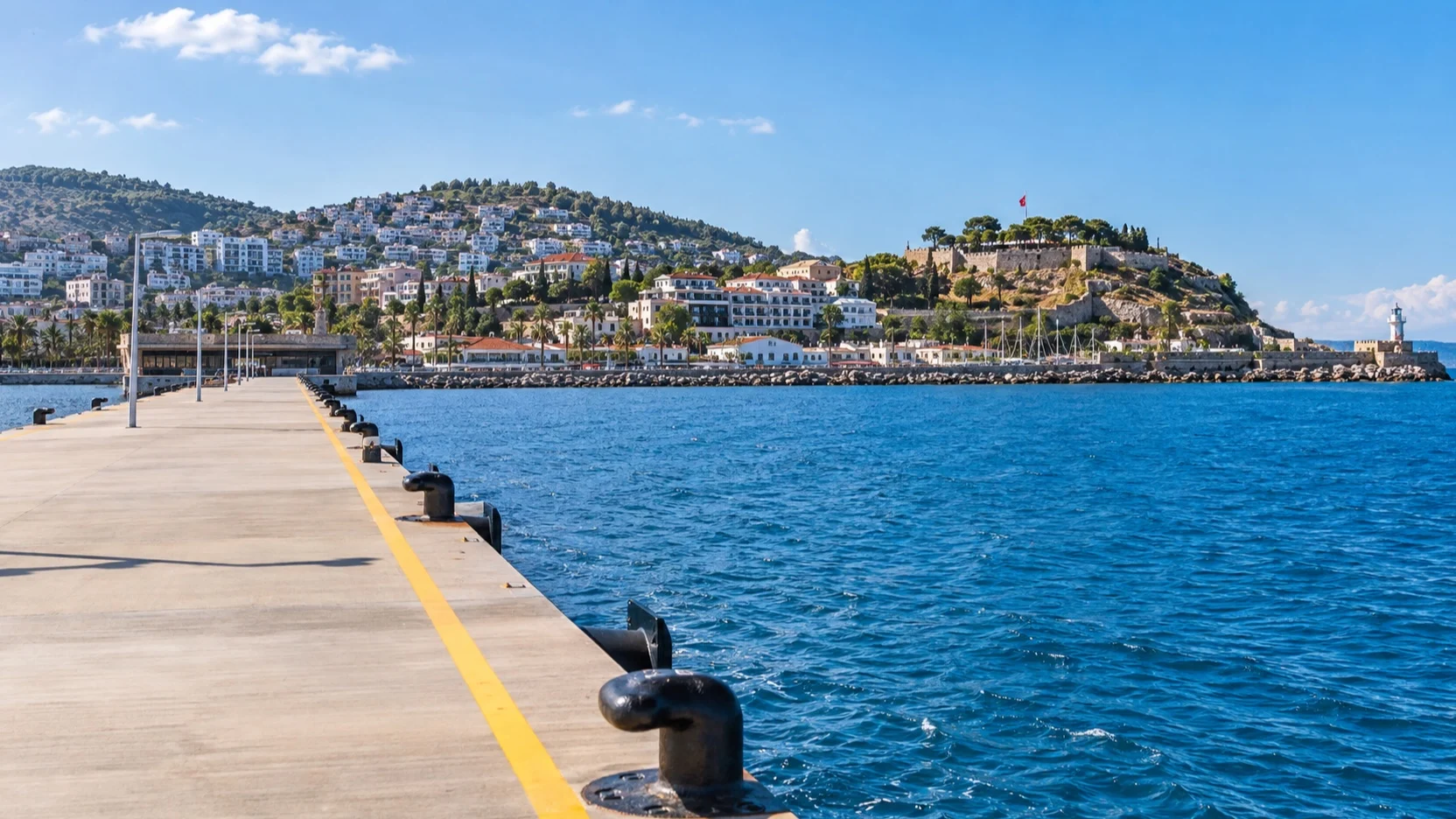
Kusadasi itself is easy to enter from the cruise area, with waterfront streets, shopping, food, and a manageable town day. The planning challenge appears because most first-time visitors choose the ancient city of Ephesus outside town.
Our Kusadasi cruise port guide explains the port and Ephesus choices. The archaeological site requires road transportation and involves extensive outdoor walking over uneven and sometimes polished stone.
Why Ephesus benefits from a guide
The scale and complexity of Ephesus reward interpretation, especially when limited time forces you to choose a route. A knowledgeable licensed guide can connect civic buildings, religious history, water systems, domestic life, restoration, and the city’s changing relationship with its harbor.
Use the official Turkish Museums portal to find current museum and archaeological-site information. Verify tickets, hours, closures, accepted payment, entrance arrangements, and any separately controlled areas before the visit.
I do the hardest clock first because the simplest port will forgive me later.
The Terrace Houses decision
The Terrace Houses are a separate highlight for many visitors and may involve additional admission, steps, and time. Confirm whether they are included rather than assuming every Ephesus tour enters them.
Travelers with limited mobility should ask about the precise route, drop-off and pickup points, surfaces, shade, restrooms, seating, and vehicle access. A general moderate rating does not describe the site well enough.
When Kusadasi needs less planning
If Ephesus is not a priority, Kusadasi can become a low-pressure waterfront and town day. You can save the excursion budget and avoid the midday archaeological heat, although opening hours and local conditions still deserve a quick check.
Mykonos: plan around the arrival method
Mykonos can involve docking at Tourlos New Port or tendering, and that difference changes how passengers reach Chora. A plan copied from another sailing may begin at the wrong place.
Our Mykonos cruise port guide covers Tourlos, Chora, and Delos considerations. Confirm the ship’s current arrival plan and any shuttle instructions before committing to a tight meeting time.
Chora works well independently
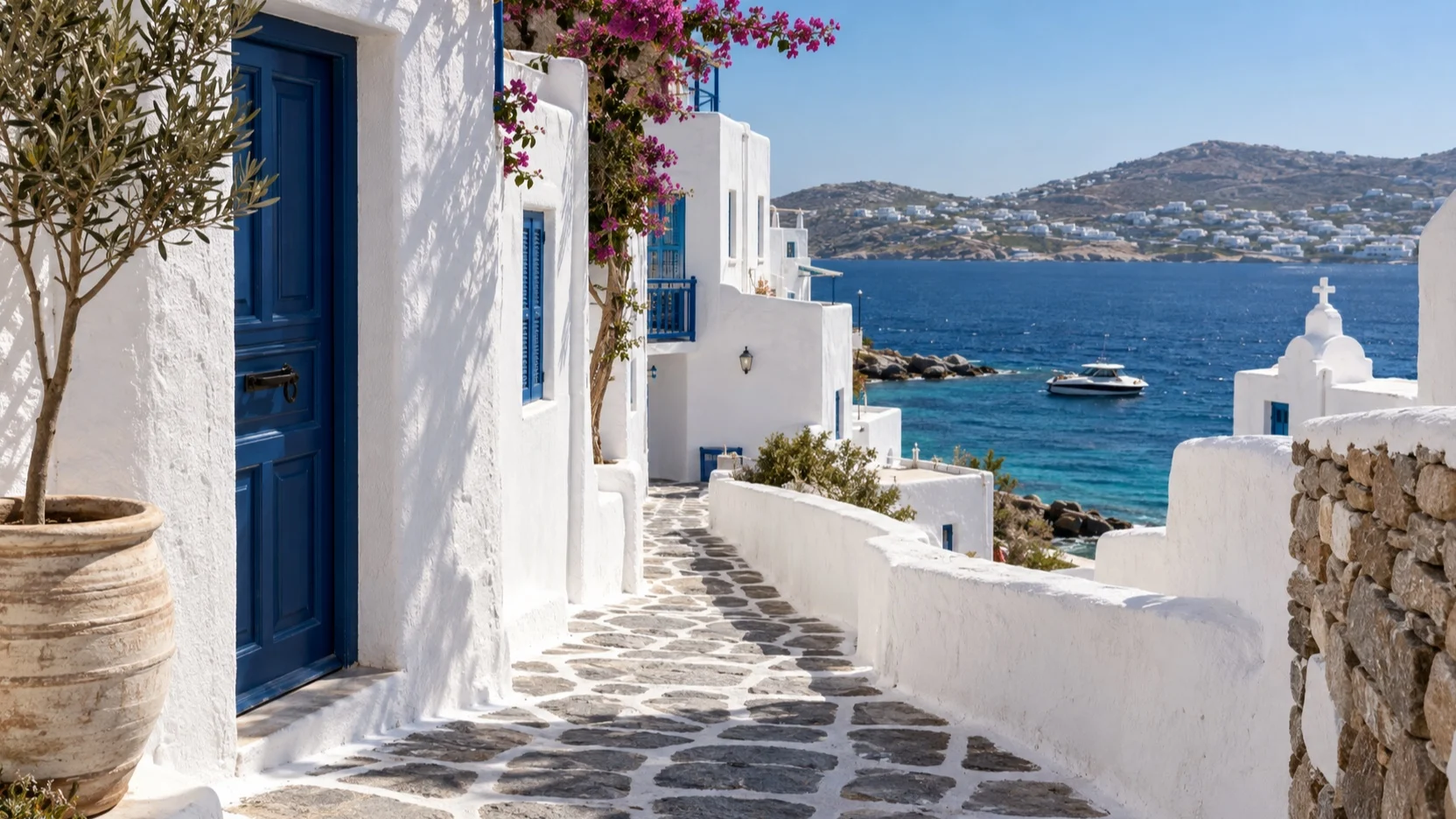
Once in Mykonos Town, lanes, waterfront views, windmills, churches, shops, and restaurants support a flexible walk. The challenge is not building a huge itinerary but preserving orientation, shade, and enough time to return.
Crowds can collect around the most photographed lanes and waterfront corners. Step away from the shortest social-media route and allow time for a meal or quieter neighborhood rather than treating Chora as a photo scavenger hunt.
Delos changes the equation
Delos requires a boat and is exposed to wind and weather, so it needs more planning than Chora. Current boat schedules, archaeological-site access, and cancellation terms should be confirmed through official sources and the operator.
The UNESCO World Heritage listing for Delos provides authoritative context for the site’s global significance. A qualified guide can make the extensive ruins far more coherent.
Rhodes: the easy independent winner
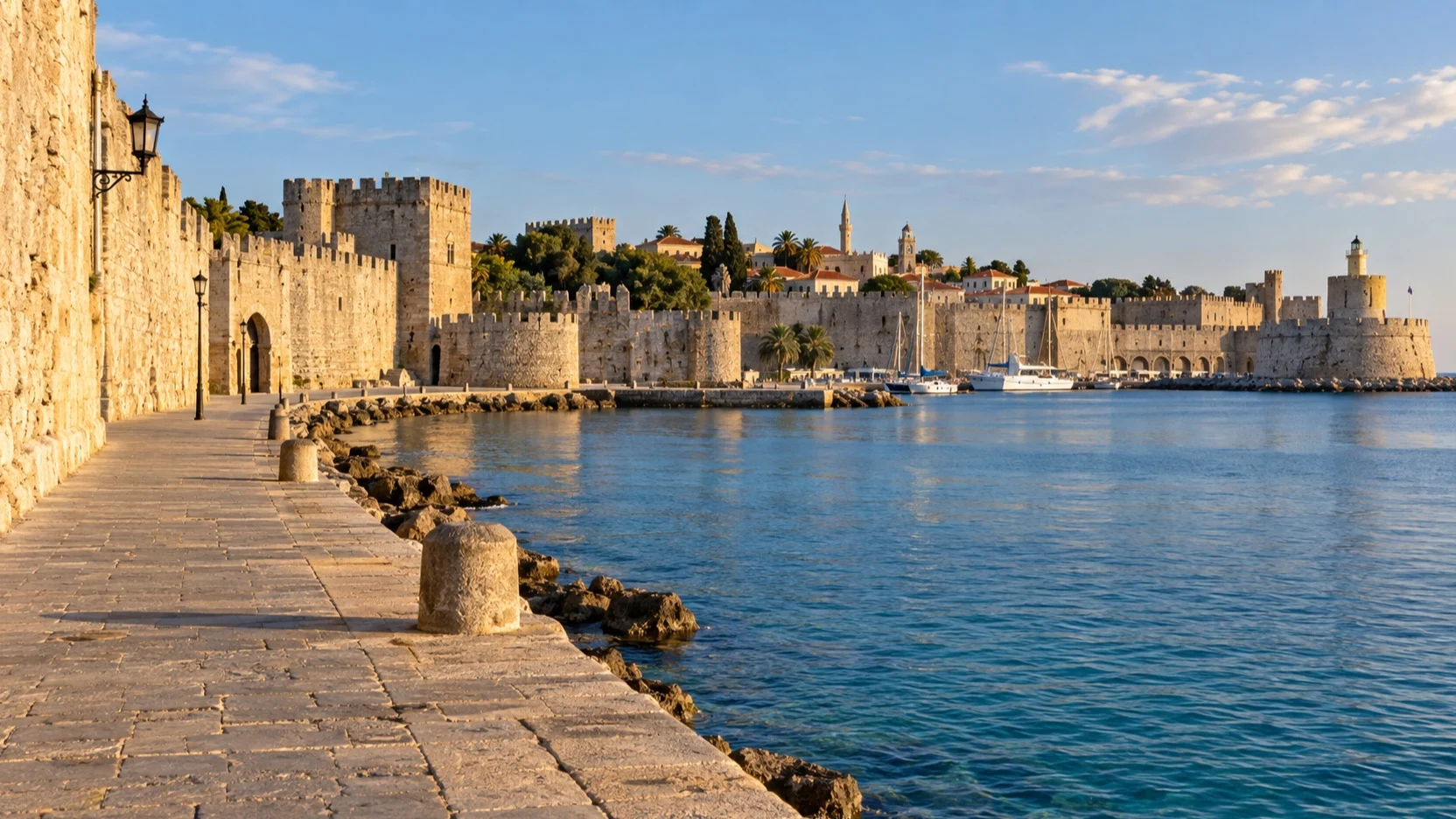
Rhodes is the least planning-intensive of the four when the goal is Medieval Old Town. Cruise passengers can often reach the walled historic area with a short walk, then build the day around gates, lanes, museums, food, and the harbor.
Use our Rhodes cruise port guide for berth and attraction context. The UNESCO listing for the Medieval City of Rhodes explains why the urban fabric matters beyond its photogenic walls.
Why Rhodes works without a tour
The main experience is spatially coherent, and a flexible route lets you respond to heat and crowds. You can choose one museum or landmark, wander, eat, and still preserve return margin.
A guide remains valuable because the city layers Classical, Byzantine, Hospitaller, Ottoman, Italian, and modern periods. Pay for interpretation if that depth interests you, not because navigation is impossible.
Lindos makes Rhodes more complicated
Lindos lies away from Rhodes Town and adds road travel, crowds, sun exposure, and steep walking. An excursion can simplify transportation, but the physical demands remain.
Trying to combine an in-depth Old Town day with a full Lindos visit can feel rushed on a shorter call. Choose the headline priority rather than using a tour title’s long attraction list as a challenge.
Choose by traveler type
First-time cruisers
Give Santorini the most detailed schedule, book Kusadasi around Ephesus, verify Mykonos docking, and let Rhodes remain flexible. This distributes effort according to real bottlenecks.
History lovers
Spend on a strong Ephesus guide, consider Delos with interpretation, and use Rhodes for a guided walk or museum-centered day. Santorini can add Akrotiri if its current access and the itinerary fit.
Limited mobility
Rhodes Old Town may be close but still has uneven surfaces, while Santorini’s vertical access can be the hardest challenge. Ephesus and Lindos require detailed route questions, and Mykonos lanes can include slopes.
Request precise walking distances, stairs, surfaces, vehicle steps, restroom access, seating, shade, and mobility-device handling from the operator. A private route may be worth the money even in the theoretically easiest port.
Crowd-averse travelers
Avoid centering Santorini entirely on Oia at peak flow, slow down in Mykonos beyond the most photographed lanes, and explore Rhodes with one quieter museum or neighborhood. Ephesus still attracts large groups, so departure timing matters.
Families
Rhodes offers the easiest freedom to shorten the day, while Kusadasi can engage older children who enjoy ancient history. Santorini requires the most patience with tendering and cliff access, and Delos demands sun readiness.
If every island has a rigid tour, I have planned the sunshine out of the itinerary.
How to allocate excursion money
Give the largest amount to Kusadasi if Ephesus is essential and you value knowledgeable interpretation. Give it to Santorini if a coordinated island route solves mobility or transportation concerns, but read exactly how the return works.
Keep Rhodes inexpensive unless Lindos or a specialist guide matters deeply. Keep Mykonos independent for Chora, but pay for Delos, a tailored beach route, or transportation that genuinely removes friction.
Ship tour, independent guide, or DIY?
A ship tour makes the strongest case for Santorini’s most timing-sensitive plans and for any distant activity with little buffer. Read your line’s current delay and return terms.
An independent licensed guide can be ideal at Ephesus, Rhodes, or Delos when expertise matters. Verify credentials, meeting point, tickets, accessibility, cancellation, and conservative return timing.
DIY is strongest for Rhodes Old Town, Kusadasi town, Mykonos Chora after reaching it, and a focused Fira day. It becomes fragile when boats, tender lines, road transfers, timed entries, or several connections must align.
Planning safeguards
Confirm whether the ship docks or tenders and where passengers reach shore.
Use the ship’s local all-aboard time as the controlling deadline.
Check official tickets, closures, and weather information.
Expect heat, exposed sites, steps, and uneven surfaces.
Read where a tour begins and ends.
Protect a return margin before adding the final stop.
The planning order and its nonnegotiables
Plan Santorini first, Kusadasi second, Mykonos third, and Rhodes fourth. That order reflects transport bottlenecks and reservation stakes, not which island is most beautiful.
Santorini: learn the tender destination, cliff-ascent plan, where a tour ends, and how you will descend before the final tender. Check the official cable-car timetable for the date, but still expect cruise-day lines.
Kusadasi: confirm the current Ephesus entrance, ticket source, guide license, shade plan, and whether the Terrace Houses are included or separately ticketed. Heat and uneven stone make fewer well-explained sites better than a packed route.
Mykonos: confirm berth versus tender before committing to Delos, because the transfer to town and the excursion boat are separate links. Keep Chora and a nearby beach as the wind-cancellation fallback.
Rhodes: Old Town is the reliable independent plan; Lindos needs a prearranged transfer, heat strategy, and a return that reaches the ship area 60 to 90 minutes before all-aboard.
Add the ship’s final tender or shuttle cutoff to every return calculation. Santorini deserves the largest cushion because a road transfer, cliff access, and tender can all stack at the end of the day.
The final recommendation
Santorini needs the most planning because its tender and cliff-access system can dominate the day. Kusadasi needs the best guide when Ephesus matters, Mykonos needs the correct arrival assumption, and Rhodes rewards leaving space for discovery.
Solve Santorini first, secure a high-quality Ephesus plan second, confirm Mykonos logistics third, and let Rhodes be the day that breathes. Equal planning effort would ignore how differently these ports actually behave.
Quick answers
Which port is easiest without an excursion?
Rhodes is the strongest answer when you focus on Medieval Old Town near the cruise area. Mykonos Town can also work well after you confirm how your ship reaches shore.
Why is Santorini difficult on a cruise day?
Tendering, Old Port arrival, vertical access to Fira, cable-car capacity, and travel toward Oia all use limited time. Crowd levels and ship procedures can amplify those bottlenecks.
Do I need a guide at Ephesus?
A guide is not universally mandatory, but knowledgeable interpretation substantially improves the site for many visitors. Transportation, heat, surfaces, tickets, and any Terrace Houses plan still need coordination.
Can I visit Delos independently?
It may be possible using current boats and official site access, but schedules and wind conditions matter. A guide can add valuable archaeological context.
Is Lindos realistic from Rhodes?
It can be realistic with adequate port time and a conservative transport plan. Decide whether Lindos or Rhodes Old Town is the priority rather than rushing both.
How this guide was researched
This guide was checked in September 2026 using Santorini Cable Car, Visit Greece, Turkish Museums, UNESCO, and our destination guides. Tender systems, docking, boats, site access, tickets, heat measures, and transport change, so verify each detail for your sailing; see our Editorial Policy for our sourcing, review, and corrections standards.
More on this topic: browse every guide on shore excursions and DIY port days.