Kusadasi Cruise Port: Ephesus, Terrace Houses & Bazaar
Kusadasi is the rare cruise port where the gangway more or less deposits you straight into the shops. The town center sits roughly 165 feet from the terminal gate, a distance most people cover while still deciding whether they want a coffee.
But almost nobody sails here for Kusadasi itself. They come for Ephesus, about 25 minutes inland, and it earns every minute of the bus ride.
My quick take
Ephesus is the reason this port exists, and it is one of the few ancient sites that genuinely lives up to the photographs. You walk down a marble street between standing colonnades, and the Library of Celsus appears at the bottom like a stage set that forgot to be a ruin.
Go early, and pay the extra for the Terrace Houses. They are the best hour you can buy in Turkey and most of the crowd walks straight past the entrance.
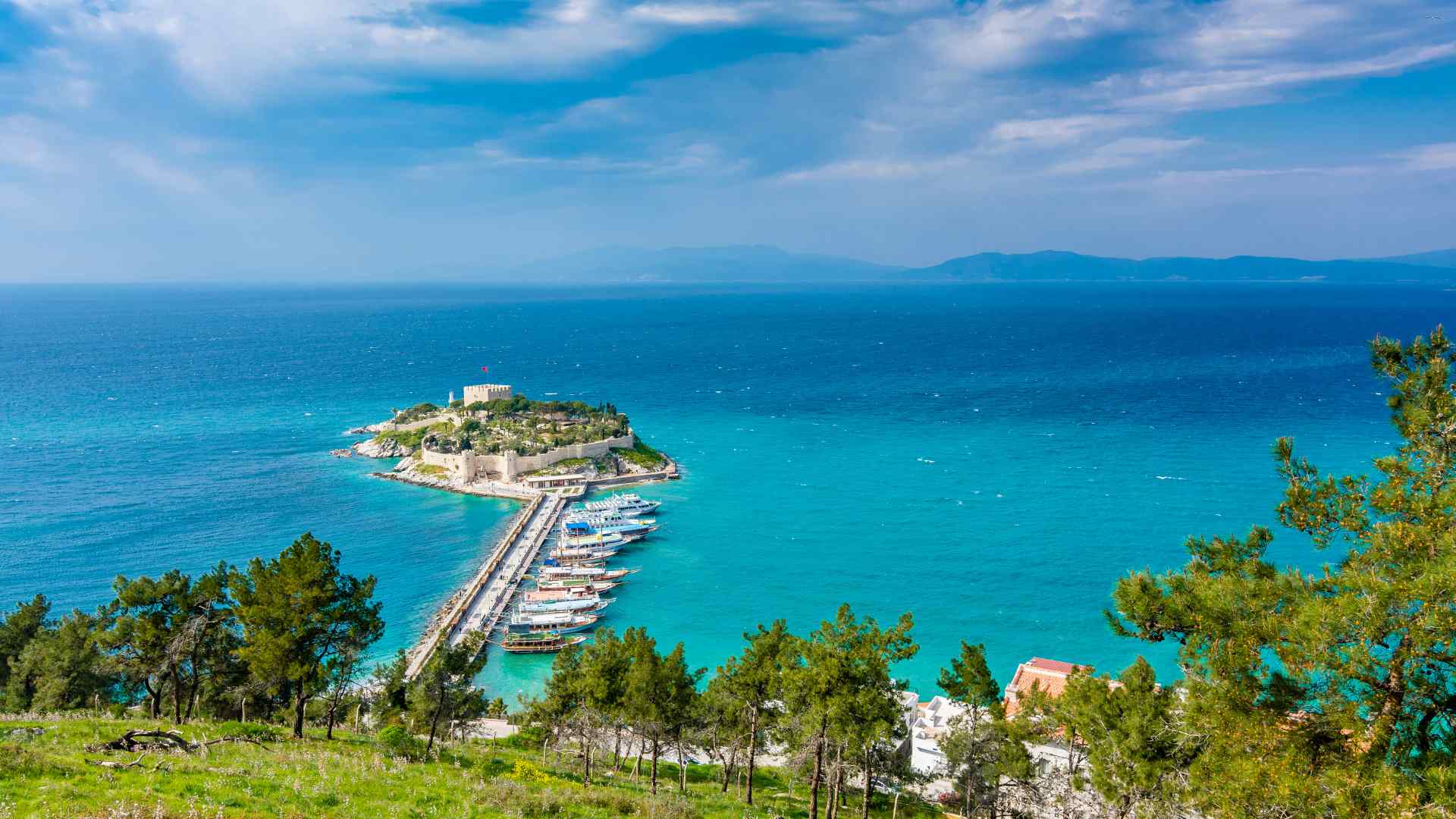
The town itself is pleasant enough, with a proper bazaar, a small castle island, and a lot of people who would very much like to sell you a carpet. It is a fine second act, not a first one.
If you are building a wider itinerary, my roundup of Mediterranean cruise ports shows where a ruins day like this fits between the beach stops. Kusadasi is one of the easiest calls in the eastern Med, logistically speaking.
Kusadasi Cruise Port Quick Facts
- Where you land: Ege Port Kusadasi, a purpose-built cruise terminal with eight berths along roughly 4,165 feet of quay, arranged around two finger piers. Global Ports Holding has run it since 2003 and it takes ships up to Oasis class.
- Dock or tender: Up to four large ships can be alongside at once, and while anchoring is technically possible here, tendering is not how a normal call works.
- Into town: About 165 feet, which is not a typo.
- Currency and language: Turkish lira (TRY) and Turkish, with an exchange desk just past customs before you reach the street.
- Time zone: Turkey Time (TRT, UTC+3) all year.
- How often the call is missed: Low (under 1%): the sheltered berth is rarely limited by local weather.
Berthing, Scala Nuova, and the shortest walk in the Med
Ege Port has eight berths along roughly 4,165 feet of quay, arranged around two finger piers that let four large ships moor at the same time. That is why Kusadasi so often shows up on a day when three other ships are also in.
There is no shuttle bus, and you will not miss it. You clear the terminal, walk through the gate, and you are in Kusadasi.
Between the ship and the gate sits Scala Nuova, a shopping and restaurant village built inside the port area. It is perfectly nice and completely optional, and the prices reflect who it was built for.
The terminal has duty free, first aid, and a passenger center with internet, though the operator notes that Wi-Fi is not available across the port itself. Berth details and facilities are listed on the official Ege Port Kusadasi site.
Now the honest part. The walk from the gate into the bazaar is a gauntlet of shopkeepers who have perfected the art of the friendly opening question, and a cheerful “no thank you” without breaking stride is the only technique that works.
Getting around
Taxis wait outside the port and can take you to Ephesus, but the site has upper and lower entrances several miles apart by road. Agree the fare, waiting time, drop-off gate, pickup gate, and payment method before leaving Kusadasi.
A local dolmus can reach Selcuk, but it does not solve the entire transfer to the correct Ephesus gate. This is best for confident independent travelers with a long call, live return information, and enough Turkish lira for small purchases.
Most people take either a ship excursion or a private guide booked ahead, and for once I think that is the right call. Ephesus without context is a lot of very impressive rubble.
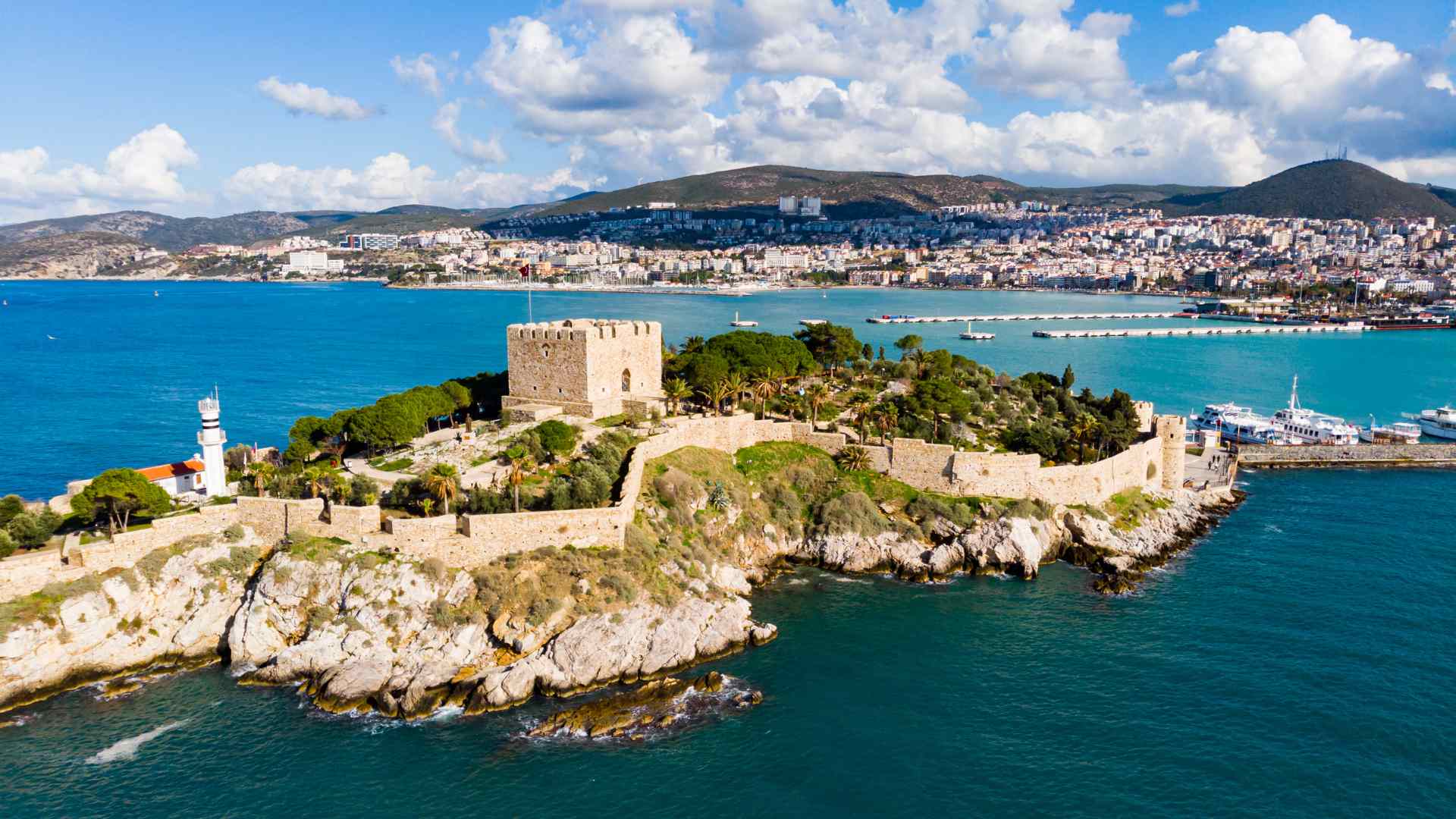
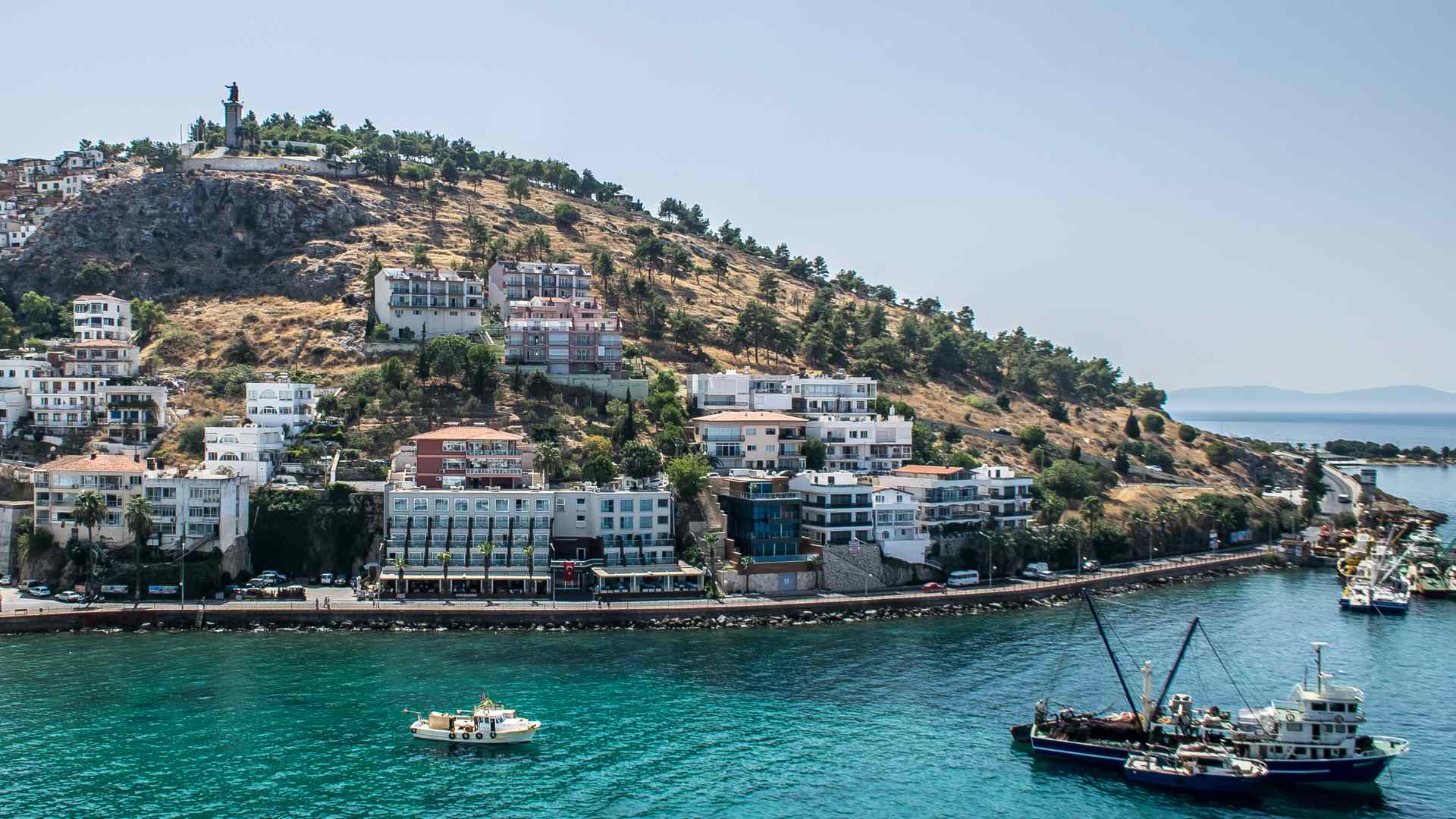
Kusadasi town needs no transport at all beyond your own feet. The bazaar, the harbor front, and the castle island are all within a comfortable stroll of the terminal.
The stops I would actually spend time on
You cannot do all of this in one call, and pretending otherwise is how people end up eating a sad sandwich on a motorcoach. Here is what I would prioritize, roughly in order.
Ephesus, the main site: A Roman provincial capital with paved streets, temples, latrines, and a genuine sense of a city rather than a monument. Allow two hours minimum and enter from the upper gate so you walk downhill.
The Terrace Houses: A separate ticket, a separate roof, and by far the best thing on the site. These are the homes of wealthy Roman families, with mosaics and painted walls still in place.
The Library of Celsus: The famous two-story facade at the bottom of Curetes Street, reassembled from its own fallen stones. It is the photograph everyone comes for and it does not disappoint.
The Great Theater: A hillside theater commonly described as holding about 25,000 spectators in antiquity. Its stone seating and steps are exposed, uneven, and demanding in heat, so the lower view is enough for many visitors.
House of the Virgin Mary: A small stone chapel on Bulbul Mountain, about 35 minutes from the port and a serious Christian pilgrimage site. It is quiet, modest, and moving even if you arrived skeptical.
Basilica of St John, Selcuk: The ruined basilica on Ayasuluk Hill, part of the same UNESCO listing as Ephesus. Fewer visitors, good views, and a fraction of the walking.
Ephesus Archaeological Museum: In Selcuk, and the home of the marble statues of Ephesian Artemis that everyone has seen in books. Twenty minutes here makes the ruins make much more sense.
Temple of Artemis: One of the Seven Wonders of the Ancient World, now essentially one reassembled column in a field. Worth five minutes for the sheer humility of it.
Kusadasi old quarter and Pigeon Island: The bazaar streets behind the harbor plus the small fortified island joined to town by a causeway. This is a strong plan B when the ruins are not happening.
Fun fact: Ephesus was only inscribed as a World Heritage Site in 2015, which feels absurdly late for a city that hosted two early Church councils and a Wonder of the Ancient World. The listing is a serial one covering the Cukurici Mound, Ayasuluk Hill, and the ancient city, and you can read the citation on the UNESCO World Heritage entry for Ephesus.
We rounded up the closest places to stay in our Kusadasi cruise port hotels guide.
How I would plan the day
Get to Ephesus early, before the largest motorcoach wave and the strongest heat. Prebook the correct admission product, confirm whether the Terrace Houses are included or separate, and carry water because shade is limited.
Enter at the upper gate and walk down through the city to the Library and the theater. Doing it the other way round means climbing a long slope in the sun, which is best avoided.
On a short call, that is your whole morning and I would stop there. Head back, eat in Kusadasi rather than at the site, and browse the bazaar with whatever time is left.
With a full day, add the House of the Virgin Mary on the way out and the museum in Selcuk on the way back. Sirince, a hill village above Selcuk known for its fruit wines, is the pleasant alternative if you have had enough antiquity.
Ephesus hours, ticket combinations, and last entry change seasonally, while restoration or events can restrict areas. Check Turkey’s official museum ticket system shortly before the call and do not rely on a tour marketplace’s cached hours.
A realistic word on accessibility
The port end of this day is genuinely easy. Ege Port is flat and modern, the terminal has step-free routes, and the operator says wheelchair assistance is provided when needed.
Ephesus has polished marble, loose stone, slopes, stairs, and limited shade. The Terrace Houses add many steps, and a wheelchair user should arrange an adapted tour that confirms the exact gate, route, vehicle, and accessible restrooms.
If walking is limited, ask the official site or an adapted operator what is reachable from the lower entrance on the day. Do not assume the Library and theater route is step-free simply because those monuments sit near the lower part of the site.
When to go, and the weather
May and October are the sweet spots, with average highs around 79°F in May and 76°F in October. Both are warm enough for the harbor front and cool enough for a morning of walking on stone.
July and August average highs near 95°F, and Ephesus has essentially no shade. If that is your sailing date, treat the early start as compulsory rather than clever.
Winter calls are rarer, with January highs around 55°F and the wettest stretch running November to April. December is the rainiest month of the year here, so pack accordingly.
Bring real shoes with grip, because that famous marble is slick when wet and polished by two thousand years of feet. The official Go Turkiye page for Ephesus is a good sanity check on what is open before you go.
Three Ephesus plans that fit a cruise call
Five to six hours: use a prearranged transfer to the upper gate, walk the main site and Terrace Houses if appropriate, then return directly. Aim to reach the Kusadasi port area at least 75 to 90 minutes before all-aboard.
Seven to nine hours: add one nearby site, such as the Ephesus Museum, Basilica of Saint John, or House of the Virgin Mary, but not all three. A guide adds real value because the ruins have limited labeling and the pickup logistics are easier with one accountable operator.
Limited mobility or extreme heat: choose an adapted lower-site visit or stay in Kusadasi for the bazaar, waterfront, and Pigeon Island. The port is easy, while the ancient site can become punishing quickly once the marble heats up.
US tourist-passport holders currently do not need a visa for visits of 90 days or less, but Turkey requires adequate passport validity and a blank page; other nationalities differ. The current US advisory is Level 2, with a Level 4 warning for areas within 6 miles of the Syria and Iraq borders, far from Kusadasi.
Quick answers
Do ships tender at Kusadasi? Normal calls berth at Ege Port, which has eight berth positions and can handle several large ships, although the port also lists anchoring and tender capability.
How far is Ephesus from the port? Ege Port lists about 18 kilometers, with driving often around 25 to 35 minutes before allowing for traffic and the separate site gates.
Can I walk into town from the ship? Yes; the port lists the city center only 50 meters from the terminal and no shuttle service.
Are the Terrace Houses worth the extra ticket? They suit visitors who value mosaics and domestic history and can manage many stairs, but the separate admission and access demands make them a poor fit for some groups.
The last word
Kusadasi is one of the least stressful ports in the eastern Mediterranean, and it hands you one of the greatest archaeological sites in the world at the end of a short drive. That is an unusually good trade.
Just be clear that the town is the side dish. Spend your energy at Ephesus and treat the bazaar as a place to cool down afterward.
For the rest of the region, my Istanbul cruise port guide covers Turkey’s big city call, and Rhodes and Athens are the usual neighbors on an eastern Med run. Between them you get walls, temples, and a great deal of marble.
How this guide was researched: This guide uses Ege Port Kusadasi, Turkey’s official museum and tourism information, UNESCO, and the June 9, 2026 US travel advisory. Berths, entry, tickets, site access, transportation, heat, safety, and return margins were reviewed on September 10, 2026; see our Editorial Policy.