Rhodes Cruise Port: Medieval Old Town & Lindos Acropolis
Rhodes is the rare Mediterranean port where a world-class historic city begins almost as soon as you clear the ship. The walls of the UNESCO-listed Old Town stand beside the cruise harbor, so even a short call can become a rich day without a bus, guide, or heroic transport plan.
Lindos adds a dazzling clifftop acropolis and whitewashed village farther down the island, but it changes the shape of the day completely. My rule is simple: stay in Rhodes Town on a short call, and consider Lindos only when an early start and a conservative return leave the Old Town unhurried.
Rhodes cruise port quick facts
- Primary cruise areas: Tourist Port beside the Old Town and Akandia immediately to the south
- Dock or tender: Cruise ships normally berth alongside
- Walk to the Old Town: Very short from Tourist Port, longer from an Akandia position
- Best easy day: Old Town, Palace of the Grand Master, Street of the Knights, and Mandraki waterfront
- Best full-day add-on: Lindos village and acropolis with an early road transfer
- Currency: Euro, with cards widely accepted and cash useful for small purchases
- Language: Greek, with English common in visitor-facing businesses
- Summer challenge: Strong sun, heat, crowds, and exposed stone
- Return strategy: Confirm the berth, gate, and all aboard time before leaving the port
Where cruise ships dock in Rhodes
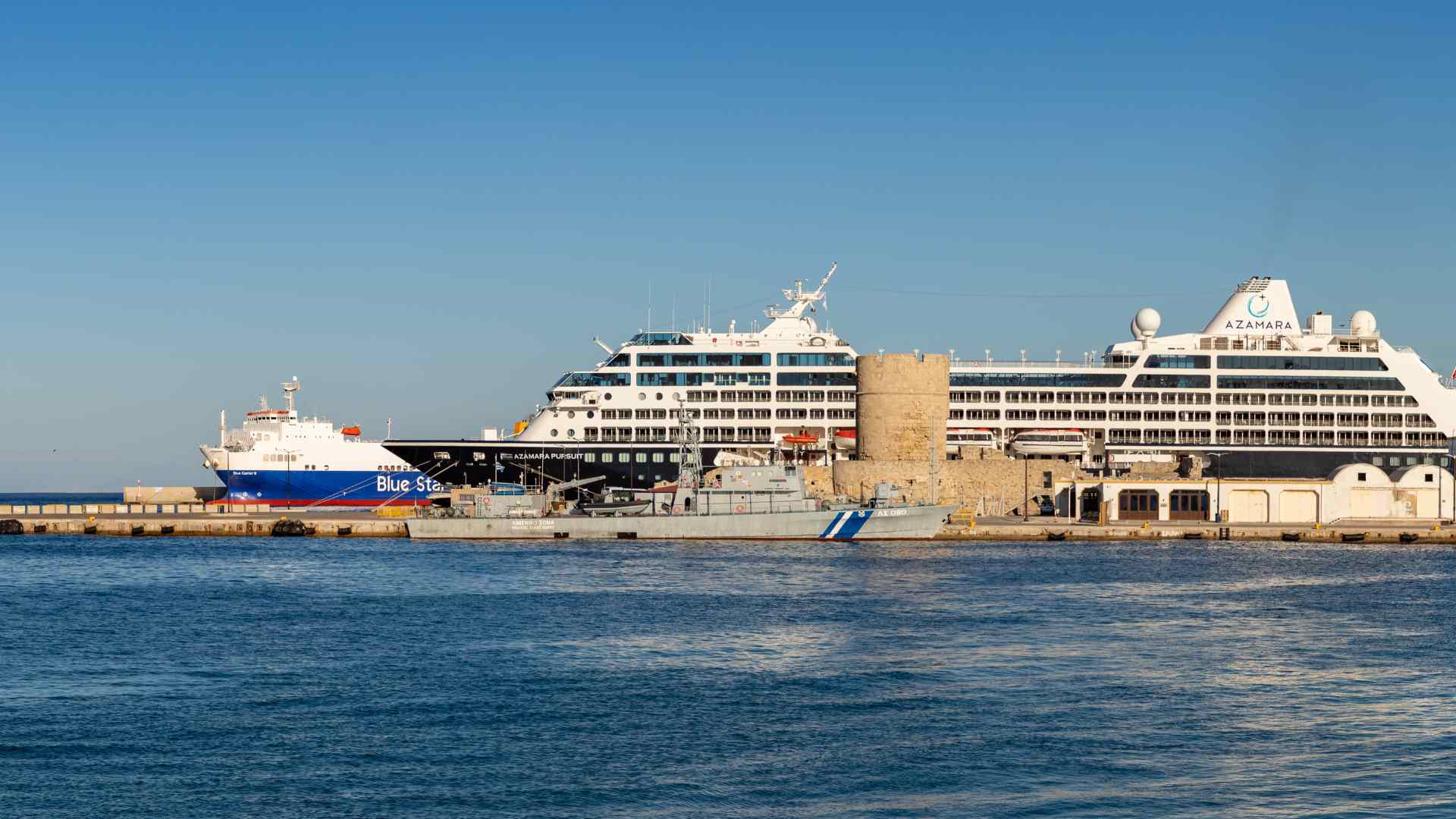
Rhodes Town contains several neighboring harbors, and the names matter when you plan a walk or arrange a driver. Cruise calls generally use Tourist Port beside the eastern Old Town walls or the Akandia harbor area just to the south.
Tourist Port gives the dream arrival because the historic gates are only minutes away after you clear the controlled quay. An Akandia position adds distance, and shuttle arrangements can vary by cruise line and day.
Ships normally berth alongside rather than tendering, which removes much of the uncertainty found at other Greek island calls. Marine operations can still change, so the ship’s daily program remains the authority for your gangway, exit, and return.
Do not confuse the cruise quay with Kolona, Mandraki, or ferry areas shown on a general map. Send an independent driver the ship name and exact pickup instructions instead of simply writing Rhodes port.
The walk from the ship to the medieval walls
From a Tourist Port berth, you clear the terminal or port gate, cross the waterfront road where directed, and enter the Old Town through a nearby gate. The route is short, but traffic, security controls, and the length of your specific quay can make the real time longer than a map suggests.
Akandia passengers should follow the line’s walking or shuttle guidance because the extra port distance changes the calculation. A hot midday walk that looks modest on a screen can feel much longer with no shade.
Photograph the gate you use and drop a map pin at the port entrance. Rhodes has multiple medieval gates, and leaving through the wrong one can place you on an entirely different side of the walls.
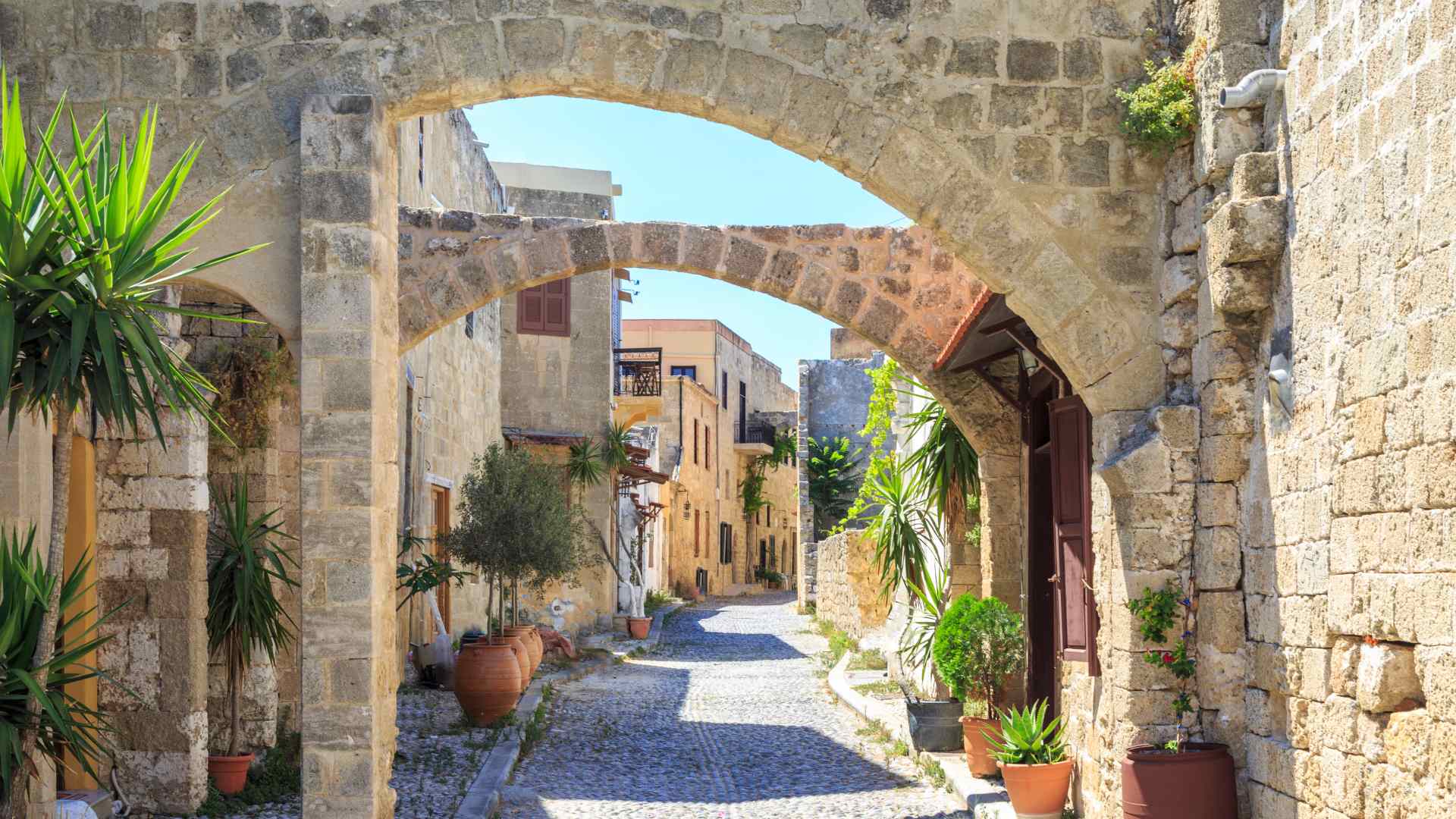
The Old Town is a living district, not a preserved film set. Residents, deliveries, worship, restoration work, and local business continue around the monuments, which is part of what makes the city feel real.
Why the Old Town deserves most of your day
UNESCO inscribed the Medieval City of Rhodes in 1988 and describes a layered urban ensemble shaped by the Knights of Saint John, later Ottoman rule, and Italian occupation. Gothic buildings, mosques, baths, houses, fortifications, and public spaces remain woven together inside walls roughly four kilometers long.
The Knights held Rhodes from 1309 until 1522 and transformed the capital into a fortified stronghold. The Palace of the Grand Master, Great Hospital, and Street of the Knights define the Upper Town, while the Lower Town reveals the later complexity that keeps Rhodes from feeling like a one-period museum.
This is a place to wander as well as visit named attractions. Main shopping lanes can be intensely crowded, yet turning one or two streets away often produces quiet courtyards, arches, cats, workshops, and moments when the stonework becomes the story.
A practical Old Town walking route
Start with the Street of the Knights
The Street of the Knights climbs through the Upper Town between historic inns associated with the Order’s different linguistic groups. Its scale is compact, and the disciplined Gothic facades make it one of the most complete medieval urban scenes in Greece.
Go early if photography matters because group traffic builds quickly. The incline and polished cobbles require careful footing even though the street itself is not long.
Visit the Palace of the Grand Master
The palace anchors the fortified city visually and historically. Parts were substantially reconstructed during Italian rule, and the current visitor experience combines architecture, courtyards, mosaics, and exhibitions.
Check the official Hellenic Heritage ticket system or Ministry of Culture information for current hours, admission, seasonal closure patterns, and any timed-entry rule. Heat alerts, conservation work, and holidays can change access after an old guide was published.
Allow enough time for security and interior circulation rather than treating the palace as a quick photo stop. If crowds are heavy, the building’s exterior and surrounding lanes can still provide a satisfying sense of the complex.
Continue to the Archaeological Museum
The Archaeological Museum occupies the Great Hospital of the Knights, built in the fifteenth century. The courtyard and stone interiors are as compelling as many of the objects, particularly when summer heat makes an indoor stop welcome.
Museum hours and combined-ticket arrangements can change by season, so confirm them through official cultural channels. Do not assume the palace and museum share identical opening days or last-entry times.
Explore the Lower Town
The Lower Town is where Gothic, Ottoman, Jewish, and everyday residential history overlap most visibly. Mosques, fountains, arches, commercial lanes, and quieter squares reward travelers who stop trying to follow a perfect line.
Sokratous Street carries much of the shopping crowd. Step away from it carefully, keep your orientation, and give yourself permission to enjoy a cafe or small shop that never appears on a top-ten list.
Visit the Jewish quarter respectfully
Kahal Shalom Synagogue and the surrounding Jewish quarter hold an important part of Rhodes history. Access and museum hours can vary, and visitors should approach memorial spaces quietly and dress appropriately.
The stop adds necessary human context to a day that might otherwise remain focused on walls and knights. Check current opening details and avoid arriving just before closing.
Mandraki harbor and the New Town
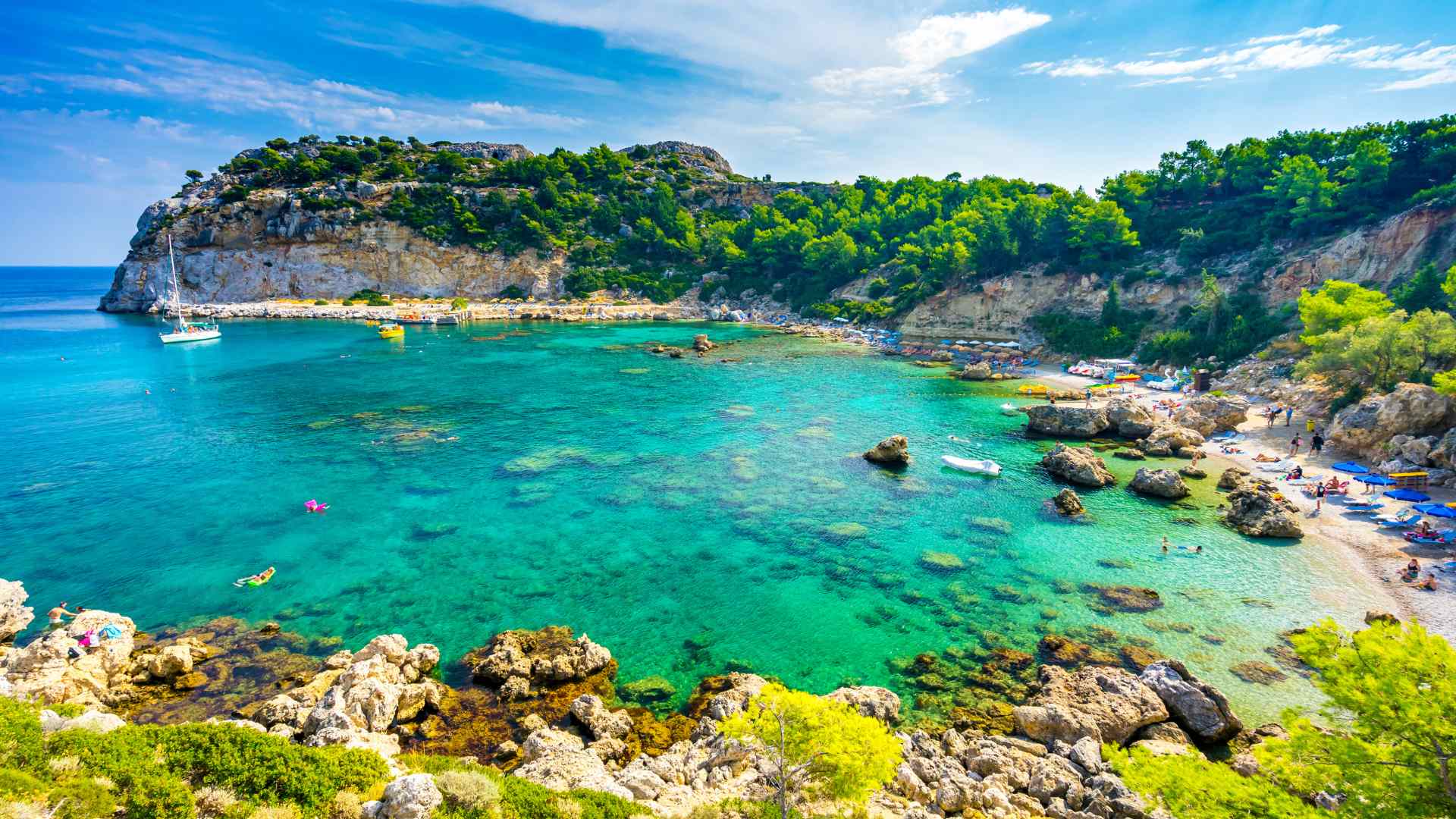
Mandraki lies north of the medieval city and offers a different waterfront atmosphere with boats, windmills, and the deer columns near the harbor entrance. Tradition links the harbor with the Colossus of Rhodes, although its precise location remains uncertain.
A route from the Old Town to Mandraki works well when you want open sea views after enclosed lanes. The waterfront is generally easier than the cobbled interior, but crossings, curbs, sun exposure, and changing construction still matter.
The New Town also contains shops, cafes, beaches, and Italian-era architecture. Travelers who have visited the Old Town before can build an excellent port day around Mandraki and the northern tip without repeating every major monument.
Lindos: the beautiful complicated choice
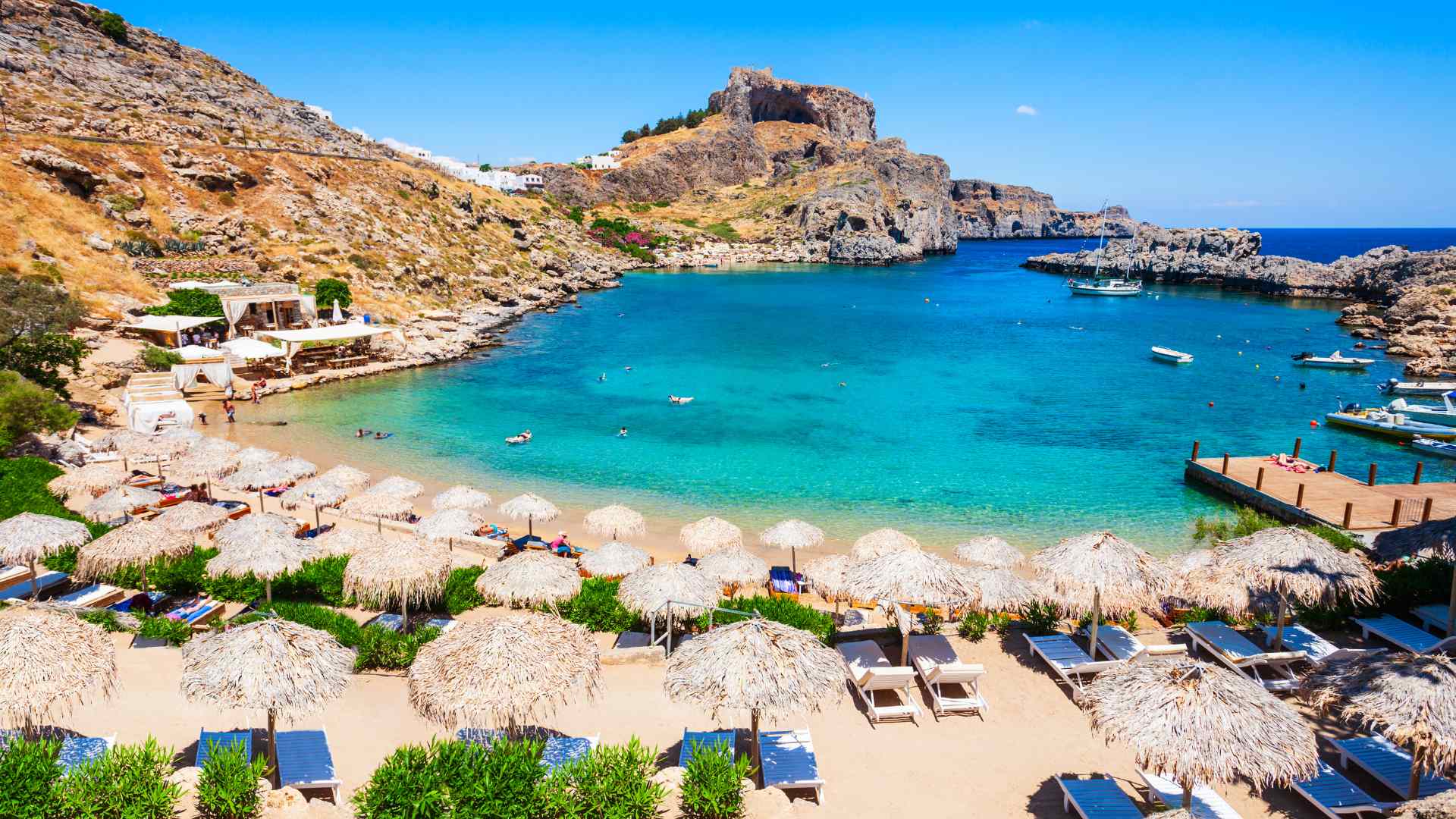
Lindos sits down the east coast with a whitewashed village below a fortified acropolis. At the summit, the Sanctuary of Athena Lindia occupies a spectacular position above blue bays and later defensive walls.
The journey usually takes about an hour each way by road, depending on traffic, pickup, and the season. The final approach requires walking through pedestrian village lanes before a steep, exposed climb and ancient steps.
Lindos is not an attraction to squeeze into the middle of a six-hour call. It works best as an early main event on a long day, with Rhodes Old Town reserved as the flexible second half.
Even visitors who skip the acropolis can enjoy village lanes, rooftop views, pebble-mosaic courtyards, and a relaxed meal. Be realistic about crowds because the narrow streets can become slow-moving in peak summer.
Getting from Rhodes Town to Lindos
Public bus
KTEL Rodou operates the Rhodes Town to Lindos corridor and publishes schedules and stop information. Timetables change by season and day, so use the operator’s current information rather than copying times from an older article.
Locate the departure point before committing, identify at least one earlier return, and allow time to walk between the cruise gate and bus station. A missed bus is inconvenient on vacation and potentially catastrophic on a port day.
The bus is the budget choice, but it gives you less control over departure and delay. Avoid it when the sailing is short, the schedule is sparse, or the return has no safe backup.
Taxi or private driver
A taxi offers direct travel and control over pickup time, particularly useful for a group. Agree on the total fare, currency, waiting arrangement, exact meeting point, and return deadline in writing before leaving.
Ask whether the driver stays in Lindos or returns later, since those are different arrangements. Save the phone number offline and choose a return early enough to survive traffic or a meeting-point misunderstanding.
Cruise-line excursion
A ship excursion generally costs more, but its protected return and coordinated departure reduce risk. It can be worth the premium on a medium-length call, during peak crowds, or when a family does not want to manage bus logistics.
Read the activity description closely because some tours include the acropolis climb while others focus on a village orientation or viewpoint. Coach parking is outside the pedestrian core, so every product still includes some walking.
Seasonal boat
Excursion boats may connect the Rhodes Town waterfront with Lindos during the visitor season. The coastal view can be lovely, but marine weather, a slower journey, and fixed return time make the option more complex than it first appears.
Confirm the departure harbor, full sailing time, shore transfer, cancellation policy, and return buffer. A one-way combination only works when the other transport leg is securely arranged.
Climbing the Lindos Acropolis
The acropolis approach is steep, stepped, exposed, and demanding in summer heat. Start early, carry water, wear shoes with grip, and obey any midday closure or heat-safety instruction from Greek authorities.
Official cultural information should be checked for current admission, hours, accessibility, and last entry. The ancient site is not a practical wheelchair visit, and even strong walkers may need frequent pauses.
Animal rides have historically been offered in Lindos, but they do not remove the final site steps and raise welfare concerns for many travelers. Walking at a controlled pace or enjoying the village without the summit is a valid choice.
At the top, views over Saint Paul’s Bay and the coast can be extraordinary. Take care near edges, keep children close, and remember that the descent on worn stone often demands more concentration than the climb.
Other excursions from Rhodes cruise port
Valley of the Butterflies
The Valley of the Butterflies is a shaded inland gorge best known for seasonal gatherings of Jersey tiger moths. The natural setting can be pleasant outside peak activity, but the signature wildlife experience is seasonal rather than guaranteed.
Paths include inclines and steps, and visitors should follow quiet behavior rules that protect resting insects. Confirm current access, conditions, and the likelihood of seasonal activity before making it the day’s main excursion.
Kallithea Springs
Kallithea Springs combines restored architecture, gardens, sea views, and swimming access closer to Rhodes Town than Lindos. It can suit travelers who want a lighter coastal outing without surrendering most of the day to road time.
Check official opening, event closures, swimming conditions, and facility access. A prearranged return is wise because taxi availability can tighten when several ships share the island.
Beach time
Rhodes offers numerous beaches, including options around Rhodes Town and farther along the east coast. Choose based on travel time, wind, seabed, chair availability, and the kind of facilities your group actually needs.
A town beach can be the smartest add-on after the Old Town because it avoids another long transfer. Keep valuables secure, follow local flags, and leave time to rinse off and return through port security.
Food worth pausing for
Rhodes makes lunch easy to build into sightseeing, with grilled fish, meze, stuffed vegetables, salads, local cheeses, lamb, and honey-based sweets appearing widely. Ask about house specialties instead of automatically ordering the most familiar Greek dish.
Restaurants on the busiest lanes trade heavily on location, while quieter side streets may offer a slower local atmosphere. Check the menu, service pace, cover charges, and seafood pricing before you sit down.
A quick plan can use a bakery, gyro counter, or casual meze stop. A long taverna lunch is delightful only when you request the bill early enough that Mediterranean pacing never threatens all aboard.
Greece uses the euro, and cards are common, but small cash helps for kiosks, tips, and minor purchases. Carry a backup payment method and confirm whether a taxi accepts cards before departure.
Accessibility in Rhodes
Rhodes is unusually convenient at port level but challenging once medieval surfaces begin. The short distance from Tourist Port is helpful, while cobbles, steep lanes, thresholds, steps, and crowds can complicate a self-guided route.
The Palace of the Grand Master has published accessibility provisions, but the approach through the Old Town still needs planning. Contact the official site for current ramp, elevator, restroom, and companion details rather than assuming every gallery is reachable.
Mandraki and parts of the waterfront can provide a smoother alternative with harbor views and nearby cafes. Akandia passengers should ask about an accessible shuttle or taxi because the extra port distance matters.
Lindos Acropolis is not a practical wheelchair visit due to the steep village approach and ancient stairs. A road tour with viewpoints, a beach facility with confirmed access, or a focused Rhodes Town day will usually be more rewarding.
Heat, wind, and seasonal conditions
Summer in Rhodes is hot, bright, and generally dry, with stone surfaces reflecting heat into the afternoon. Visit exposed sites early, wear a hat that stays secure, use sunscreen, and refill water before entering a long stretch of lanes.
The meltemi can bring strong seasonal wind, especially around exposed waterfronts and viewpoints. It may feel refreshing in town while disrupting small-boat plans or making loose clothing and hats difficult.
Spring and fall often provide more comfortable walking temperatures, though rain and shorter opening hours become more possible. Winter calls need current attraction schedules because weekly closures and reduced operations may differ from summer.
Greek authorities can restrict access to outdoor archaeological sites during extreme heat. Build a plan that can move the palace, museum, shaded lanes, or lunch into the hottest period without ruining the day.
Documents, safety, and return planning
Carry the cruise card and whatever identification your line requires ashore. Save the port-agent contact, ship name, berth, all aboard time, and port entrance on a phone that works offline.
Rhodes is busy and visitor-friendly, but crowded shopping streets still reward ordinary awareness. Keep phones and wallets secure, use licensed transport, watch for scooters, and cross only when traffic allows.
The European emergency number is 112. For a cruise-specific delay or lost document, contact the port agent or ship promptly through the information supplied onboard.
Return to the port well before all aboard, especially from Lindos. Your buffer must cover road traffic, bus delays, a wrong Old Town gate, the length of the quay, and port security.
Three realistic Rhodes port-day plans
A short call
Stay in Rhodes Town for the Street of the Knights, Palace exterior or interior, Archaeological Museum or Lower Town, and a relaxed lunch. Finish near the harbor so the final return remains easy.
A long call with Lindos
Leave for Lindos early, climb before peak heat if conditions allow, and return to Rhodes Town with at least 90 minutes of independent-travel margin before all aboard. Use the Old Town as a flexible afternoon rather than attaching a rigid second checklist.
A lower-energy day
Arrange the easiest transfer from your berth to a suitable Old Town entrance, focus on one accessible palace visit if confirmed, then continue by vehicle or smooth waterfront route to Mandraki. Add a harbor lunch and skip Lindos without regret.
Common Rhodes planning mistakes
The first mistake is assuming every berth is equally close to the medieval gates. Tourist Port and Akandia are neighbors, but the passenger walking experience is not identical.
The second is trying to fit Lindos into a short call because the island looks small. Road time, pedestrian lanes, ticket lines, the exposed climb, and the return consume more of the day than distance alone suggests.
The third is relying on a saved bus timetable or museum closure pattern. Seasonal schedules, holidays, heat alerts, and operating changes require a fresh official check.
The fourth is navigating the Old Town by instinct on the return. Multiple gates look plausible, so use your saved pin rather than discovering the wrong side of the walls at the worst moment.
The fifth is spending the entire visit on Sokratous Street. Two turns away, the city becomes quieter, more architectural, and much more memorable.
Rhodes cruise port frequently asked questions
Do cruise ships tender in Rhodes?
Cruise ships normally berth alongside at Tourist Port or Akandia. Operational changes remain possible, and your line provides the final arrival instructions.
Can I walk to the Old Town?
Yes, Tourist Port sits beside the walls and offers a very short walk. An Akandia position is farther south, so confirm the line’s shuttle or walking guidance.
Is Lindos possible independently?
Yes, using a current KTEL Rodou bus schedule or a prearranged taxi. Choose an early return that reaches Rhodes Town with a generous cushion and a backup.
Should I visit the palace or museum?
The palace delivers the grand fortified setting, while the Archaeological Museum combines collections with the historic Great Hospital. On a hot day, either provides valuable indoor time, and a long call can include both.
Is Rhodes good for limited mobility?
The port proximity is excellent, but medieval cobbles and steps create real barriers. Confirm palace accessibility, consider Mandraki’s waterfront, and avoid Lindos Acropolis if stairs or steep terrain are unsuitable.
Where was the Colossus of Rhodes?
Tradition often places it around Mandraki harbor, but historians do not know its exact position. Enjoy the deer columns and waterfront without treating a popular reconstruction as settled fact.
The bottom line
Rhodes gives cruise passengers something precious: a major historic experience without a major transfer. The UNESCO Old Town can fill an entire day, and it becomes better when you stop chasing every landmark and start noticing how Gothic, Ottoman, Italian, and modern life share the lanes.
Add Lindos only when the clock, weather, and your energy leave room for the climb and an early return. For a wider island comparison, use our Greek cruise ports guide, and see our Rhodes cruise port hotels guide if you are staying before or after the sailing.
Planning note: Berths, shuttles, bus schedules, tickets, site hours, heat closures, and accessibility arrangements can change. Confirm time-sensitive details with your cruise line, port authority, KTEL Rodou, and official Greek cultural sites before travel.
How this guide was researched: This guide was checked against current official port, KTEL Rodou, UNESCO, Greek cultural-heritage, attraction, and public-safety information. Logistics and time-sensitive details were reviewed September 11, 2026; see our Editorial Policy.