Messina Cruise Port: Taormina, Etna & the Duomo Clock
Messina is the rare Sicilian port where the ship parks in the middle of the city and the day simply opens up. You can be standing under the cathedral clock in ten minutes, or on a motorcoach toward Mount Etna before your coffee has worn off.
Almost everyone leaves immediately for Taormina. That is a perfectly good plan, and I still think Messina itself earns an hour of your time.
My quick take
Messina is a gateway port and it knows it. The city was destroyed by the 1908 earthquake and rebuilt low, wide, and sensible, so it does not have the layered swagger of Palermo or Siracusa.
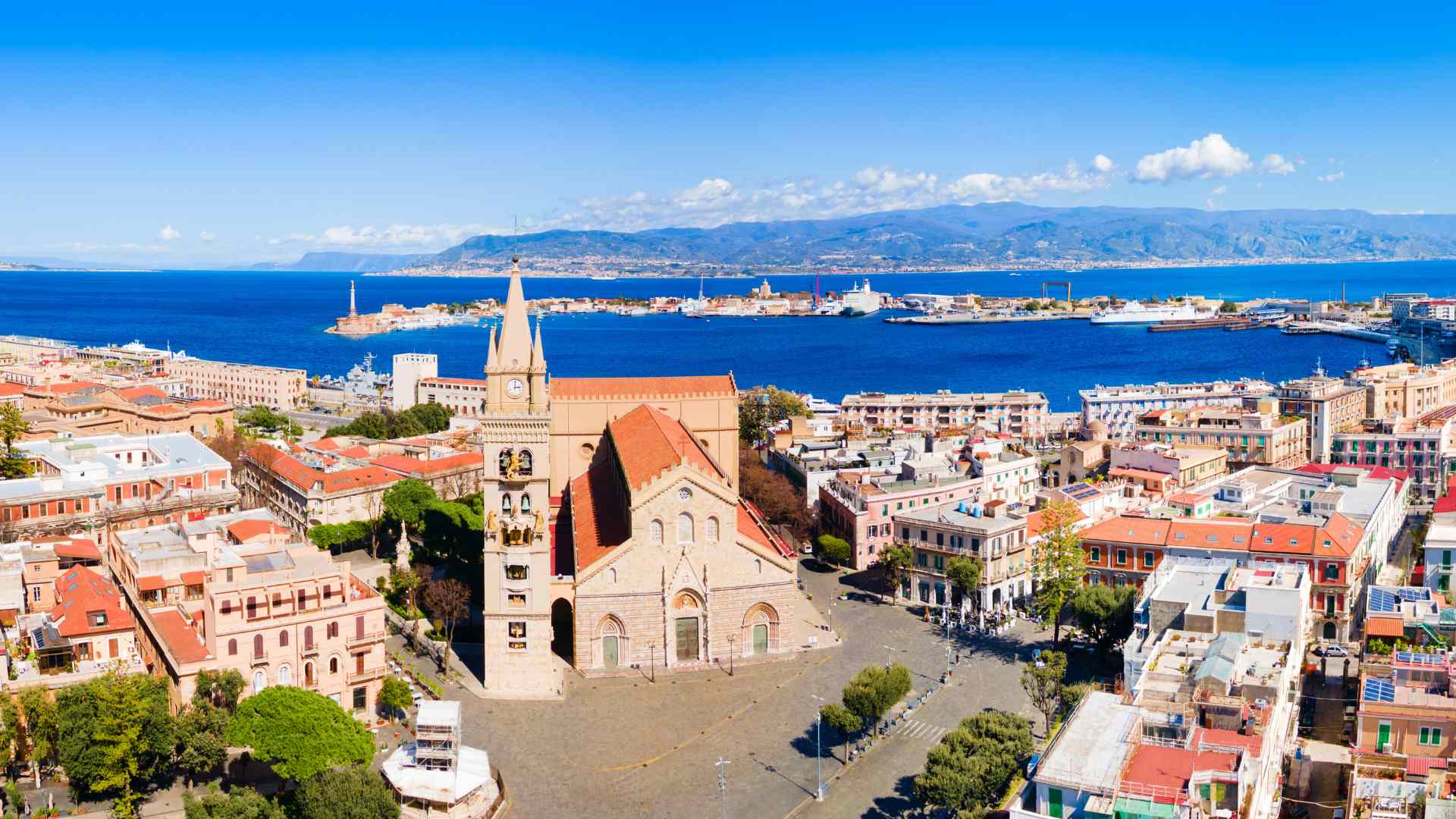
What it does have is one genuinely great piece of theater. At noon the astronomical clock on the cathedral bell tower runs its full mechanical routine, and the piazza fills up to watch a set of gilded figures do their jobs.
So my plan depends on ambition. If this is your only Sicilian call, get out to Taormina or Etna and treat Messina as the bookend, and if you have already done both, stay put and walk.
Either way you are dealing with one of the easiest berths in the Mediterranean. If you are stitching a wider itinerary together, my roundup of Mediterranean cruise ports shows where a Sicilian call like this one fits between the bigger city stops.
If you would rather arrive a day early, our Messina cruise port hotels guide has the shortlist.
Messina Cruise Port Quick Facts
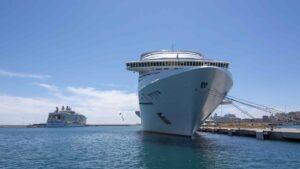
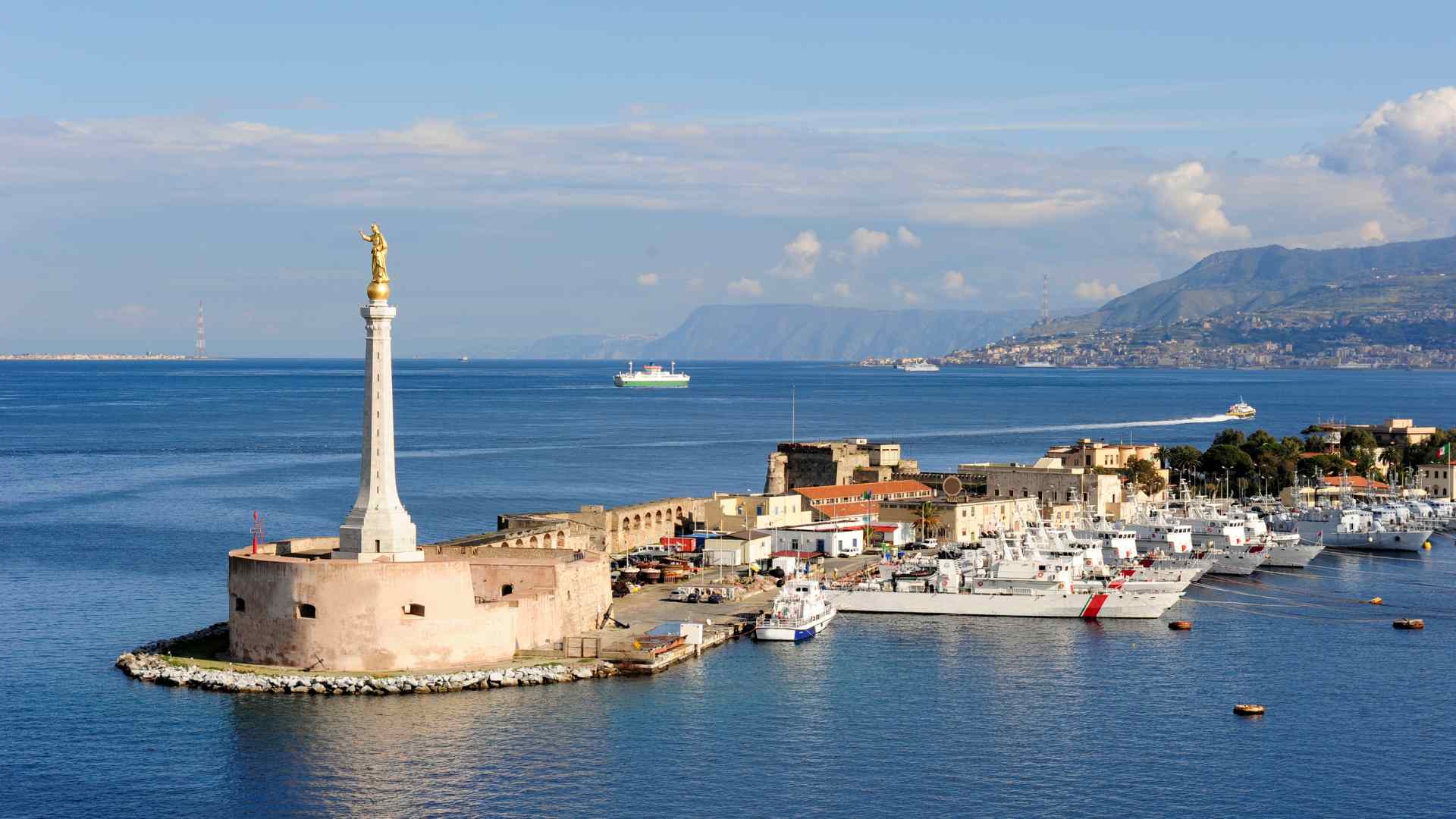
- Where you land: the cruise quays run along the city waterfront beside Via Vittorio Emanuele II, inside the harbor’s natural hook. A new cruise terminal is being built at the Colapesce quay under a concession awarded to an MSC group company.
- Dock or tender: The port works with about 3,940 feet of quay across five berths and handles ships over 985 feet long.
- Into town: Piazza Duomo is about a 10 minute walk from the berths, and there is usually no shuttle because there is no need for one.
- Currency and language: The euro (EUR) and Italian, with cards accepted almost everywhere that has a till.
- Time zone: Central European Summer Time (CEST, UTC+2) during the cruise season, Central European Time (CET, UTC+1) in winter.
- Weather and operations: Ships normally berth alongside in the sheltered harbor, but the port and cruise line make the final operational decision.
Berthing, the port gate, and the walk into town
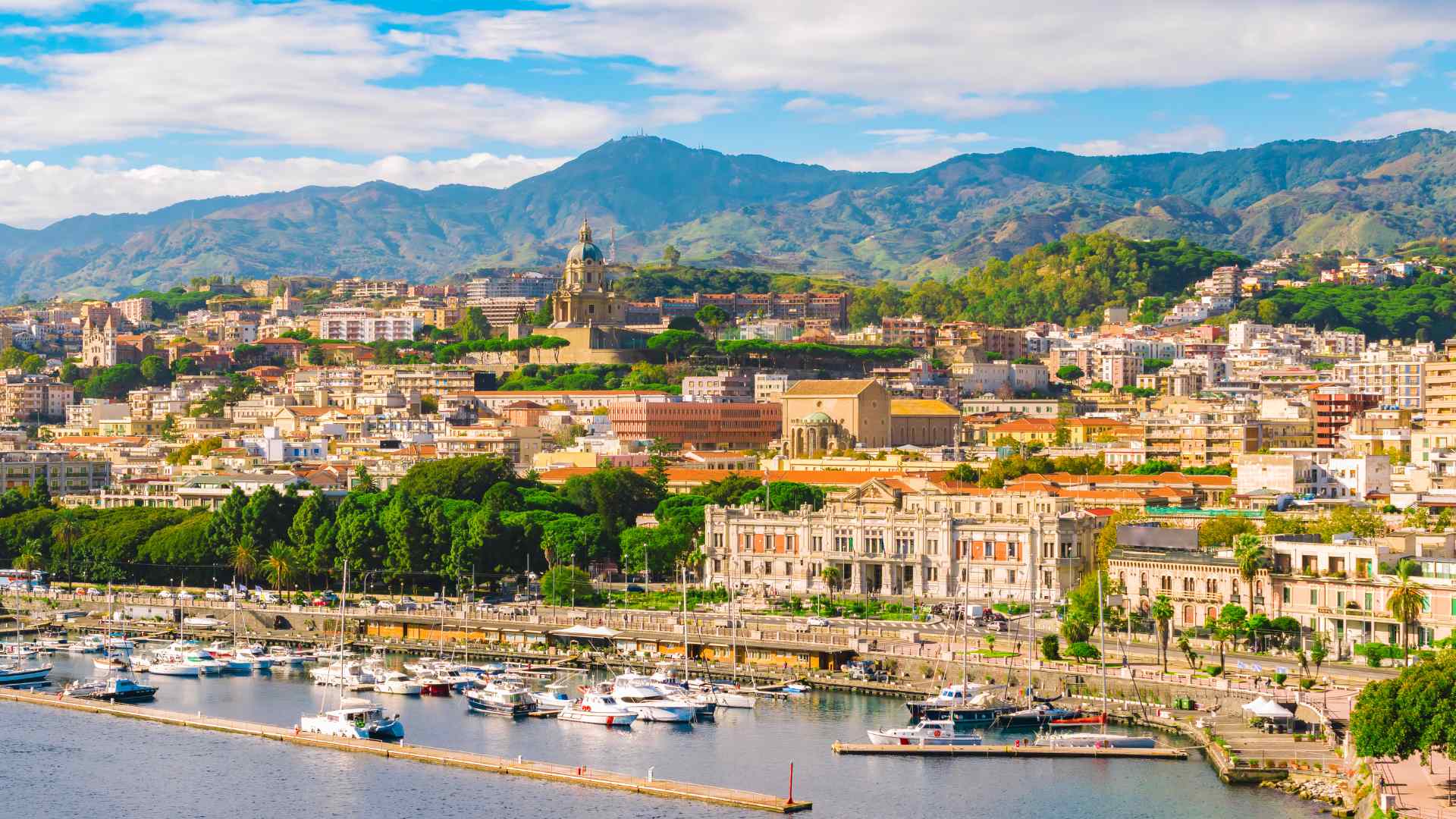
Messina’s cruise berths sit inside the city rather than out on some industrial spur, which is the whole reason this port is a pleasure. You come down the gangway, walk a few hundred yards, and you are on a normal Sicilian street.
The harbor is run by the Port System Authority of the Strait, which also covers Milazzo and Reggio Calabria across the water. Its official Port of Messina pages are the place to check if anything unusual is happening on your call date.
The one wrinkle right now is construction. The new terminal at the Colapesce quay means hoardings and shifting pedestrian routes inside the port gate, so follow the marshals rather than your memory of a previous visit.
Once you are through the gate you are on the main waterfront road, and you cross it to reach the streets behind. Messina traffic is enthusiastic, so use the marked crossings instead of trusting your reflexes.
The only hard deadline of the day is noon at the cathedral. If you want a view of the bell tower rather than the back of somebody’s phone, be in Piazza Duomo by about a quarter to twelve.
Getting around
Messina Centrale is the main train station and it sits at the southern end of the port, walkable from most berths in around fifteen minutes. It is comfortably the cheapest way to reach Taormina.
Regional trains run to Taormina-Giardini in roughly 45 to 60 minutes, depending on the service. Check the live return schedule before leaving Messina and remember that the station is below Taormina, not in its pedestrian center.
Taormina-Giardini station sits below the hill town, so use the connecting bus or a taxi and allow for queues. The Mazzaro cable car links Taormina with the coast near Isola Bella, but it is not a direct connection from the rail station.
ATM’s tram links parts of the waterfront, station area, and northern city, but service patterns and ticket rules can change. Check ATM’s live information on the day, especially if the regional museum is your target, and keep a taxi fallback for a short call.
Taxis and tour touts wait just outside the port gate. Agree the price before you get in for anything out of town, because Etna and Taormina round trips are half day jobs and priced accordingly.
The stops I would actually spend time on
Messina rewards a short, targeted wander rather than a grand tour, and the big draws are out of town anyway. These are the things I would prioritize, roughly in the order I would reach them.
Duomo di Messina and the astronomical clock: The cathedral is Norman in origin and has been rebuilt more than once, most drastically after 1908 and again after wartime bombing. The clock mechanism was made by Ungerer of Strasbourg in 1933 and performs at noon sharp.
Fontana di Orione: The official Sicily tourism board calls this the most beautiful fountain of the sixteenth century in Europe, which is a bold swing. It stands beside the cathedral, it is by Montorsoli, and it costs you nothing to judge for yourself.
Museo Regionale Interdisciplinare: The current museum complex on Viale della Liberta displays major works by Antonello da Messina and Caravaggio. The collection moved from the former silk-mill building into its newer adjacent galleries, so check the regional museum’s current hours and entrance rather than an old map pin.
Santissima Annunziata dei Catalani: A small church of Norman date that now sits noticeably below the modern street, because the city rebuilt itself higher around it. It takes five minutes and it is the oldest thing you will see downtown.
Taormina: The cliff town pairs the Teatro Antico with a pedestrian center and views toward Etna. Tickets, hours, event closures, and accessible routes change, so reserve the theater only after checking the official cultural-site listing for your date.
Mount Etna: Cruise excursions normally reach an approved visitor area, with altitude depending on volcanic activity, weather, and the product purchased. Confirm the highest point, walking surface, cable-car or 4×4 inclusion, clothing needs, and cancellation plan before paying.
The Madonnina del Porto: A gilded statue on a column at the tip of the San Raineri sandspit, carrying a Latin blessing over the city and every ship that passes. You will get the best view of it from your own deck on the way in.
Granita and brioche: Sicilian granita is not a slushie and Messina takes the distinction personally. Order lemon or almond with a brioche on the side and call it a legitimate breakfast.
Fun fact: Etna has one of the longest documented eruption records anywhere on earth, with activity noted for at least 2,700 years. It joined the World Heritage list in 2013, and the official UNESCO listing for Mount Etna is a much better read than any tour brochure.
How I would plan the day
On a standard eight or nine hour call you can do one big thing out of town and still see the clock. Taormina is the easier of the two because the train does most of the work.
Etna is the excursion I would protect through the ship or a reputable operator that monitors official restrictions and guarantees the return. Volcanic activity, wind, cloud, and road controls can change the route after departure, so a summit-style promise is a warning sign.
If your call is short, forget both and give Messina three hours on foot. Cathedral, fountain, a wander through the streets behind, granita, done, and you will still be back aboard early.
The crowd pattern here is unusual because most people vanish onto motorcoaches by nine. That leaves the town oddly calm until the tours come back, which is why an independent walk in the morning feels so relaxed.
A strong plan B for rain is the regional museum, which is indoors, air conditioned, and has two Caravaggios in it. That is a better wet afternoon than most ports can offer.
A realistic word on accessibility
The port itself is about as easy as Italy gets. You dock rather than tender, the quayside is flat, and the route to Piazza Duomo has no hills and no steps worth the name.
Beyond that it gets harder quickly. Sicilian sidewalks are uneven, dropped curbs are inconsistent, and the historic churches were not designed with ramps in mind.
Taormina is steep and can be crowded, while Etna adds altitude and rough volcanic ground. Ask for an adapted vehicle and an exact step-free route, and do not assume the cable car or ancient theater will meet every mobility need.
When to go, and the weather
August is the hottest month, averaging around 82°F across the day and pushing well past 100°F when the wind swings around from Africa. The sea peaks near 80°F, which is the one consolation.
February is the cool end of the scale, averaging near 54°F, which is still perfectly walkable weather. Messina gets around 33 inches of rain a year, and almost all of it falls between late fall and early spring.
The best windows are mid April to mid May and mid September to mid October, when the light is good and the tour bus lots are not. The regional tourism board’s official Visit Sicily site is a reliable place to check festival dates before you plan around them.
Pack for two climates if Etna is on the list, because the mountain is routinely twenty degrees cooler than the coast and often windy. A layer, a hat, and shoes with grip cover it.
Choose one main outing
Four to five hours: stay in Messina for the cathedral, noon clock, Annunziata dei Catalani, and a waterfront stop. This is the least fragile plan and works well when weather or a late arrival compresses the call.
Seven to nine hours: choose Taormina or Etna, not both, then keep any remaining Messina walk close to the port. Taormina is better for independent travelers, while Etna is better with protected transportation and clear activity-level details.
A train day needs the port-to-station walk, the uphill Taormina transfer, and a backup return built into the schedule. A road tour needs extra time for highway traffic and should be back in Messina 90 minutes or more before all-aboard.
Non-Schengen visitors may encounter Entry/Exit System processing when the sailing first crosses an external Schengen border. ETIAS is not operating as of September 10, 2026, so ignore sites selling an immediate authorization and check the European Union’s official travel portal.
Quick answers
Do you tender at Messina? Normal cruise calls berth alongside on the city waterfront, with the exact quay and walking route set by current operations.
Can I get to Taormina on my own? Yes by regional train plus a bus or taxi uphill, or by direct road transfer, provided the return reaches Messina at least 90 minutes before all-aboard.
Is Messina worth staying in? Yes for a short call or slower day because the cathedral, noon clock, historic churches, food, and museum can fill several comfortable hours.
Is there a shuttle from the ship? Usually not for central berths, but construction or an unusual quay can change the route and the daily program is the final word.
The last word
Messina is a port people rush through, and I understand why, because Taormina and Etna are genuinely worth the trip. But a place that hands you a walk-off berth in the middle of a real Italian city deserves better than a motorcoach window.
Give it the morning or give it the last two hours, but give it something. The clock alone justifies the detour.
If Sicily is the theme of your itinerary, my Palermo cruise port guide covers the island’s loud, layered capital, and Valletta makes a natural companion call just south. For the mainland version of the same easy walk-off idea, try Naples.
How this guide was researched: This guide uses the Port System Authority of the Strait, Trenitalia, local transit, Sicily’s official cultural and tourism sources, UNESCO, and European Union entry guidance. Berths, construction, transfers, attraction status, access, volcanic conditions, and return margins were reviewed on September 11, 2026; see our Editorial Policy.