Cartagena, Spain Cruise Port Guide for 2026
Cartagena may be Spain’s easiest history lesson from a cruise ship. You step into a handsome Mediterranean waterfront, walk toward the center, and move from a modern marina to Roman streets, Punic defenses, naval inventions, and Art Nouveau facades without needing a coach.
This is Cartagena in the Region of Murcia, not Cartagena de Indias in Colombia. The Spanish port is compact, deeply layered, and unusually kind to independent visitors who prefer ancient ruins with lunch rather than a full-day bus tour.
Quick Facts
- Country and region: Spain, in the Region of Murcia on the southeastern Mediterranean coast.
- Arrival: Cruise ships normally berth at the passenger terminal beside the marina and city waterfront.
- City access: The historic center begins a short, level walk from the cruise area.
- Best first attraction: The Roman Theatre Museum, with its entrance near City Hall.
- Closest major museum: ARQVA, Spain’s National Museum of Underwater Archaeology, on the waterfront.
- Currency: Euro, with cards widely accepted.
- Language: Spanish, with some English in visitor-facing businesses.
- Best simple plan: Roman Theatre, old-town streets, a waterfront museum, and lunch near the port.
Where cruise ships dock
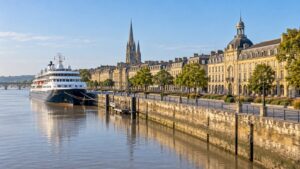
Cartagena’s cruise facilities sit on the commercial waterfront beside the marina, facing the historic center rather than an industrial edge miles away. Most passengers walk from the gangway toward the palm-lined promenade and Plaza del Ayuntamiento.
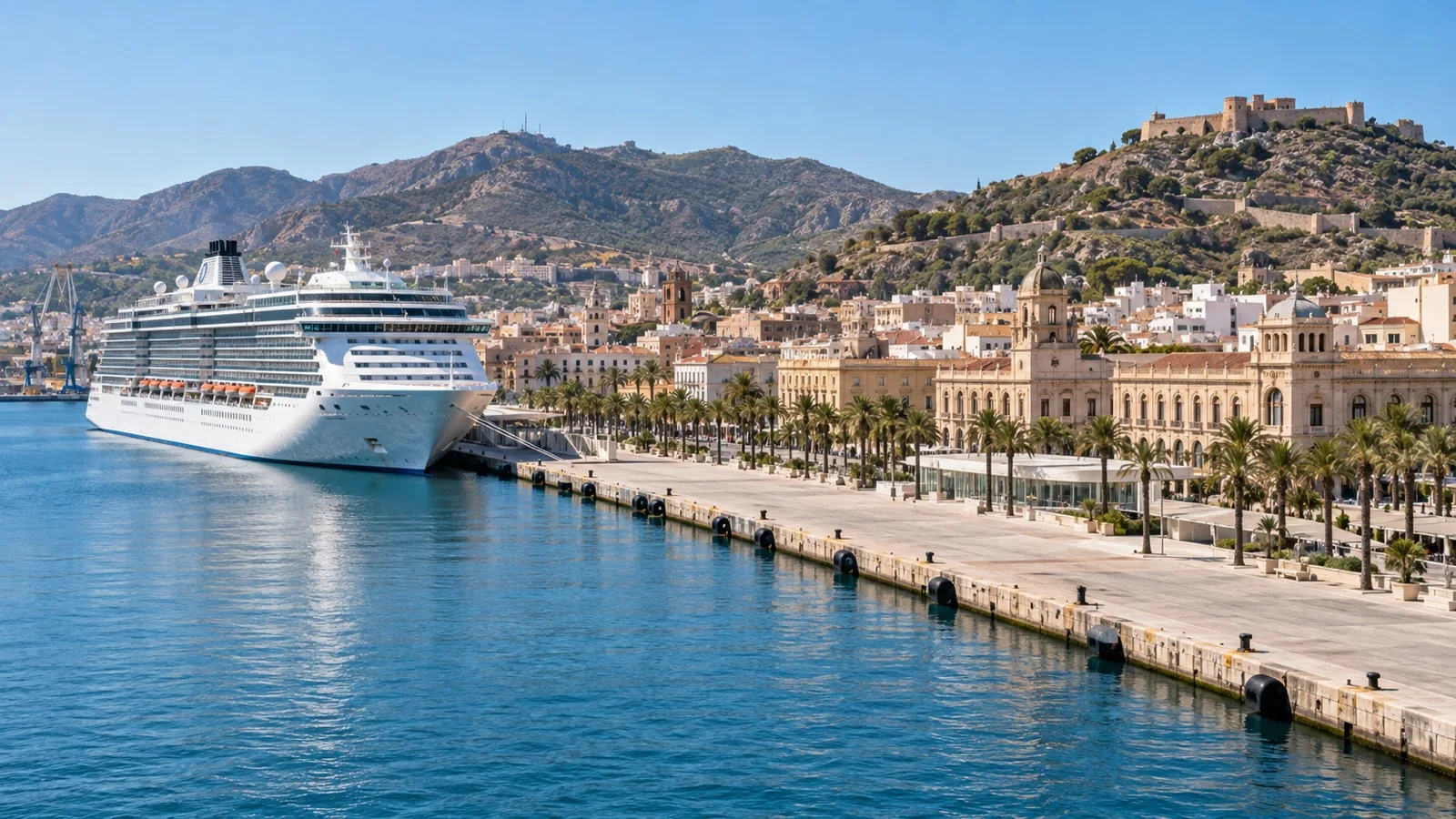
Your assigned berth can still vary by vessel and port operations, so follow the terminal route marked for your ship. If a shuttle is provided from a more distant position, note its final return time before leaving the drop-off point.
The natural harbor’s hills and fortifications explain why Cartagena mattered to Carthaginians, Romans, and later naval powers. You do not need a lecture to see the strategic logic once you look back at the narrow entrance from the waterfront.
The walk into town is the gift
Walk along the Paseo Alfonso XII with the water on one side and the city’s monuments ahead. ARQVA appears near the cruise route, while the elegant City Hall and the Roman Theatre Museum entrance sit just beyond the waterfront.
The central streets are pedestrian friendly by Mediterranean port standards, although curb cuts, paving, and grades vary once you head toward archaeological sites. Wear shoes for stone rather than shoes selected only for the ship’s dining room.
Start with the Roman Theatre
The Roman Theatre is Cartagena’s essential first visit because the museum turns a spectacular ruin into a coherent story. Its entrance near Plaza del Ayuntamiento can look surprisingly discreet compared with the ancient monument waiting behind it.
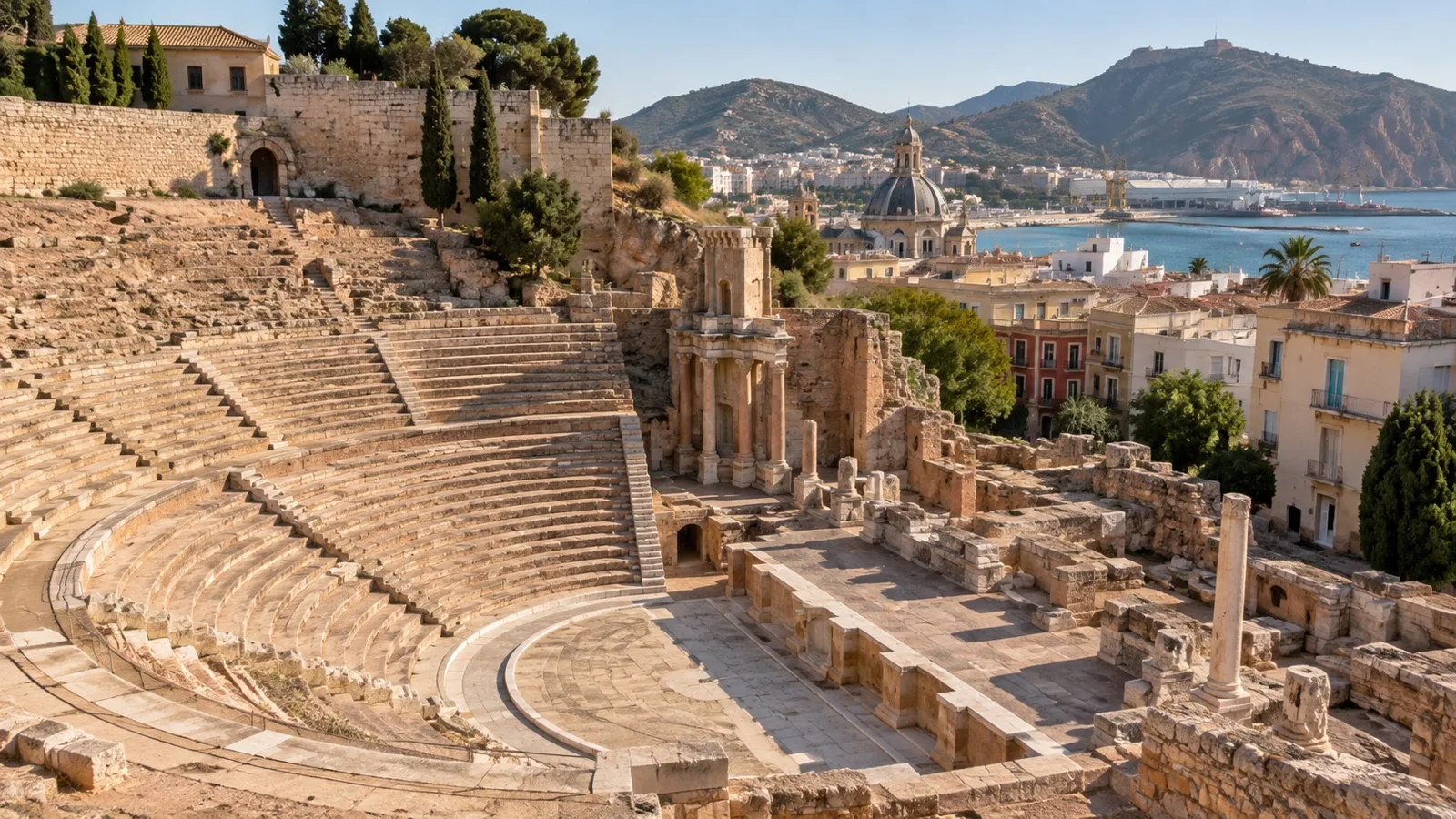
The official Roman Theatre Museum explains that architect Rafael Moneo’s route moves visitors through the collection and into the theater itself as the final great gallery. That progression makes the reveal far more satisfying than simply finding an exterior overlook.
Opening hours vary by season and day, and museums in Cartagena commonly close or shorten hours on certain Mondays, Sundays, and holidays. Check the museum’s own schedule for your date and buy timed admission ahead when several ships or a holiday crowd is expected.
The Roman Forum District adds texture
The Roman Forum District on Molinete Hill shows daily urban life rather than another performance venue. Streets, thermal baths, painted walls, and domestic or commercial spaces make ancient Cartagena feel inhabited instead of staged.
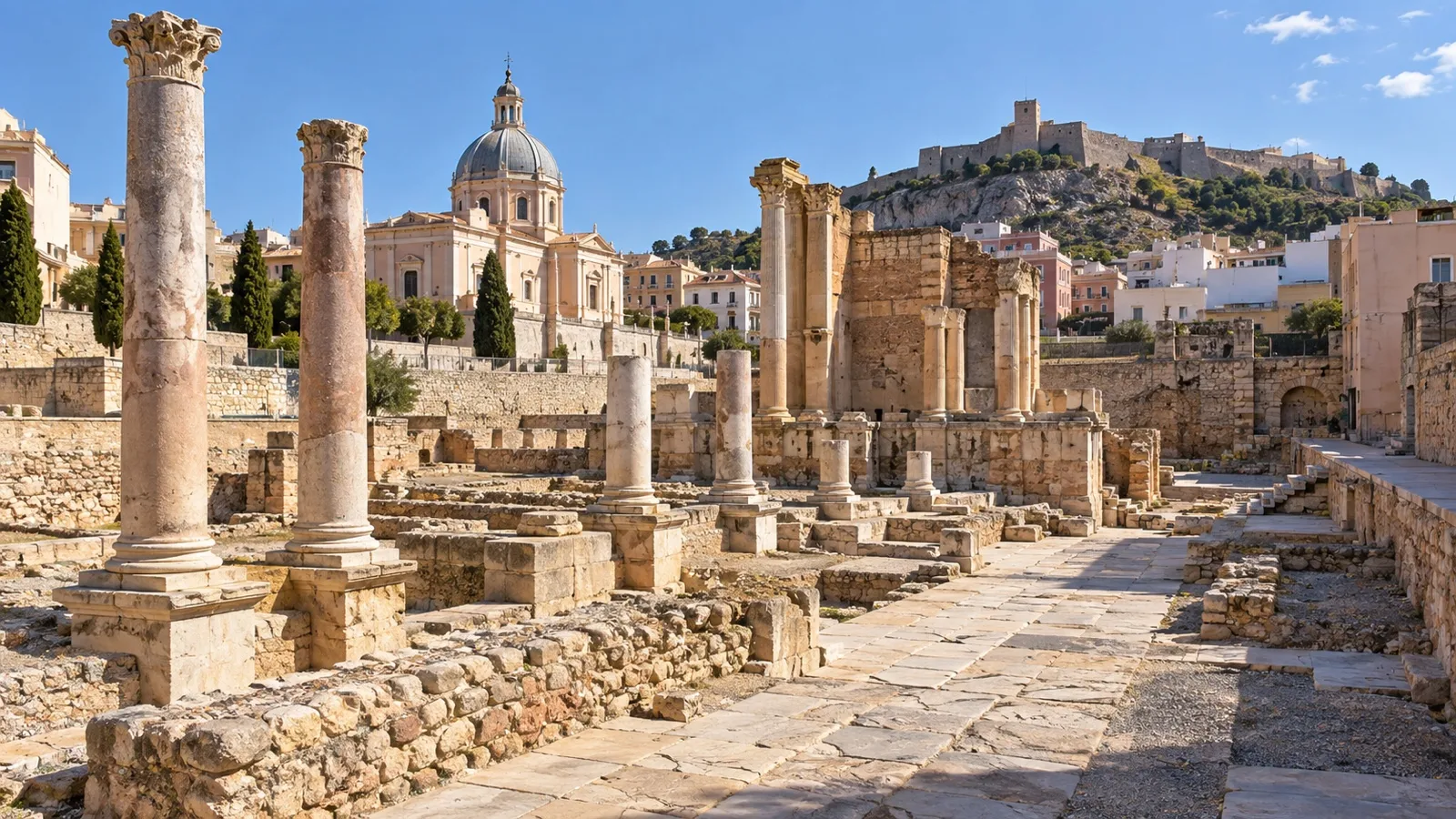
It is a strong second stop for travelers who want a deep Roman day, but the theater remains the better single choice for most first visits. Combined tickets may offer value, yet the real limit is attention and walking time rather than admission cost.
The Punic Wall goes further back
Cartagena’s Punic Wall Interpretation Center reaches into the era when the city was Qart Hadasht, the Carthaginian stronghold associated with the family of Hannibal. Surviving defenses and interpretation reveal a chapter often buried beneath the more visible Roman city.
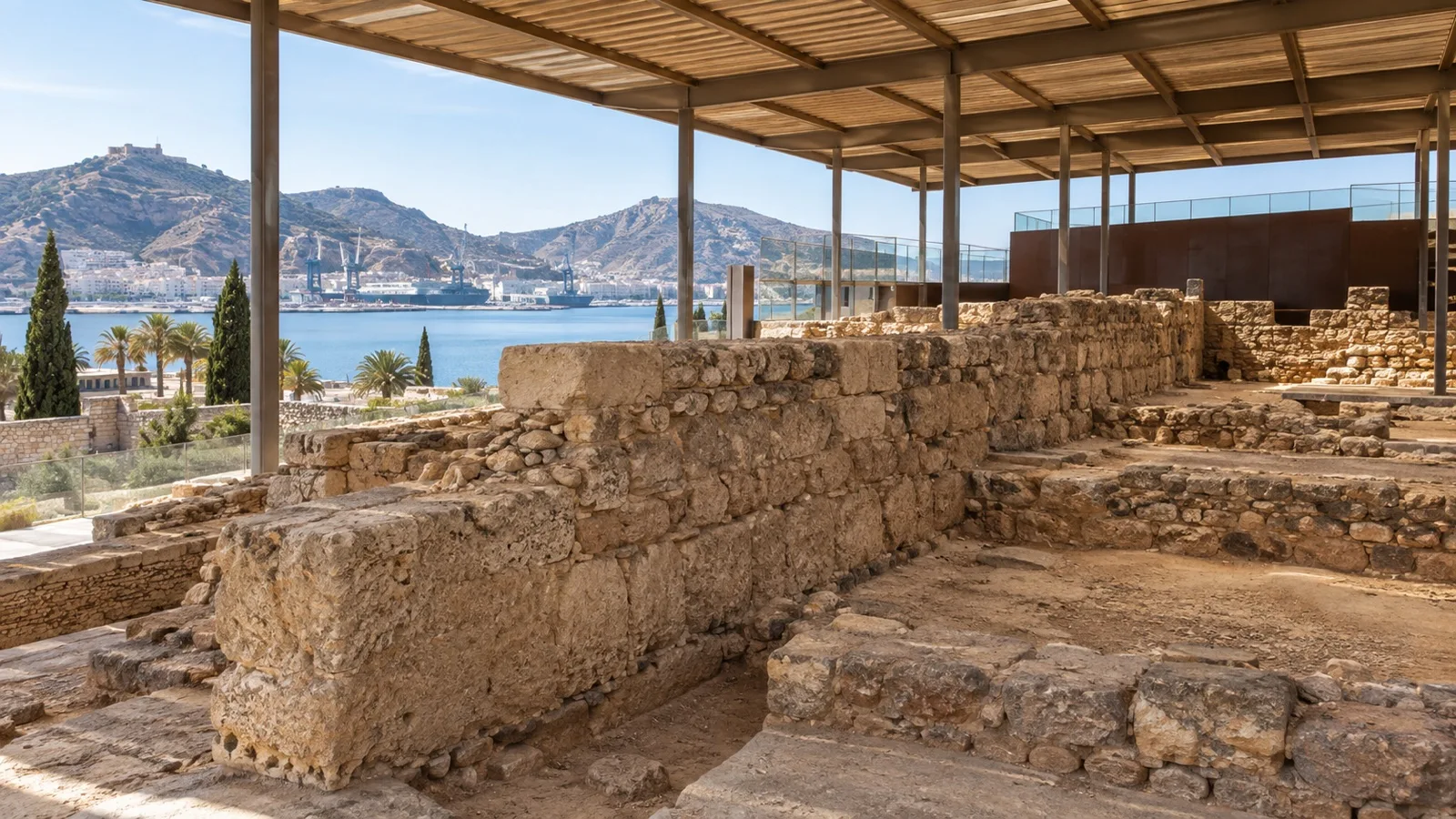
The wall lies farther from the cruise pier than the Roman Theatre, so it fits best in an ancient-history route rather than a casual waterfront loop. Pairing the Punic Wall, Roman Forum, and theater creates a rich day, but it leaves little room for a long lunch or distant excursion.
ARQVA is the best rainy-day anchor
ARQVA, the National Museum of Underwater Archaeology, sits on Paseo del Muelle Alfonso XII near the ship. Its collections connect shipwrecks, maritime trade, underwater research, and preservation in a building that feels appropriately close to the sea.
The national museum publishes its current schedule through Spain’s Ministry of Culture, and Monday closure is a recurring planning issue. Check the official ARQVA visitor information for your exact date rather than trusting a screenshot or an old port guide.
ARQVA is especially useful when rain, heat, or limited mobility makes a hilltop route less appealing. Because it is so close to the cruise area, it also works as a final stop without creating serious return anxiety.
Naval Cartagena and the Isaac Peral story
Cartagena remains one of Spain’s major naval cities, and the Naval Museum explores that long relationship with the sea. The story of Cartagena-born inventor Isaac Peral and his pioneering electrically powered submarine gives the collection a memorable local focus.
Opening arrangements and security can change, so verify access before building the day around it. Maritime-history fans can pair the Naval Museum with ARQVA, while companions less excited by submarines can enjoy the nearby center and waterfront.
Concepción Hill for the view
Concepción Hill and its castle provide the classic panorama over the harbor, Roman Theatre, rooftops, and surrounding defensive heights. A panoramic lift reduces the climb, although the route can still include slopes, outdoor surfaces, and steps depending on which areas you visit.
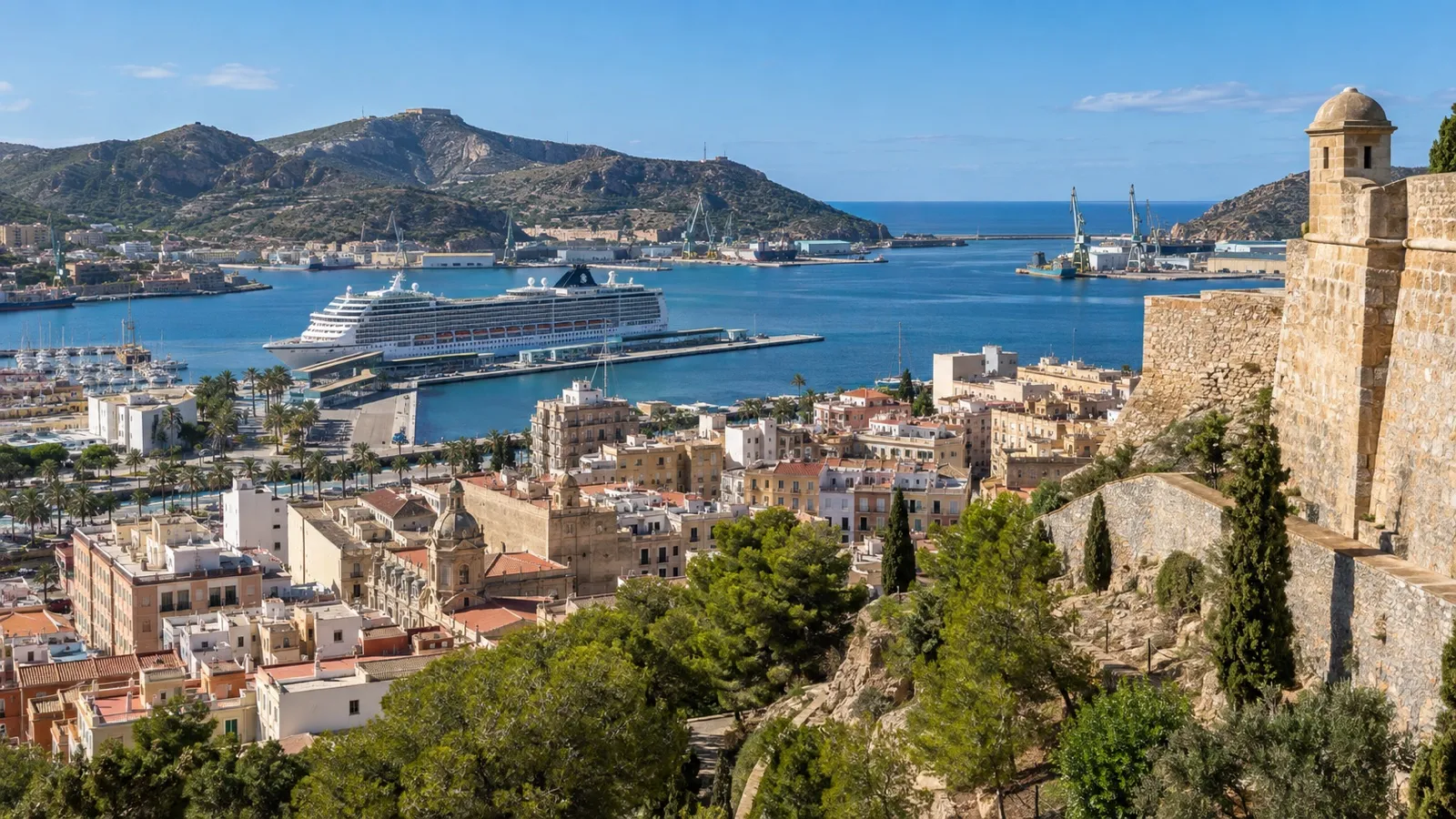
Go early in hot weather and look back toward your ship to understand Cartagena’s geography. The view joins the city’s layers together more effectively than another room of labels.
Modernist streets between the ruins
Calle Mayor turns the walk itself into an attraction, with ornate Modernist facades, enclosed balconies, tiled details, and lively cafes. The Palacio Consistorial at the waterfront end makes a grand opening statement before the street pulls you deeper into town.
Look for the Casa Cervantes, Gran Hotel, and Casino as you wander, but do not turn the route into a scavenger hunt. Cartagena rewards looking upward, stopping for coffee, and noticing how new life occupies old bones.
What to eat
Murcian menus may include caldero rice, salted fish, seafood, local vegetables, and marinera, a crisp bread ring topped with Russian salad and an anchovy. Cartagena’s café signature is café asiático, a sweet layered coffee with condensed milk, liqueur, cinnamon, and citrus peel.
Ask what is included before ordering a set menu, and allow Spanish lunch service enough time. If your all-aboard is early, eat near Calle Mayor or the waterfront rather than committing to a long meal after a distant excursion.
Should you leave Cartagena?
Murcia city offers a cathedral, plazas, shopping streets, and a different urban character inland. It can be a worthwhile excursion, but Cartagena already contains more than enough history for a full port day and requires no highway buffer.
Cabo de Palos, La Manga, and the beaches of the Costa Cálida appeal to travelers seeking coastal scenery or a swim. Use a prearranged excursion or clearly structured transport, check seasonal facilities and water conditions, and avoid assuming every beach works year-round.
Calblanque Regional Park is beautiful but more logistically sensitive, with protected landscapes, seasonal access measures, and limited services. Confirm official park access for your date before treating it as an independent taxi destination.
A smart half-day plan
Walk from the ship to the Roman Theatre Museum, continue along Calle Mayor, and choose either Concepción Hill or ARQVA. Finish with tapas or coffee near the waterfront, keeping the final hour comfortably close to the gangway.
If the theater is closed, reverse the emphasis: visit ARQVA, explore the Modernist center, and take the panoramic lift for the harbor view. Cartagena has enough alternatives that one locked door should not ruin the day.
A full ancient-city plan
Begin at the Roman Theatre, continue to the Roman Forum District, then decide whether the Punic Wall or Concepción Hill deserves your remaining museum energy. Break the sequence with lunch in the center because three major archaeological sites without food becomes homework.
Buy a multi-site pass only after checking which included attractions are open during your call. Savings are imaginary when the schedule gives you no realistic chance to use the ticket.
Accessibility
Cartagena’s proximity is a major advantage for travelers with limited mobility, and the waterfront route is relatively level. Still, cobbles, curb transitions, heat, archaeological surfaces, and grades near the hills can make a short map distance demanding.
The Roman Theatre Museum publishes separate exterior and interior accessibility guidance, and ARQVA provides a modern museum environment. Contact attractions directly about elevators, accessible entrances, companion policies, and any temporary outage before buying timed tickets.
Accessible taxis should be reserved in advance for Murcia or coastal excursions. For a simple day, combine one confirmed-access museum with Calle Mayor and the waterfront rather than forcing every hilltop viewpoint.
Heat, rain, and practical safety
Summer and early autumn can be intensely hot, while sudden heavy rain can flood low areas and make polished stone slippery. Carry water, sun protection, and a light rain layer, then follow official weather warnings if your call coincides with a storm.
Cartagena is generally straightforward in central visitor areas, but normal city precautions apply. Keep phones and wallets secure in crowds, use licensed transport, and do not leave bags unattended while photographing the ship.
Money, language, and return timing
Spain uses the euro, and cards are widely accepted, although small cash remains useful for modest purchases. Decline dynamic currency conversion unless you deliberately prefer the offered rate, since paying in euros usually lets your card issuer handle conversion.
Spanish is the everyday language, and a friendly buenos días, por favor, and gracias go far. English is common at major attractions, but translated opening notices are not guaranteed at every small site.
For a walking day, start back before the published all-aboard rather than treating the short distance as an excuse to cut it close. If you leave town, add traffic and vehicle delays to the cruise line’s required return margin.
My honest take
Cartagena is a port where staying local is not the compromise option. The Roman Theatre, naval waterfront, Modernist center, and harbor view form a stronger day than many rushed excursions farther away.
Choose one historical thread, leave room for lunch, and keep the final hour close to the water. You will return to the ship with a clear sense of the city rather than a camera full of places you barely entered.
Ellie is the editor behind CruisePorts.co and writes practical port guides for travelers who want clear choices without the fluff. This guide was checked against current Cartagena Port Authority, municipal museum, and Spanish Ministry of Culture information, but always confirm berth details and opening hours for your sailing.