Cádiz River Cruise Port: The Atlantic Stop on Guadalquivir Itineraries
Cádiz appears on Guadalquivir river-cruise itineraries despite one inconvenient fact: it is not on the Guadalquivir. The city is an Atlantic port in the Bay of Cádiz, included because certain small vessels combine inland river navigation with coastal sailing.
Think of it as the ocean chapter in an Andalusian river book. The reward is a genuinely walkable port where the old town begins close to the quay and the sea appears at the end of streets that seem determined to find it.
Cádiz quick facts
Into Town: Central cruise berths put the old town within an estimated 5 to 10-minute walk; confirm the assigned quay onboard.
Currency and Language: Euro and Spanish. English is common at major attractions, hotels and cruise services.
Time Zone: CET, UTC+1 in winter; CEST, UTC+2 during European daylight saving time.
Call reliability: Strong wind, sea state, port traffic, or broader itinerary changes can disrupt the call. No audited Cádiz missed-call rate is published.
Quick take
Explore Cádiz independently unless the ship offers a specialized experience you genuinely want. The cathedral, market, La Viña, waterfront and forts fit into a coherent walk without turning the morning into a search for your tour-group number.
Do not automatically take a Seville excursion from this call, especially if the itinerary already visits Seville by ship. Cádiz is not the waiting room for somewhere inland, and doubling back can trade a compact Atlantic city for several hours of highway.
Why is an ocean port on a river cruise?
The Guadalquivir reaches the Atlantic near Sanlúcar de Barrameda, while Cádiz sits on a narrow peninsula within the broad bay farther south. A vessel cruising between Seville and Cádiz therefore leaves the river and completes a coastal leg.
This requires a ship designed and certified for the relevant waters, not an ordinary riverboat casually deciding the ocean looks friendly. Weather and sea conditions on the coastal section can matter differently from river level and lock operations upstream.
A current CroisiEurope Andalusia itinerary shows how one operator combines Seville, Cádiz and other regional stops. Its vessel and operating plan create the hybrid route; the itinerary does not relocate Cádiz onto the Guadalquivir.
Conventional ocean cruise ships also call here, often on Atlantic, Mediterranean or repositioning voyages. For full terminal details beyond the river-cruise angle, use the site’s existing Cádiz cruise port guide.
Where does the ship dock?
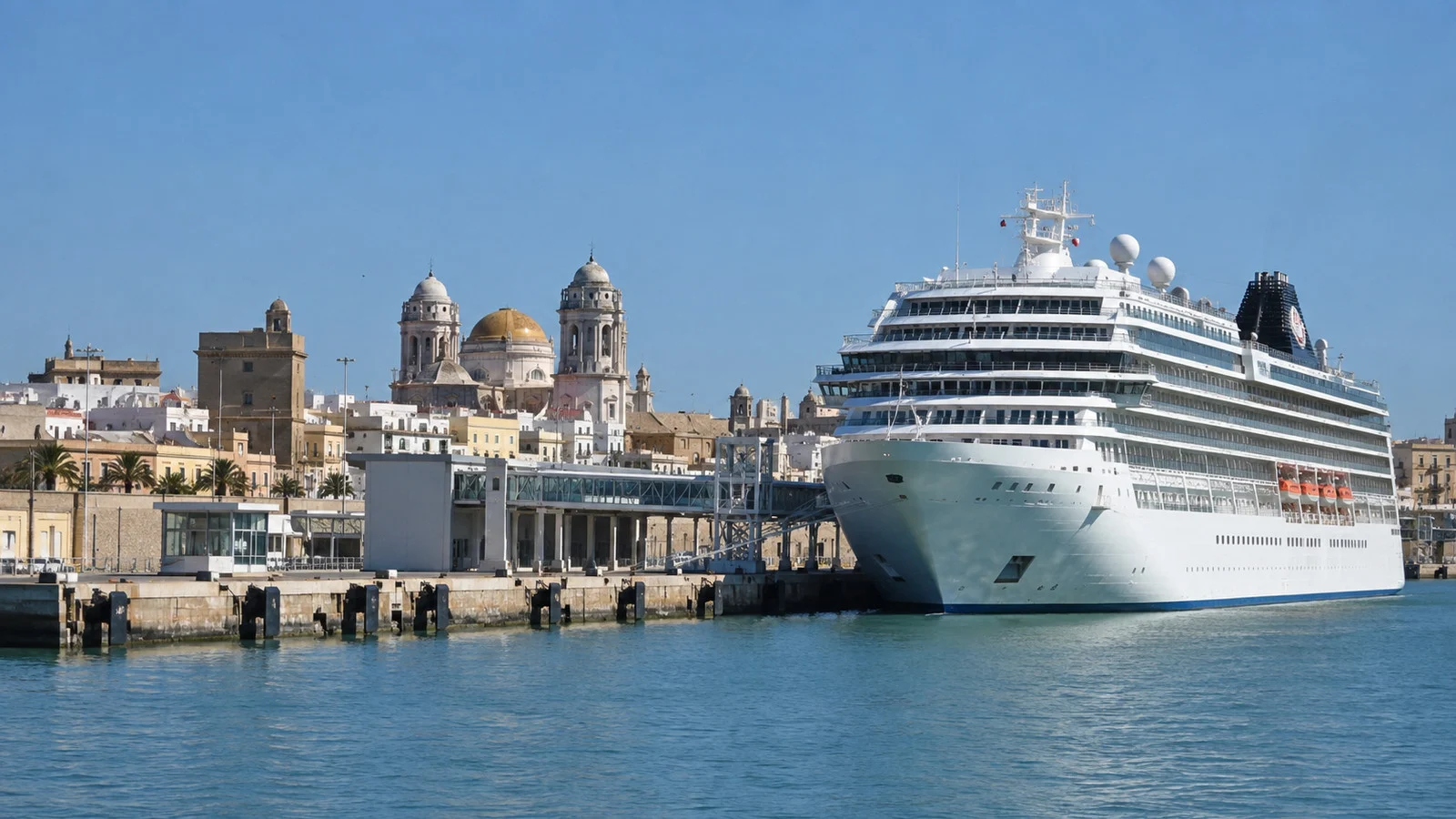
The main cruise facilities sit beside the old town, with Muelle Alfonso XIII serving as a principal passenger location. Other central quays can be assigned, so the terminal name on a generic map is not a berth confirmation.
The Port of the Bay of Cádiz publishes its passenger facilities and current operational information. Check the ship’s daily program for the quay, gangway and all-aboard point.
From a central berth, Plaza de San Juan de Dios is generally an estimated 5 to 10 minutes away on foot. The cathedral follows within roughly another 5 to 10 minutes, depending on the gate, crowd and whether the first café wins.
Small hybrid vessels can share a port day with much larger ocean ships. Their passenger scale may feel different, but everyone reaches the same wonderfully compact street plan after security.
The easiest independent walking loop
Begin at Plaza de San Juan de Dios, enter El Pópulo and continue to Cádiz Cathedral. From there, walk toward the central market, cross La Viña and follow the seafront toward Santa Catalina Castle.
Return through the old town or along the northern waterfront according to time. A relaxed loop takes an estimated three to four hours before monument interiors, lunch and the powerful gravitational field of fried seafood.
The municipal tourism office publishes several official historical walking routes through the old town. Its colored-route maps are useful when the narrow streets begin behaving as if they have known one another longer than they have known north.
Choose one or two interiors rather than entering everything with a doorway. The cathedral, Cádiz Museum, Torre Tavira and Roman Theater each need time, while the streets, squares and Atlantic walls provide the city’s larger story for free.
Cathedral, market or Torre Tavira?
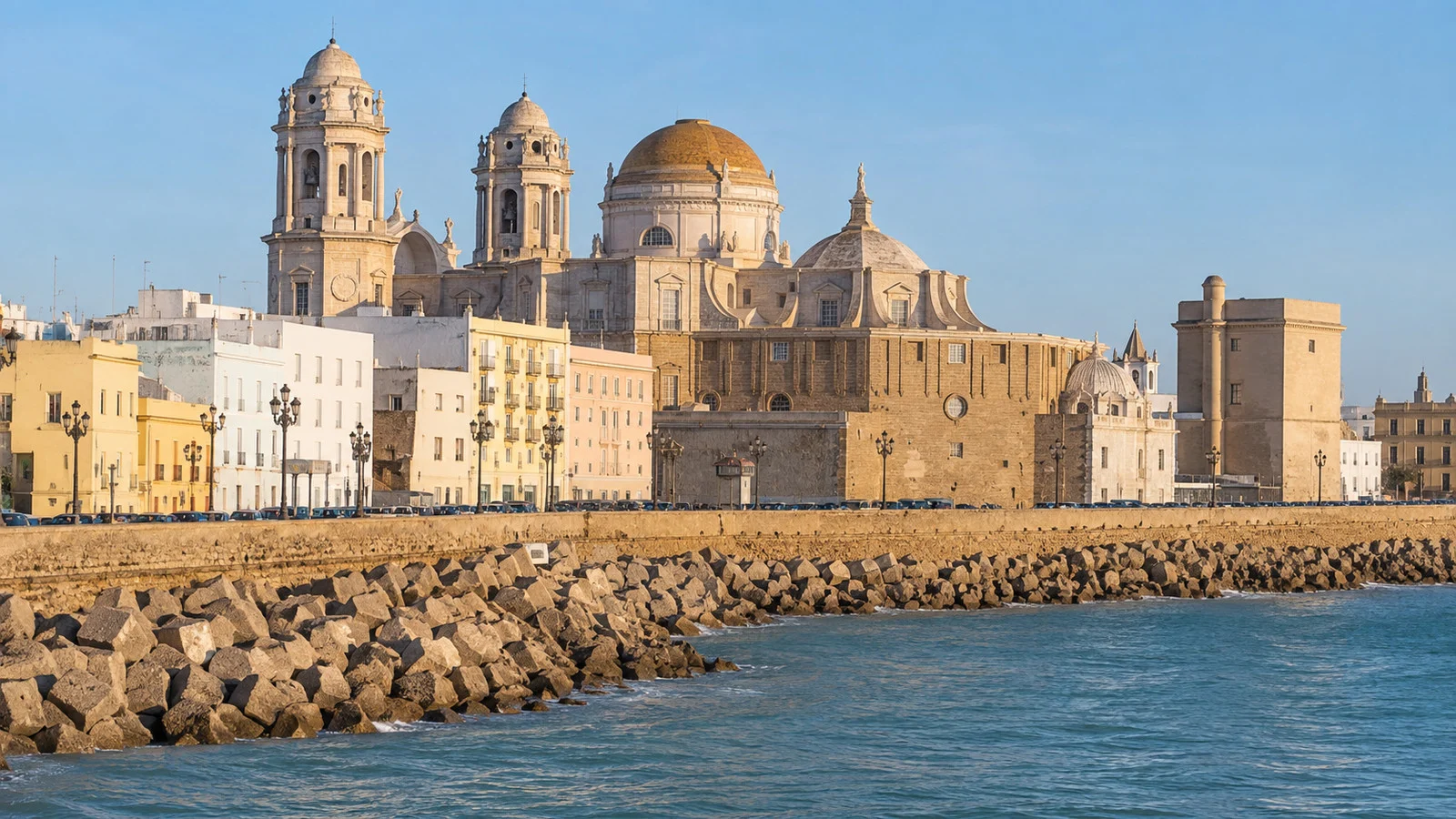
Choose the cathedral for architecture and the city skyline, subject to current tower access. Dress respectfully, check worship closures and buy through the official attraction channel rather than an advertisement disguised as a search result.
Choose the central market for food and local rhythm. Morning generally offers more market activity, while the surrounding stalls and restaurants can carry the visit into lunch without a formal plan.
Choose Torre Tavira for rooftop perspective and its camera obscura presentation, but reserve if timed capacity is limited. The climb and enclosed presentation may not suit every mobility or language need, so check current access directly.
For a no-ticket day, combine El Pópulo, the market exterior, La Viña, La Caleta and Santa Catalina Castle. Cádiz excels at making the space between attractions feel like the attraction.
Should you take the excursion to Seville?
Seville lies inland and requires a long road or rail round trip from Cádiz. An organized excursion manages the return risk, but the journey consumes a significant share of a typical port day.
If the cruise already spends time in Seville, stay in Cádiz. The only compelling reasons to return inland are a missed Seville visit, a very long Cádiz call or a specific ticketed experience that matters more than the local port.
Independent rail can work only with a long schedule, confirmed current trains and generous margins. Add the walk or taxi between the Cádiz berth and station, the Seville station transfer and the possibility that one delayed train suddenly becomes the day’s main character.
For broader itinerary context, compare other stops through the Spain cruise ports guide. Seville is an inland maritime port, while Cádiz is the Atlantic endpoint that demonstrates why those two labels are not interchangeable.
El Puerto de Santa María substitutions
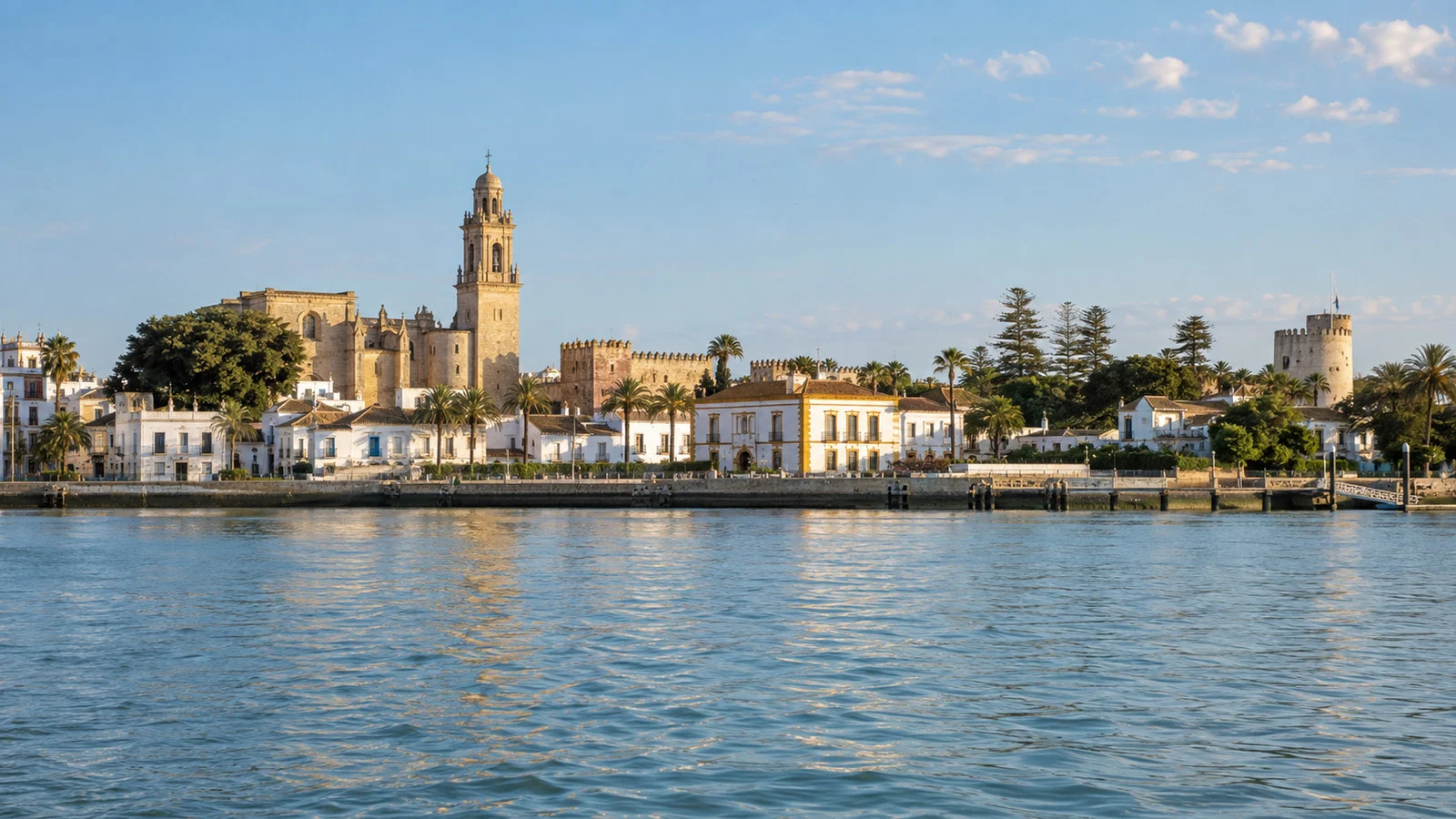
Some Andalusian programs include El Puerto de Santa María within the Bay of Cádiz, often with an excursion toward Jerez. Current operator language may allow Cádiz to replace that stop.
A substitution does not mean the ship failed to reach the Guadalquivir, because neither Cádiz nor El Puerto is a Guadalquivir river berth. It means the coastal or bay portion of the itinerary changed its local port.
If Cádiz replaces El Puerto, shore-excursion timing and the route to Jerez may also change. Read the revised program before keeping a private booking whose pickup point is now across the bay.
Wind, sea state and itinerary changes
Cádiz has protected harbor infrastructure and regularly handles cruise traffic, but the approach remains maritime. Strong wind, rougher coastal water, visibility, pilotage or port operations can delay arrival or alter the wider sailing plan.
The small ship may also change the order of Cádiz, El Puerto or a lower-river program to fit safe navigation. A different arrival hour is more likely than the old town itself moving, which is reassuring even by Andalusian standards.
Do not compare a coastal forecast with the conditions alongside the quay and conclude the captain is being dramatic. The route decision covers waters you cannot see from the café table.
Accessibility
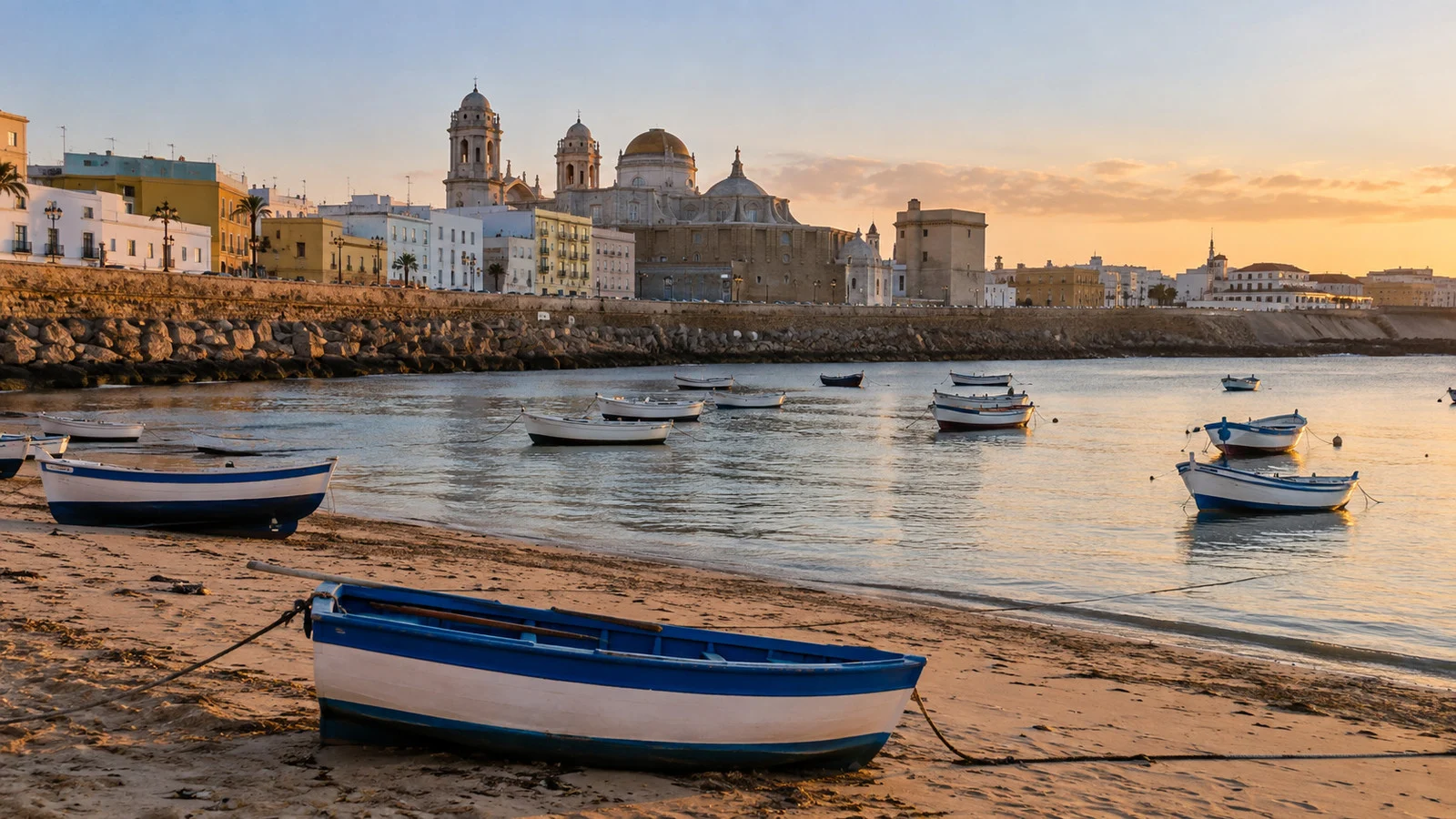
The central port and much of the old-town route are relatively level, though paving, curbs and monument steps vary. Gangway slope depends on the vessel and berth.
Cádiz tourism publishes an official wheelchair-accessible old-town route linking major squares, the market area, seafront and visitor services. The document notes that route accessibility does not guarantee access inside every establishment.
The site’s broader wheelchair-friendly cruise ports guide includes Cádiz for good reason. Still, ask the ship about gangway assistance and each attraction about elevators, accessible entrances and current construction.
Food, weather and timing
Cádiz suits an unhurried lunch built around seafood, fried fish, local produce or tapas. Choose a busy local place, ask about prices for market seafood sold by weight and leave room for the return walk.
Atlantic wind can make the waterfront cooler than inland Seville, while summer sun remains strong. Carry water, sunscreen and a secure hat unless you want it to begin an independent journey toward Morocco.
Keep at least 20 to 30 minutes of editorial return margin beyond the estimated walk. Security lines, a changed gangway or one final purchase can absorb it without effort.
A practical Cádiz call plan
The Port of the Bay of Cádiz handles cruise passengers at several central quays, so Alfonso XIII is a likely facility rather than a promise for every call. Use the quay on the daily program, then photograph the security entrance because large ships and the small hybrid vessel may be using different positions.
Spain and Schengen entry requirements depend on nationality and the wider itinerary, even when the day feels like a simple walk into town. Check official EU and Spanish sources and carry the identity document named by the cruise line when leaving and reentering the controlled port.
For most passengers, Cádiz itself is the best use of this call, particularly when the itinerary already includes Seville. A private train trip inland adds station transfers and a fixed return, while the cathedral, market, La Viña, and seafront make a complete day without transport.
Keep at least 30 minutes beyond the normal walk back, adding more in strong wind, rain, heat, or a busy multi-ship day. The central terrain is relatively level, but gangway slope and each monument’s steps or elevator still need separate accessibility checks.
Quick answers
Is Cádiz on the Guadalquivir River?
No. Cádiz is an Atlantic port in the Bay of Cádiz, included on hybrid itineraries that combine the Guadalquivir with coastal sailing.
Can you walk into Cádiz from the ship?
Usually yes from central cruise berths. The old town begins within an estimated 5 to 10-minute walk, but confirm the assigned quay.
Should I visit Seville from Cádiz?
Only if the itinerary does not already give Seville enough time and the call is long. Otherwise, Cádiz offers the better and less fragile port day.
Can Cádiz replace El Puerto de Santa María?
Yes, on some operator itineraries. Check the revised excursion pickup and Jerez arrangements if the coastal port changes.
What is the best short walk?
Visit Plaza de San Juan de Dios, El Pópulo, the cathedral exterior and central market. Add La Viña or the seafront when time permits.

The last word
Cádiz belongs on an Andalusian river-cruise itinerary precisely because it is not another river port. It delivers the Atlantic, a compact fortified city and the satisfying novelty of walking almost everywhere.
Confirm the quay, resist the automatic coach to Seville and let Cádiz be Cádiz. Geography has already made the itinerary more interesting than the label suggests.
How this guide was researched: No firsthand visit is claimed; port facilities, city routes, accessible walking information, and current hybrid-itinerary language were checked against the Port of the Bay of Cádiz, Cádiz municipal tourism, and CroisiEurope. Facts were reviewed September 12, 2026, while labeled walking and return times are editorial estimates; see the CruisePorts.co Editorial Policy.