Sa Đéc River Cruise Port: Local Boats, Market and Flower Village
Sa Đéc river visits can involve a hotel-ship stop on the Tiền River followed by a smaller boat and changing local landing. That chain determines the market, historic house, flower-village timing, accessibility, weather exposure, and return, so use the operator’s current plan rather than a generic port pin.
Sa Đéc river cruise port quick facts
- Into Town: Most large ships transfer guests by local boat to a central landing; smaller vessels may use a branch mooring. Follow your operator’s route.
- Currency and Language: Vietnamese đồng (VND). Vietnamese is official; English varies, so guides are valuable beyond major visitor businesses.
- Time Zone: Indochina Time, UTC+7 year-round, with no daylight saving time.
- How Often the Call Is Missed: Not published. Water levels, local-boat safety, weather and itinerary sequencing can change the landing, transfer or shore program.
No cruise line, port authority or river agency publishes an audited Sa Đéc cancellation rate. A changed landing or transfer may still deliver the destination, so follow the ship’s daily program.
My quick take
Choose the local market and Huỳnh Thủy Lê house if your operator offers that combination. They sit close enough to tell one coherent story about river trade, family wealth, French colonial influence and daily Delta life.
Choose the flower village if plants, photography or working landscapes matter more than literary history. Just know that the growing district is not one tidy garden beside the gangway, so a vehicle or arranged local excursion is usually part of the plan.
Do not build an independent itinerary around an online pier marker. Ask exactly where and how your operator will bring you ashore.
Is Sa Đéc an active river cruise port?
Yes, Sa Đéc remains an active lower-Mekong destination. Current cruise programs sell it as a shore call, commonly paired with Cái Bè, Tân Châu or the sailing toward Cambodia.
AmaWaterways’ current Charms of the Mekong itinerary includes Sa Đéc, with excursion details and schedules subject to change. Confirm the local-boat transfer and the day’s market, temple or historic-house option in your final documents.
Other operators may use sampans, excursion boats or smaller vessels with different capabilities. An itinerary name proves the destination, not one permanent berth shared by every cruise company.
Sa Đéc also appears in wider Mekong programs rather than as a standard embarkation port. Browse the site’s river cruise ports guide if you are comparing how destination calls differ from true start and finish terminals.
Tiền River, Sa Đéc River and the landing question
Sa Đéc lies beside the Tiền, one of the major Mekong distributaries in Vietnam, and is connected to narrower local waterways including the Sa Đéc River. Cruise marketing often simplifies that geography to “the Mekong,” which is sensible for trip planning but not precise enough for finding a gangway.
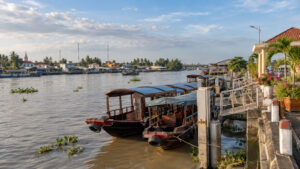
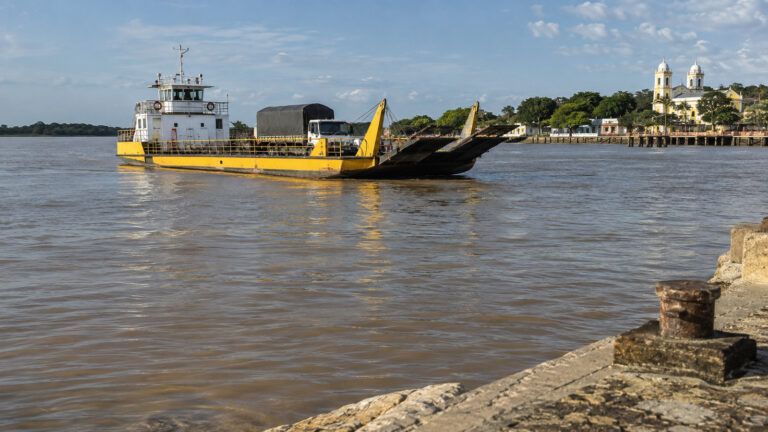
A larger hotel vessel may remain on a navigable main channel while guests move to a local boat that can approach the town more easily. A smaller expedition-style vessel may reach a different landing, and operational conditions can change the exact handoff.
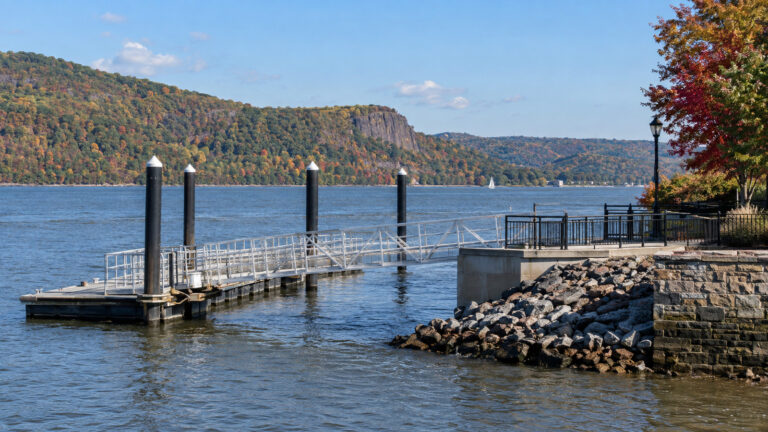
No authoritative public roster was found assigning all Sa Đéc cruise calls to one numbered pier. Landing position can depend on vessel size, river traffic, water level, local permissions and the day’s excursion design.
Treat any crowd-sourced map pin as a clue, not a promise. The final daily program and cruise director’s instructions outrank a traveler’s photograph from another season.
What the local-boat transfer is really like
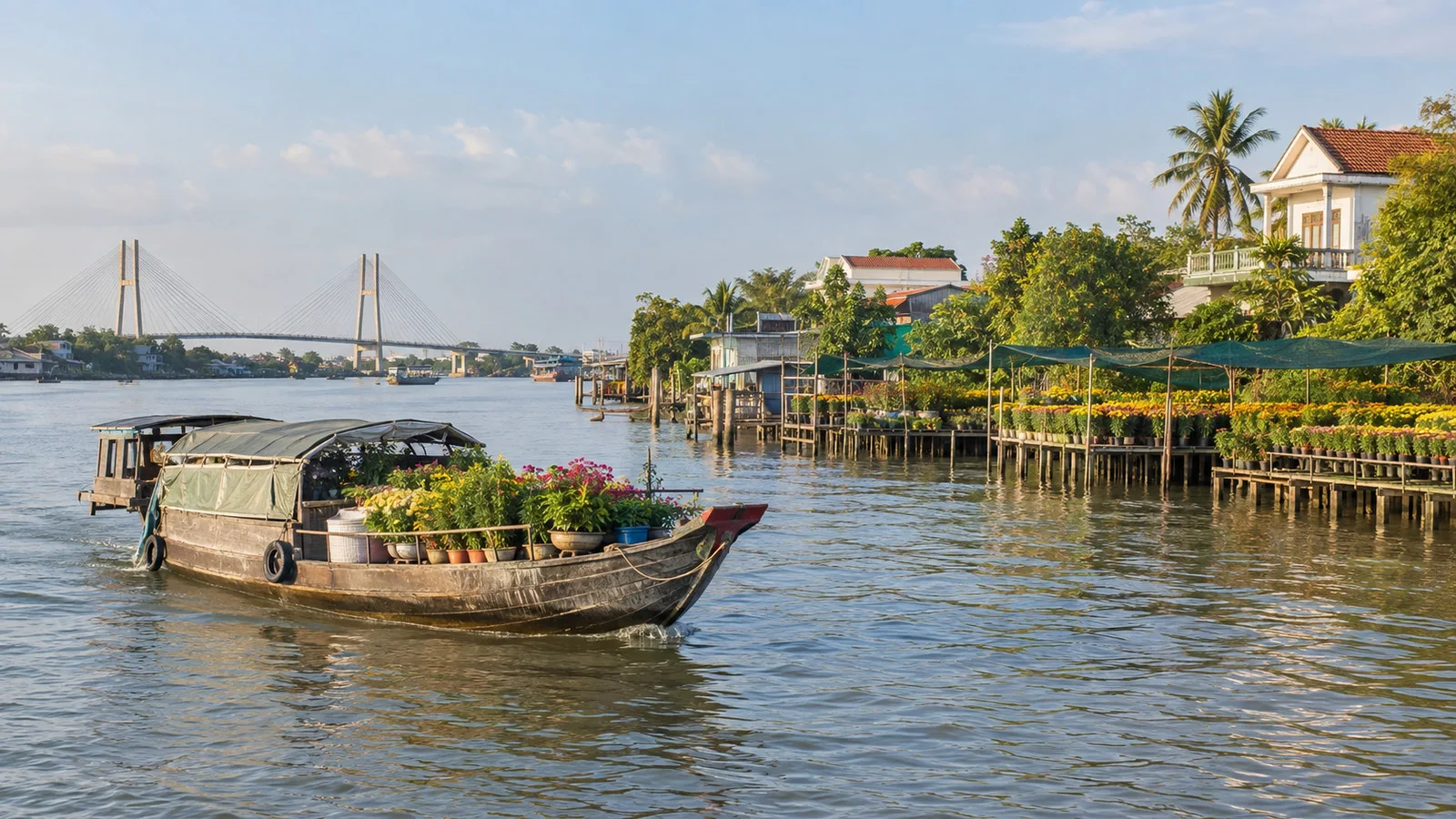
The transfer may be one of the best parts of the call because it lowers your viewpoint to working boats, riverfront homes and the traffic of the Delta. It is still transportation, with steps, moving decks, engine noise, spray and weather exposure rather than a sightseeing ride designed around perfect camera angles.
Expect crew to control boarding order and seating. Keep both hands available, wear the provided life jacket if instructed and let staff handle bags during the step between vessels.
Ask in advance whether the transfer is ship-to-boat, ship-to-shore-to-boat or a direct gangway landing. Those three arrangements can feel completely different to someone who uses a cane, cannot manage a high step or needs a wheelchair kept upright.
A transfer described as a “sampan” in an itinerary may be motorized and larger than the romantic postcard version. Request the actual boarding specifications for your sailing instead of relying on the boat label.
Getting into the center
Operator boats used for the classic town visit generally bring groups to a practical central landing, then guides continue on foot or by arranged local transport. Independent taxis should not be assumed at every landing, particularly when the group uses a private or temporary access point.
The market and Huỳnh Thủy Lê house are in the historic riverside center and can fit into one guided walk. Allow the operator to set the sequence because market congestion and boat timing matter more than the shortest line on a map.
The flower-growing areas spread beyond that compact core. If your excursion specifically promises a flower village, expect a bus, van, electric cart, local boat or some combination chosen by the operator.
Huỳnh Thủy Lê house without the movie fog
The house at 255A Nguyễn Huệ Street belonged to the family of Huỳnh Thủy Lê, whose relationship with French writer Marguerite Duras inspired her novel The Lover. Calling it “Duras’ house” is catchy but inaccurate because it was not her residence.
Sa Đéc’s official tourism listing says the original three-bay wooden house was built in 1895 by Huỳnh Cẩm Thuận, a wealthy merchant of Fujian Chinese origin. A 1917 renovation wrapped the timber structure in masonry, creating the French exterior and Chinese, Vietnamese and French interior details visitors see today.
The building is relatively small, so a cruise group can fill its rooms quickly. Give other visitors space to see the tiled floors, carved wood, family furnishings and stained glass instead of stopping in the doorway for a feature-length photo shoot.
The official Huỳnh Thủy Lê house page identifies it as a nationally recognized monument and operating visitor attraction. It did not provide a reliable future-proof cruise-day schedule or price when this guide was researched, so confirm hours and admission through the operator.
Sa Đéc Market is not scenery on pause
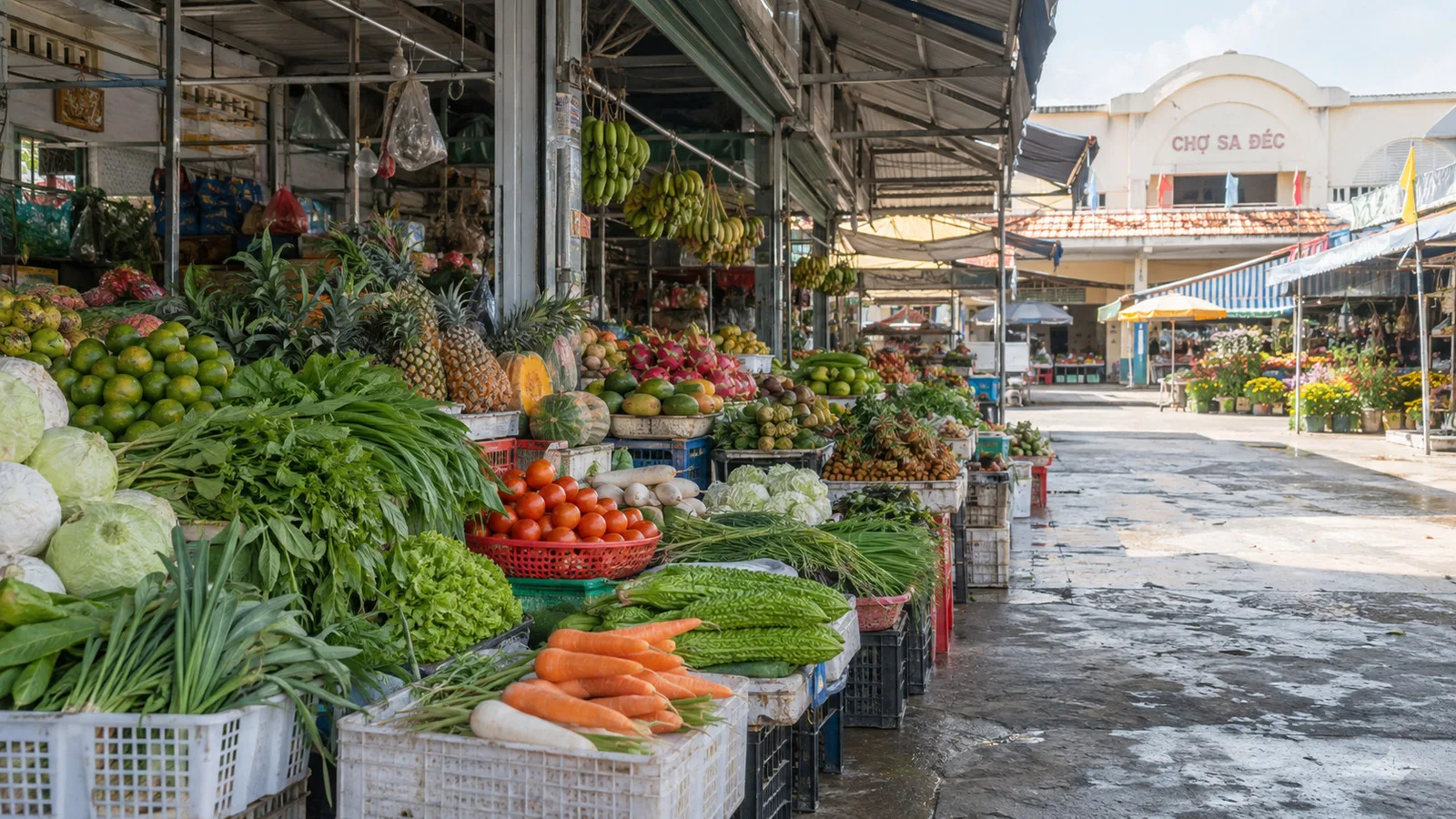
The central market is a working food and household market, not a staged cultural village. Produce, fish, meat, herbs and prepared foods share busy aisles with shoppers, porters and scooters operating on local time rather than tour-group time.
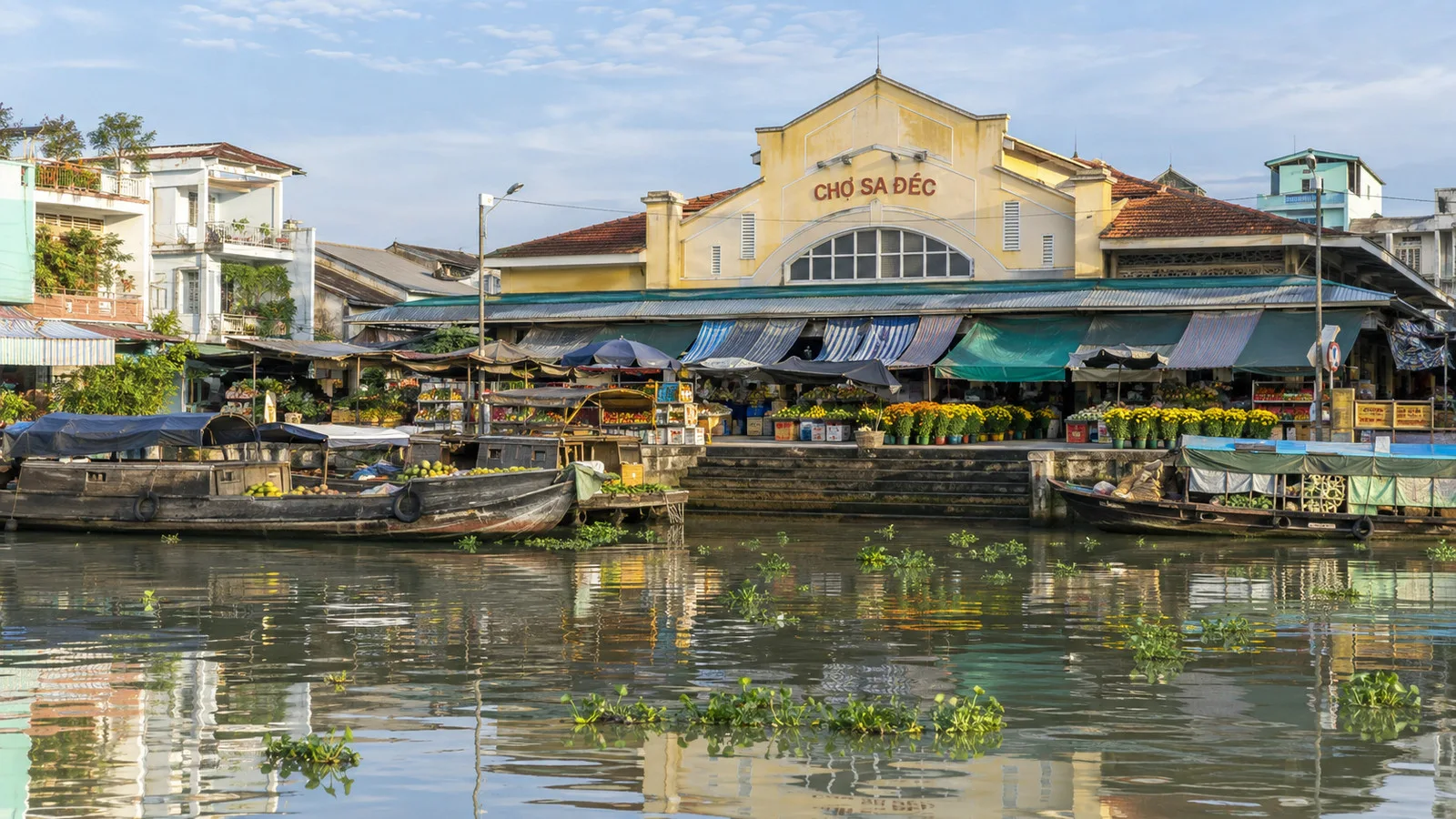
Vietnam’s national tourism authority notes that the market extends toward the water, where boats arrive and depart. That relationship between river transport and commerce is the real reason to visit, even if you buy nothing.
Wear closed shoes with traction because floors can be wet. Keep bags close, step aside before taking a photograph and ask before making a vendor the subject of your portrait.
Small Vietnamese đồng notes are useful if your guide confirms shopping time. Agree on the price before accepting food or goods, and do not expect every stall to take cards, dollars or make change for a heroic banknote.
The Cao Đài temple option
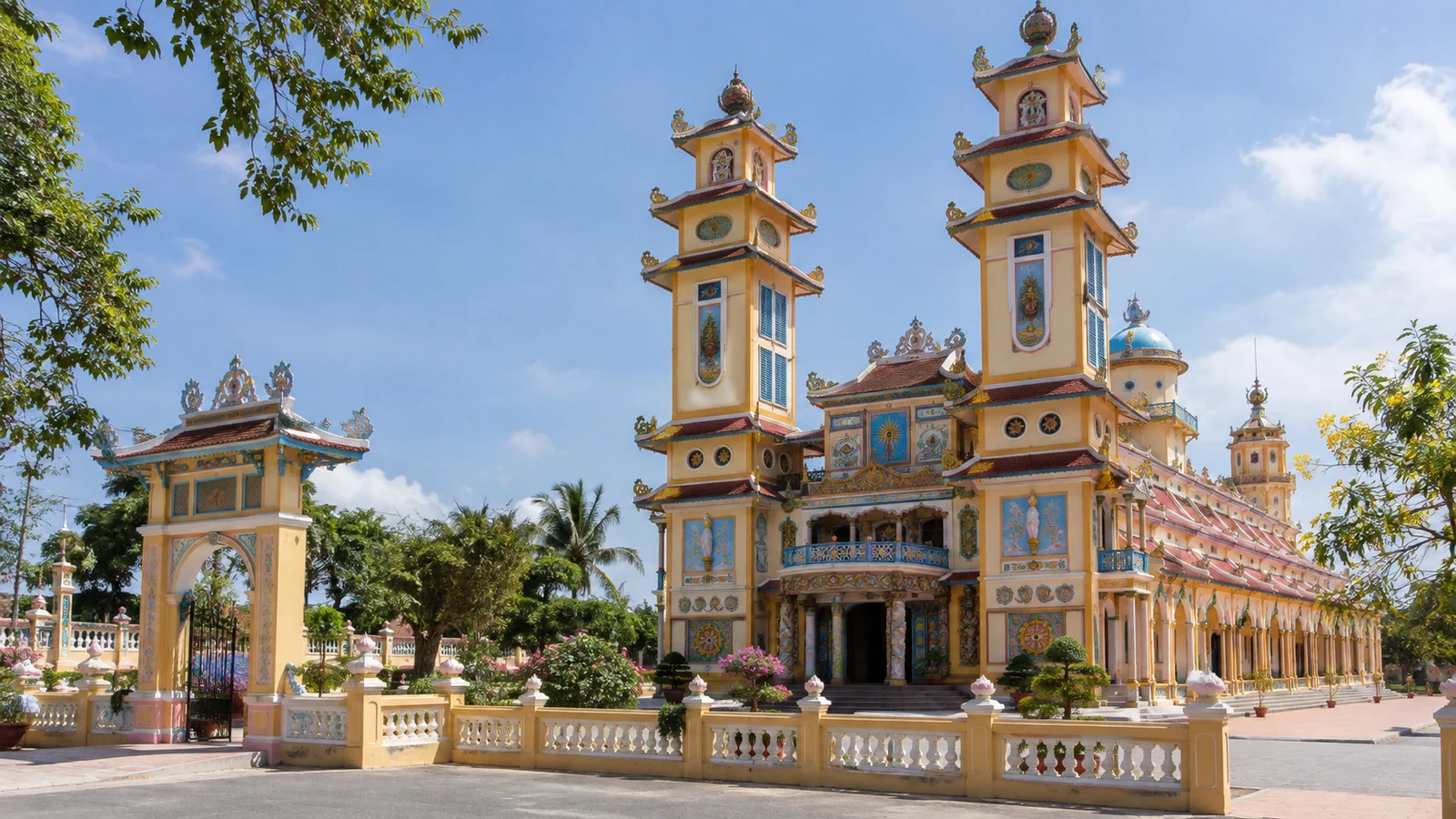
Some current itineraries offer a local Cao Đài temple instead of the historic house. Cao Đài is a Vietnamese religion founded in southern Vietnam, with teachings and visual traditions that draw from several religious and philosophical sources.
The precise temple and access conditions can vary by operator program. Dress modestly, follow the guide on where to stand and never interrupt worship for a better photograph.
Do not describe the visit as a colorful curiosity and stop there. A temple is an active religious place, and the guide’s explanation of beliefs and etiquette is more valuable than collecting a ceiling photo at speed.
Sa Đéc Flower Village is bigger than one garden
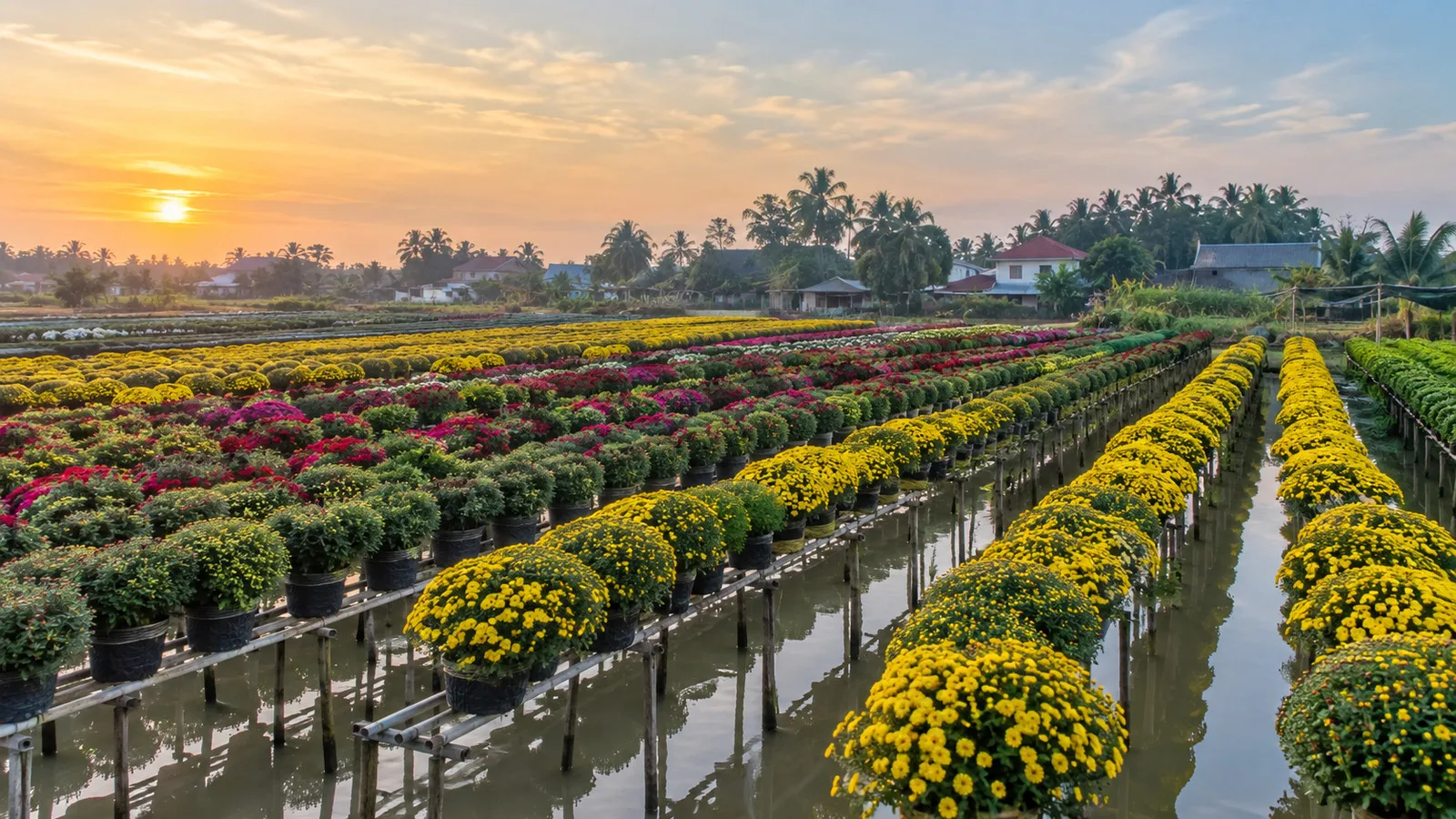
“Flower village” refers to a broad horticultural district associated with Tân Quy Đông and nearby growing areas, not one fenced attraction. Provincial reporting in late 2025 described nearly 2,500 acres of cultivation, more than 4,000 producing households and a huge output timed for Tết 2026.
The defining sight is cultivation on raised racks above wet ground and tidal water. Dong Thap’s official newspaper explains how growers may move among the rows by small boat, an ingenious response to a landscape that periodically puts the garden floor underwater.
The district is especially photogenic before Tết, when plants are prepared for Lunar New Year markets. Flowers are grown year-round, but one February photograph cannot guarantee identical density, color or access in October.
A current Dong Thap report on elevated flower cultivation describes nearly 2,500 acres and more than 2,000 plant varieties. Those regional figures should not be mistaken for the size of a single visitor stop.
Use designated paths and ask before entering working plots. A greenhouse is a workplace, and a narrow plank among thousands of pots is not the moment to discover your camera has a panorama setting.
Can you do the market, house and flowers in one call?
Possibly, but not on every schedule. A short local-boat call may offer the market plus either the house or temple, while a longer excursion can add a flower-growing stop with ground transportation.
For a two-hour window, prioritize the operator’s included town walk and resist adding an independent flower-village dash. Transfer time is part of the call, and the return boat does not wait for a taxi whose driver is enthusiastically asking directions.
For a half-day call with confirmed transport, combine the flower district first with the old center afterward. The operator may reverse that order for traffic, heat, market timing or the river schedule.
Accessibility requires questions before sailing
Sa Đéc can be difficult for travelers who cannot step between moving boats. The main issue is often the local-boat transfer, not the distance between attractions.
Ask for step height, handrail availability, crew assistance policy, seating type and whether a wheelchair can be transferred without folding. Also ask whether the shore landing has steps, a ramp or a floating surface that changes angle with the water.
The market can have wet floors, narrow aisles, curbs and dense traffic. The historic house is a protected old building, and no authoritative end-to-end step-free specification from boat through every room was found during research.
Flower stops vary even more because working farms may use narrow bridges, damp paths or small boats. Send the site’s river cruise accessibility checklist to the cruise line and request an answer for the exact excursion, not the destination in general.
Travelers who can walk short distances but need a slower pace should ask whether a gentle group exists. “Easy” may describe the sightseeing content while quietly ignoring the boat transfer that gets everyone there.
Water levels, tides and seasonal changes
The lower Mekong has wet and dry seasons, but Sa Đéc is not subject to the same navigation limits as rocky upstream reaches. Its Delta waterways are also tidally influenced, so landing height and current can change within a day.
The Mekong River Commission’s live flow system monitors wet and dry season conditions and notes daily tidal variation at its Vietnamese Delta stations. On September 12, 2026, Tan Chau and Chau Doc were in the normal water-level zone, but that regional snapshot does not guarantee a particular Sa Đéc landing.
Low water can affect draft, approach and transfer location, while high water, fast current, floating debris or heavy rain can make small-boat operations less comfortable or unsafe. Captains and local authorities decide whether the visit proceeds.
A landing change is more common than a total cancellation. If the local boat cannot use its normal point, operators may shift the outing, shorten it, substitute an experience or continue sailing to protect the wider Cambodia-Vietnam schedule.
Heat, rain and what to carry
Sa Đéc is warm and humid, and a transfer boat may have less climate control than the ship. Carry water, sun protection and a light rain layer that leaves your hands free for boarding.
Use a small zipped day bag rather than a loose tote. Protect phones and cameras from spray, but do not wrap essentials so thoroughly that you need a dockside excavation to find your boarding card.
Closed, nonslip shoes work for boats, market floors and garden paths. Clothing that covers shoulders and knees is also useful if the day’s program includes a temple.
Quick answers
Where do river cruise ships dock in Sa Đéc?
There is no verified universal cruise pier; large ships commonly use a local-boat transfer, while smaller vessels or excursion boats may reach different branch landings.
Is Sa Đéc on the Mekong River?
Sa Đéc sits beside the Tiền River within the Mekong Delta and connects with narrower local waterways, including the Sa Đéc River.
Can I walk into town from the ship?
Often not directly from the main ship; after an operator boat reaches a central landing, the market and historic-house portion may continue on foot.
Is the Huỳnh Thủy Lê house really the house from The Lover?
It was Huỳnh Thủy Lê’s family home and is associated with Duras’ novel, but it was not Marguerite Duras’ residence.
When is Sa Đéc Flower Village best?
The weeks before Tết are especially colorful, although commercial flower cultivation continues year-round and displays vary by season and farm.
Is Sa Đéc wheelchair accessible?
No single answer covers every sailing because boat transfers and landings vary; request exact step, ramp, wheelchair-handling and excursion-path details from the operator.
Can water levels change a Sa Đéc call?
Yes, and operators may change the landing, transfer or excursion while the captain and local authorities decide whether the visit can proceed safely.
How I would choose the Sa Đéc stops
The operator’s excursion sheet should identify the small boat, town landing, and whether Flower Village uses a vehicle. Official local tourism information can confirm the Huỳnh Thủy Lê house, but opening hours can still change.
The market, house and a central temple can fit a short call, while Flower Village needs extra road time and confirmed transport. Stay with the agreed transport and return by the operator’s stated meeting time.
Use Vietnam’s official eVisa portal and the cruise line for entry rules. Small-boat gunwales, wet landings, market congestion, heat, rain, and limited accessible toilets should be checked stage by stage.
How this guide was researched: No firsthand visit is claimed. Details were checked against AmaWaterways, official Sa Đéc tourism information, Dong Thap reporting and the Mekong River Commission’s live flow system.
Logistics and time-sensitive details were reviewed September 12, 2026. See our Editorial Policy.