Cái Bè River Cruise Port: Small Boats, Markets and Village Guide
Cái Bè is usually an operator-led small-boat visit rather than a conventional terminal call, and its historic floating market is much smaller than old descriptions imply. Confirm the transfer boat, landing, workshop program, weather, mobility requirements, entry documents, and return before expecting a self-guided port day.
Cái Bè River Cruise Port Quick Facts
Into Town: Guests usually transfer by local boat from the river ship to Cái Bè waterways and village landings. The exact stop varies by excursion.
Currency and Language: Vietnamese đồng. Vietnamese is official; English is common with cruise guides but limited at small workshops and independent boat landings.
Time Zone: Indochina Time, UTC+7 year-round. Vietnam does not observe daylight saving time.
Call reliability: Channel depth, current, heavy rain, local-boat safety, landing conditions, or itinerary changes can alter the Cái Bè call. No audited local cancellation rate is published.
Is Cái Bè an Active River Cruise Port?
Yes. AmaWaterways’ official 2026 itinerary sails from Mỹ Tho toward Cái Bè, then uses a local boat for visits to rice-paper and candy workshops or an active walk to Kiet House.
Scenic also sells multiple 2026 Mekong departures featuring Cái Bè river life. Other small-vessel and regional operators use the area for canal cruises, orchards, old houses, cycling, cooking, and workshop visits.
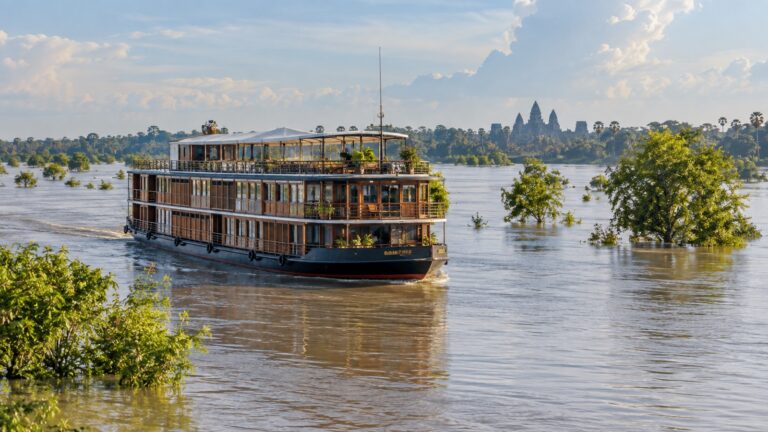
The active call is not evidence of a fixed big-ship pier. It is an excursion zone along the Tiền River and its connected canals, with the larger river vessel, local launch, sampan, and shore landing each doing a different job.
Our Mekong river cruise ports guide compares Cái Bè with Mỹ Tho, Sa Đéc, Tân Châu, Phnom Penh, Kampong Cham, and other lower-river stops.
Where Is Cái Bè in 2026?
Cái Bè lies beside the Tiền River, one of the main distributary branches carrying Mekong water through southern Vietnam’s delta. It is west of Mỹ Tho and southwest of Ho Chi Minh City.
Older sources place Cái Bè town in Tiền Giang province, and the river name Tiền naturally adds to the confusion. Vietnam’s 2025 administrative reorganization merged Tiền Giang and the former Đồng Tháp province into a new, larger Đồng Tháp province.
The official government resolution also formed the current Cái Bè commune from the former town and neighboring Đông Hòa Hiệp and Hòa Khánh communes. A current address should therefore say Cái Bè commune, Đồng Tháp province, even though legacy brochures may still print Tiền Giang.
None of this moved the church, canals, or fruit trees. It only means a traveler can see two province names attached to the same destination without either map necessarily pointing to a different riverbank.
Landing and Local-Boat Realities
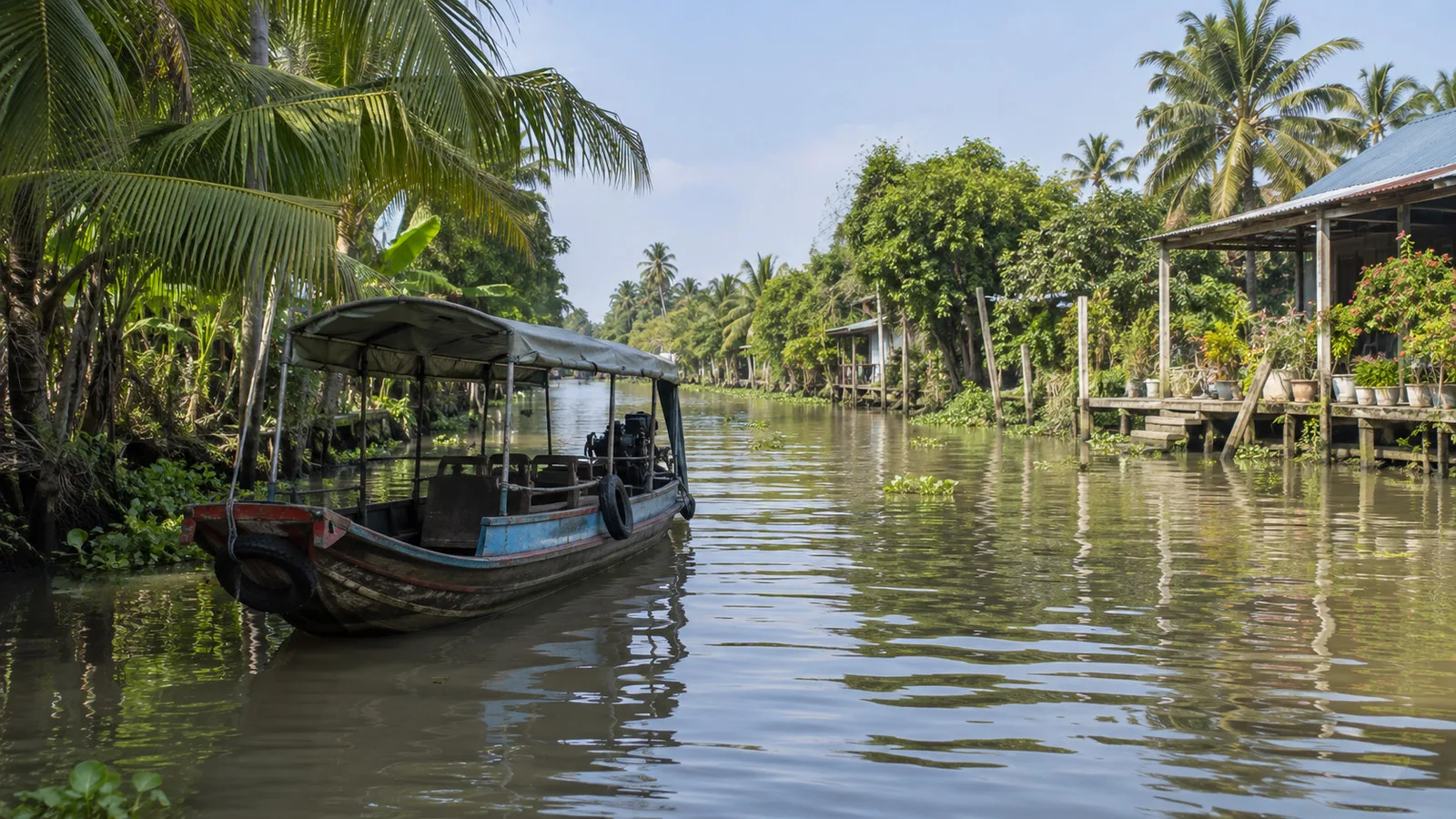
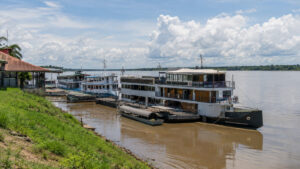
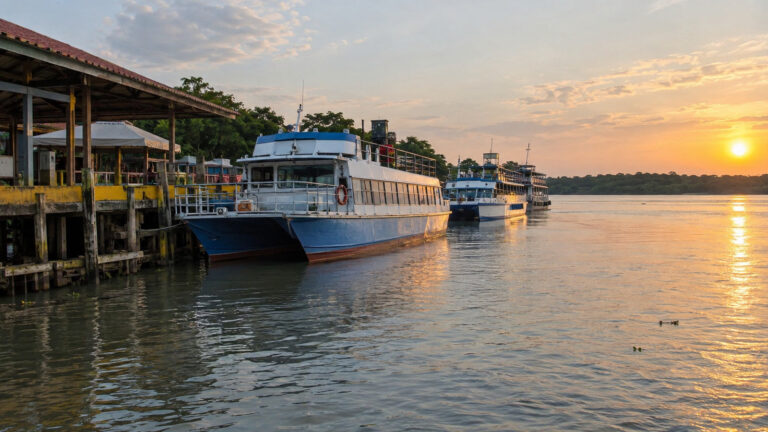
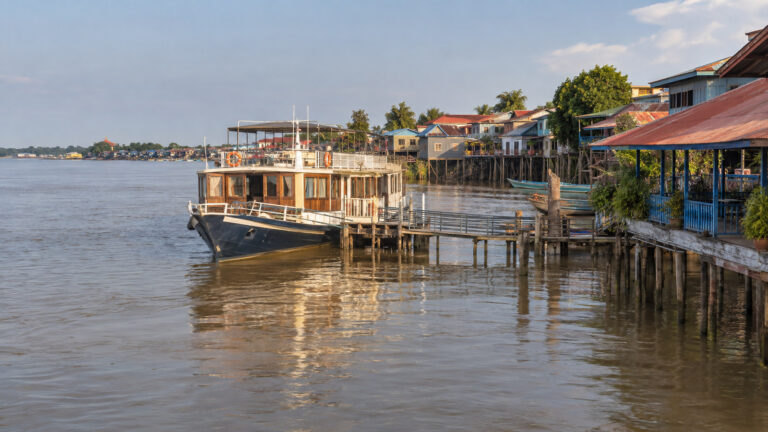
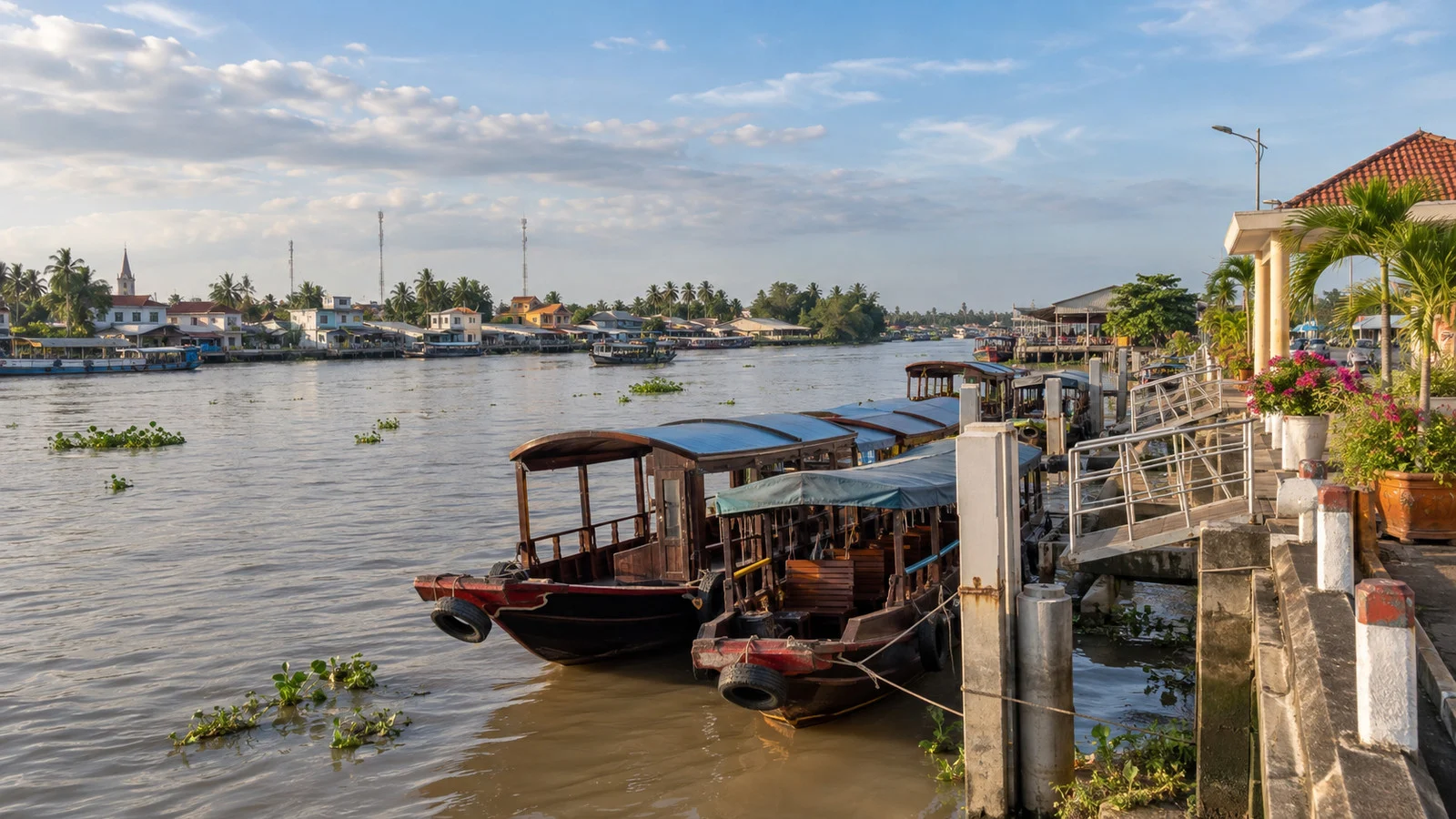
Main Mekong hotel ships generally remain on a wider navigable channel while passengers board a local covered launch for Cái Bè. AmaWaterways’ 2026 program explicitly says guests “take a local boat to Cái Bè,” which is more precise than promising a dock beside town.
This transfer is closer to a ship-operated excursion launch than an ocean-cruise tender service with a permanent public terminal. Boarding may occur alongside the hotel ship and involve a step down, a moving gap, a handrail, crew assistance, or a short rafted passage.
The local boat can then use a town jetty, workshop landing, old-house landing, orchard bank, or smaller canal stop. Water height, vessel traffic, the selected excursion, and local conditions determine the sequence.
Some small boutique vessels can approach more closely or use their own bank arrangement. Do not convert one operator’s photograph into a universal berth promise for every ship.
Photograph the local boat and listen for the group name before stepping ashore. A row of similar wooden launches becomes remarkably less distinctive when everyone returns wearing the same sun hat.
What Happened to the Cái Bè Floating Market?
Cái Bè grew famous for wholesale produce traded between boats, with sellers traditionally raising a sample on a pole to advertise cargo. Roads, bridges, trucks, supermarkets, and changing livelihoods have steadily reduced the market’s commercial scale.
Vietnam’s official tourism site still promotes early river commerce and the Tiền riverside market, and some 2026 cruise marketing still uses “floating market” language. Yet AmaWaterways’ detailed current Cái Bè day promises a local boat and workshops, not a guaranteed flotilla of wholesale traders.
The accurate expectation is scattered boat commerce, river traffic, and a living waterside economy rather than a huge, concentrated daily market. The number of trading boats varies with hour, season, harvest, and ordinary business decisions made for locals rather than cameras.
An early visit offers the best chance of seeing active produce movement, but even dawn does not guarantee the spectacle shown in an old brochure. Cái Răng near Cần Thơ is a separate floating market with a different scale and should not be used to describe Cái Bè.
If only a few working boats appear, the call has not failed. The canals, workshops, old houses, orchards, ferries, and everyday river transport are the more dependable story in modern Cái Bè.
Rice Paper, Candy, and Family Workshops
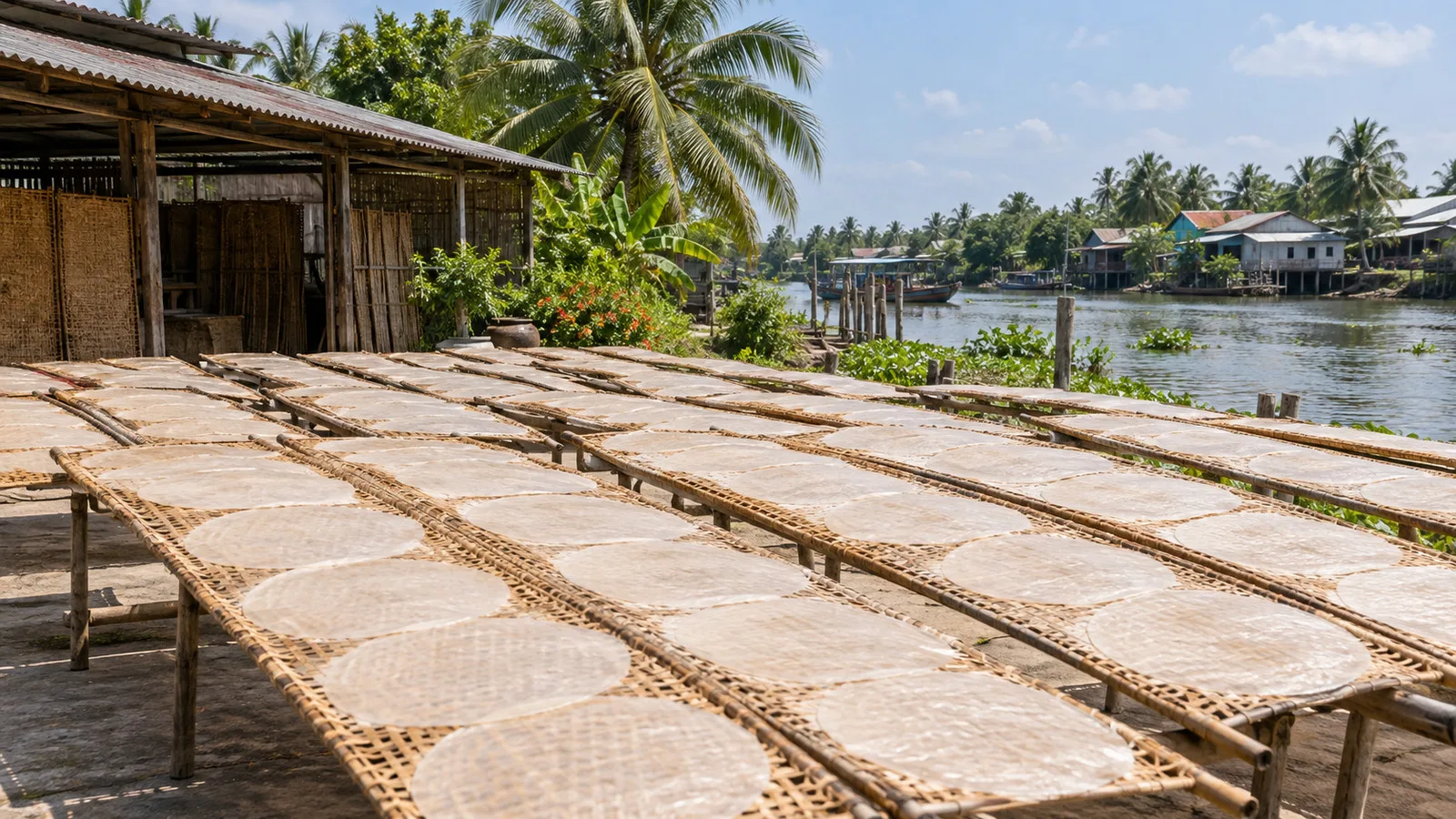
Current cruise programs commonly visit family-run workshops producing rice paper and coconut or fruit candy. Demonstrations may include steaming batter, drying thin sheets, popping rice, stirring hot mixtures, cutting candy, and wrapping finished pieces.
These are working businesses, not standardized museums. The exact products, machinery, demonstration length, language support, sales area, and tasting can change by day.
Ask before photographing workers closely, especially children, and do not lean over hot pans or moving equipment. Samples can contain peanuts, sesame, coconut, dairy, gluten, or other allergens, so use the guide rather than guessing from appearance.
Buying is optional, though a modest direct purchase supports the household hosting the group. Carry small Vietnamese đồng notes because card payment and change are not reliable at a canal-side family workshop.
Kiet House and Đông Hòa Hiệp
AmaWaterways offers an active walking option to historic Kiet House before the workshops. The house belongs to the old-house landscape of Đông Hòa Hiệp, now administratively within the expanded Cái Bè commune.
Traditional homes in this area blend southern Vietnamese planning, timber craftsmanship, tiled roofs, gardens, and decorative influences accumulated through trade. Interiors remain private or semi-private spaces, so access depends on the host and operator arrangement.
The “active” label deserves attention. Paths may be narrow, warm, slick after rain, uneven at thresholds, and shared with bicycles or motorcycles.
Allow 60 to 120 minutes for a combined landing, house or workshop visit, and local-boat movement as an editorial range. A program with several stops or a long canal detour can take more time.
Tân Phong Islet and Orchard Visits
Tân Phong is an orchard-rich island across the river system from Cái Bè. Vietnam’s official tourism site describes a short ferry connection, narrow lanes, small bridges, fruit farms, cycling, sampans, and community-based visits.
Not every cruise includes Tân Phong. An itinerary may instead focus on town waterways, Đông Hòa Hiệp, workshops, or a direct onward route to Sa Đéc.
Fruit availability follows harvest cycles, and an orchard visit is not an all-season promise of every tropical fruit at peak ripeness. Guides may offer what is locally available rather than the exact tasting pictured online.
Cycling routes can include narrow paved lanes, abrupt little bridges, damp leaves, dogs, scooters, and no protective separation from local traffic. Choose a walking or boat-based alternative when balance, heat, vision, or confidence makes that sound less delightful than the brochure intended.
Cái Bè Church and Town Market
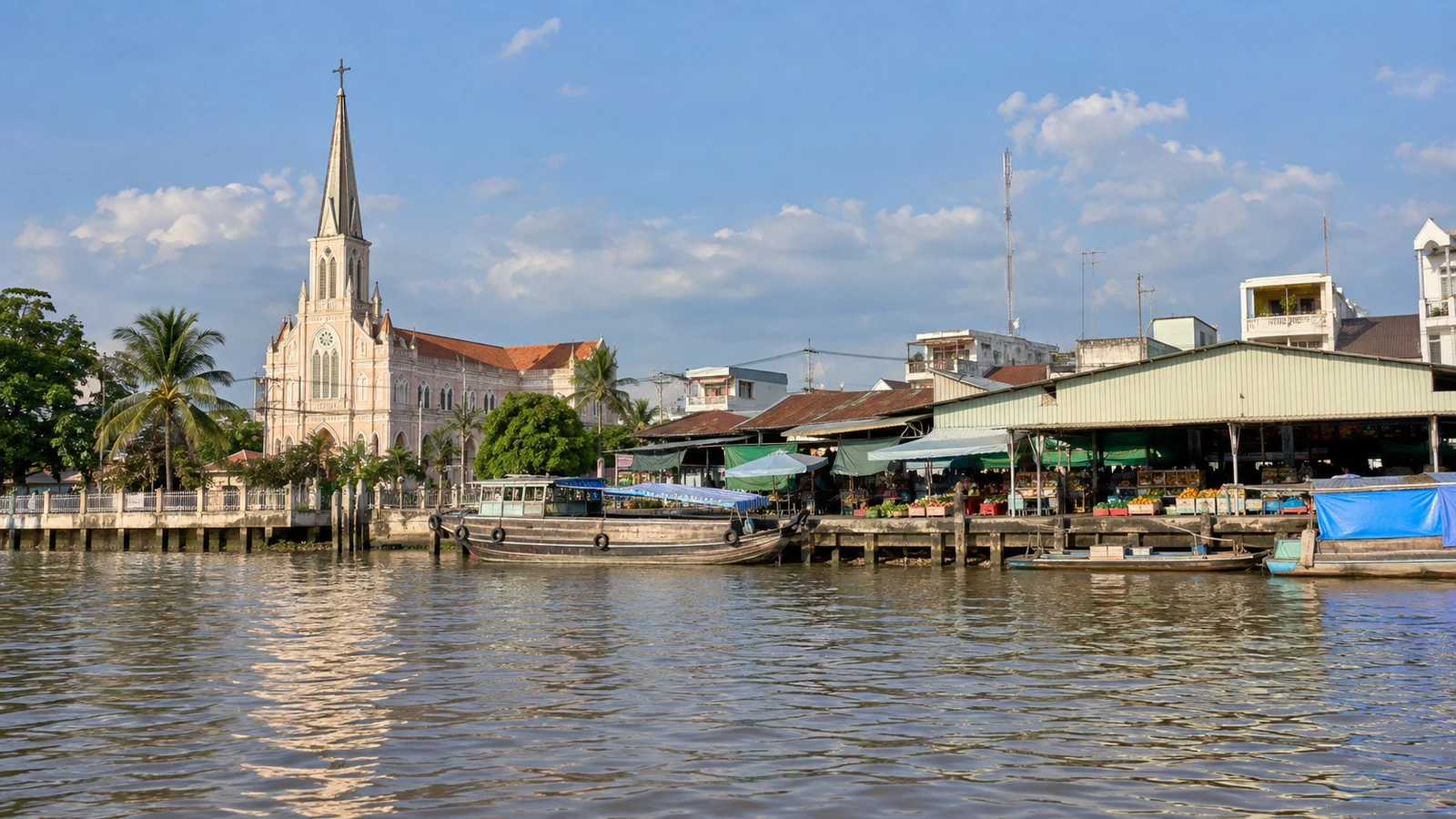
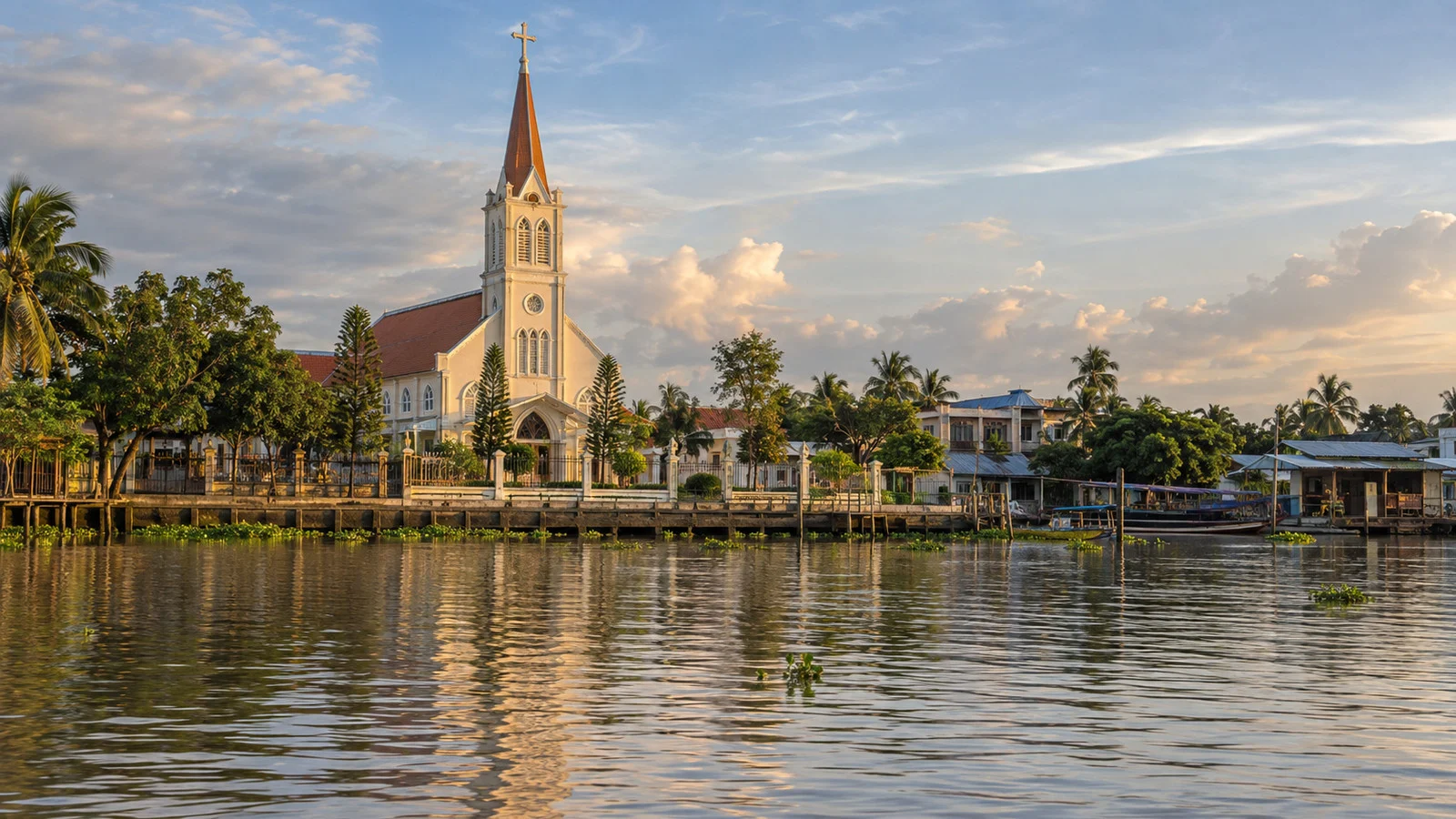
Cái Bè’s Roman Catholic church is a useful visual landmark near the waterways, with a prominent bell tower visible from parts of the river. River itineraries may pass it without providing an interior visit.
The land market and riverside vendors are more dependable than a large floating market, particularly in the morning. Expect produce, household goods, wet surfaces, motorcycles, close aisles, and commerce designed for residents.
Dress respectfully for any church or religious stop, keep voices low, and never assume interior access during worship or a private event. Market photography should be quick, polite, and subordinate to someone trying to sell a basket of fruit.
Accessibility at Cái Bè
Cái Bè is a challenging call for many wheelchair users and anyone unable to manage moving boat transfers. The sequence may require hotel ship to local launch, launch to a simple jetty, then steps or uneven paths into a workshop or house.
AmaWaterways’ Mekong guidance warns that landing stages and sites can have steps or uneven terrain, embarkation points may be difficult, and local boats and motorcoaches may not be accessible. That is a more useful planning statement than calling the destination merely “easy” or “active.”
Ask the cruise line about the actual boat-transfer method, number and height of steps, handrails, whether crew can handle a mobility device, distance at each stop, seating, restroom access, and a stay-aboard alternative. Never assume a folding wheelchair can be accepted simply because it fits in a cabin.
Our river-cruise accessibility guide separates vessel, transfer craft, landing, and attraction access. Cái Bè is a textbook case for needing all four answers.
Travelers who can manage the launch but not a long walk may be able to enjoy a panoramic boat ride and one closer landing, subject to operator approval. Confirm in advance because a local captain cannot improvise safe access after the group is already alongside a high bank.
High Water, Low Water, and Rain
The lower Mekong has a tropical monsoon regime, but Cái Bè also sits in a low delta where tides, canals, rainfall, upstream flow, local drainage, and sediment all influence water access. One simple “high-water season” label cannot predict a specific landing.
The Mekong River Commission issues wet-season flood forecasts from June through October and dry-season monitoring from November through May. It monitors delta inflow at Tân Châu and Châu Đốc, while noting that lower-delta water levels are also subject to daily tidal variation.
Higher water can improve access to some channels while making currents stronger, banks wetter, and low structures less convenient. Lower water can expose muddy edges, increase step height, restrict a side canal, or move the local-boat stop.
Heavy rain can arrive quickly, especially during the monsoon period, and lightning or strong squalls may pause small-boat operations. A poncho is more practical than a large umbrella when boarding, and a dry bag protects phones better than optimism.
Itineraries may change workshop order, skip a minor canal, move the landing, or substitute another community experience. Those adjustments are normal safety and navigation decisions, not evidence that the entire Mekong has become unnavigable.
Embarkation and Ho Chi Minh City Transfers
Cái Bè is normally an excursion call, not the advertised joining point for international river cruises. AmaWaterways’ 2026 south-to-north program transfers guests from Ho Chi Minh City to Mỹ Tho for embarkation, then sails toward Cái Bè.
Do not hire a driver to “Cái Bè port” and expect a reception desk. There are multiple local jetties and boat operators, while the hotel ship may be on a broader channel away from town.
Cái Bè is roughly two to three hours by road from central Ho Chi Minh City as an editorial range, depending on traffic, pickup point, and current road conditions. A cruise-arranged transfer avoids the problem of locating a moving vessel after a delayed flight.
Our Vietnam cruise ports guide distinguishes Mekong embarkation points from ocean terminals at Phú Mỹ, Nha Trang, Chân Mây, Đà Nẵng, and Hạ Long Bay.
Weather, Clothing, and Safety
Cái Bè is warm and humid year-round, with strong sun even when clouds make the day look gentle. Wear breathable clothing, a secure hat, sunscreen, and closed shoes or sandals with real grip.
Use bottled or properly treated water, wash or sanitize hands before tasting, and tell the guide about food allergies. Mosquito repellent is useful around shaded gardens and canals, particularly after rain.
Keep hands inside the boat, wear the supplied life jacket as instructed, and let crew stabilize the craft before stepping. Never jump between boats or onto a muddy bank because the landing looks close.
Watch for motorcycles on narrow lanes and keep valuables secured at markets and busy jetties. Do not photograph police, military facilities, checkpoints, or sensitive transport infrastructure.
Vietnam’s national emergency system uses 112 for incidents, disasters, and urgent situations, linked with police 113, fire 114, and ambulance 115. Save the cruise director’s local number because the ship can solve an excursion separation faster than a national call center.
A Sensible Cái Bè Plan
Take the included local-boat excursion and confirm whether the main vessel moves toward Sa Đéc while guests are ashore. Choose one primary focus: workshops and Kiet House, a gentler boat-based route, or an orchard and cycling option if specifically offered.
Expect river life rather than a guaranteed floating-market spectacle. Give the local launch, village paths, and host businesses time to be interesting on their own terms.
Carry small đồng notes, rain protection, water, repellent, and only the gear you can manage across a moving boat transfer. The best day bag here is the one that does not need its own boarding assistance.
Final Verdict
Cái Bè remains an active and worthwhile lower Mekong call, but its modern strength is not a giant floating market. It is the layered connection between Tiền River navigation, small boats, canal communities, family workshops, orchards, old houses, and ordinary delta commerce.
Expect a local launch rather than one universal pier, verify mobility before committing, and let water conditions determine the exact route. With those expectations set, Cái Bè feels personable, textured, and refreshingly more alive than a staged market postcard.
How to approach Cái Bè responsibly
The operator controls the hotel-ship position, local boat, life jackets, and village landing, while Vietnam’s official tourism site provides destination context. Follow the guide rather than trying to meet the ship at a map pin.
Treat workshops as working homes, ask before photographing, and buy only when the price and product genuinely suit you. A quiet floating-market morning can be authentic even without the dense boat scene shown in old marketing, so do not pressure residents to perform a vanished version of the place.
Check Vietnam entry permission through the official eVisa portal and seasonal water through the Mekong River Commission. Small boats, wet steps, narrow paths, heat, and toilets make the access chain demanding, and the operator’s return time is firm.
How this guide was researched: Unless a firsthand visit is explicitly identified above, this guide uses official government, tourism, river-monitoring, and operator sources where available. Details were checked against Vietnam’s official tourism site, current government administrative records, the Mekong River Commission, and published cruise itineraries.
Logistics and time-sensitive details were reviewed September 12, 2026. See our Editorial Policy.