Chiang Khong River Cruise Port: Border and Embarkation Guide
Chiang Khong is the Thai gateway many travelers use for an Upper Mekong cruise, but the boat commonly waits across the border in Huay Xai, Laos. That makes embarkation a sequence of hotel pickup, two immigration formalities, cross-border transport, another vehicle, and a river landing.
The day works smoothly when the cruise operator controls those connections. It becomes fragile when passengers treat Chiang Khong town, the Friendship Bridge, Huay Xai immigration, and the pier as one walkable terminal.
My quick take
I would sleep in Chiang Khong or the operator’s designated hotel the night before and use the included transfer. Arriving from Chiang Rai on embarkation morning leaves too little room for road delays, document problems, or a changed meeting point.
Keep your passport, Lao entry authorization, and cruise documents in a small personal bag rather than checked luggage. Let the crew handle large bags at the pier, where slopes, sand, stairs, and narrow gangways can be more demanding than a city dock.
Quick Facts
- Country: Chiang Khong is in Thailand.
- Common embarkation town: Huay Xai in Bokeo Province, Laos.
- Border crossing: Lao Thai Friendship Bridge IV.
- Usual sequence: Hotel or meeting point, Thai exit, bridge transfer, Lao entry, Huay Xai pier, then ship.
- Lao eVisa: Accepted at Friendship Bridge IV for eligible travelers with an approval letter.
- Time zone: Thailand and Laos both use Indochina Time, seven hours ahead of UTC.
- Currencies: Thai baht before the border and Lao kip after entry.
- Best planning move: Arrive one day early and follow the operator’s exact transfer instructions.
Where Upper Mekong cruises actually embark
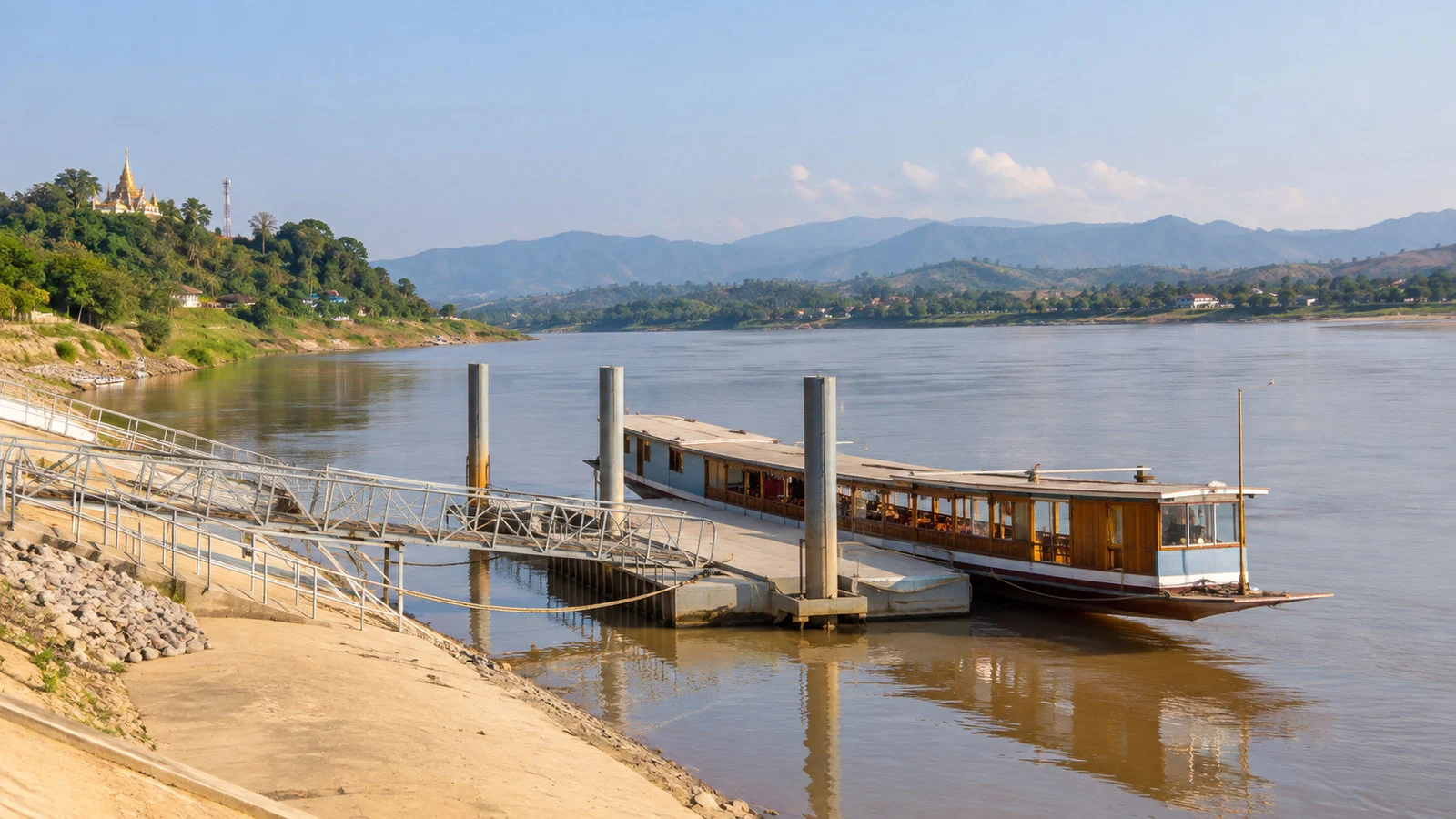
Chiang Khong faces Huay Xai across the Mekong, but the modern international border crossing uses Lao Thai Friendship Bridge IV outside the old riverfront centers. Many downstream cruises begin at a Huay Xai pier after passengers complete immigration.
Lao tourism authorities describe Huay Xai as Bokeo’s capital, a border crossing opposite Chiang Khong, and a popular starting point for boats toward Pakbeng and Luang Prabang. That official geography is why a cruise marketed from Chiang Khong can still board in Laos.
Your operator’s itinerary is the best source for the precise meeting point. Heritage Line’s current itinerary describes welcoming guests at Lao immigration, gathering the group, and transferring passengers by minivan to Huay Xai Pier.
Chiang Khong is not the pier address
A hotel voucher that says Chiang Khong identifies the Thai side of the journey, not necessarily the ship. The border checkpoint, bridge, Lao immigration, Huay Xai center, and river landing are separate places connected by road.
Do not leave a hotel on foot expecting signs to a cruise terminal. Even when the Mekong is visible, the legal border crossing and the vessel’s landing may be several transfers away.
Confirm whether the operator collects you at a hotel, a named meeting point, or the border. Also ask what happens if you stay at a different property from the recommended one.
A realistic border transfer sequence
The usual process begins with a vehicle from Chiang Khong to the Thai checkpoint. Passengers complete Thai departure formalities, cross the bridge by authorized transport, then enter Laos through the Bokeo checkpoint.
After Lao immigration, the cruise company or local partner may gather the group for another vehicle to the river. The final drive can end at a landing that looks informal compared with a large cruise terminal.
Exact steps, waiting areas, and vehicle changes can vary. Follow the guide rather than moving ahead independently, because the group may need to account for every passport and bag before continuing.
Lao visa and passport planning
Entry rules are nationality specific and can change, so use the official Lao eVisa website and guidance from your nearest Lao diplomatic mission. Do not rely on a tour forum, an old cruise review, or a third party visa advertisement.
The official eVisa site currently lists Lao Thai Friendship Bridge IV in Bokeo Province as a designated eVisa entry point. It also states that applicants must carry the eVisa Approval Letter and present it with the passport at immigration.
Eligibility, passport validity, permitted stay, fees, and processing can differ by traveler. Check every name, passport number, and date on the approval letter as soon as it arrives, then ask the operator if a printed copy is required.
Do not wait until embarkation week
The official Lao service says eVisa processing is usually three working days when an application is complete, but it can take longer. Public holidays, photo problems, passport image issues, or additional review can erase a narrow timeline.
Apply only after checking the official site’s eligibility and your cruise dates, but leave a comfortable buffer. A nonrefundable booking does not override immigration requirements.
Keep digital copies of your passport bio page, approval letter, travel insurance, and cruise contacts in secure storage. Carry the documents immigration asks to see in a place you can reach without opening your main suitcase.
What immigration day feels like
Border processing is administrative rather than scenic. Expect waiting, queuing, moving between counters, and possibly transferring luggage while the group advances in stages.
Wear clothing that is comfortable but respectful, and keep a pen handy if forms are used. Avoid photographing officials, passport controls, or restricted areas unless permission is clear.
Stay close enough to hear the guide but do not crowd the counter. If an officer asks a question, answer directly and let the operator translate or clarify when needed.
Money before and after the border
Use Thai baht for purchases in Chiang Khong and expect Lao kip to be the local currency after entry. Cards and cash access become less predictable once the cruise moves into remote stretches of the Mekong.
Ask the operator where currency exchange or an ATM fits into the transfer. Do not delay the whole group by leaving the immigration or meeting area to search independently.
Small clean notes can be useful for incidental spending, but currency acceptance and change vary by place. Follow current operator advice rather than carrying a large amount based on an old travel guide.
What the Huay Xai landing may be like
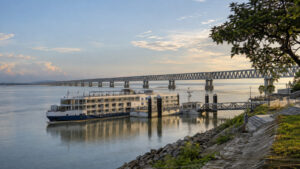
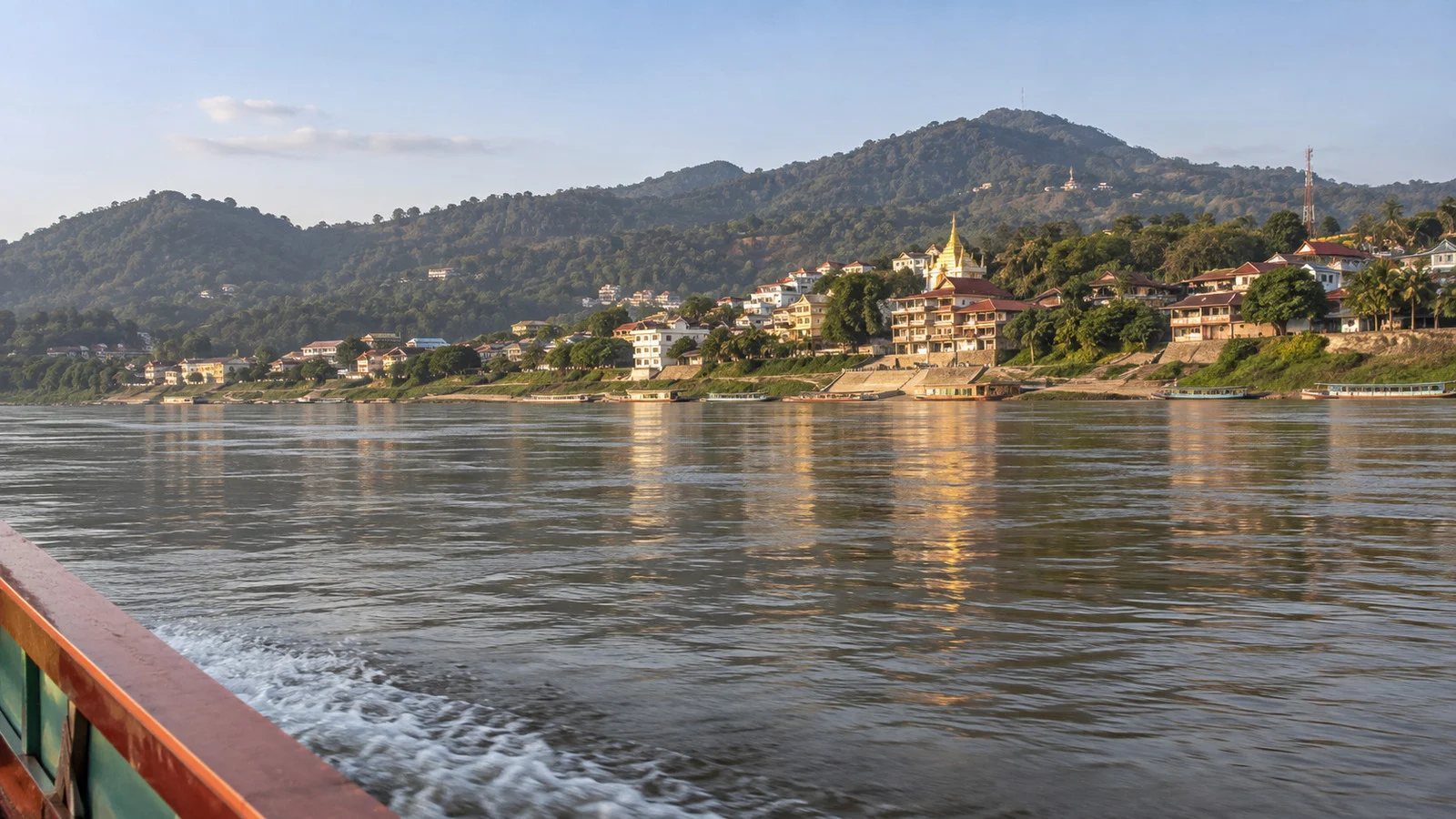
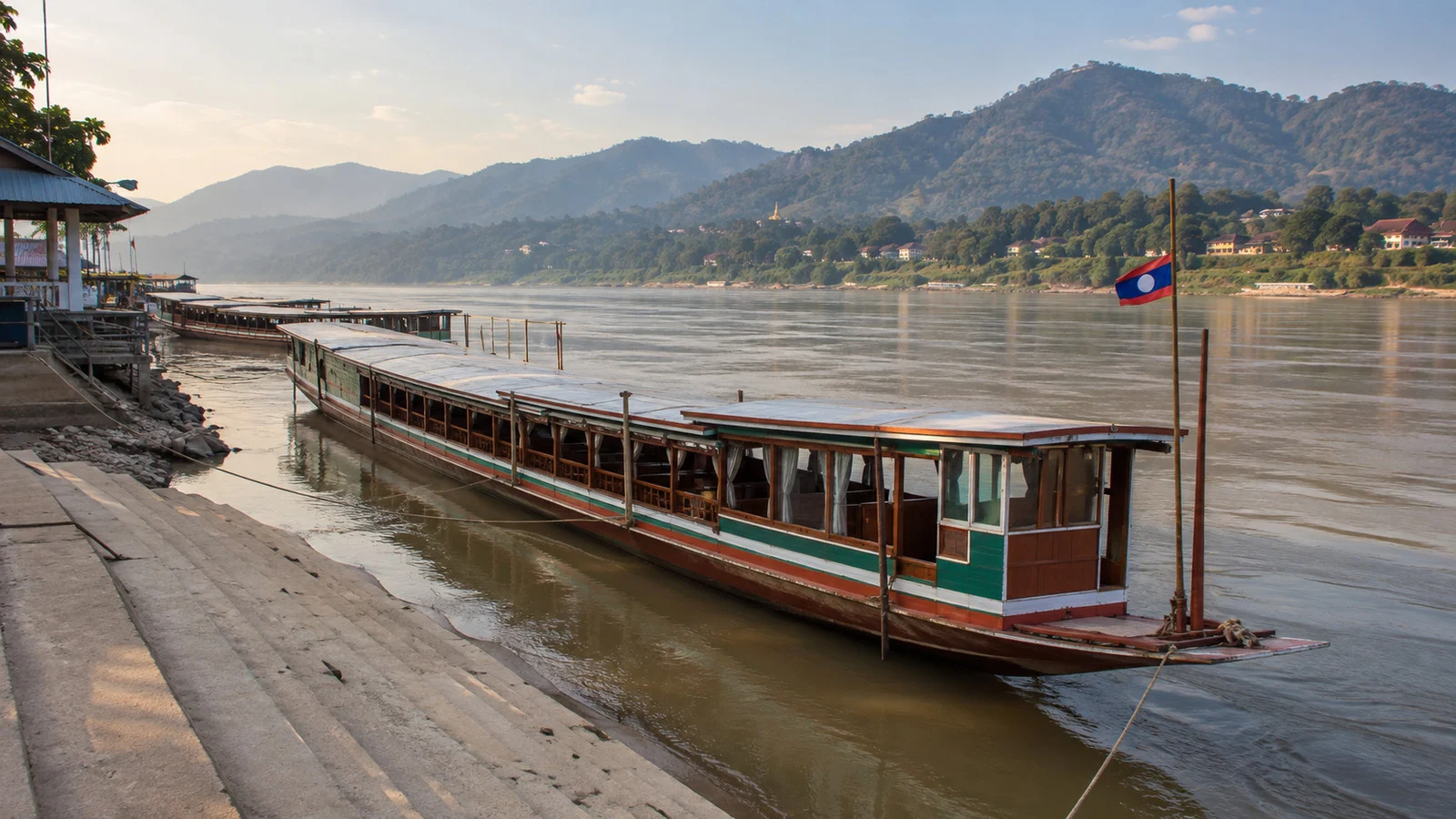
Upper Mekong vessels are designed for river conditions, not for a fixed ocean cruise terminal. Boarding may involve a sloped bank, floating platform, narrow gangway, steps, or a short walk over uneven ground.
Water level can change the height and angle between shore and vessel. A landing that felt easy in one season may require more balance or assistance on another departure.
Heritage Line’s current itinerary says its team handles check in and luggage at Huay Xai Pier. Other operators may use different arrangements, so confirm how bags move and what you must carry yourself.
Pack a small embarkation bag
Keep medicine, documents, electronics, valuables, water, and one light layer in a manageable day bag. Your larger suitcase may be moved separately and might not reach the cabin the moment you step aboard.
Use a bag you can hold close while entering vehicles and crossing a gangway. Loose tote bags and oversized carry-ons are awkward when both hands are needed for rails.
Protect electronics and documents from sudden rain. A simple waterproof pouch inside your bag is more dependable than assuming the dock or transfer vehicle stays dry.
Luggage choices matter
Soft-sided luggage is often easier for river vessels to store than very large rigid cases. Check the cruise line’s dimensions and weight guidance instead of applying an airline allowance automatically.
Label every bag with your name and cruise contact, but keep passport details private. Remove old airline tags that could confuse handling.
If you cannot lift or roll your case over uneven ground, tell the operator before travel. Embarkation day is not the moment to discover that assistance was never requested.
Accessibility reality
This embarkation involves more than the boat’s cabin design. Travelers may face vehicle steps, immigration queues, limited seating, curb changes, uneven landings, gangways, and ship stairs in one morning.
Ask for a stage-by-stage description from hotel pickup through cabin arrival. The useful questions cover step height, handrails, maximum walking distance, standing time, toilet access, wheelchair transfer, and luggage assistance.
A small Upper Mekong vessel may not have an elevator or accessible cabin. Confirm the exact ship and itinerary, because a general company statement cannot describe every vessel or seasonal landing.
Wheelchairs and mobility devices
Do not assume a wheelchair can remain occupied through the border transfer or final boarding. Vehicle storage, immigration pathways, bank conditions, and gangway width all need specific confirmation.
Provide dimensions and weight for any wheelchair or scooter, and explain whether the traveler can transfer or climb steps. Written confirmation is more useful than a vague assurance that staff will help.
If the operator cannot meet a required transfer, ask about an alternative itinerary before final payment. Remote river infrastructure can make improvisation unsafe or impossible.
How early to arrive in Chiang Khong
Arrive at least the day before the scheduled transfer unless the cruise company explicitly builds the Chiang Rai journey into its package. A same morning road trip creates risk from traffic, weather, vehicle problems, and confusion over the meeting hotel.
An overnight also lets you organize documents, repack the day bag, and start rested. Border formalities are easier when nobody is trying to recover from a late arrival.
Choose lodging based on the operator’s pickup plan, not only the river view. A beautiful hotel becomes inconvenient if its transfer is not included and local transport is scarce early in the morning.
Getting to Chiang Khong
Many travelers approach from Chiang Rai by private transfer, shared vehicle, or cruise arranged transport. Journey time varies with the pickup, road conditions, stops, and the exact hotel.
Ask whether the price includes airport pickup, a hotel night, or only the border day transfer. Similar sounding cruise packages can begin at very different points.
If you arrange independent transport, share the full hotel name in Thai and a map pin. Keep the driver’s contact and the cruise company’s emergency number available offline.
Is Chiang Khong worth extra time?
Yes, if you appreciate a quieter Thai border town and a slow Mekong evening. The riverfront can provide a useful pause before the structured crossing and several days aboard.
Keep expectations modest because Chiang Khong is not a resort terminal built around cruise passengers. Local restaurants, temples, markets, and river views are the appeal.
Dress respectfully for temples, ask before photographing people, and remember that daily life continues around the tourism route. A little patience belongs in the packing list.
Should you stay in Chiang Khong or Huay Xai?
Stay where your operator’s transfer works most reliably. If the package begins with Thai hotel pickup and coordinated border handling, changing to Huay Xai independently can create more work rather than less.
A Huay Xai night can make sense when the cruise explicitly starts there and provides a Lao side meeting point. You still need to confirm how and when immigration happens.
Do not cross the border early merely because the ship is in Laos. A group procedure may depend on meeting staff at a particular checkpoint or time.
River conditions and itinerary changes
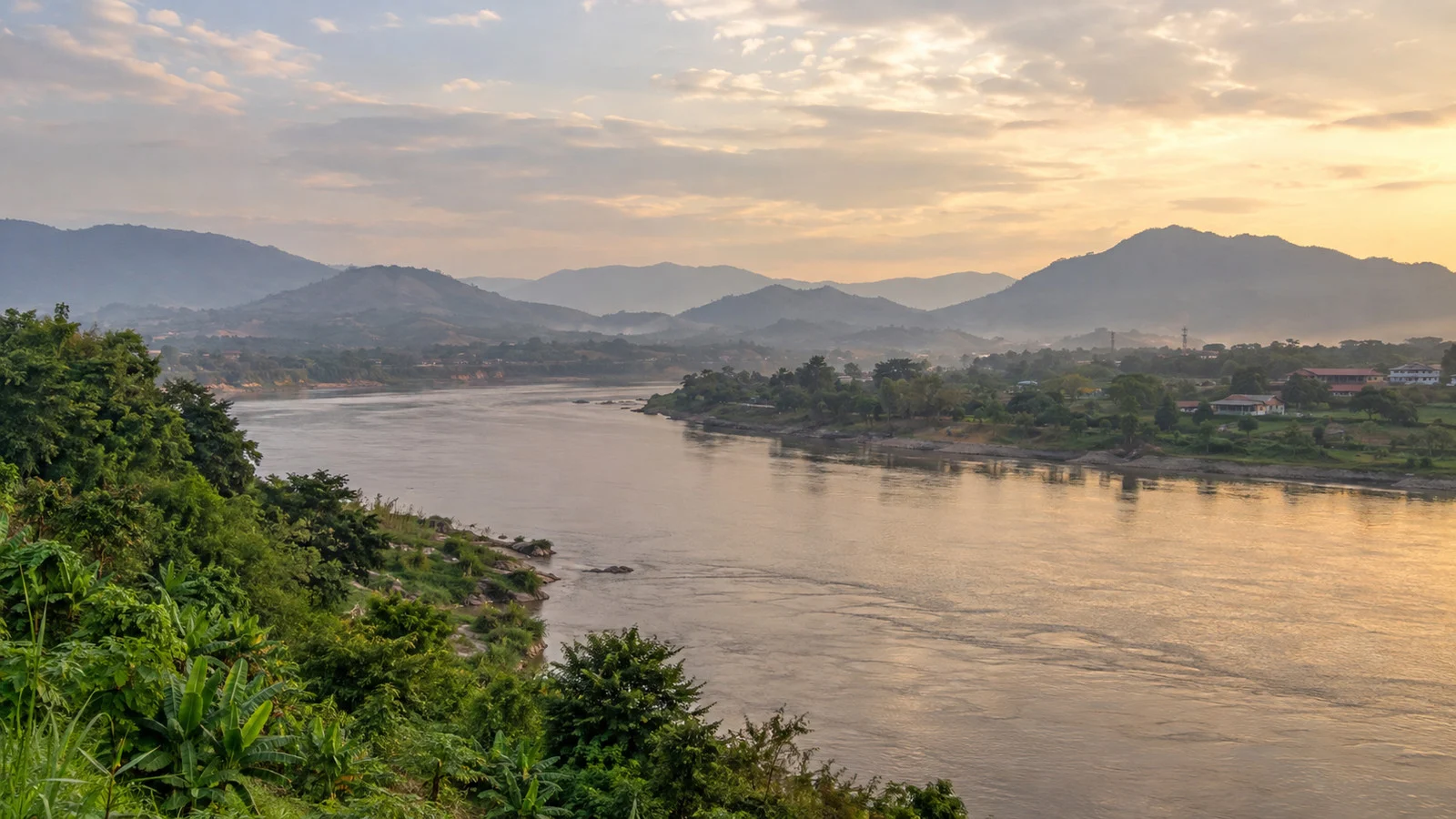
The Mekong River Commission notes that navigation conditions vary greatly and that sections contain physical obstacles and turbulent water. Upper Mekong operations therefore depend on experienced crews, suitable vessels, and daily conditions.
Water level, current, fog, weather, and local restrictions can affect departure, landing points, excursions, and cruising speed. A revised plan is not necessarily a failure when it protects safe navigation.
Listen closely to the safety briefing and daily updates. Remote river travel works best when passengers remain flexible about timing while firm about document and health requirements.
Health and comfort planning
Talk with a travel health professional well before departure about destination specific needs, routine vaccines, personal medications, and mosquito protection. This guide cannot replace individualized medical advice.
Carry prescribed medicine in original labeled packaging and keep an adequate supply in your hand luggage. Remote cruising may place you far from a pharmacy or full medical facility.
Heat, sun, insects, and dehydration can make a transfer day more tiring than expected. Wear breathable clothing, use sun protection, and drink safe water supplied by a trusted source.
Connectivity and offline preparation
Mobile service may be usable near the border towns but less reliable along remote river sections. Download the itinerary, hotel address, insurance details, and emergency contacts before leaving Chiang Rai.
Save offline copies of visa and cruise documents, but keep printed versions when authorities or the operator request them. A low battery should not become an immigration problem.
Bring the correct chargers and a power bank that complies with airline rules. Ask the cruise company what outlets are available onboard.
A realistic arrival-day plan
Reach Chiang Khong in daylight, check into the correct hotel, and confirm the next morning’s pickup with reception and the operator. Lay out passport documents and reduce luggage to one main case plus a small day bag.
Eat an early dinner, obtain any needed cash through a trusted source, and sleep. Sightseeing should support a calm embarkation rather than compete with it.
A realistic embarkation morning
Be ready before the stated pickup and keep passport documents on your person. Travel with the group through Thai departure, bridge transport, Lao entry, and the vehicle to Huay Xai Pier.
At the landing, follow crew directions, use handrails, and let staff move heavy bags. Once aboard, attend the safety briefing and check that essential belongings reached the cabin.
Mistakes that cause avoidable stress
The first mistake is booking a same-day arrival from far away. The second is assuming an eVisa works at every border without checking the official port list.
Other problems include putting the approval letter in checked luggage, wandering away during border processing, carrying bags that are too heavy, and arranging a different hotel without confirming pickup. Each one is easy to prevent before travel.
Quick answers
Is Chiang Khong in Thailand or Laos?
Chiang Khong is in Thailand. Huay Xai is across the Mekong in Laos and is the common embarkation point for downstream Upper Mekong cruises.
Can I walk from Chiang Khong to the ship?
No practical embarkation plan should assume that. The legal border crossing uses Friendship Bridge IV, and the Huay Xai pier normally requires vehicle transfers.
Does the Lao eVisa work at this border?
The official Lao eVisa site currently lists Lao Thai Friendship Bridge IV in Bokeo Province as a designated entry point. Confirm your nationality’s eligibility and carry the required approval letter.
Should I stay in Chiang Khong or Huay Xai?
Use the town named in the operator’s confirmed transfer plan. Changing sides independently can separate you from the group process.
How much time should I allow before the cruise?
Arriving the previous day is the safest general approach. Follow any earlier deadline set by your operator, visa process, or inbound travel schedule.
The last word
Chiang Khong embarkation is simple when you respect its moving parts. Arrive early, carry the correct documents, stay with the operator’s transfer, and save your energy for the Mekong once the border is behind you.
How this guide was researched: No firsthand Chiang Khong or Huay Xai visit is claimed. This guide was independently checked September 12, 2026 against the official Lao eVisa service, Lao tourism authorities, the Mekong River Commission and current Upper Mekong operator instructions.