Koh Oknha Tey River Cruise Port: Silk Weaving Near Phnom Penh
Koh Oknha Tey offers a quiet Mekong contrast to nearby Phnom Penh, with village lanes, working looms, and farmland replacing monuments and traffic. The best visit is slow, respectful, and led by people who can explain how weaving fits local life.
My quick take
This is a cultural stop rather than a checklist attraction. Watch the weaving process, ask thoughtful questions, buy only what you genuinely value, and leave space for ordinary village life to continue around the group.
The landing and walking route can change with river level, bank conditions, and the operator’s arrangements. Follow the daily briefing instead of relying on a map pin or a description from another sailing.
Koh Oknha Tey and nearby Koh Dach are distinct islands, although tourism marketing sometimes uses Silk Island loosely for weaving visits in this part of the Mekong. Confirm the exact community named in your cruise program.
Koh Oknha Tey quick facts
- Best for: Village life, Cambodian textiles, working looms, rural scenery, and a gentle cultural program.
- Arrival: The landing method and riverbank location vary by vessel, season, river level, and local arrangements.
- Walking: Expect uneven lanes, steps, soft ground, dust, or mud rather than a polished cruise terminal route.
- Currency: Cambodian riel is official. Some sellers may accept United States dollars, but ask your guide what works and carry clean notes in small values.
- Time zone: Indochina Time, seven hours ahead of Coordinated Universal Time throughout the year.
- Main caution: Stay with the approved route, respect photography rules, and return at the time set by the cruise director.
Where the ship stops
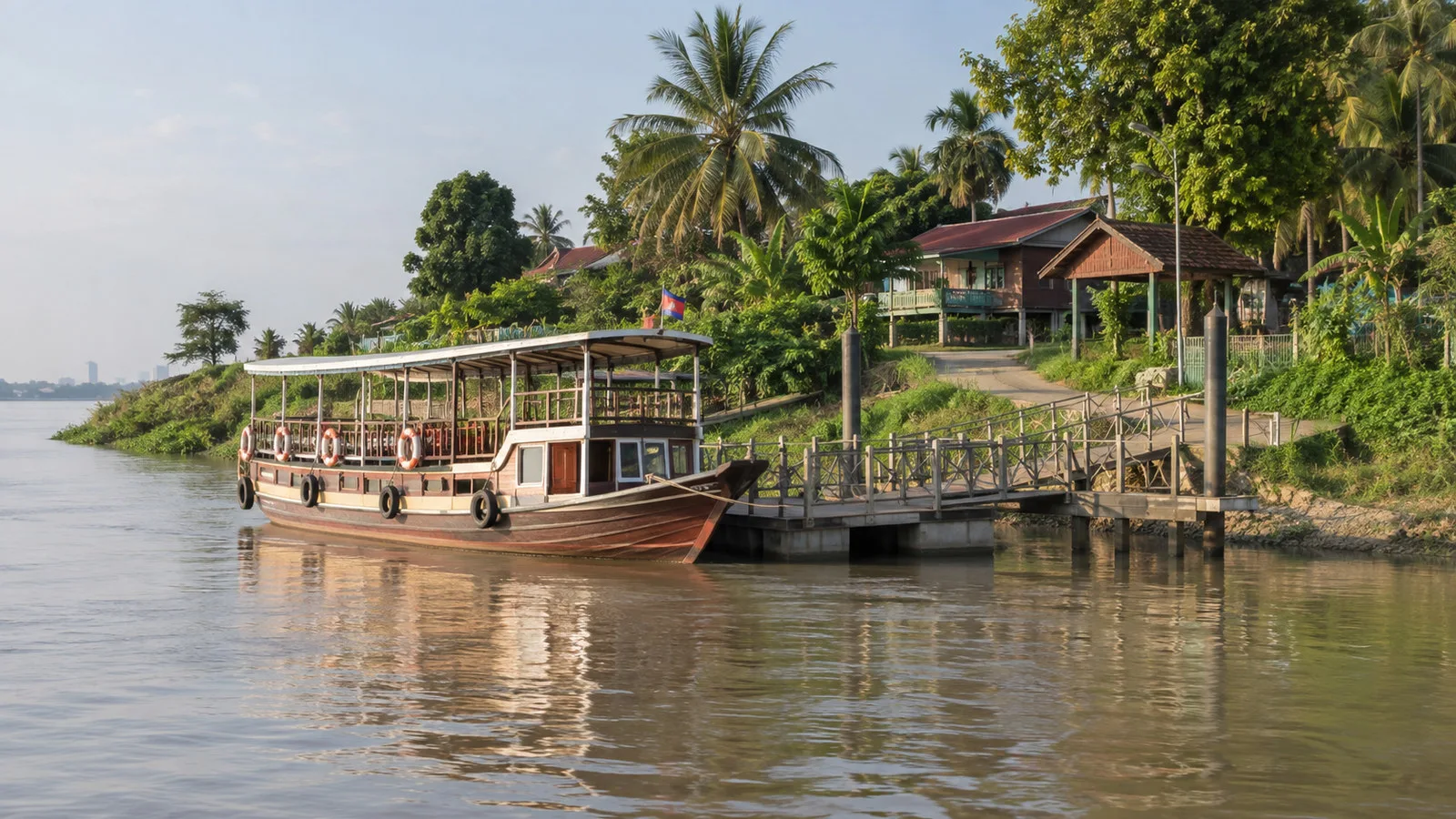
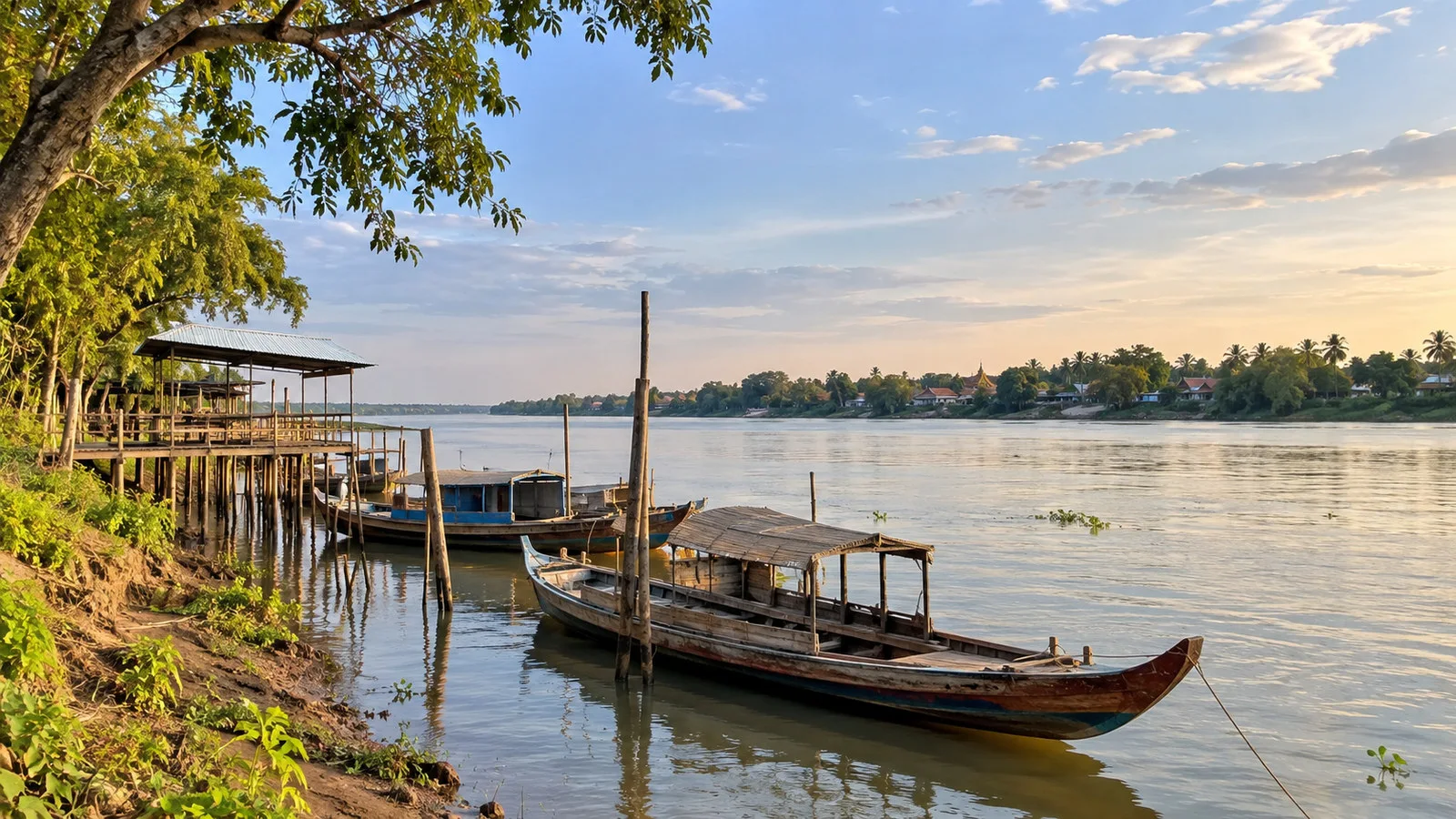
Koh Oknha Tey sits in the Mekong near Phnom Penh, but it does not function like a conventional terminal port. River vessels use the landing that best suits their size, local traffic, current, river level, and the day’s shore program.
Your ship may put passengers ashore by gangway, tender, or another small craft arrangement. Do not assume every sailing noses into the bank or uses the same patch of shore.
Before leaving the vessel, photograph the landing and note the return instructions. Riverbanks can look similar, and the embarkation point may not appear clearly in a phone map.
Getting ashore safely
Listen to the crew demonstration and keep both hands available when crossing the gangway or stepping from a small boat. Secure phones, cameras, and loose bags before moving between the vessel and shore.
Gangway angle and ground firmness can change as the river rises or falls. A landing that was easy for one cruise may be steeper, muddier, or farther from the village on another date.
Closed shoes with good grip are the safest choice for most visitors. Sandals can expose feet to rough ground, while smooth soles become unreliable on mud or wet boards.
Walking through the village
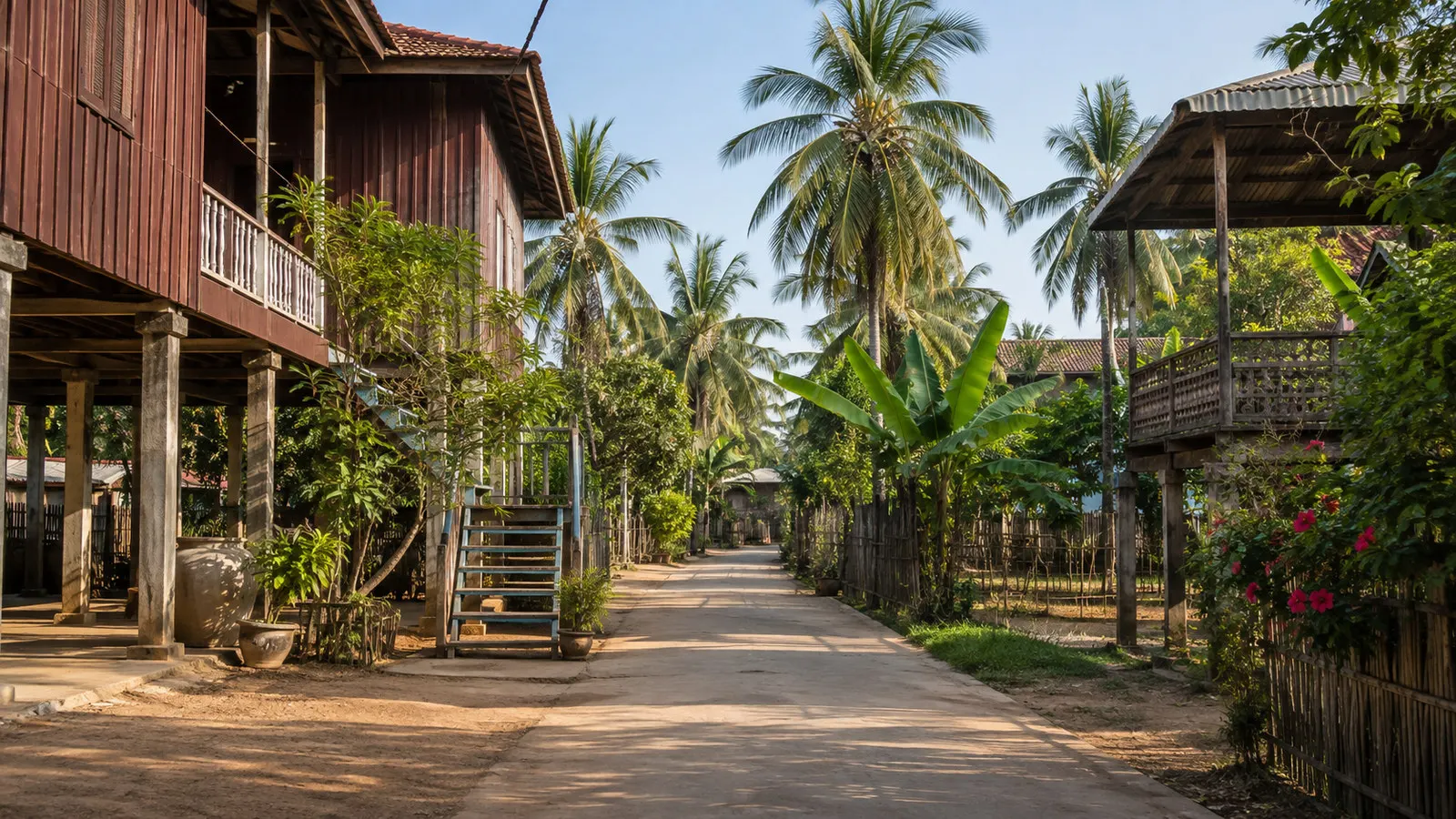
The shore program usually follows local lanes between homes, gardens, fields, and weaving spaces. Surfaces may include packed earth, concrete, gravel, grass, and short steps.
This is a working community, not an outdoor museum. Motorbikes, animals, children, farming activity, and household routines continue while visitors pass through.
Stay to the side when vehicles approach and follow your guide around private property. Do not enter a home, touch a loom, or open a gate unless someone invites you.
Understanding the Silk Island name
Koh Dach is widely known as Silk Island, and Koh Oknha Tey is a neighboring Mekong island with its own villages and weaving visits. Cruise operators may use Silk Island as an easy label for a broader shore experience in this area.
That shorthand can create confusing claims about the exact village or landing. Use the name in your ship’s daily program, and ask the guide whether the visit is on Koh Oknha Tey, Koh Dach, or another nearby community.
The distinction matters when arranging an independent visit before or after the cruise. Ferries, roads, meeting points, and travel times differ by island.
What you may see at a weaving visit
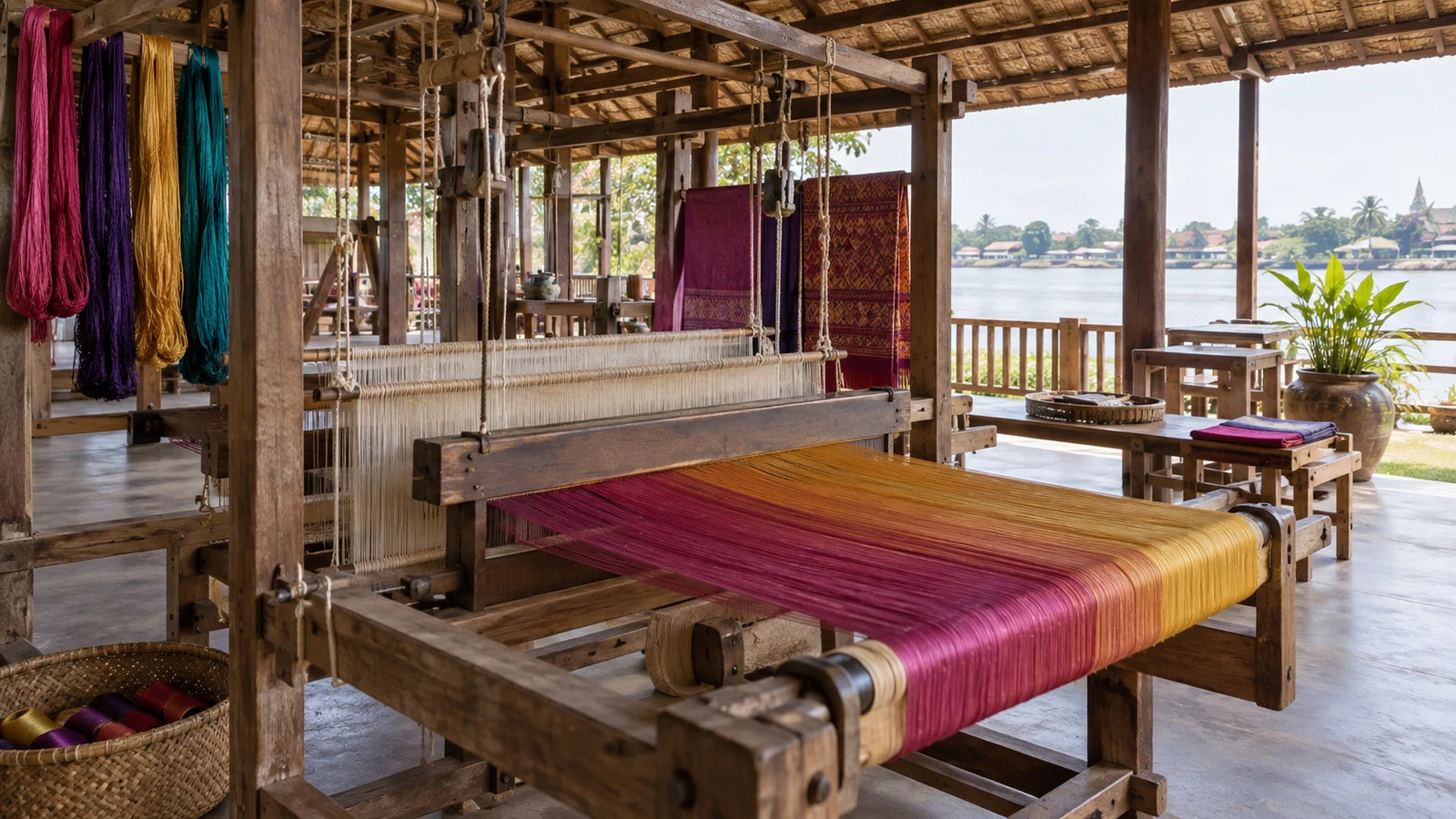
A guided visit may show thread preparation, dyeing, warping, loom setup, and the weaving of patterned cloth. The exact stages depend on what the household or workshop is doing that day.
Do not expect every location to raise silkworms, reel raw silk, dye yarn, and weave finished textiles on one property. Materials and labor can move through several households or suppliers before a scarf reaches the loom.
A skilled weaver makes the shuttle and treadle rhythm look effortless, but patterned cloth requires concentration and experience. Stand where the host directs so you do not block light, airflow, or the movement of the loom.
Ask before touching fibers or finished pieces. Natural oils, sunscreen, and moisture from hands can mark some textiles.
Silk, cotton, and honest labeling
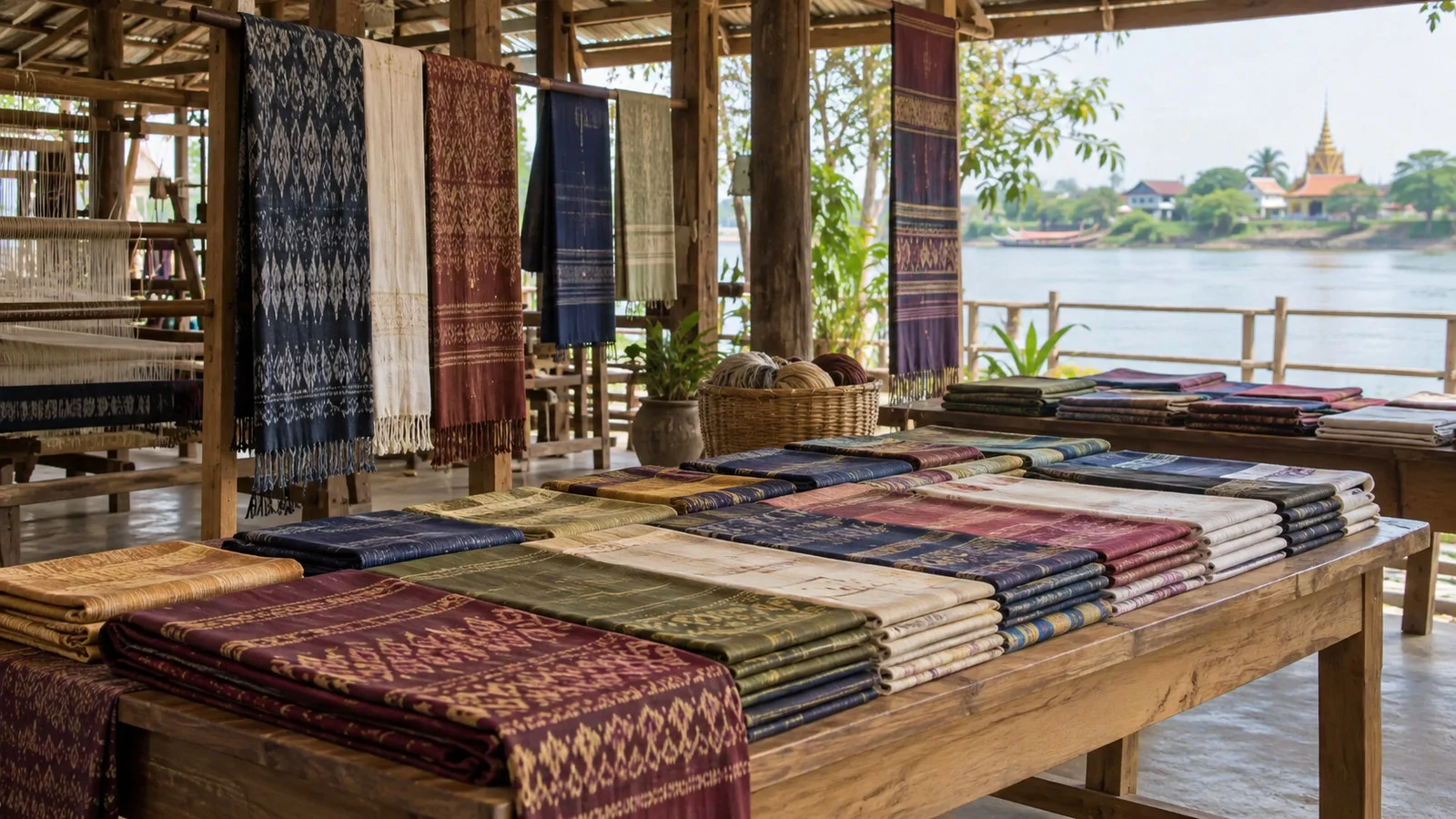
Not every attractive Cambodian scarf is pure silk. Cotton, rayon, blends, and machine made fabric also circulate, so ask what the item is made from rather than guessing from shine or softness.
A guide may help translate questions about fiber, dye, weaving method, and where the work was produced. Sellers should be able to explain an item, but differences in language can make precise labeling difficult.
Buy because you like the piece and understand the price. Avoid making investment claims about a textile unless there is reliable documentation.
Shopping respectfully
Purchasing directly during a community visit can support households and workshops, but visitors should not assume that every home wants to sell. Wait for the guide or host to indicate which items are offered.
Ask whether prices are fixed before bargaining. If negotiation is welcome, keep it friendly and remember that a small difference may matter more to the maker than to the traveler.
Inspect seams, fringe, color consistency, and any flaws before paying. Handmade work can include variations, which may be part of its character rather than a defect.
Cambodian riel is the official currency, and some tourism transactions also use United States dollars. Carry small, clean notes because damaged foreign bills may be refused and electronic payments may depend on a connection.
Photography etiquette
Ask permission before photographing people, homes, religious objects, workspaces, or children. A person demonstrating a craft has not automatically agreed to a close portrait.
Turn off the flash when it could distract a weaver or disturb a household. Keep clear of the loom’s moving parts and avoid directing people to repeat actions for the camera.
If the host declines a photograph, accept the answer immediately. A respectful conversation is more valuable than another image on a phone.
Guided visit or independent time?
The ship’s organized program is usually the best fit because the guide knows the approved landing, route, hosts, and return schedule. Interpretation also makes the weaving process easier to understand.
Independent wandering can lead visitors onto private property or separate them from the correct return point. Stay within the area and timing that the expedition or cruise team approves.
Land based travelers can arrange separate island visits from Phnom Penh, but those ferry and road logistics are different from a cruise call. Do not leave the ship program for an improvised taxi or ferry plan.
A practical two hour plan
Begin with the guided walk from the landing and listen to the introduction about the island and community. That context helps separate local practice from the simplified Silk Island label.
Spend most of the time at one or two weaving locations rather than rushing through many houses. Leave space for questions, careful shopping, and a short look at the surrounding farms or lanes.
Return with the guide at the appointed time. A small boat transfer or changing riverbank can make an independent late return impractical.
Accessibility
This can be a difficult stop for wheelchairs, walkers, and anyone with limited balance. Gangways, small boats, soft banks, steps, and uneven village lanes may all appear on the same outing.
Ask the cruise line for the exact minimum transfer requirement before sailing. Clarify whether you must step, pivot, grip, bear weight, or climb stairs, and whether crew can carry a mobility device.
Do not rely on a general statement that assistance is available. Help from crew does not make an unstable bank or narrow household entrance accessible.
If you remain aboard, ask whether a guide, artisan, video program, or demonstration will be available on the ship. A meaningful alternative should provide more than simply waiting for the group to return.
Heat, rain, and seasonal conditions
Cambodia is hot and humid for much of the year, so a short village walk can feel more demanding than the distance suggests. Wear light breathable clothing, use sun protection, and carry water.
Rain can quickly turn packed earth into mud and make a gangway slippery. A compact waterproof layer and a dry bag for electronics are more useful than an umbrella when both hands are needed for boarding.
The wetter season generally brings higher river levels, while the drier season can expose steeper banks or different landing points. Local rainfall and upstream conditions both affect the Mekong.
The Mekong River Commission publishes basin information and monitoring resources. Your cruise operator remains the source for how current conditions affect a specific vessel and landing.
Health and comfort
Use mosquito repellent and avoid touching animals. Wash or sanitize hands before eating, especially after visiting a household or handling textiles.
Drink sealed or treated water supplied by the ship or a trusted source. Do not assume that a short rural visit will include a reliable restroom, shaded waiting area, or place to buy refreshments.
Heat illness can begin with headache, dizziness, nausea, or unusual fatigue. Tell the guide early and move to shade rather than trying to finish the route.
Safety in the village
Watch for motorbikes, bicycles, animals, low beams, uneven thresholds, and open drainage along village lanes. Keep valuables secure without treating the community as inherently unsafe.
Do not climb onto river structures, farmland equipment, or household platforms for a better photograph. Follow local guidance around temples, spirit houses, and religious spaces.
Children may greet visitors or show curiosity about the group. Do not hand out candy, money, or gifts directly unless the community host has organized an appropriate exchange.
Returning to the ship
The meeting time set by the cruise director is the deadline that matters. Return with the group even when a purchase or conversation feels unfinished.
River current, traffic, changing light, and a shifting bank can affect small boat operations. The crew may shorten the visit to protect a safe return window.
Keep the ship’s contact details offline, but do not assume a phone call can solve a missed transfer. Signal, language, and local boat availability may all be limited.
Entry rules and money preparation
Confirm Cambodian passport, visa, and entry rules for your nationality before travel. The official Cambodia electronic visa site is the correct starting point when an electronic visa applies.
River itineraries that cross between Cambodia and Vietnam can have additional timing and document procedures. Follow the cruise line’s instructions for passport collection and border formalities.
Notify your bank of travel if required and carry more than one payment method. Keep cash in a small secure pouch rather than displaying a large wallet during purchases.
How the stop fits a Mekong cruise
Koh Oknha Tey is often paired with Phnom Penh, giving travelers a quick shift from the capital to a rural island setting. It can appear near the beginning or end of a Cambodia river segment.
Other itineraries continue toward Kampong Cham, Oudong, or Angkor Ban. Each village stop should add a different story rather than repeating a generic rural Cambodia performance.
Read the cruise line’s current itinerary because island names and program descriptions vary. The exact village, workshop, and landing may change while the broader silk weaving theme remains.
Quick answers
Is Koh Oknha Tey the same as Koh Dach?
No. They are neighboring islands, although tourism descriptions sometimes use Silk Island loosely for weaving experiences in this area.
Does every cruise ship use the same landing?
No. Vessel size, river level, current, bank condition, and local arrangements can change the landing and transfer method.
Will I see the full silk process?
Not necessarily. The program may show weaving and some preparation stages, but production can be divided among different households and suppliers.
Can I pay in United States dollars?
Some sellers may accept them, but Cambodian riel is official and small clean notes are easiest. Ask your guide about the expected payment method before shopping.
Is the stop wheelchair accessible?
Access may be difficult because of gangways, small boats, uneven ground, soft banks, steps, and narrow routes. Ask the cruise line about the exact landing before sailing.
The last word
Koh Oknha Tey works best when visitors let the craft and community set the pace. A thoughtful hour beside a working loom can say more about contemporary Cambodia than a rushed sequence of staged photographs.
Confirm the island name, wear shoes for an imperfect landing, and follow the host’s lead. Those simple choices make the visit easier for travelers and more respectful for residents.
How this guide was researched: This guide uses official visa and Mekong basin resources plus current operator information, with time sensitive details reviewed in September 2026. Recheck the island, village, landing, payments, mobility requirements, and return time through your cruise line and local host.