Phnom Penh River Cruise Port: Your Mekong Berth Is on the Tonlé Sap
Phnom Penh is the rare river-cruise port where the first navigation lesson arrives after the ship does. Your itinerary may say Mekong, while the official passenger terminal is actually on the Tonlé Sap, close enough to the confluence for both descriptions to sound convincing.
My quick take
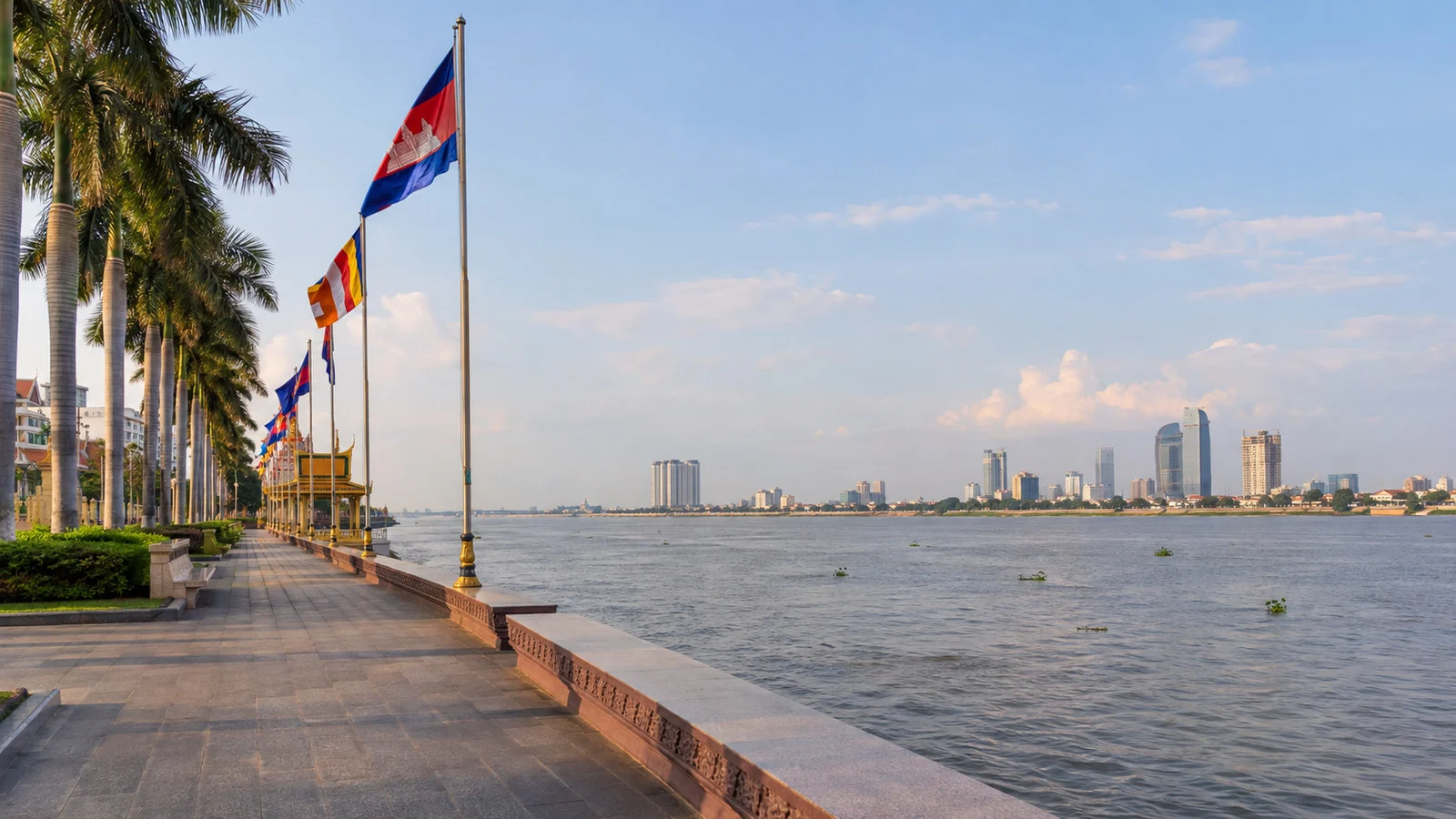
If you dock at the main TS1 tourist terminal, Sisowath Quay and Wat Phnom are easy independent choices. The Royal Palace and National Museum are farther downriver but still manageable by a short tuk-tuk ride.
For a first call, choose either royal and artistic Phnom Penh or the city’s Khmer Rouge memorial sites. Trying to compress both into a cheerful highlights reel shortchanges places that deserve attention.
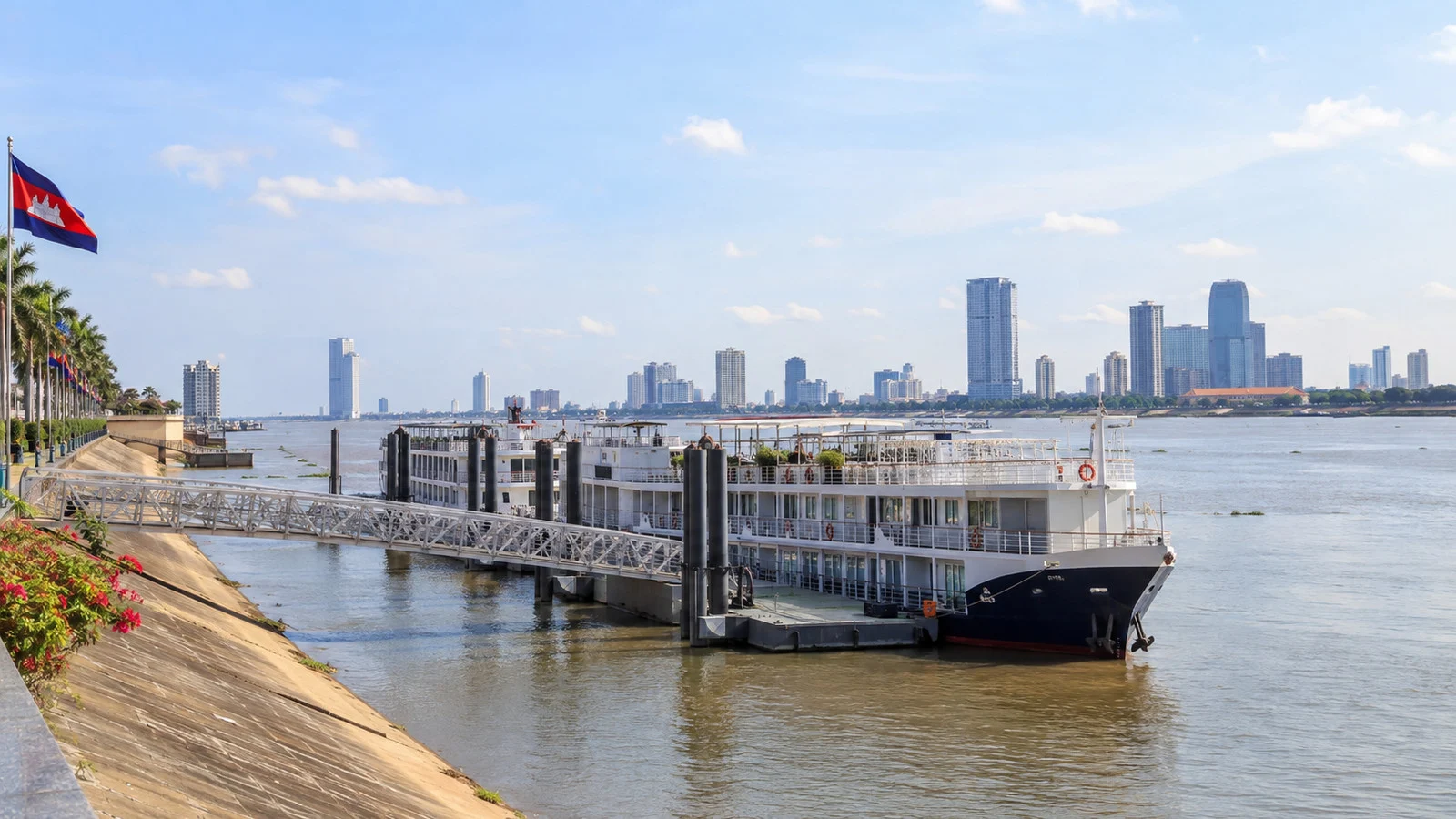
The quick facts
- Where you land: The main TS1 Passenger and Tourist Terminal is on the Tonlé Sap at Sisowath Quay; private or operator-specific landings can differ.
- How you get ashore: Normally by gangway to a floating pontoon, without a tender. Water level and any alongside vessel can alter slope, steps and exit position.
- Into Town: Sisowath Quay begins outside TS1; Wat Phnom is an estimated 10 to 15 minutes away on foot.
- Currency and Language: Cambodian riel and Khmer; US dollars are widely accepted in tourist businesses, although change may come in riel.
- Getting around: Walk the riverfront, then use a metered ride-hailing tuk-tuk, booked driver or cruise excursion for museums and Choeung Ek.
- Time Zone: Indochina Time, UTC+7 year-round, with no daylight saving time.
- How Often the Call Is Missed: No audited Phnom Penh-specific rate is published. Water levels, border formalities, navigation restrictions, or wider itinerary changes can relocate, shorten, or cancel the call.
No port authority or cruise line publishes a missed-call percentage for Phnom Penh. Every walking or driving time below is an editorial estimate affected by berth, traffic and pace.
Our piece on River Cruise Embarkation After a Land Tour, Train or Bus is the fuller version of this point.
“Mekong port” does not always mean a Mekong berth
Phnom Penh Autonomous Port places its TS1 Passenger and Tourist Terminal on Preah Sisowath Quay, on the Tonlé Sap River north of the Chaktomuk confluence. It lists two berths, floating pontoons measuring about 98 by 39 feet and 148 by 49 feet, and about 15 feet of water depth in the dry season.
Mekong itineraries still call this Phnom Penh’s Mekong port because the cruise route follows the larger river system. The ship may also receive an operator-specific landing or anchorage near the confluence, so use the location in your cruise documents rather than a generic map pin.
When two vessels overlap, alongside docking may put another lobby between you and Cambodia. The guide to river-cruise rafting and double docking explains how that changes gangway access.
Save the ship’s contact number and photograph the return landmark. “Riverside” covers a long and lively stretch, not a single doorway.
What is genuinely walkable from TS1?
Sisowath Quay is immediate, and its promenade gives you river traffic, food stalls and the city’s everyday pace without a transfer. Wat Phnom is an estimated 10 to 15 minutes inland, while Central Market is roughly 20 to 25 minutes on foot.
The Royal Palace and National Museum sit farther south, an estimated 25 to 35 minutes from TS1 in heat and active traffic. A short tuk-tuk ride is usually a better use of energy, especially if your definition of shade does not include standing behind a bus.
Phnom Penh belongs in the practical middle of the site’s walkable cruise ports: the riverfront works on foot, but the broader day needs wheels. Sidewalks can be interrupted by parking, vendors and uneven paving.
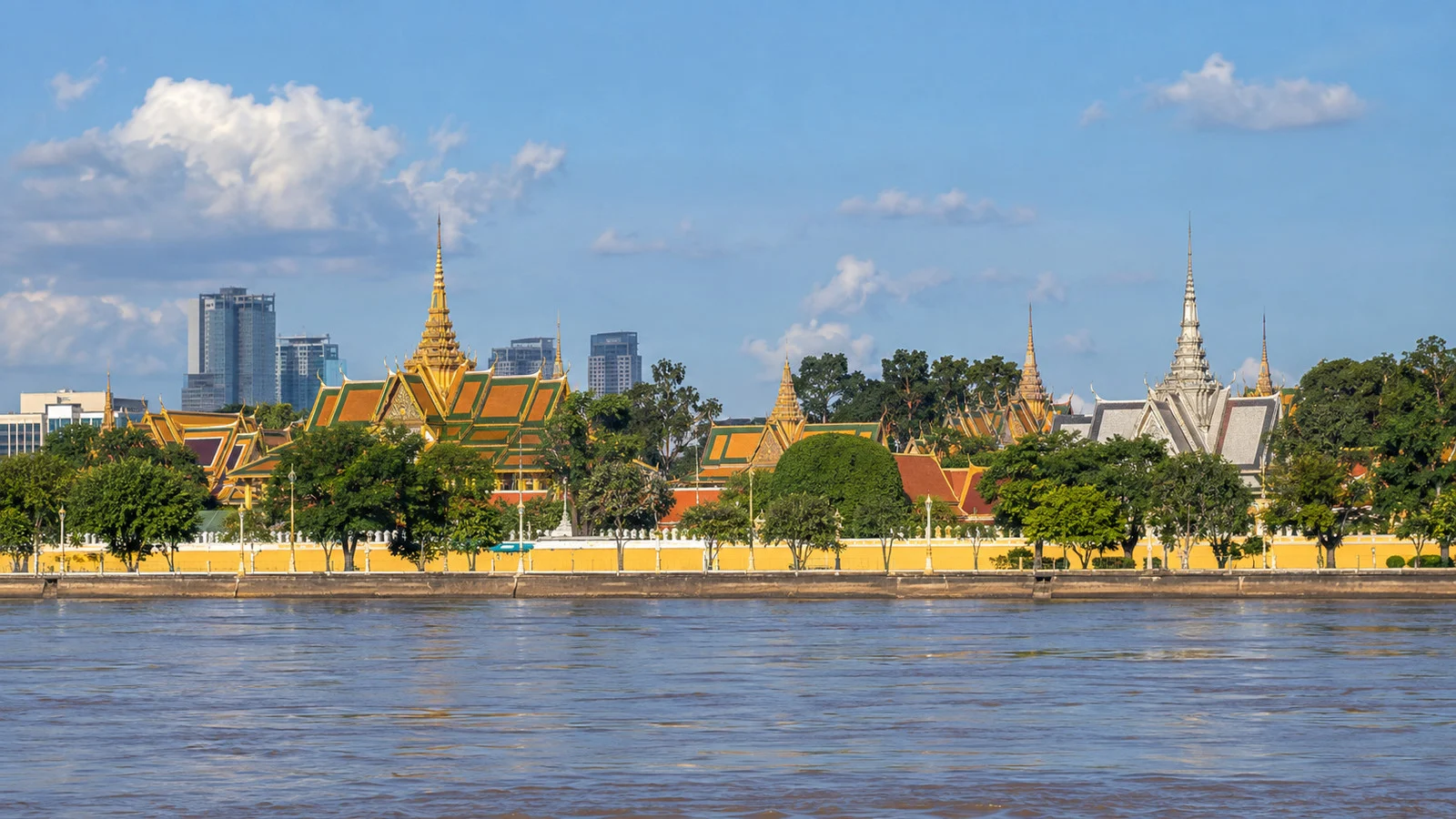
Royal Palace and Silver Pagoda
The Royal Palace remains a working royal compound, not a building that promises every room every day. Ceremonies, state business and conservation can affect access, so check locally before making it the fixed point of a tight schedule.
Shoulders and knees should be covered, and a scarf may not be accepted as a substitute for an appropriate shirt. Follow posted photography restrictions, remove hats where requested and remember that the Silver Pagoda is a sacred space as well as a major sight.
Pair the palace with the National Museum rather than crossing the whole city for a third attraction. They sit near one another, which is Phnom Penh’s gracious way of giving your itinerary one easy decision.
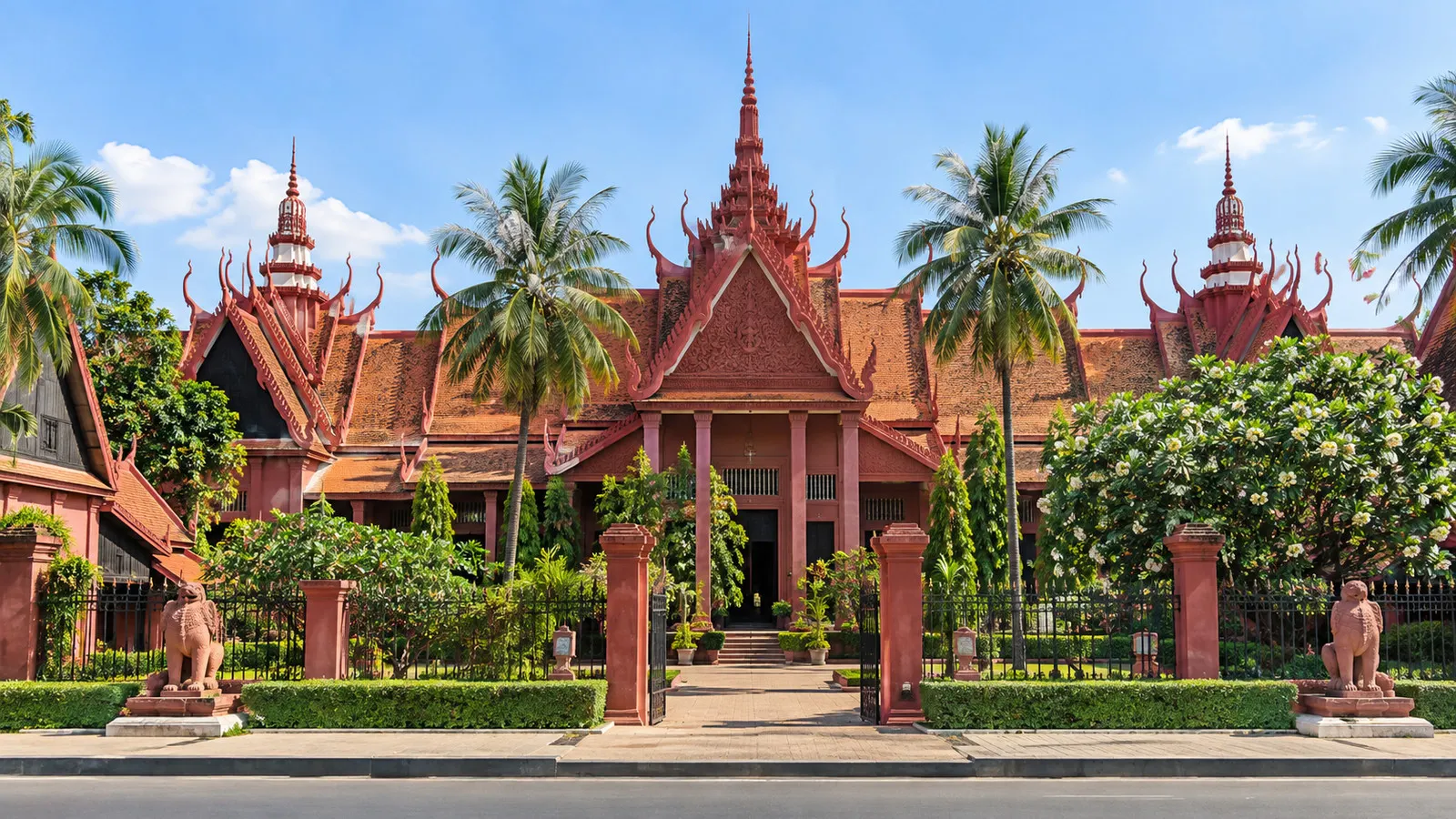
The National Museum gives the temples context
Cambodia’s Ministry of Tourism says the National Museum houses more than 14,000 objects and the world’s largest collection of Khmer art. Sculpture, ceramics and bronzes span prehistory, the Khmer Empire and later periods.
The museum also has a religious role, so its Buddhist and Hindu works are not merely decorative objects. Read the labels slowly and let one excellent collection replace a frantic citywide scavenger hunt.
The National Museum’s official website is useful background, but same-day hours and gallery closures should be confirmed. Allow an estimated 60 to 90 minutes for a focused visit.
Visiting Tuol Sleng with care
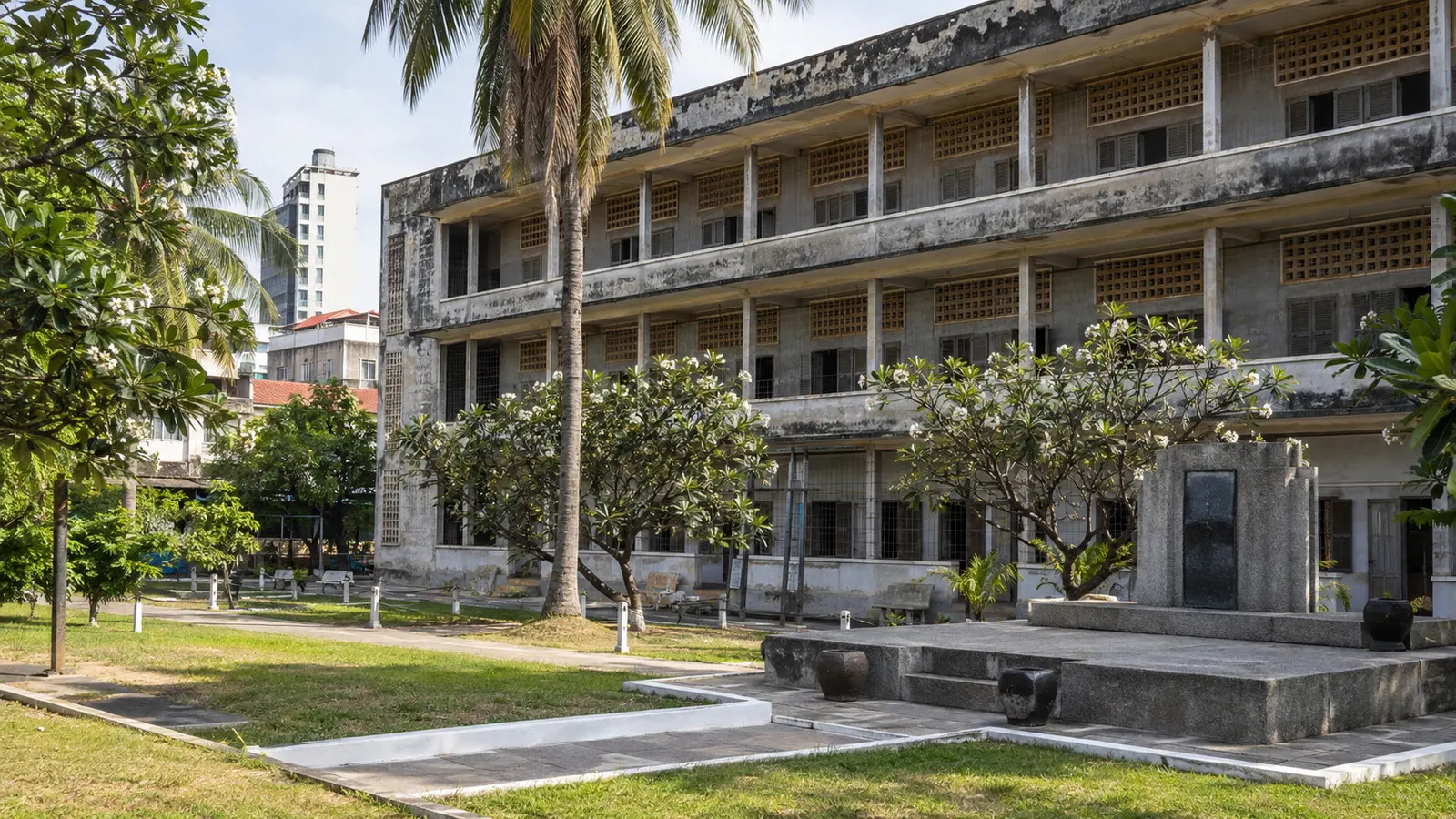
Tuol Sleng Genocide Museum preserves the former S-21 detention and interrogation center used by the Khmer Rouge regime. It is a memorial and evidence site centered on victims, survivors and the consequences of state violence.
The museum’s official site lists daily opening from 8 a.m. to 5 p.m., including public holidays. As reviewed September 12, 2026, international adult admission is US$5 and the non-Cambodian audio guide is US$5, with cash accepted in riel or US dollars.
Dress with shoulders and knees covered, speak quietly and ask before photographing people. The museum permits noncommercial personal photography in designated areas, but permission is not the same thing as a need to record everything.
Allow an estimated 90 minutes or more, plus a 15 to 30-minute tuk-tuk ride each way from the riverfront depending on traffic. Do not sandwich the visit between a cocktail tasting and a comedy selfie stop.
Should you also visit Choeung Ek?
Choeung Ek Genocidal Center, about 9 miles south of central Phnom Penh, preserves the execution site associated with S-21. In 2025, UNESCO inscribed it and Tuol Sleng within the serial Cambodian Memorial Sites World Heritage property.
UNESCO describes these as places of memorialization, reflection, learning and reconciliation. Treat human remains, memorial structures and survivor testimony with the dignity that description requires.
The estimated drive is 40 to 75 minutes each way, sometimes longer in congestion. Pairing Choeung Ek with Tuol Sleng is appropriate only when the ship’s schedule leaves ample time and you are prepared for an emotionally demanding day.
A cruise-line excursion or reserved round-trip driver reduces return risk. If time is short, visit Tuol Sleng properly instead of racing through both sites to collect names.
Tuk-tuks, traffic and money
App-booked tuk-tuks can make the destination and fare clearer than a curbside negotiation. Confirm the license plate, share the trip details when appropriate and never leave a passport or phone as security.
Traffic is the larger planning problem. Build at least 30 minutes of return margin inside the ship’s stated all-aboard time, more if traveling from Choeung Ek or during rain.
Carry clean, small US-dollar bills and some riel because damaged foreign bills may be refused and change often arrives in local currency.
Heat, rain and river levels
Phnom Penh is hot and humid throughout the cruise season. The wet season generally runs from May into October, while the drier months from November through February are often more comfortable for walking.
Heavy rain can flood streets briefly and slow traffic, while changing river levels alter gangway angle and navigation. Carry water, sun protection and a light rain layer rather than assigning all three jobs to optimism.
Two port-day plans that make sense
For three usable hours, walk Sisowath Quay, ride to the National Museum or Royal Palace, then return along the riverfront. Choose one ticketed sight because opening changes and traffic can consume the spare minutes.
With five or six hours, combine the palace and National Museum, then add Wat Phnom or a Khmer lunch. Keep the final hour near the waterfront.
For a memorial-focused day, visit Tuol Sleng with its audio guide and add Choeung Ek only on a sufficiently long call with reserved transportation. Leave room afterward to process what you learned.
A realistic accessibility note
Floating pontoons and changing water levels can produce steep gangways, steps and uneven transitions. Ask the cruise line about the assigned berth and whether crew assistance or an alternative landing is available.
Heritage buildings, temple thresholds and Tuol Sleng’s former school blocks include stairs and uneven surfaces. Confirm the accessible route with each site, because being able to enter a compound does not guarantee access to every gallery.
Use TS1 as the default, not a guarantee
Phnom Penh Autonomous Port lists TS1 on Sisowath Quay with two berths and floating pontoons, but private cruise operators may use another approved landing. Check the daily berth and ship contact because river height, traffic, and an alongside vessel can change the gangway position and slope.
Cambodian visa and electronic-arrival requirements depend on nationality, entry point, and whether the itinerary crosses Vietnam by river. Use Cambodia’s official e-Arrival system, carry the same passport named in the booking, and confirm that the cruise line handles every river-border form rather than assuming an airport process applies.
The Royal Palace, National Museum, and Tuol Sleng each deserve time, while Choeung Ek adds a long traffic-dependent drive. I would choose Tuol Sleng or Choeung Ek rather than rushing both, use a licensed guide for context, and treat these memorial sites quietly and respectfully.
Heat, monsoon rain, traffic, curb gaps, pontoon movement, and tuk-tuk steps complicate accessibility. Reserve a suitable vehicle and set a firm turnaround because a ride-hailing estimate does not include the time needed to cross port security and the gangway.
Quick answers
Where do river cruise ships dock in Phnom Penh?
The main official berth is TS1 Passenger and Tourist Terminal on the Tonlé Sap River at Sisowath Quay. Operator-specific landings can differ, so check your cruise documents.
Is Phnom Penh’s cruise port on the Mekong?
The itinerary is a Mekong cruise, but TS1 itself is on the Tonlé Sap north of its confluence with the Mekong. Alternative positions may be described differently.
Can I walk from the ship to the Royal Palace?
Yes from TS1, in an estimated 25 to 35 minutes. A short tuk-tuk is more comfortable in midday heat and preserves time for the visit.
Can I visit Tuol Sleng and Choeung Ek in one call?
Yes on a long call with reserved round-trip transportation. Allow for traffic and approach both as memorial sites, not rapid photo stops.
The last word
Phnom Penh rewards editing. One palace, one museum or one carefully planned memorial day will teach you more than six hurried pins on a map.
Start by naming the correct river, save the correct dock and give the city’s difficult history the time it deserves. That is a small planning discipline with a much better day attached.
How this guide was researched: This guide was checked against current official port, waterway, immigration, transit, attraction, operator, and weather information. Operational and time-sensitive details were reviewed September 12, 2026; confirm the live berth, daily program, entry rules, accessibility, and cancellation terms before travel.
See our Editorial Policy.