Hudson River Cruise Ports: Seven Stops From Albany to NYC
A Hudson River cruise can serve up a state capital, a military academy, artists’ estates, presidential history, Gothic mansions, and Manhattan without ever leaving New York. It can also turn the innocent phrase “Kingston and Hyde Park” into a coach ride nobody noticed when reading the itinerary.
This guide covers seven names on current overnight Hudson itineraries: Albany, Catskill, West Point, Sleepy Hollow, Kingston, Hyde Park, and New York City. Not every label represents a dedicated terminal or separate ship landing.
Hudson River cruise ports quick facts
- Into Town: Access ranges from walkable waterfronts to secured or coach-only sightseeing calls. Never assume the itinerary name identifies your exact landing.
- Currency and Language: U.S. dollar. English is the primary visitor language; Spanish is also widely used, especially in New York City.
- Time Zone: Eastern Time, UTC-5; Eastern Daylight Time, UTC-4, from the second Sunday in March through the first Sunday in November.
- Call reliability: Weather, tides, currents, berth limits, security, or operational changes can alter individual Hudson calls; no verified route-wide missed-call percentage is published.
Hudson River Ports at a Glance
- Albany: Riverfront docking or embarkation details vary by sailing. Use the call for the State Capitol, State Museum, and Empire State Plaza.
- Catskill: Expect the Historic Catskill Point area, subject to the final operator assignment. Prioritize the Thomas Cole site, an Olana excursion, or village browsing.
- West Point: This is a security-controlled academy visit that is usually organized. A guided academy visit is the practical choice for military history.
- Sleepy Hollow: Confirm how your small ship lands. Irving history, the cemetery, Lyndhurst, and the riverfront are the main choices.
- Kingston: The Rondout waterfront is the practical port district. The maritime museum and waterfront are nearby, while the Stockade District needs a transfer.
- Hyde Park: Treat it as an inland excursion normally paired with Kingston, not a separate guaranteed dock. The FDR home and library and Vanderbilt Mansion are the main draws.
- New York City: The exact Manhattan pier varies by vessel and itinerary. Plan embarkation, museums, memorials, or skyline time only after confirming the terminal.
This summary is not a berth schedule. Ship size, tide, permissions, construction, and the daily plan determine how guests go ashore.
Do Hudson River Cruises Actually Operate Today?
Yes. American Cruise Lines publishes 2026 summer and fall itineraries connecting Albany and New York City, with calls or excursions covering every place in this guide.
The current Hudson River Summer Classic itinerary lists Catskill, West Point, New York City, Sleepy Hollow, and a combined Kingston/Hyde Park day. Exact excursions vary by date, so use the page to confirm the route exists and your final cruise documents for the operational details.
Summer brings longer daylight, while fall sailings chase foliage. Peak color is not an appointment, and weather or elevation can move it.
Albany River Cruise Port
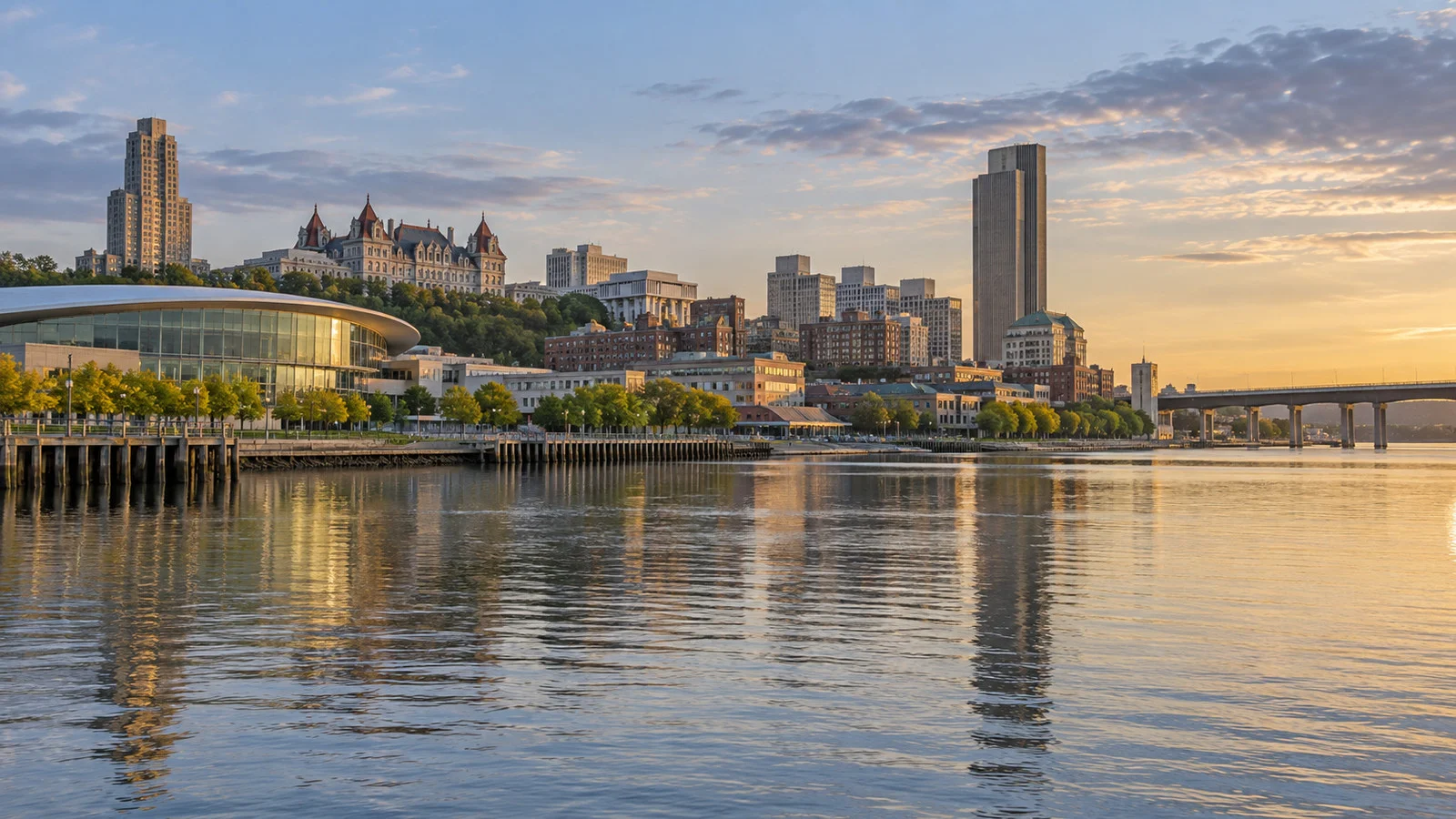
Albany is the northern anchor and often an embarkation or disembarkation city. Its Hudson waterfront includes Corning Riverfront Park and Jennings Landing, while I-787 forms a substantial barrier between the river and downtown.
A pedestrian bridge connects the preserve with Broadway, but luggage and limited mobility make a cruise-arranged transfer the smarter embarkation choice. From the riverfront to the State Capitol area, allow roughly 20-30 minutes walking after reaching the correct shore exit, an editorial map estimate.
The New York State Capitol, Empire State Plaza, and State Museum form the strongest independent cluster. Capitol tours involve security screening, while museum hours should be checked that day.
Albany’s river edge includes recreational docks, local cruise operations, and the USS Slater museum ship, but that does not establish one permanent overnight-cruise berth. A 2026 City of Albany shoreline study documents the varied waterfront uses and facilities without promising your ship an address.
If Albany begins or ends the cruise, stay downtown or near the operator’s hotel. Highway ramps, rail lines, and limited crossings can make a short map distance unhelpful with luggage.
Catskill River Cruise Port
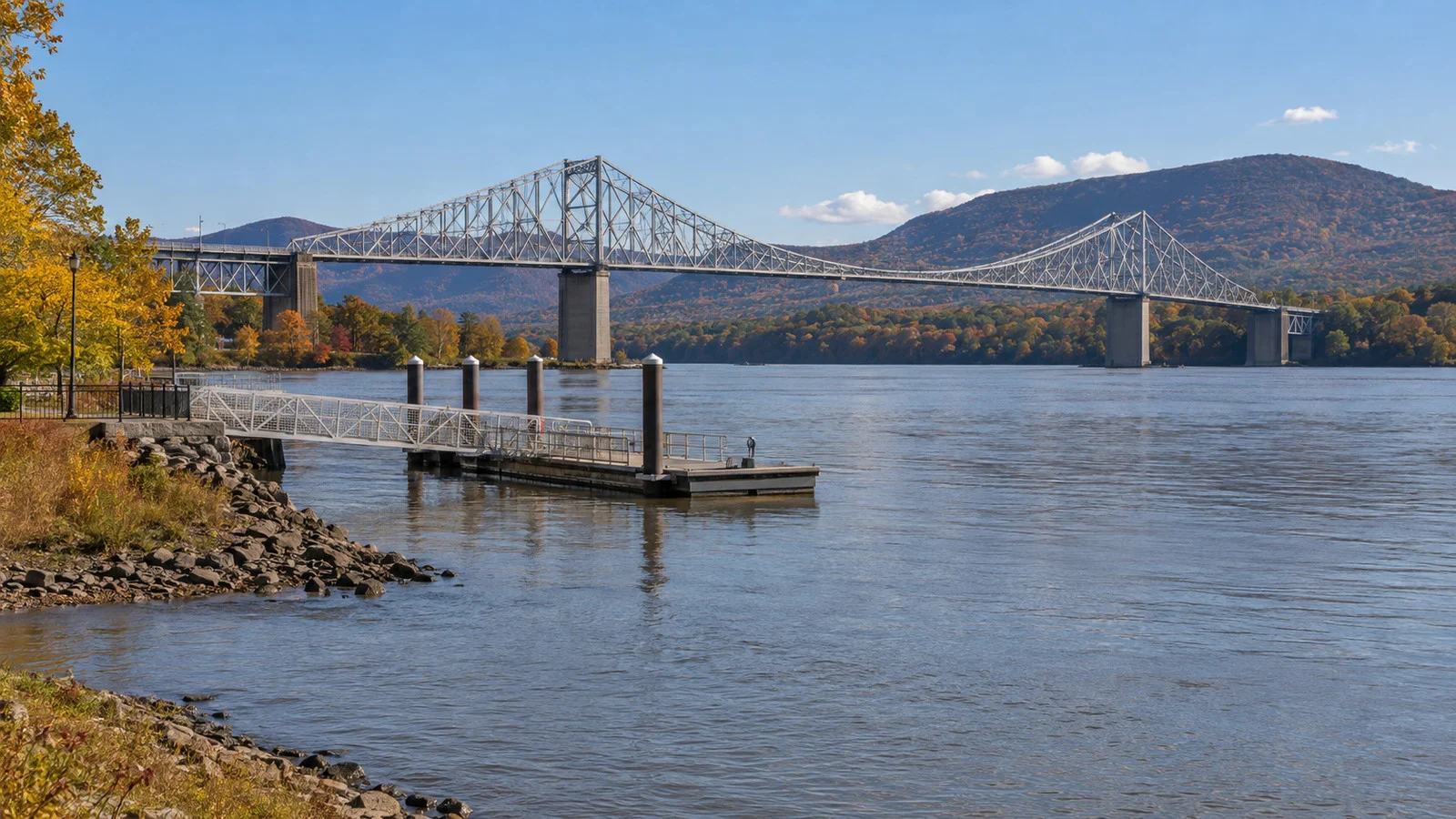
Catskill sits where Catskill Creek meets the Hudson, and current itineraries identify Historic Catskill Point as the waterfront focus. Final docking instructions still matter because a destination page is not a daily berth confirmation.
The village’s most important attraction is the Thomas Cole National Historic Site, home of the artist associated with founding the Hudson River School. The site is not directly beside the waterfront, so use the included excursion, a scheduled shuttle, or a prearranged ride.
The official Thomas Cole visitor page listed historic buildings and permanent exhibitions Wednesday through Sunday from 11 a.m. to 4 p.m. as checked September 10, 2026. Grounds and gardens were open free from dawn to dusk, but special events can shorten building hours.
Olana, Frederic Edwin Church’s extraordinary estate, stands across the Hudson near the city of Hudson. It requires road transportation and a bridge crossing, so it is an excursion rather than a spontaneous walk from Catskill Point.
New York State Parks says Olana’s 250-acre landscape is free and open daily, while house tours require planning and reservations are strongly recommended. The official Olana page also documents a lift to the main floor, wheelchair dimensions, and stairs on the combined upper-floor tour.
Choose Thomas Cole or Olana if the call is short, unless the cruise line explicitly schedules both. Art history is much more enjoyable when it is not conducted as a relay race across the Rip Van Winkle Bridge.
West Point River Cruise Stop
West Point is a working U.S. Army installation as well as the United States Military Academy. That means security rules, identification, tour permissions, and operational closures outrank any independent sightseeing plan.
A cruise-line excursion is the sensible default because the operator can coordinate transport and group access. Carry the original identification specified by the cruise line, and do not assume a photocopy or phone image will satisfy current requirements.
The academy’s official visit information says visitors must follow current security instructions. It distinguishes candidate admissions tours from public guided bus tours, saving everyone from accidentally joining a college briefing.
The West Point Museum and visitor center may be accessible without a full academy tour, but opening status does not guarantee entry to the secured cadet area. International visitors should submit any requested information promptly because background-check procedures can differ from those for U.S. citizens.
Expect walking, slopes, steps, coach boarding, and security waits unless the excursion specifically states otherwise. Guests needing step-free transport or accessible restrooms should get written details from the cruise line before sailing.
Sleepy Hollow River Cruise Stop
Sleepy Hollow pairs literary atmosphere with a real village, not a year-round Halloween set staffed by headless horsemen. Washington Irving’s grave, the Old Dutch Church area, Sleepy Hollow Cemetery, river views, and nearby Lyndhurst Mansion give the call plenty to do without artificial cobwebs.
Sleepy Hollow publishes no universal overnight-cruise terminal. The village describes Horan’s Landing as a park with a kayak launch, while its 2026 rules limit that area to kayaks and canoes.
That official description is a useful warning against mapping your ship to Horan’s Landing. Confirm whether the sailing docks elsewhere, uses a tender or launch, or provides a transfer from another landing.
The Village of Sleepy Hollow’s Horan’s Landing page is best used for riverfront park information, not cruise-berth instructions. Walking times to the cemetery, church, or downtown depend entirely on the real arrival point.
Lyndhurst is south in Tarrytown and generally requires transport, while the Irving and cemetery area is inland from the river. In October, event traffic and timed admissions can turn a casual independent plan into a pumpkin-flavored logistics project, so reserve key attractions and protect the ship-return buffer.
Kingston River Cruise Port
Kingston’s practical port district is the Rondout waterfront along Rondout Creek, just before it reaches the Hudson. This is a genuinely rewarding walk-off area, with restaurants, historic commercial buildings, the Hudson River Maritime Museum, and seasonal local boat activity.
The City of Kingston notes that the maritime museum has about 400 feet of dock and deep-water facilities used by cruise vessels and other boats. That confirms cruise-capable infrastructure, but private dock management and daily assignments still make the ship announcement authoritative.
The city’s official Rondout walking-tour page explains the district’s role as the Delaware and Hudson Canal’s terminal port. The immediate waterfront is the easiest independent plan for a shorter or mobility-conscious call.
Uptown Kingston’s Stockade District and Senate House are separate from the Rondout and uphill, roughly two miles away by road. Take the included shuttle, city transit, or a taxi rather than treating “Kingston” as one compact waterfront neighborhood.
New York State Parks lists the Senate House museum open Wednesday through Sunday from late May through October 31 in 2026, with grounds from dawn to dusk. Hours are seasonal, so a pretty stone building on a map is not proof the exhibits are open.
The Walkway Over the Hudson is another excursion requiring transportation toward Poughkeepsie or Highland. Its seasonal glass elevator is weather-sensitive, and the state’s 2026 schedule says it closes temporarily in heavy rain, high winds, and thunderstorms.

Hyde Park Is Usually an Excursion, Not a Dock
Current cruise schedules often print “Kingston/Hyde Park” as one day because ships use the Kingston area while coaches carry guests to Hyde Park. Hyde Park’s famous properties sit along Route 9 above the river and should not be described as walkable from a cruise gangway.
The FDR home and library, Vanderbilt Mansion, and Eleanor Roosevelt’s Val-Kill can fill more than one day. A port call needs choices, timed tours, and realistic driving time.
The National Park Service’s 2026 rules say Springwood, the FDR home, is entered by guided tour only and tours are limited to 25 people. Vanderbilt Mansion is also guided-tour only with a 30-person limit, while Val-Kill’s Factory tour is limited to 12.
Those limits explain why the cruise-line excursion can be more valuable than improvising. Review the current National Park Service FDR planning page and the separate presidential library information because the NPS historic home and National Archives museum have different operations.
For accessibility, ask which property, building floor, and tour are included. Historic houses can have narrow routes or stairs, while grounds, visitor centers, and alternative interpretation may be more accessible.
New York City Hudson River Cruise Port
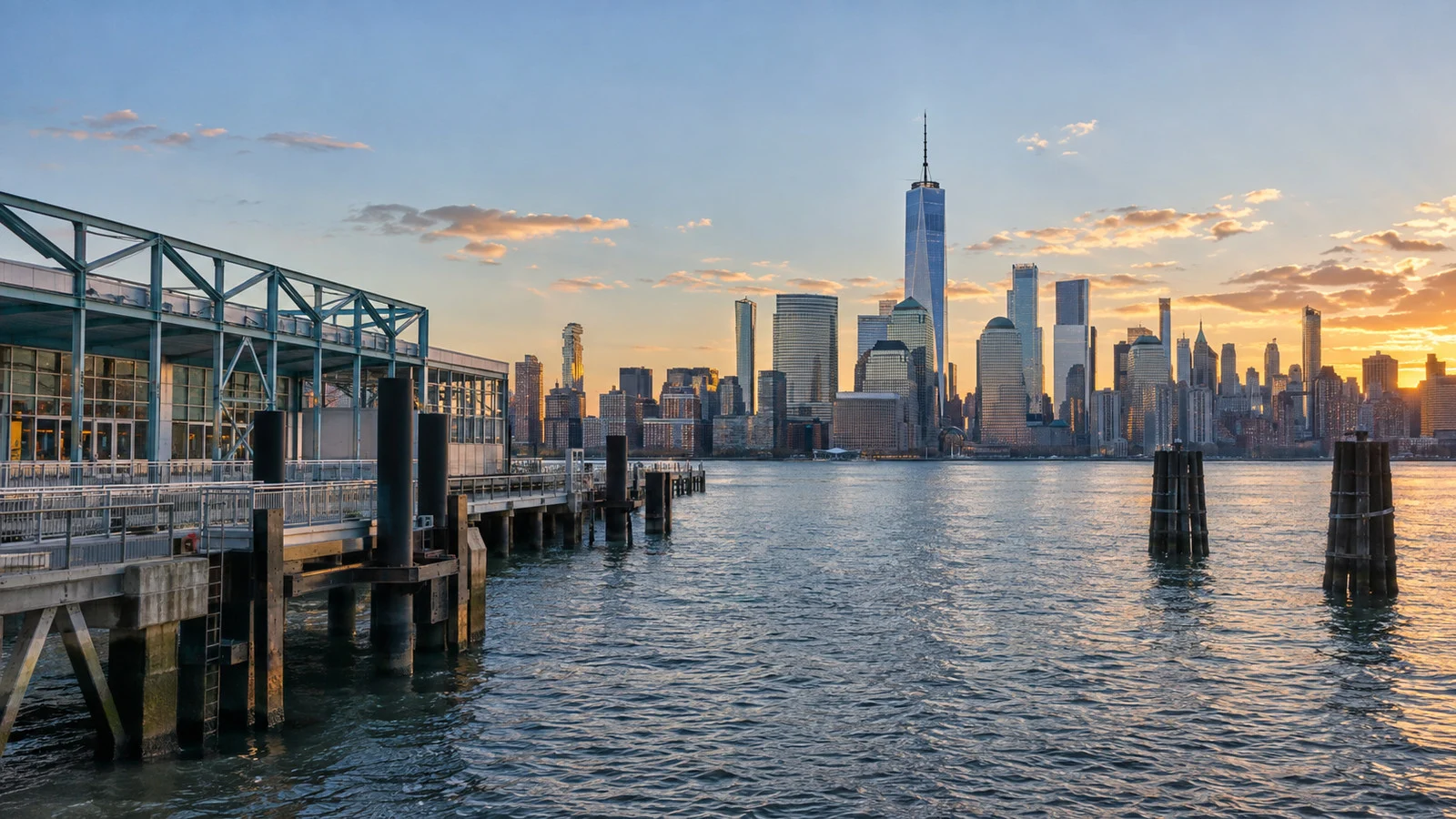
Hudson small ships arrive on Manhattan’s West Side, but the exact pier must come from the operator. Do not automatically navigate to the Manhattan Cruise Terminal at Piers 88 and 90, which primarily handles much larger ocean ships.
A West Side landing can offer quick vehicle access to Midtown, the Intrepid Museum, the High Line, and the 9/11 Memorial area, but New York traffic makes distance a weak clock. Use the ship’s transfer when it is included, and allow a generous buffer for any independent ride.
Guests beginning or ending here should read our New York cruise port guide and New York cruise hotel guide. They explain the city’s waterfront facilities, while operator paperwork supplies the one pier that matters.
Airport transfers are rarely quick. LaGuardia, JFK, and Newark can each be practical depending on flight and pier, but traffic, rail connections, luggage, and terminal changes make same-day tight flights an unnecessary gamble.
Accessibility Across the Hudson Route
Small ships can offer elevators and accessible cabins, yet the shore interface remains variable. Floating docks, tide-driven gangway slopes, tender steps, unpaved paths, historic buildings, and coach stairs can each become the limiting link.
Ask about every call individually, including whether the ship will raft, whether a tender is used, how far the coach parks from the attraction, and whether mobility equipment fits. “ADA accessible” on one excursion does not describe the entire port day.
Kingston’s waterfront and Albany’s plaza district may provide the most flexible independent choices once transport barriers are solved. West Point security tours, Catskill estates, Sleepy Hollow attractions, and Hyde Park houses benefit from advance coordination.
Weather, Foliage, and Safety
Summer can be hot and humid, with afternoon thunderstorms that affect gangways, tenders, and outdoor tours. Fall brings cooler mornings, shorter daylight, wet leaves, and occasional fog, while Atlantic systems can send wind and heavy rain far inland.
Wear shoes with good grip and bring layers plus rain protection. On wooded estate grounds, use repellent and check for ticks after walking through grass or brush.
The Hudson is tidal all the way to Albany, so gangway angles and current change through the day. Crew instructions around floating docks are safety rules, not optional suggestions from people determined to ruin a scenic stroll.
For broader planning, see our United States cruise ports guide and East Coast cruise ports guide. They are especially useful when a Hudson sailing connects with a coastal cruise.

How this guide was researched: Unless a firsthand visit is explicitly identified above, this guide uses official port, tourism, transit, government, attraction, and operator sources where available. Details were checked against American Cruise Lines, the City of Albany shoreline study, the National Park Service, New York State Parks, and local waterfront and attraction sources.
Logistics and time-sensitive details were reviewed on September 12, 2026. See our Editorial Policy.