Mompox River Cruise Port: Magdalena Landing and UNESCO Old Town Guide
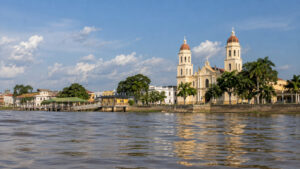
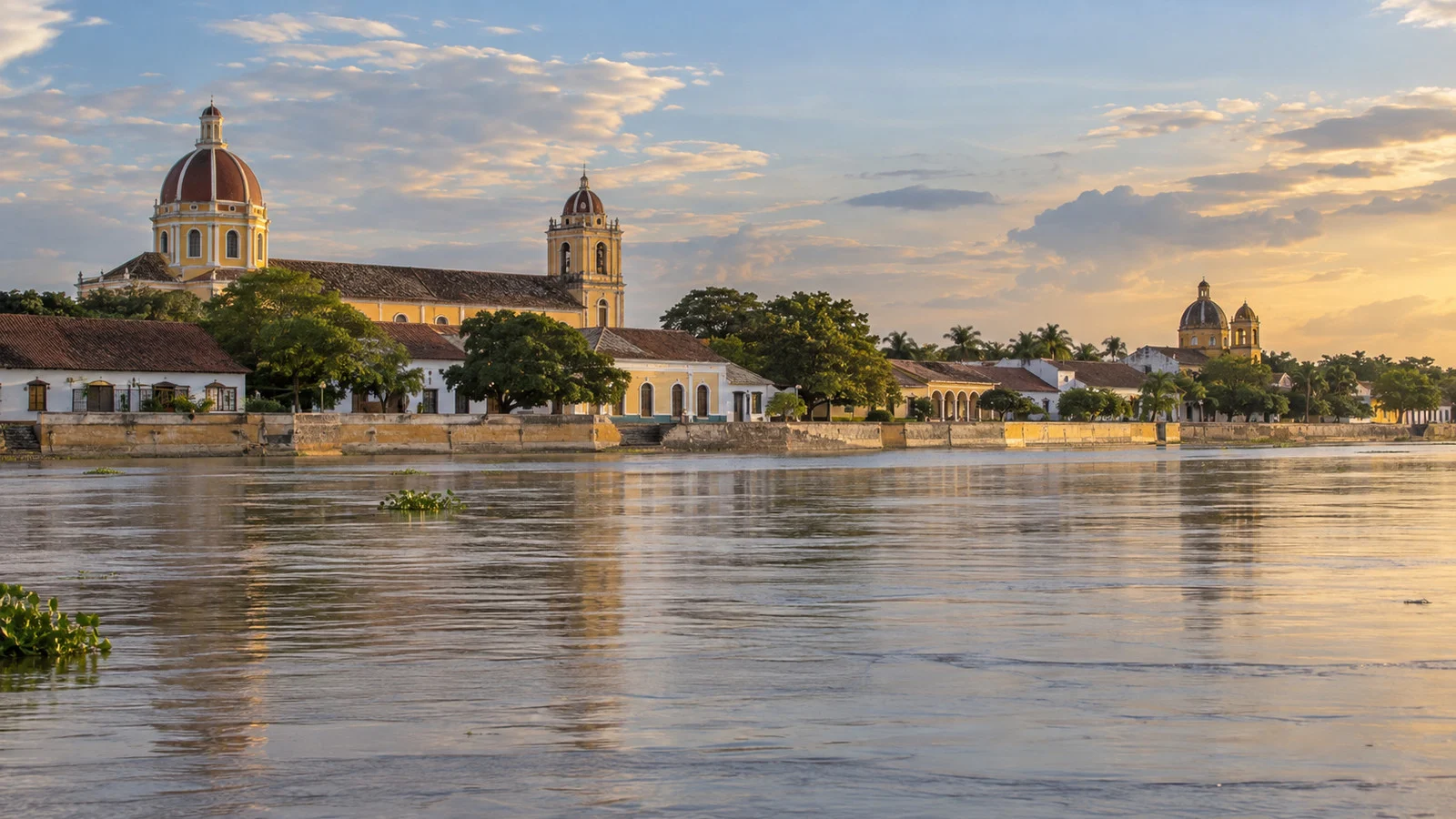
Mompox is the Magdalena River call that appears to have negotiated a private agreement with time. Church towers, deep-roofed colonial houses, filigree workshops, and shaded plazas line a riverfront shaped for boats centuries before anyone thought to add a cruise director.
The town is an active two-day highlight on AmaWaterways’ 2026 Colombia itineraries. The practical wrinkle is that ships reach it through the Mompox branch of the Magdalena, where depth, sediment, and seasonal conditions can change how passengers make the final move ashore.
My quick take
Mompox deserves its generous itinerary time. The UNESCO-listed historic center is compact enough for a guided walk, but layered enough to reward another wander after the group has finished discussing churches and started thinking seriously about cold drinks.
Take the included orientation and filigree workshop, then choose either more independent Old Town time or the Ciénaga Pijiño nature experience. Heat is the most reliable logistical challenge, while low water and branch-channel navigation are the variables most likely to change the ship’s exact access.
Do not expect one permanently published AmaWaterways street address for every gangway. Mompox has a documented public river port and several local landing points, but the cruise line does not promise one universal passenger berth in its itinerary.
Quick facts
- Into Town: AmaWaterways calls for about two days; the historic center follows the riverfront, but the exact ship or excursion-boat landing can vary.
- Currency and Language: Colombian peso and Spanish. English-speaking guides accompany cruise excursions; small peso notes help for crafts, snacks, and tips.
- Time Zone: Colombia Time, UTC-5 year-round, with no daylight saving time.
- Operational caution: Low water, sediment, dredging, branch-channel conditions, or operational changes can shorten the stay or require smaller-boat transfers.
No cruise line or Colombian river authority publishes an audited Mompox missed-call rate. A different landing, revised arrival, compressed program, or excursion-boat transfer is possible, so follow the ship’s live plan.
Is Mompox an active river cruise port in 2026?
Yes. AmaWaterways’ live Wonders of Colombia itinerary gives Mompox two itinerary days, with historic and scenic cruising experiences.
The reverse-direction Magic of Colombia itinerary also calls. AmaMagdalena launched on the river in 2025, and sister ship AmaMelodia entered service later that year, creating a scheduled operation rather than a one-off demonstration voyage.
Government evidence supports the operator listing. Colombia’s Ministry of Commerce, Industry and Tourism documented the first luxury-cruise operation in 2025 and public investment across the Magdalena route, including ten projects in Santa Cruz de Mompox.
AmaWaterways’ current AmaMagdalena page identifies Mompox among its shore-excursion destinations. The 60-passenger ship was designed for the Magdalena, but purpose-built does not mean immune to depth, sediment, or official navigation restrictions.
Is Mompox really on the Magdalena River?
Yes, with an important geographic footnote. The lower Magdalena divides into channels across the wetland-rich Depresión Momposina, and Mompox fronts the Brazo de Mompox, or Mompox branch, rather than the main commercial channel travelers may picture from a simple map.
The town occupies part of a large river island between branches of the Magdalena system. Its long waterfront faces the Mompox branch, while the deeper Loba branch became more important to navigation after sediment and channel changes reduced Mompox’s commercial dominance.
This is why a Magdalena itinerary can include Mompox while still treating the approach as a specialized navigation segment. The branch is part of the river system, but it has its own depth, maintenance, current, and turning constraints.
A July 2026 Colombian Transport Ministry document refers explicitly to the river port of Santa Cruz de Mompox and navigation on the Mompox branch. The government’s active channel-maintenance projects further show that navigability is managed, not assumed.
Where do river cruise passengers land?
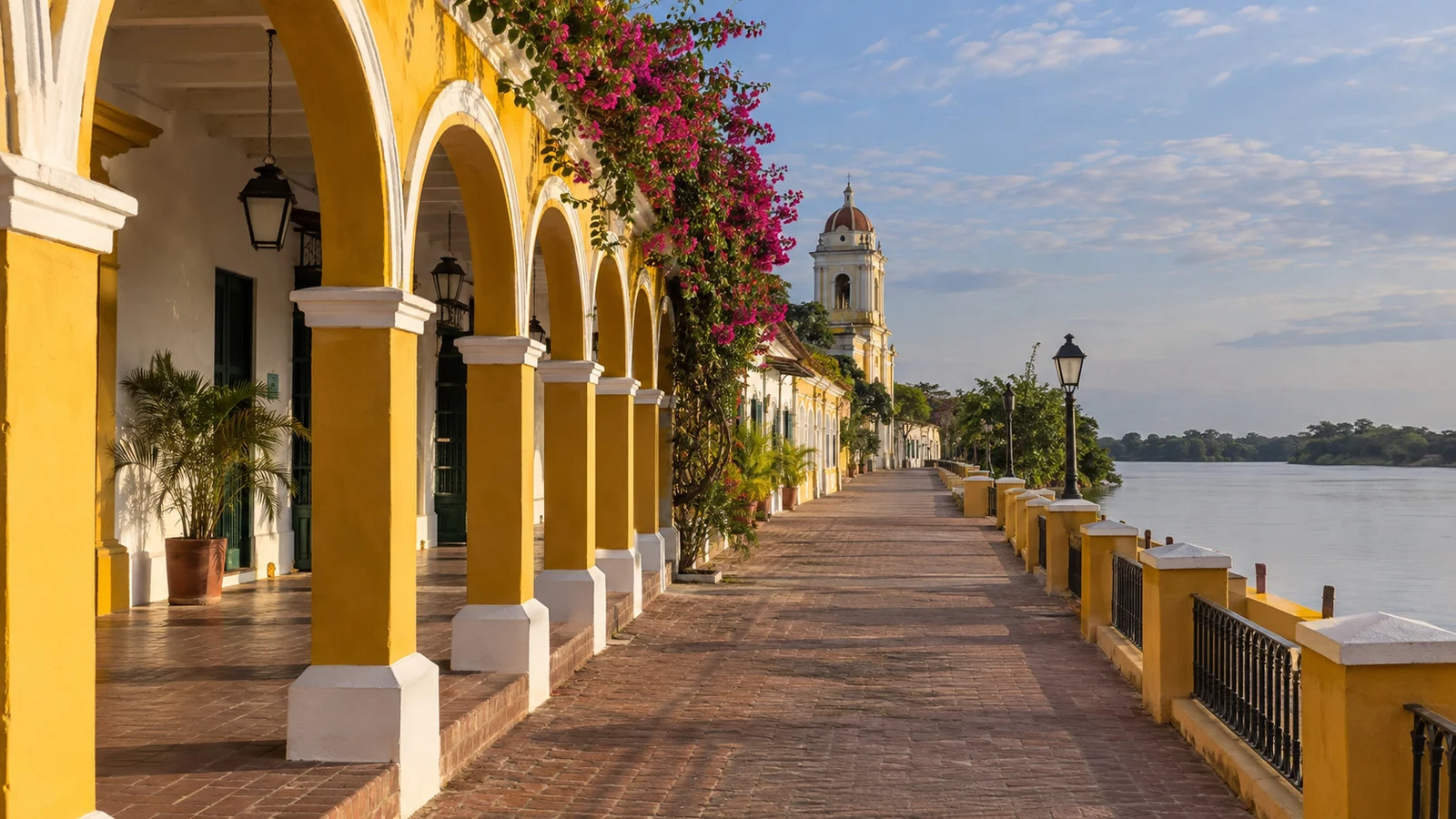
Mompox has a public river port and multiple local piers or embarkation points along its waterfront. A Colombian transport inventory identifies several facilities, including activity around the San Francisco landing.
AmaWaterways does not publish one final guest gangway address on its public Mompox itinerary. That omission matters because the large ship may use an approved berth, another operating position, or an excursion boat for the passenger transfer according to conditions.
Expect instructions from the cruise director on which deck, boat, or landing will be used. Do not walk toward a visible pier independently, since a waterfront full of small craft is not the same thing as a public entrance to your ship.
From a central passenger landing, the historic district can begin within roughly 5 to 15 minutes on foot by editorial estimate. A small-boat transfer, changed landing, security route, or tuk-tuk staging point can add time.
What happens when water is low?
Low water can reduce usable depth on the Mompox branch and make sediment bars more consequential. Dredging and navigation management help, but the captain must still work with the river that exists that morning.
The likely responses are a schedule change, slower passage, altered berth, shortened stay, or smaller-boat transfer. AmaWaterways states that ports and excursions remain subject to change and directs travelers to final documents for the latest plan.
High water brings a different set of problems, including stronger current, flood risk, submerged landing edges, and steeper gangway relationships. UNESCO notes that the historic center is subject to flooding and that La Albarrada’s protective waterfront role is part of the site’s long relationship with the river.
Our Magdalena River cruise ports guide explains how Mompox fits between Cartagena, Calamar, Magangué, smaller river communities, and Barranquilla.
Why Mompox is a UNESCO World Heritage Site
The Historic Centre of Santa Cruz de Mompox joined the UNESCO World Heritage List in 1995 under cultural criteria iv and v. UNESCO considers it an exceptionally intact Spanish colonial river settlement that preserves its urban fabric and original relationship with the Magdalena.
Founded in 1540, the town became a strategic point on the route between the Caribbean and the interior. Trade, colonial government, precious-metal movement, Catholic institutions, coerced labor, and Spanish territorial control all shaped the place visitors see today.
That context deserves more than “colonial charm.” The preserved houses and churches are beautiful, but they also belong to a history of conquest, extraction, Indigenous displacement, enslavement, religion, resistance, independence, and local adaptation.
Mompox developed lengthwise beside the river rather than around one dominant central square. La Albarrada served as both riverfront street and dyke, making the water not a backdrop but part of the town’s urban machinery.
A practical Old Town walk
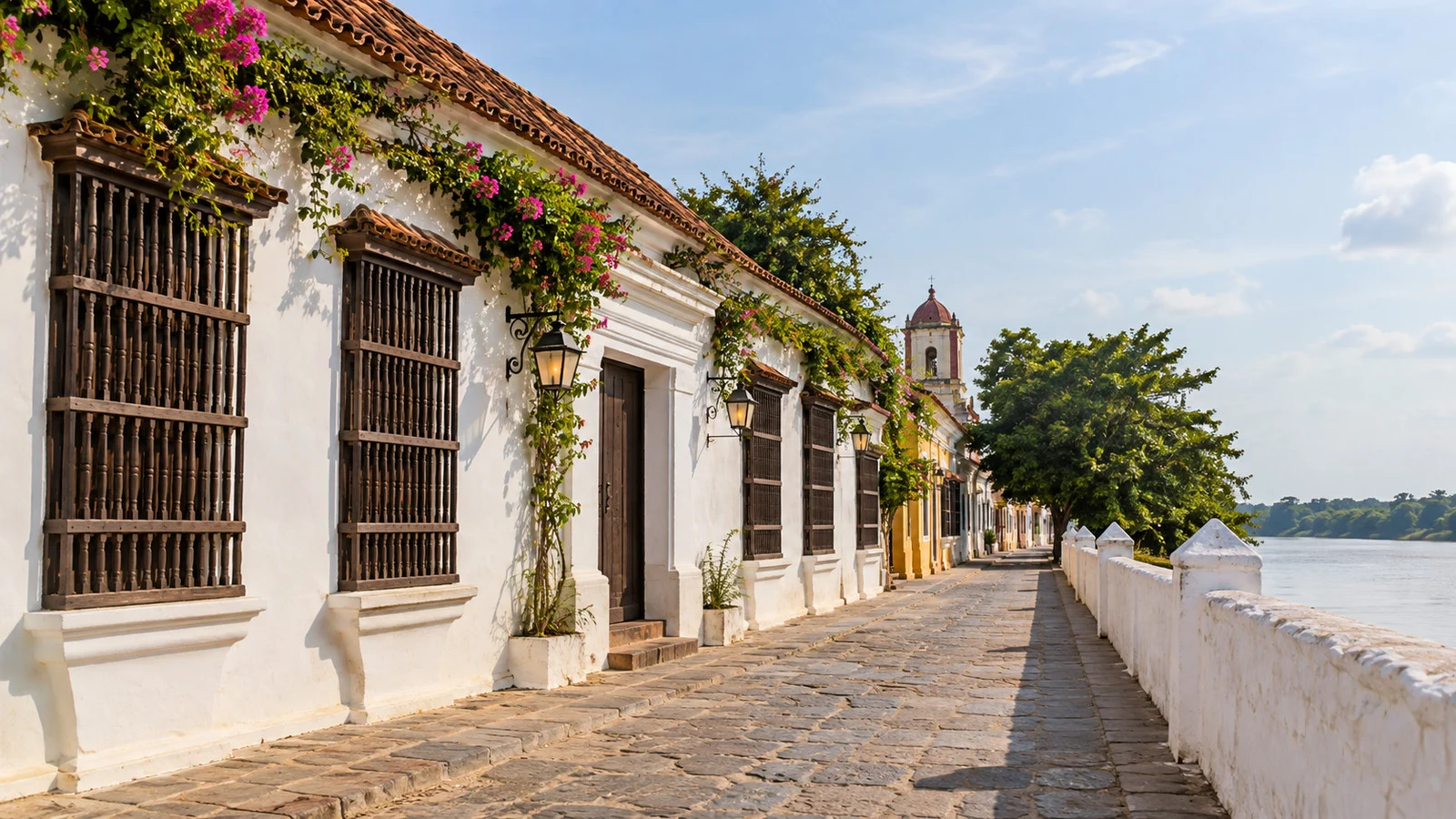
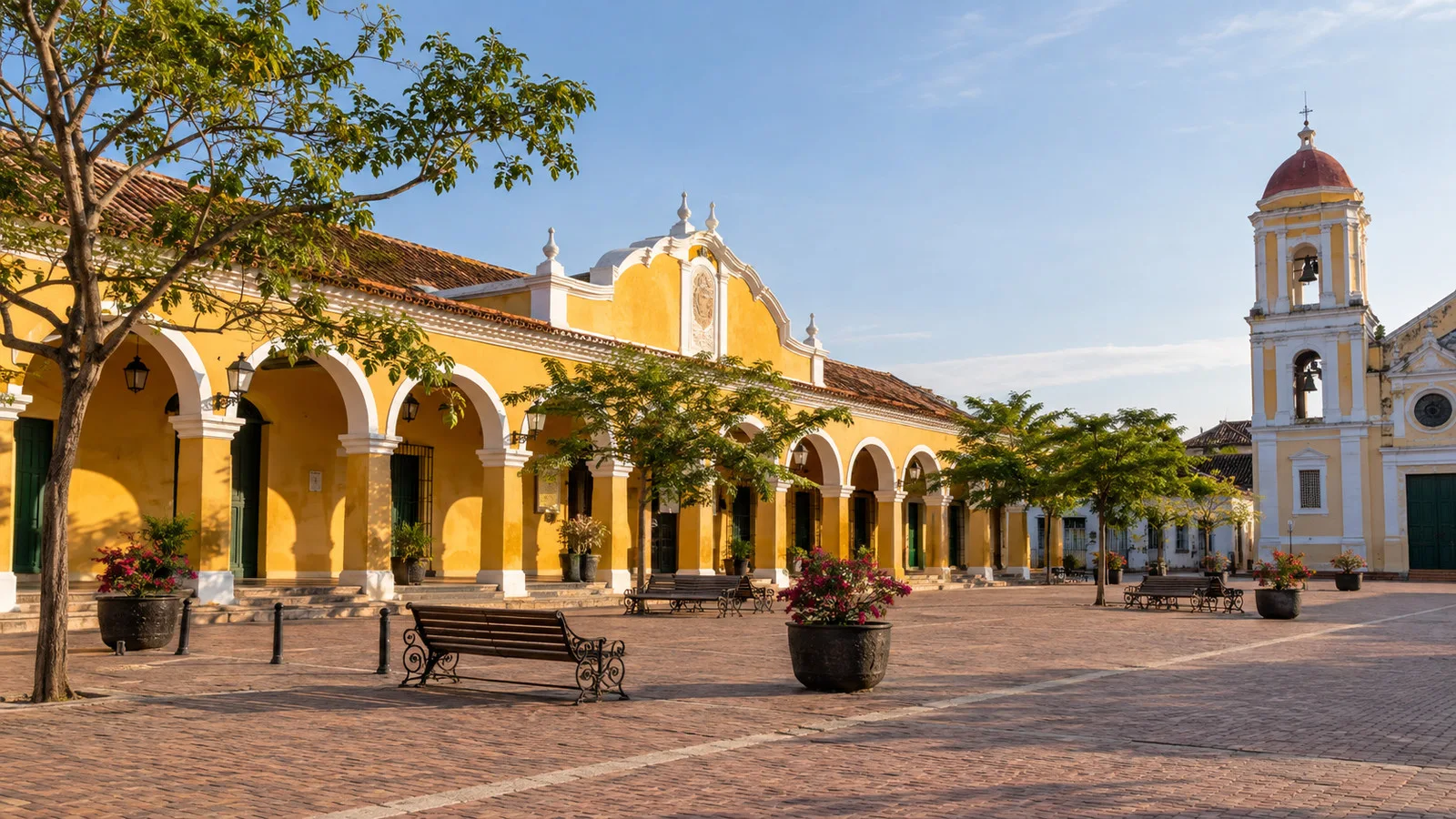
Begin along La Albarrada, where arcaded buildings, river views, small plazas, and churches make orientation easy. The town’s historic axis rewards slow walking because carved doors, window grilles, courtyards, and rooflines carry much of the story.
Santa Bárbara Church is the most visually distinctive stop, with a riverside position and ornate tower. San Francisco and the Church of the Immaculate Conception help form the chain of religious landmarks stretching through the historic center.
Church entry depends on services, ceremonies, restoration, and local hours. Treat the exterior architecture as guaranteed scenery and any interior visit as a welcome addition rather than a contractual right.
The official Colombia Travel guide to Mompox also highlights the Religious Art Museum, filigree, and Ciénaga de Pijiño. Confirm museum opening on the day, since small cultural sites can close around holidays, maintenance, or midday heat.
Filigree is more than a souvenir stop
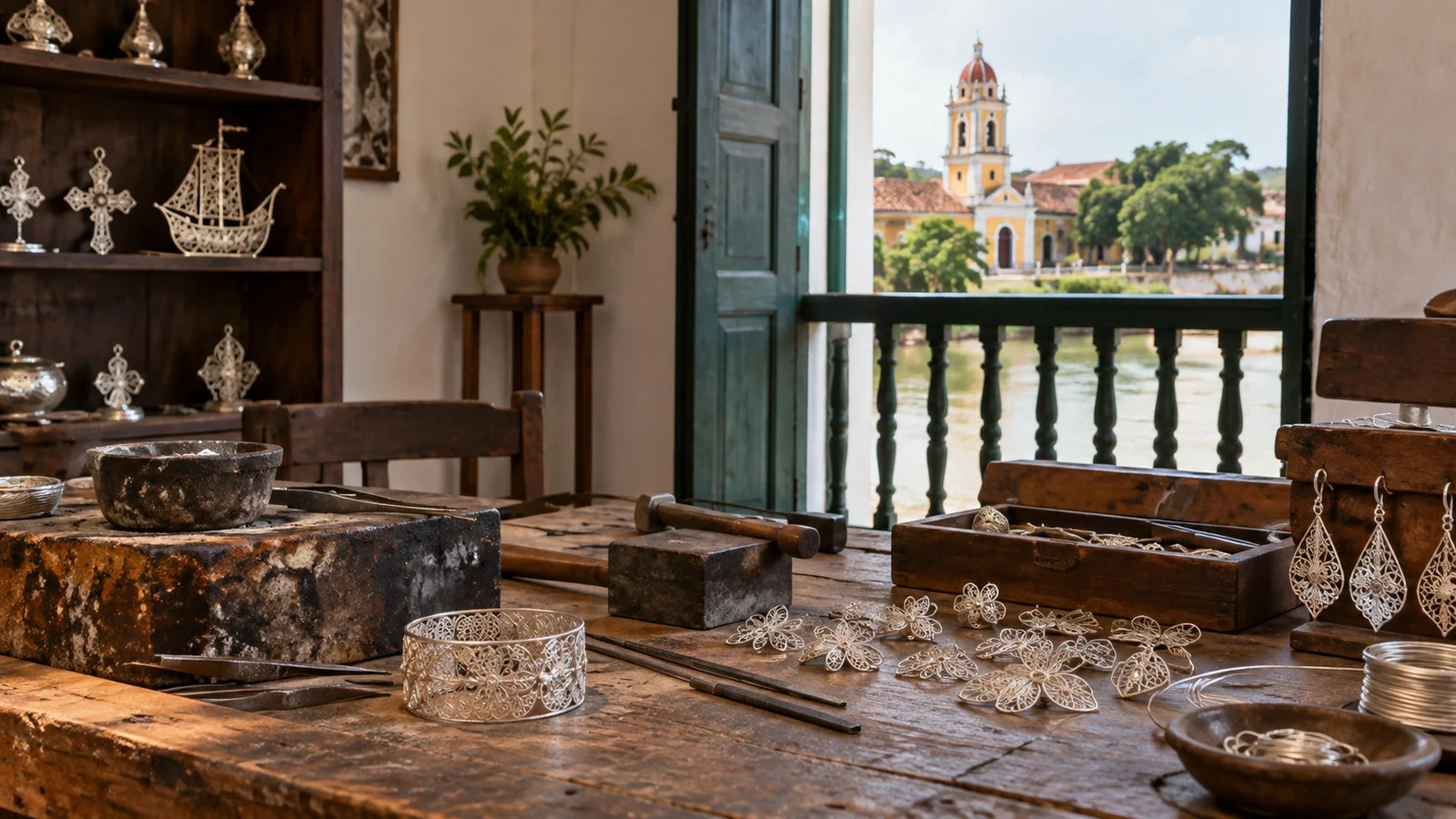
Mompox is famous for filigree, in which artisans form intricate jewelry from extremely fine strands of precious metal. Silver is now widely used, while gold work remains available through specialist commissions and workshops.
AmaWaterways includes a filigree workshop on current Mompox programs. Watch how wire is drawn, twisted, flattened, shaped, soldered, and finished before deciding that a delicate earring should cost about the same as an airport refrigerator magnet.
Buy from an identified artisan or reputable cooperative, ask what metal and purity you are purchasing, request a receipt, and understand customs rules at home. The value is not merely raw material; it includes design, skill, time, and a living local tradition.
The craft’s history also intersects with colonial precious-metal flows and European techniques adapted by generations of Momposino artisans. A good workshop should center the makers working today, not leave them as anonymous decoration for a conquest story.
Ciénaga de Pijiño and the wetlands
Ciénaga de Pijiño is a nearby wetland of channels, open water, aquatic vegetation, birds, and reptiles. Ama’s current programs include nature outings in the Mompox area, often at cooler or more wildlife-active times of day.
This excursion normally requires a smaller boat and is operationally separate from walking ashore in town. Boarding height, boat stability, seating, sun exposure, and the need to step between surfaces should be checked before participating.
Wildlife sightings vary with season, time, weather, water level, and plain luck. A guide can improve the odds dramatically, but even the most charismatic bird has not signed your shore-excursion contract.
Wear sun protection and use insect precautions suitable for your health and current official guidance. Keep voices low around wildlife and follow the guide’s instructions about distance and movement.
Heat changes the pace
Mompox is hot and humid for much of the year, with stronger comfort early and late in the day. Colombia’s tourism office specifically recommends light clothing and a hat because of the high temperatures.
Carry water, use shade, and schedule indoor or seated stops during the hottest hours. The historic center is compact, but heat turns a modest distance into a more serious exertion surprisingly quickly.
Late afternoon is especially pleasant along the river as residents emerge and the breeze improves. Ama’s overnight or extended stay creates the rare river-cruise luxury of seeing a small port after day visitors have mentally packed it away.
Accessibility in Mompox
Mompox’s mostly low-rise historic center avoids major hills, but flat does not mean step-free. Cobblestones, uneven paving, drainage edges, high thresholds, missing curb cuts, heat, and narrow passages can all complicate a route.
Ama includes tuk-tuk components on some walking tours, which can reduce distance but do not automatically solve access. Boarding a tuk-tuk may require a high step, limited space, and transferring away from a mobility device.
The river connection is the first question. Ask about the day’s landing, gangway slope, railings, possible excursion-boat transfer, crew assistance, ship elevator coverage, and whether your mobility device can travel on the tour vehicle.
Request a shorter lower-impact route if needed, ideally focusing on La Albarrada, one plaza, one church exterior, and a seated filigree demonstration. A compact day can still feel complete when it is planned around comfort rather than around collecting every landmark.
Independent time and personal safety
Stay within the operator’s recommended historic area, carry only what you need, and ask before photographing people. Keep jewelry purchases discreet and use a workshop’s secure payment process rather than counting large amounts of cash in the street.
The U.S. Department of State currently rates Colombia Level 3, Reconsider Travel, due to crime, terrorism, civil unrest, kidnapping, and natural disasters. Mompox is not in the departments named at Level 4, but travelers should still follow the cruise line’s security guidance and avoid displaying valuables.
Confirm the all-aboard location as carefully as the time. A small transfer boat may leave from a different point than the one used on arrival, especially when the ship repositions.
Food and drink worth noticing
Ama highlights queso de capa and butifarra among the local flavors. Queso de capa is a layered fresh cheese associated with Mompox, while regional sausage, fish, tropical fruit, candy, coffee, and cold juices round out the practical research menu.
Use established venues recommended by the guide or cruise line, particularly if you have food allergies or a sensitive stomach. Ask about ingredients in Spanish when needed and remember that “a little spicy” is an emotionally flexible measurement.
Three realistic ways to spend the call
First visit: included history and craft
Take the historic tour and filigree workshop, then retrace La Albarrada independently at a slower pace. This gives you the essential context and leaves room for photographs, shade, and a drink.
Nature focus
Choose the Ciénaga de Pijiño or operator nature experience, followed by a shorter Old Town loop. Confirm small-boat boarding requirements before committing.
Low-energy day
Use the tuk-tuk component if suitable, visit one accessible workshop, and enjoy the riverfront close to the landing. Skip the midday marathon and return outside later if the ship remains in town.
Let the historic center and wetlands have separate time
Mompox lies on a branch of the Magdalena, and the hotel ship or an excursion boat may use different landings as sediment and water change. Get the day’s return point from the crew because two days in the itinerary do not guarantee one permanent gangway.
The UNESCO center, churches, plazas, and filigree workshops make a complete walking program without leaving town. Use an authorized guide, ask before photographing artisans, and buy directly when possible because the craft has more value than a rushed souvenir stop.
A Ciénaga de Pijiño outing depends on a smaller boat, wildlife conditions, water, weather, and local access. Choose it as a dedicated nature excursion with life jackets, shade, drinking water, and a firm return rather than trying to combine it with every church.
Colombian entry requirements are passport-specific, and heat, cobbles, gangways, small boats, and uneven banks limit accessibility. Ask for a shortened shaded route or appropriate boat transfer, then keep the line’s security and health instructions with you.
Quick answers
Where do river cruise ships dock in Mompox?
Mompox has a public river port and several waterfront landing points, but AmaWaterways does not publish one universal guest berth. The ship or an excursion boat may use the approved location selected for current conditions.
Can I walk into the UNESCO center?
Usually, yes, from a central riverfront landing. Allow roughly 5 to 15 minutes to the main historic axis as an editorial estimate, with extra time for transfers or route controls.
How long does AmaWaterways stay?
Current itineraries give Mompox two itinerary days. Exact arrival, overnight position, and departure remain subject to change.
Is Mompox on the main Magdalena channel?
It is on the Mompox branch within the Magdalena system. The branch geography and its sediment history are central to both the town’s rise and its modern navigation caveats.
Is Mompox wheelchair accessible?
Some routes may be workable with advance arrangements, but the town and landing are not universally step-free. Confirm the gangway, any small-boat transfer, tuk-tuk boarding, paving, thresholds, and ship access in writing.
The last word
Mompox is the rare port where a long stay still feels slightly too short. Its churches and houses make the first impression, but the river geography, craft traditions, wetlands, music, and layered colonial history are what keep the town from becoming a handsome backdrop.
Follow the day’s landing instructions, respect the heat, and leave enough unstructured time to hear the place between tours. Mompox spent centuries facing the river, and arriving from the water is still the best way to understand why.
How we researched this guide
This guide was researched and fact-checked on September 12, 2026, using AmaWaterways’ live itineraries and ship information, UNESCO’s World Heritage record, current Colombian ministry and river-transport documents, official Colombia Travel guidance, and the U.S. Department of State Colombia advisory. Walking times are labeled editorial planning estimates because no operator or authority publishes one guaranteed Mompox gangway or call-cancellation rate.
We have not claimed a personal visit, exact berth experience, or wildlife sighting. For how CruisePorts.co evaluates active calls, sources, access, and operational caveats, read our Editorial Policy, then continue with our Colombia cruise ports guide or Cartagena cruise port guide.
If your sailing begins in Cartagena, the Cartagena cruise hotel guide covers sensible pre-cruise bases and transfer questions.
How this guide was researched: Operational and time-sensitive details were reviewed September 12, 2026. Confirm the live berth, daily program, entry rules, accessibility, and cancellation terms before travel.
See our Editorial Policy.