Siem Reap River Cruise Port: Tonle Sap, Angkor Wat and the Long Ride In
Siem Reap is the reason a lot of people book a Mekong river cruise in the first place, not just another stop on the itinerary. Angkor Wat draws them, and the ship is really just the way they got to Cambodia.
How you actually reach Siem Reap, by boat across Tonle Sap or by a long motorcoach ride from Kampong Cham, depends on how much water is in the lake that month. That single detail can change your whole Cambodia schedule, so it is worth understanding before you book anything.
My quick take
I would build my Cambodia days around Angkor, not around the ship. Two full days there beats one rushed afternoon squeezed between excursions.
If you can afford it, hire a private guide and driver in Siem Reap instead of joining the ship’s group motorcoach. You move at your own pace, skip a temple that does not interest you, and are not stuck behind forty photographers all waiting for the same shot of the Bayon at sunrise.
Before you book flights, read our Mekong river cruise ports guide and ask your cruise line, in writing, whether your sailing uses the direct Tonle Sap pier or the Kampong Cham motorcoach transfer. That is the one question that actually determines your Cambodia schedule.
Quick Facts
- Docking: No direct quay; ships tender to a Tonle Sap pier near Chong Kneas in high water, or dock at Kampong Cham when levels drop.
- Into town: About 40-45 minutes by road from the Tonle Sap landing; from Kampong Cham, plan four to five hours or more by motorcoach.
- Currency: Cambodian riel is the official currency; US dollars are also widely accepted by many tourism businesses. Khmer is official, while English is common in tourism.
- Time zone: Indochina Time, UTC+7 year-round. Cambodia does not observe daylight saving time.
- Operational caution: Tonle Sap water levels can change the embarkation route, with a longer road transfer used when the lake crossing is unavailable.
- Best independent plan: A private guide for Angkor Wat, Angkor Thom, Bayon, and Ta Prohm, with a slower afternoon instead of a rushed fourth temple.
How your ship actually gets you to Siem Reap
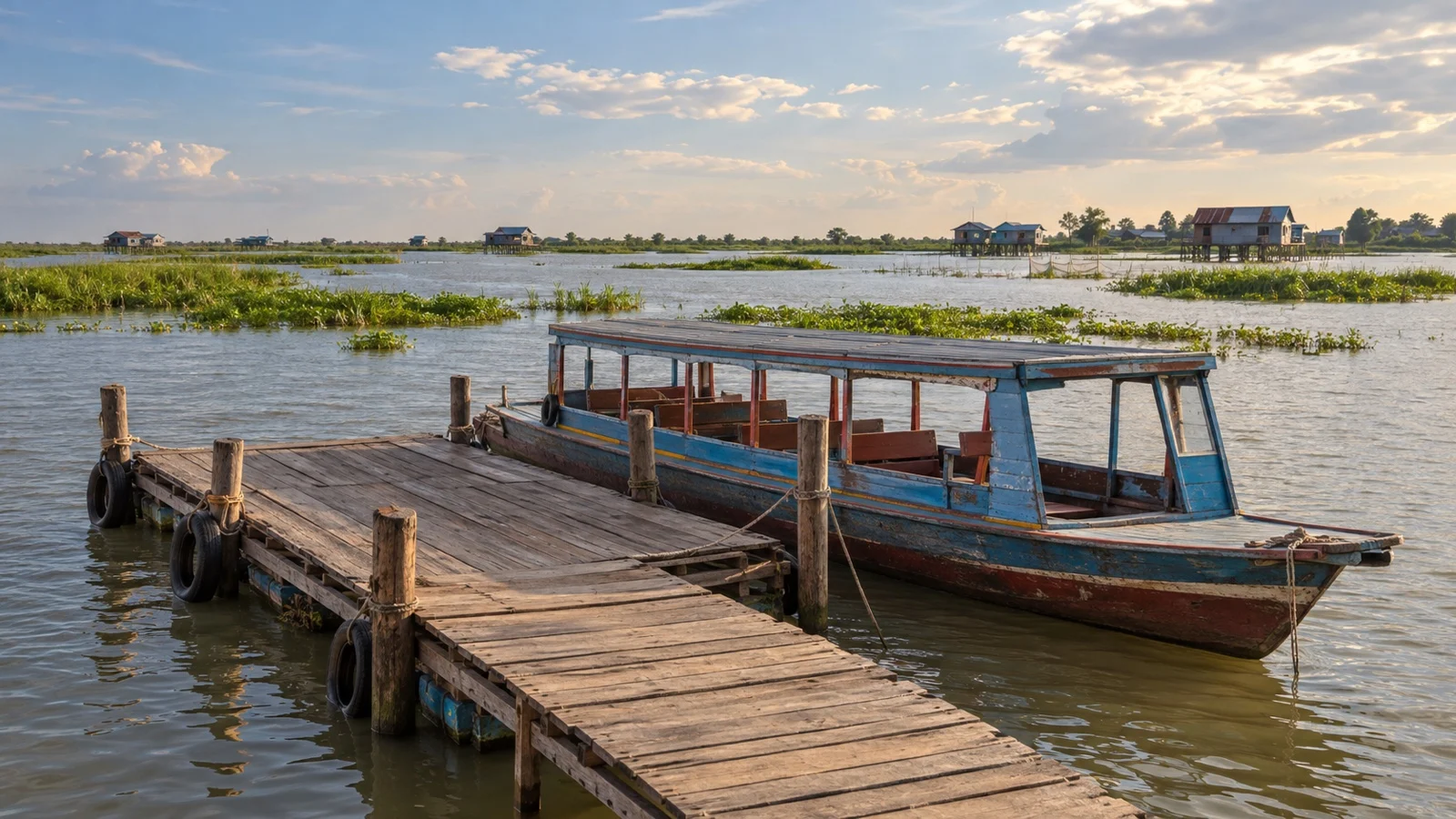
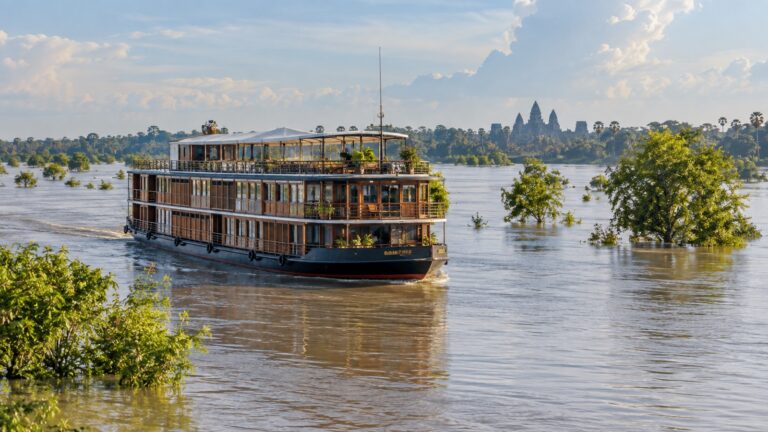
Tonle Sap is not a fixed lake so much as a lake with a mood. Its outlet river reverses direction each year, and the Mekong’s flood pulse expands the lake several times over between dry and wet season.
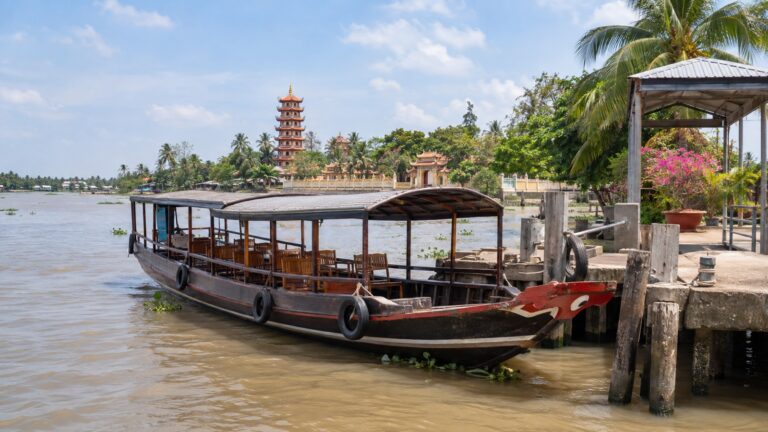
When the water is high enough, typically from around mid-August into November, ships can cross the lake and land at a pier near Chong Kneas, a short drive south of Siem Reap. When the water drops, that crossing stops being possible, and cruise lines dock at Kampong Cham on the Mekong instead and bus passengers to Siem Reap.
Our Kampong Cham river cruise port guide covers that alternate landing in detail, including what an actual ship call there looks like. No cruise line publishes a public calendar of which weeks get which routing, so treat any date range here as a planning estimate rather than a promise.
This is not a minor operational footnote. It can add several hours to your embarkation or disembarkation day, and it can change which airport you should be flying in or out of.
The transfer into Siem Reap town
From the Chong Kneas area, the road into Siem Reap runs past rice paddies, roadside stalls, and, depending on your route, glimpses of stilt houses and boats along the lake’s edge. Give the drive its full 40 to 45 minutes, and do not assume traffic closer to town will cooperate.
Some itineraries route travelers further out to Kampong Phluk or Kampong Khleang, floating and stilt villages built for a lake that rises and falls by feet rather than inches. These are worthwhile if you have the time, but they are a separate excursion from the direct transfer to Angkor, so do not confuse one for the other when reading your itinerary.
Whichever landing you use, board only the vehicle your ship or excursion desk has actually assigned you. Cambodia’s tourist areas run on plenty of informal drivers who will happily take your money and your afternoon.
What is worth the time in Siem Reap
Angkor Wat
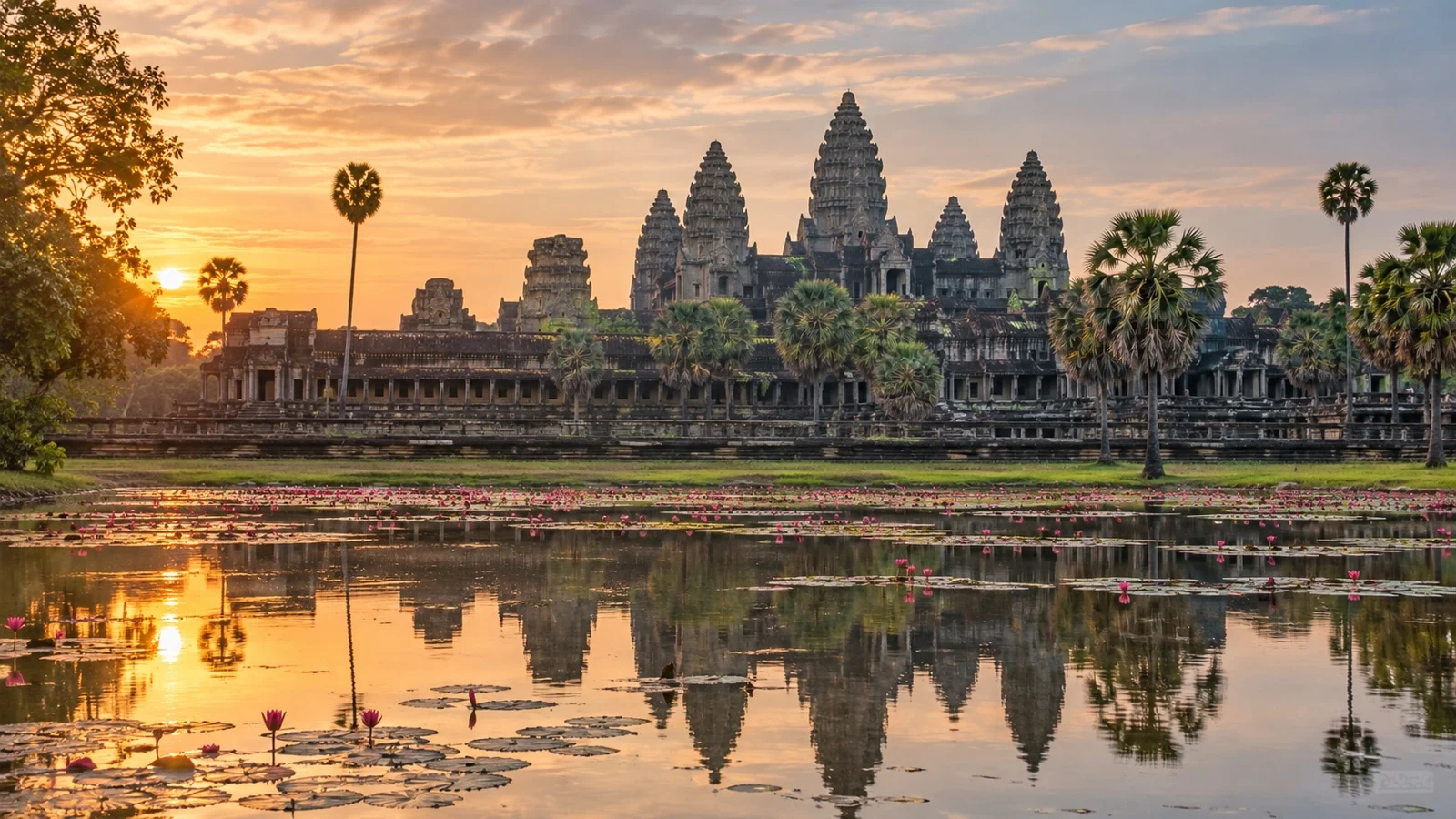
Angkor Wat is the temple most people picture when they picture Cambodia, and it earns that reputation. Built in the 12th century, it is the best-known landmark within the wider Angkor World Heritage site and a hugely popular sunrise destination.
UNESCO inscribed the wider Angkor site as a World Heritage property in 1992, covering roughly 154 square miles of temples and the historic hydraulic network that once supported them. Arrive before dawn if a sunrise view matters to you, because by mid-morning the crowd at the reflecting pools is a genuine crowd.
Angkor Thom and the Bayon
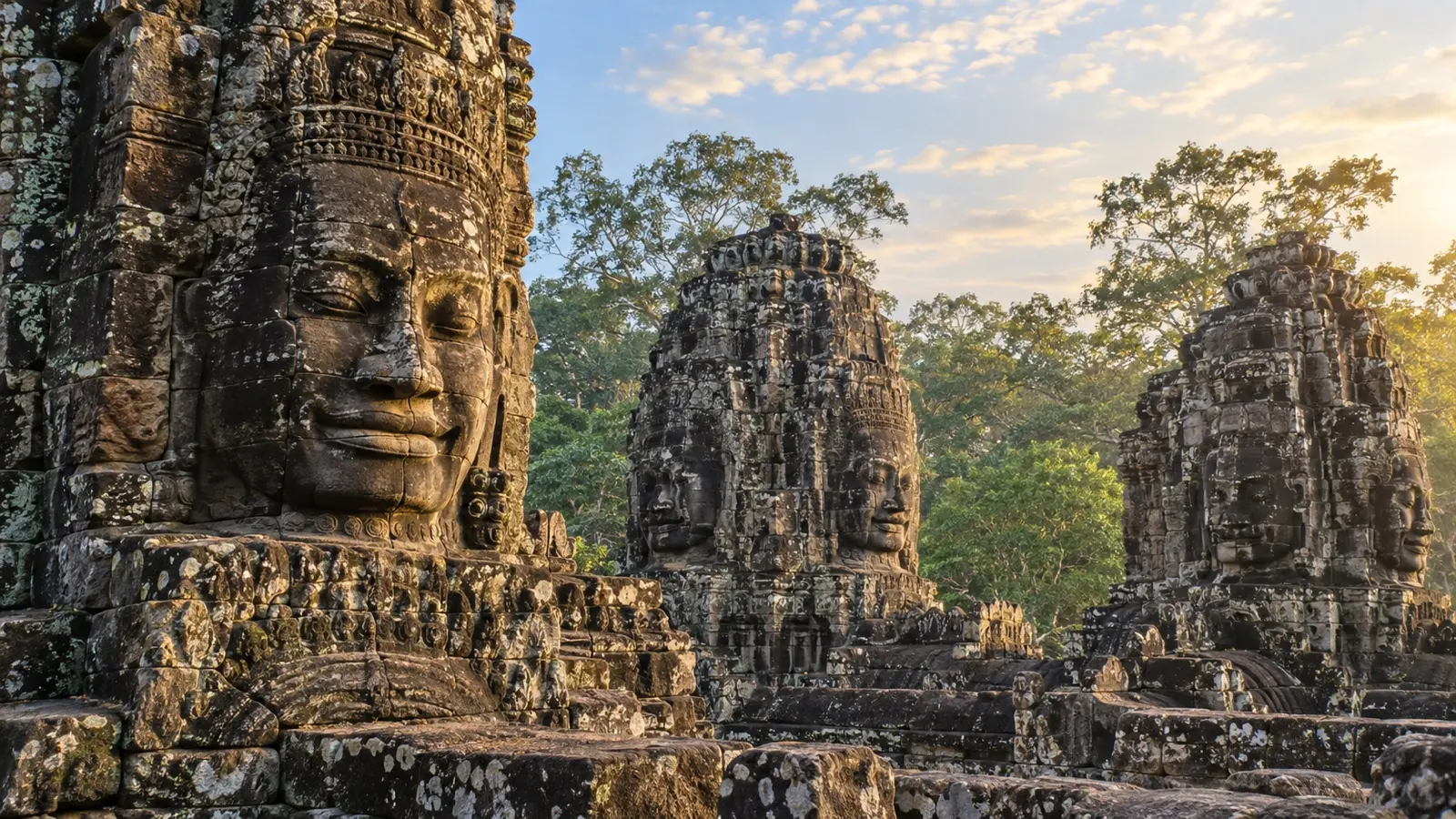
Angkor Thom was the last great walled capital of the Khmer empire, and its centerpiece, the Bayon, is the temple with the enormous stone faces looking out in every direction. Expect uneven stone steps and steep, narrow stairways if you climb to the upper terraces.
This is usually paired with Angkor Wat on a half-day itinerary, and it earns the full stop rather than a drive-by photo. Give the Bayon’s face towers enough time to actually notice how many of them there are.
The APSARA National Authority, the Cambodian government body that manages the whole Angkor site, coordinates ongoing restoration work at these temples with teams from more than a dozen countries. That is worth knowing before you dismiss a roped-off corner as tourist-proofing, since it is often an active conservation site rather than simple crowd control.
Ta Prohm
Ta Prohm is the temple where the jungle was deliberately left to do some of the work, with tree roots wrapped over walls and doorways in a way that photographs beautifully and unsettles the knees in equal measure. It is often billed as the Tomb Raider temple, and yes, that film really was shot here.
Paths are uneven stone and packed earth, with roots doing double duty as scenery and tripping hazards. Wear real shoes here, not the sandals you packed for the pool deck.
Angkor National Museum
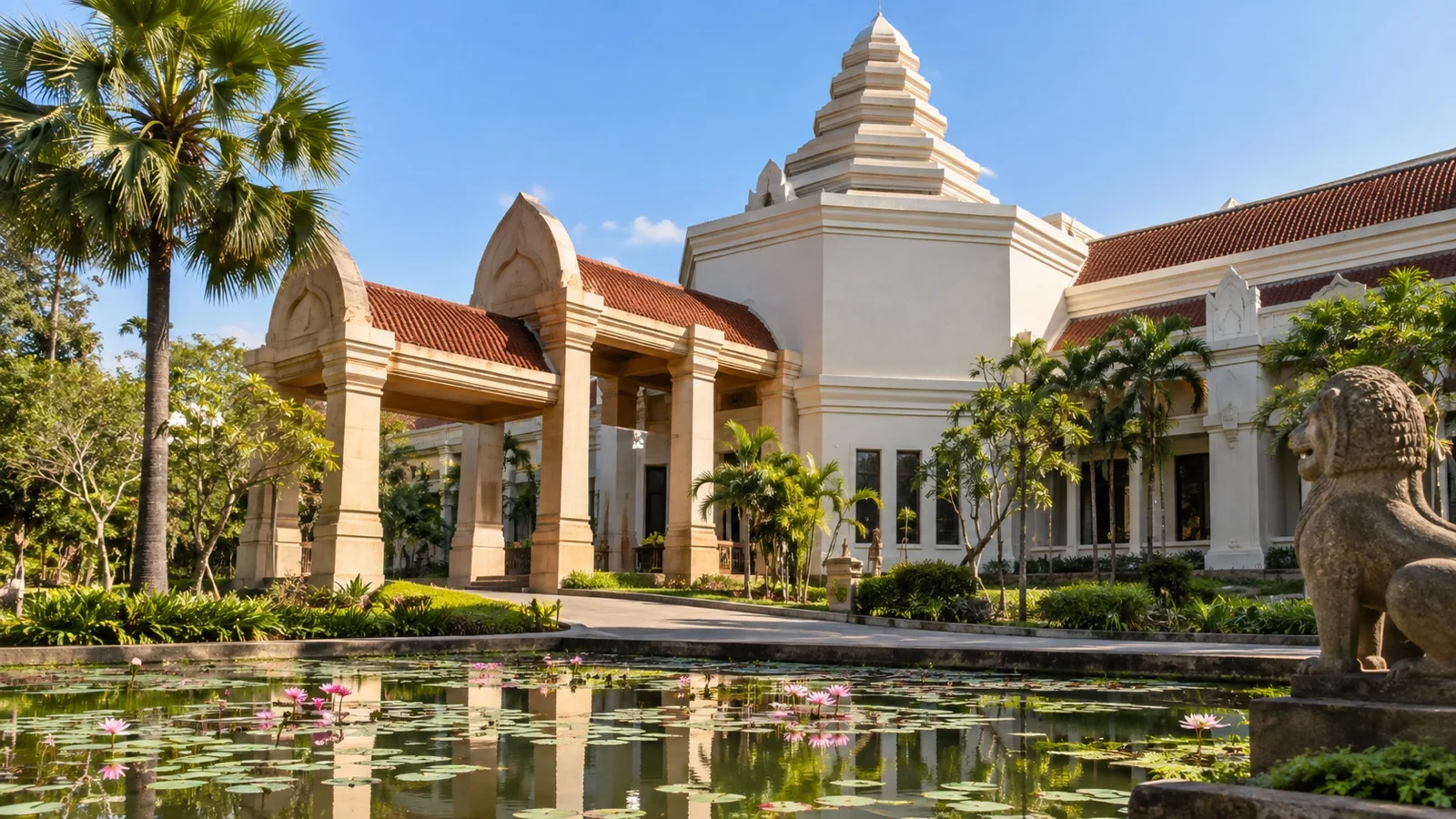
If you want context before or after the ruins, the Angkor National Museum in Siem Reap town holds galleries of statuary, inscriptions, and displays on Khmer history and religion. It is air conditioned, which by early afternoon in Cambodia is its own kind of attraction.
Entry is ticketed separately from the Angkor Pass that covers the temples themselves. Budget for it independently if you plan to visit, since it is not bundled into your temple ticket.
Siem Reap town, Pub Street and the markets
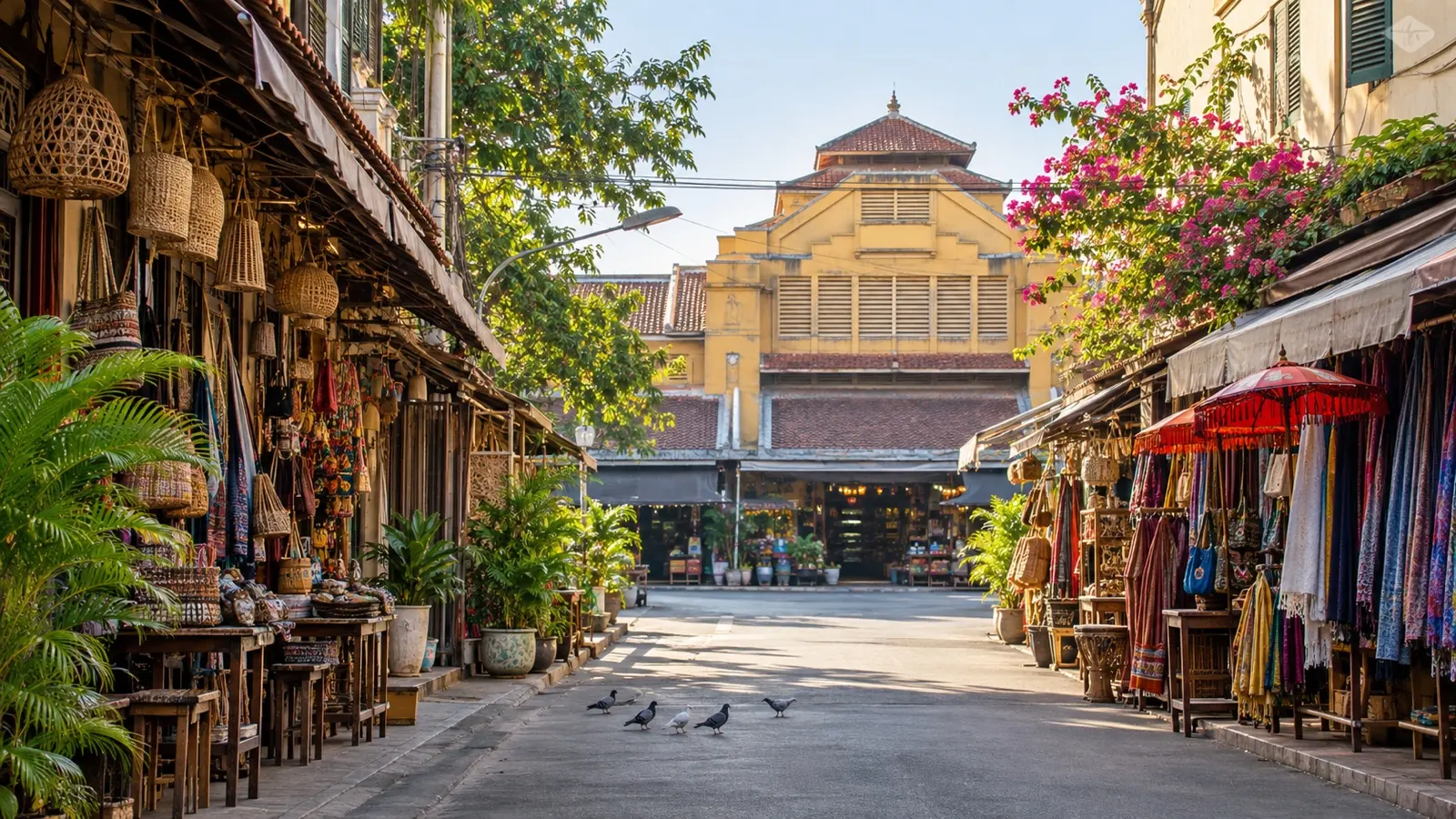
Siem Reap town is worth an evening beyond the temples, built around Pub Street’s bars and night market stalls and the older, more workaday Psar Chas, known as the Old Market, nearby. It is loud, it is touristy, and it is also a fair place to eat well and bargain badly for a scarf you did not need.
If your ship overnights nearby, or you have hotel time before or after the cruise, spend it here rather than on a fourth temple you will not remember clearly by dinner.
Ship excursion or independent guide?
Cruise lines including AmaWaterways, Avalon Waterways, APT and its Travelmarvel brand, and CroisiEurope all build Siem Reap into their Mekong itineraries as the trip’s anchor destination, usually with at least one full day of included temple touring. The included version is efficient and entirely reasonable if you would rather not manage logistics yourself.
The independent version, a private guide and driver booked directly in Siem Reap, costs more but buys flexibility a forty-person motorcoach cannot match. You can leave before dawn for Angkor Wat, skip a temple that does not interest you, and linger at Ta Prohm until the light gets good.
My honest take is that Angkor rewards the independent option more than almost anywhere else on this itinerary. It is not an off-the-ship-for-two-hours kind of place, it is a you-flew-a-long-way-for-this-so-take-the-extra-day kind of place.
Accessibility, honestly
Angkor is not an easy site for anyone with mobility limitations, and I would rather say that plainly than let someone find out at the first staircase. Angkor Wat’s upper level involves steep stairs, the Bayon’s terraces are uneven stone, and Ta Prohm’s paths cross tree roots that a wheelchair or a walker cannot manage.
Ground-level viewing at Angkor Wat and a slower pace at the Bayon are realistic for many travelers with limited mobility, and a private guide can plan a route around the worst stairs. Ask your excursion desk or private guide exactly which temples in your plan require climbing, rather than accepting a general “it’s manageable” answer.
When to visit: dry season, wet season, and the lake in between
Cambodia’s dry season runs roughly November through April, when Tonle Sap is at its shallowest and temple days turn dry, hot, and dusty by March and April. The wet season runs from around May through October, with the lake building toward its highest levels in September and October.
That timing overlaps directly with the cruise logistics above. The stretch when the direct Tonle Sap crossing to Chong Kneas is most reliable, roughly mid-August through November, is also a genuinely pleasant window for temple visiting before the driest, hottest months arrive.
None of this is a guarantee for any specific sailing date. Ask your cruise line for the current routing plan for your exact departure rather than working backward from a general seasonal rule.
Getting back to the ship on time
If you are on a motorcoach transfer from Kampong Cham, build in real slack. Cambodian road traffic, a delayed lunch stop, or simply a slower morning at Angkor can turn a five-hour transfer into six without much warning.
If you are tendering back across Tonle Sap, confirm the last shuttle time from your hotel or meeting point before you wander off for one more market stall. A missed connection here is not a short walk back to a downtown pier, it is a genuinely long day to fix.
The practical checks I would make before Siem Reap
Get the actual embarkation or disembarkation plan in writing because Siem Reap has no fixed Mekong cruise terminal. High enough water may allow a Tonle Sap crossing and Chong Kneas transfer, while lower water can mean a long motorcoach connection to or from Kampong Cham.
Give Angkor at least two full days when possible and reserve the official pass before the busiest dates. A private guide and driver can improve pacing, but the cruise line’s coordinated transfer is the safer choice when the ship, hotel, or flight connection depends on lake conditions.
Check Cambodia’s visa and e-Arrival rules, passport validity, Angkor ticket terms, temple dress, and current protected-site routes. Heat, monsoon rain, steep temple steps, uneven stone, long coach rides, boat landings, and changing water levels all need explicit accessibility and schedule planning.
Quick answers
Do river cruise ships actually dock in Siem Reap?
Not directly. Ships reach a pier on Tonle Sap near Chong Kneas when water levels allow, then passengers transfer by road into Siem Reap town.
What happens if the water is too low to cross Tonle Sap?
Your cruise line docks at Kampong Cham on the Mekong instead and buses passengers to Siem Reap, a transfer of several hours rather than under an hour. Ask which routing applies to your sailing before you book flights.
How much does an Angkor Pass cost?
Angkor Enterprise, the official ticketing authority, priced the one-day pass at 37 US dollars in 2026, with three-day and seven-day passes costing more and valid across a longer window. Confirm current pricing before you travel, since these prices do change.
Is Angkor Wat worth visiting if I only have one day?
Yes, but one day is a compromise, not the ideal plan. If your schedule allows it, build in two days so you are not racing between Angkor Wat, the Bayon, and Ta Prohm in a single rushed morning.
Can I visit the floating villages instead of Angkor?
You can, and Kampong Phluk or Kampong Khleang are genuinely interesting on their own. They are a different excursion from the temples, though, not a substitute for them, so check exactly what your itinerary includes before trading one for the other.
What should I wear to the temples?
Cover your shoulders and knees at every temple, and wear shoes with real grip rather than loose flip-flops. Guards do enforce the dress code at the more visited sites, and uneven stone steps are not forgiving of flip-flops.
The last word
Siem Reap is worth every bit of the extra planning it demands, because Angkor is not a stop you tack onto a river cruise, it is the reason a lot of people book one. Just do not assume the ship gets you there the same way twice in one year.
Read our Mekong cruise ports guide for how this seasonal swing plays out across the whole itinerary, and our Phnom Penh river cruise port guide for the Cambodian capital most itineraries pair it with. If Cambodia’s coast interests you too, our Sihanoukville cruise port guide covers the very different, ocean-side version of a Cambodian call.
Confirm your routing, book flexible flights if you can, and give Angkor the two days it deserves.
How this guide was researched: This guide was checked against current information from the APSARA National Authority, Angkor Enterprise, UNESCO, Cambodia’s official eVisa service, and the official e-Arrival service. Time-sensitive details were reviewed in September 2026; see our Editorial Policy.