Kjøllefjord Cruise Port: Nordkinn, Church and Fishing Village
Kjøllefjord is the kind of stop that never makes a cruise brochure cover, and that is exactly its appeal. It is a working Arctic fishing village on Norway’s Nordkinn Peninsula, and it happens to sit closer to the true top of mainland Europe than the famous cliff most people book a whole trip to see.
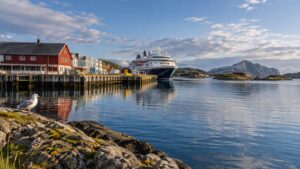
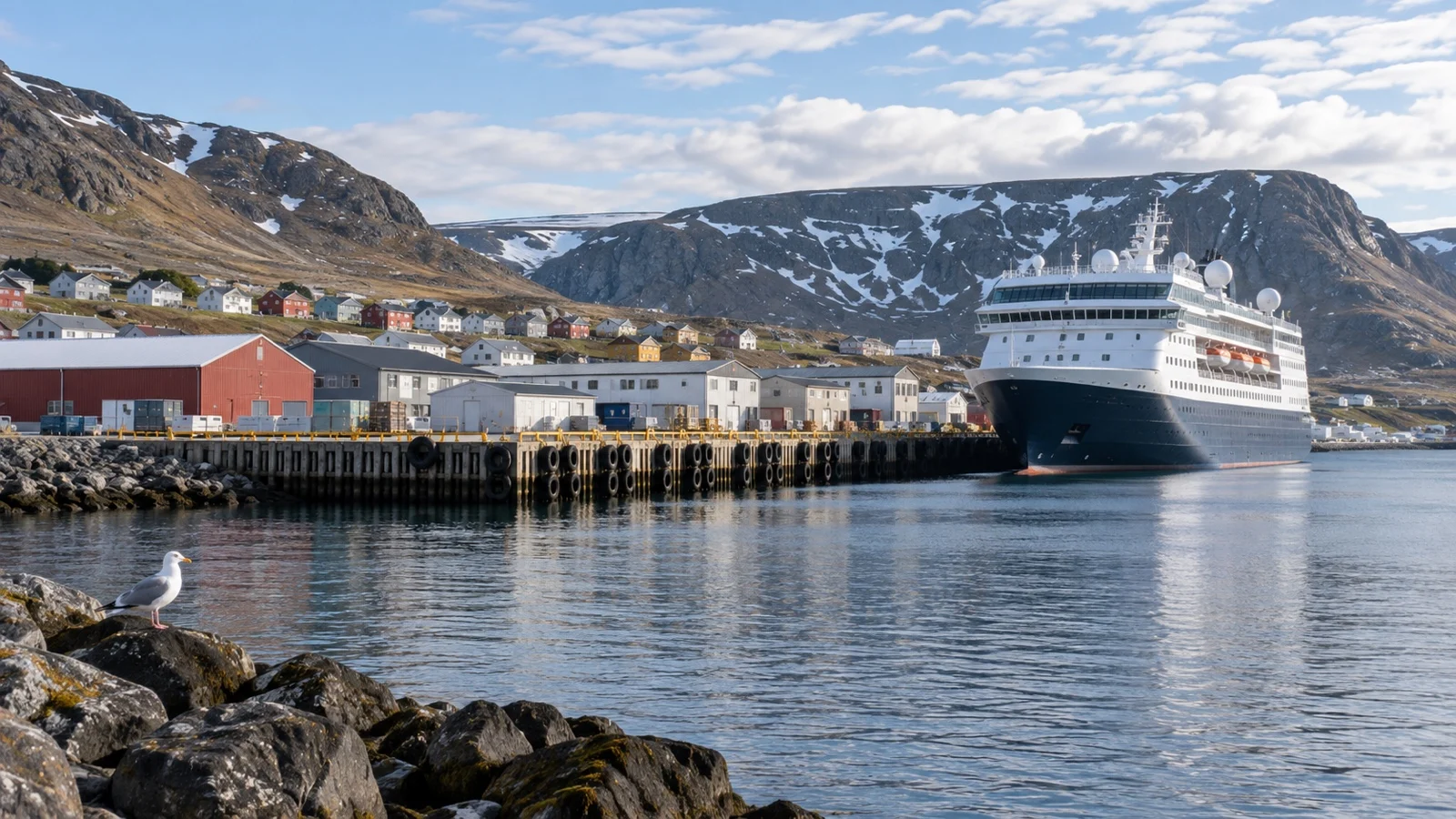
The quay at Kjøllefjord
Scheduled coastal ships normally berth alongside at the village harbor. Follow the current operator and crew instructions for your call.
Hurtigruten currently schedules 20 minutes northbound and 10 minutes southbound. Treat those as current scheduled windows rather than guaranteed shore time because operations can change.
The harbor front sits close enough to the village that you do not need a bus or a shuttle. Whatever you want to see here, you are walking to it.
Kjøllefjord cruise port quick facts
- Dock or tender: Scheduled coastal ships normally berth alongside at the village harbor; follow the current operator and crew instructions for your call.
- Into town: Village center sits right at the harbor edge, so it’s a short walk ashore, no transfer needed.
- Currency and language: Norwegian krone (NOK); Norwegian is the local language, and visitor-facing staff may speak English.
- Time zone: Central European Time, UTC+1 in winter, UTC+2 during summer daylight saving.
- Schedule caution: No trustworthy public missed-call percentage is available; weather and operating conditions can shorten, change, or cancel a call.
Finding your way around the village
Kjøllefjord is a small fishing village, so “finding your way around” mostly means walking the harbor front and the few streets behind it. It is also the administrative center of Lebesby municipality, which is a bigger job than the size suggests.
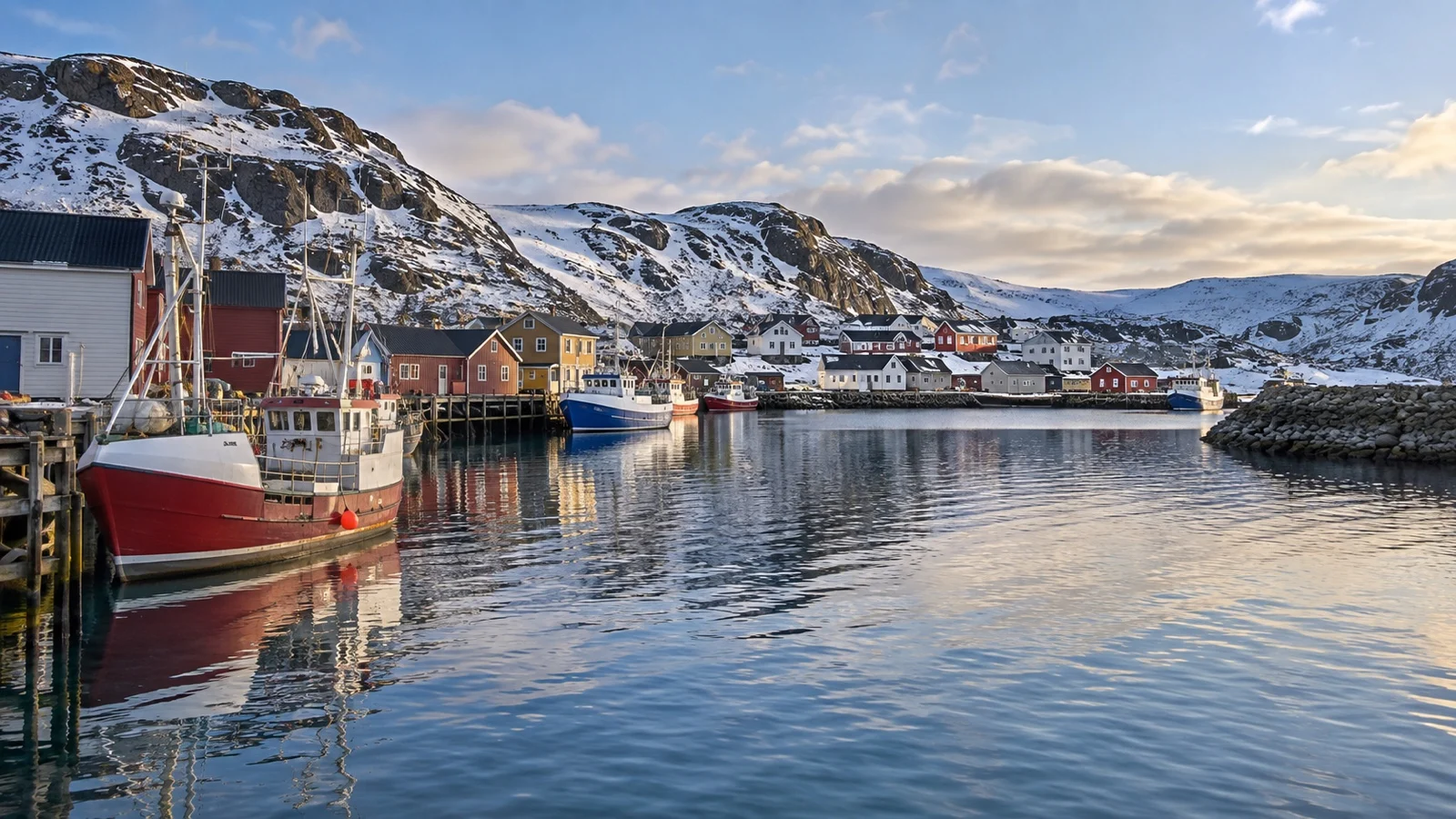
The village runs along the water in red and white timber buildings, backed by bare, marbled hills rather than trees. A road connection to the rest of Norway only arrived in 1989, and that late arrival is a large part of why the place still feels like its own small world.
Fishing is not a heritage display here but the living economy. Hurtigruten describes Kjøllefjord as one of Finnmark’s larger fishing villages, with a busy harbor and king-crab fishing.
The surrounding peninsula has GPS-marked trails of varying difficulty, but none belongs in a 10- or 20-minute coastal call. They explain the wild landscape while also underscoring why a short harbor walk is the sensible plan.
Nordkinn: mainland Europe’s real northernmost point
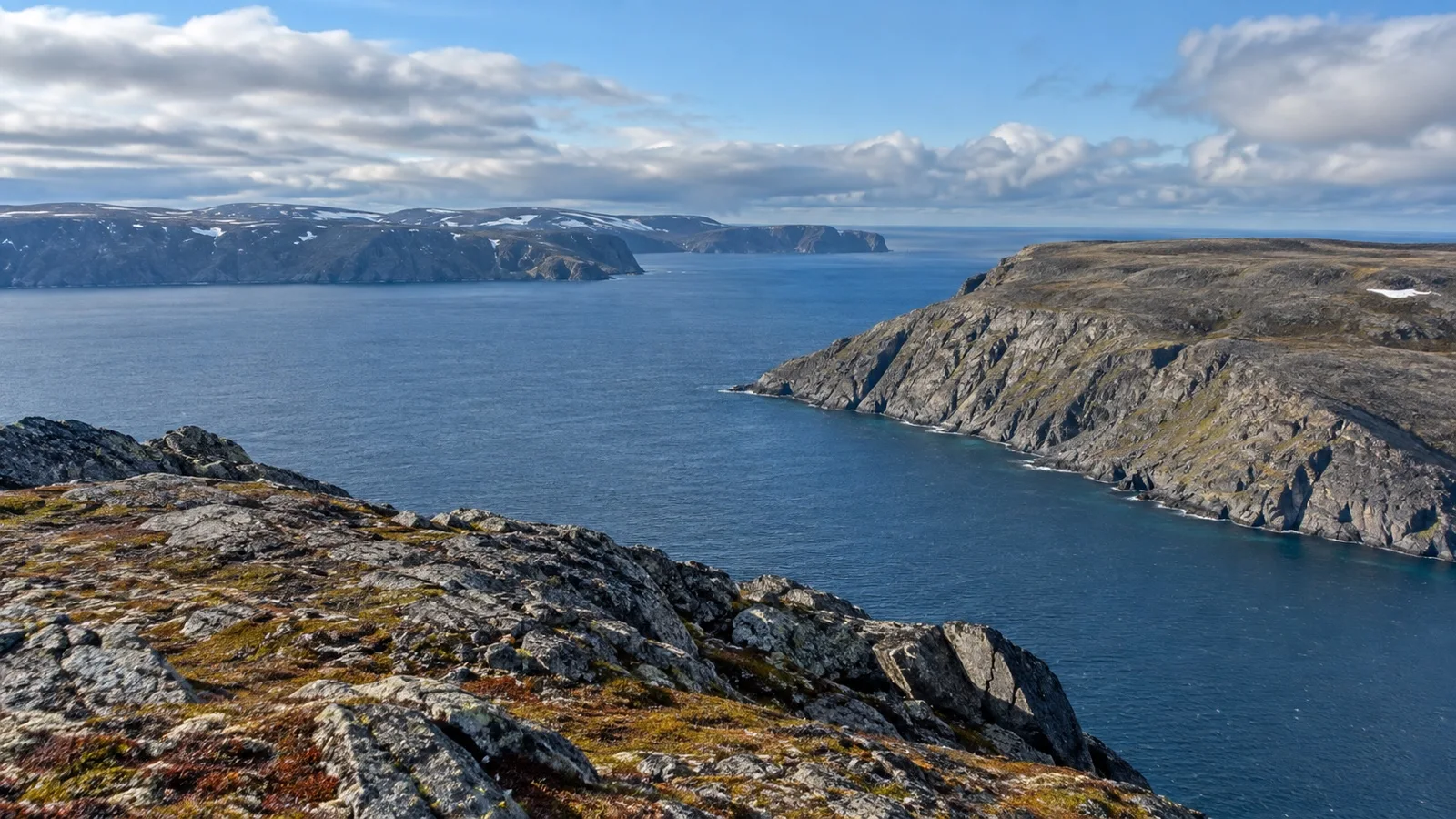
North Cape sits on the island of Magerøya, while Kinnarodden holds the mainland distinction. That is why the two places can make different “northernmost” claims without contradiction.
Visit Norway identifies Kinnarodden as Europe’s northernmost mainland point. Kjøllefjord is a practical gateway to learning about that geography, not a quick path to the headland.
It is Europe’s northernmost mainland point outright, a genuine regional distinction rather than a technicality nobody outside Norway cares about. It is the kind of fact locals mention with a raised eyebrow, since almost every tourist walks straight past it toward Nordkapp instead.
Kjøllefjord does not sit on Kinnarodden itself, but it is the closest village of any size to the peninsula that holds it. That geography is the whole reason this small fishing stop earns a place on an Arctic itinerary at all.
Kinnarodden, Finnkirka and the case for staying longer
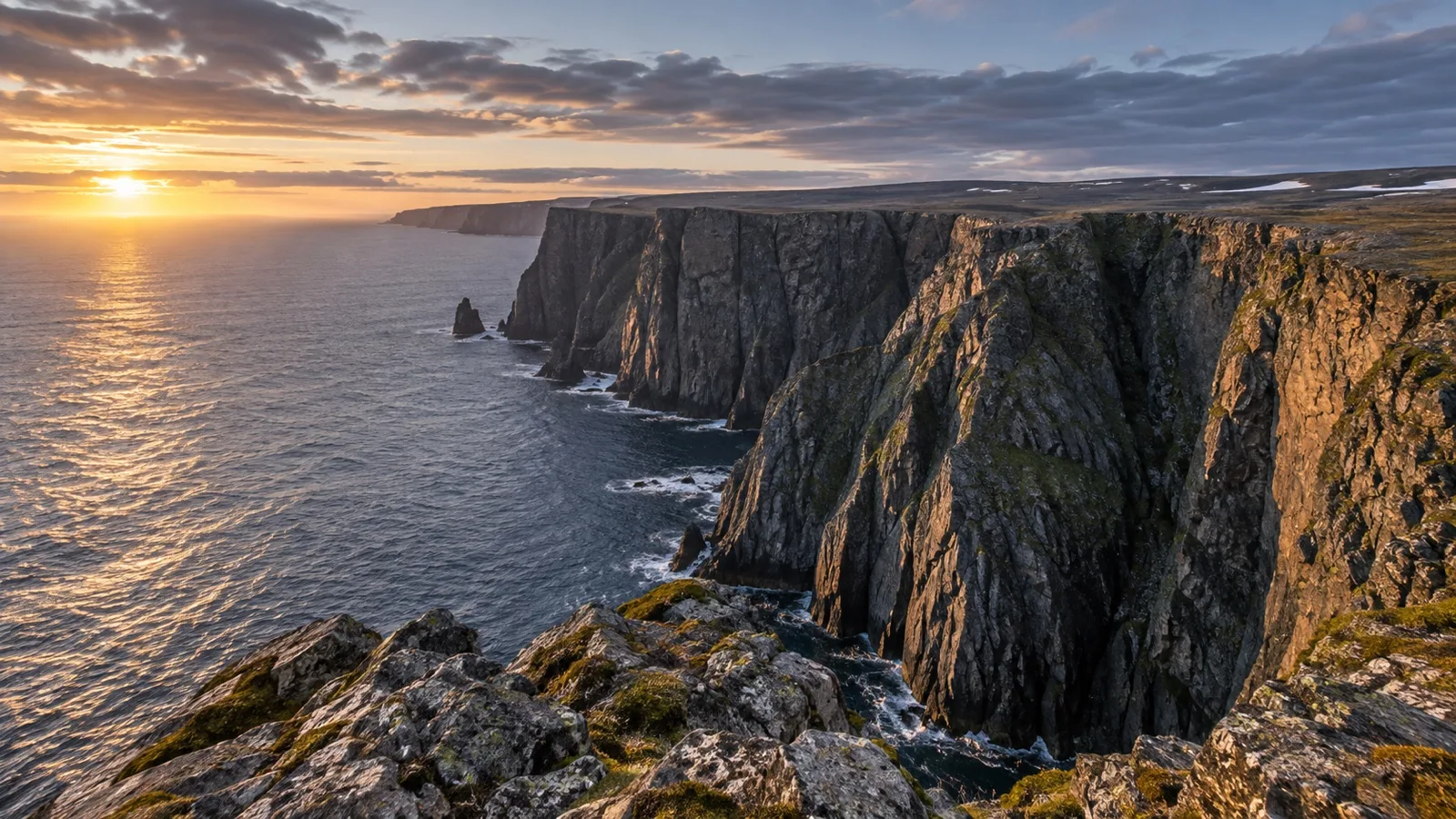
Kinnarodden is a remote, demanding hiking objective that requires far more time and preparation than a short coastal call. Treat it as a separate Finnmark trip with current route guidance, proper equipment, and a weather margin.
That distance rules it out for a twenty-minute port call, and honestly for most single-day excursions of any kind. If reaching Kinnarodden matters to you, it belongs on a separate Finnmark trip with your own time and your own boots, not squeezed into a ship’s schedule.
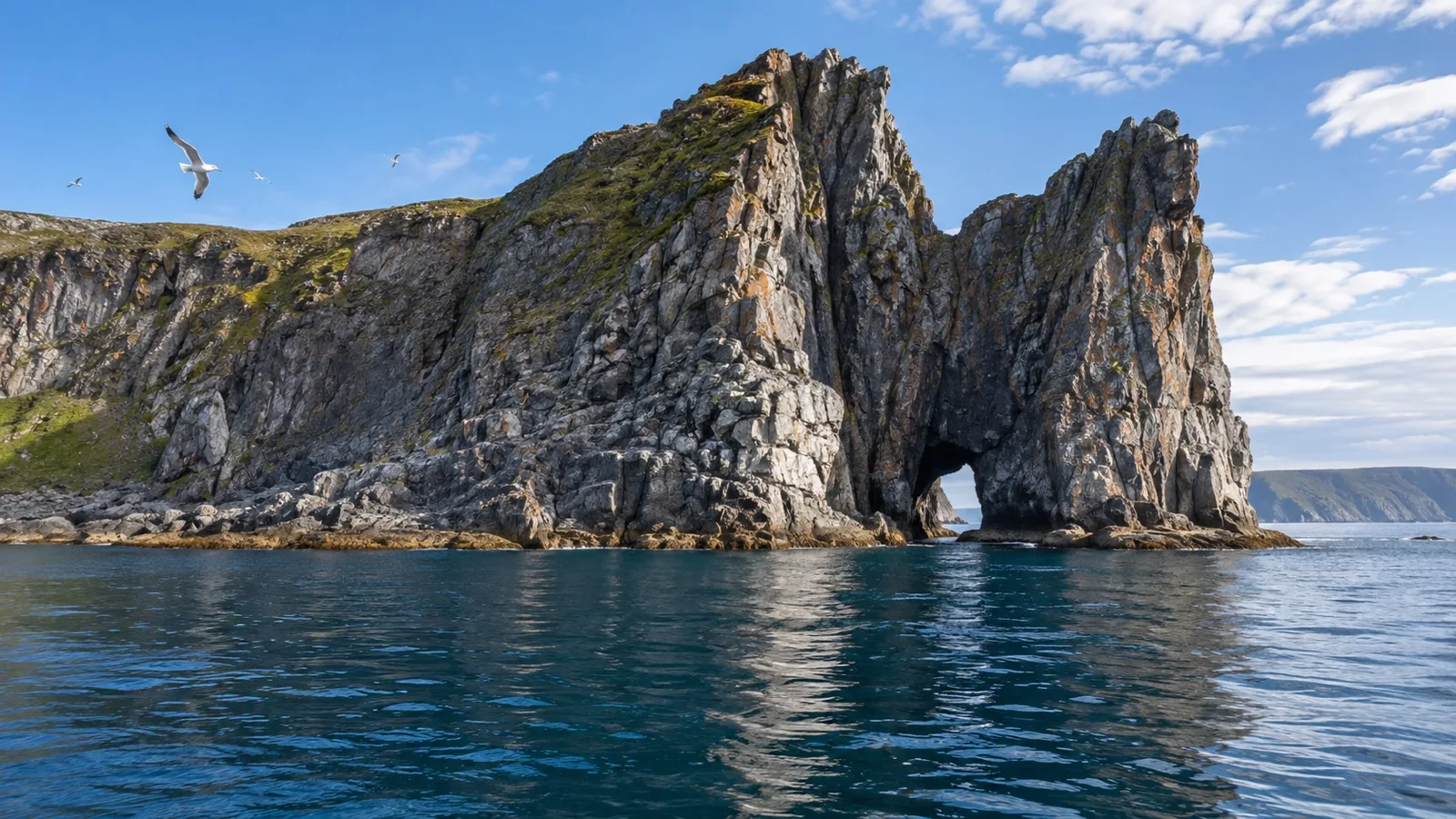
Finnkirka is a jagged sea-cliff formation at the fjord entrance that resembles a church spire. Hurtigruten and Lebesby municipality both say it is best viewed from the sea, so watch during the approach rather than assuming you can reach it from the quay.
The village keeps its working history close at hand too, in the old Foldalbruket fishing wharf and the story of the Oksevågen whaling station nearby. None of it needs a full day to appreciate, which is really the point of a place built around a twenty-minute call.
Land, village or coast: how to spend your call
Village: on a stop this short, the village itself is the excursion. Walk the harbor front, look toward the church, and you have used your available time well.
Coast: if you would rather stay near the rail, Finnkirka is visible from the ship as you arrive, so you do not have to go ashore at all to see the headline sight.
Land: do not plan anything inland. Nordkinn and Kinnarodden are real and worth knowing about, but they belong to a separate Finnmark trip, not a shore excursion from this call.
Getting around and accessibility
The quay sits flat and close to the village, which helps, but Kjøllefjord is still a small working harbor rather than a purpose-built cruise terminal. There is no dedicated terminal building, covered ramp, or waiting area.
Coastal operators generally ask passengers with mobility needs to contact the sales center ahead of time rather than book online blind, and that applies here as much as anywhere on this coast. On a call this short, getting the boarding arrangements confirmed in advance matters more than usual.
Underfoot, expect a working quay of uneven stone and asphalt rather than a smooth boardwalk. Ice and wet surfaces can be a real factor depending on the season, so footwear matters more than sightseeing ambition.
There is no organized shore-excursion infrastructure built around this call, unlike Honningsvåg’s motorcoach service to the North Cape. What you get here is whatever you can reach on your own two feet in the time available.
Weather, safety and the exposed Arctic coast
Kjøllefjord sits on an exposed Arctic coast where wind, swell, snow, and visibility can affect operations. Only the captain and port team can decide whether alongside access is safe on the day.
Weather here swings fast, and the daylight swings even faster by season, from close to permanent light in midsummer to genuine polar night in December and January. Dress for wind chill rather than the thermometer reading, whatever month you sail.
Norway’s emergency numbers are 112 for police, 113 for medical emergencies, and 110 for fire, and they work the same in a village this size as they do in Oslo. Keep them saved before you go ashore anywhere on this stretch of coast, not just here.
Return timing
With a call this short, return timing is less a plan and more a habit: be back at the gangway with minutes to spare, not seconds. Do not assume the vessel will wait for stragglers because the route runs to a tight schedule.
Set a personal cutoff five minutes ahead of the ship’s stated departure, and treat the walk back to the harbor as part of whatever you are doing, not an afterthought. On a twenty-minute call, that cutoff is a meaningful share of your total time ashore.
If weather has been marginal on the approach, stay aboard unless the crew confirms that guests may disembark safely. An exposed quay like this one rewards caution over a lingering last photograph.
How Kjøllefjord fits a Norway cruise
Kjøllefjord almost always shows up as one stop within the wider Hurtigruten coastal express route, rather than as a standalone port on a conventional big-ship itinerary. If you are weighing that route against a classic fjord cruise, my Norway cruise ports guide lays out how the fjord ports and the Arctic ports actually differ.
It is also, unusually, a stop worth being awake for. My northern lights cruise guide flags Kjøllefjord as one of the small-hours Finnmark calls worth setting an alarm for, and if the crowds at nearby Honningsvåg and the North Cape are not your idea of a good time, this quieter cousin farther along the coast might be exactly the trade you want.
The practical checks I would make before Kjøllefjord
Use the current Hurtigruten or Havila sailing plan for the alongside berth and departure minute because the northbound and southbound calls can be only 10 to 20 minutes. Stay within sight of the gangway unless the ship explicitly sells a through-excursion that rejoins later.
The harbor and church are the realistic short-call walk, while Kinnarodden, Finnkirka, and Nordkinn trails are land-stay objectives rather than cruise-stop add-ons. A road or hiking plan needs hours, Arctic equipment, and a return arrangement that this brief call does not provide.
Check Norway and Schengen entry rules, the live weather warning, and any local opening hours before stepping ashore. Wind, ice, snow, darkness, fishery traffic, and a steep or moving gangway can make even a few minutes outside unsuitable for some travelers.
Frequently asked questions
Is Kjøllefjord the same as the North Cape?
No. The North Cape (Nordkapp) is reached from Honningsvåg, a different port farther west, while Kjøllefjord sits on the neighboring Nordkinn Peninsula, home to Kinnarodden, the actual northernmost point of mainland Europe.
Can I visit Kinnarodden on a cruise call?
Realistically, no. It is a remote, demanding hiking objective that needs far more time, planning, and equipment than a short port call allows.
Does Kjøllefjord use a tender?
Scheduled coastal ships normally berth alongside at the village harbor, but arrangements can change with operating conditions. Follow the crew’s instructions for the actual call.
How long does the ship stay in Kjøllefjord?
The ship stays roughly 20 minutes northbound and 10 minutes southbound, among the shortest calls on the whole coastal route.
The last word
Kjøllefjord will never be the reason you book a Norway cruise, and that is fine, because it was never trying to be. It is a genuine working fishing village that happens to sit beside the real northernmost edge of the continent, seen for twenty honest minutes from a working quay.
Walk the harbor, look up at Finnkirka, and let Kinnarodden stay the excuse for a future trip rather than a rushed one. Some ports are the whole point of a voyage, and some are just proof of how far north a working ferry route actually goes.
How this guide was researched: This guide uses current Hurtigruten, Havila Voyages, Lebesby municipality, Visit Norway, and Norwegian government information. Logistics and time-sensitive details were reviewed in September 2026; see our Editorial Policy and follow current onboard instructions.