Hvar Cruise Port: Tender, Fortress and Island Day
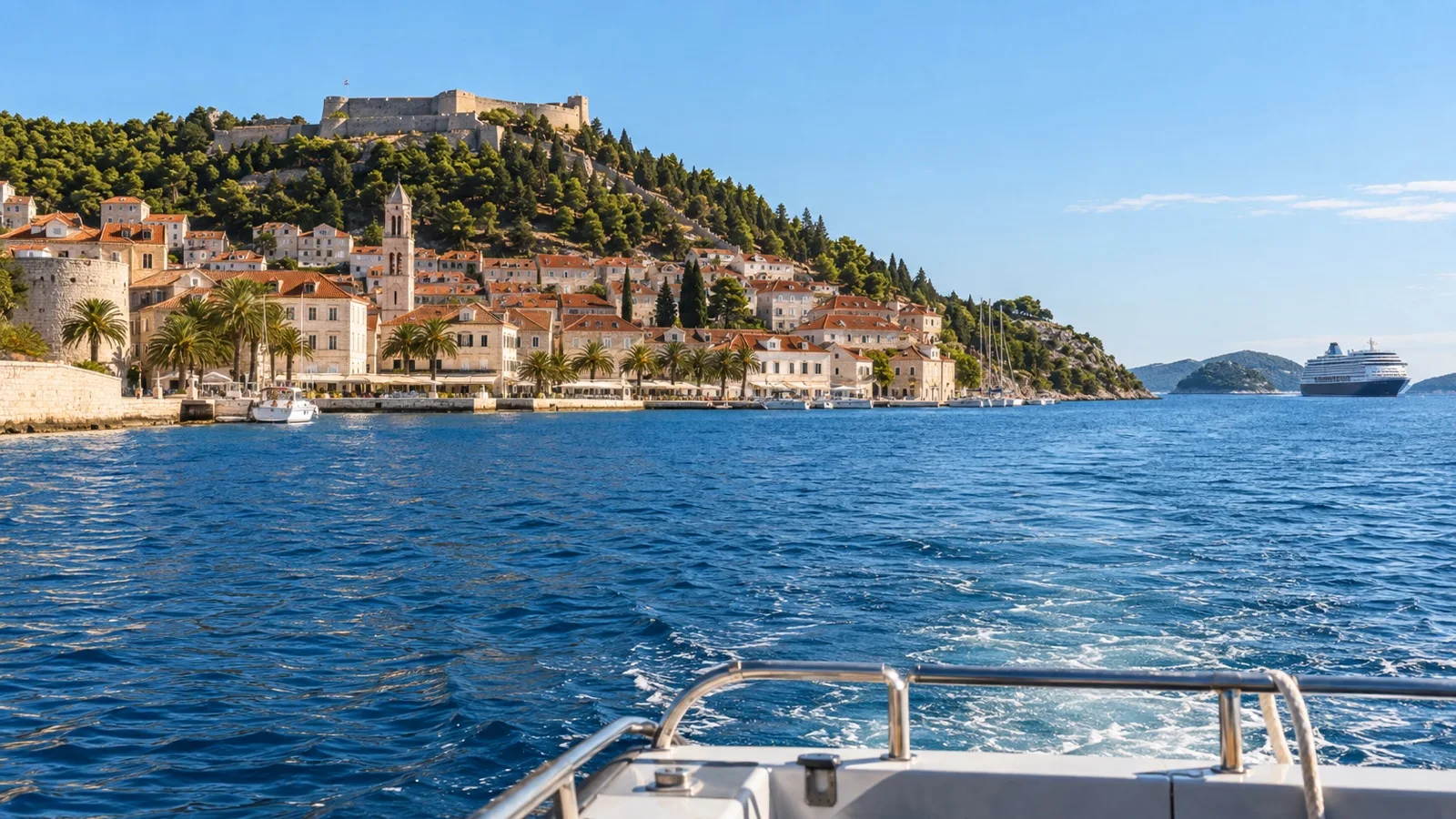
Hvar announces itself beautifully, with pale stone buildings gathered around a bright harbor and a fortress high above the town. The view can make an independent day seem effortless, but this is a tender port, so the smartest plan begins with the ship’s landing instructions and ends with a generous return buffer.
I would treat Hvar as a day of layers rather than a race across the island. Walk the old town, choose either the fortress or an easy waterfront ramble, then add a swim, a boat ride, or Stari Grad only if your port hours and mobility make that choice genuinely comfortable.
Hvar Cruise Port Quick Facts
- Arrival: Most ocean cruise ships anchor offshore and carry guests ashore by tender.
- Tender landing: Guests usually arrive on Hvar Town’s central waterfront, close to Saint Stephen’s Square.
- Best first stop: Confirm the final tender time and exact return point before leaving the harbor.
- Fortress: Fortica, also called Španjola, stands above town and requires a sustained uphill walk on steps and sloping lanes.
- Old town: Saint Stephen’s Square, the cathedral, the Arsenal, the historic theater, and the Franciscan Monastery are close enough for an unhurried walking route.
- Pakleni Islands: Seasonal local boats run from the harbor, but service depends on weather and operator schedules.
- Stari Grad: This historic town and the UNESCO listed Stari Grad Plain are across the island by road, not a casual extension of a short Hvar Town walk.
- Currency: Croatia uses the euro, and cards are widely accepted, though a little cash can help with small purchases.
- Accessibility: Tender boarding, cobbles, steps, steep streets, and boat access can all affect the day.
- Return rule: Allow time for any island boat, the walk back to the landing, the tender queue, and the tender ride to the ship.
Your Ship Is Probably Anchoring Offshore
Hvar Town has a compact, busy harbor rather than a conventional cruise terminal beside the old center. Most larger ships anchor in the channel and use their own tenders or locally arranged boats, while smaller vessels may receive different instructions according to size, traffic, and harbor conditions.
The ship’s daily program is the authority for the landing point, tender tickets, accessibility procedures, and all aboard time. Never assume that yesterday’s online report or another line’s schedule applies to your call, because wind, swell, harbor traffic, and operational decisions can change the plan.
Start at the Riva and Get Oriented
The usual tender arrival places you on or near the Riva, Hvar Town’s waterfront promenade. From here, the broad Saint Stephen’s Square sits just inland, the cathedral anchors its eastern end, and the fortress appears above the roofs as a useful visual landmark.
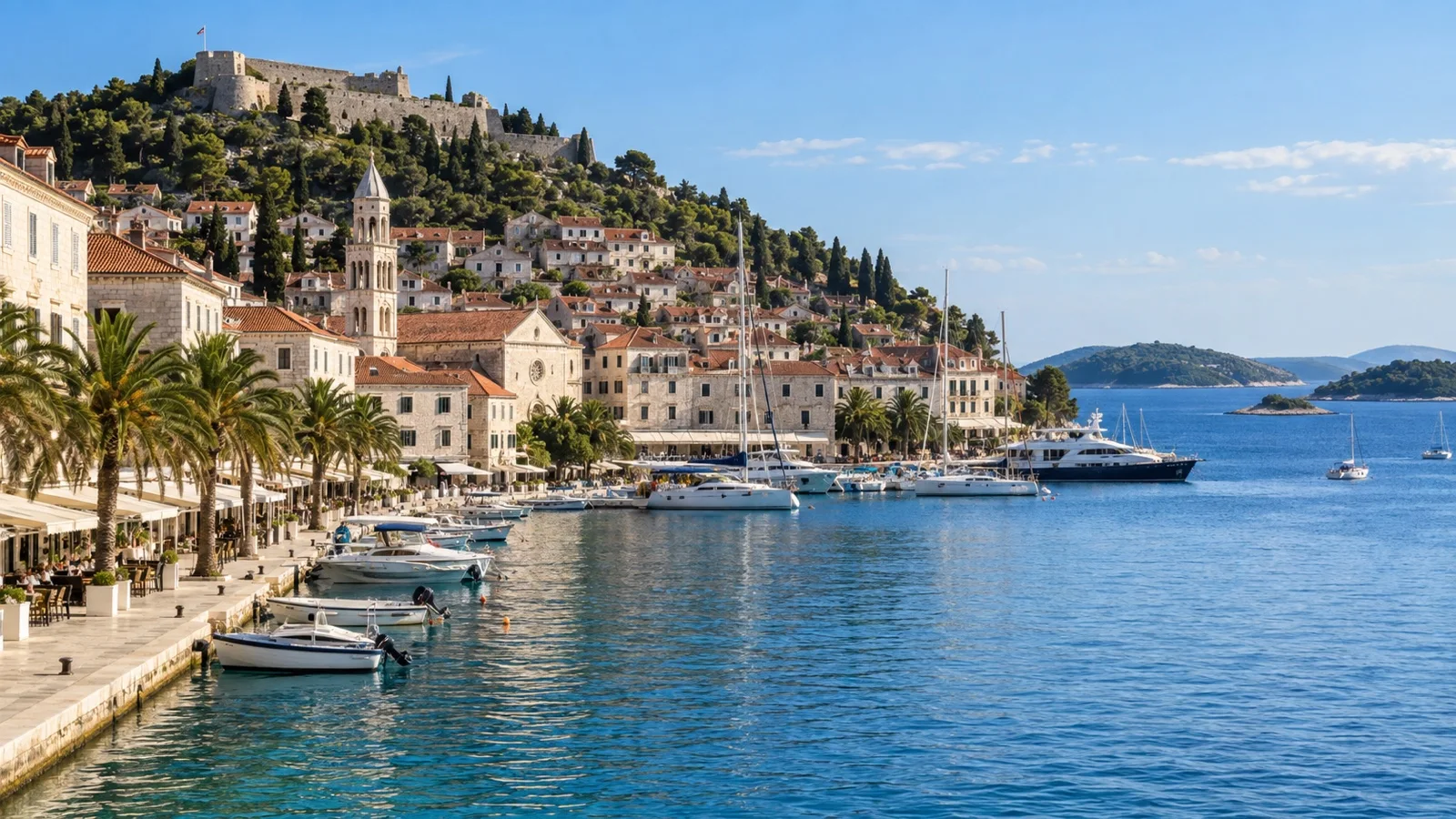
Pause before walking away and identify the exact return queue, not merely the general harbor. A photograph of the landing, the ship’s contact number, and the written final tender time can prevent a surprisingly stressful search later in the day.
A Gentle Old Town Walk
Saint Stephen’s Square is one of the largest historic squares on the Croatian coast, and it works as the natural center of an independent visit. Café tables, honey colored paving, Venetian influenced facades, and the cathedral create a scene that rewards slow observation more than a hurried checklist.
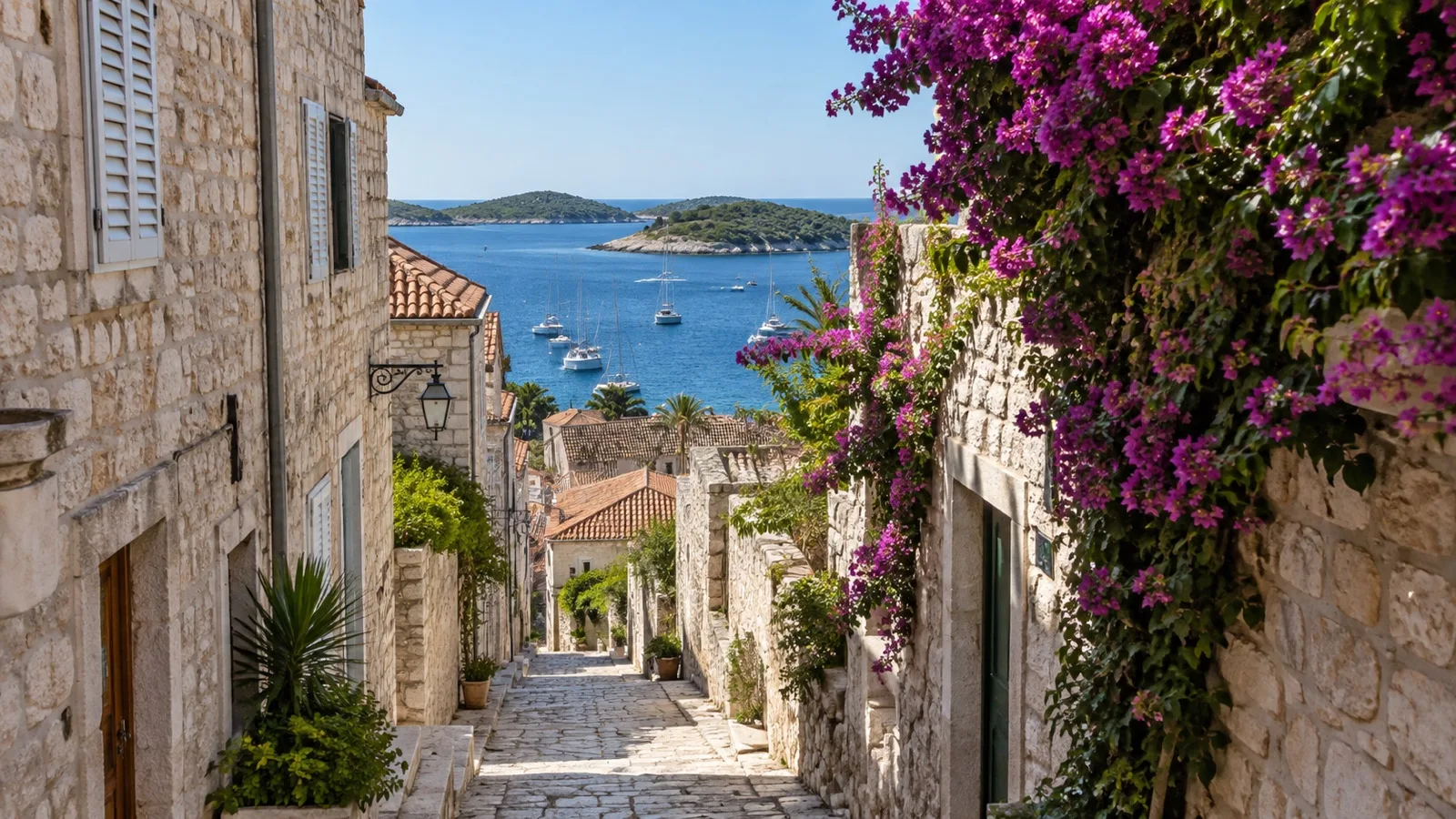
On the waterfront side of the square, the Arsenal reflects Hvar’s long maritime life, and the historic public theater occupies the building’s upper level. Opening hours and access can vary with events and season, so check the official Hvar visitor information rather than building a tight day around a single interior.
Continue toward the Franciscan Monastery for a quieter counterpoint to the main square. The waterfront path is generally easier than the fortress route, though old paving, curbs, crowds, and occasional service traffic still require attention.
Fortica Rewards the Climb
Fortica Fortress, often called Španjola, rises directly above town and delivers the classic view across Hvar’s roofs, harbor, and the Pakleni Islands. The walking route threads through stone lanes and gardens before becoming a persistent uphill climb, so the distance on a map understates the effort.
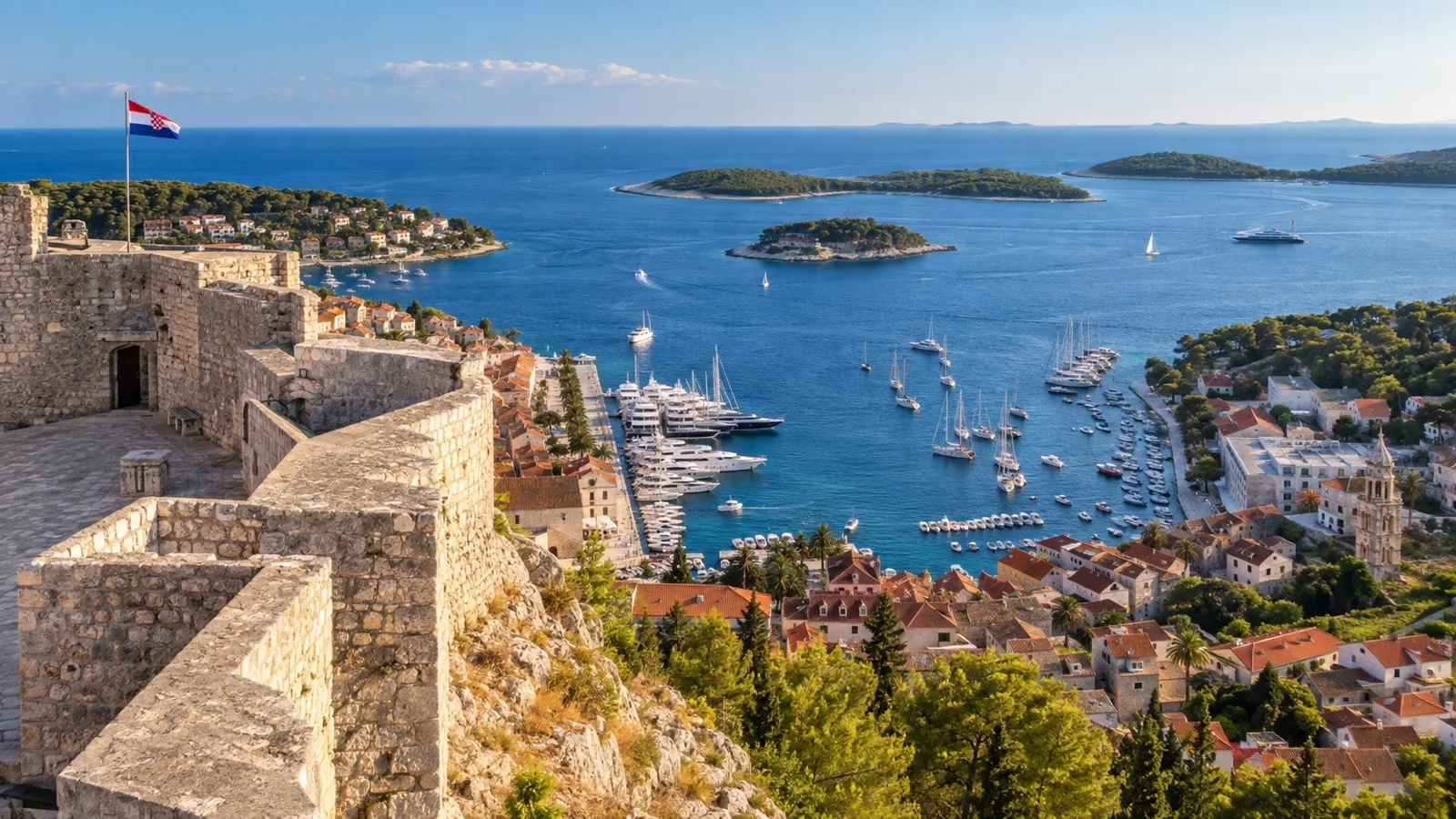
Wear shoes with grip, carry water, and start earlier when summer heat is building. A taxi can reduce much of the ascent for some visitors, but it does not make every historic surface step free, and the interior can still include uneven ground and stairs.
The fortress keeps seasonal hours and charges admission, with details subject to change. Confirm the current opening information through the Hvar Tourist Board or locally before committing your limited port time, especially during a shoulder season call or an evening arrival.
Choose a Waterfront Day When the Hill Is Not Right
Skipping the fortress is not missing Hvar. The harbor, square, cathedral exterior, lanes around Groda, and the monastery side of town create a satisfying route with frequent places to pause, and the view back toward the anchored ships is lovely from ground level.
This gentler plan also leaves room for lunch or a swim without turning the clock into an opponent. Hvar’s polished reputation can suggest that every stop must be glamorous, but a shaded table, grilled fish, and an unhurried harbor walk often make the more memorable day.
Swimming Near Hvar Town
Small beaches and swimming areas sit along the coast beyond the central harbor, with options in both directions depending on local access and conditions. Ask at the visitor office or a reputable local business for the most suitable current choice, because construction, private beach operations, sea state, and seasonal services can change.
Croatian island shores are often pebbly or rocky, so water shoes can be useful. Watch for slippery entry points and sea urchins, never dive into unfamiliar water, and leave enough time to dry off and walk back without rushing on hot stone.
Pakleni Islands Need a Separate Clock
The low green islands opposite Hvar make an irresistible backdrop, and seasonal taxi boats and excursions commonly connect the harbor with selected coves and beach areas. They are local marine services, not cruise tenders, so their timetable, payment arrangements, last return, and weather policy must be confirmed directly with the operator.
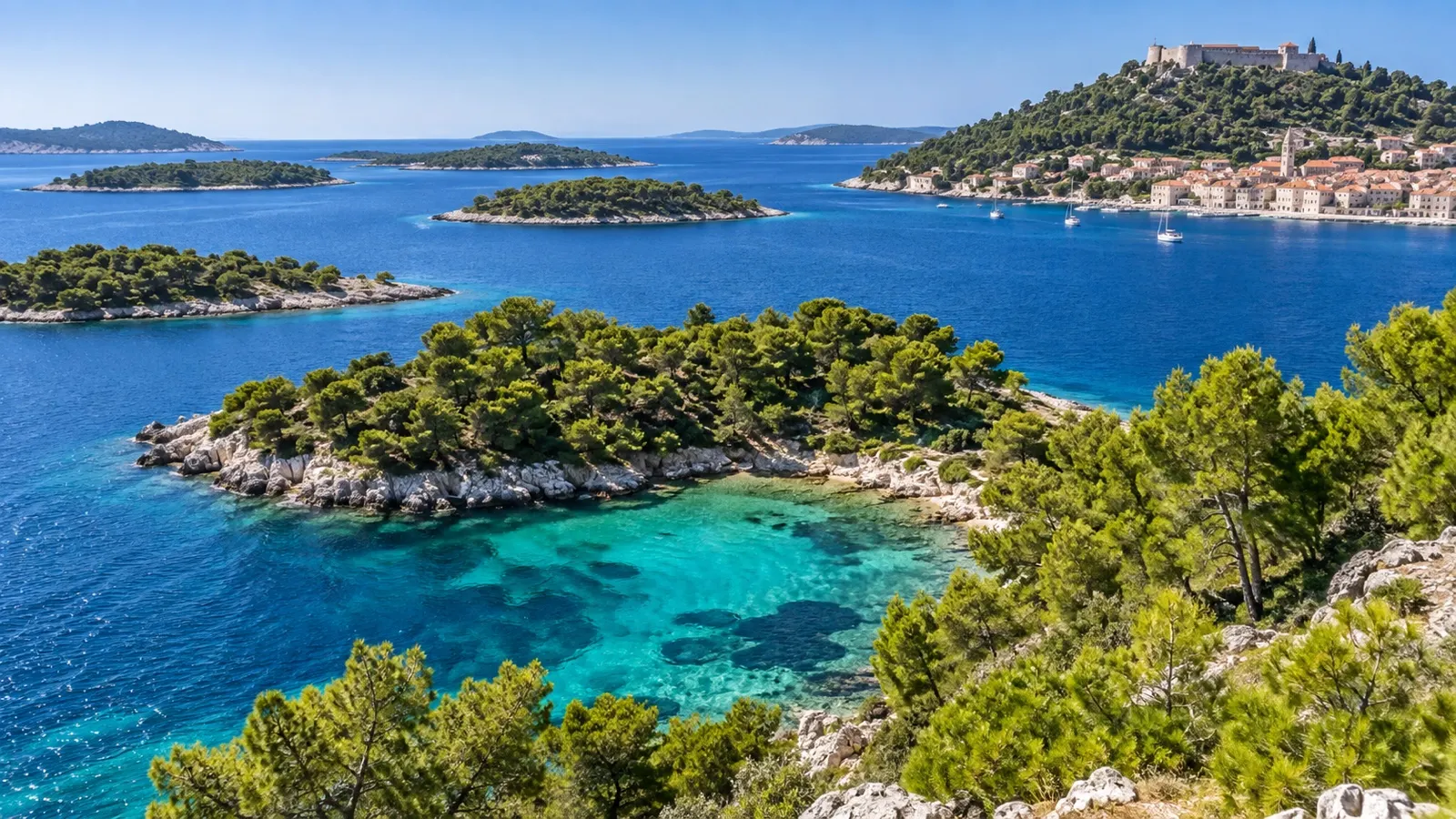
A Pakleni outing creates three deadlines: the local boat back to Hvar, the ship’s tender queue, and the final tender to the vessel. I would only make the trip when the operator understands your ship deadline and the plan leaves a wide cushion for a missed sailing, a slower boat, or a harbor queue.
Choose a licensed, established operator and agree on the destination and return terms before boarding. If wind strengthens or the sea becomes unsettled, accept a cancellation as good seamanship rather than trying to preserve an itinerary that no longer fits the conditions.
Stari Grad Is a Different Kind of Island Day
Stari Grad lies across Hvar Island by road and feels calmer and older than the lively waterfront around Hvar Town. Its lanes, sheltered harbor, and relationship with the agricultural plain offer real depth, but it is a deliberate excursion rather than a spontaneous stroll from the tender.
The Stari Grad Plain is recognized by UNESCO for a cultural landscape whose ancient Greek field division and agricultural use have endured for centuries. Visit with respect by staying on appropriate roads and paths, avoiding cultivated land, and remembering that this is a living farming landscape rather than an open air stage set.
Independent travelers should confirm the current bus schedule in both directions and understand where the stops are located. A taxi, private guide, or ship excursion usually gives more control on a short call, while a long port day may make public transportation reasonable if there is an earlier backup return.
Lavender Is Seasonal, Not Guaranteed
Hvar is closely associated with lavender, but purple fields are not a year round attraction and agricultural conditions change from season to season. Bloom timing depends on weather and elevation, while harvest, land use, and wildfire history can affect what visitors actually see.
A farm visit or island road tour can still be rewarding for dry stone landscapes, villages, herbs, and broad coastal views. Do not enter private fields, pick plants, or stop a vehicle where narrow island roads make that unsafe.
Building a Sensible Island Road Tour
A road based excursion can connect Hvar Town with viewpoints, inland villages, Stari Grad, or other coastal settlements, but trying to include all of them usually weakens the day. Pick one main destination beyond Hvar Town and tell the driver or guide the ship’s final tender time before departure.
Confirm whether the quoted trip includes waiting, parking, and the return to the correct Hvar harbor landing. Island roads can be narrow and summer traffic can slow near popular places, so a schedule that looks generous on a mapping app may not feel generous in practice.
Accessibility Begins With the Tender
Guests who use wheelchairs, scooters, walkers, or who have limited balance should ask the cruise line about tender boarding before planning anything ashore. The ability to transfer, sea conditions, equipment dimensions, crew procedures, and the ship’s own safety decision all determine whether tendering is possible.
Once ashore, the central waterfront and square may be manageable for some travelers, but cobbles, polished stone, curbs, steep lanes, and stairs appear quickly. The fortress is particularly demanding, while a tailored vehicle tour or a slower waterfront route may provide a much more comfortable experience.
Accessible facilities and vehicles should be arranged in advance with precise questions, not assumed from a general label. Ask about step height, lifting equipment, securement, restroom access, walking distance from drop off points, and whether assistance is available at the local boat or tender landing.
Heat, Wind, and Stone Shape the Day
Hvar can be intensely sunny in summer, and pale stone reflects heat upward while shade disappears on exposed climbs. Carry water, use sun protection, take deliberate breaks, and reserve the fortress for the cooler part of the call when possible.
Wind matters just as much as temperature because it can affect tenders and small boat services even on a bright day. Check the Croatian Meteorological and Hydrological Service forecast, then follow the ship and local operators when their real time judgment differs from a phone app.
Old stone becomes slick after rain and around waterfront spray, while sandals with smooth soles offer little help on polished steps. Supportive footwear is one of the least glamorous and most valuable things you can bring to Hvar.
Food, Payments, and a Respectful Visit
Menus around the harbor commonly feature seafood, grilled dishes, salads, local olive oil, and Croatian wines. Ask about preparation and allergens clearly, especially with mixed seafood, sauces, and shared kitchen surfaces, and avoid ordering a long meal when your return margin is already shrinking.
Croatia uses the euro, and cards are common in established businesses, though a modest amount of cash is practical for small purchases or an operator whose terminal is temporarily offline. Check the amount before approving a card payment and decline dynamic currency conversion when your own bank offers better terms.
Hvar is a lived in town as well as a visitor destination, so swimwear belongs at the beach rather than in churches or civic interiors. Keep voices moderate in residential lanes, dress respectfully for sacred spaces, and take your photographs without blocking doors, steps, or working harbor areas.
Documents and Entry Rules
Croatia is in the Schengen Area, but the documents needed for your cruise depend on nationality, itinerary, and the ports visited before and after Hvar. Carry the identification specified by your cruise line, and use official government or carrier guidance for visa questions rather than relying on a generic port guide.
If your passport is held aboard, follow the ship’s instructions about the cruise card and any photocopy or other identification required ashore. Keep valuables discreet and use ordinary awareness in crowded waterfront areas, even though most visits are relaxed.
Return Planning for a Tender Port
Work backward from the ship’s final tender rather than from the published departure time. Your personal cutoff should include the tender queue, a walk from your last stop, time to find the correct landing, and a buffer for a local boat or road transfer if you left Hvar Town.
The tender ride itself may take only a short time, but boarding can pause while the ship moves, harbor traffic clears, or sea conditions change. Being early gives the crew room to operate safely and gives you time to enjoy the harbor instead of watching it through a sprint.
If you visit the Pakleni Islands, return to Hvar Town much earlier than the last locally advertised boat. If you travel to Stari Grad or another village, keep the number of a backup taxi and choose a return that still leaves another realistic option behind it.
Hvar Cruise Port Questions
Do cruise ships dock in Hvar Town?
Most larger cruise ships anchor offshore and tender passengers into the harbor. Your cruise line will confirm the actual arrangement for your sailing because ship size, weather, and harbor operations can alter it.
Where does the tender usually land?
Tenders generally land on the central Hvar Town waterfront near the Riva and Saint Stephen’s Square. Check the exact quay and return queue when you arrive, as local traffic can shift operations.
Can I walk to Fortica Fortress?
Yes, the fortress is walkable from the harbor, but the route is steep and includes many steps and uneven historic surfaces. Allow more time than the map suggests, particularly in heat, and consider a taxi for part of the climb if that suits your mobility.
Can I visit the Pakleni Islands during a cruise call?
A seasonal local boat trip can work on a long, calm port day with a large return buffer. Confirm the operator’s timetable and weather policy, and remember that the local boat must return you to Hvar before you can join the ship’s tender.
Is Stari Grad practical on my own?
It can be practical with enough time and a carefully checked bus or taxi plan, but it is across the island by road. On a short call, a prearranged excursion or a Hvar Town day is usually the less fragile choice.
What is the easiest worthwhile plan?
Stay in Hvar Town, explore the square and waterfront lanes, visit the monastery side of town, and choose a relaxed meal or nearby swim. This plan keeps the tender landing close while still giving you architecture, sea views, and a strong sense of place.
Let Hvar Keep Some Breathing Room
Hvar works best when you resist turning every view into a deadline. Choose one ambitious element, whether that is the fortress, Stari Grad, or a Pakleni boat, then let the harbor and old town fill the rest of the day at their natural pace.
For current planning, consult the Hvar Tourist Board, the UNESCO Stari Grad Plain listing, Jadrolinija for applicable public ferry schedules, and the Croatian Meteorological and Hydrological Service. Always follow your cruise line’s tender instructions and final return time, because live ship operations take priority over any general guide.