Rijeka Cruise Port: Breakwater, Korzo & Trsat
Rijeka is a port city in the fullest sense, with cargo infrastructure, passenger quays, ferries, maritime history, and an urban center pressed close to the Kvarner waterfront. A cruise call can be delightfully simple if you walk from the harbor to Korzo, or more ambitious if you climb or ride to Trsat and continue toward Opatija or Učka.
The first decision belongs to the ship, not the map. Confirm the exact berth or anchorage, the authorized port exit, and the all-aboard time before deciding how much of the city and coast fits.
Quick Facts
- Port: Port of Rijeka on Croatia’s Kvarner Gulf
- Possible arrival: Breakwater or another assigned berth, with anchorage and tendering possible on some calls
- Main local promenade: Korzo in the city center
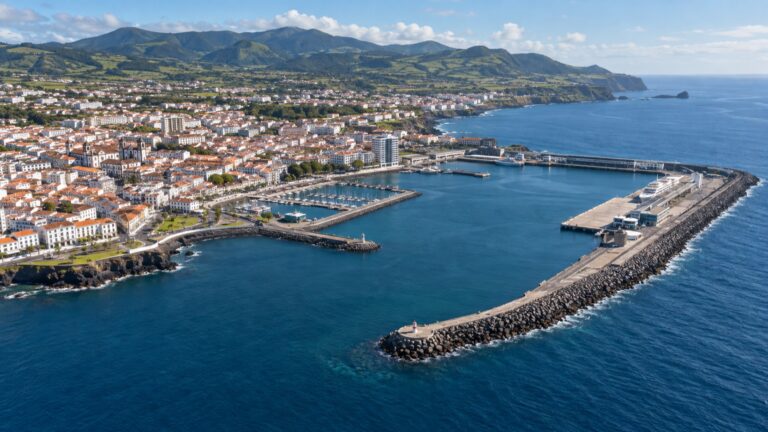
- Breakwater: Molo Longo, a 1,707-meter passenger terminal and promenade
- Hilltop landmark: Trsat Castle, 138 meters above sea level
- Trsat access: Taxi, city bus, or more than 500 historic steps
- Local transit: Autotrolej city buses and its official passenger information system
- Currency: Euro
- Language: Croatian, with English common in visitor settings
- Best easy day: Korzo, City Tower, Old Town, market, and a flexible museum or café stop
- Weather concern: Heat, rain, and strong bora winds can change walking and marine conditions
- Return rule: Recheck the port entrance and leave extra time for Trsat, Opatija, or Učka
Your berth controls the first and last mile
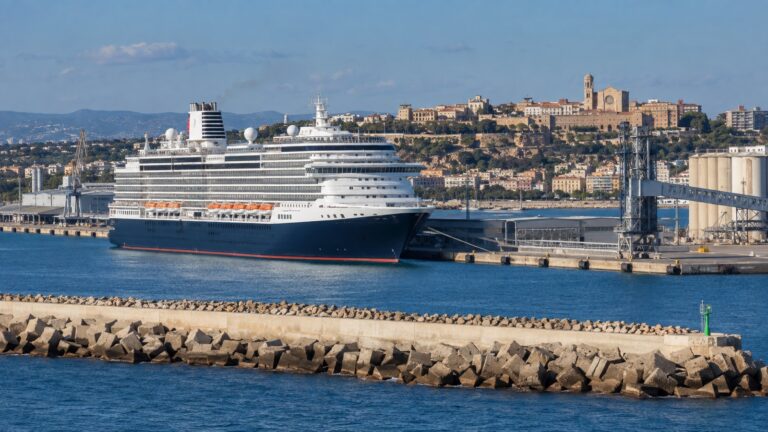
Rijeka’s cruise calls do not all use one identical passenger setup. A ship may berth along the long breakwater, use another assigned quay, or anchor and tender according to size, traffic, weather, and port operations.
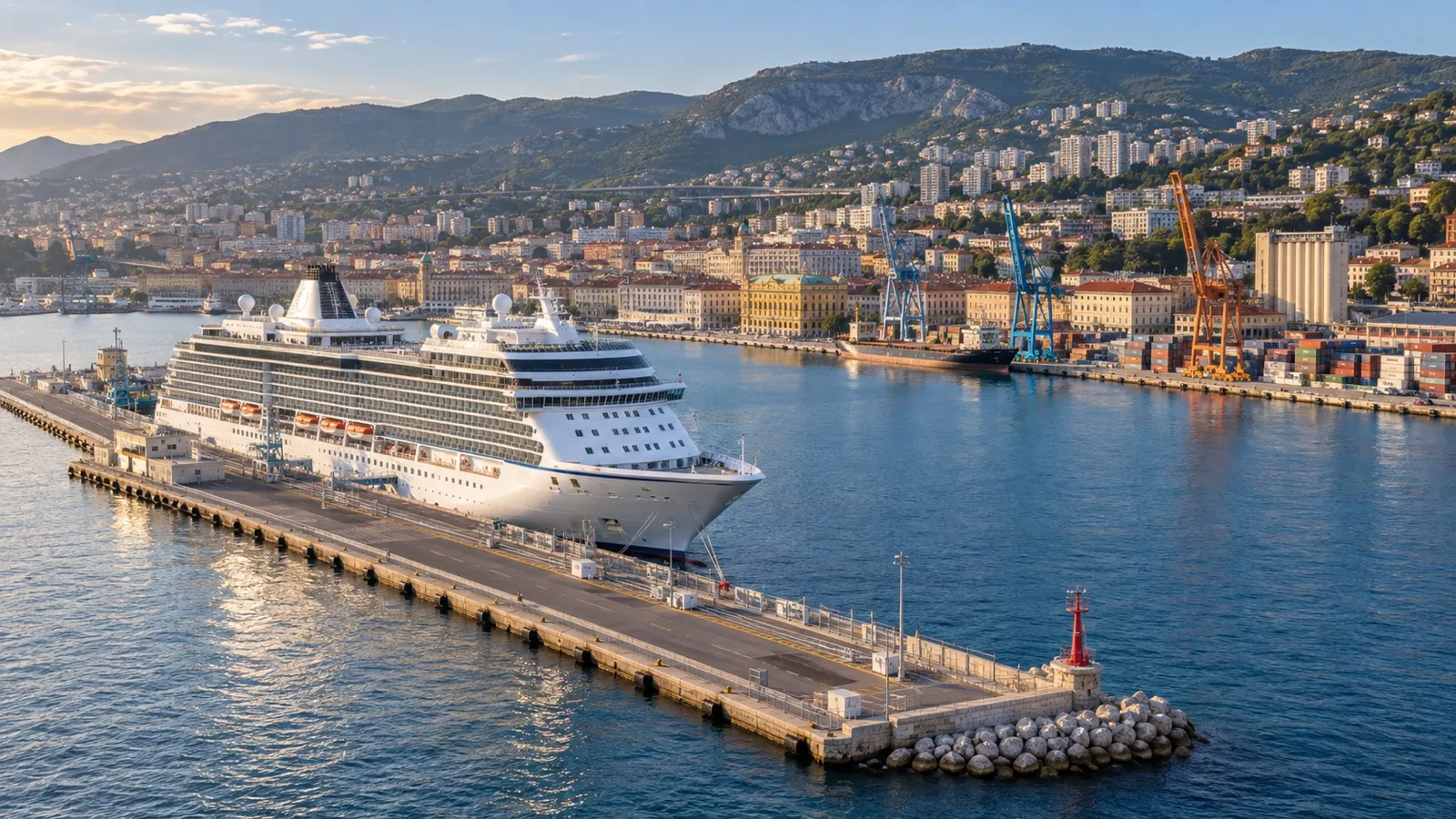
The breakwater is close to the urban center in a broad sense, but a position farther along its length creates a longer walk than a pin at the shore end suggests. If a shuttle operates, learn its drop-off point and final return time before leaving it.
Tendering changes the math more sharply because queues, priority groups, sea conditions, and boat loading reduce usable time ashore. Treat the last tender departure as a hard deadline that comes before the ship’s sailing time.
Rijeka remains a working commercial port, so use only marked passenger routes and staffed exits. Do not take a shortcut through cargo areas even if Korzo appears close across a fence or rail line.
Molo Longo is part of Rijeka’s story
Visit Rijeka identifies the main breakwater as Molo Longo and gives its length as 1,707 meters. It functions as a passenger terminal and promenade, with a history that reaches back to 19th-century plans for an expanded modern harbor.
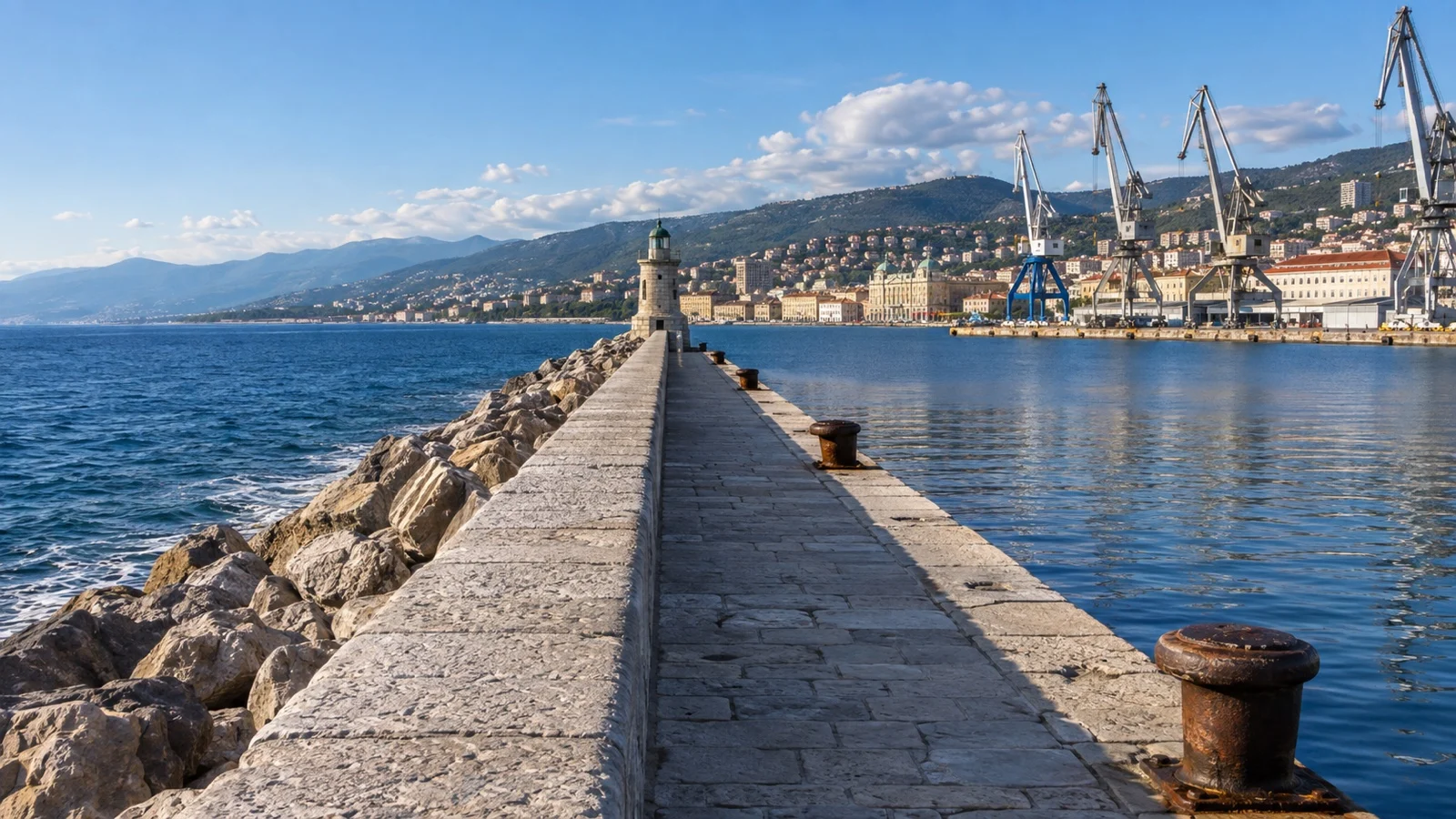
If your ship berths here, the walk itself becomes a visual introduction to Rijeka’s relationship with the sea. You can read the skyline, old port structures, working harbor, and reclaimed waterfront before reaching the city streets.
The exposed setting also means sun, wind, and rain feel stronger than they do among the buildings. Wear secure footwear and avoid leaning over barriers for photographs, especially when the bora is blowing.
Walk from the waterfront to Korzo
Korzo is Rijeka’s civic living room, not simply a shopping street. The official tourist board describes it as the city’s main promenade and meeting place, lined with cafés, historic façades, shops, and the rhythms of everyday local life.
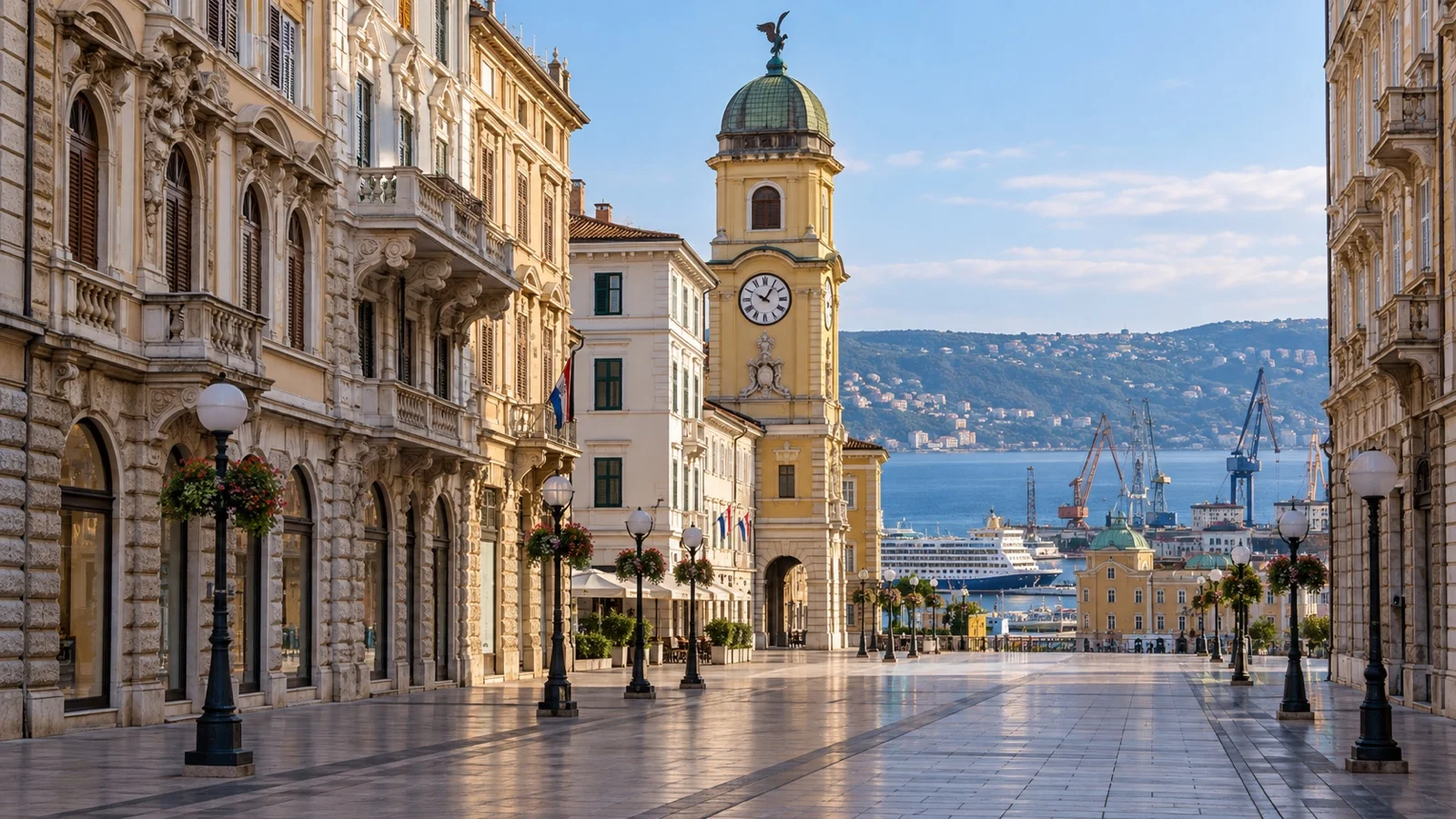
This is where I slow down rather than hurry toward a checklist. Look up at the architectural layers, stop for coffee if the timing suits, and use the pedestrian center as the spine for a compact walking loop.
The City Tower is the clearest visual landmark on Korzo. Its passage once formed an entrance to the fortified city, while its clock, imperial symbols, and distinctive double-headed eagle tell a more complicated story of Rijeka’s political and maritime past.
Pass through the tower into the Old Town for smaller streets and archaeological layers. The Principia at Tarsatica, Ivan Kobler Square, Saint Vitus Cathedral, and the Old Gate can be combined without turning the day into a transport exercise.
Add the market when the timing works
Rijeka’s City Market developed beside the waterfront where fishermen once landed and sold their catch. The surviving market complex combines daily commerce with steel, glass, carved stone, and decorative marine motifs.
Market life is usually strongest earlier in the day, and individual sections or vendors may close before tourist attractions do. Go first if the market matters more than a late lunch, and ask before photographing people or close-up displays.
Fresh fish, produce, and prepared foods can be fascinating, but customs rules may limit what you can take back aboard or into the next country. Buy for immediate enjoyment unless the ship confirms that an item is allowed.
Choose one museum, not every museum
Rijeka has enough museums to fill a full day, including the City Museum, Maritime and History Museum of the Croatian Littoral, Museum of Modern and Contemporary Art, Natural History Museum, and smaller specialist collections. Opening days, temporary exhibitions, and building access vary, so check the official page for your date.
The Sugar Palace gives a strong route into the city’s commercial and industrial history, while the Governor’s Palace setting adds architecture to a maritime and regional collection. Pick the story that interests you instead of spending the call moving between ticket desks.
A museum is also useful when rain, heat, or bora wind makes an exposed harbor walk uncomfortable. Keep one indoor option in reserve rather than treating the weather as a reason to abandon the city.
Trsat gives you the high view
Trsat Castle stands on a hill 138 meters above sea level and looks across Rijeka’s old center, river corridor, port, and Kvarner setting. The site reflects prehistoric observation, Roman defense, medieval fortification, and later cultural use.
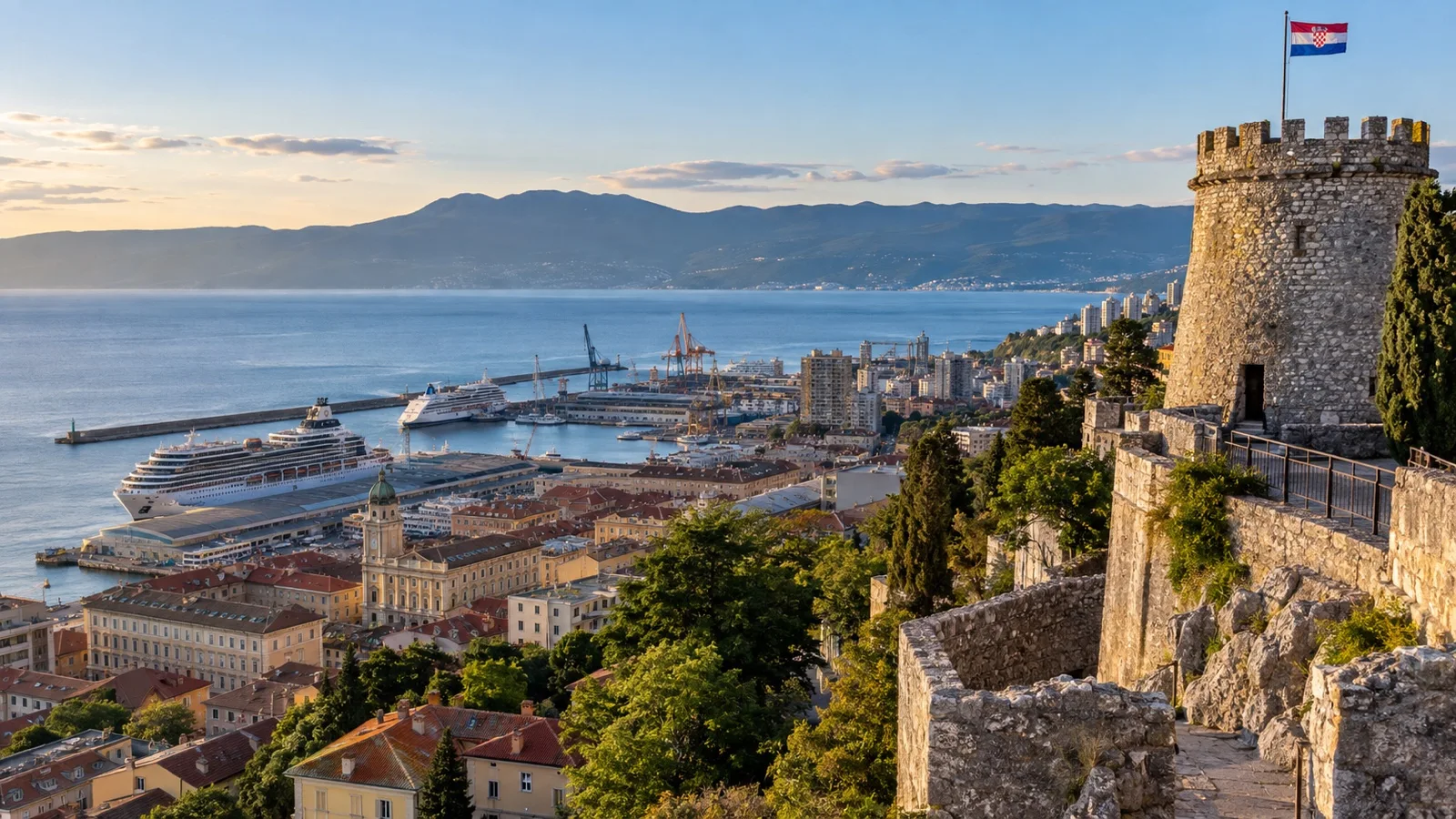
The castle is not the only reason to go uphill. The Shrine of Our Lady of Trsat, monastery, parks, and neighborhood create a distinct upper-city experience that deserves more than a rushed photograph.
Confirm opening and event access because the castle hosts exhibitions, concerts, and other programming. Outdoor viewpoints can remain valuable when an interior space is closed, but barriers and staff directions still apply.
Taxi is the simplest choice
A licensed taxi is usually the easiest way to reach Trsat when time or mobility matters. Agree on the destination, confirm the fare basis, and save the port return point rather than asking vaguely for the cruise terminal.
A one-way ride uphill followed by a bus or careful descent can work, but only if every member of the group is comfortable with uneven surfaces and slopes. The apparent short distance hides a meaningful elevation change.
City bus is the practical public option
Autotrolej operates Rijeka’s city network, and its current route list includes route 2 for Trsat plus route 8 with Trsat on its alignment. Use the operator’s live passenger information system because stops, directions, construction, and timetables can change.
Digital and physical ticket options exist, but the purchase and validation method should be checked on the official Autotrolej site before boarding. Do not rely on an old fare or assume the driver sells the ticket you need.
The historic stairs are a workout
The Petar Kružić Stairway begins near Titov Square and climbs toward the Trsat pilgrimage center. Visit Rijeka says the route has more than 500 steps, built and expanded from the 16th century onward.
This is a cultural route and a sustained climb, not a quick shortcut. Heat, rain, polished stone, footwear, knees, and the return deadline should decide whether it belongs in your port day.
I would never start the stairway merely to see how it feels if the ship’s time is already tight. Take the bus or taxi when the goal is Trsat itself rather than the physical challenge.
Accessibility needs a route-specific plan
A central Rijeka day can be adapted around pedestrian streets, cafés, and museums, but not every surface or entrance is step-free. Historic thresholds, slopes, construction, market crowds, and the long breakwater can create practical barriers.
Ask the cruise line for the distance from the gangway to the port exit, any shuttle arrangement, and whether the vehicle is accessible. Tender calls require separate confirmation because transfer rules depend on the vessel, sea state, chair type, and crew assistance limits.
For Trsat, a taxi or accessible vehicle is generally more realistic than the historic steps. Contact individual attractions about ramps, restrooms, lifts, companion access, and the route from the vehicle drop-off to the entrance.
Opatija is the classic coastal side trip
Opatija lies west of Rijeka and offers Habsburg-era resort architecture, landscaped parks, seafront promenades, and a different atmosphere from the working port city. It can be reached by reserved tour, taxi, or regional transport when the call is long enough.
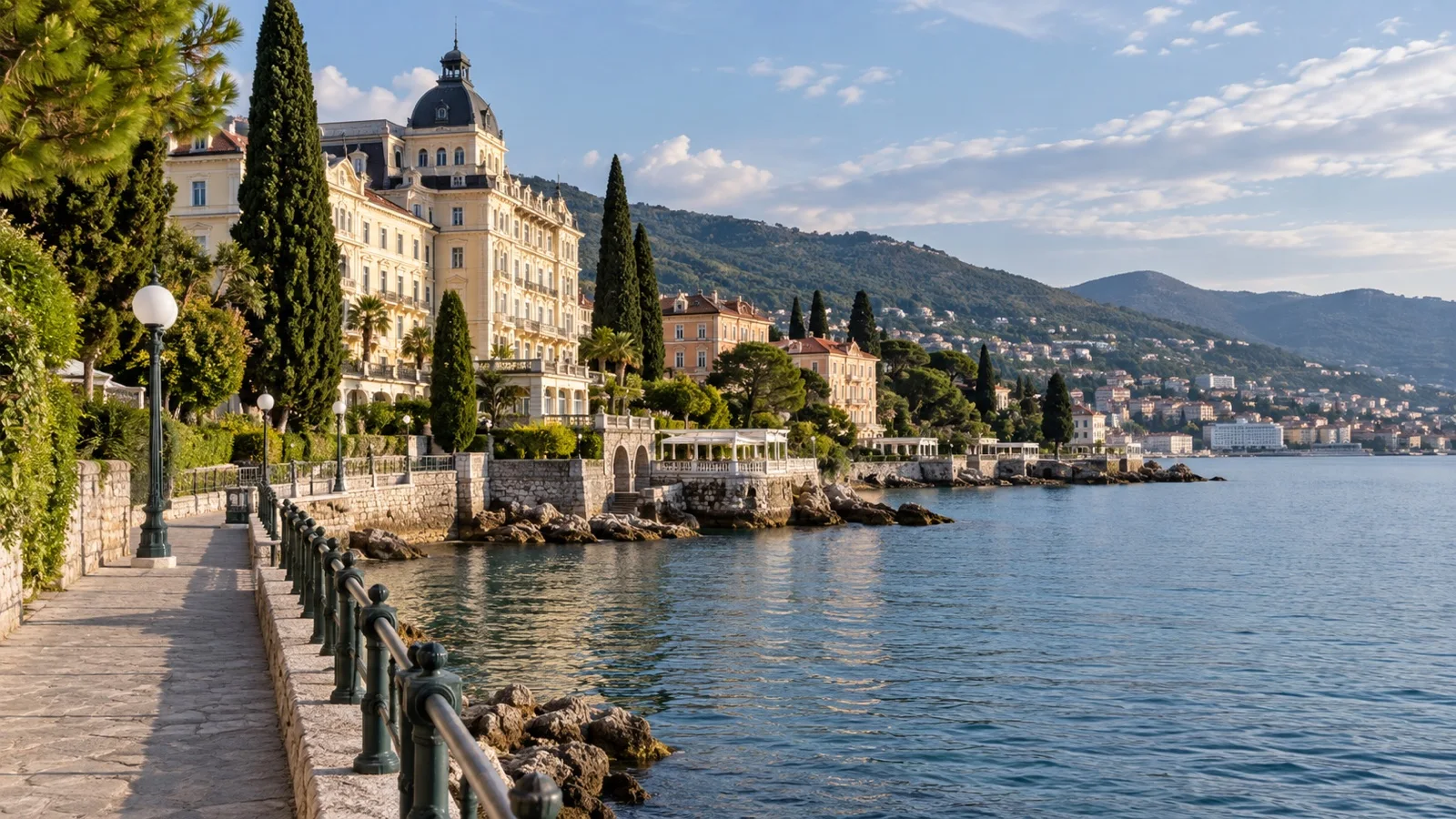
Do not reduce the plan to a road-time estimate from a map. Traffic, bus frequency, stop location, walking along the resort coast, and the return through Rijeka all need to fit inside the margin.
If traveling independently, choose a specific Opatija area and a firm turnaround time. A short walk near the center and a café is safer than trying to cover the entire Lungomare promenade before racing back.
The official Opatija Tourist Board is the right place to check current events, access, promenade information, and seasonal changes. Avoid copying a fragile admission price or timetable from a third-party blog.
Učka is a mountain excursion, not an add-on
Učka Nature Park rises behind the coast and offers forest, karst, hiking, viewpoints, and the Poklon Visitor Centre. The park identifies Vojak as its highest peak and places the visitor center at about 930 meters above sea level.
Weather at altitude can differ sharply from the sunny waterfront. A proper outing needs official trail information, appropriate footwear, water, a weather check, and transport that waits or has a reliable return schedule.
The park’s marked routes vary in difficulty, and natural surfaces are not automatically accessible. A cruise call is not the occasion for an improvised hike whose distance, ascent, and mobile coverage you have not checked.
Kvarner coast options beyond Opatija
The wider Kvarner region includes coastal towns, islands, beaches, and cultural sites, but each extra transfer increases the risk of a missed return. Choose a destination because it offers something you cannot get in central Rijeka, not because it appears on a broad shore-excursion list.
Boat trips are especially sensitive to wind and sea conditions. Confirm the operator, departure point, safety equipment, cancellation plan, and latest realistic return before paying.
A regional excursion is most comfortable through the cruise line when the distance is substantial or the route crosses a known traffic bottleneck. Independent travelers should carry offline contact details and have a backup return option.
Weather can change the entire call
Rijeka’s coastal climate brings summer heat, sudden rain, and strong local winds. The bora can make an exposed breakwater uncomfortable and may affect marine operations even when the sky looks clear.
Carry water, sun protection, a light waterproof layer, and shoes with grip. Check Croatia’s official weather service and the ship’s operations message on the morning of the call.
In heavy rain, shift toward Korzo’s covered breaks, a museum, a café, or the market if open. On a windy day, avoid turning Molo Longo into a long out-and-back walk when conditions feel unsafe.
Entry documents and Schengen claims
Croatia is in the Schengen Area, but cruise passengers should still follow the document instructions for their complete itinerary and nationality. A sailing can involve external borders, shipboard inspection, or cruise-line rules that a city guide cannot determine.
Use the official European Union travel portal and Croatia’s government information for current Entry and Exit System or ETIAS status. Do not pay an unofficial authorization website or assume a planned launch date means the system is already operating.
Carry the passport or ship-issued identification named in the daily program. Keep a digital copy stored securely, but remember that a copy does not replace an original when authorities require it.
Money, language, and connectivity
Croatia uses the euro, and cards are common in central Rijeka. Keep a modest backup payment method for small vendors, transport, or a network failure, and use bank-linked ATMs with clearly displayed terms when possible.
Croatian is the official language, while English is common in tourism and the city center. Save Trsat Castle, the cruise berth, and the port entrance on your phone so a driver knows the exact places you mean.
Visit Rijeka provides free Wi-Fi information for the city, but never let connectivity determine whether you can return. Download the map, tickets, operator contact details, and the all-aboard time before leaving the ship.
Return timing that protects the day
The ship’s all-aboard time is the fixed deadline, not the published sailing time. I return earlier than required, and I increase that buffer for Trsat, Opatija, Učka, or any tender operation.
If you dock far along the breakwater, include the full walk or shuttle wait in the return calculation. Reaching the waterfront is not the same as reaching the correct gangway.
For buses, check the direction as well as the route number and leave room for a missed departure. For taxis, store the driver’s details and avoid depending on finding an empty car at a remote viewpoint.
Three Rijeka plans that work
The easy city day
Walk to Korzo, pass through the City Tower, explore the Old Town, and visit the market while it is active. Add one museum or café, then return along the waterfront with time to spare.
The city plus Trsat day
Take a taxi or current city bus uphill, explore the castle and shrine area, then return to central Rijeka for Korzo. Use the historic stairs only if fitness, weather, footwear, and time all support the descent or climb.
The regional day
Choose either Opatija or Učka through a reserved transport plan and make it the main event. Add only a brief city walk after returning if the buffer remains intact.
Common Rijeka cruise questions
Can I walk from the ship to Korzo?
Often yes from a central berth, but the exact distance depends on your assigned quay and authorized port exit. A position farther along Molo Longo can add a substantial exposed walk.
Does every ship dock at Molo Longo?
No, berth assignments vary and some calls may anchor and tender. Use the cruise line’s final information for your sailing.
Is Trsat walkable from the center?
It is physically walkable, but the historic route includes more than 500 steps and a meaningful climb. A bus or taxi is the practical choice for many cruise passengers.
Can I see Rijeka and Opatija in one call?
Yes on many longer calls with controlled transport, but the city portion should remain focused. Traffic and the final port approach need to be included in your turnaround time.
Is the breakwater just a cruise terminal?
No, Visit Rijeka presents Molo Longo as both a passenger terminal and promenade with deep importance in the city’s harbor development. It is a useful viewpoint when weather and port access allow.
What is the best plan in bad weather?
Keep the day central with Korzo, a museum, the Old Town, market buildings, and café breaks. Avoid exposed coastal or mountain plans when official warnings or operators advise against them.
My bottom line for Rijeka
Rijeka is most rewarding when you let its maritime identity lead the day. The breakwater, Korzo, City Tower, market, industrial heritage, and Old Town explain a city shaped by trade, shifting borders, and the Adriatic.
Add Trsat for the high view, or choose one regional outing when the schedule is generous. Verify the berth, port exit, tender or shuttle operation, transport, weather, attraction access, and all-aboard time before committing.
Continue planning with our Croatia cruise ports guide and our Dubrovnik cruise port guide. Our excursion versus DIY guide helps compare regional transport risk.
How this guide was researched: This guide was independently checked on September 11, 2026, against Visit Rijeka, Autotrolej, the Učka Nature Park, the Opatija Tourist Board, and current official port and cruise-line instructions. Reconfirm the berth, port exit, documents, transport, accessibility, weather, attraction access, and final return before sailing because live conditions can change.