Oban Cruise Port: Anchorage, Tenders and the Town
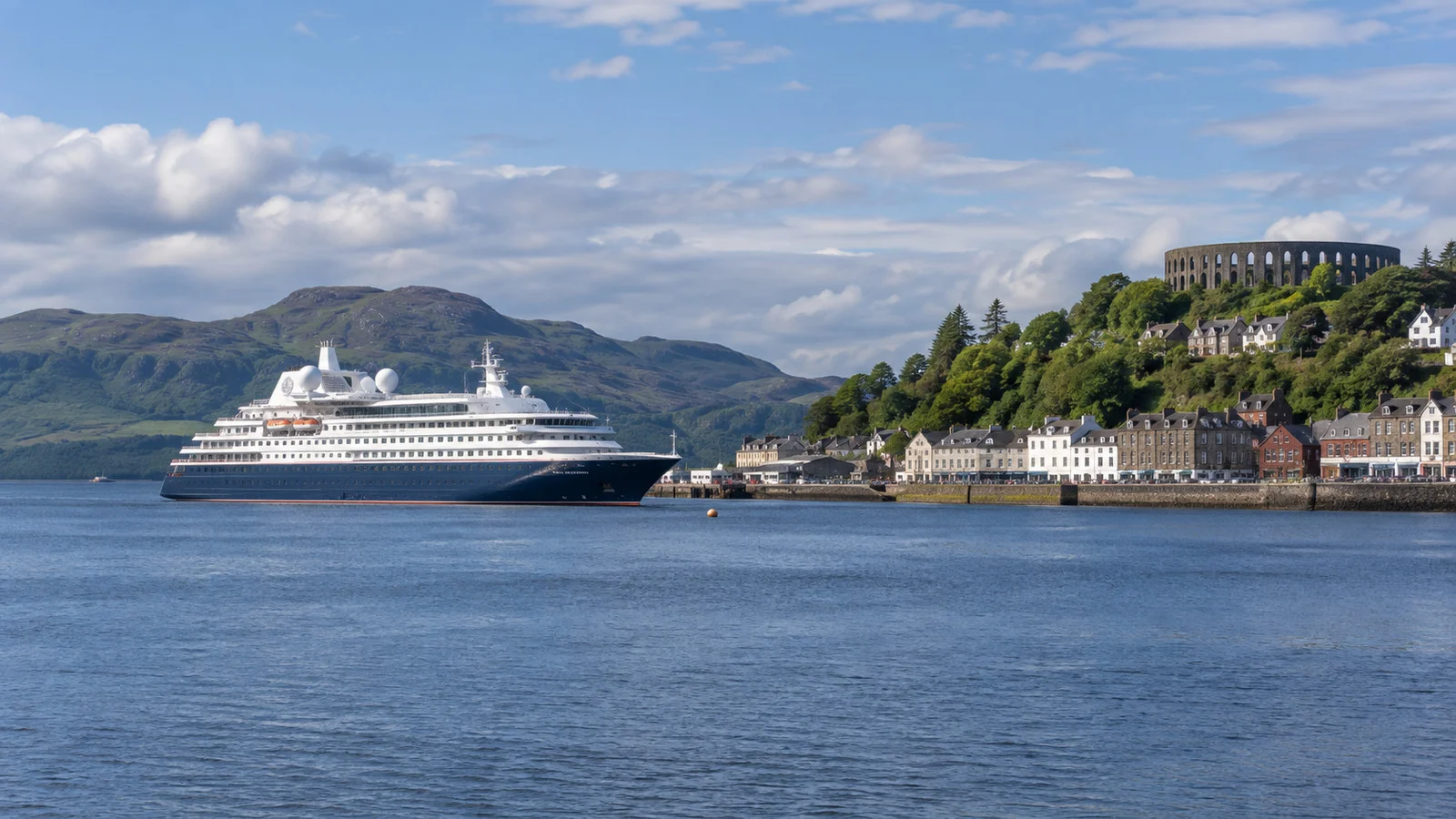
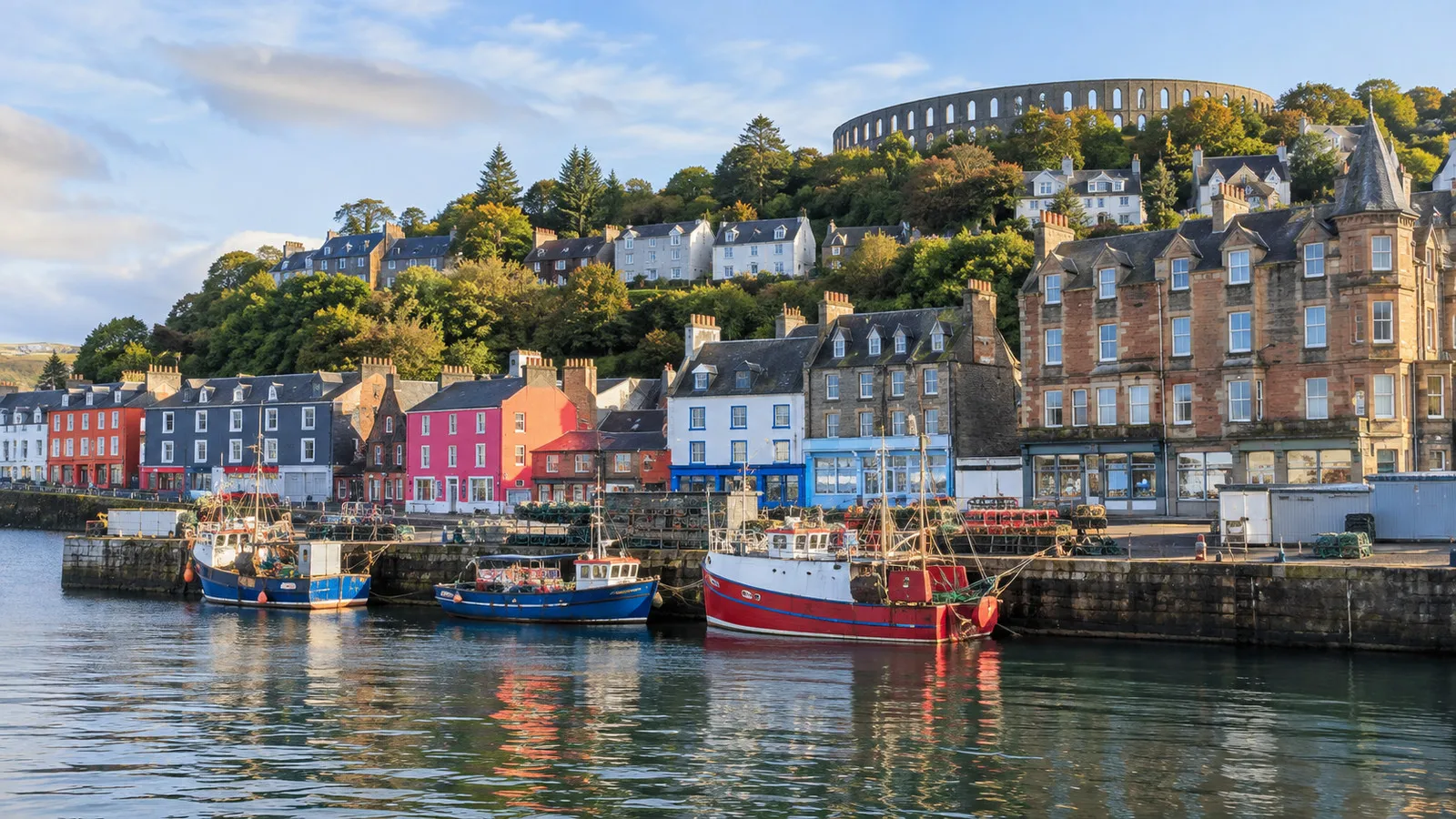
Oban is the kind of Scottish port that looks ready-made for a cruise day. Fishing boats and island ferries move across the bay, seafood counters line the waterfront, and a granite tower watches from the hill above town.
Large cruise ships normally anchor and carry passengers ashore by tender, so the sea sets the pace before your sightseeing even begins. Once you land, however, Oban is compact, friendly, and easy to enjoy without an elaborate plan.
Oban cruise port quick facts
- Country: Scotland, United Kingdom
- Port type: Busy working harbor and CalMac ferry hub
- Large cruise ship arrival: Usually at anchor, with passengers transferred ashore by tender
- Official anchorage guidance: Oban Harbour lists three recognized positions for vessels over 24 meters and cruise vessels
- Large-ship anchorage: Anchorage 4 is the harbor authority’s only recommended position for large cruise ships in Oban Bay
- Town access: The waterfront, shops, restaurants, and railway station are close together once ashore
- Currency: Pound sterling
- Best local views: McCaig’s Tower, Oban Bay, Kerrera, and the surrounding islands
- Best local flavors: Seafood and Scotch whisky
- Essential check: Confirm tender arrangements and the final boat time with your cruise line
My quick take
Oban is at its best when you resist the urge to turn it into a race across western Scotland. A distillery visit, McCaig’s Tower, fresh seafood, and time along the harbor can make a complete day.
If your call is long and your ship offers a well-timed excursion, the castles and landscapes beyond town are tempting. An independent ferry trip to Mull is a different proposition, because your cruise tender and the public ferry operate on separate clocks.
Where cruise ships anchor in Oban
The Oban Harbour anchorage page lists three recognized anchorages for cruise vessels and other ships over 24 meters. Anchorage 4, near Dunollie, is the only one it specifically recommends for large cruise ships in Oban Bay.
The authority notes that large cruise ships up to 179 meters have anchored between that charted position and Sgeir Ratheid Reef when depth allowed. Those are navigational details for the ship’s bridge, not a promise that every visiting vessel will use exactly the same spot.
Smaller expedition vessels and yachts may have different arrangements, including berths or moorings appropriate to their size. Your cruise line’s daily program remains the reliable source for whether you will tender, where you will land, and when the final boat departs.
Why the harbor can feel busy
Oban is a lifeline port for the Hebridean islands, with CalMac ferries serving destinations including Mull, Lismore, Coll, Tiree, Colonsay, and Barra. Commercial vessels, fishing boats, tour boats, and leisure craft share the same water.
The harbor authority describes the bay and the north end of the Sound of Kerrera as busy and sometimes congested. Tender drivers follow harbor instructions and established vessel routes, so a short distance on the chart does not always mean an instant ride.
How the tender day works
Your ship decides when tender tickets are needed and which passengers have priority. Guests on ship excursions often receive assigned departures, while independent travelers may have to collect a numbered ticket or wait for open tendering.
Build both the outward and return boat rides into your schedule. The printed port hours are not the same as usable time ashore, because launching boats, loading passengers, harbor traffic, and sea conditions all take time.
The tender landing can vary with operations, so listen for the announcement rather than planning around an old map pin. Once ashore, identify the return queue, photograph the last-tender notice, and save the ship’s local contact number.
Tender service can slow or stop when the master judges conditions unsafe. There is no responsible fixed cancellation percentage to rely on, and a calm forecast does not override what the crew sees beside the platform.
Getting around Oban
Central Oban is delightfully walkable after the tender. The railway station, ferry terminal, harborfront businesses, and main shopping streets sit in a tight area, although the hill to McCaig’s Tower changes the effort level quickly.
Local buses and taxis can take you toward Dunollie, Dunstaffnage, or attractions outside town. Supply can be tight when a ship arrives, so prebook any journey that is essential to your plan and agree on the return pickup.
Do not assume every waterfront pier is interchangeable. Ferry approaches and working berths have controlled access, and the safe pedestrian route may be different from the shortest line shown by a map app.
Best things to do in Oban
Book an Oban Distillery experience
Oban Distillery sits in the center of town, an unusually convenient location for cruise passengers. Its compact site is woven into the streets around it, which helps explain why the distillery feels inseparable from the town.
Tours and tastings can sell out, and the product offered may change by date. Reserve only through the distillery’s official booking channel, then leave enough time on both sides for the tender queue.
A tour is not the right fit for every traveler, including those avoiding alcohol or managing steps and tight historic spaces. The harborfront, shops, and cafés provide an easy alternative while companions visit.
Climb to McCaig’s Tower
McCaig’s Tower is the ring of granite arches on Battery Hill, visible from much of Oban. The unfinished monument resembles a small Roman arena and encloses a public garden with wide views across the bay.
The reward is the panorama toward Kerrera, Mull, and the mainland hills, but the climb is steep enough to deserve real time. Follow the road for a steadier gradient, wear shoes with grip, and avoid squeezing this walk into the final hour ashore.
Cloud and showers can soften the distant islands without ruining the harbor view. If the hill is slick or your mobility is limited, a taxi toward the top can reduce the climb, though vehicle access and availability should be checked locally.
Explore Dunollie Museum, Castle and Grounds
Dunollie occupies a headland north of town, where a medieval castle ruin overlooks Oban Bay. The 1745 House Museum tells the story of the MacDougall family through objects, textiles, and local history.
The independent trust that runs Dunollie posts current hours, ticket information, events, and accessibility notes on its official website. Check it shortly before arrival, because days and hours can vary through the year.
The site combines ruins, grounds, and indoor collections, so it works well when the weather is changeable. Paths and historic spaces are not uniformly step-free, making the detailed accessibility information worth reading before you commit.
Walk the waterfront
A simple harbor walk may be the most satisfying part of the day. Watch ferries pivot toward the Railway Pier, look back at McCaig’s Tower, and follow the changing view toward Kerrera.
This is also the easiest plan to shorten if tender operations change. Stay aware of vehicle traffic around ferry facilities and obey any temporary barriers along the working waterfront.
Visit Dunstaffnage Castle and Chapel
Dunstaffnage Castle stands on a rocky promontory north of Oban, guarding the entrance to Loch Etive. Its heavy stone walls, ruined chapel, and sea views give you a much older Scotland than the Victorian town center.
Historic Environment Scotland manages the site, and access can change because of conservation work or weather. Check the official property page for current opening, ticket, and access information before arranging a taxi.
This is not a casual add-on by foot from the tender. Use a taxi, organized tour, or clearly researched bus plan, and secure the return rather than hoping a vehicle appears when you are ready.

Can you take the ferry to Mull?
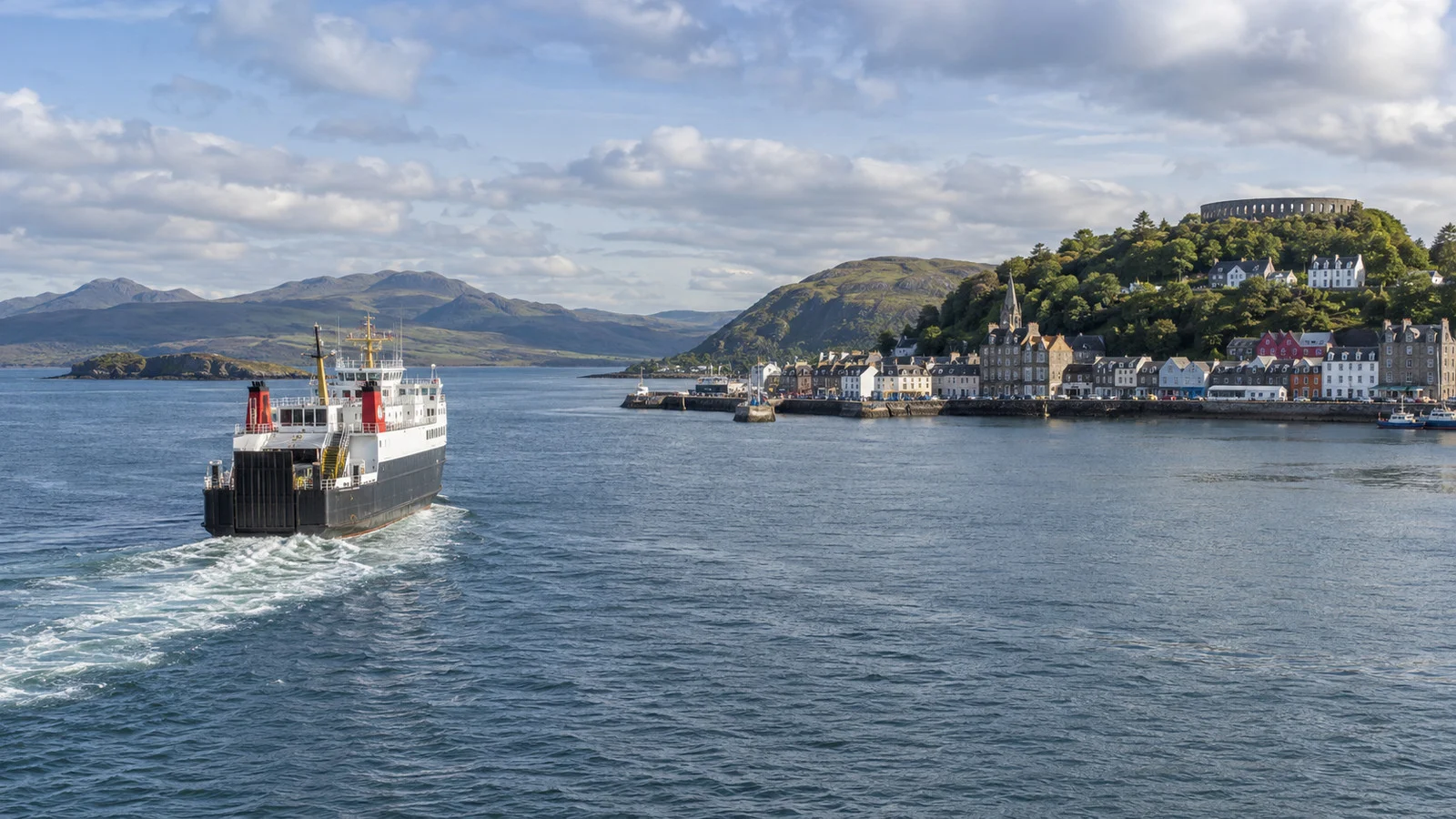
CalMac runs the public ferry between Oban and Craignure on Mull, and the temptation is obvious when the terminal is right in front of you. The problem is that public ferry schedules, check-in rules, delays, and your cruise tender are separate systems.
CalMac advises passengers to book in advance, even on foot, and to check its live route information before travel. Its current notice says a passenger-access problem at Craignure may lengthen turnarounds, so allow for delays and do not rely on a tight onward connection.
A missed or delayed return sailing could mean missing the last ship tender. Consider an independent Mull visit only on an exceptionally long call, with a generous fallback sailing and full acceptance of the risk.
A ship excursion to Mull or Iona changes the calculation because the cruise line coordinates transport and knows where its guests are. Even then, expect much of the day to be spent on ferries, roads, and transfers rather than lingering in Oban.
Food and drink near the harbor
Oban’s nickname as the seafood capital of Scotland is easy to understand beside the water. Look for local shellfish, smoked salmon, fish and chips, chowder, or a simple plate built around the day’s catch.
Popular seafood shacks and restaurants can develop lines when ferries and cruise tenders arrive together. Eat a little earlier than the traditional lunch rush or choose a place that lets you keep the harbor and tender landing in view.
Whisky appears everywhere, but you never need to drink to enjoy the town. Drivers should remember that Scotland’s alcohol limit is strict, and cruise passengers should pace tastings around sea travel and uneven tender steps.
Weather and tender risk
West coast weather is part of Oban’s character: showers, bright breaks, wind, and low cloud can all pass through one day. Dress in light layers and carry a waterproof shell rather than relying on a bulky umbrella.
The bay is sheltered by Kerrera, but the route between ship and shore can still become unsuitable for small boats. The captain’s decision is based on actual conditions, and no independent booking is more important than a safe transfer.
Check the UK Met Office forecast before leaving the ship, then follow onboard announcements. If your original excursion is canceled, central Oban gives you a strong fallback without another transport commitment.
Accessibility and slower-paced visits
The central waterfront is relatively compact, but it is not uniformly level or obstacle-free. Curbs, wet paving, ferry traffic, tender steps, and steep streets toward Battery Hill all deserve consideration.
Ask the cruise line about accessible tender procedures before arrival, because the ability to carry a wheelchair depends on the boat, equipment, sea state, and crew assessment. Never assume that being able to embark at one port guarantees the same transfer here.
A low-walking day can focus on the harborfront, a nearby café, shopping, and a taxi viewpoint. Dunollie publishes site-specific accessibility information, while other attractions should be contacted directly for current arrangements.
Three sensible Oban plans
The easy town day
Begin with a waterfront walk, then visit the distillery if you have a timed reservation. Have seafood for lunch and climb to McCaig’s Tower only if the sky, footing, and your energy make it worthwhile.
This plan stays flexible and keeps you close to the tender. Choose it after a late start ashore or when the crew expects conditions to worsen.
The local history day
Take a taxi or local transport to Dunollie, explore the museum and grounds, then return along the waterfront. Add McCaig’s Tower or lunch in town according to the clock rather than trying to force both.
Dunollie’s posted schedule should guide the order of the day. Confirm your return transport at the start, especially if several tours are moving through town.
The wider Argyll day
Join a ship excursion or arrange a driver for Dunstaffnage and selected viewpoints around Loch Etive. Keep the number of stops modest, because single-track roads, photo pauses, and changeable weather can stretch a schedule.
End back in central Oban with enough buffer for the tender. Anything you fit near the harbor after that is a bonus, not a reason to gamble with the final boat.
Common Oban cruise questions
Do all cruise ships tender in Oban?
Large cruise ships generally anchor and tender, with Anchorage 4 the harbor authority’s recommended position for large vessels. Smaller ships may have different approved arrangements, so check the information issued for your call.
How long is the tender ride?
The ride is usually short, but the total transfer time varies with anchorage position, harbor traffic, loading, and sea state. Plan around the announced tender schedule rather than a fixed minute estimate from a previous visit.
Is Oban easy without a tour?
Yes, once you are ashore. Central attractions, food, shopping, the station, and the ferry terminal are close together, while Dunollie and Dunstaffnage need more deliberate transport planning.
Should I book the distillery in advance?
Yes, if the experience is a priority. Choose a slot that allows for tender delays and do not book so late that the visit ends close to the final boat.
Can weather cancel the call?
Weather or sea conditions can prevent or interrupt tendering, even though Oban Bay has protection from Kerrera. Ignore unsupported online cancellation percentages and follow the ship’s real-time decision.
What should I verify that morning?
Check the tender ticket procedure, landing point, final boat time, forecast, and any excursion changes. If you are considering CalMac, also check live ferry status and the return sailing before leaving the ship.

The last word
Oban does not need a complicated itinerary to feel distinctly Scottish. The harbor’s constant movement, the granite arches above town, island views, whisky, and seafood are already a rich port day.
Let the tender schedule set your boundaries and keep one indoor fallback for rain. With that small amount of discipline, Oban becomes less a logistical puzzle and more the warm, salt-air gateway it ought to be.
About the author: Ellie writes practical cruise port guides for travelers who want clear choices, realistic timing, and room to enjoy the place.
These details were checked against current Oban Harbour, CalMac, and attraction information on September 12, 2026. Port conditions can change, so confirm tender arrangements, transportation, and all-aboard time with your cruise line.