Tórshavn Cruise Port: Turf Roofs, Weather & Free Buses
Tórshavn makes a wonderfully compact first impression: turf roofs, salt air, fishing boats, red timber buildings, and a serious working harbor gathered beneath green hills. The weather may rearrange your plans, but the city rarely makes the logistics feel intimidating.
I would give the capital a proper first hour before chasing the wider islands. Tinganes, Reyn, Skansin, the inner harbor, museums, and a cafe create a complete day, while Kirkjubøur is the cleanest extension when the current bus or a tour fits.
Tórshavn cruise port quick facts
- Arrival: Most cruise ships berth alongside in the working harbor, while tendering remains possible for operational reasons.
- Port access: A controlled shuttle may be required between the ship and public exit when the assigned quay is inside the industrial area.
- Best easy day: Walk Skansin, Tinganes, Reyn, the inner harbor, cathedral area, shops, and cafes.
- Best nearby extension: Kirkjubøur offers medieval and living heritage south of the capital.
- Local buses: Tórshavn’s red municipal Bussleiðin routes are free, while blue intercity SSL buses are a separate paid network.
- Currency: Danish kroner and Faroese banknotes are used, with cards widely accepted.
- Main caution: Wind, fog, rain, berth changes, and infrequent rural transport can reshape the day.
Find out exactly how you are arriving
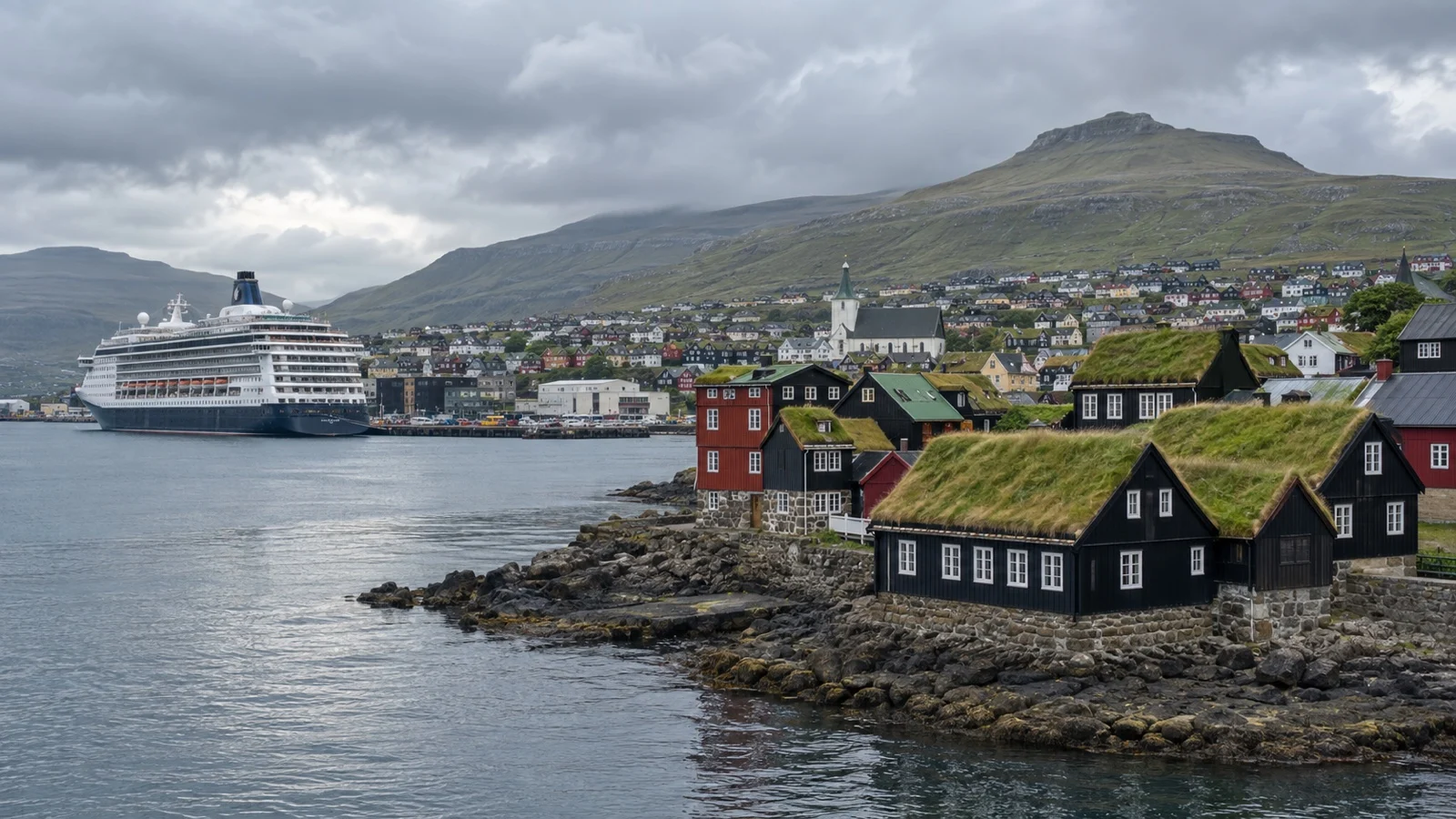
Most cruise calls berth alongside in the expanded commercial harbor, often on the eastern side of Tórshavn rather than at a polished downtown cruise pier. The Port of Tórshavn publishes current cruise calls and live harbor information, but your ship’s daily program determines the actual passenger route.
Some quays sit inside an active industrial area where unrestricted walking is not allowed. When required, a port shuttle carries passengers between the ship and public exit, which is different from an optional cruise-line sightseeing transfer.
Tendering remains possible when berth availability, vessel size, wind, swell, or port traffic prevents an alongside operation. A tender day changes mobility access and return timing, so do not build a plan from a generic map before the ship confirms the method.
If an independent guide is meeting you, send the ship name and ask for the precise pickup point. Port gate, cruise berth, tender landing, and ferry terminal can describe different locations around the same harbor.
Start with Skansin
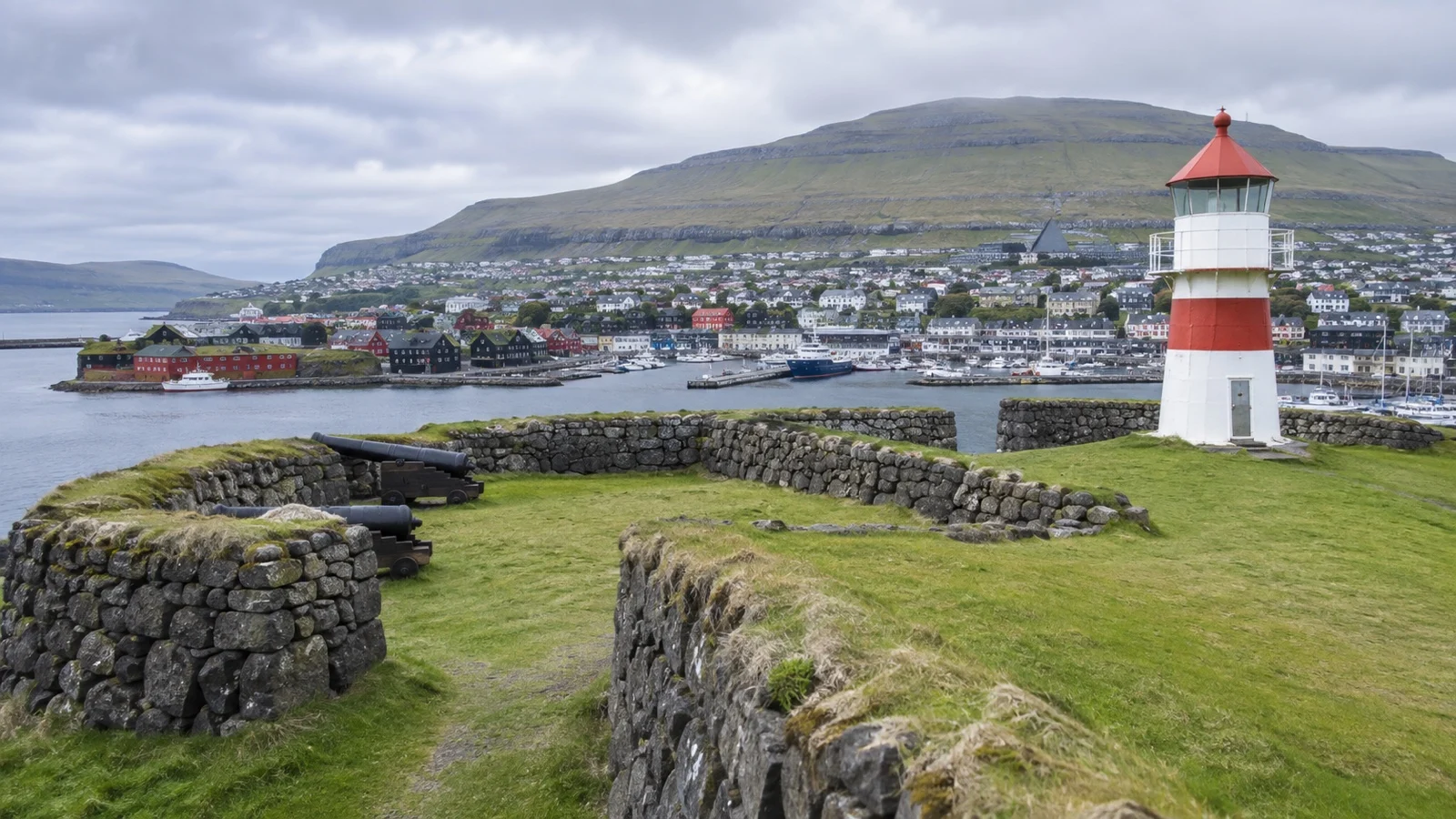
Skansin is the historic fort on the harbor’s eastern side and often forms the natural first stop after leaving the port. Its lighthouse, guns, grass, and views across the water introduce Tórshavn without placing a vehicle or timetable between you and the ship.
The grounds can be exposed to wind and rain, with uneven surfaces and slopes. Stay behind barriers, follow any access restriction, and remember that the view remains worthwhile without climbing every edge.
Tinganes and Reyn
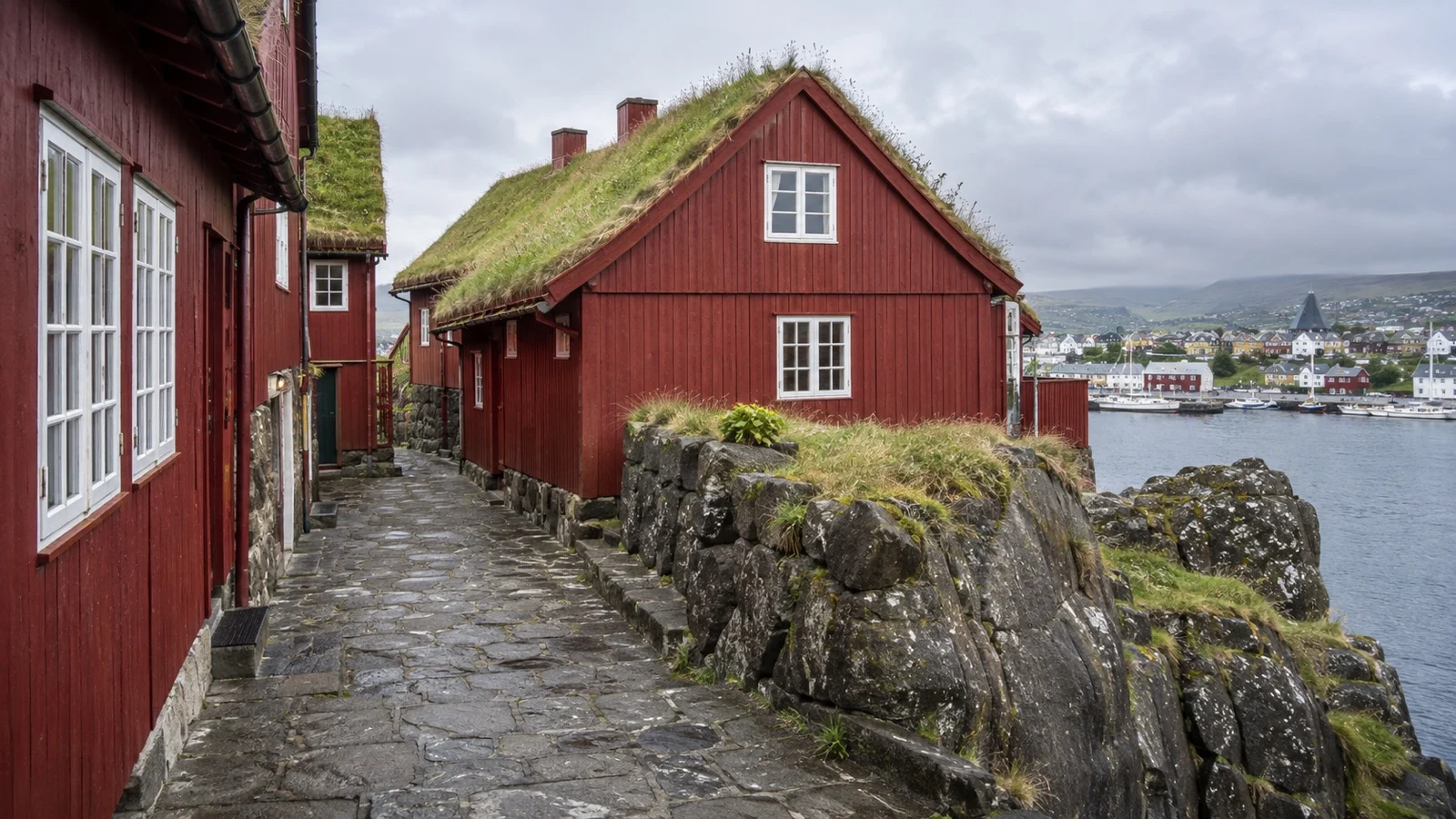
Tinganes is the rocky peninsula where red timber government buildings wear turf roofs as if this were ordinary office dress. The narrow lanes of neighboring Reyn add black-tarred houses, grass roofs, and intimate harbor glimpses.
These are working buildings and homes rather than a historic theme park. Explore quietly, do not peer through windows, avoid blocking doorways, and ask before photographing residents at close range.
Stone, timber walks, and old lanes can become slick. Shoes with grip matter more than elegant cruise footwear, especially after a quick shower.
The inner harbor and cathedral
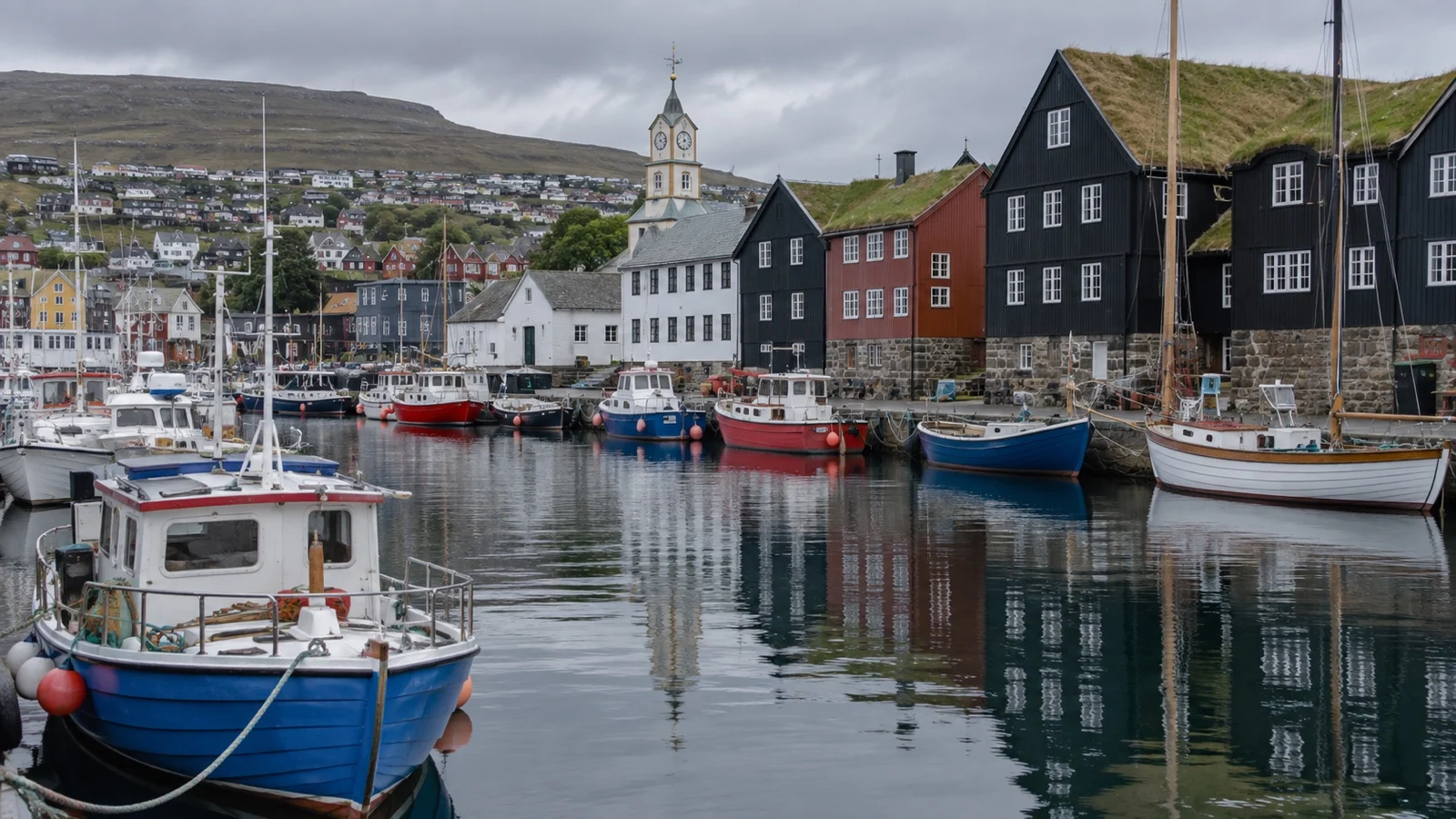
Continue around the inner harbor toward Vaglið, Tórshavn Cathedral, shops, and cafes. This compact loop gives you a strong sense of the capital while keeping the ship within a manageable distance.
The cathedral is modest and welcoming in scale, which suits the city. Services, funerals, weddings, and community use take priority, so enter only when open and maintain quiet.
Fishing vessels, ferries, pleasure craft, and service traffic share the waterfront. Keep to pedestrian areas and watch for wet surfaces, ropes, moving vehicles, and unguarded edges.
Free red buses that are genuinely useful
Tórshavn Municipality operates the red Bussleiðin buses, and its current official page says the system is free for residents and visitors. Four urban routes run daily at least hourly, while all city lines converge at Steinatún and most also meet at Á Hálsi.
The municipal page provides route maps, timetables, and real-time tracking through the SONA app. Download the relevant schedule before leaving the ship because live data is a convenience rather than a return guarantee.
A free fare does not make an infrequent route flexible. Identify the exact stop, direction, departure, and backup before boarding, especially outside central Tórshavn.
Free city bus does not mean every island bus is free
The blue intercity Bygdaleiðir buses are operated separately by Strandfaraskip Landsins, commonly shortened to SSL. They charge fares, accept current payment methods listed by the operator, and follow schedules designed for island travel rather than cruise calls.
Do not assume a red bus and blue bus connect perfectly because both appear on one journey planner. Leave room for transfers and remember that an island route may offer no convenient backup before all-aboard.
Kirkjubøur is the best extension
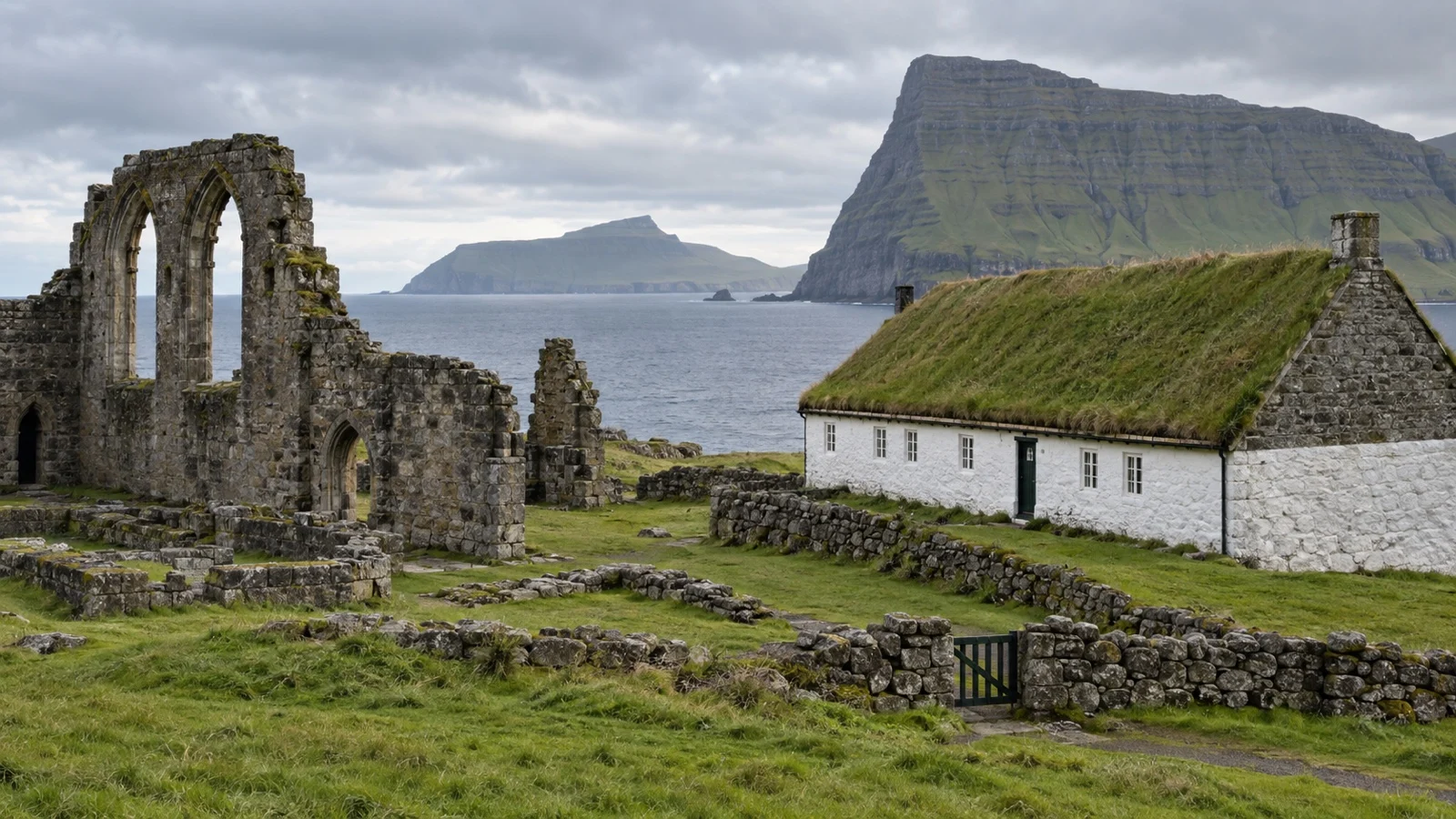
Kirkjubøur is the Faroes’ great historic village, with the medieval Magnus Cathedral ruins, whitewashed Saint Olav’s Church, and the old Roykstovan farmhouse clustered above the water. It feels dramatically different from the capital without requiring an island marathon.
Current municipal information lists free route 5 to Kirkjubøur on weekdays and route 7 on Saturdays. Sunday and holiday options can differ, so use the live dated timetable rather than repeating a route number from memory.
A taxi or organized tour provides more control when the call is short or the public schedule leaves only one sensible return. Agree on the fare, waiting time, pickup point, and port drop-off before departure.
Respecting a living heritage village
Kirkjubøur is not an open-air museum without residents. Follow signs, stay on permitted paths, keep voices low around homes and churches, and pay any required admission or local fee.
Weather can sweep across the coast quickly, making stone and grass slippery. Carry waterproof layers and shorten the visit rather than risking the only practical bus home.
Museums for mixed weather
National Museum of the Faroe Islands
The National Museum in Hoyvík interprets archaeology, boats, religious art, geology, farming, fishing, and daily life across the islands. It is an excellent choice when the landscape is hiding behind rain or fog.
Check the official opening day and bus route before leaving central Tórshavn. Museum schedules can change seasonally, and an attraction outside the center deserves a confirmed return connection.
National Gallery and Viðarlundin
Listasavn Føroya, the National Gallery, sits near the green park called Viðarlundin. Faroese art and a sheltered museum visit pair beautifully with a walk through the park when showers pause.
The route includes some slope, but remains within the capital. Verify opening hours and accessibility, then allow time for a cafe instead of forcing another distant stop.
The Nordic House
The Nordic House hosts exhibitions, performances, architecture, and cultural events in a distinctive turf-roofed building. Its public program varies, so check the official calendar before traveling across town.
A bus or taxi can reduce the uphill effort. If no exhibition is open, the central harbor offers more reward than waiting outside a closed venue in sideways rain.
Nólsoy by ferry
The ferry to Nólsoy leaves near central Tórshavn and the crossing can look temptingly simple. Wind, schedule changes, boarding limits, and the need for a reliable return make it an advanced cruise-day choice.
Use the current SSL timetable for the exact date and identify at least one backup sailing that still leaves a generous ship margin. If the schedule offers only one safe return, stay in Tórshavn or choose a ship excursion.
Never assume the cruise ship will wait because the same public authority operates local transport. An independent ferry delay remains your responsibility.
Distant island scenery
Saksun, Gjógv, Tjørnuvík, Vestmanna, and famous viewpoints on Vágar appear close on a small map. Tunnels, single-lane roads, fog, sheep, traffic, and rapidly changing weather make independent timing less predictable than the distance suggests.
A ship-sponsored excursion or reputable local guide is the sensible format for distant scenery. Ask for the exact route, walking difficulty, weather backup, and return commitment before booking.
Do not build an itinerary that crosses several tunnels simply to collect village names. One landscape understood slowly is more memorable than six places seen through wet glass.
Hiking on a cruise call
Faroese walks range from easy urban paths to steep exposed routes across private land. Some hikes require fees, local guides, permission, or seasonal restrictions, and signage does not always communicate difficulty in the way visitors expect.
Use Visit Faroe Islands’ current hiking and safety guidance, check the weather repeatedly, and tell someone your route. A cruise call is not the moment for an unplanned ridge walk when fog is forming.
Stay on the approved path, close gates, keep distance from livestock, and avoid nesting birds. Do not approach sheep for photographs or cross cultivated fields without permission.
Accessibility and mobility
An alongside gangway can make arrival manageable, but its slope changes with tide and berth conditions. Ask the cruise line about gangway gradients, port shuttles, wheelchair securement, and scooter dimensions before sailing.
A tender operation may prevent some mobility devices or travelers from going ashore when transfers are unsafe. The ship controls that decision on the day and sea conditions can change it quickly.
Central Tórshavn includes manageable waterfront sections, but Reyn, Tinganes, Skansin, and hillside museums introduce cobbles, uneven stone, slopes, and slippery surfaces. Contact each attraction for the exact step-free entrance and restroom access.
Municipal buses may be useful, but verify ramp or lift access and space for the specific device. Reserve an accessible taxi rather than assuming one will wait at the port.
Four seasons can share one hour
The Faroes are famous for rapidly changing wind, rain, fog, and sun. Dress in breathable layers with a truly waterproof outer shell, secure hood, warm midlayer, and shoes that grip wet stone.
Umbrellas are often less useful in strong wind than a good hood. Protect electronics and documents in a waterproof pouch, and keep gloves or a hat available even in summer.
Check the Faroese Meteorological Office, Port of Tórshavn, local transport, and ship messages close to arrival. A sunny harbor does not prove that a ridge, tunnel, or western village has the same conditions.
Food, money, and small comforts
Tórshavn’s restaurants and cafes can turn a wet day into a highlight. Look for Faroese seafood, lamb, rye bread, soups, pastries, and contemporary Nordic cooking, while recognizing that imported food and island logistics affect prices.
Reservations help for a special lunch, but keep the meal inside the return plan. Tell staff when you need to leave and request the bill early if the ship uses a distant commercial berth.
The Danish krone is used, and Faroese banknotes circulate at equal value within the islands. Cards and mobile payments are common, while Faroese notes may be difficult to exchange or spend outside the Faroes.
Carry a small backup payment method and avoid withdrawing more local cash than the day requires. Blue SSL buses are paid even though red municipal routes are free.
Language and connectivity
Faroese is the national language, Danish is widely understood, and English is commonly spoken in visitor settings. Learning a greeting is appreciated, while saved destination names help when accents and wind compete.
Mobile coverage is generally good in populated areas but can weaken in tunnels, valleys, and remote terrain. Save tickets, maps, port details, and operator contacts offline.
Entry documents and special status
The Faroe Islands are a self-governing territory within the Kingdom of Denmark and sit outside the European Union. Their immigration status has special rules, so a visa valid for mainland Denmark or the Schengen Area may not automatically cover the Faroes.
Check the relevant Danish immigration authority and your cruise line for your nationality and full itinerary. Carry the passport, ship card, and any landing document specified in the daily program.
A layered return plan
An alongside day still requires time for the walk or shuttle through the working port and security. A tender day adds the shore queue, small-boat loading, weather, and crossing.
For a central city day, I would be near the public port entrance at least 45 to 60 minutes before the published cutoff. After Kirkjubøur, Nólsoy, or a distant island tour, I would add substantially more margin.
This is a planning preference, and the cruise line’s all-aboard or last-tender time always controls. If fog thickens or buses fall behind, remove the final stop and return immediately.
Three realistic Tórshavn cruise-day plans
Compact capital day
Walk Skansin, Tinganes, Reyn, the inner harbor, cathedral area, and central shops. Add the National Gallery or a long cafe stop when showers arrive, then return to the port early.
Kirkjubøur and old town
Use a dated free bus, taxi, or tour to Kirkjubøur, verify the return before departure, and come back for a short Tinganes walk. Do not add a distant village after the connection works.
Museum and viewpoints day
Use the red buses or a taxi for the National Museum, National Gallery, or Nordic House, choosing no more than two. Finish around the harbor where the weather plan can shrink without disappointment.
Common planning mistakes
The first mistake is assuming every ship berths at a downtown passenger pier. Commercial quays and tendering can require a controlled transfer.
The second is treating every Faroese bus as free. Red municipal routes cost nothing, while blue SSL buses are a separate paid network.
The third is copying a Kirkjubøur timetable without checking the weekday. Route patterns change across weekdays, Saturdays, Sundays, and holidays.
The fourth is forcing a distant scenic loop through bad weather. Fog and wind can hide the view while making the return more difficult.
Tórshavn cruise port FAQ
Can I walk from the ship into Tórshavn?
Often, but the exact berth may require a port shuttle through the industrial area. Follow the day’s marked passenger route.
Do cruise ships tender?
Most calls berth alongside, while tendering remains possible because of ship size, traffic, berth availability, or weather. Confirm the method on board.
Are Tórshavn buses really free?
The red municipal Bussleiðin city and village routes are free for visitors. Blue SSL intercity buses charge fares.
Is Kirkjubøur possible without a tour?
Yes, when the dated municipal bus timetable offers a comfortable outbound and return connection. A taxi or organized tour gives more control on a short call.
What if the weather turns?
Stay close and switch to museums, shops, cafes, and the sheltered inner harbor. Do not wait on an exposed trail for conditions to improve.
What is best for a short call?
Keep the day in central Tórshavn with Skansin, Tinganes, Reyn, the cathedral area, and lunch. This plan delivers the city’s character with the smallest transport risk.
My bottom line on Tórshavn
Tórshavn proves that a small capital can fill a cruise day without trying too hard. Turf roofs, working harbor life, Faroese history, art, food, and fierce weather all sit within a compact frame.
Confirm berth or tender, learn the difference between red and blue buses, and let the forecast edit the itinerary. That flexibility is not a compromise in the Faroes; it is the essential local travel skill.
Keep planning your North Atlantic cruise
Continue with our guides to Faroe Islands cruise ports, Reykjavik cruise port, and Bergen cruise port. Recheck the ship’s daily program after arrival because berths, port shuttles, tenders, and final boarding can change.