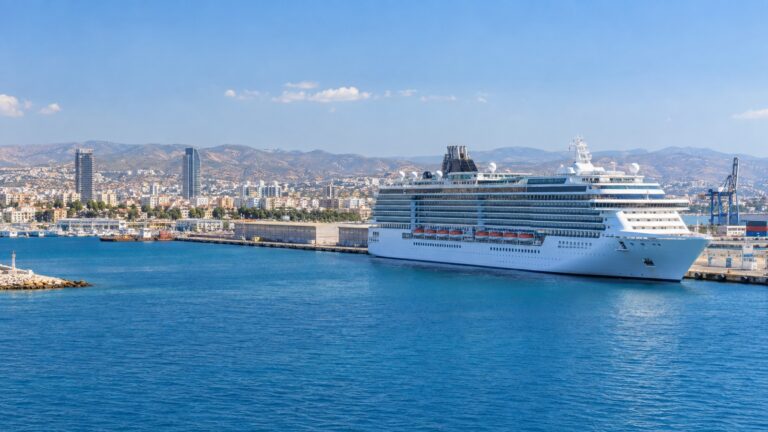
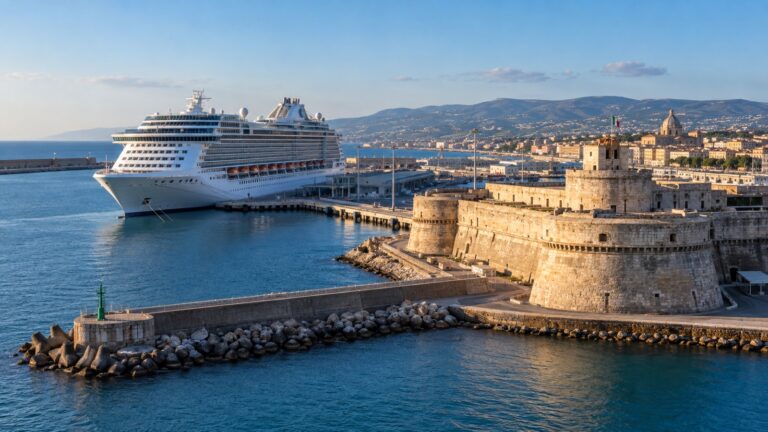
Kos Cruise Port: Berth, Tender, Town and Asklepieion
Kos is the kind of port that can make a cruise day feel almost too easy. The harbor opens directly into a town of palms, bicycles, ancient stones, Italian-era avenues, beaches, and tavernas, while the island’s great healing sanctuary sits only a short drive inland.
The only uncertainty comes before you step ashore. Kos supports alongside calls, but ship size, ferry traffic, wind, and the day’s berth plan can still put a vessel at anchor with tenders.
Quick Facts
- Arrival: Kos can receive cruise ships alongside or at anchor with tenders, depending on the vessel and harbor plan.
- Into town: Central Kos Town begins just beyond the public port exit.
- Signature excursion: The Asklepieion, reached most efficiently by taxi or organized tour.
- Currency: Euro, abbreviated EUR.
- Language: Greek, with English common in visitor services.
- Time: EET in winter and EEST during summer time.
- Road rule: Traffic drives on the right.
- Best return rule: Allow at least an hour from town and more from the Asklepieion, beaches, or an island drive.
Kos Has Two Possible Front Doors
The Hellenic Ports Association identifies cruise and passenger facilities at Kos, including quay space and an anchorage. That infrastructure allows some cruise ships to berth close to town without promising an alongside position to every vessel.
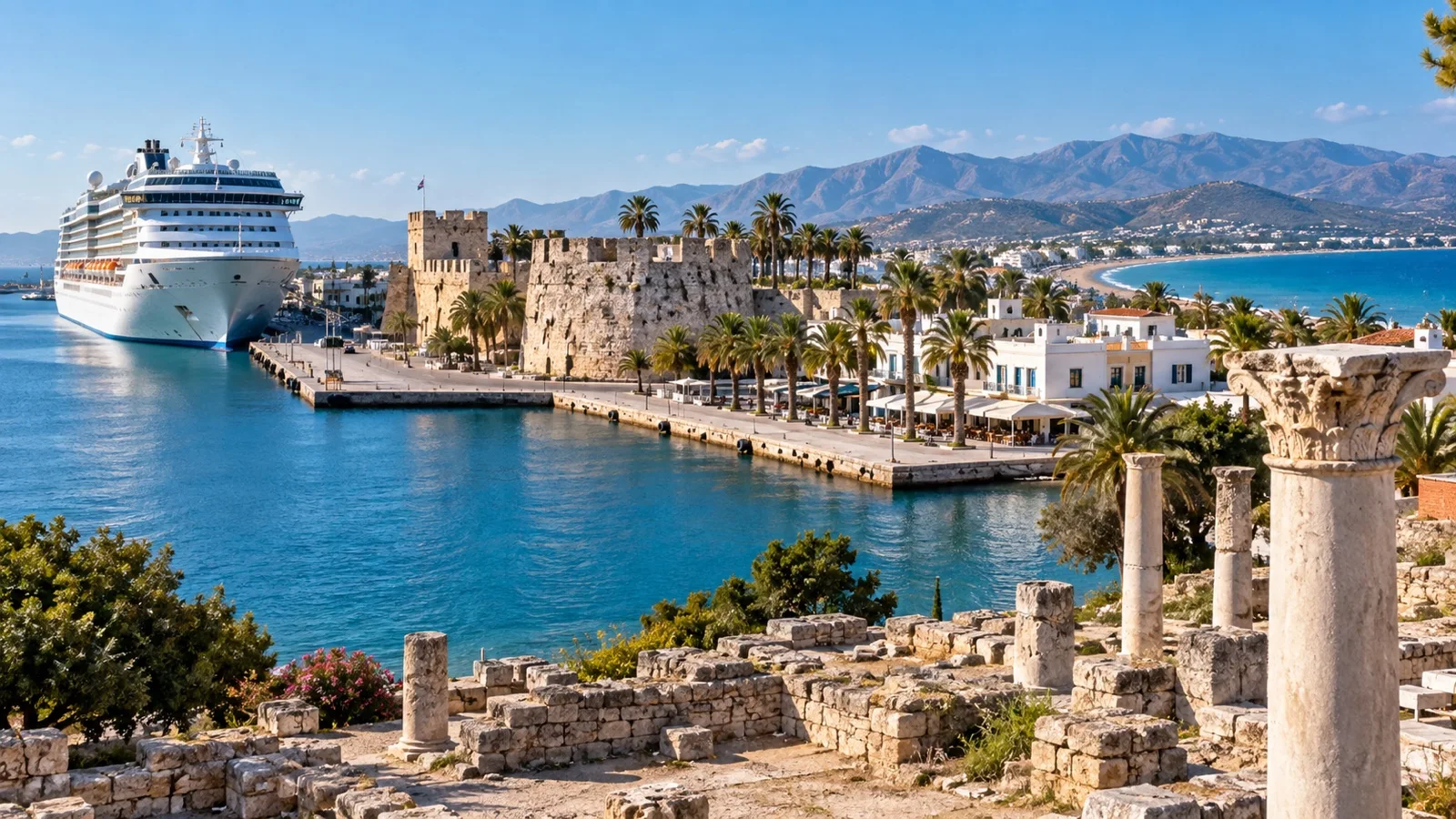
An alongside call gives passengers a gangway and short walk through the port. An anchored call adds tender tickets, loading, sea conditions, and a last-boat deadline to the day.
Read the ship’s program for the exact berth or tender landing, port gate, identification requirements, and all-aboard time. Do not assume the arrival will match a photograph from a previous sailing.
Kos harbor also handles ferries, excursion boats, and local traffic. Follow passenger signs and never step through a fenced operational area simply because town appears close on the other side.
Kos Town Begins at the Harbor
Once you reach the public side of the port, the town is immediately useful. Cafes, taxis, shops, cycle rentals, archaeological areas, and waterfront paths all sit within a compact center.
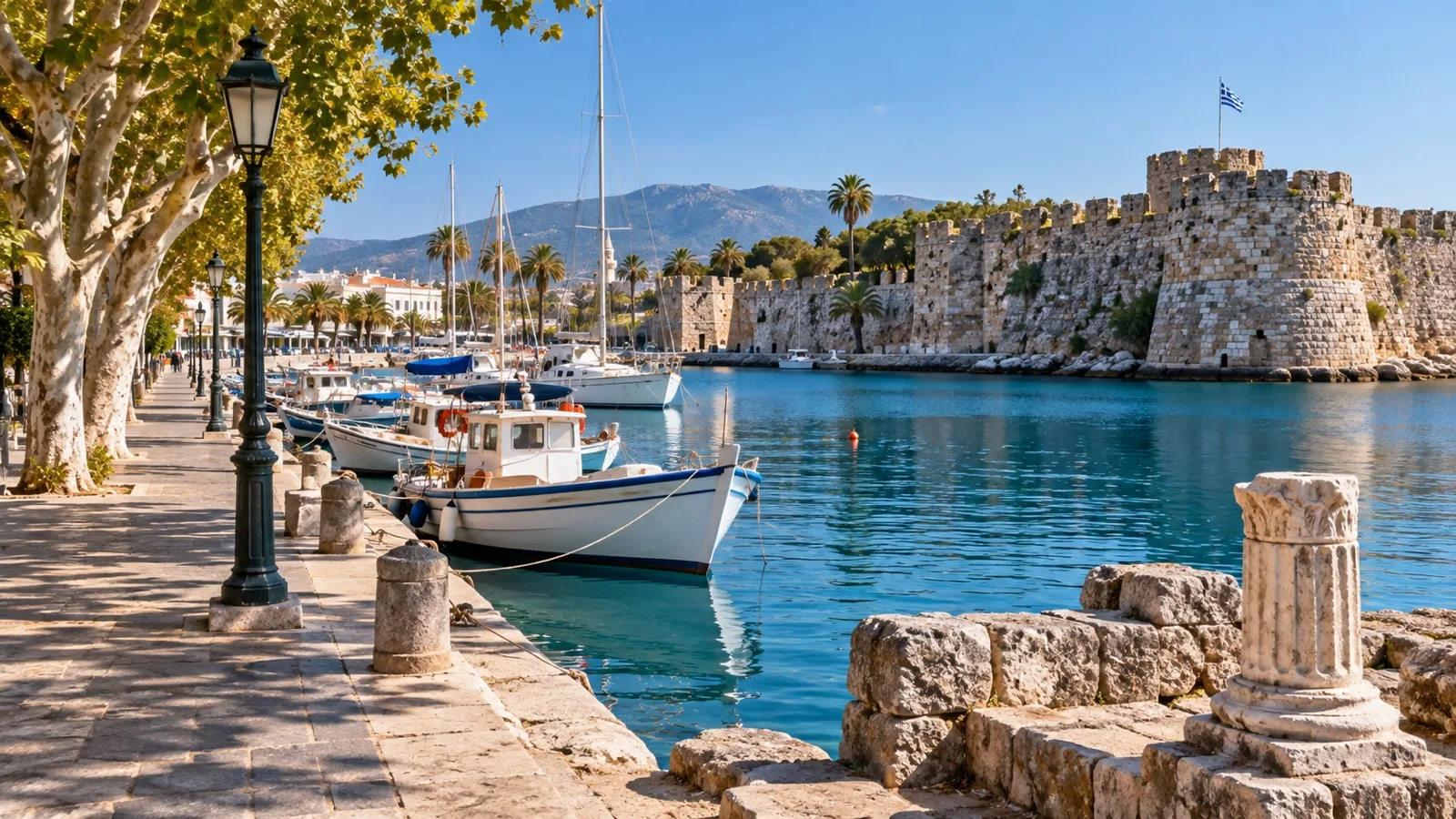
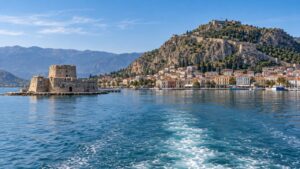
The harbor landmark is the Castle of Neratzia, also called the Castle of the Knights. Earthquake damage and restoration have affected access over time, so check the Hellenic Ministry of Culture’s current notice rather than assuming the interior is open.
Even when the gate is closed, the exterior, bridge area, palms, and harbor views help explain the strategic position. Build a town route that remains complete without castle entry.
Kos is unusually good for a flexible day because open-air ruins appear between ordinary streets. The Ancient Agora, Roman Odeon, Western Archaeological Zone, and other remains can be connected without a long transfer.
The Hippocrates Story Needs Some Care
Hippocrates is traditionally associated with Kos and remains central to the island’s identity. The Plane Tree of Hippocrates near the castle is a beloved landmark, but the present supported tree should not be presented as a proven place where the ancient physician personally taught.
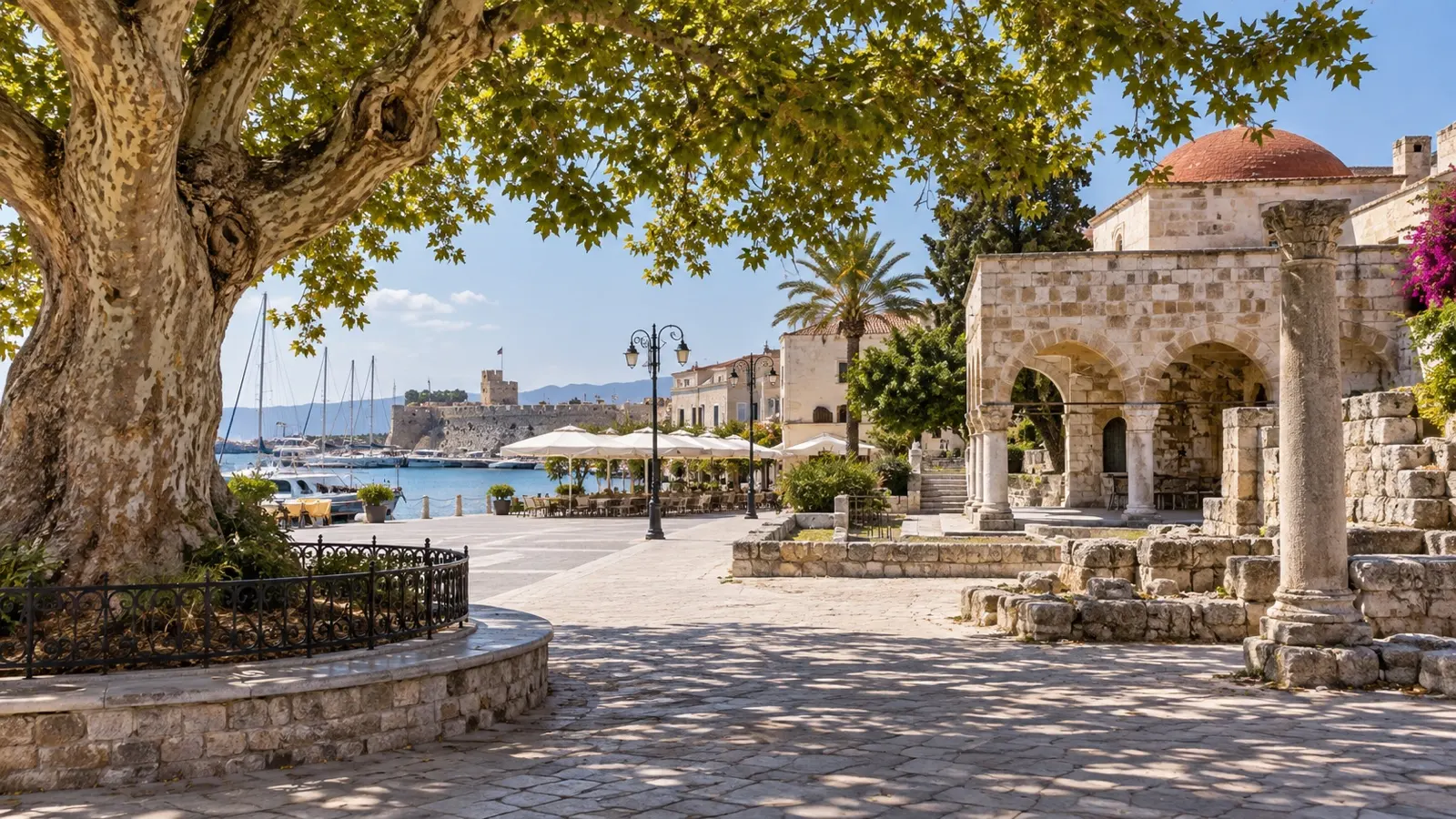
Treat the tree, nearby fountain, and square as part of a longer cultural story. The Asklepieion provides the archaeological setting for understanding healing, worship, teaching, water, and landscape in the ancient world.
The Archaeological Museum can add context through sculpture and objects from the island when open. Check current hours, ticket rules, and any gallery closures before building the day around an interior visit.
One well-chosen museum plus the open-air town sites is enough. Kos rewards the connections between eras more than a race through every ticket office.
A Walkable Kos Town Route
Begin at the harbor and castle exterior, pause at the Plane Tree square, then angle through the Ancient Agora. Continue toward Eleftherias Square and the Archaeological Museum before deciding whether to add the Roman Odeon or Casa Romana.
This route mixes open sites with cafes and shade, which helps in summer heat. It can be shortened immediately if the tender starts late or a site is closed.
Ancient surfaces are uneven and modern crossings can be busy with bicycles, scooters, and cars. Watch for curb changes and do not step backward into a cycle lane while framing a photograph.
Town squares also reflect Ottoman, Italian, Greek, Jewish, and earthquake history. A knowledgeable walking guide can make those layers visible without requiring a bus excursion.
The Asklepieion Deserves Its Own Block of Time
The Asklepieion stands on terraces southwest of Kos Town, in a green setting with views back toward the coast. It was a sanctuary of Asklepios and a place connected with healing practice, worship, and medical learning.
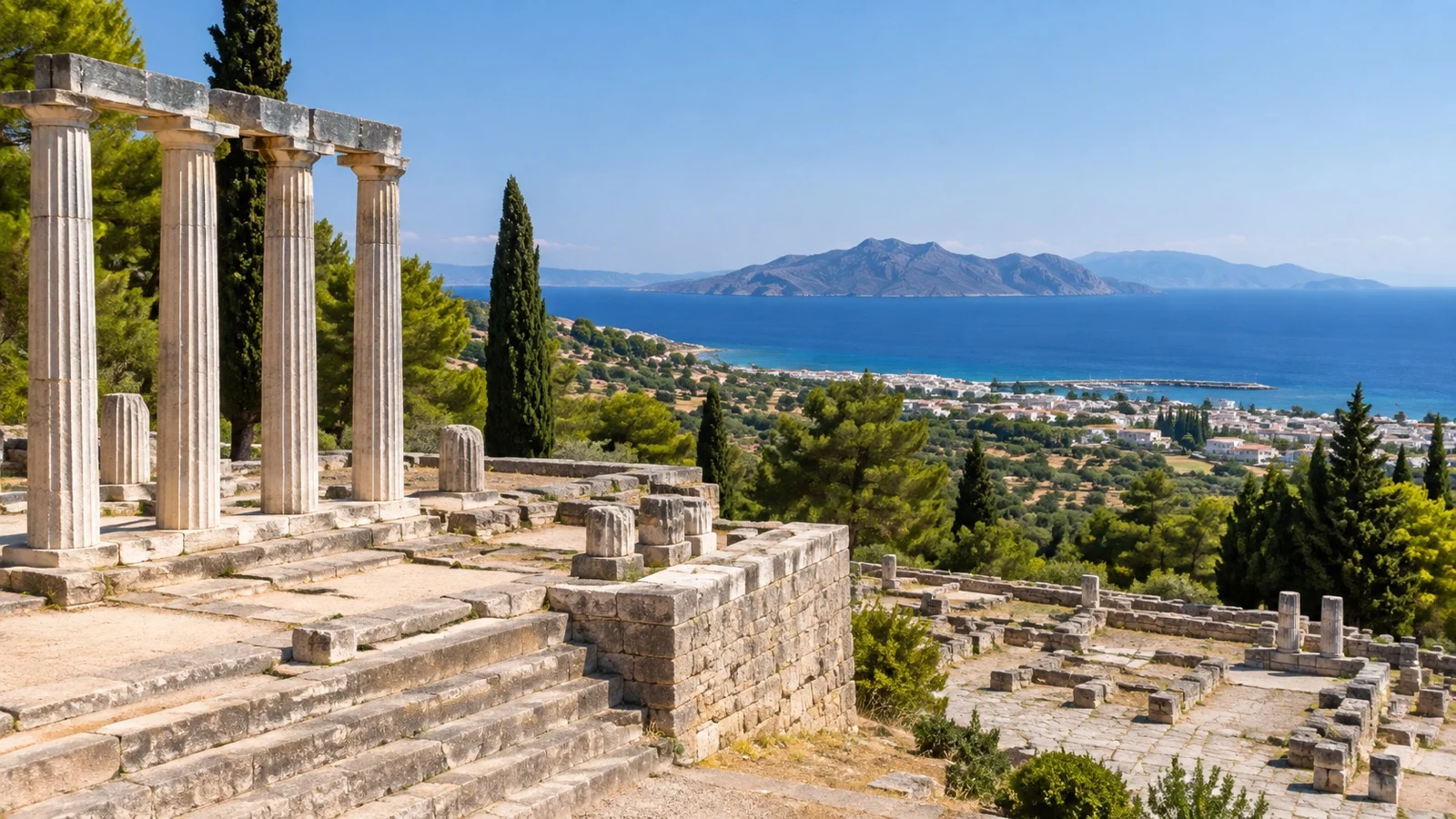
The site is close enough to tempt an impulsive visit and substantial enough to punish one. Allow roughly 75 to 90 minutes inside, plus the ride, ticketing, heat, and a return buffer.
Multiple terraces, broad stairways, uneven stone, and limited shade make the physical effort more important than the mileage. Start early when possible and carry water.
Use the designated entrance, never climb or sit on ancient structures, and follow current photography rules. The Hellenic Ministry of Culture controls hours, seasonal schedules, holiday closures, and any temporary restrictions.
Taxi to the Asklepieion
A licensed taxi offers the cleanest independent timing. Ask the driver to wait or agree on a precise pickup because an empty taxi may not be ready when you finish.
Confirm the meter or official fare approach before departure and save the driver’s contact. Show the ship time as well as the time you want to be back in town.
Organized Tour
A ship excursion or port-aware local tour adds transportation and interpretation. It is a strong choice for first-time visitors, reduced mobility, or a call with tender uncertainty.
Read the walking description carefully because “panoramic” does not mean step-free. Ask how much shade, seating, and free time the tour includes.
Bicycle
Cycling to the Asklepieion is possible for confident riders, but the inland route adds heat, navigation, traffic, and climbing. It is not the same gentle experience as following the flat waterfront path toward Lambi.
Inspect brakes and tires, wear a helmet, carry water, and keep a taxi backup number. Return the bicycle early enough to solve a lock, mechanical, or billing problem before all aboard.
Kos Is Cycle-Friendly, Not Risk-Free
Kos Town has a visible cycling culture and flatter terrain than many Greek island ports. Marked paths and rental shops can make a short coastal ride one of the most enjoyable ways to see the waterfront.
Pedestrians, mopeds, delivery vehicles, intersections, heat, crosswinds, and lane endings still require attention. Ride predictably, obey signals, and never hold a phone while moving.
Lambi is the simplest cruise-day direction because it stays close to town and follows the coast. Psalidi can also work for experienced riders who confirm the route and wind.
A bicycle is transportation with a failure mode. Carry the rental contact, basic lock instructions, and enough cash for a taxi if the bike cannot be ridden back.
Beaches Near Kos Town
Lambi
Lambi extends north from Kos Town and is the easiest beach to combine with archaeological sightseeing. Walk, cycle, taxi, or use current local transport depending on heat and mobility.
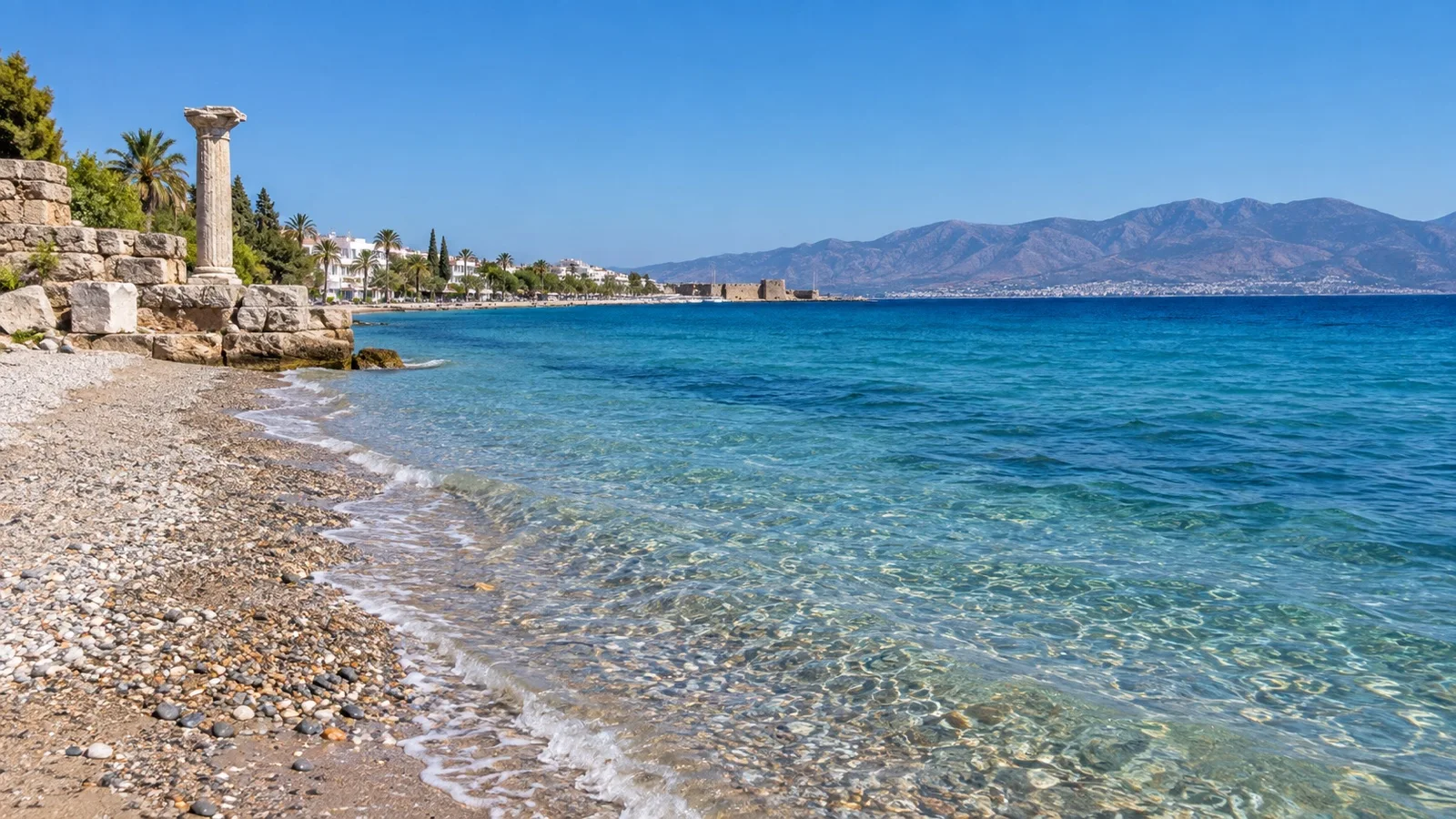
Beach surfaces, wind, loungers, showers, restaurants, and lifeguard coverage vary by stretch and season. Choose the section that has the services you need rather than the first patch of sand.
Psalidi and Agios Fokas
Psalidi lies east of town along a coastal corridor with resorts and organized beach areas. Agios Fokas sits farther along the same general direction and requires more return planning.
The meltemi and other winds can make the water choppy and cycling harder on one leg. Ask about the day’s beach flags and plan for the return headwind.
Tigaki
Tigaki is a broader resort beach west of town and works best by taxi, bus, or organized outing. It is farther than Lambi and should be the beach focus rather than a casual addition after a long archaeological morning.
Check the current KTEL Kos schedule in both directions. Seasonal frequency, stop location, traffic, and a full bus can turn a simple beach day into a tight return.
Therma Beach and Hot-Spring Reality
Therma Beach on the southeast coast is known for warm spring water mixing with the sea. The experience depends on weather, sea conditions, water temperature, access, and current local safety guidance.
The final approach has involved steep or rough ground, and conditions can change after storms. Do not assume an older path description or accessibility claim still applies.
Use a taxi or established excursion, arrange the return, and wear suitable footwear. Avoid the pool if local authorities close it or if heat and medical conditions make immersion unwise.
Village and Island Drives
Zia, Pyli, Antimachia, wineries, mountain viewpoints, and distant beaches can create a rewarding island circuit. Kos is longer than the compact harbor view suggests, so choose two or three meaningful stops rather than every advertised highlight.
Zia is popular for village lanes and elevated views, with traffic and parking pressure at busy times. A cruise-day visit is best with a driver who knows where to meet after the walk.
Antimachia can add a traditional windmill, village character, or castle landscape depending on current access. Verify opening hours before driving across the island for one interior.
A ship excursion protects the return when the route reaches the center or west. An independent driver should receive the all-aboard time in writing and plan to finish near the port.
Public Buses Require the Current Schedule
DEAS serves urban Kos routes, while KTEL Kos operates many island connections. A route name on an old travel page does not establish the current stop, frequency, or seasonal timetable.
Use each operator’s official dated information for the Asklepieion, beaches, and villages. Confirm whether the schedule applies to weekdays, Sundays, holidays, or a particular season.
Photograph the return schedule at the stop and choose a service with a backup. Keep enough money and time for a taxi if the bus is delayed or full.
Public transport works best for one direct destination. Two transfers, a beach, and a tender deadline create more risk than the fare savings justify.
Bodrum Is Close and Still a Poor Cruise-Day Gamble
The Turkish coast is strikingly close to Kos, and ferries connect the island with Bodrum. That geographic closeness hides international border control, separate ticketing, check-in, marine schedules, and a second country’s entry rules.
A delayed ferry or immigration line can separate you from the cruise ship. Save Bodrum for a land trip or use a cruise-line excursion specifically designed around the call.
The same caution applies to independent trips to Nisyros, Kalymnos, or other islands. Every additional ferry creates another departure you cannot control.
If the ship sells an island excursion, read the cancellation plan and walking description. A protected return is valuable, but weather can still change the destination.
Entry Rules and Schengen Checks
Kos is part of Greece and follows Greek and Schengen entry rules. Visa needs, passport validity, permitted stay, and border procedures depend on nationality and the voyage’s previous and next ports.
The European Entry and Exit System affects covered non-EU short-stay travelers at Schengen external borders, while a voyage between internal Schengen ports may follow a different clearance process. The cruise line and border police control the actual sequence for your sailing.
Use official Greek and European Union sources for current requirements. Do not pay a private seller for an authorization that official authorities have not yet launched or said you need.
The ship may retain passports or clear passengers collectively, but that does not erase an underlying visa requirement. Carry the ship card and identification named in the daily program.
Archaeological Rules and Ethical Shopping
Kos Town’s ruins and the Asklepieion are protected sites rather than open climbing areas. Use the entrance, stay off ancient walls, and never remove stone, pottery, shells, or other material.
Receipts matter when buying art, jewelry, fossils, or antiquity-style objects. Greece strictly protects cultural property, and a seller’s casual assurance does not replace legal export documentation.
Leave ship food onboard when local agricultural or customs rules prohibit it. A sealed snack bought ashore is simpler than carrying fruit or meat across a controlled border.
Weather, Heat, and Wind
Summer is hot, dry, and bright, while spring and fall can bring cooler temperatures, rain, and more changeable sea conditions. Wind influences tendering, cycling, beaches, and small-boat excursions.
Put the Asklepieion and exposed ruins early in the day, then use lunch or a museum during the strongest heat. Carry water, sun protection, a hat that stays attached, and shoes with grip.
The harbor may feel sheltered while an east-facing beach is choppy or an inland road is gusty. Check each activity separately instead of applying one forecast to the whole island.
Wildfire danger rises during hot, dry, windy periods. Follow Greek civil protection alerts, obey road and trail closures, and never smoke near vegetation.
Accessibility and Reduced Mobility
An alongside berth is simpler than a tender, but gangway angle, distance, port surface, and heat still require call-specific information. Ask the cruise line whether an accessible shuttle or assistance must be reserved.
A tender involves steps, a moving gap, crew handling limits, and a changing sea state. The ship can restrict powered scooters, wheelchairs, or passenger transfer even when the morning looks calm.
Kos Town offers relatively level waterfront routes, while archaeological zones include rough stone, curb changes, gravel, and limited shade. The Asklepieion’s terraces and stairs make a full visit demanding.
Ask the site or tour operator what can be seen without climbing all levels. A scenic lower-terrace experience may be worthwhile even when the complete route is not suitable.
Accessible taxis are limited and should be arranged ahead with device dimensions, weight, ramp or lift needs, and securement. Confirm the vehicle rather than a generic promise of accessibility.
Beach accessibility is seasonal and location-specific. Boardwalks, assisted-sea equipment, toilets, and staff may not operate outside peak months.
Money, Food, and Connectivity
Kos uses the euro, and cards are widely accepted in town and established businesses. Carry some cash for buses, taxis, a small cafe, or a terminal outage.
Use bank-affiliated ATMs and decline dynamic currency conversion when your own bank offers the better rate. Keep only the day’s money accessible in crowded harbor areas.
A bakery breakfast, meze lunch, grilled fish, salads, and local cheese can fit naturally between sights. Ask about market-priced fish before ordering and explain allergies clearly.
Mobile service is generally good around town and the developed coast. Save bus schedules, tickets, berth or tender details, and port contacts offline anyway.
Three Port Days That Work
Town and Asklepieion
Take a taxi or organized tour to the Asklepieion early, give the site proper time, then return for the harbor, open-air ruins, museum if open, and lunch. This is the strongest first visit.
Keep the castle interior optional because current access can change. The town remains rewarding even when one gate is closed.
Town and Lambi
Walk the harbor and ancient core first, rent a well-maintained bicycle or take a taxi toward Lambi, and finish with a swim or waterfront meal. Stay close enough to return without an island bus.
This plan works especially well on a medium call or after a slow tender. It balances culture with the sea without creating a complicated schedule.
One Island Circuit
Book a ship tour or private driver for Zia, a village, and one beach or archaeological stop. Finish in Kos Town with enough time to walk back through the correct port gate.
Do not add an international ferry or multiple distant resorts. A focused loop shows more of Kos because you spend less time negotiating pickups.
Return Timing by Radius
From central Kos Town, begin moving toward the port at least 45 to 60 minutes before the ship’s deadline. Tender passengers should be at the landing well before the published final boat.
From Lambi or the Asklepieion, allow at least 90 minutes. From Tigaki, Zia, Therma, or a wider island circuit, plan around two hours when traffic, taxi supply, or bus schedules add uncertainty.
These are conservative planning ranges rather than replacements for the ship’s instructions. If the line sets an earlier all-aboard or last tender, that time wins.
Save the port gate, ship time, agent number, and driver contact offline. “Kos harbor” is not precise enough when ferries and excursion boats use different areas.
The Mistakes I Would Avoid
I would not assume the ship will berth because another vessel did last week. Kos can use a quay or anchorage, and the entire accessibility and timing plan changes.
I would not ride to the Asklepieion without testing the bicycle or evaluating heat and hills. A short distance can still become a difficult return.
I would not take the final useful bus from a beach or the final ferry from another country. One delay should never threaten the ship.
I would not treat the supported Plane Tree as a literal object from Hippocrates’ lifetime. The tradition matters without making a claim the evidence cannot carry.
Final Planning Advice
Confirm berth or tender first, then make the Asklepieion, Kos Town, one beach, or one island circuit the anchor. Leave enough empty space for heat, a closed site, and a slow lunch.
Kos offers more history within walking distance than many ports offer after an hour on a bus. Let the harbor and ruins do most of the work, then choose one deliberate trip beyond town.
Return through the port before the clock becomes urgent and watch the castle recede from the deck. A calm ending is the right final chapter for this island.
Planning more Greek island calls? Explore our other CruisePorts.co guides for practical port-day ideas, and confirm live details with your cruise line before sailing.