Denmark Cruise Ports: The Complete Guide to Every Stop
Denmark is wonderfully easy to underestimate from a cruise map. Copenhagen gets the headlines, but Aarhus, Aalborg, Skagen, Fredericia, Rønne, and Ærøskøbing reveal how much character can fit into a compact waterfront day.
I would build a Danish itinerary around pace as much as attractions. The capital deserves extra time, while the smaller calls are at their best when you resist the urge to turn every harbor into a long coach excursion.
Quick Facts
- Best first visit: Copenhagen for landmarks, museums, food, and transport
- Best compact city day: Aarhus for waterfront design and major museums
- Best northern atmosphere: Skagen for light, dunes, and two meeting seas
- Best island call: Rønne for Bornholm or Ærøskøbing for a tiny storybook town
- Currency: Danish krone, with cards widely used
- Planning rule: Verify the exact terminal, shuttle, and all-aboard time for your sailing
Copenhagen
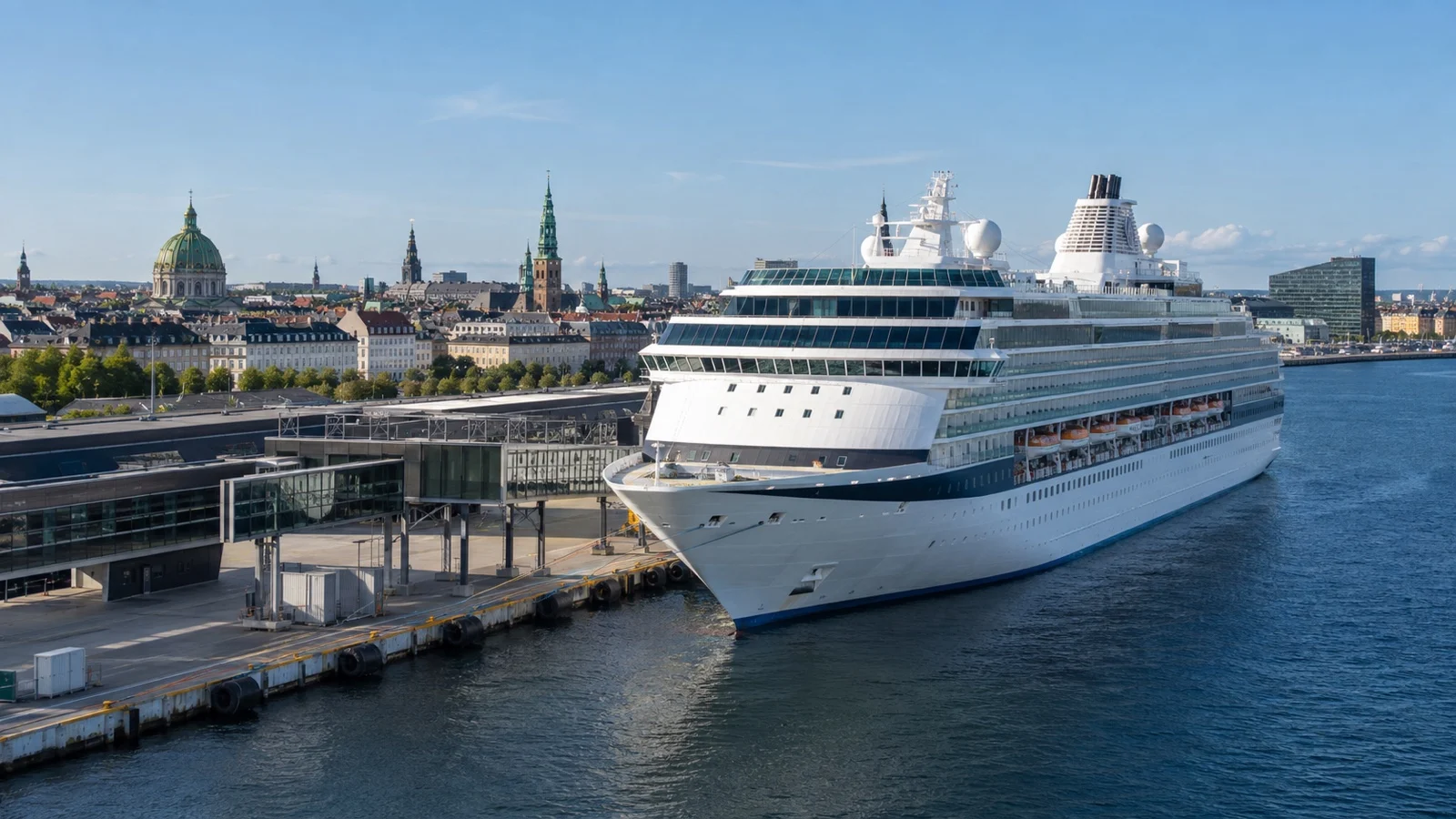
Copenhagen is Denmark’s essential first call and one of northern Europe’s great embarkation cities. The crucial detail is terminal assignment because Oceankaj, Langelinie, Nordre Toldbod, and other operational berths do not share the same walk, bus, train, or taxi plan.
Oceankaj is the large turnaround area north of the center and normally requires public transport, a cruise shuttle, or a taxi. Langelinie is much closer to the Little Mermaid and central waterfront, while Nordre Toldbod can make independent walking feel remarkably easy.
For one day, I would choose a geographic loop rather than a greatest-hits sprint. Nyhavn, Amalienborg, the waterfront, and one major museum or palace make a satisfying route with time left for coffee or an open sandwich.
Tivoli, the National Museum, Christiansborg, Rosenborg, and the canals all deserve attention, but they do not need to fit into the same call. Copenhagen is an excellent place to arrive two nights early because jet lag and luggage are poor companions for a tightly timed sightseeing day.
The city’s buses, metro, trains, and harbor buses form an excellent network, yet the first and last mile still depend on the berth. Check official journey planning on the morning itself because engineering work, events, and seasonal cruise buses can change the best route.
If the cruise begins here, stay close to the experience you want rather than automatically booking near the dock. A central hotel makes the city enjoyable, then a prebooked taxi can simplify luggage on embarkation morning.
Aarhus
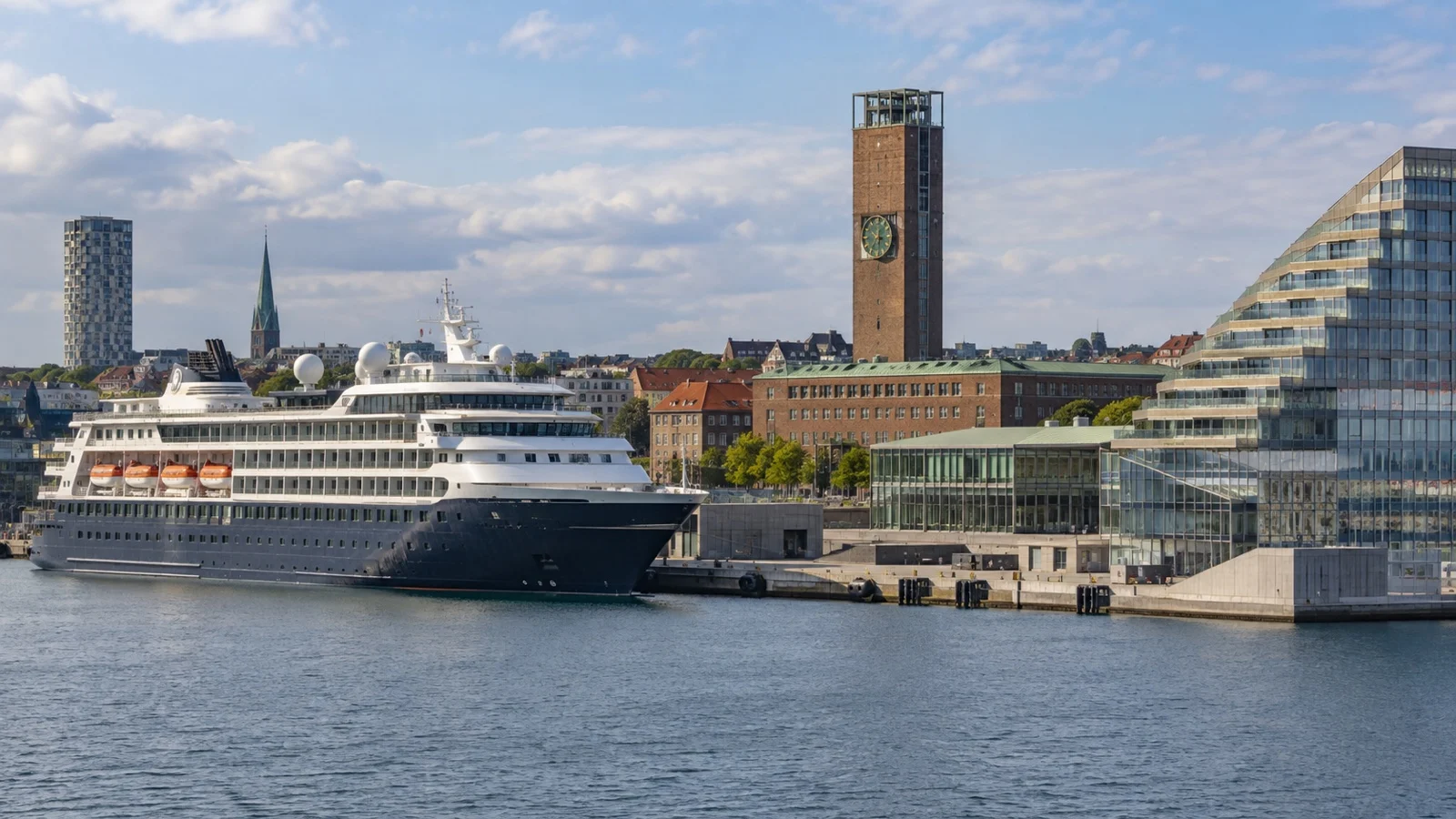
Aarhus is my favorite Danish call for travelers who want serious culture without capital-city scale. The cruise facilities sit near a waterfront that has become part working harbor, part design showcase, with the center within a manageable transfer or walk depending on the berth.
ARoS Aarhus Art Museum and Den Gamle By are the two headline choices, and each can comfortably anchor half a day. I would pick one, then connect it with the Latin Quarter, cathedral, river, or waterfront rather than rushing through both.
Moesgaard Museum is exceptional for archaeology and human history, but it lies outside the central walking loop. Use a taxi, public bus, or organized tour, and confirm current opening hours before making it the centerpiece.
Aarhus rewards an independent day because distances in the center are friendly and cafes appear exactly when you need one. It also handles mixed-interest groups well, since museum lovers and relaxed wanderers can separate and reunite near the harbor.
Construction and working-port rules can alter the pedestrian route even when the city looks close. Follow the marked cruise path and do not shortcut through restricted areas.
Aalborg
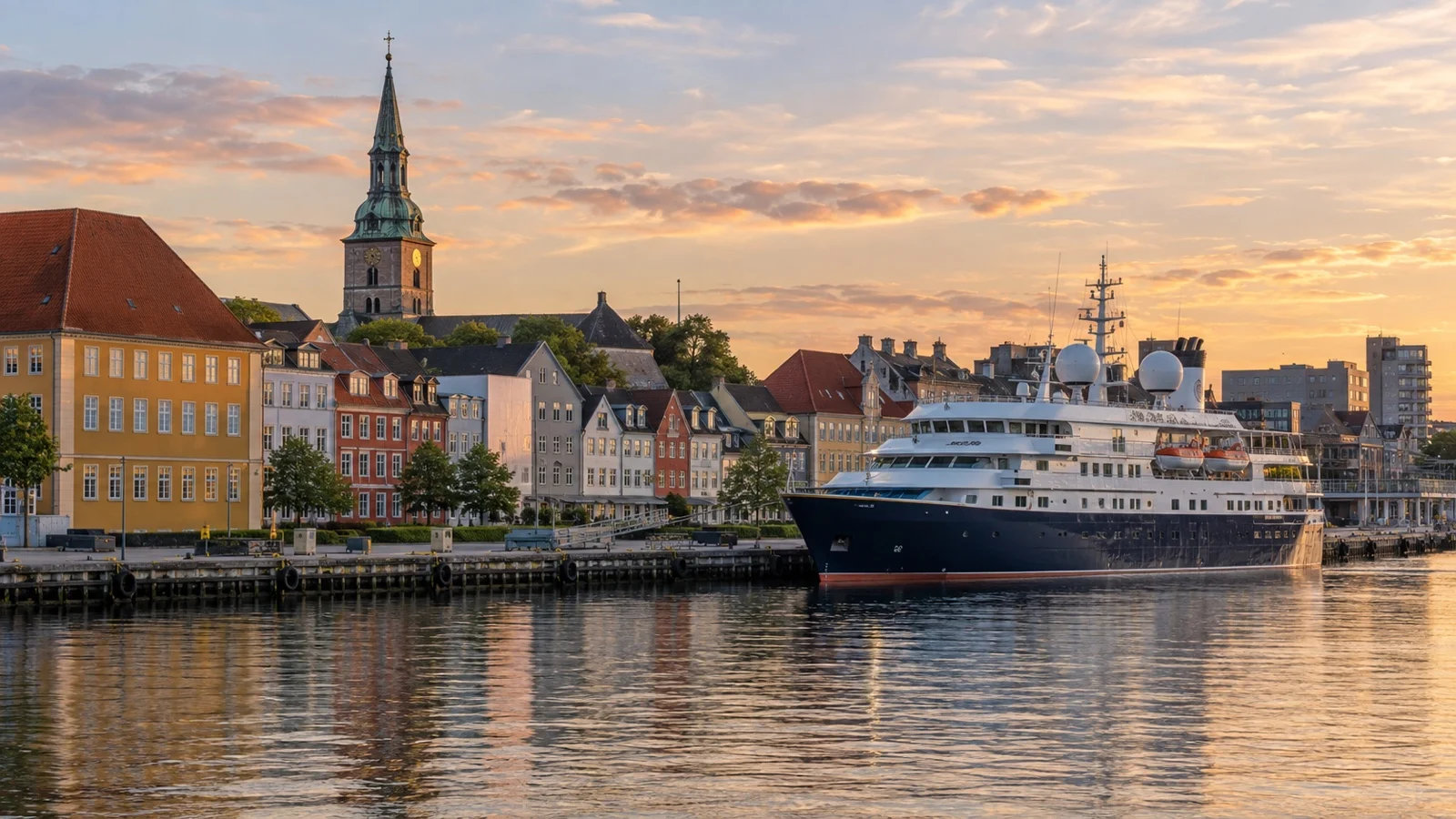
Aalborg sits along the Limfjord and often delivers one of Denmark’s most pleasantly walkable city calls. The waterfront, historic center, cathedral, Utzon Center, and lively streets can form a compact loop without a major excursion.
Lindholm Høje is the important trip beyond the center, with an ancient burial ground and museum connected to the region’s Viking and Iron Age story. It needs transportation, so decide early whether history there matters more than extra time downtown.
Aalborg’s strength is balance because you can see something meaningful without spending hours in transit. I would reserve a distant tour only for a specific passion, then let the fjord and old streets set an easier rhythm.
Berth location and shuttle arrangements can vary with ship size and port operations. Confirm the ship’s instructions before assuming the gangway will open directly beside the pedestrian center.
Ærøskøbing
Ærøskøbing is the storybook stop, a small island town of cobbled lanes, low historic houses, gardens, and a harbor that feels made for wandering. Visit Ærø emphasizes the island’s maritime setting, small-town life, beaches, crafts, and local food.
The cruise arrival may not follow the public-ferry pattern used by ordinary visitors, so use the landing information supplied by the ship. Once ashore in town, the pleasure is scale rather than a list of monuments.
Walk the old streets, pause at the harbor, browse local shops, and add a beach or bathing-hut view if time and mobility allow. The cobbles can be tiring for wheelchairs, scooters, and anyone unsteady on uneven surfaces.
Island buses and ferries are useful for longer stays, but I would not build a short cruise day around the last possible connection. Stay local unless the line provides an excursion with protected return timing.
Skagen
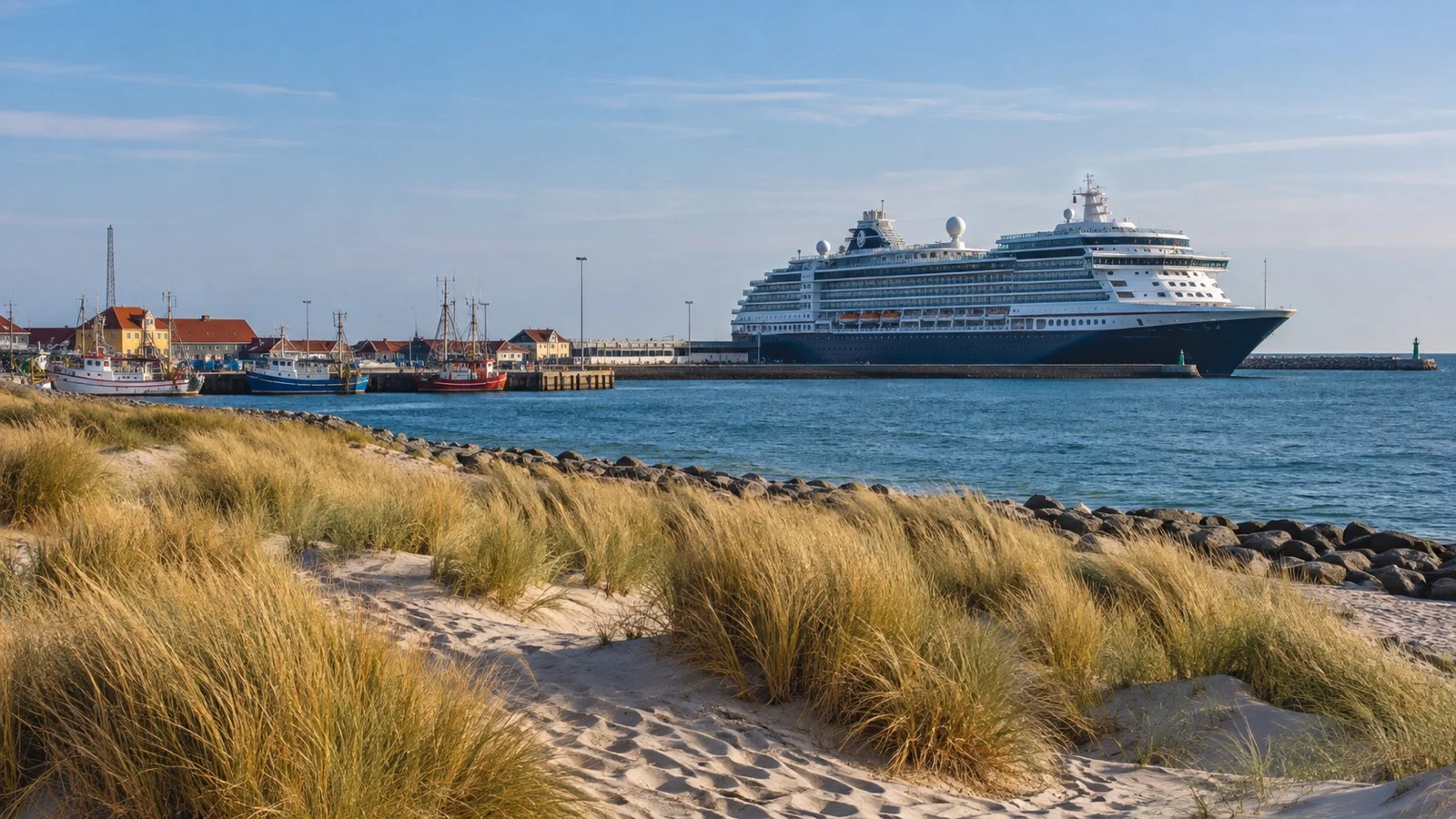
Skagen sits at Denmark’s northern tip, where its luminous landscapes inspired generations of artists. The town, Skagens Museum, harbor, sand-colored houses, and Grenen headland combine into a day that feels entirely different from Copenhagen.
Grenen is the famous point where seas meet, reached from town by road and then a walk or seasonal tractor service across sand. Wind, rain, crowds, and soft ground affect the experience, so check the day’s conditions before committing.
The buried church and Råbjerg Mile are additional landscape draws, but they pull the route in different directions. I would pair one natural landmark with the town and museum rather than spend the whole call transferring between dunes.
Skagen can use a berth with shuttle arrangements or operational variations tied to the vessel. Treat the cruise line’s daily notice as final and keep enough time for the return from Grenen.
Fredericia
Fredericia is a fortified Jutland town with ramparts, broad streets, and a waterfront close enough to support a relaxed local day. Its military history and walkable core make it much more than a gateway, particularly for travelers who enjoy urban landscapes and local stories.
Some itineraries promote longer trips to attractions elsewhere in southern Jutland, including royal, Viking, or family-oriented destinations. Those can be worthwhile, but they turn a simple port into a transport day and deserve cruise-line protection when timing is tight.
My local plan would walk part of the ramparts, explore the center, and leave room for lunch. It is a refreshing alternative after several days of museums and coach tours.
Confirm where the shuttle or pedestrian route begins because a working-port arrival can change the first few minutes. The town’s compactness only helps after you are safely outside the operational area.
Rønne and Bornholm
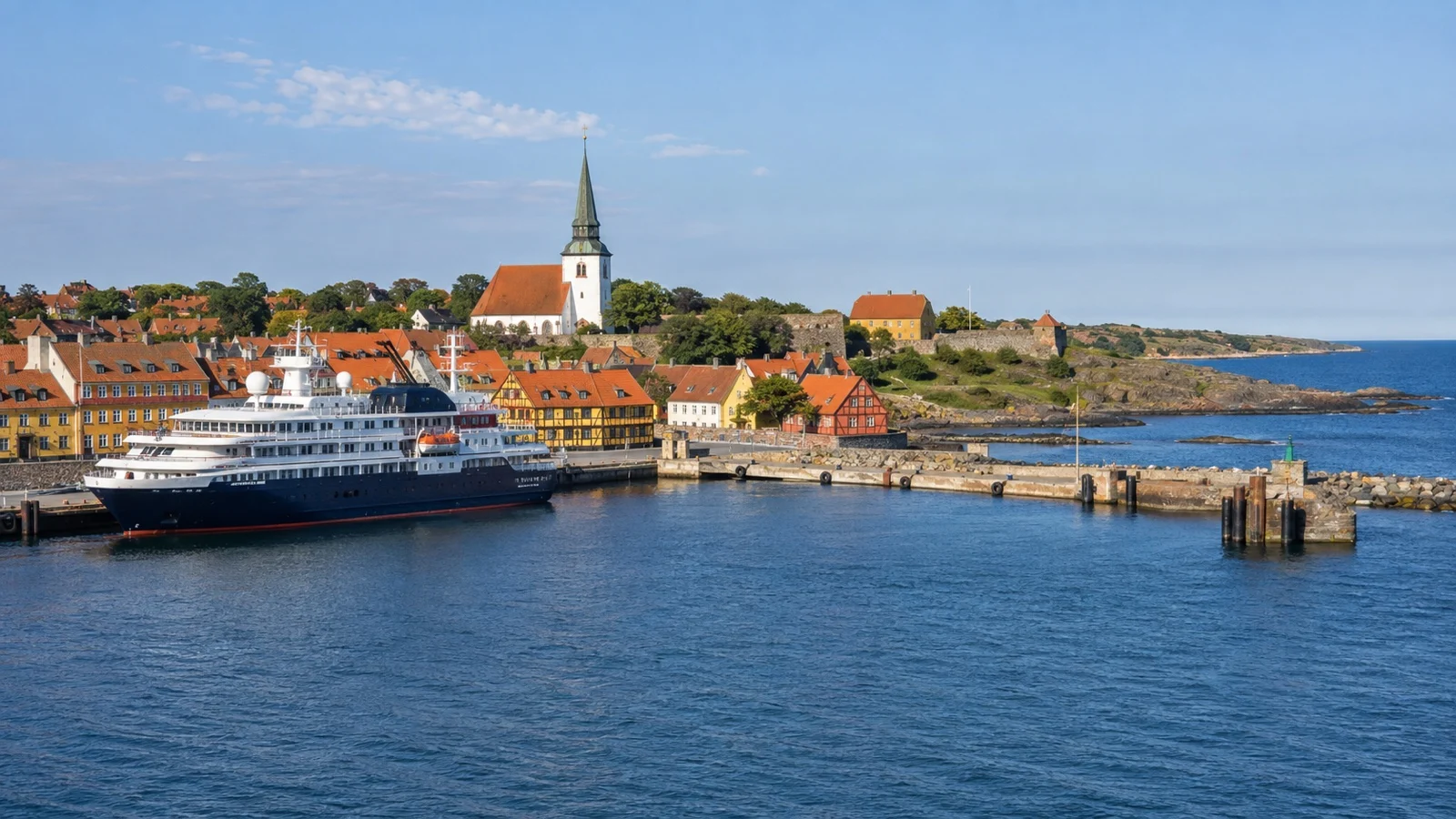
Rønne is the main cruise gateway to Bornholm, an island with round churches, fishing villages, rocky northern coast, smoked fish, and the medieval fortress ruins at Hammershus. The right plan depends on whether you want the island or the town because Bornholm’s highlights are spread out.
A local Rønne day offers cobbled streets, old houses, museums, shops, and an easy sense of place. It is the safest independent choice when the call is short, the weather is uncertain, or transportation is limited.
Hammershus, Gudhjem, Allinge, and the round churches usually require a vehicle or organized circuit. I would choose one island loop with a reputable operator rather than improvise multiple bus connections against all aboard.
Cruise ships may use a berth or tender arrangement depending on vessel and operations. Check the exact arrival method because tendering reduces usable time and can complicate accessibility.
Kalundborg and other occasional calls
Kalundborg lies on western Zealand and can appear as a regional call or operational alternative. Its medieval town plan and five-towered Church of Our Lady provide local interest, while longer excursions may point toward castles, countryside, or Copenhagen.
A Copenhagen excursion from Kalundborg is a substantial travel commitment and should not be confused with arriving at Copenhagen’s own cruise terminals. I would use a ship-operated tour for that plan and keep an independent day closer to the port.
Other Danish calls can include Hundested, Helsingør, Esbjerg, Odense-area access, smaller island harbors, or expedition-style landings. Frequency and passenger facilities vary, so verify the exact port name, landing method, and excursion program before planning.
Helsingør is associated with Kronborg Castle and can be a rewarding history call, while Hundested offers a smaller harbor atmosphere and access to North Zealand. A destination name on a preliminary itinerary is not a promise of a specific berth.
How the ports fit together
Copenhagen is the logistical heavyweight and deserves extra nights, while Aarhus and Aalborg deliver excellent city days at a gentler scale. Skagen and Rønne are landscape-led, Fredericia is quietly historical, and Ærøskøbing is about atmosphere.
For a first Denmark itinerary, I would look for Copenhagen plus either Aarhus or Skagen. Repeat visitors can gain more from Bornholm, Ærø, or a smaller harbor than from another hurried capital day.
Count transfer-heavy days across the whole cruise. A long island circuit after a distant castle trip may look exciting on paper but feel like two days inside a bus.
The best routes alternate ambition with ease. Denmark is particularly good at giving you a waterfront, historic street, cafe, and museum within one forgiving day.
Transport, tickets, and payment
Denmark’s public transportation is reliable, but a cruise passenger still needs to work backward from all aboard. If the plan depends on the final possible train, bus, ferry, or harbor connection, it is not a comfortable plan.
Use official transit planners and operators for current schedules, not a screenshot from an old travel article. Weekend service, construction, special events, and seasonal routes can change the journey.
Cards are widely accepted, and the local currency is the Danish krone rather than the euro. Carry a backup payment method because a small kiosk, bus system, or offline terminal may not handle every foreign card.
Taxis are useful for the awkward segment rather than necessarily the whole day. A short ride from a remote berth or to an outlying museum can preserve energy and turn a complicated route into an easy one.
Border documents and Schengen planning
Denmark is part of the Schengen Area, but document requirements depend on nationality and the full cruise route. A voyage that also visits the United Kingdom, Norway, Iceland, or another non-Schengen destination can involve different checks.
Use the European Union travel portal and official Danish immigration information for current requirements. Follow the cruise line’s boarding rules because it must evaluate every country on the itinerary, not only Denmark.
Keep your passport or approved identification according to the ship’s daily instructions. Never assume that a short walk ashore eliminates the need to carry documents.
Accessibility and lower-energy days
Modern Danish cities can be accessibility-friendly, yet cobbles, older buildings, steep gangways, sand, and tenders still create real barriers. Evaluate the entire route from cabin to attraction rather than only the destination entrance.
Travelers using wheelchairs or scooters should ask about berth access, shuttle lifts, vehicle storage, restroom availability, and the exact path at historic sites. Equipment dimensions and weight may determine whether a tender transfer is possible.
A lower-energy day can be excellent in every major Danish port. Choose one district, use a taxi for the longest segment, reserve accessible admission where offered, and leave time for a comfortable meal.
Families and mixed-stamina groups can split around a shared meeting point, provided everyone carries offline ship details. Agree on local time or ship time before separating.
Weather and seasonal rhythm
Danish cruising centers on the brighter months, when daylight stretches late and waterfront life moves outdoors. Even in summer, a cool wind or quick rain can make layers more valuable than a single heavy jacket.
Shoulder-season calls can be quiet and beautiful, but attractions, island ferries, and visitor services may use reduced hours. Verify the exact date before making a seasonal activity the anchor.
Check the Danish Meteorological Institute forecast for the actual port rather than treating Denmark as one weather point. Skagen’s exposed tip, Bornholm, the South Funen Archipelago, and sheltered city harbors can feel very different.
Pack a waterproof outer layer, sun protection, water, and shoes with grip. Historic paving becomes more noticeable after rain, while Grenen and island beaches add sand and wind.
My final advice
Give Copenhagen time, then let the smaller ports be small. Denmark’s charm often appears in the unscheduled space between a harbor, a bakery, a museum, and a street you had not planned to walk.
Confirm the berth and protect the return, but do not overengineer every hour. A calm Danish port day can become the one you remember most precisely because it never felt like work.
Port, berth, transit, border, attraction, accessibility, and destination guidance was reviewed against current Danish port, tourism, transport, government, and cruise-line sources in September 2026, but assignments and schedules can change. Confirm your exact terminal or tender landing, documents, tickets, accessibility needs, weather, and all-aboard time directly before travel, then see our Editorial Policy.