Aarhus Cruise Port: Denmark’s Old Town and ARoS Guide
Rolling into Aarhus on a cruise ship? This is Denmark’s second city, and it punches well above its size.
You get a rainbow-ringed art museum, a real old town, and Viking history within an easy walk. Here is how I would spend the day.
My quick take
Aarhus is compact, walkable, and genuinely relaxed, which makes it one of the easier northern ports to enjoy. If you like this culture-heavy Danish vibe, it pairs beautifully with a stop in nearby Copenhagen.
My honest advice is to pick two anchors, an art museum and an old town, then leave room to wander. You do not need a packed plan here to have a great port day.
The quick facts
- Where you land: At the berth assigned by Port of Aarhus, which may be close to the center or farther out in the East Harbour. The ship’s notice determines whether a signed walk or shuttle applies.
- Dock or tender: Ships normally berth alongside, but the exact quay changes the first part of your day.
- Into town: A central berth can make the old core walkable, while a more distant assignment requires the call-specific shuttle or a taxi.
- Currency and language: Danish krone and Danish, with English widely spoken in visitor settings.
- Time zone: Central European Time, with daylight saving observed in summer.
- Call reliability: Weather and port operations can alter any call, so rely on the ship’s live berth and shuttle announcements.
- Best first visit: Choose ARoS or Den Gamle By as the main museum, then add the cathedral and Latin Quarter.
- Return margin: Start back earlier from Moesgaard or any outer berth and add the shuttle deadline printed by the ship.
Where the ship ties up
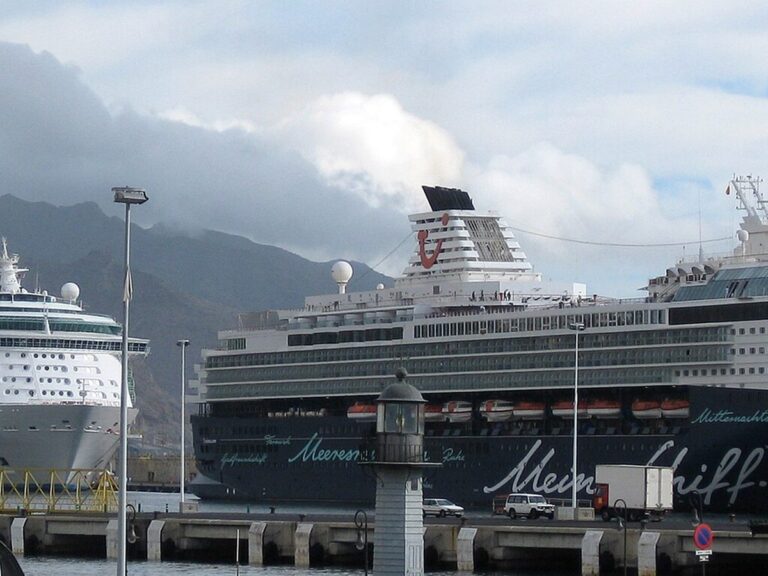
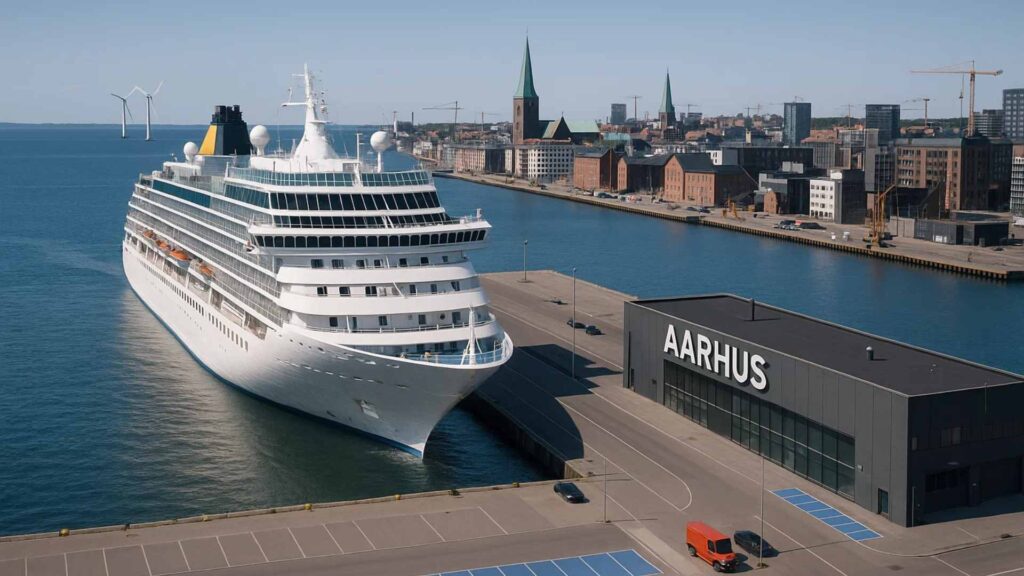
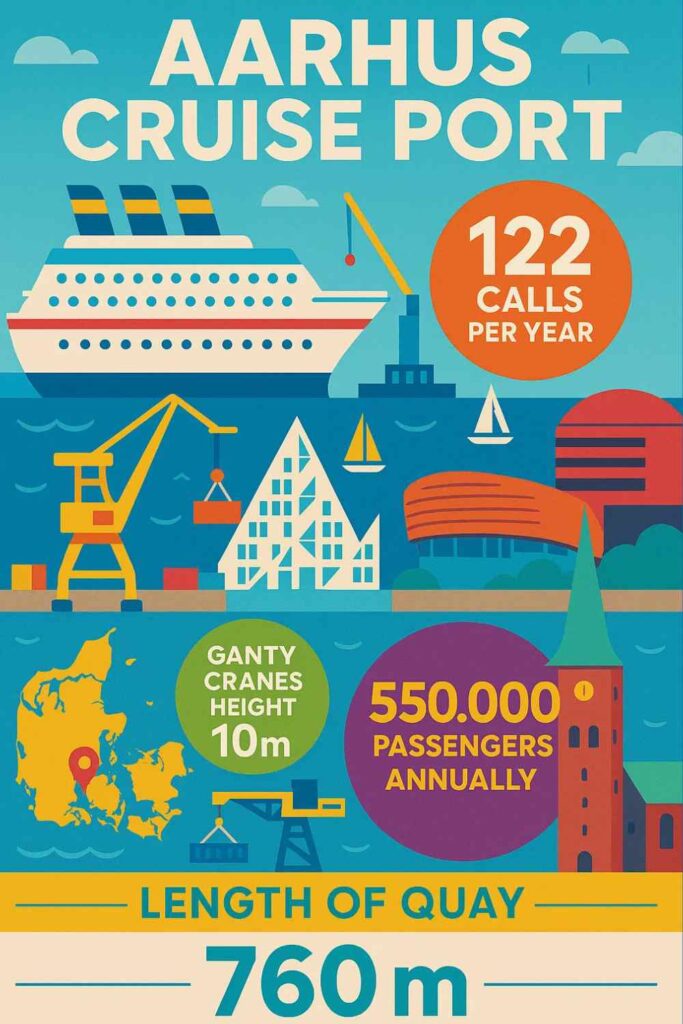
Port of Aarhus uses more than one cruise berth, ranging from near-center quays to an outer East Harbour position. Do not use one fixed walking distance for every call; the ship’s berth notice will say whether a signed walk or shuttle applies.
A central berth can be a short walk, while the outer berth is much farther and normally handled with cruise-day transport. Confirm the drop point and last return before leaving because shuttle arrangements are call-specific.
Pier facilities, visitor information, and taxi access depend on the assigned berth and call setup. Plan to do most eating and shopping in the city, and confirm any services you need before leaving the ship.
Getting around
The best news about Aarhus is that you rarely need transport at all. The old core is small, flat, and made for wandering.
The harbor walk into town is scenic, passing modern waterfront buildings and sea views. Bring a light windbreaker, because the breeze off the bay can be brisk even in July.
For Moesgaard Museum, use the current Midttrafik journey planner because the useful connection is normally a city bus rather than the light rail. Buy the correct zone ticket before boarding when required, and use a taxi if the published return leaves too little margin.
Aarhus is also a cycling city with dedicated lanes everywhere. If you are confident on two wheels, a rental bike is a very Danish way to cover more ground.
One word of warning for walkers: those bike lanes are busy and cyclists move fast. Look both ways before crossing one, because locals will not expect you to drift into their path.
The stops I would actually spend time on
You cannot do everything in one port call, so here are the places I think earn your hours. I have ordered them the way I would tackle them.
ARoS Aarhus Art Museum and the rainbow panorama
This is the headline sight, and the rooftop circle of colored glass is the reason it goes viral. Walking the ring, the whole city shifts through red, yellow, and blue as you go.
Below the roof there are strong collections spanning classic Danish painting to bold contemporary installations. Give it two hours if you can, or one if you are tight.
Fun fact: Olafur Eliasson’s Your rainbow panorama is a 150-meter circular glass walkway mounted above the museum roof. ARoS provides both stairs and an elevator to the work.

Den Gamle By, the open-air old town
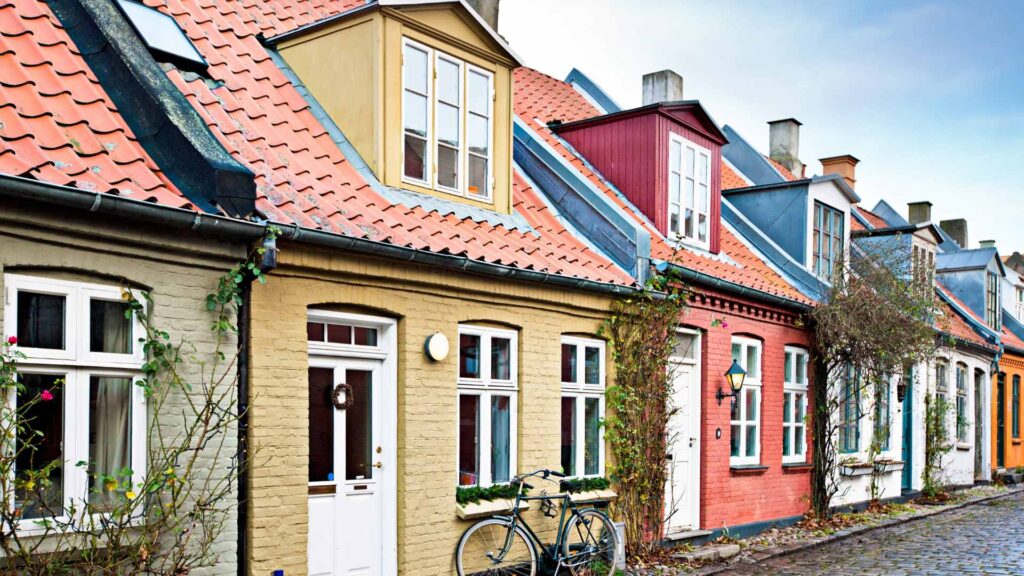
This is not a fake theme park, it is a museum of real historic Danish buildings relocated and rebuilt street by street. You wander cobbled lanes into old shops, homes, and workshops with costumed staff going about their day.
Families love it, and honestly so do I. Budget around two hours to do it justice.
Good to know: Den Gamle By publishes current hours and programming on its official site. Check the day’s schedule because demonstrations, historic interiors, and seasonal activities shape how long the visit deserves.
Aarhus Cathedral and the Latin Quarter
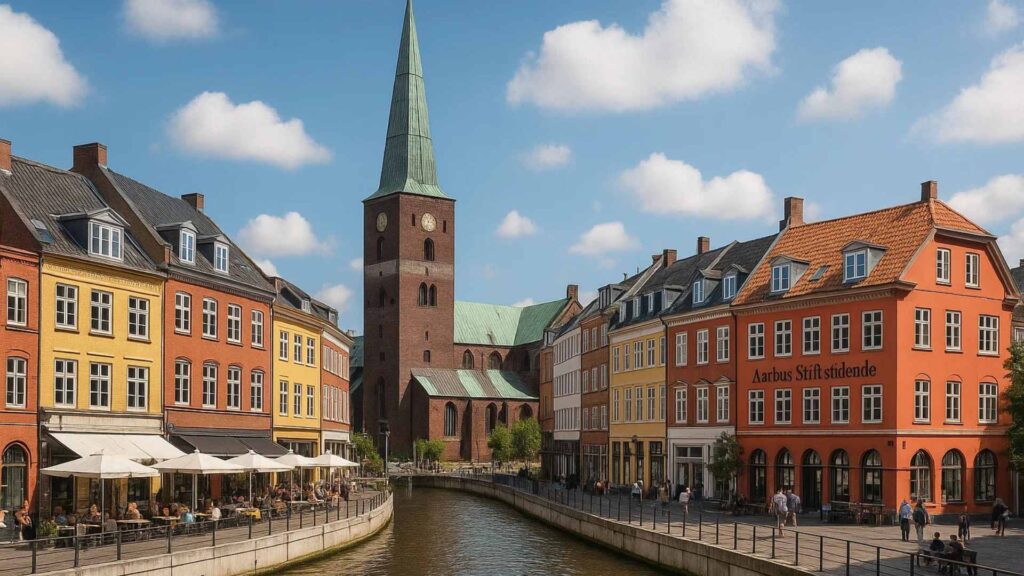
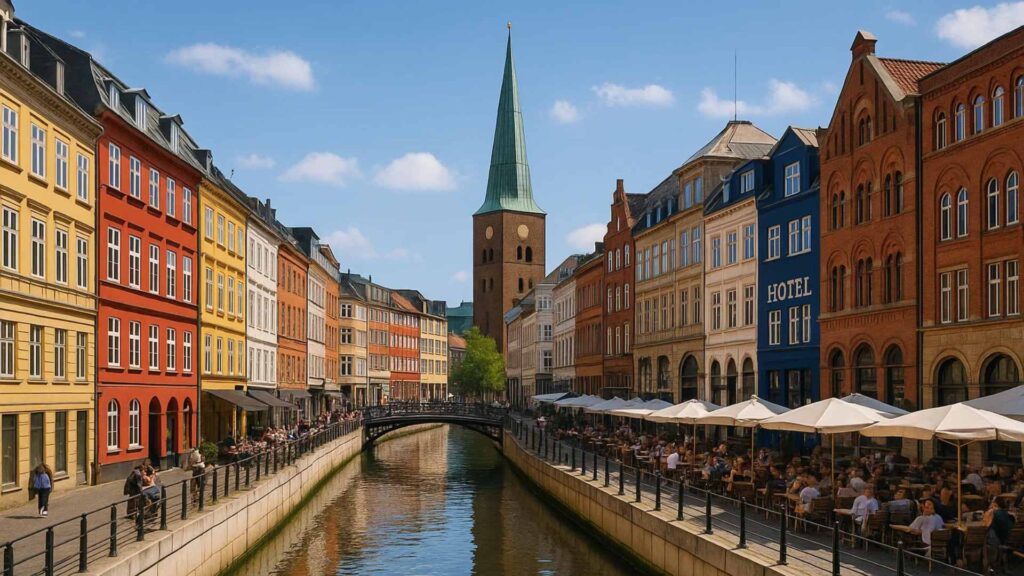
The cathedral anchors the medieval heart of the city and entry is free. Around it, the Latin Quarter is the oldest part of Aarhus, a tangle of narrow streets full of independent shops, galleries, and cafes.
This is my favorite zone for simply strolling with a coffee. It costs nothing and it is where the city feels most itself.
Fun fact: according to the official VisitAarhus tourist board, Aarhus Cathedral runs about 305 feet from door to altar, making it Denmark’s longest church, and it is dedicated to Saint Clement, the patron saint of sailors.
Moesgaard Museum and the Viking side
If you came for Viking and Iron Age history, this striking hillside museum is worth the trip out. It sits about 15 to 20 minutes from the center by bus or taxi.
Its star exhibit is the Grauballe Man, a stunningly preserved bog body. Set aside a half day if you commit to it, since the ride and the exhibits add up.
Fun fact: Moesgaard describes the Grauballe Man as the world’s best-preserved bog body from the Iron Age, a man who lived around 390 BC and was found in a Danish bog in 1952 with his skin, hair, and features intact.
How I would plan the day
On a six-hour call, choose ARoS or Den Gamle By plus the cathedral and Latin Quarter. With eight hours or more, both museums can work if their current opening hours align, but Moesgaard should replace one rather than become a third major stop.
After the museum, drift into the Latin Quarter for lunch and a slow wander. Smorrebrod, the open-faced rye sandwich, is the classic thing to try here.
If you still have energy, add Den Gamle By in the early afternoon. That combination alone fills a satisfying day without ever feeling rushed.
Short on time under six hours? Pick one museum, add the cathedral and a coffee, and skip anything that needs a bus.
On the food front, do not overthink it. A bakery pastry, a smorrebrod lunch, and a good flat white cover the local flavor without eating into your sightseeing time.
Aarhus takes coffee seriously, and the Latin Quarter is thick with excellent little roasteries. It is the kind of place where a mid-afternoon coffee break becomes a highlight rather than a pit stop.
One practical tip on timing: many museums are quietest right after opening. Getting off the ship early buys you calmer galleries and better photos before the tour groups arrive.
Start back 60 minutes before all-aboard from the center and 90 minutes before it from Moesgaard, then add any shuttle deadline printed by the ship. Wind, construction, and event traffic can turn a simple harbor transfer into the day’s bottleneck.
A realistic word on accessibility
Modern central Aarhus and ARoS offer strong step-free options, but the exact route starts with your berth and shuttle. Den Gamle By has cobbles and many historic interiors that wheelchair users cannot enter, so review its accessibility information before choosing it.
The harbor walk from the quay is level, and shuttles and taxis fill the gap for anyone who cannot manage the distance. Buses and light rail are broadly accessible too.
The honest caveats are the cobbles in the Latin Quarter and Den Gamle By, which can jolt a wheelchair. Tell your cruise line ahead of time if you need gangway assistance, as staff usually help right at the ship.
When to go, and the weather
Cruise season here runs mainly from late spring through early autumn. Summer is the sweet spot for long daylight and the mildest conditions.
Summer is usually mild rather than hot, and a passing shower is always possible. Check the day-specific forecast because wind along the harbor can matter as much as the temperature.
Pack layers and something windproof regardless of the forecast. The bay breeze has a habit of finding you on the harbor walk.
If your itinerary leans far north, it is worth reading up on the northern lights cruise ports for the darker-season alternative to a summer Baltic run.
Quick answers
Where do cruise ships dock in Aarhus?
Port of Aarhus can use different berths, from near-center quays to more distant East Harbour positions, so confirm the exact assignment and shuttle plan onboard.
Can I use euros?
Denmark uses the Danish krone, although cards work almost everywhere and most visitors need little cash.
What is the one must-see?
ARoS and its rooftop rainbow walkway, with Den Gamle By a close second for families.
Is it easy to get around?
The center is mostly flat and walkable, while buses, light rail, and taxis cover farther stops.
How Aarhus compares
If Aarhus is on a wider Danish itinerary, it makes a lovely low-key counterpoint to the capital. I would think of it as Copenhagen without the crowds or the price tags.
Copenhagen gives you royal palaces, big-city buzz, and Tivoli, while Aarhus trades that for a walkable, art-led calm. Both reward slow wandering more than a checklist.
For a wider view of how these Nordic calls fit together, my roundup of cruise ports in Europe is a good next read. It will help you slot Aarhus into the rest of your route.

How this guide was researched: Unless a first-hand visit is explicitly identified above, this guide is based on independent research using official port, tourism, transit, government, and attraction sources where available. Logistics and time-sensitive details were reviewed on September 11, 2026; see our Editorial Policy.