Molde Cruise Port: Storkaia, Varden & Atlantic Road
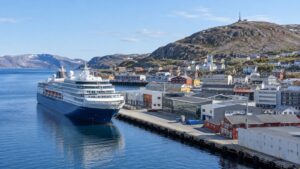
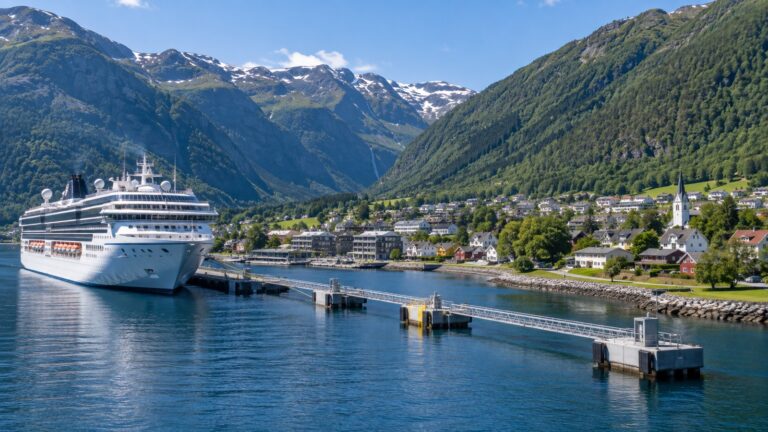
Molde is one of Norway’s easiest cruise ports to enjoy without a long transfer. Ships berth beside the compact center, while mountain views, the Romsdal Museum, and the waterfront all sit within reach of a relaxed walking day.
The harder decision is whether to stay close or use the call for the Atlantic Road. Both can be excellent, but the coastal drive consumes several hours and should be treated as the day’s main excursion.
Molde cruise port quick facts
- Main cruise berth: Storkaia in central Molde
- Official berth dimensions: 300 meters long with a listed depth of 9.5 meters
- Town access: Shops, cafes, and the waterfront begin just beyond the secure pier
- Signature viewpoint: Varden and the Molde Panorama
- Best nearby cultural stop: Romsdal Museum and its Krona visitor center
- Major day trip: Norwegian Scenic Route Atlanterhavsvegen, the Atlantic Road
- Local currency: Norwegian krone
- Main planning risk: Road time, changeable weather, and a late return from the Atlantic coast
My quick take on Molde
If the mountains are clear, I would make Varden the priority and then walk through the Romsdal Museum and central Molde. This plan delivers the city, landscape, and regional history without turning the day into a long coach ride.
The Atlantic Road is worthwhile when dramatic coastal engineering is the reason you booked the cruise. It is less compelling as a rushed add-on because the best part of the experience is stopping at viewpoints and feeling the open-ocean setting.
Where cruise ships dock in Molde
The usual cruise berth is Storkaia, directly on Molde’s waterfront. The official Molde and Romsdal Port page lists the quay at 300 meters long and 9.5 meters deep, with ISPS security, water, power, and waste services.
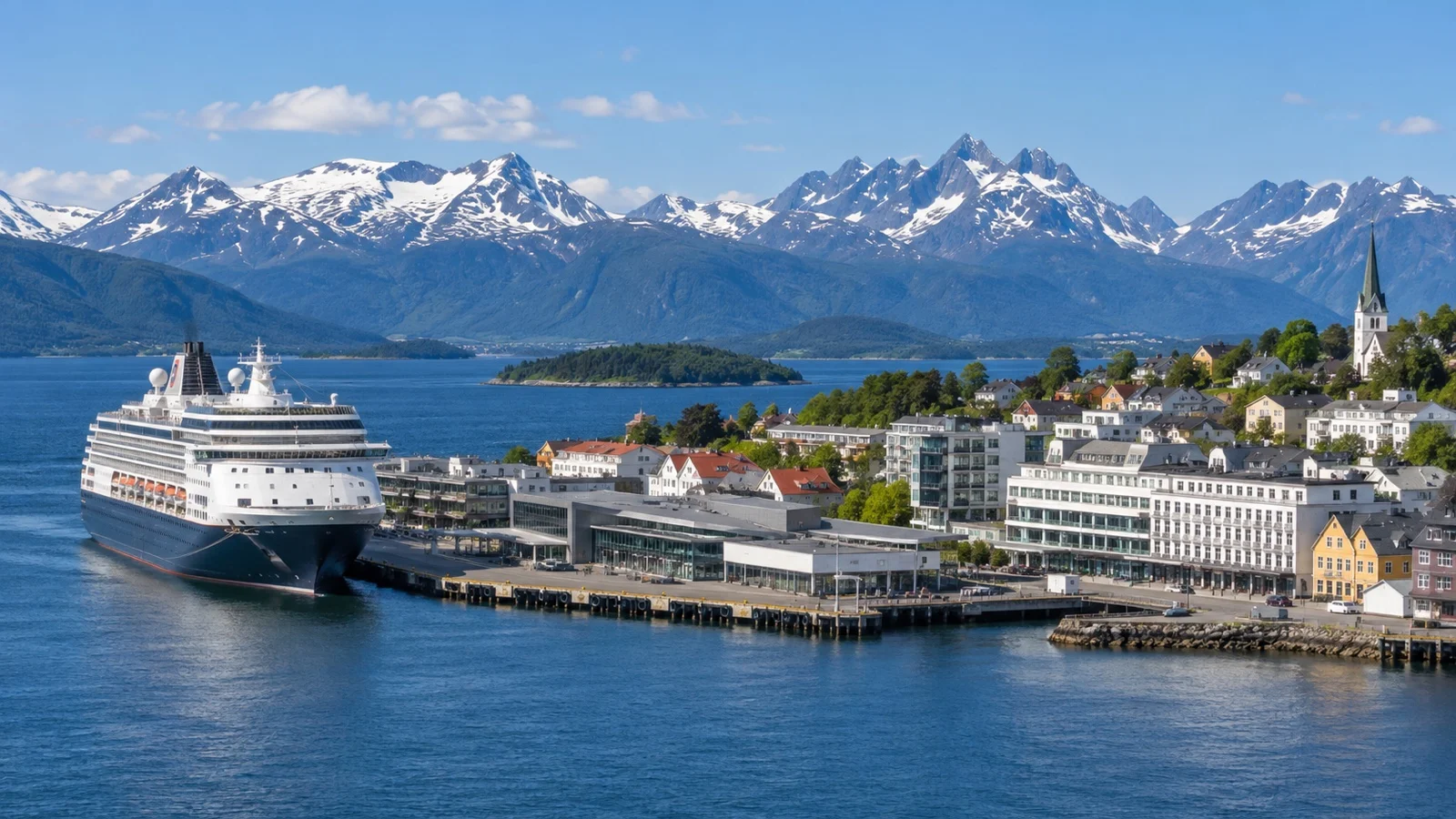
Those technical dimensions explain why cruise vessels can berth close to town rather than tendering passengers ashore. Your specific docking position still depends on the day’s ship traffic and operational plan.
The port publishes a current cruise-call list, but it warns that schedules can change at short notice. Treat the berth shown by your cruise line or the day’s gangway signage as authoritative.
Walking from Storkaia
Storkaia is exceptionally convenient for independent passengers. Once you clear the controlled pier, Molde’s central streets, waterfront, shops, and cafes are only a short walk away.
The town center is fairly compact, but Molde climbs inland from the fjord. A route toward Varden or the upper neighborhoods gains substantial elevation, so a short distance on the map may still require effort.
The Molde Panorama
Molde is associated with a sweeping panorama of peaks across the fjord. On a clear day, the combination of water, islands, and the Romsdal Alps gives the city a much grander setting than its modest size suggests.
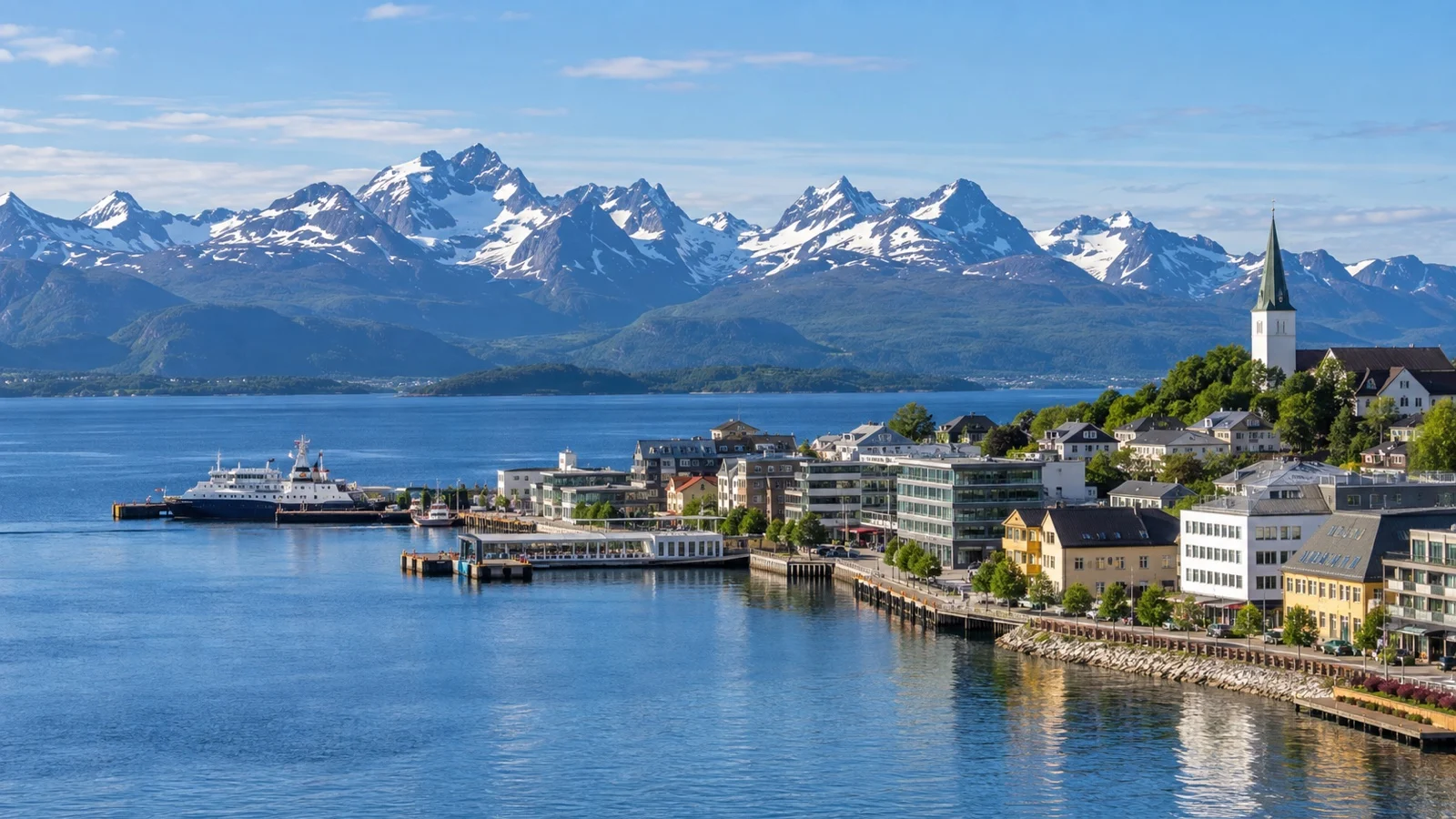
You can catch mountain views from the waterfront and higher points in town without reaching the summit viewpoint. This matters when low cloud covers Varden, mobility is limited, or the port call is short.
Varden viewpoint
Varden rises above Molde and provides the classic panorama over the city, fjord, islands, and mountain wall. It is accessible by road, making a taxi, sightseeing bus, or organized excursion the efficient cruise-day choice.
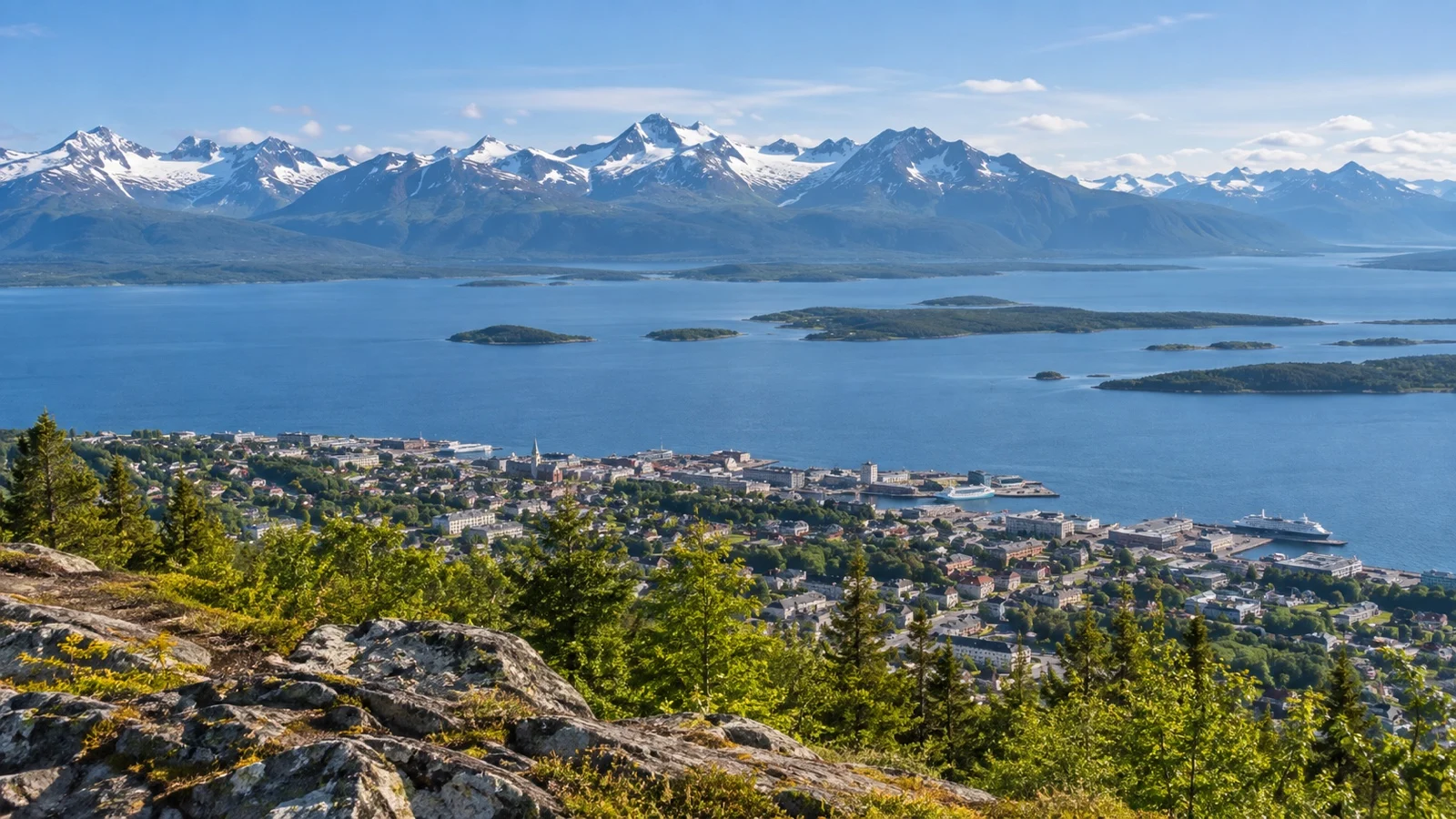
Walking from the center is possible for fit visitors, but it is a real uphill outing rather than a casual extension of the waterfront. Check the route, surface, daylight, and return time before setting off.
Cloud can erase the summit view even when the harbor looks pleasant. If visibility is poor, redirect the time to the museum or waterfront instead of climbing for a white wall of mist.
Romsdal Museum
The Romsdal Museum is one of Norway’s largest folk museums and was established in 1912. Its open-air collection includes historic buildings and interiors from the region, while the reconstructed town street shows Molde houses from before World War II.
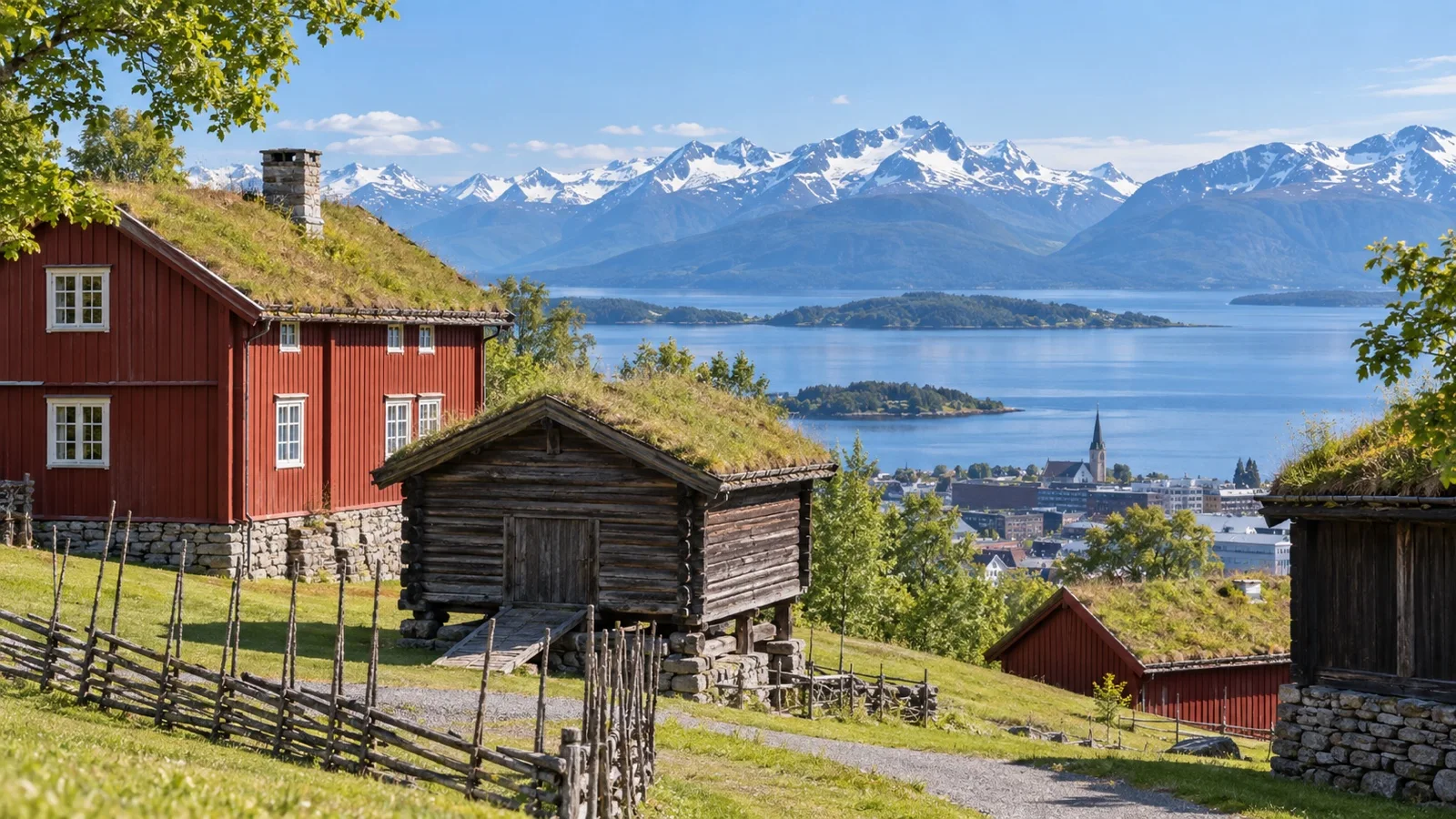
Krona, the modern visitor center, contains exhibitions, a cafe, a shop, a local-history library, and a bunad workshop. The museum says it is about a 10-minute walk from central Molde, though the exact walk from your gangway will be longer.
For 2026, Krona has daily summer hours from June 22 through August 31 and more limited hours outside that period. The open-air museum has its own seasonal schedule, while cruise days may bring extended access and activities inside some old houses.
Always check the official calendar for your date, especially on Mondays or outside summer. The park can still be a pleasant stop when building access is limited, but the experience changes when interiors and guides are unavailable.
Molde Cathedral and the city center
Molde Cathedral’s modern tower and interior make it a natural stop on a town walk. Religious services, private events, and local opening practices can affect access, so treat an interior visit as a bonus rather than a guaranteed appointment.
The center mixes postwar architecture with landscaped spaces and waterfront views. Molde’s rose-city nickname is most visible in the warmer months, but flowering conditions vary with weather and season.
The Atlantic Road from Molde
The Atlantic Road is a sequence of bridges, islets, reefs, and exposed coastal viewpoints between the Molde and Kristiansund regions. Norway’s official Scenic Routes program defines the full Atlanterhavsvegen route from Kårvåg to Bud as 36 kilometers.
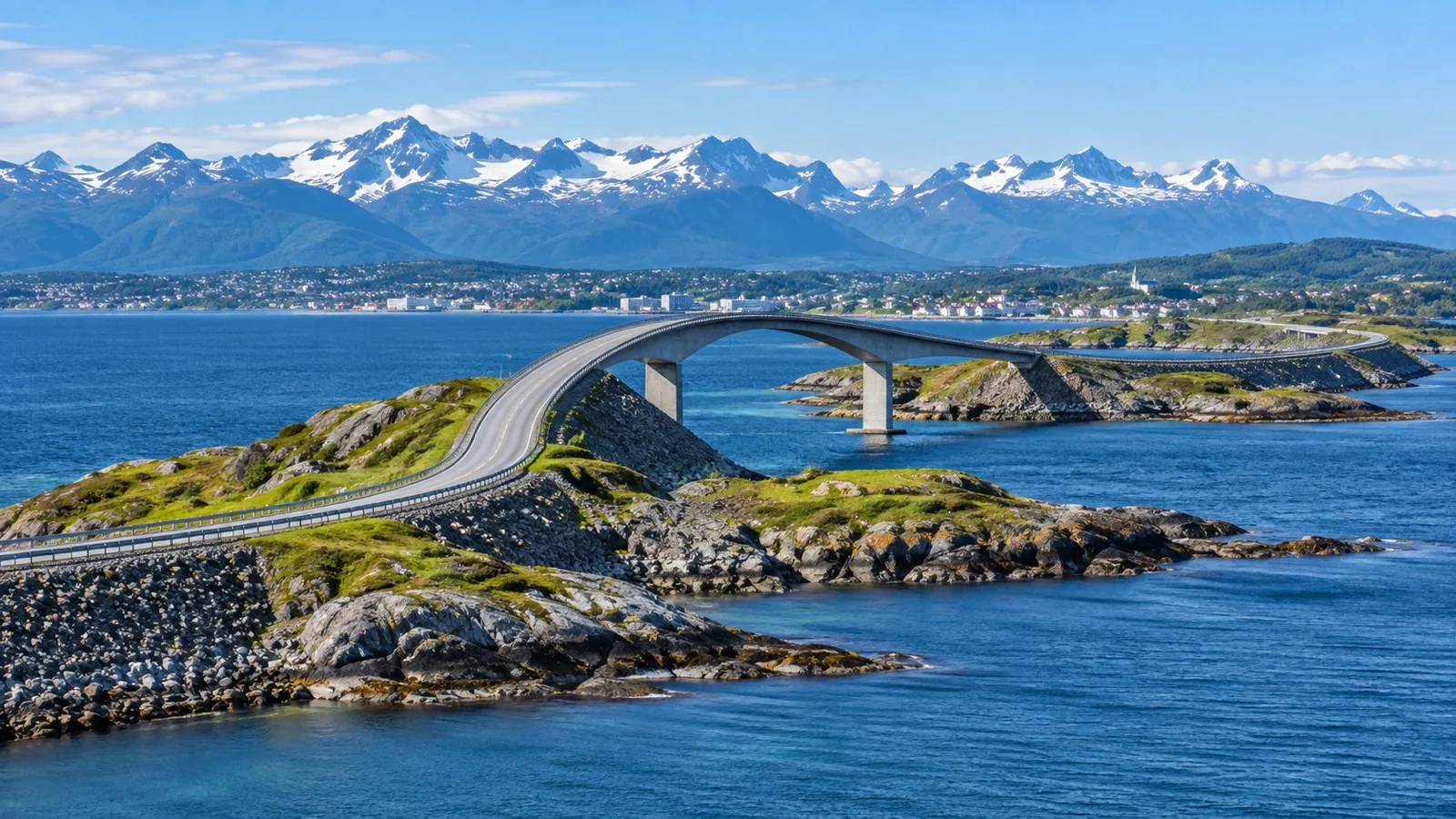
The famous bridge section is only part of the story. The landscape shifts between sheltered coves, cultural farmland, low rock, and the open Hustadvika coast, so the approach and viewpoint stops create much of the experience.
Official tourism information describes eight bridges between Kårvåg and Vevang, while the broader Scenic Route page refers to seven bridges across its designated road. The difference reflects how sources define the iconic stretch, so I would focus on the experience rather than counting structures from the coach window.
Best Atlantic Road stops
Storseisund Bridge creates the road’s most recognizable profile. Its curves and changing perspective can make it seem as if the roadway disappears into the sea, especially when viewed from a safe pullout.
Eldhusøya has an elevated circular path designed to bring visitors close to the coastal terrain. The Norwegian Scenic Routes authority describes it as accessible to all, although wet weather and strong wind may still affect comfort.
Askevågen extends toward the sea with a rugged viewpoint, while Bud adds a fishing-village setting and coastal history. A well-paced excursion should include at least one real stop rather than racing out for a bridge photo and immediately turning back.
Tour, rental car, or private driver?
A cruise excursion is the simplest Atlantic Road option because transport and ship timing are coordinated. A local tour can offer a smaller group, while a private driver provides more control over stops and turnaround time.
A rental car can work for confident drivers, but pickup time, unfamiliar roads, parking, and the firm ship deadline all add friction. Check live road conditions through the Norwegian Public Roads Administration before committing to the coast.
Do not expect a practical public bus to reproduce a cruise-focused scenic loop with viewpoint stops. Scheduled transit serves communities, while an Atlantic Road day depends on flexible pauses and a reliable return.
Three realistic Molde port-day plans
Plan one: town, museum, and Varden
Take a taxi or sightseeing vehicle to Varden while visibility is good, then descend to the Romsdal Museum. Finish with Molde Cathedral, the center, and the waterfront before walking back to Storkaia.
Plan two: Atlantic Road
Leave promptly on an organized tour or prearranged vehicle and make the coastal drive the day’s anchor. Return to Molde with enough time for a short waterfront walk rather than squeezing in another major attraction.
Plan three: easy independent Molde
Walk the center, visit Krona and the museum park, and pause for lunch or coffee. This is the best plan for a short call, poor weather, or travelers who prefer a flexible day close to the ship.
Accessibility
Storkaia’s central location makes Molde easier than many Norwegian ports, but the city rises away from the water. A taxi to Varden or the upper museum area can remove the hardest elevation while preserving the highlights.
Krona is a modern visitor center, while the open-air museum includes outdoor surfaces and historic buildings with varying access. Contact the museum for current details if a particular entrance, restroom, or mobility feature is essential.
The Eldhusøya path is a promising Atlantic Road stop for travelers with limited mobility because the official Scenic Routes authority describes the circular walk as accessible. Confirm the tour vehicle’s lift, step, and storage arrangements separately.
Weather and what to wear
Molde’s weather can shift quickly between sun, showers, wind, and low cloud. Bring a waterproof layer and shoes with dependable grip even when the morning forecast looks friendly.
The Atlantic Road is more exposed than central Molde, and wind can make a mild day feel cold. The coast can also be most dramatic in unsettled weather, but remain inside safe barriers and follow your guide’s instructions.
Money, food, and connectivity
Norway uses the krone, and cards are accepted for most visitor purchases. A small amount of cash is still useful as backup, but there is no reason to carry a large sum for a normal Molde port day.
Central Molde offers cafes and shops close to the ship, while an Atlantic Road excursion may have fewer convenient stops. Bring water and a snack if your tour description does not clearly include time for food.
Mobile coverage is generally useful, but exposed coastal sections and heavy ship traffic can still create gaps. Download your map, meeting point, and ship contact details before leaving Storkaia.
Returning to the ship
A local walking day carries little transport risk because Storkaia sits beside the center. The Atlantic Road requires a much larger buffer for traffic, road incidents, weather, restroom stops, and tour delays.
Use the ship’s all-aboard time rather than its sailing time as your deadline. Independent drivers should turn around early enough that a single delay does not convert a beautiful coastal day into a missed departure.
Frequently asked questions
Is Molde cruise port walkable?
Yes, Storkaia is directly beside central Molde, and most town sights are reachable on foot. Varden is uphill and better reached by taxi or tour vehicle for many cruise passengers.
Can I visit the Atlantic Road from Molde?
Yes, cruise excursions and private road tours regularly make it the main outing from Molde. Allow several hours and choose a plan with a conservative return time.
Can I walk to Varden?
Fit visitors can walk from the center, but the route involves sustained climbing and more time than a map glance suggests. A taxi is the efficient option on a cruise schedule.
What should I do if Varden is cloudy?
Choose the Romsdal Museum, central Molde, and lower waterfront viewpoints instead. Cloud can change quickly, so ask locally whether conditions are expected to improve.
Is Molde the same port as Åndalsnes?
No, they are separate cruise ports in the same broader region. See the guides to Åndalsnes, Ålesund, and Geiranger before comparing itineraries.
Final thoughts on Molde cruise port
Molde gives you the rare luxury of choosing between an easy city day and one of Norway’s most dramatic coastal drives. Match the plan to the weather and call length, then protect enough return time to enjoy the landscape without watching the clock all afternoon.