Hammerfest Cruise Port: Quays, Arctic History and Views
Hammerfest is a northern port that becomes more interesting the moment you stop treating latitude as the main attraction. Its harbor, postwar streets, steep island landscape, survey monument, reconstruction story, and everyday Arctic life fit into a compact call with very little wasted motion.
The practical catch is that Hammerfest has several working quays rather than one universal cruise doorstep. Your assigned berth determines whether town, the Meridian Column, or a viewpoint is closest, so begin with the daily port notice.
Hammerfest Cruise Port Quick Facts
- Arrival style: Usually alongside at a call-specific working quay
- Town access: Walk, cruise shuttle, taxi, or excursion transfer depending on the berth
- Best easy day: Reconstruction Museum, central waterfront, church, and Polar Bear Society
- Best viewpoint: Mount Salen by suitable road transport or an active hike in safe conditions
- UNESCO stop: Meridian Column at Fuglenes, part of the Struve Geodetic Arc
- Currency: Norwegian krone, with cards widely accepted
- Time zone: Central European Time with daylight saving in summer
- Planning rule: Check the quay first and build a reversible plan around Arctic weather
Start With the Quay, Not the Nickname
Hammerfest Harbour handles coastal ships, cargo, energy-related traffic, fishing activity, and visiting cruise vessels. Large ships may use different quays according to size, availability, port work, and the requirements of the call.
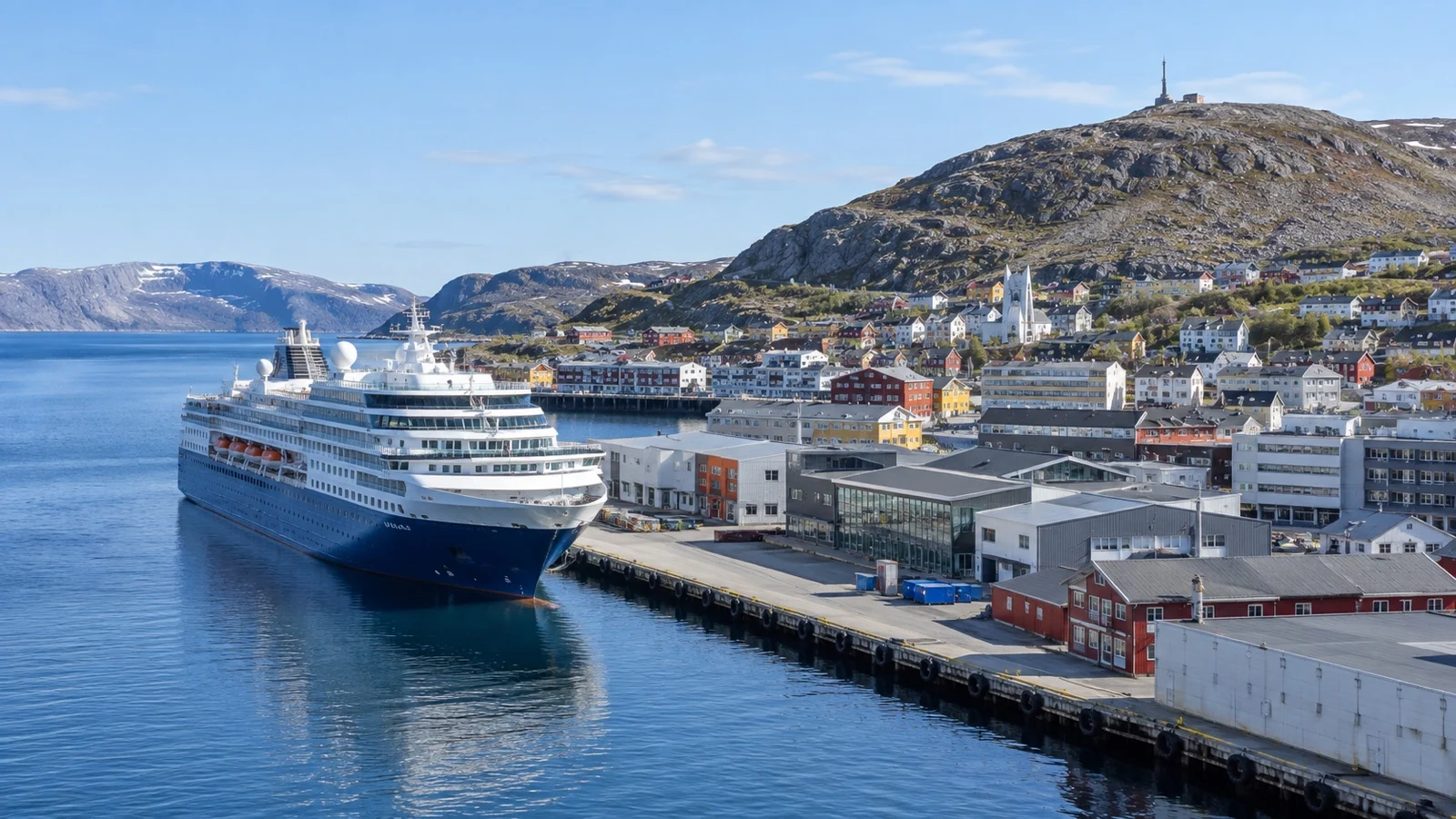
Check the berth name, passenger gate, shuttle plan, and taxi meeting point before leaving the ship. A map pin for Hammerfest harbor is too broad when several waterfront areas look close across the bay.
I photograph the port sign and save the ship’s local contact information before walking away. If a shuttle operates, note the final departure because service may not be continuous for the entire call.
A Town Rebuilt From Almost Nothing
Hammerfest and much of Finnmark were devastated during the forced evacuation and burning carried out by retreating German forces late in the Second World War. The town visitors see today is largely the result of reconstruction and the determination of residents who returned north.
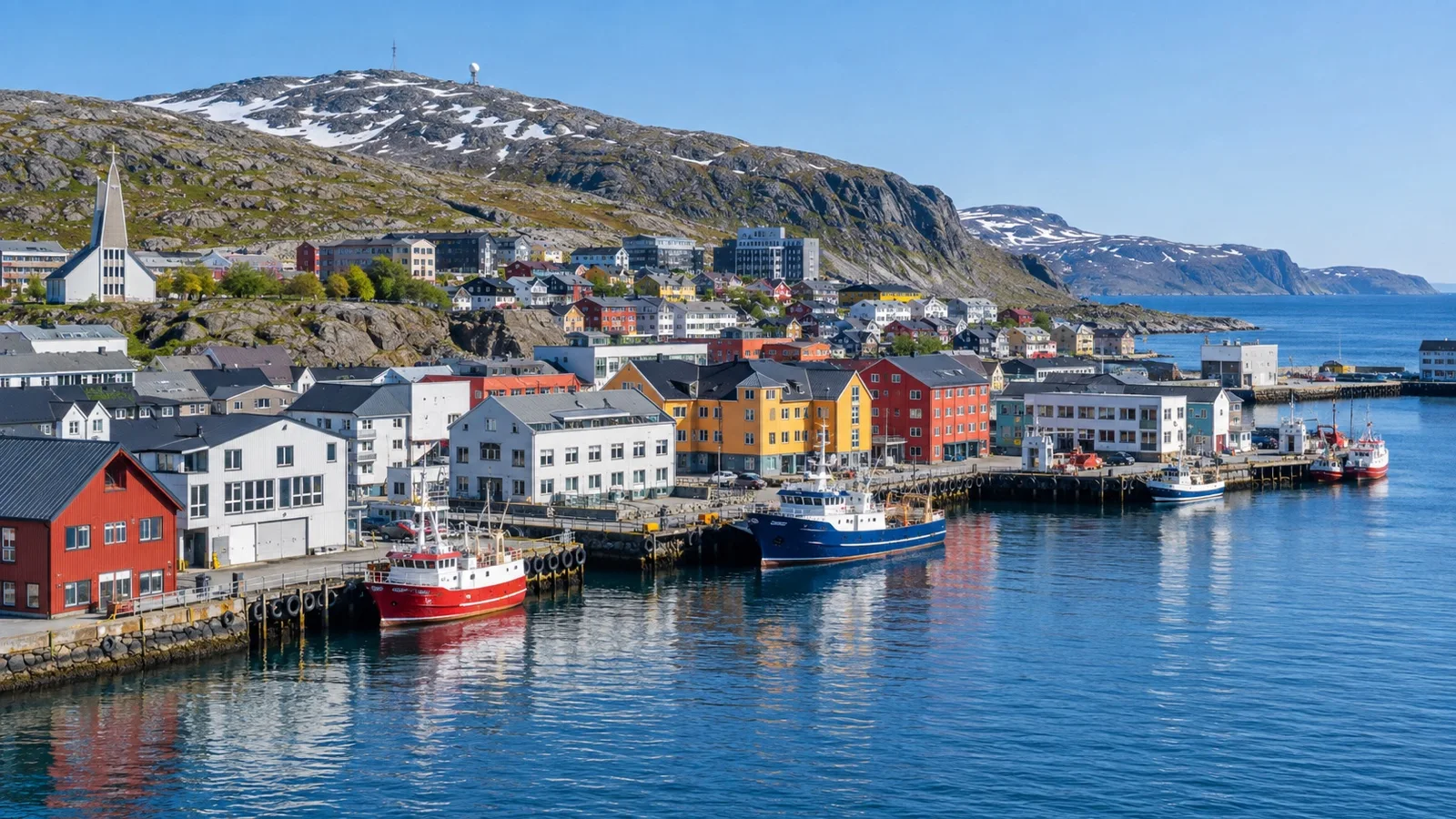
The Museum of Reconstruction for Finnmark and North Troms gives this story the depth it deserves. Exhibitions connect wartime destruction, evacuation, return, rebuilding, homes, public life, and the wider regional experience.
Check current opening hours and language resources on the museum’s official site. Give the visit at least an hour if history is a priority because the emotional and architectural story cannot be reduced to one display case.
The Royal and Ancient Polar Bear Society
The Royal and Ancient Polar Bear Society is a small Hammerfest institution built around Arctic history, local identity, and the fun of becoming a member. It is not a zoo and there are no live polar bears waiting behind the harbor buildings.
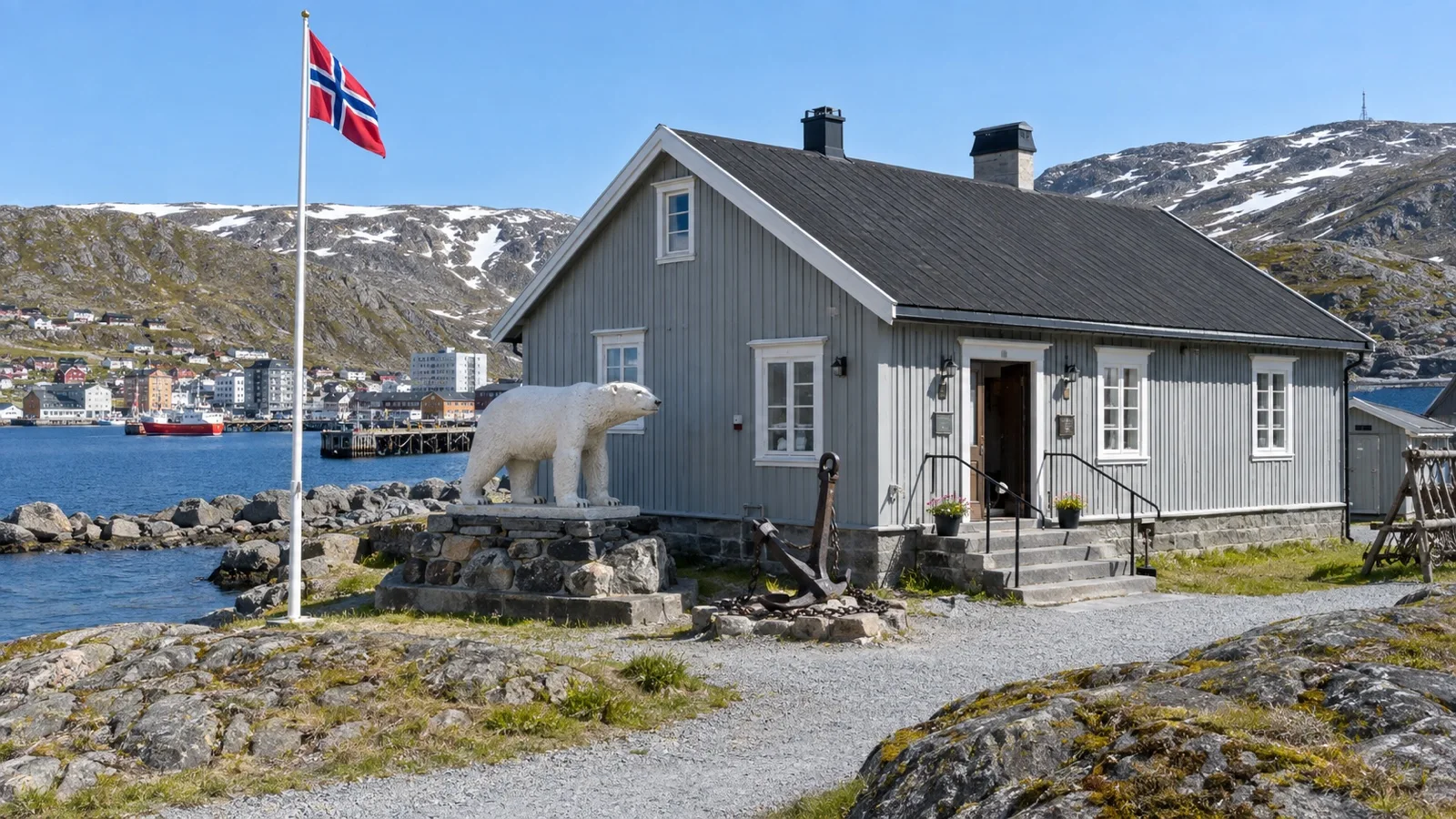
The exhibits and membership ritual can be a cheerful stop near the central waterfront, especially on a short call. Confirm current hours and group access because a cruise arrival can make the compact space busy.
Keep the joke in proportion and remember that Hammerfest’s real story belongs to the people who live in the Arctic. A souvenir membership is most enjoyable when paired with the reconstruction museum and time in the town itself.
The Meridian Column Needs a Transfer Plan
The Meridian Column at Fuglenes marks the northern end of the Struve Geodetic Arc, a UNESCO World Heritage property extending through ten countries toward the Black Sea. The nineteenth-century triangulation chain helped scientists measure a long meridian segment and improve understanding of the Earth’s size and shape.
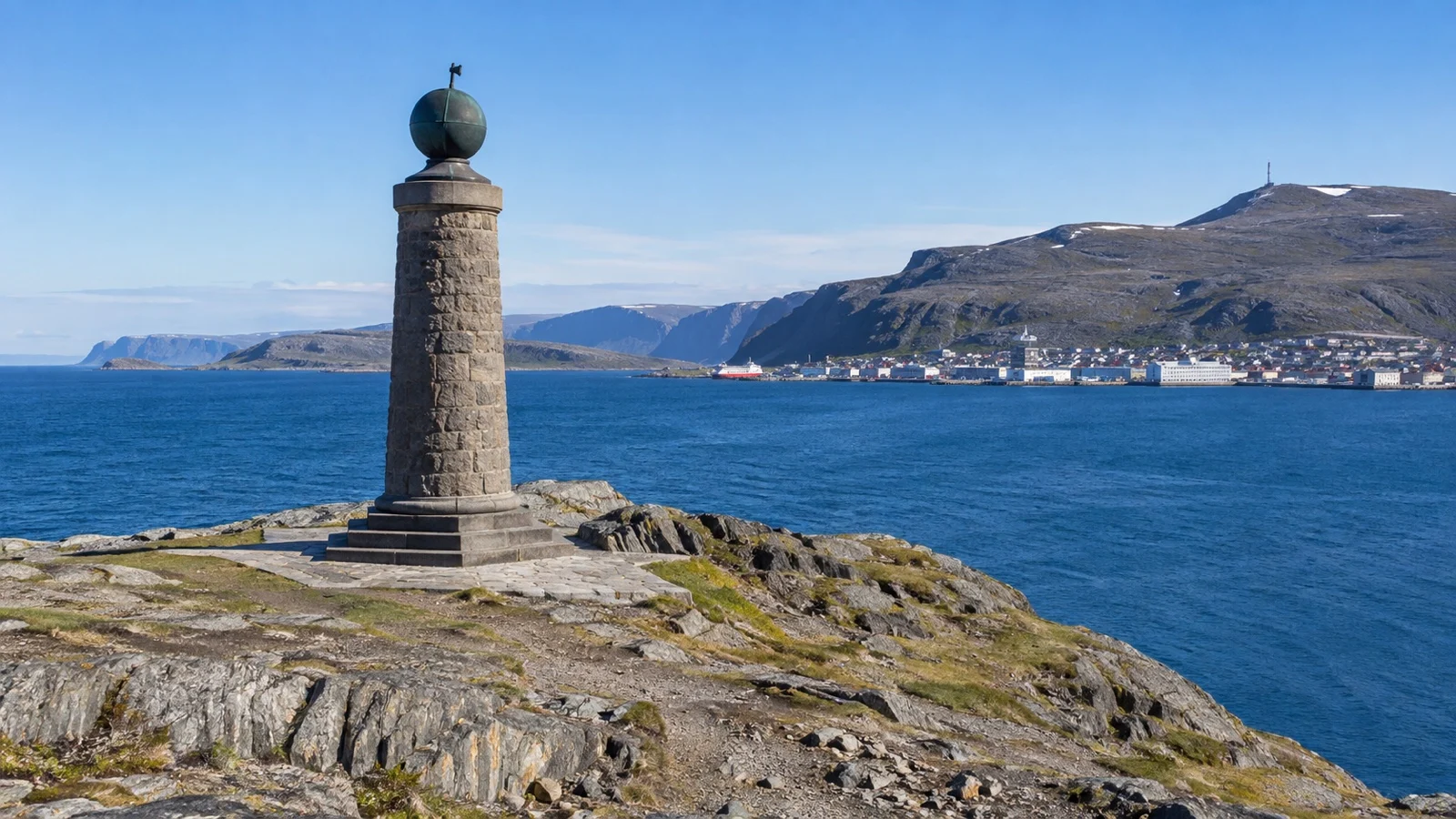
The monument lies outside the tight central sightseeing loop, although it may be convenient from some quay assignments. Check your berth before deciding whether to walk, take a taxi, or include it in a local tour.
There is no reason to rush out for a photograph without understanding what the column represents. A guide or a few minutes with the UNESCO background turns a modest monument into a story of international scientific cooperation.
Choose the Salen Viewpoint by Weather
Mount Salen rises behind Hammerfest and provides the classic view over town, harbor, islands, and surrounding water. Road access, a local sightseeing tour, or a walking route may be possible, but current weather and surface conditions should decide the method.
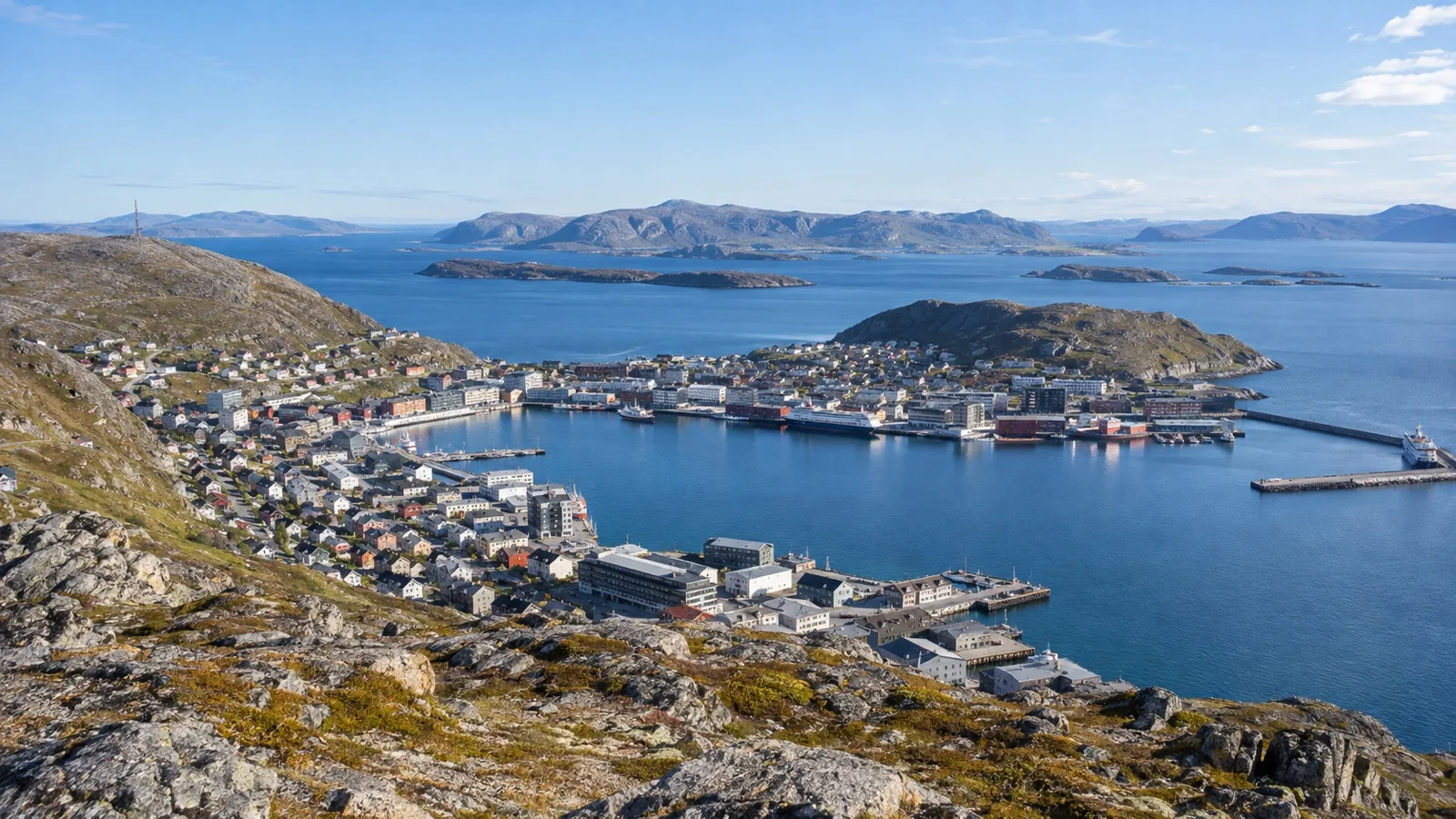
The popular zigzag path climbs quickly and can be muddy, icy, snowy, or slick after rain. Wear proper footwear, stay on the route, and turn around if wind, visibility, or footing deteriorates.
A taxi or tour protects energy and can work well for mixed-mobility groups, provided the vehicle and final viewpoint surface are confirmed. Ask the driver to wait or arrange the return before getting out.
Central Hammerfest Is the Flexible Choice
The center combines the harbor, shops, cafes, church, museums, and civic spaces within a manageable area. It is a practical plan after a late arrival because each stop can be shortened without risking the whole day.
Hammerfest Church is a striking part of the postwar townscape, but it remains an active place of worship. Check visitor access, keep voices low, and respect services, ceremonies, and photography rules.
The waterfront also reveals that Hammerfest is a working northern community rather than an Arctic stage set. Stay outside marked industrial areas and give fishing, freight, and coastal operations room to work.
Sentrum and Fuglenes Create Different Walking Days
A central berth naturally favors the reconstruction museum, church, shops, and Polar Bear Society. A Fuglenes-area berth may put the Meridian Column closer while making some central attractions a longer walk or shuttle ride.
Do not copy a walking route without checking where it begins. The same list of sights can require a very different order from another quay, and steep terrain magnifies a bad sequence.
Build the route in a loop that finishes on the ship side of town. If weather worsens, replace the viewpoint with a museum or cafe and keep the return easy.
Beyond Town Means One Island Excursion
Hammerfest sits on Kvaløya, with coastal roads and Arctic landscapes extending beyond the urban area. A local guide can introduce fishing communities, wartime sites, wildlife habitats, and broad island scenery while managing distances.
Reserve ahead because vehicles and guides are limited when a ship arrives. Confirm the route, duration, restroom stops, walking demands, weather policy, and guaranteed return to the correct quay.
Wildlife sightings are never guaranteed, and reindeer or seabirds should not be approached or fed. Slow down, stay on the vehicle-safe side of the road, and let animals choose the distance.
Boat Trips Need Arctic Margin
Local marine excursions can reveal nearby islands, seabirds, fishing history, and the exposed coast, but they add another weather-dependent operation to the port day. Boat type, boarding method, protective clothing, and sea conditions matter as much as the advertised route.
Use a reputable operator familiar with cruise timing and confirm the return wharf in writing. A small-boat trip should finish well before all-aboard because wind and visibility can change faster than the itinerary page.
Travelers prone to motion sickness should follow their clinician’s advice and take precautions at the correct time. Even a calm harbor departure can lead to more exposed water.
Hiking Deserves Arctic Honesty
A trail that looks short can still involve steep ground, wet rock, bog, lingering snow, strong wind, and limited shelter. Download an official route, check local conditions, carry layers, and tell someone which path you intend to use.
Do not treat summer daylight as unlimited excursion time because the ship still leaves. The midnight sun removes darkness, not distance, weather, injury risk, or the all-aboard deadline.
For a short call, Salen is usually the most realistic active objective. Longer or remote hikes belong with a qualified guide and a schedule designed around the ship.
Accessibility Changes With the Quay and Season
An alongside berth removes tender transfer concerns, but the gangway angle, secure port route, shuttle vehicle, curb cuts, and distance still vary. Ask the cruise line which quay is assigned and whether a lift-equipped transfer operates.
Central museums can provide a rewarding lower-effort day, while Salen, the Meridian Column, and outdoor routes need specific surface and vehicle checks. Request doorway, elevator, restroom, seating, and mobility-device storage information directly from the venue or operator.
Snow, ice, slush, and freeze-thaw conditions can temporarily change an otherwise accessible route. Bring traction appropriate to the forecast and accept a museum-based plan when the pavement is unsafe.
Midnight Sun and Polar Night Are Different Trips
Summer calls can arrive under near-continuous daylight, which gives the harbor and hills a luminous, unhurried appearance. It does not guarantee warmth, and a bright day can still bring cold wind, rain, and low cloud.
Dark-season visits offer a different atmosphere and a chance of aurora when skies and solar activity cooperate. Northern lights are never guaranteed, and they are not visible against the bright summer sky.
Check current sunrise, sunset, and twilight for the call date rather than relying on a broad Arctic season. Your body may also need a sleep mask in summer even if the schedule says bedtime.
Arctic Weather Belongs in the Plan
Hammerfest weather can shift between sun, rain, fog, sleet, and strong wind in a single visit. Dress in breathable layers with a windproof and waterproof outer shell, then carry gloves and a warm hat even outside winter.
Footwear needs grip for wet pavement, hillside paths, and possible ice. Secure loose items near the waterfront because a sudden gust can remove a hat or destabilize a person concentrating on a camera.
Use the Norwegian Meteorological Institute and local operator updates close to arrival. When visibility collapses, the museum and central town are better choices than a viewpoint with no view.
Food, Money, and Northern Courtesy
Hammerfest has cafes and restaurants where seafood and northern Norwegian ingredients may appear, but opening hours and menus can change seasonally. Check the current lunch schedule and reserve if a large ship is expected.
Norway is highly card friendly, and some businesses may prefer cashless payment. Carry a working payment card with a PIN and a backup method rather than relying on foreign cash.
Ask before photographing local people, private property, industrial facilities, or working crews. Hammerfest is home first and a cruise destination second, which is part of what makes the visit worthwhile.
Return to the Correct Harbor Gate
Work backward from all-aboard and include the route to your specific quay, a shuttle wait, port security, weather, and slower walking on wet or icy surfaces. A ship visible across the harbor may still be separated from you by restricted roads.
For a taxi outing, agree on the pickup time and berth name before leaving town. For a hike, set a turnaround point that remains conservative even if the view appears just beyond the next rise.
Ship-sponsored excursions normally provide the strongest coordination if delayed, while independent travelers own the timing risk. I would return early enough for a final harbor photograph rather than discover how large Hammerfest feels from the wrong quay.
Hammerfest Cruise Port Questions
Do cruise ships dock in Hammerfest?
Most calls are alongside, but the assigned working quay varies by vessel and operation. Check the ship’s current port notice for the gate and town transfer.
Can I walk into town?
Often yes from a central quay, while other berths make a shuttle or taxi more practical. Follow the authorized pedestrian route and do not cross restricted port areas.
Can I see polar bears in Hammerfest?
No live polar bears are displayed in town, and ordinary cruise visitors should not expect wild ones nearby. The Polar Bear Society is a cultural and historical attraction, not an animal park.
Is the Meridian Column worth visiting?
Yes for travelers interested in science, mapping, and UNESCO history. Its value comes from the Struve Arc story, so read the background or visit with a guide.
Is Hammerfest worthwhile without a tour?
Yes, especially if the berth is central and the weather favors walking. The reconstruction museum, waterfront, church, and Polar Bear Society create a complete compact day.
A Northern Town, Not a Latitude Trophy
Hammerfest is most rewarding when you look past the northernmost claims and notice how a community rebuilt, adapted, and continues to work on an exposed Arctic coast. The quay, museum, monument, and hillside views all belong to that larger story.
My ideal call pairs the Reconstruction Museum with Salen in good weather and keeps the Meridian Column for the berth that makes it practical. Check the quay, carry real layers, and let one honest northern day be enough.
Planning details were checked against Hammerfest Harbour, Visit Hammerfest, the Museum of Reconstruction, and UNESCO’s Struve Geodetic Arc listing. Quays, shuttle arrangements, museum hours, trail conditions, tours, and weather can change, so reconfirm them with your cruise line and the relevant official provider before you sail.