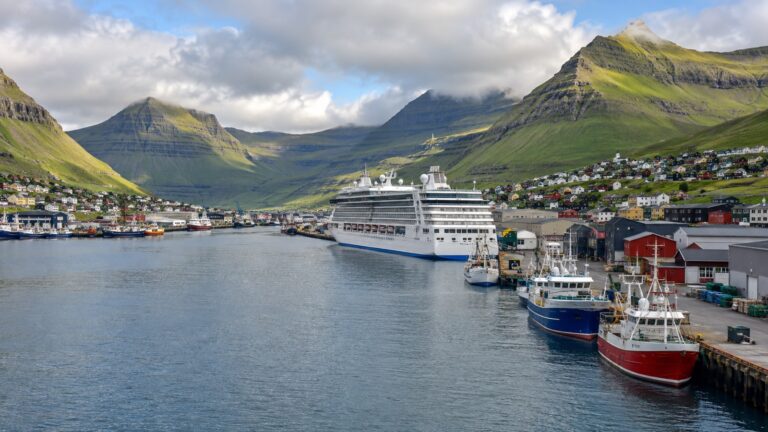
North Pole Cruise: How You Actually Get to 90 Degrees North
A North Pole cruise is far removed from an ordinary cruise. It is roughly two weeks aboard one of the very few passenger ships built to work through heavy polar pack ice.
The capable passenger fleet is tiny, and Russian nuclear-icebreaker voyages are currently unavailable through Western expedition operators. That shapes the price, availability, and gateway arrangements.
Quick take
If you want to stand at 90 degrees north, the mainstream Western market currently has one practical operator, PONANT, with limited and expensive departures. Plan well ahead rather than expecting broad last-minute availability.
For most of the modern era the answer was a Russian nuclear icebreaker chartered out of Murmansk, and that answer has stopped working. Poseidon Expeditions, the operator that ran those charters for years, now states plainly on its own North Pole page that it cannot operate the voyages while the Russia-Ukraine situation continues.
What is left is Ponant’s Le Commandant Charcot, an LNG-powered Polar Class 2 icebreaker that is the only passenger ship of its class afloat. It is expensive, it sells out early, and it is the practical route currently sold in the mainstream Western market.
Choose this trip for the experience of traveling through polar ice, not only for the coordinate. The Pole itself is a position on drifting sea ice, so the voyage is the larger experience.
The quick facts
- What you are actually reaching: the geographic North Pole, 90 degrees north, in the middle of a frozen ocean with no land under it. There is nothing to plant a flag in except ice that is moving beneath you.
- The ice class you need: a genuine icebreaker, not an ice-strengthened expedition ship. Railotech, formerly Aker Arctic, which developed the hull concept for Le Commandant Charcot, rates her Polar Class 2 and gives her smooth icebreaking ahead in multiyear ice up to about 8 feet thick.
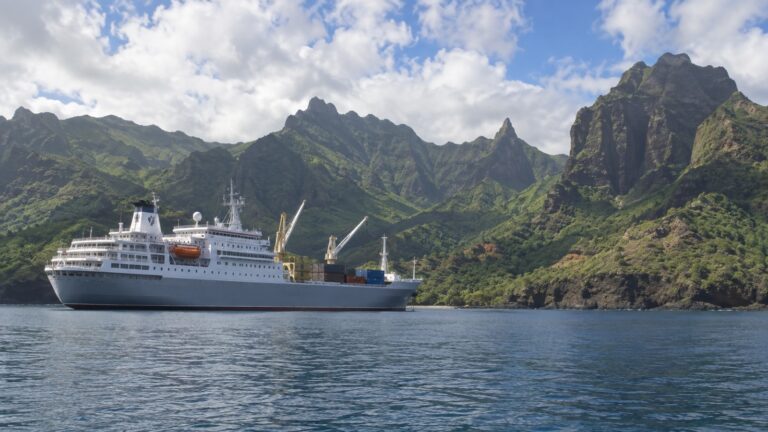
- The other ship: the nuclear icebreaker 50 Let Pobedy, described by Poseidon Expeditions as carrying two reactors and 75,000 horsepower and crushing multiyear ice up to nearly 10 feet. She is not currently available to Western guests.
- How you get ashore: you do not, in the usual sense. At the Pole the ship parks against the floe and crew cut steps or a ramp down onto the ice, and en route the landings are Zodiac work onto shore or ice.
- The gateway ports: Longyearbyen on Svalbard for the Ponant sailings, and historically Murmansk in Russia for the nuclear icebreakers. Longyearbyen sits at about 78 degrees north, which leaves roughly 830 miles of ocean between you and the Pole.
- The cost: premium expedition pricing with fares that change by departure and cabin. Ask for the current total, then confirm whether gateway flights and transfers are included.
- The wildlife you might see: polar bears, ringed and bearded seals, walrus on the Svalbard leg, and seabirds well beyond 80 degrees north. Bears do turn up near the Pole, but treat any sighting as luck rather than an itinerary item.
Why almost no ship can do this
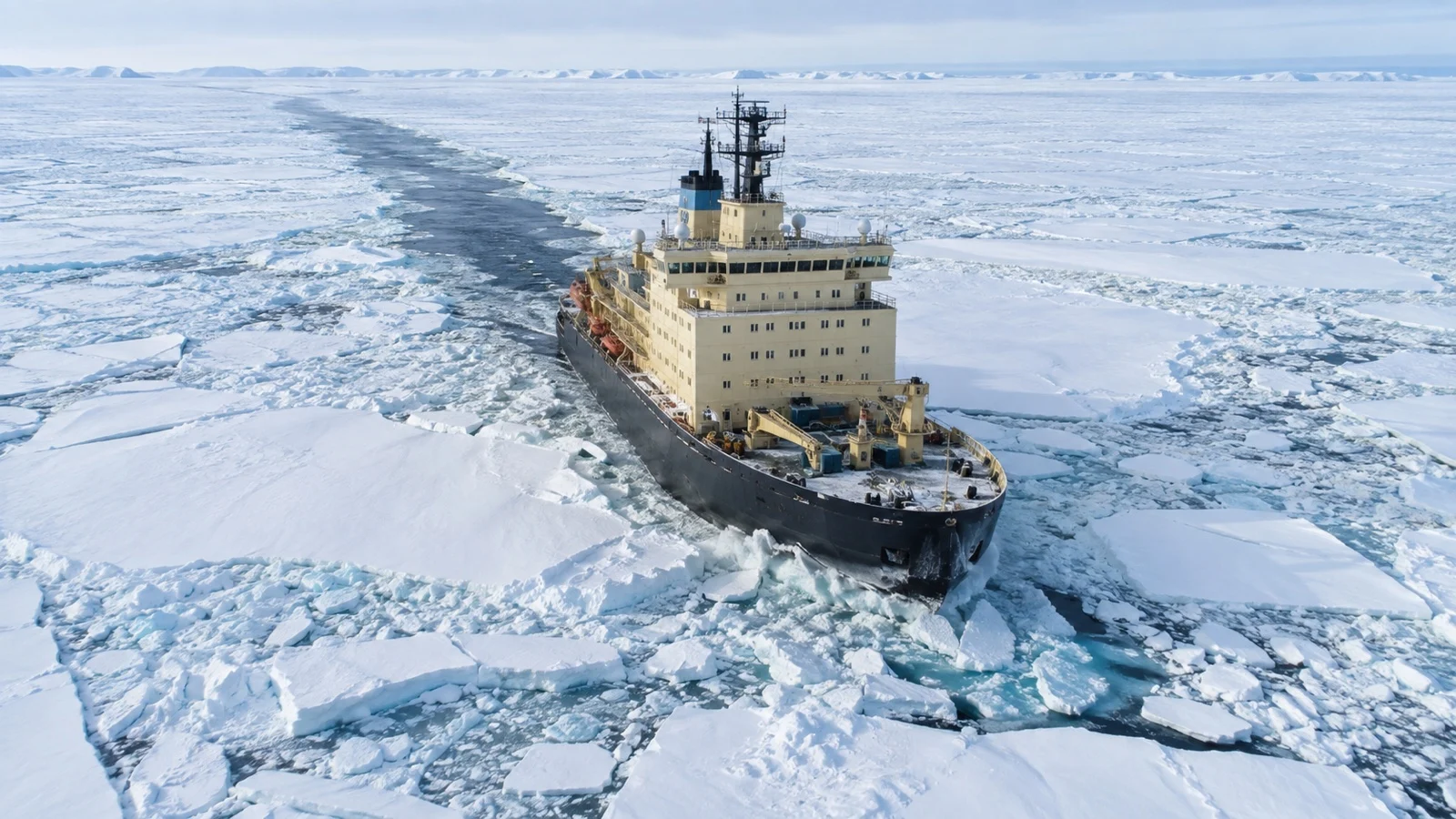
The Arctic Ocean does not politely melt out of the way in July. The National Snow and Ice Data Center puts typical multiyear ice at roughly 6.5 to 13 feet thick, with a thermodynamic equilibrium around 10 to 13 feet and ridged pile-ups reaching over 30 feet.
Ridges are the real problem, not flat ice, because they reach down twice as far as they stick up. That is why the Pole was for decades the preserve of nuclear icebreakers, which have the endurance to reverse and charge for hours.
Le Commandant Charcot is the exception, and she is a genuinely unusual piece of engineering. Railotech lists her at about 492 by 92 feet, delivered in 2021, with two 17 MW propulsion units and a Double Acting design that lets her run astern into the worst ice.
She is also the first luxury icebreaking cruise vessel with LNG propulsion, and she spends roughly 200 days a year working in polar ice. In September 2024 she became the first cruise vessel to reach all three Arctic poles in one voyage.
The availability problem, stated honestly
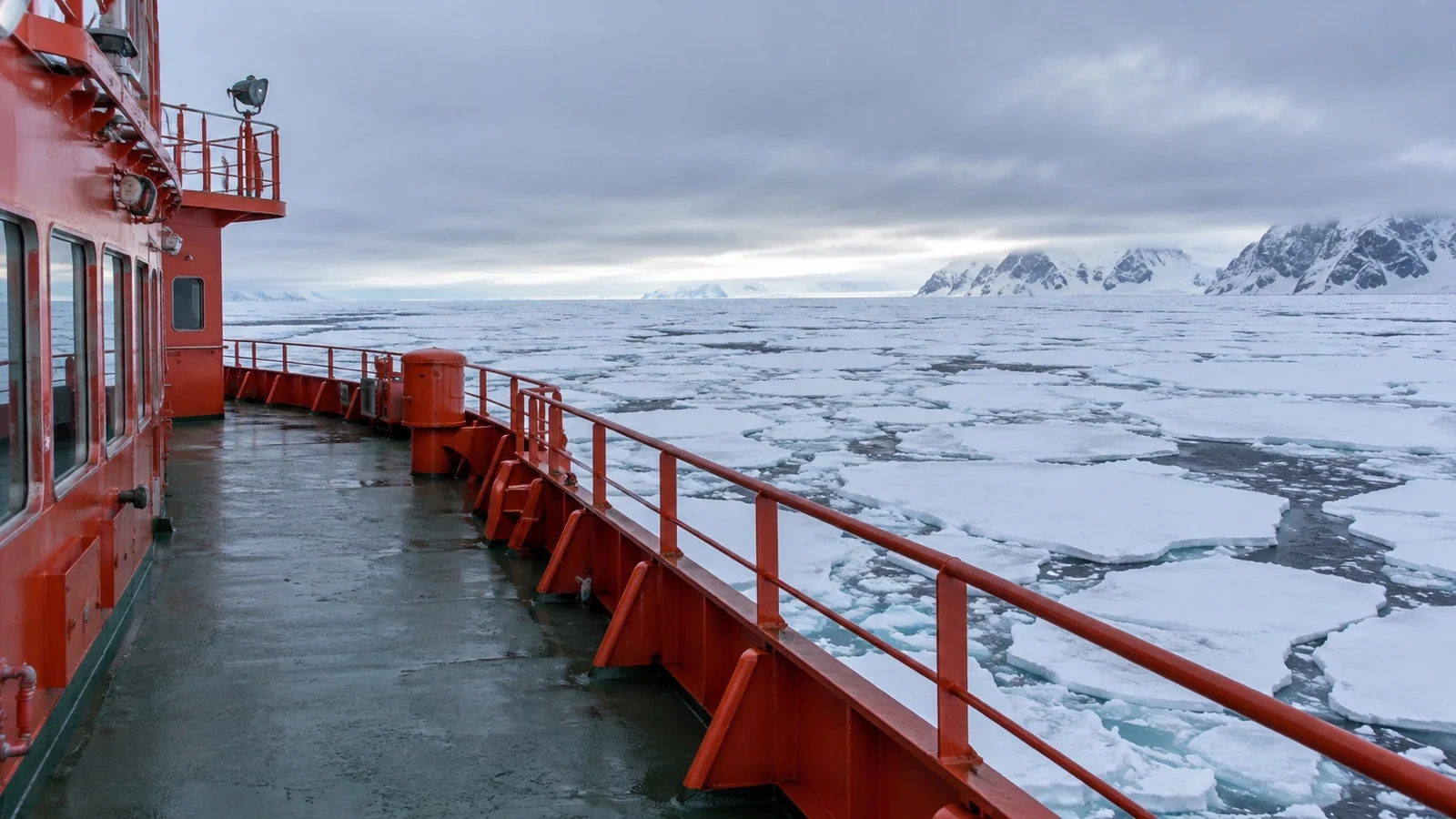
This is the part the glossy brochures skate over, so here it is flat. The Russian nuclear icebreaker charters that carried most North Pole passengers for three decades are not bookable by Western travelers at the moment.
Poseidon Expeditions still keeps its North Pole page live and says it hopes to resume when circumstances allow, while pointing customers at Svalbard and Greenland instead. Quark Expeditions, which also chartered icebreakers to the Pole in the past, now lists only the Canadian High Arctic, Greenland, Svalbard and Iceland among its Arctic destinations.
If the Pole itself is out of budget or out of reach, consider an expedition to the pack-ice edge north of Svalbard. It can deliver ice, Arctic light, and possible wildlife at a lower price, as explained in the guide to the Svalbard cruise ports.
What actually happens when you get there
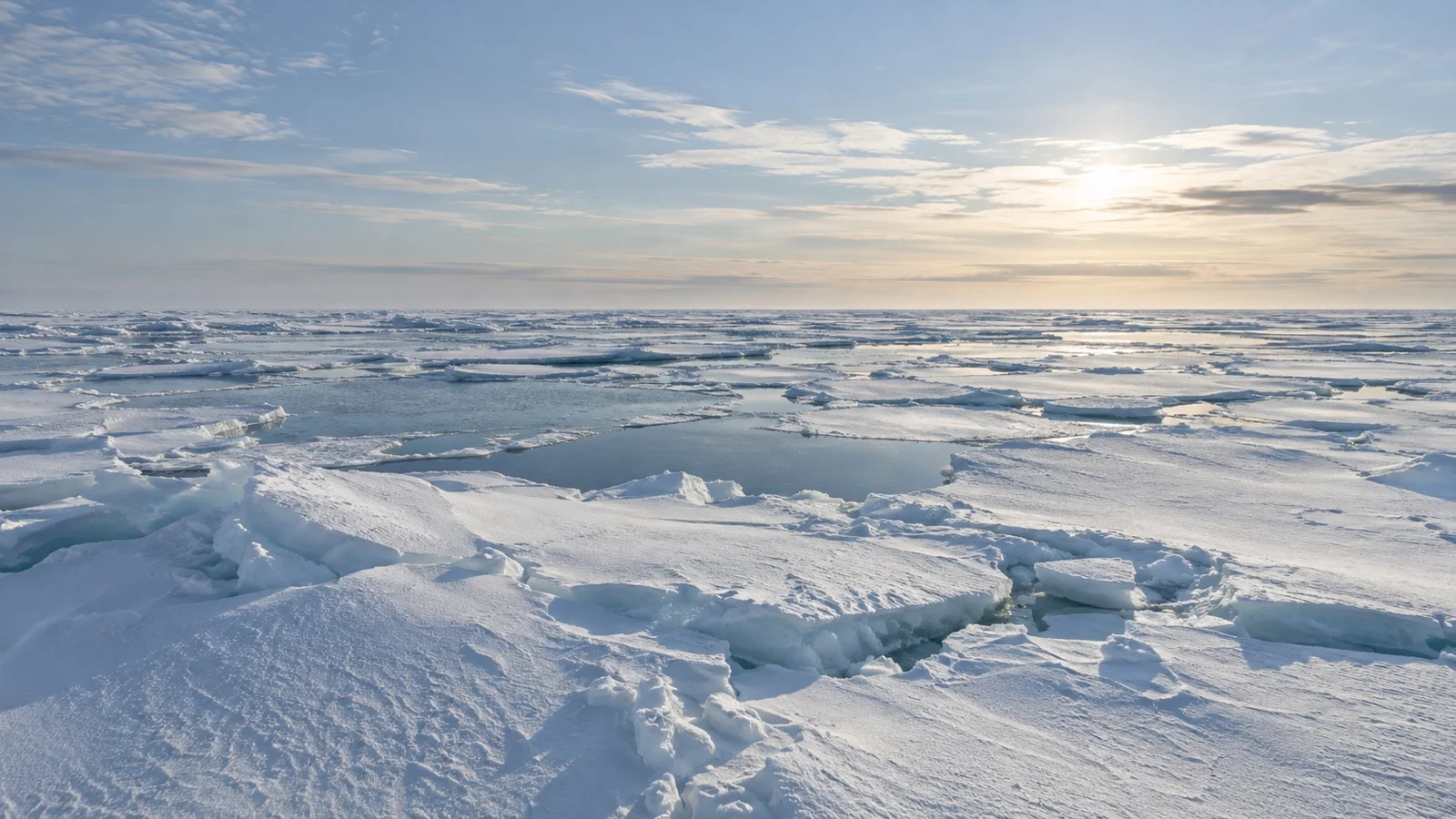
Arrival is anticlimactic by design. The bridge works to a GPS position, the ship noses into a suitable floe, and someone announces that you are at 90 degrees north.
Then the ice drifts, and you are not any more. This is the detail people find hardest to absorb: there is no fixed point, only a moving sheet that happens to be over the spot for a while.
Assuming the floe is judged safe, the crew test it, mark a perimeter, post bear watch with rifles, and let you walk on the frozen Arctic Ocean. The ceremonial circuit of a marker post, the champagne, the group photograph and the traditional walk around the world in ten seconds all happen here.
The polar plunge is the other set piece, and it is exactly what it sounds like. You go into water around 29 Fahrenheit on a harness for a few seconds, and you get out.
Every part of this is conditional on ice and weather. A floe that will not hold, fog, or a bear in the area cancels the walk, and no operator will promise it in writing.
What to check before paying a deposit
This is a large financial commitment for a voyage with genuine operational uncertainty. Put these questions in writing before signing anything.
- What is the actual ship: confirm the vessel name and its polar class in writing. Ice-strengthened and icebreaking are different words for different ships.
- What happens if the Pole is not reached: ask what the compensation or alternative is. Ice conditions have stopped voyages before and will again.
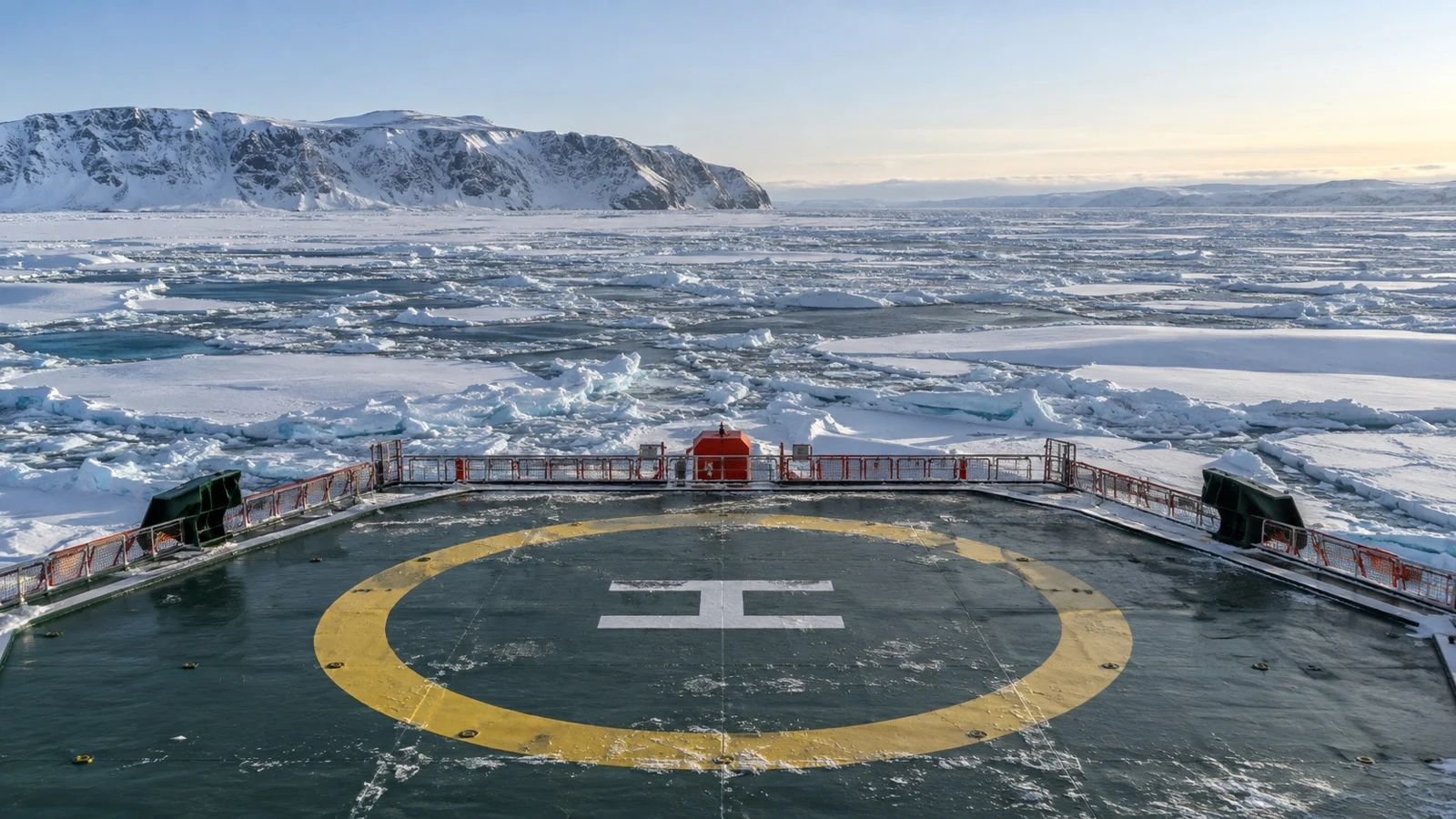
- Whether helicopters are carried: some polar voyages carry them for ice reconnaissance and flightseeing, some do not, and rules on their use vary. Do not assume a flight is included.
- How many landings are realistic: the Svalbard stops at the start and end are where the wildlife content lives, and the number varies with ice and permits. Get a range, not a promise.
- What the evacuation plan is: at 90 degrees north you are days from a hospital. Ask what the medical facility on board covers and what the insurance requirement is.
- Whether your insurance actually covers it: most standard travel policies exclude remote polar regions and repatriation costs at this scale. Read the exclusion list rather than the summary page.
- What the flights to the gateway involve: Longyearbyen is reached via Oslo or Tromso and the flights are not frequent. Build in a spare day at the front, using the same reasoning outlined in the guide to the port at Longyearbyen.
- What the cancellation terms look like: deposits on these voyages are large and the milestones come early. Know the dates before you commit.
Fun fact: the National Snow and Ice Data Center notes that at the North Pole the sun rises once each year and sets once each year, giving six months of continuous daylight and six months of continuous night. Every summer voyage there happens inside a single very long day.
How to decide
If Arctic wildlife is the main goal, a Svalbard-focused itinerary usually offers more time near productive coastal habitats. Wildlife at the Pole is possible but never guaranteed.
If the appeal is the ice itself, this is one of the rare commercial trips built around watching an icebreaker work through polar floes for days.
A Svalbard ice-edge voyage can be a practical first expedition before committing to North Pole pricing. It offers a less expensive way to learn whether long days in cold, changeable conditions suit you.
A realistic word on accessibility
The ship is the easy part. Modern polar vessels have elevators, wide corridors and accessible cabins, and Le Commandant Charcot was built recently enough to be designed with that in mind.
Everything outside the hull is the hard part. Getting onto the ice means a gangway or steps onto an uneven, snow-covered surface with no handrails and no way to make it level.
Zodiac operations are harder still, involving a step down into a moving inflatable from a platform, usually with two crew taking your arms. For more detail, see the separate explainer on how Zodiac landings actually work.
Be honest with the operator at booking rather than at the gangway. Expedition teams are good at adapting, but they will refuse a landing on safety grounds if the conditions do not allow it, and at 90 degrees north there is no appeal process.
When to go, and the weather
There is only one season, and it is short. Sailings run in the northern summer, broadly July and August, when the ice is at its weakest and the light never goes.
Arctic sea ice reaches its annual maximum in March and its minimum in September, according to the National Snow and Ice Data Center. A voyage timed for late summer meets thinner ice, which is why nobody attempts this in May.
Expect cold rather than extreme cold. NSIDC gives average Arctic coastal summers around 50 Fahrenheit, and out on the pack ice it is colder and windier, hovering near the melting point of the ice itself.
Fog is the underrated enemy, not temperature. It closes in over the ice edge without warning, cancels helicopter operations and turns a spectacular horizon into a gray wall for two days at a time.
The gateway and ice plan to lock down
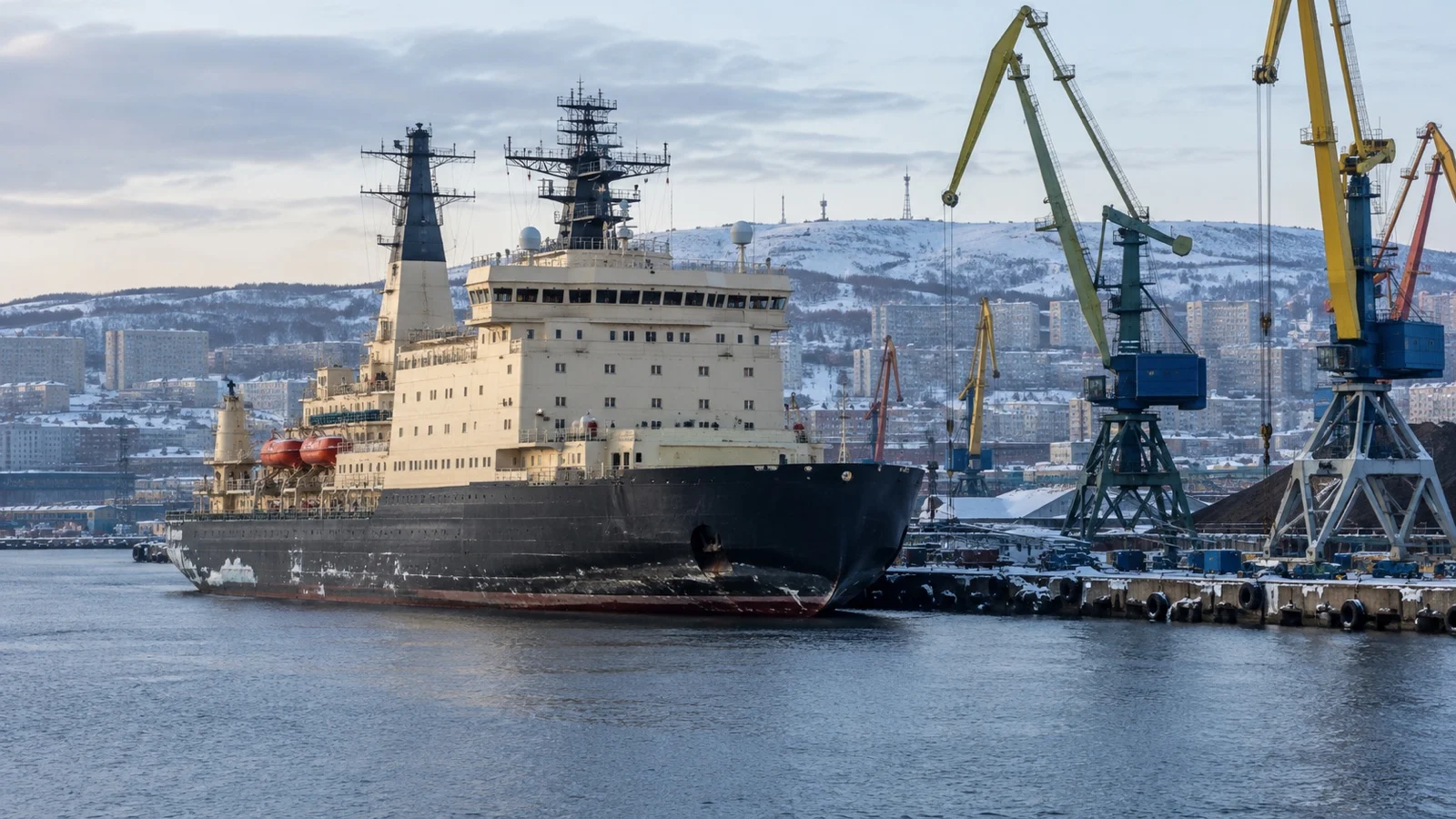
For the current mainstream Western market, Ponant’s Le Commandant Charcot is the practical passenger option; that is a question of current operations, sanctions, payment, insurance, and availability, not a rule about Western passports. Recheck the operator and government advice before every payment because the market can change faster than a printed guide.
Longyearbyen is in Norway’s Svalbard archipelago, with passport and immigration arrangements that differ from a simple mainland domestic connection. Follow the current Norwegian rules for your nationality and routing through Oslo, and arrive at least two nights before the operator’s check-in or charter.
Reaching 90 degrees north and stepping onto a tested floe are separate achievements, and neither an ice landing nor passenger helicopter flightseeing is guaranteed. Helicopters may be carried for operational reconnaissance, so treat a passenger flight as included only when the written itinerary says so.
Medical care and evacuation are exceptionally remote, while large deposits and cancellation milestones arrive early. Keep essential medication and polar gear in carry-on luggage, confirm the insurer covers this voyage and evacuation latitude, and get written approval for any mobility or medical need before deposit.
Quick answers
Can you actually cruise to the North Pole?
Yes, by icebreaker, in July and August.
The mainstream Western-market option currently advertised is Ponant’s Polar Class 2 Le Commandant Charcot, sailing from Longyearbyen in Svalbard.
Why can I not book the Russian nuclear icebreaker any more?
Because the charters that filled those ships with international passengers have stopped.
Poseidon Expeditions says on its own site that it cannot operate North Pole voyages while the Russia-Ukraine situation continues.
Do you see polar bears at the North Pole?
Occasionally, but it is not the reason to go.
The Norwegian Polar Institute notes that polar bears are largely restricted to areas with sea ice for much of the year, and the productive hunting grounds are far south of 90 degrees north.
Do you get off the ship at the Pole?
Usually yes, onto the sea ice, after the crew have tested the floe and posted armed bear watch.
It is entirely conditional on ice, weather and wildlife, and it does get canceled.
Is the polar plunge compulsory?
No, and plenty of people watch instead.
It is a few seconds in water around 29 Fahrenheit, on a safety line.
The last word
A north pole cruise is the least port-focused cruise there is, because there are no ports for most of it. You leave one small Arctic town, spend two weeks in ice, and come back to the same small Arctic town.
That makes the gateway matter more than usual, and Longyearbyen repays a couple of days on either side. The town, the museum and the surrounding valleys are the closest thing to context you will get, and the Norwegian Polar Institute’s own research presence there is part of the appeal.
If the wait or the money defeats you, the consolation prize is genuinely good. Svalbard’s ice edge and the fjords of the Greenland cruise ports deliver more wildlife per day than the Pole ever will.
And if you do get there, remember what is actually under your boots. About 6 feet of drifting sea ice, and then several miles of very cold ocean with no seabed worth mentioning until a long way down.
How this guide was researched: No firsthand North Pole sailing, ice landing, or ship inspection is claimed. Specifications were checked against Railotech, formerly Aker Arctic; ice and daylight information against the National Snow and Ice Data Center; wildlife context against the Norwegian Polar Institute; and current availability against PONANT and Poseidon Expeditions.
Logistics and time-sensitive details were reviewed September 12, 2026. Confirm the exact ship, itinerary, inclusions, insurance requirements, and cancellation terms before paying. See our Editorial Policy.
More on this topic: browse every guide on expedition and alternative cruises.