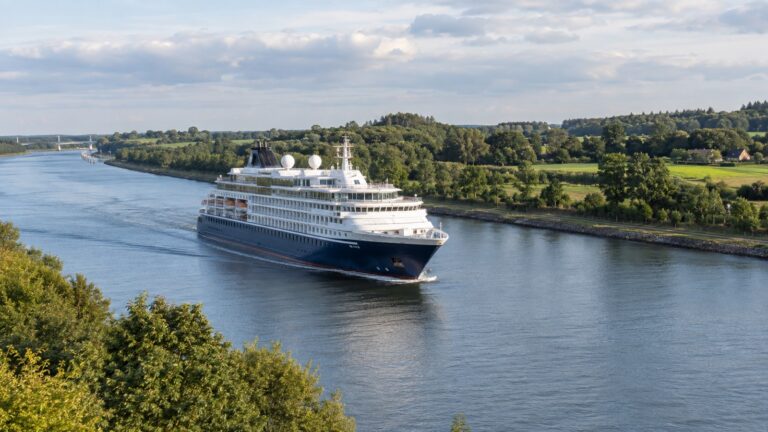
Zodiac Landing Cruise Explained: Mudrooms, Boot Washes and Wet Landings
A Zodiac landing can involve sitting on the inflated tube and swinging both legs over the side at the beach. The exact boarding and landing method depends on the operator, vessel and conditions.
Expedition teams brief and practice the procedure before operations begin. Following the crew’s instructions is central to keeping each transfer safe.
The practical take
Expedition ports are not ports. There is no quay and no taxi stand, so the ship becomes the terminal and the Zodiac becomes the shuttle.
If you have only done tender ports on a big ocean ship, forget most of it. A conventional tender is usually a covered boat with seats, while a Zodiac is an open inflatable boarded using the ship’s instructed method.
Treat the first outing as a chance to learn the ship’s procedure. If the itinerary offers a calm Zodiac cruise before a wet landing, it can help you practice the boarding motion.
Do not book an expedition sailing on the assumption that boarding requirements will be waived. Ask the operator for the requirements on your specific ship before paying a deposit.
The quick facts
- How you get ashore: by Zodiac at most remote expedition sites, using the vessel’s shell door, platform, or gangway. A landing may be wet or dry, and some itineraries also use docks or other small craft.
- The boarding move: one person at a time, using the sailor’s grip, forearm to forearm rather than hand to hand. AECO writes it into its Arctic visitor guidelines, along with staying seated and never having more than one person standing.
- Life jackets: the operator supplies the required flotation equipment and explains when and how to wear it. Follow the ship’s procedure for every transfer.
- Boots: many polar operators supply rubber boots, but inclusions and sizing vary. Aurora Expeditions says gumboots are supplied for landings and advises that guests should be able to manage reasonable distances on uneven ground.
- How many go ashore at once: in Antarctica, a hard maximum of 100 passengers per vessel at any one time, with one guide per twenty passengers. Site-specific rules cut both numbers further.
- The head count: operators use a tag board, scanned card or another check-out system so the team knows who is off the ship. Follow the vessel’s procedure every time.
- Biosecurity: cleaning and disinfection rules depend on the destination and current guidance. Expect inspections and cleaning of boots, outerwear, bags and equipment before landings, with additional cleaning when directed.
- How often landings are canceled: no reliable expedition-wide cancellation rate is published. Wind, swell, surf, ice and wildlife can all change or cancel a planned landing.
Getting into the boat
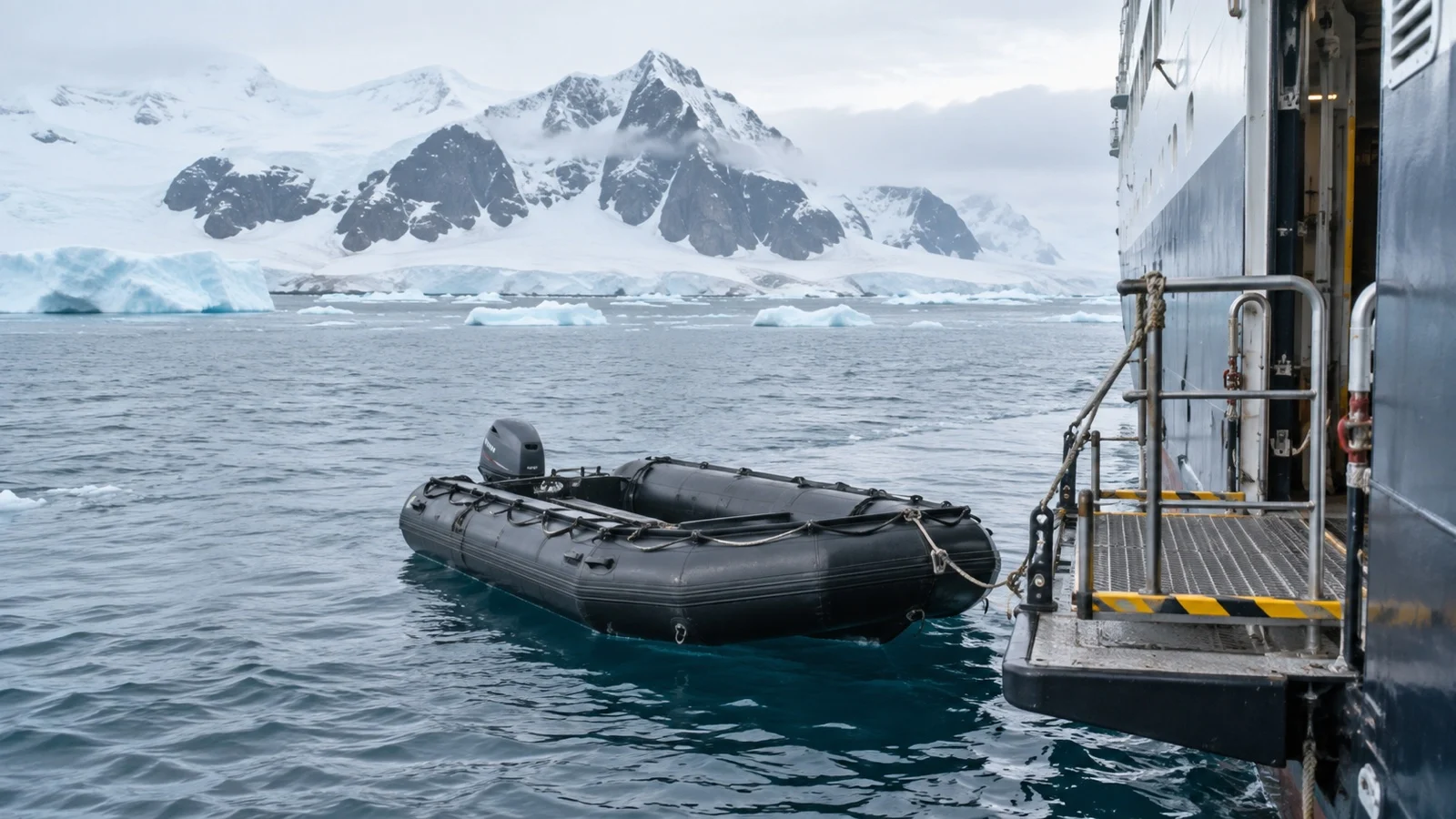
The call usually comes over the public address system by assigned group. Follow the ship’s instructions for collecting equipment, waiting in the mudroom and approaching the platform.
Crew positions and handholds vary by vessel. Secure loose items and use only the boarding grip demonstrated during the ship’s safety briefing.
Board one person at a time and move to the seat indicated by the crew. The exact step, grip and seating method depends on the vessel and landing.
Capacity and seating arrangements vary by craft. Stay seated and follow the driver’s instructions until the crew directs you to disembark.
Wet landings, dry landings and the boots
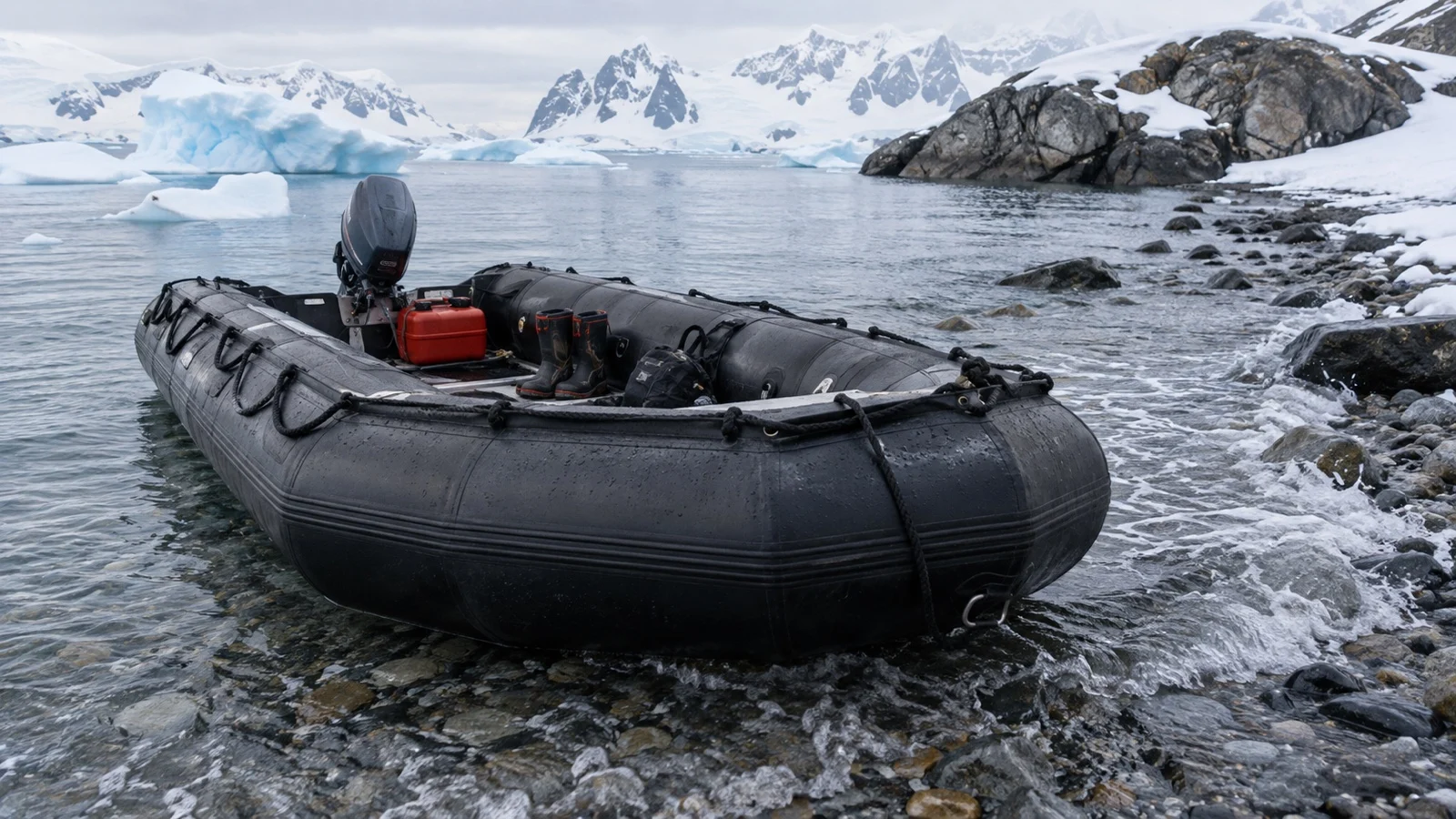
A wet landing means the Zodiac approaches a beach and guests step into shallow water. Depth and footing vary, so use the footwear specified by the operator.
A dry landing uses a jetty, rock ledge, steps or another firm transfer point. It may still require balance and a step between moving surfaces.
Use the boots required by your operator for wet landings. Personal footwear policies vary, so confirm them before packing.
The landing site is rarely a beach in any vacation sense. Expect rounded cobbles, wet kelp and a short slope steeper than it looked from the ship, so ask for a loaner walking pole.
The mudroom, the boot wash and the vacuum
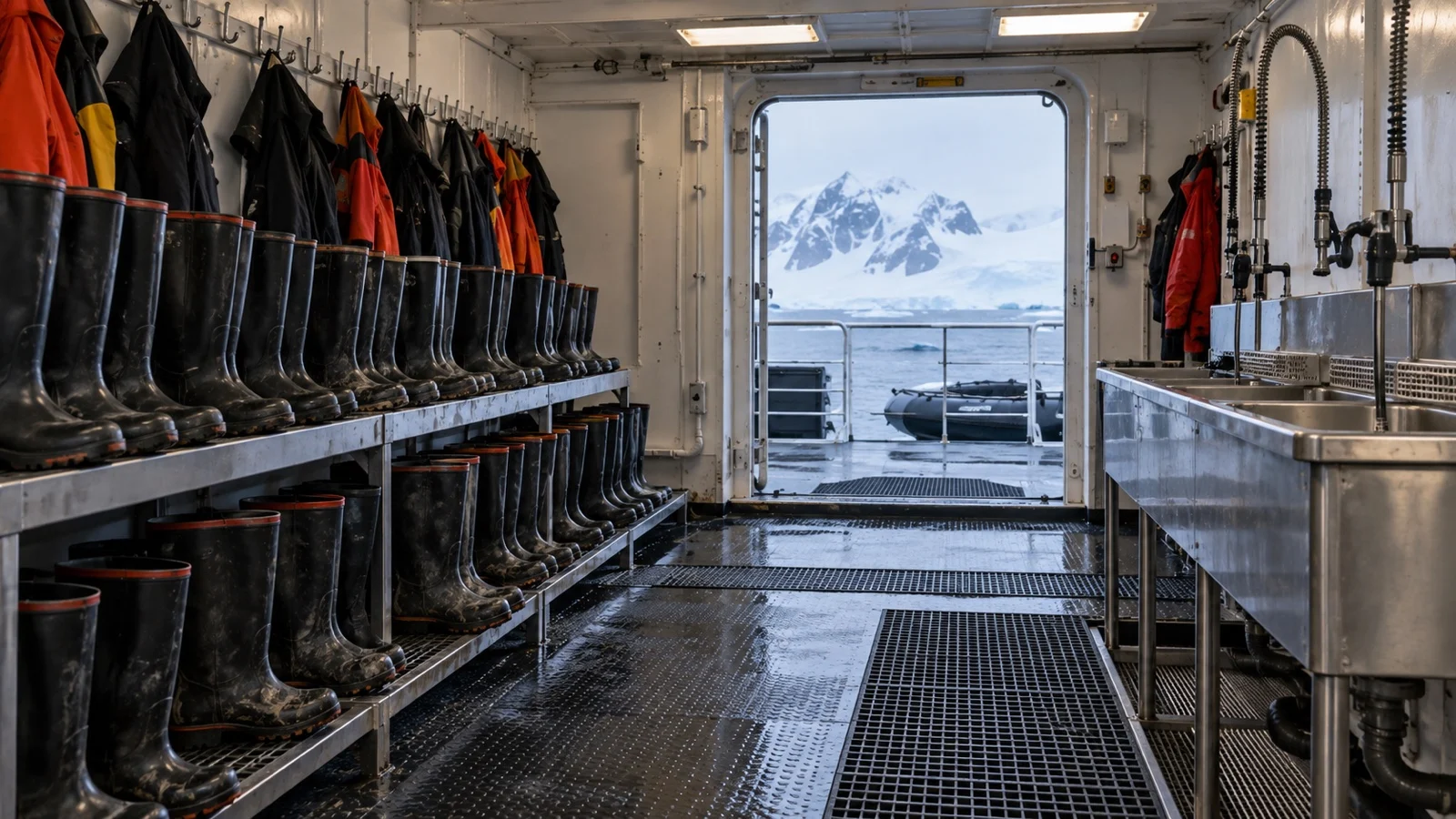
The mudroom is what makes an expedition ship an expedition ship. It sits on a low deck by the shell doors, with a numbered locker or hook per passenger holding boots, life jacket and waterproof pants.
Some ships assign mudroom storage for boots, flotation equipment and outer layers. Drying facilities and cabin-storage rules vary by vessel.
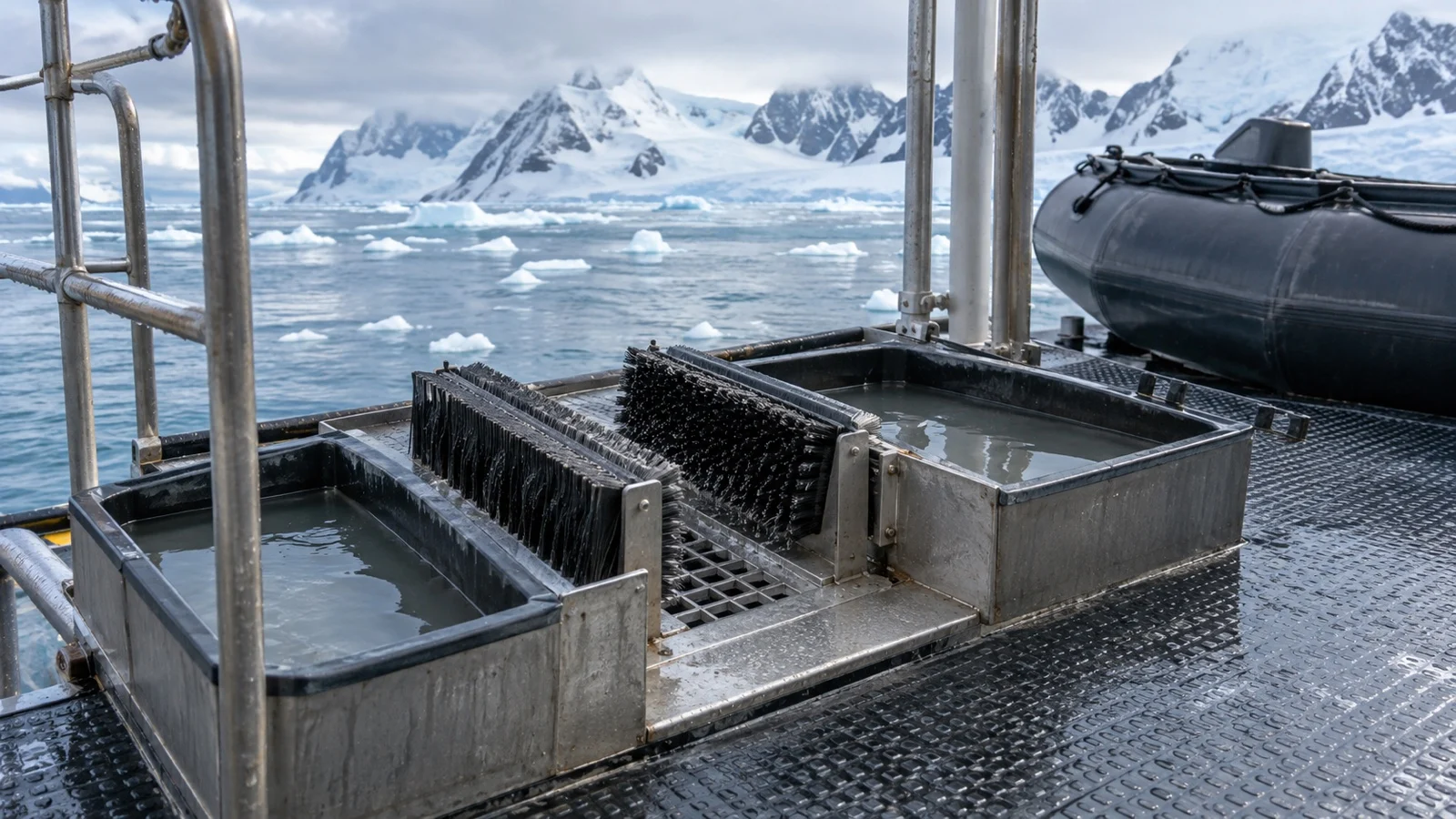
Biosecurity steps vary by destination, site and current guidance. IAATO publishes current resources for cleaning boots, clothing and equipment used ashore.
Before Antarctic landings, expedition teams inspect and clean clothing, bags and equipment to reduce the risk of moving non-native material between sites. Food rules are covered in the mandatory briefing, so leave snacks aboard unless the team explicitly says otherwise.
Why the landing gets canceled
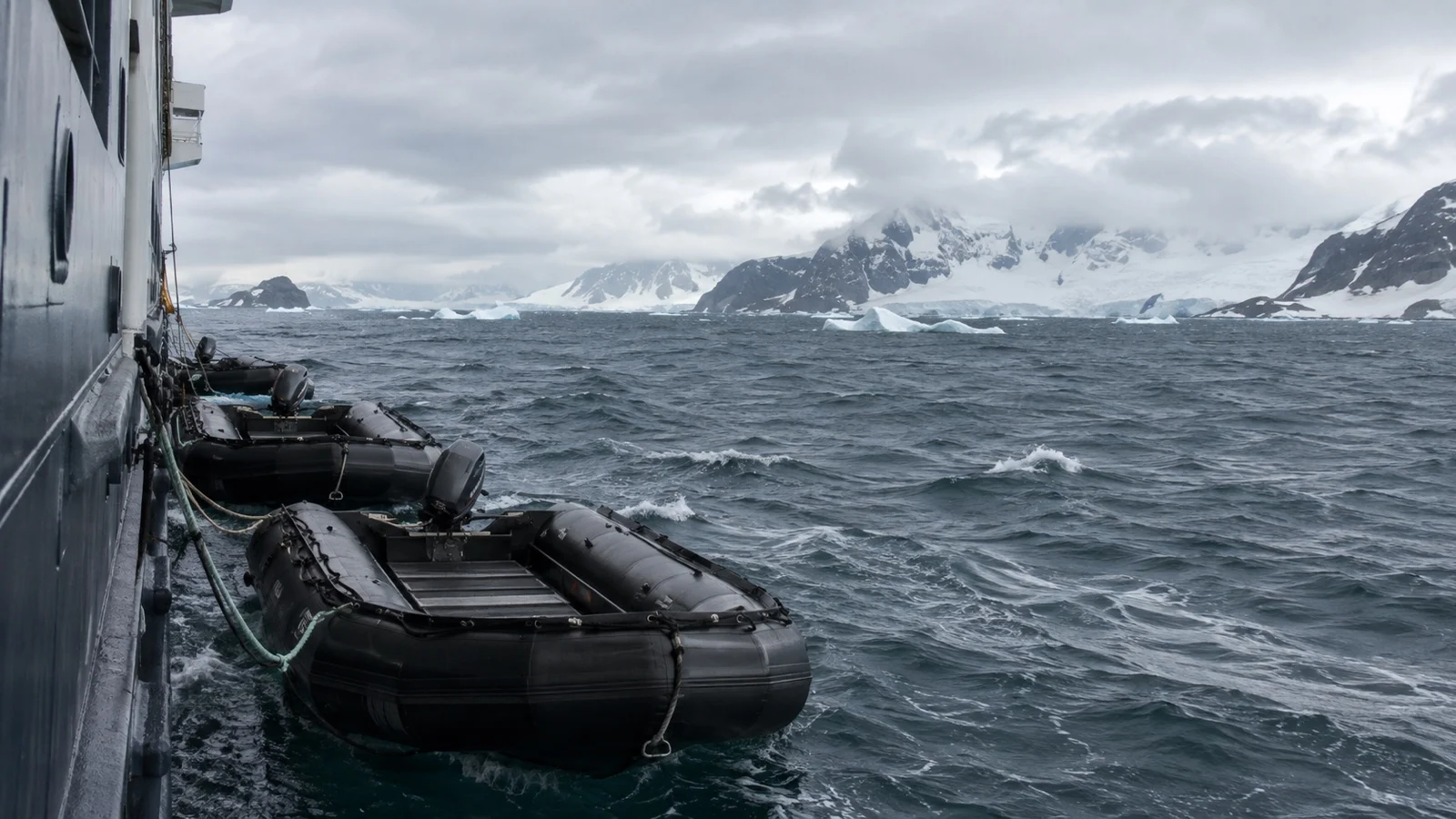
Expedition landing plans are conditional. Weather, ice, wildlife and safety assessments can change an itinerary with little notice.
Zodiac operations may stop when wind, swell, surf or ice makes the ship platform, route or landing unsafe. The expedition leader may substitute scenic cruising or another site when conditions allow.
Wildlife cancels landings too, which surprises people more. A beach of fur seals, a leopard seal patrolling the shallows or a polar bear near the site closes the site, and disappointment changes nothing.
Wildlife approach rules also apply while afloat. Follow the expedition team’s current briefings because distances, speeds and time limits vary by species, activity and location.
A canceled landing is a safety decision rather than a normal port call failure. The same weather principles appear in this guide to how rough seas delay or cancel tendering.
Rules to learn before you sail
- About 15 feet from wildlife: the Antarctic Treaty general visitor guidelines set a minimum of about 15 feet on land, and more where a site demands it. If an animal changes behavior, you are too close.
- About 50 to 80 feet from fur seals: the same guidelines single them out as dangerous, at roughly 50 to 80 feet where practicable. They are faster over cobbles than you are.
- Birds get their own numbers: IAATO sets about 15 feet for nesting seabirds and molting penguins, around 30 feet for nesting albatrosses, and roughly 75 feet for displaying albatrosses and nesting southern giant petrels.
- About 90 feet on the water: small boats should stay at least about 90 feet off concentrations of birds at sea, and roughly 15 to 50 feet from birds resting on floating ice.
- Do not sit down: IAATO’s avian influenza guidance tells visitors not to sit, kneel, crouch, squat or lie down ashore, and not to place anything on the ground. Camera bags stay on your shoulder.
- Cultural remains are protected by law: in Svalbard, AECO notes a roughly 330-foot protected zone around them, and you walk around objects rather than between them. Picking anything up is an offense, including a bleached whale bone.
Fun fact: the ceiling on Antarctic landings is not an industry courtesy but a hard cap of 100 passengers ashore per vessel at a time, published in the Antarctic Treaty general visitor guidelines with a required ratio of one guide per twenty passengers. That single line is why ships carrying more than 500 passengers cannot land anyone at all.
How to decide
Start with the boarding requirement, because everything follows from it. Ask the operator what level of balance, stepping and assistance is required to enter and leave the Zodiac on your vessel.
Lines word this differently and bury it in the expedition contract rather than the brochure. Read yours before the deposit, and telephone the line if the wording is vague.
Then look at ship size and the planned landing program. Antarctic rules cap visitors ashore from a vessel at 100 at one time, while vessel and site rules can impose tighter limits.
Finally, ask what is loaned. Boots and a parka are commonly included in polar fares, while waterproof pants often are not, so check the exact inclusions before packing.
A realistic word on accessibility
Remote Zodiac operations can present substantial accessibility barriers. Both the boat and ship can move during a transfer, and conditions change from one outing to the next.
Many remote landings cannot take wheelchairs or scooters, and manual lifting policies vary by operator and conditions. That is a safety limit, because the person lifting has to stay upright on a wet tube in swell.
Useful features can include elevator access to the mudroom deck, a low embarkation platform and seated Zodiac cruising when a beach landing is not suitable. Ask what is available on the exact vessel and itinerary before booking.
If mobility is a real constraint, a voyage built on scenic cruising with few landings is a more honest fit. The guide to wheelchair-friendly cruise ports covers conventional ports that may offer fewer transfer barriers.
When to go, and the weather
Most Antarctic expedition cruise schedules run during the austral spring and summer. Wildlife, ice and snow conditions change through the season, so compare the operator’s month-by-month guidance.
Conditions on the Antarctic Peninsula vary quickly. Wind and spray in an open boat can make a short ride feel much colder than the air temperature suggests.
Arctic expedition schedules vary by destination, ice conditions and daylight. Check the climate information for the specific month and route instead of relying on a regionwide temperature range.
Dress for the Zodiac ride, not the walk, because the crossing is the coldest quarter of an hour of the day. Waterproof over-pants, a windproof shell and a hat that will not blow off beat an extra fleece.
What to ask before relying on a landing
Ask the line to describe boarding on your specific ship, including the platform, handholds, step height, boot policy, and whether a dry landing or dock is ever used. Zodiac procedures vary, and a rule from one expedition company should not be presented as universal.
In Antarctica, the treaty system limits a vessel to 100 passengers ashore at one time at a landing site and calls for at least one guide for every 20 visitors. Site guidelines, wildlife behavior, ice, surf, and the expedition leader can impose tighter limits, so the day’s briefing always overrides a generic distance or schedule.
Treat every landing as conditional and every listed site as a plan, not a promise. There is no independent taxi or tour to substitute, and the useful return buffer is simply to be at the Zodiac meeting point before the expedition team’s announced time.
For mobility, send the operator a plain description of the steps, balance, and assistance you need and request a written answer for the booked vessel. Some teams can support more than others, but nobody should promise a wheelchair, scooter, crew lift, or snorkeling alternative at every remote site.
Quick answers
What is a Zodiac landing on a cruise?
It is going ashore by inflatable boat because there is no dock, usually stepping off the bow into shallow water.
Capacity and seating vary by Zodiac and operator.
Do I have to be fit to do a Zodiac landing?
Required mobility and permitted assistance vary by operator, vessel and conditions.
You do not need to be athletic.
Will I get wet?
Your feet may get wet during a wet landing, which is why operators specify suitable boots.
Spray is possible on a choppy crossing, so follow the operator’s waterproof-clothing list.
Can I take a snack ashore?
No, and it is one of the strictest rules on the ship.
Antarctic visitor guidelines ban leaving food or scraps, and crumbs from a pocket count.
How many landings will I get?
The planned number varies by itinerary, ship and conditions.
Treat every landing as conditional rather than assuming a specific cancellation rate.
The last word
The whole system rests on two ideas: nothing you carry should reach the shore uninvited, and the ship should always know how many people are off it. Seen that way, the tag board and the disinfectant tray stop feeling like bureaucracy.
If you have only done ocean cruising, start with what a tender port actually means. Expedition operations use smaller open craft and procedures set by the vessel and expedition team.
For shore rules, read this alongside the guide to Antarctic landings. Travelers embarking in Ushuaia should also review the port plan before departure.
How this guide was researched: This guide is based on independent research, not a first-hand Zodiac boarding or landing. Official expedition, Antarctic Treaty and visitor-guidance sources were used where available. Rules were checked against the Antarctic Treaty general visitor guidelines and IAATO’s wildlife watching, biosecurity and avian influenza guidance, AECO’s visitor and biosecurity guidelines for the Arctic, and Aurora Expeditions’ own published guest information.
Logistics and time-sensitive details were reviewed September 12, 2026. See our Editorial Policy.
More on this topic: browse every guide on expedition and alternative cruises.