South Georgia Cruise Landings: The Strictest Biosecurity in Cruising
A South Georgia cruise can include a supervised session cleaning outerwear, bags, and footwear before arrival. The exact procedure follows government biosecurity rules rather than an operator preference.
There is no airport or visitor accommodation, so tourists arrive by ship and sleep on board. The reward for the long crossing is access to remote landing sites with exceptional wildlife.
Quick take
South Georgia rewards careful preparation and is unforgiving of contaminated gear. Biosecurity is a legal and environmental requirement, so choose outerwear and bags that are easy to inspect and clean.
Smooth, washable gear is easier to inspect and clean before every landing. Seams, pockets, mesh, and hook-and-loop fasteners can trap seeds or soil, so clean them carefully before departure.
Do not treat South Georgia as a guaranteed bonus to an Antarctic itinerary. If the island is your priority, compare the number of planned days and landing opportunities while remembering that weather and wildlife can cancel any site.
The quick facts
- Where you land: there is no cruise berth and no town. Ships anchor off and work beaches, with Grytviken in Cumberland East Bay the main visitor landing with public heritage facilities.
- How you get ashore: by Zodiac, with wet landings common on beaches where you step into shallow water onto sand or shingle. Grytviken and site conditions can produce a different transfer. Knee-high rubber boots are compulsory kit rather than a nice idea.
- Getting there: only by sea. The Government of South Georgia and the South Sandwich Islands states that the island has no airport or runway, and that most visitors arrive on expedition ships carrying under 400 passengers.
- Permits: everyone entering needs a permit under the Entry Control Ordinance. The published fee is 250 pounds for a 40 day visitor permit, with a 50 pound surcharge on late applications and none approved within three days of arrival.
- Biosecurity: mandatory pre-arrival cleaning and inspection of all clothing and gear, plus boot scrubbing and biocide dipping before and after every landing. Fresh fruit, vegetables, meat, eggs and unpasteurized dairy cannot go ashore.
- Wildlife distance: use the current species-specific approach distances and the site team’s instructions rather than one universal number. Give wildlife the right of way, and move away when an animal approaches.
- Protected status: the whole land area of the territory, roughly 1,470 square miles, became a Terrestrial Protected Area in 2022.
- How often landings are missed: often enough to plan for. Wind, swell, wildlife activity, protected-site limits, and disease controls can close beaches at short notice.
How the biosecurity process works
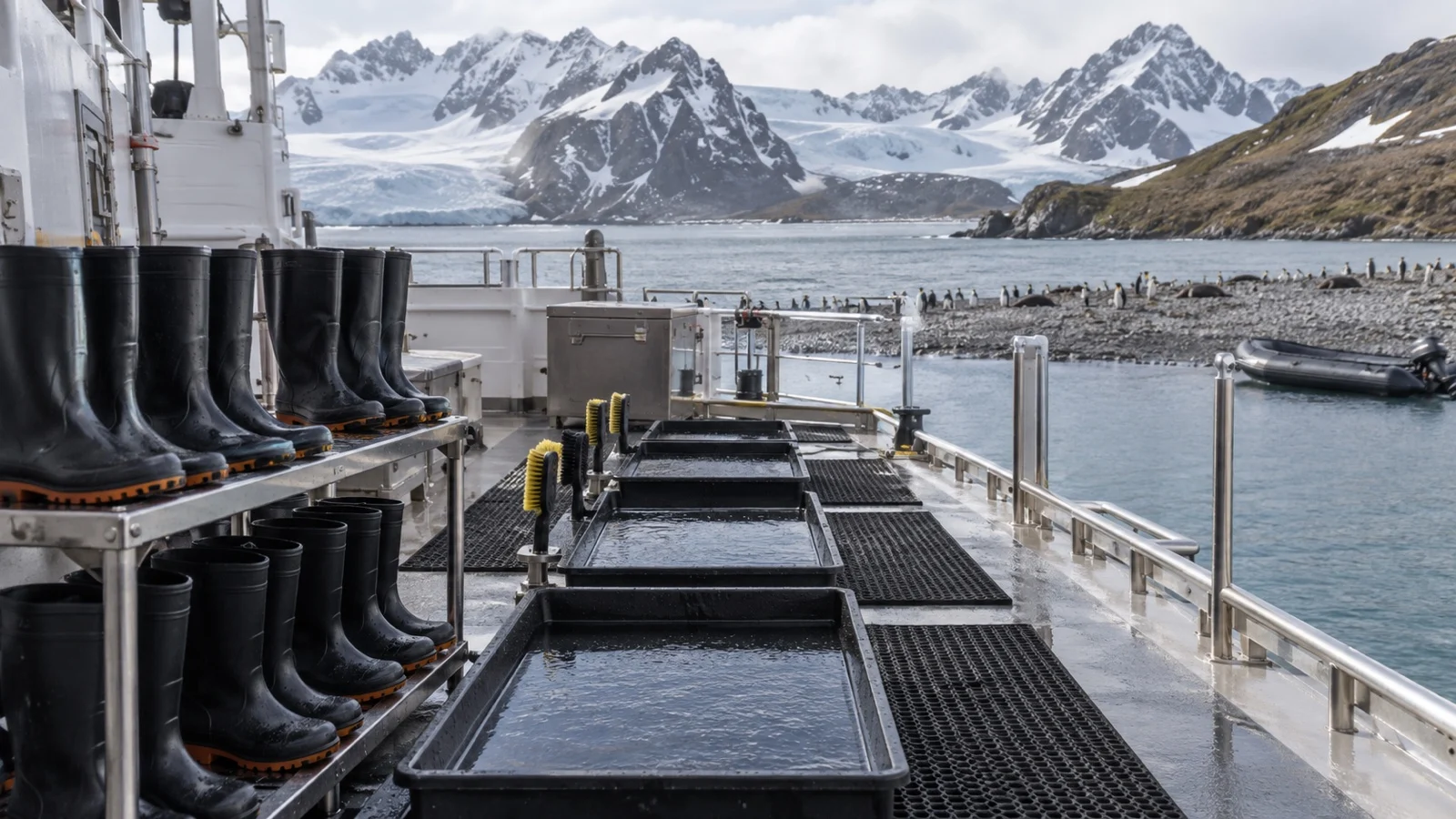
Biosecurity starts before packing. The current GSGSSI biosecurity procedures emphasize clean, easy-to-inspect clothing and equipment, with particular care around mesh, webbing, fasteners, pockets, footwear, and other places that can trap soil or seeds.
Then comes the session on board, after the last port and before the island appears. Everything you take ashore gets vacuumed and picked over for soil, seeds, plant material and insects, with particular attention to boots, Velcro, gaiters, hoods and pockets.
Boot washing is then mandatory before you go ashore and again on return, for every landing, with boots scrubbed clean and dipped in an approved biocide such as Virkon S. Walking poles and tripods have to be cleaned between each site rather than once a voyage.
Ashore, you may not sit, kneel or lie on the ground, and equipment should not be put down unless it is unavoidable or you are in a designated clean area. Bags are never left open or unattended, so your camera hangs off you all morning.
Visiting vessels have their own biosecurity obligations in addition to passenger checks. The government publishes separate current procedures for visitors and vessels, so follow the expedition team’s instructions at every stage.
Why the rules are this severe
South Georgia spent a century being wrecked by things that arrived on ships. Rats and mice ate the eggs and chicks of ground-nesting birds, and reindeer released by Norwegian whalers between 1909 and 1925 grazed the tussac down to dirt.
Both have since been removed, at enormous cost. The reindeer went in two phases in 2013 and 2014, and the island was declared free of rats and mice on 18 May 2018 after an eradication run by the South Georgia Heritage Trust across more than 247,000 acres.
The result is a recovering ecosystem with globally important populations of seals and breeding birds. Careful cleaning helps prevent new invasive species and pathogens from undoing that work.
Disease controls can also change access at short notice. Expedition staff monitor wildlife conditions and follow current government reporting and site-closure procedures, so a planned beach may be dropped without a substitute.
Grytviken, Shackleton and the fur seal problem
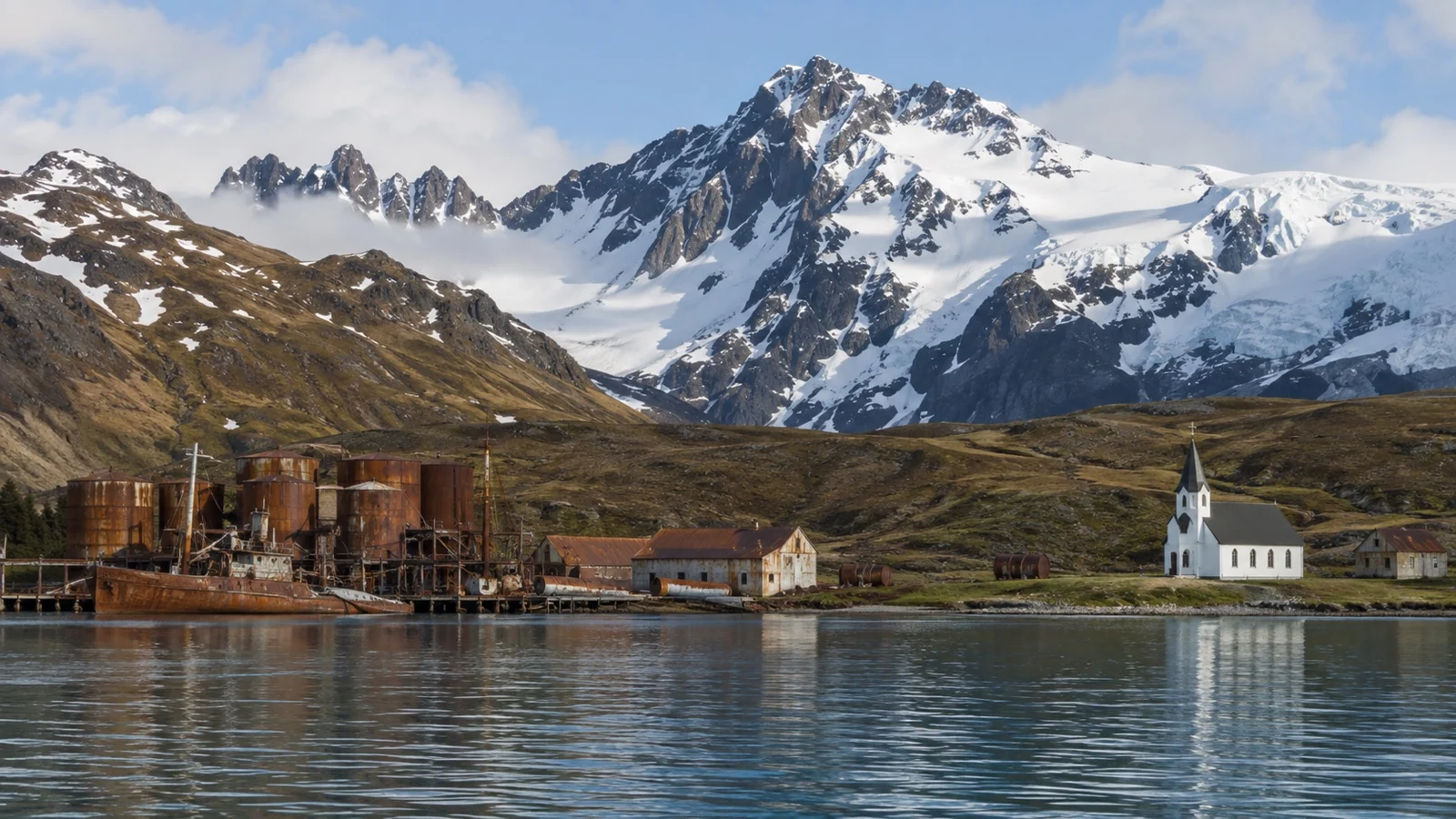
Grytviken is the exception to almost everything above, because it is the one place with buildings you are allowed near. Established in 1904 as the island’s first whaling station and closed in the 1960s, it has since been cleared of hazardous material and secured.
The other stations are not so lucky, with Husvik, Stromness, Leith and Prince Olav all prohibited by law, jetties included, inside a roughly 650-foot exclusion zone because of collapsing structures and asbestos. That matters if you have booked the Shackleton Walk, which finishes above Stromness and lets you look down on the station without entering it.
Shackleton is buried in the whalers’ cemetery at Grytviken, where his granite memorial was unveiled on 24 February 1928 among 64 burials. Some expedition teams organize a graveside toast, but it is not a required part of the visit.
The South Georgia Museum occupies the old whaling manager's villa and is managed by the South Georgia Heritage Trust. It operates during the austral visitor season, so check the current visitor information before relying on shop or postal services.
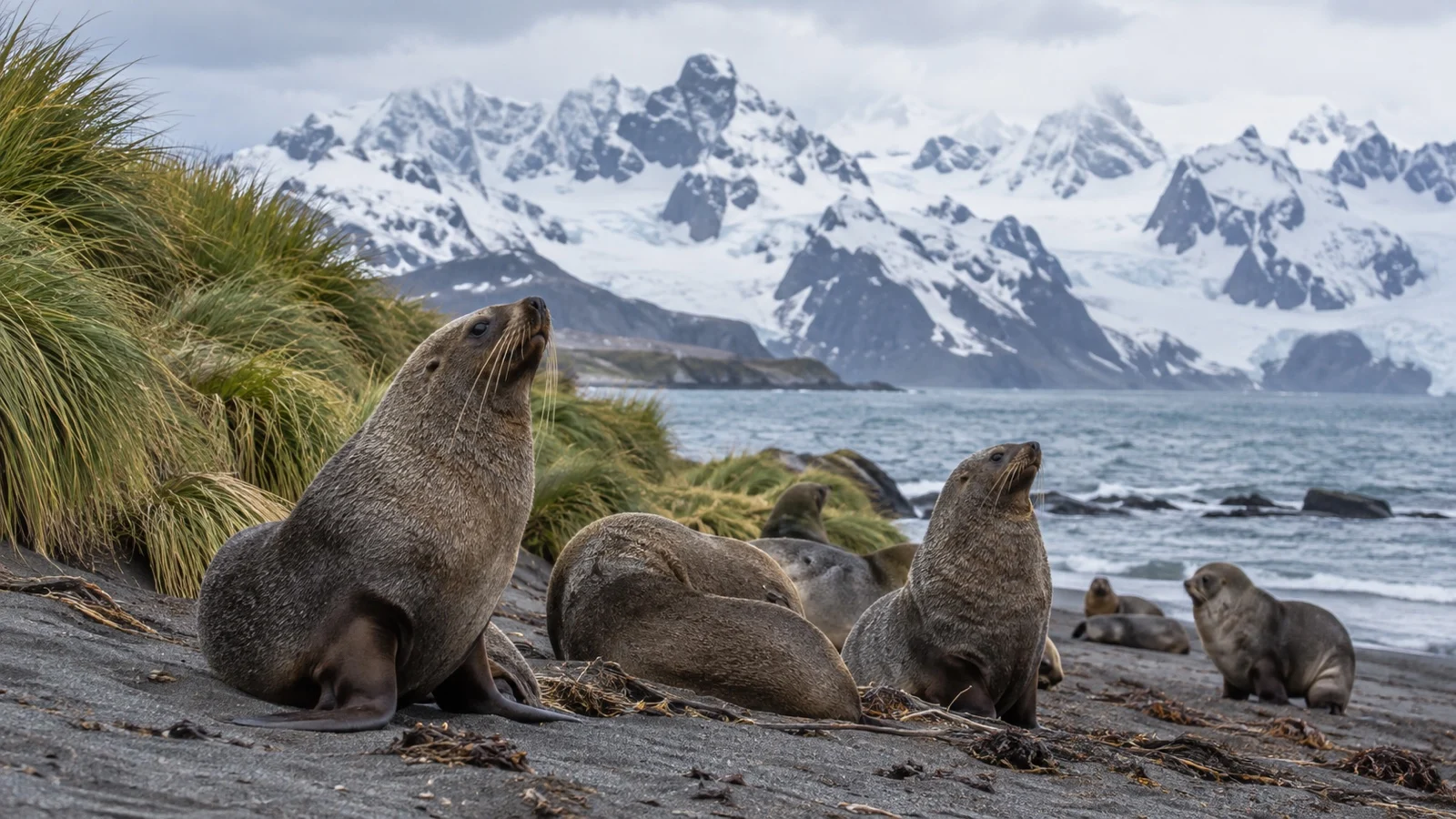
Fur seals can affect safe access, especially during the breeding season when males defend territory. Follow staff instructions, keep escape routes clear, and avoid postures or movements that increase the chance of a close interaction.
The expedition team assesses the landing area and may mark a safe route or cancel the stop. Never move between an animal and the sea, and give staff directions priority over photographs.
Landings worth prioritizing
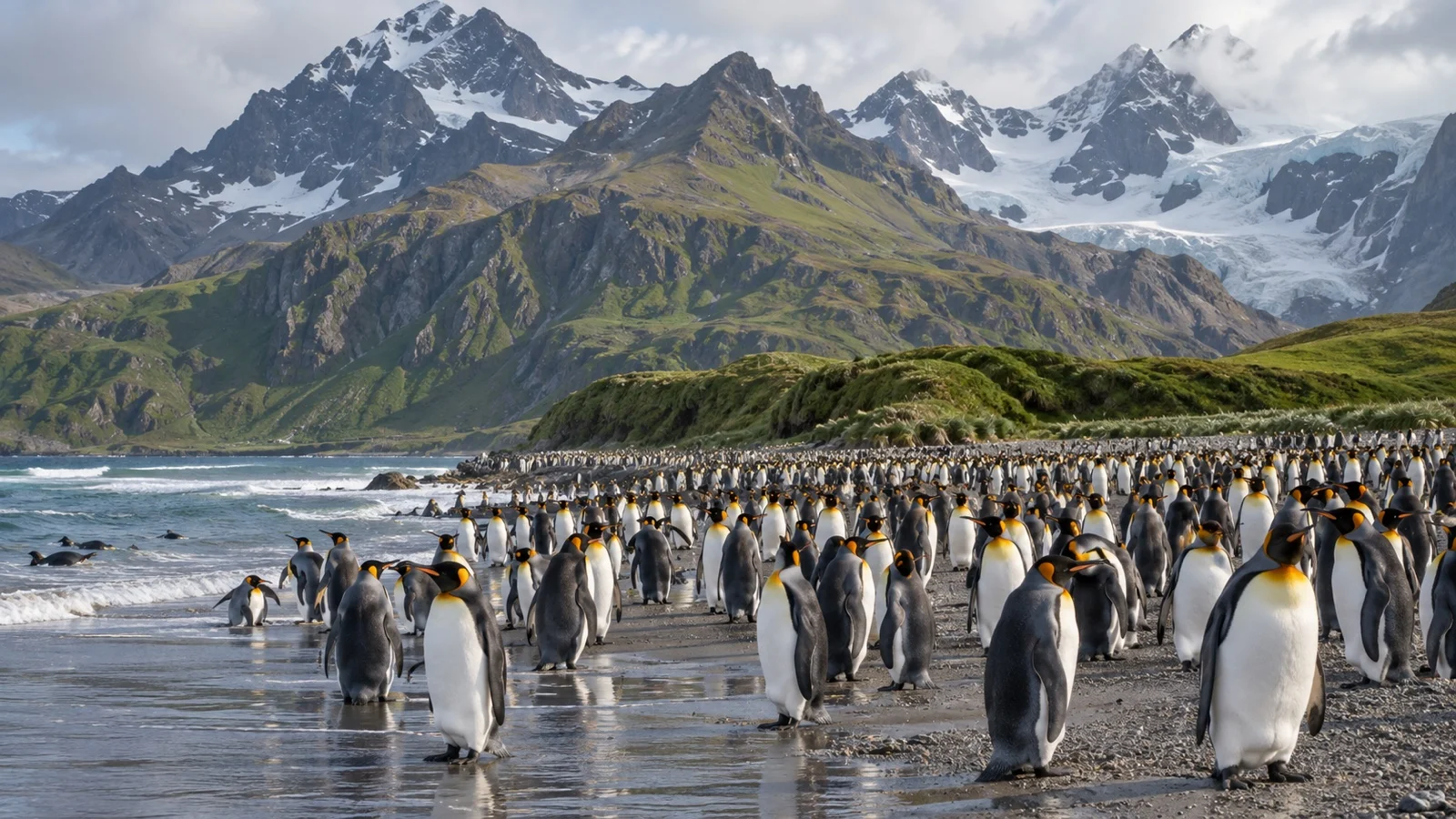
These sites are not independently bookable, and the expedition leader confirms the plan around conditions and permits. Treat them as priorities rather than guarantees.
- Grytviken: the museum, the church, the cemetery and the rusting whale oil tanks, all in one flat walk. It is the only landing where you are not standing in a colony, so it doubles as the day everyone catches their breath.
- Salisbury Plain: a wide outwash plain in the Bay of Isles fronting one of the island’s great king penguin colonies. The landing is exposed and often canceled by swell, so take it when it is offered rather than saving your energy.
- St Andrews Bay: a major king penguin colony backed by glaciers. Surf can prevent a safe landing, and the Zodiac ride may be wet.
- Gold Harbour: a small amphitheater of a bay under a hanging glacier, with kings, elephant seals and a very short walk. Ships often schedule it at dawn for the light.
- Fortuna Bay: the start of the Shackleton Walk and a good landing in its own right. The walk is about four miles over a pass, and it is a real hike rather than a stroll.
- Cooper Bay: the reliable place for macaroni penguins, usually worked as a Zodiac cruise rather than a landing. Expect to stay in the boat and expect that to be fine.
Fun fact: the rodent eradication used helicopters, hand baiting, and trained detection dogs during final verification. The Government of South Georgia records the declaration of success on May 18, 2018, and native ground-nesting birds have benefited from the recovery.
How to plan a landing day
Landing days here are not port days and there is no independent option. You go when the Zodiacs go, in your assigned group, and come back when told.
Be fully dressed before your group is called so you do not delay the cleaning station or Zodiac loading. Put on waterproof layers in the cabin rather than on an exposed boarding platform.
Expedition teams may plan more than one activity a day, but conditions can cancel either session. Eat before leaving and follow current rules about food, drink, and items allowed ashore.
A realistic word on accessibility
South Georgia can be especially difficult for travelers with reduced mobility. A wet landing may require stepping from a moving inflatable into shallow water and then crossing uneven sand or shingle.
Access varies by visitor site and vessel, and most wildlife landings do not have built infrastructure. Ask for exact transfer, terrain, resting, and mobility-aid limits instead of assuming Grytviken represents every stop.
Zodiac boarding arrangements differ by ship, so ask how transfers work before booking. Also ask whether a Zodiac cruise without landing is available when going ashore is not suitable.
The medical picture is the real constraint because the government states that there are no medical facilities for visitors or local search-and-rescue service. For less physically demanding wildlife travel, this roundup of wheelchair-friendly cruise ports is another starting point.
When to go, and the weather
Most tourist visits take place during the austral summer, and museum staffing follows the visitor season. The government says year-round visits are theoretically possible, but winter storms and sea ice make access difficult.
October and November can bring snow on beaches and active elephant seal breeding areas. Conditions vary quickly, so build flexibility into any early-season itinerary.
December through February can bring dense wildlife at popular sites. Expedition teams may change routes or cancel landings when safe separation is not possible.
Temperatures are milder than people expect and much windier. The territory’s government records a January range at Grytviken of about 32 to 66°F, and the same page warns that conditions can change suddenly even in summer.
Permits, protected sites, and the landing reality
Every visitor needs a government entry permit, and the published fee for the 2026/27 season is £250 for a 40-day permit. Check whether your operator or agent will apply for you, since applications should be paid at least eight days before arrival and later submissions incur a £50 fee.
Visitors may use only approved sites and must obey site-specific limits, closed areas, and the expedition leader’s instructions. Abandoned whaling infrastructure is dangerous, avian-influenza controls can close a beach, and neither a permit nor a scheduled call creates independent access.
Most tourist voyages operate in the austral summer, but weather, swell, wildlife, and biosecurity can change even the most established landing. Take the first safe opportunity offered, keep food aboard, and clean every pocket, fastener, tripod foot, and boot tread exactly as the ship’s team directs.
There are no visitor hotels or normal local medical services, and evacuation is a remote maritime operation rather than a quick ambulance ride. Buy the insurance the operator specifies, carry spare medication, and get a vessel-specific mobility assessment before deposit because beach landings and rough ground exclude many aids.
Quick answers
Can you fly to South Georgia?
No.
There is no airport or runway, and ordinary visitors arrive by ship. Ask the operator for the confirmed embarkation port rather than relying on a short list of gateways.
What is the biosecurity check actually like?
It is a supervised inspection and cleaning of outerwear, footwear, bags, and equipment before arrival, with the time required depending on how clean and easy to inspect your gear is.
Boots are then scrubbed and dipped in biocide before and after each landing for the rest of the visit.
Do I need my own permit?
Every person entering needs one under the Entry Control Ordinance, currently £250 for a 40-day visitor permit, and adequate health insurance must cover emergency evacuation.
Most expedition operators handle the paperwork as part of the booking, so confirm with your line rather than assuming.
How close can I get to the penguins?
Follow the current species-specific approach distances and expedition staff instructions rather than using one universal number.
Give wildlife the right of way and move away calmly when an animal approaches, as staff direct.
Can I go inside the old whaling stations?
Only at Grytviken, which has been made safe.
Husvik, Stromness, Leith and Prince Olav are prohibited by law with roughly 650-foot exclusion zones because of asbestos and collapsing structures.
The last word
South Georgia’s biosecurity rules protect an ecosystem recovering from introduced species. Expect careful checks of clothing, bags, footwear, and equipment before and between landings.
If you are new to this style of travel, read up on how the boats work before you commit, because the whole trip depends on them. This explainer on how Zodiac landings actually work covers the mechanics, and the guide to Antarctic landing rules explains the wider regional approach.
Almost every voyage stages through the Falklands or Tierra del Fuego either side. The guides to Stanley in the Falkland Islands and Ushuaia are worth reading, since those are the last places to buy anything you forgot.
Bring easy-to-clean gear and expect the schedule to change. The flexibility is part of visiting a remote, wildlife-rich island safely.
How this guide was researched: This guide is based on independent research using official sources, including current Government of South Georgia and the South Sandwich Islands guidance for biosecurity, permits, protected areas, eradication, medical access, and weather. Heritage details were checked against the South Georgia Museum.
Logistics and time-sensitive details were reviewed September 12, 2026. See our Editorial Policy.
More on this topic: browse every guide on expedition and alternative cruises.