Antarctica Cruise Landing Rules: Why Big Ships Cannot Put You Ashore
If you want to step ashore in Antarctica, passenger count belongs near the top of your booking checklist. The rules distinguish landing-capable expedition voyages from cruise-only trips, and even an eligible landing can change because of weather, wildlife, permits, or site conditions.
The Antarctic Treaty visitor guidelines state that vessels carrying more than 500 passengers shall not make landings. Ships carrying 500 or fewer still work within a 100-passenger shore limit, site-specific rules, and the expedition leader’s safety decisions.
My quick take
If landings are your priority, compare the ship’s maximum passenger count, planned activities, expedition team, and operating record before paying a deposit. A smaller ship usually needs fewer landing rotations, but itinerary, comfort, accessibility, and price still matter.
The basic arithmetic is simple: the general guideline caps visitors ashore from one vessel at 100, unless a site-specific rule is tighter. A ship carrying more than 100 landing passengers therefore has to rotate groups or offer different activities.
A ship carrying about 100 passengers can be a useful benchmark if maximizing time ashore matters most. Ask how the operator handles rotations, because capacity alone does not promise a particular number or length of landings.
The quick facts
- The 500 threshold: the Antarctic Treaty General Guidelines for Visitors state that vessels carrying more than 500 passengers shall not make landings in Antarctica. Those voyages are cruise-only in Antarctic waters.
- The 100 limit: no more than 100 visitors from one vessel should be ashore at a site at once, unless a site-specific guideline sets a lower limit. Expedition guides and leaders are not included in that visitor count.
- Guide ratio: during landings, the general visitor guidelines call for at least one guide for every 20 passengers. A site’s own management plan can add tighter conditions.
- One ship, one site: operators should coordinate so only one vessel visits a landing site at a time. IAATO members use a scheduling system, but conditions can still force a last-minute change.
- How you get ashore: most expedition ships use inflatable boats, often called Zodiacs, and many landings are wet. Boot provision and the exact transfer method vary by operator, ship, and site.
- Wildlife distances: follow your guides and the site or species-specific rule rather than relying on one universal number. The general guidance says to keep at least 5 meters, about 16 feet, from wildlife on land, with a greater distance when necessary.
- Ship categories: IAATO sorts member vessels into C1 for 13 to 200 passengers, C2 for 201 to 500, CR for 501 and up, and YA for yachts of 12 or fewer. C1 and C2 land, CR does not.
- Biosecurity: expect inspections and cleaning of boots, clothing, bags, and walking poles before the first landing and between sites. Follow the operator’s wash and disinfection procedure every time.
Why 500 is the number that decides your trip
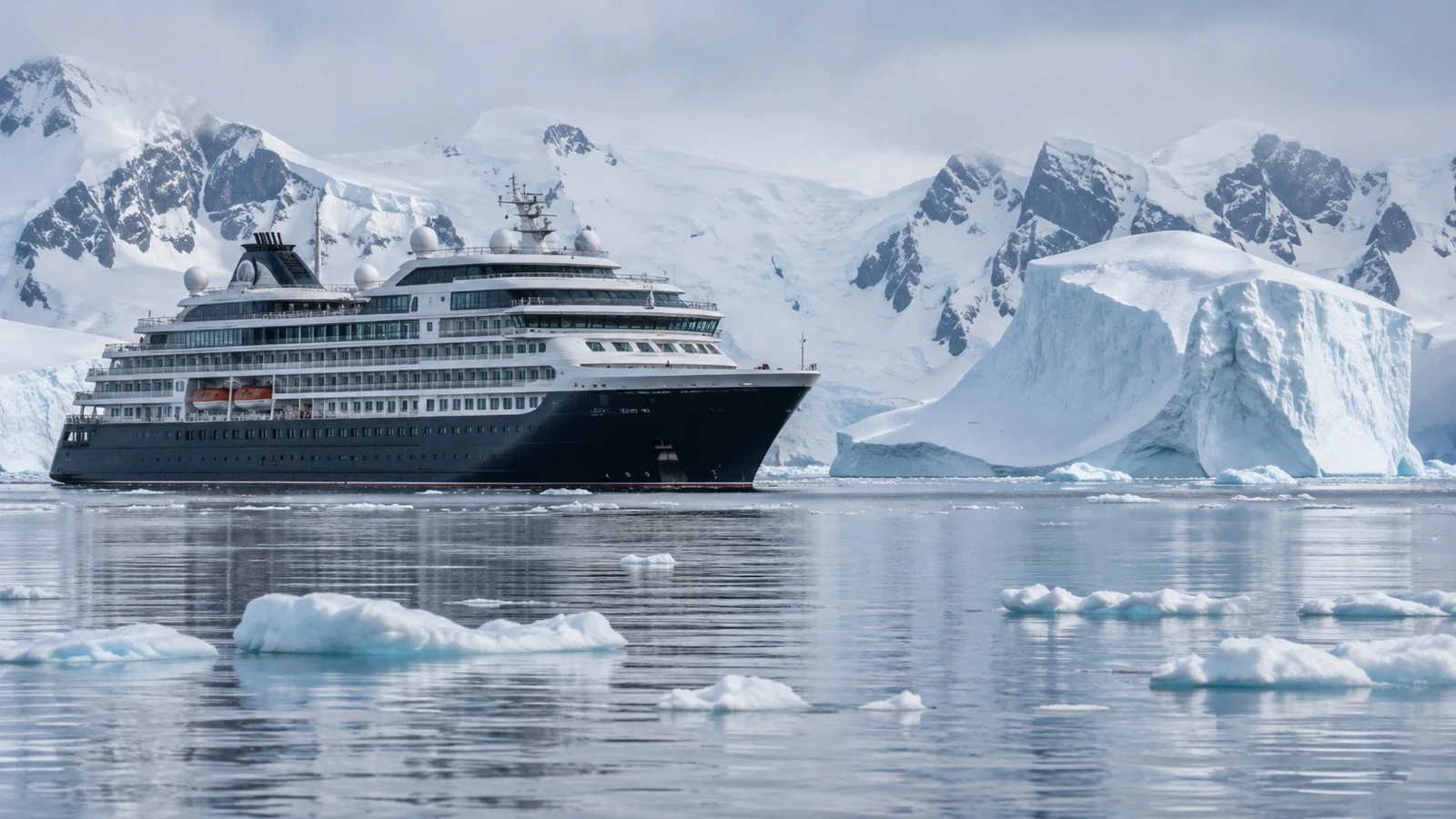
The 500-passenger line is the clearest divide in Antarctic tourism. A vessel carrying more than 500 passengers can cruise Antarctic waters, but its passengers should not land.
That makes a cruise-only voyage a different product, not automatically a bad one. It can suit someone who wants scenery and wildlife from the ship without inflatable-boat transfers, but it will not deliver a beach landing.
Check the operator’s description for the words expedition, landing, and cruise-only, then confirm the vessel’s passenger capacity. If setting foot ashore is essential, get that distinction clear before comparing cabins or promotions.
It is just a different product, and you should buy it deliberately rather than by accident. If you want your boots on gravel, check the category before you check the price.
The 100-ashore cap, and what it does to your day
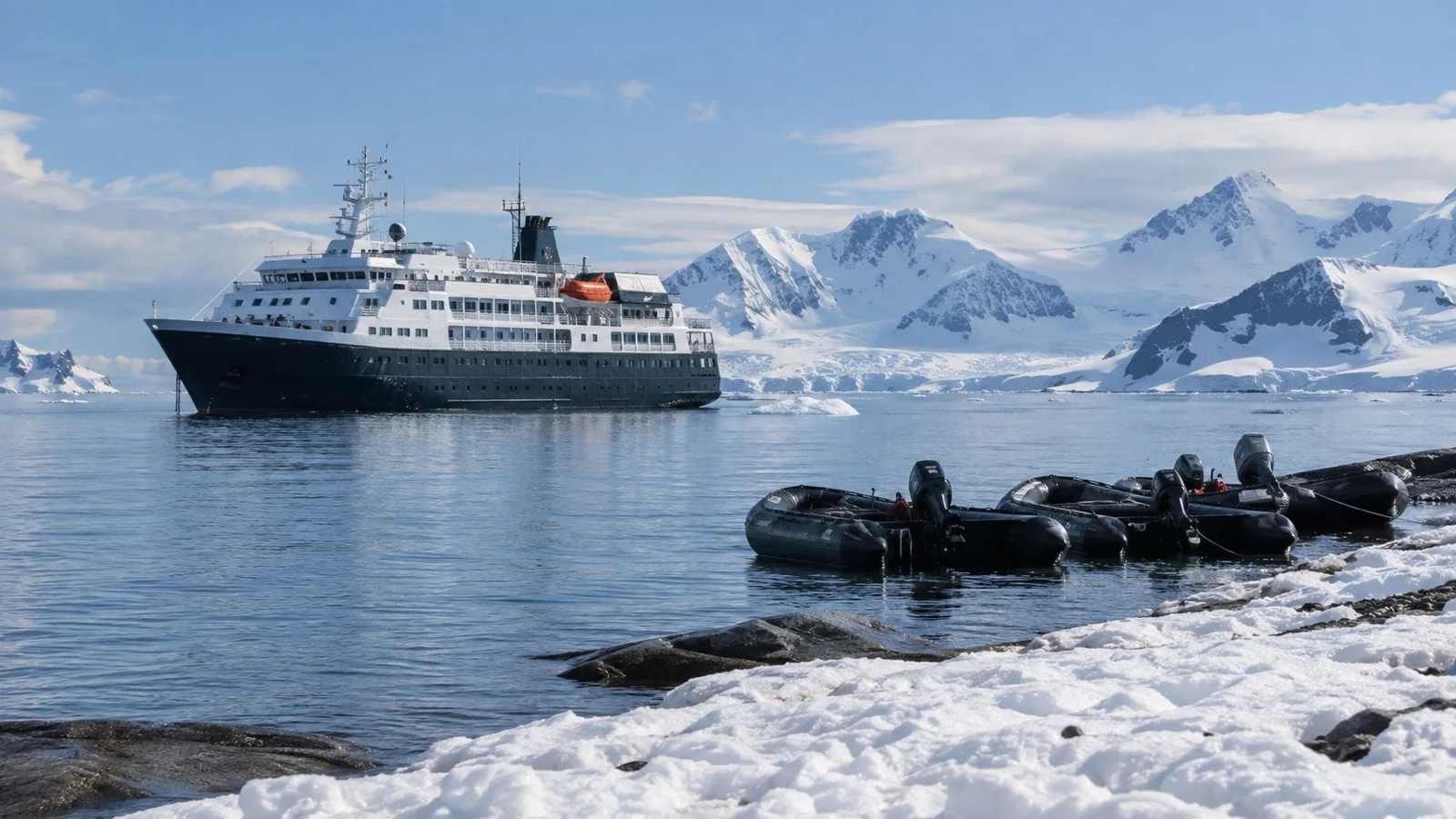
This is the rule that quietly determines how much time you actually get. One hundred passengers ashore at once, from a ship of any permitted size, with no scaling for bigger vessels.
A ship carrying 100 landing passengers may be able to put its eligible guests ashore in one group. A larger landing-capable vessel needs rotations, and the operator may pair a landing with a Zodiac cruise or another activity.
More rotations can mean less flexibility when weather shortens an operating window. It does not prove that every landing will be short, so ask the line for its typical rotation plan rather than guessing from capacity alone.
Staffing also matters because landings require at least one guide for every 20 passengers under the general guidelines. Ask for the expedition team size and what activities are offered while another group is ashore.
One ship per site, and the scheduling that implies
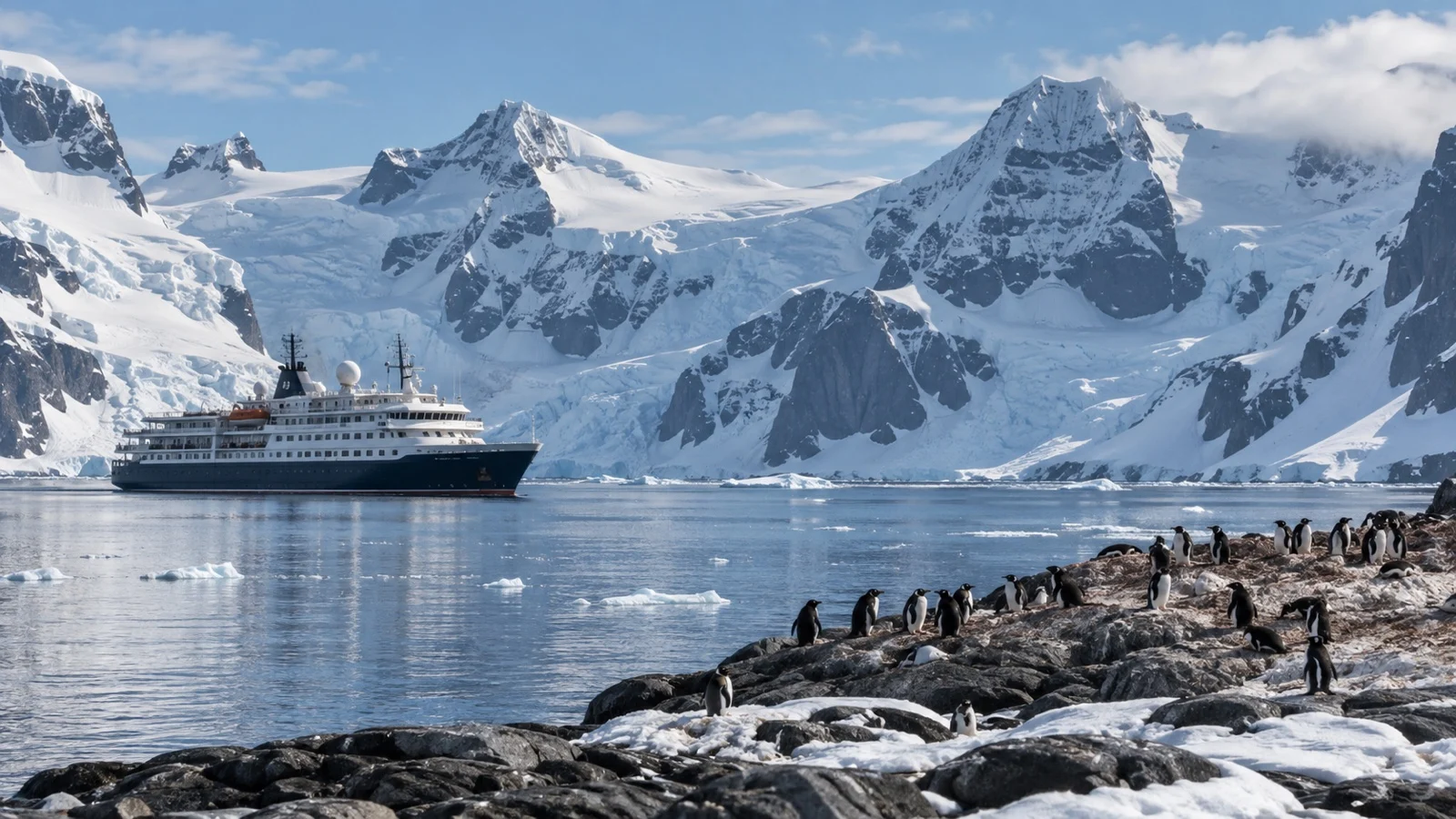
The general guidelines call for operators to coordinate so only one vessel visits a site at a time. This reduces crowding and helps protect sensitive locations.
Because the rule exists, operators cannot simply turn up. IAATO describes introducing a live ship scheduler and database in the 2010s, and later opening scheduler access to non-member vessels, so that ships book sites against each other rather than colliding at them.
A planned site is never guaranteed. Weather, sea ice, wildlife, another vessel’s schedule, and instructions from national authorities can all change the day.
Many of those popular sites carry their own published site guidelines on top of the general rules. The Australian Antarctic Division notes that these guidelines suggest limits on visitors ashore at once and per day, and can confine visits to ships carrying a certain number of passengers.
Wildlife distances, food, and the boot wash
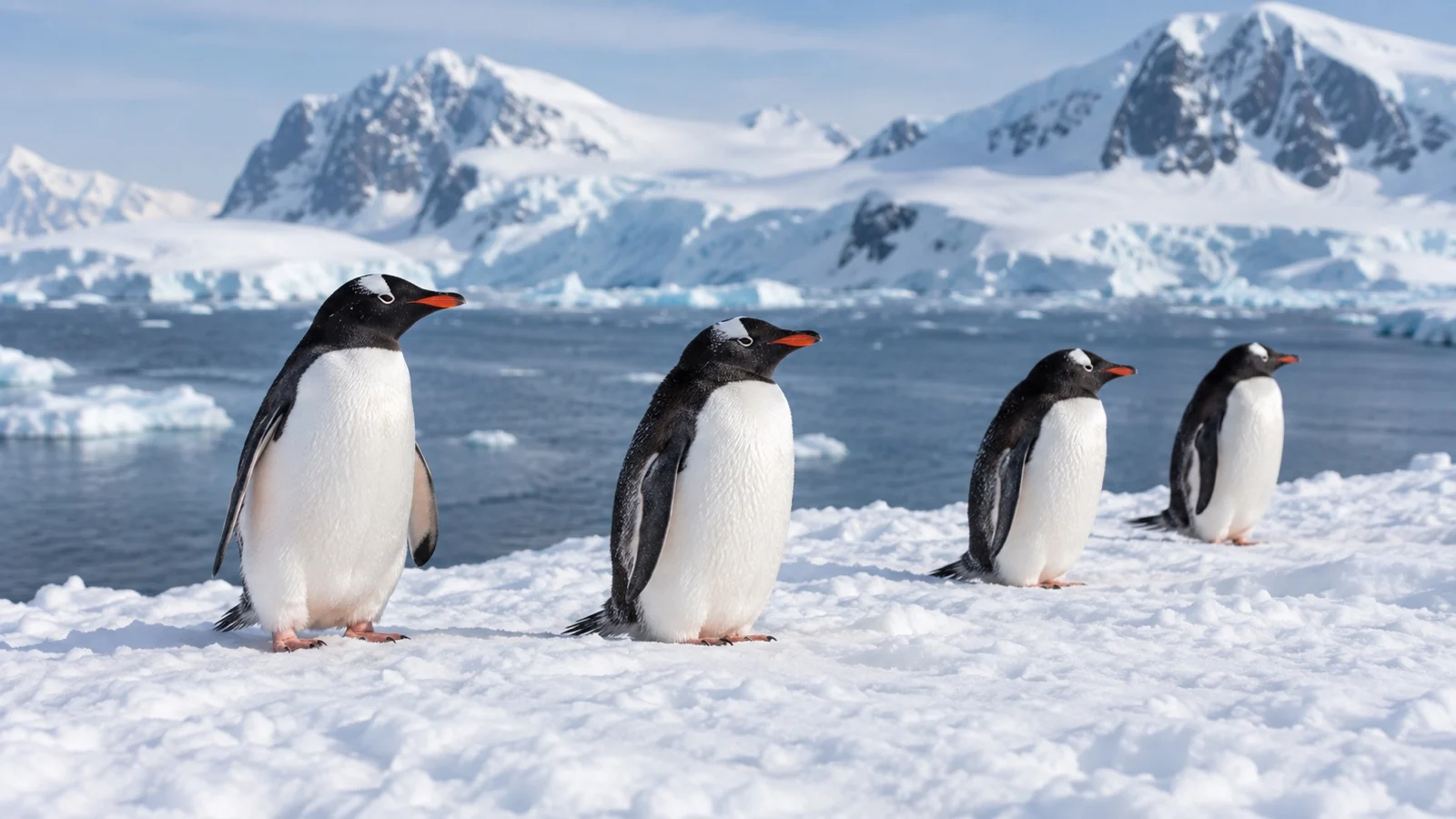
Wildlife rules combine general guidance with species and site-specific instructions. Keep at least the distance your guide sets, never block an animal’s route, and move away if your presence changes its behavior.
At sea, IAATO’s whale-watching procedures use approach zones, speed limits, time limits, and larger distances around feeding whales. These are instructions for the boat operator, so follow the expedition team’s directions instead of trying to judge the distance yourself.
Avian influenza tightened the on-land etiquette considerably. IAATO’s guidance tells visitors not to sit, kneel, crouch, squat or lie down on the ground, and not to place anything on the ground at all, so your camera bag stays on your shoulder.
Food is the rule people ask about most and the one written least precisely. The general guidelines prohibit feeding wildlife and leaving food or scraps, and in practice most operators run a nothing-but-water policy ashore, so check with your line rather than assuming a snack is fine.
Biosecurity is the part that eats your time. IAATO’s Don’t Pack a Pest guidance asks visitors to use the on-board boot wash station to clean and disinfect boots, clothing and poles before going ashore, and to let the disinfectant dry on gear between landings.
The rules I would check before I paid a deposit
- Passenger count, not ship class: ask for the maximum passenger number in Antarctic mode, which is sometimes lower than full capacity. That figure tells you whether you land and how often.
- Planned activities, in writing: ask how many landings or Zodiac cruises the operator aims to offer on a typical day. Every operator must keep them conditional because weather, ice, wildlife, and permits decide what is safe.
- Expedition team size: compare the team size with the passenger count and the 1:20 landing minimum. Extra staff can support multiple activities, but staffing alone does not guarantee more time ashore.
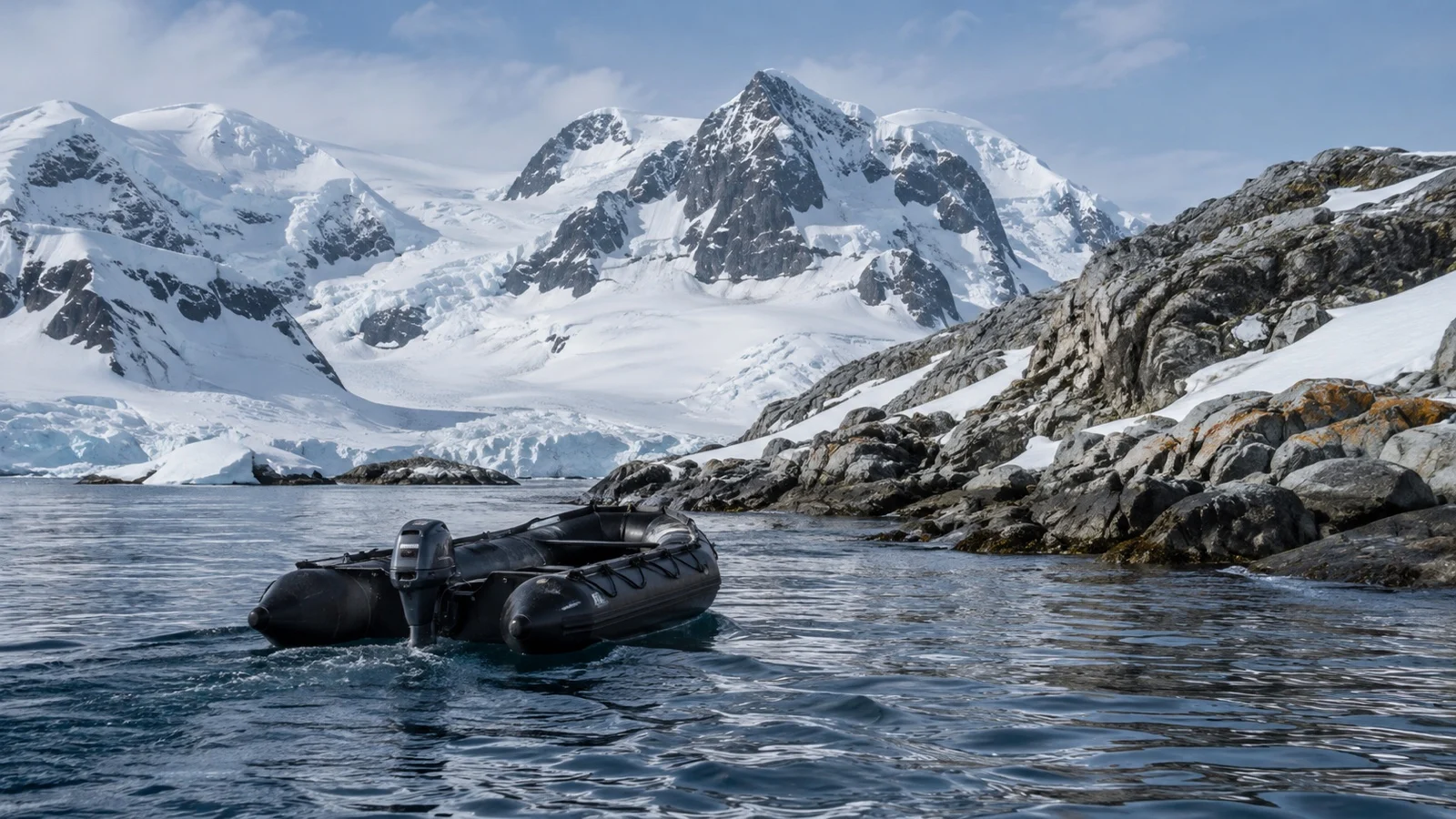
- Inflatable-boat fleet: ask how many boats are normally used for guest operations and how transfers are organized. Capacity, sea conditions, and loading procedures all affect how quickly a group can move.
- Boot provision: most expedition ships lend rubber boots and some do not. If yours does not, you are buying tall waterproof boots that fit over thick socks, and you need them for a wet landing.
- Whether South Georgia is included: it adds days and cost, and it has its own permitting and biosecurity regime on top of the Antarctic rules. It is also the best wildlife on the trip.
Fun fact: the rule that keeps ships apart is old enough to predate most of the modern fleet, with IAATO tracing “one ship at one site at one time” to the management measures adopted in the 1990s, when annual visitor numbers were a small fraction of today’s. The same association has been monitoring and reporting Antarctic tourism trends since 1991.
How I would actually decide
Start by deciding whether you need to land at all. A cruise-only trip can suit travelers who want the ice, whales, and light without inflatable-boat transfers, but compare the actual fare and itinerary rather than assuming it will cost less.
If you do want to land, set your budget and then let passenger count be the one variable you protect. Give up the balcony, give up the newer ship, give up the shoulder-season discount before you give up the small headcount.
Then look at how you get there, because a ship crossing of the Drake Passage often takes about two days each way. Flying between Punta Arenas and King George Island can remove one or both sea crossings, depending on the itinerary, and I have written separately about how the fly-cruise option compares.
A realistic word on accessibility
Antarctic landings can be difficult for travelers with limited mobility. Transfers may involve moving between a ship and an inflatable boat, then stepping into shallow water or onto snow, rock, or an uneven beach.
Equipment and assistance vary widely by ship, and some conditions cannot be made safe for every guest. Ask the operator’s expedition or accessibility team about transfers, standing and walking requirements, and what happens when a landing is not suitable.
Some operators carry passengers with limited mobility and are candid that landings may not be possible on any given day. Others decline outright, and I would rather be told no at booking than at the gangway.
Ship cruising and Zodiac cruising are the realistic middle ground, since staying seated in the boat avoids the beach entirely. Ask specifically whether Zodiac cruising is offered as an alternative on landing days, and get the answer from the expedition department rather than a call center.
When to go, and the weather
The season runs from roughly late October to early March, and it changes character sharply across those months. November is heavy snow and pristine ice, January and February are penguin chicks and whales.
Peninsula summer temperatures usually sit around 23 to 37°F. That is milder than people expect and completely irrelevant once you add 30 knots of wind on an open Zodiac.
Wind, swell, sea ice, visibility, and wildlife can cancel or relocate an operation. Treat every named landing as a plan rather than a promise.
Daylight is the underrated variable. December gives close to 20 usable hours, which lets ships run early and late operations and gives the scheduling system more room to fit everyone in.
Quick answers
Can a big cruise ship land passengers in Antarctica?
Vessels carrying more than 500 passengers shall not make landings under the Antarctic Treaty visitor guidelines, so those voyages are cruise-only in Antarctic waters.
How many people can be ashore at once in Antarctica?
The general limit is 100 visitors from one vessel, excluding guides and leaders, unless a site-specific guideline sets a lower limit.
How close can you get to penguins?
The general guidance says to keep at least 5 meters, about 16 feet, from wildlife on land, but follow any greater distance set by your guide or a site-specific rule and move away if an animal reacts.
Can you take food ashore in Antarctica?
Most operators prohibit it, and feeding wildlife or leaving food scraps is forbidden, so follow your expedition team’s policy.
Why do they vacuum your clothes before Antarctica?
Cleaning removes seeds, soil, and other biological material from pockets, fasteners, and boot treads before it can move between sites.
The last word
Antarctica is the rare destination where the regulations tell you more than the reviews. Read the passenger count, the vessel category and the guide ratio, and you can predict the trip before anyone shows you a photograph.
Most of the practical detail on the day is about the boats rather than the beach, which is why my explainer on how Zodiac landings actually work is the natural companion to this one. If your itinerary includes the sub-Antarctic, the separate regime covering landings in South Georgia is stricter again.
Ushuaia is the main Peninsula cruise gateway, while fly-cruises commonly use Punta Arenas and King George Island. On longer itineraries, Stanley in the Falklands may be a call rather than the start or end of the Antarctic voyage.
The rules protect wildlife and keep seeds, soil, and disease from moving between sites. Build the cleaning and briefing time into your expectations rather than treating it as lost expedition time.
How this guide was researched: Landing limits, guide ratios, wildlife behavior, and biosecurity were checked September 12, 2026 against Antarctic Treaty visitor guidance published by IAATO, IAATO operational materials, and the Australian Antarctic Division’s site-use guidance. Conditions and operator procedures change, so confirm the current expedition briefing before travel and see our Editorial Policy.
More on this topic: browse every guide on expedition and alternative cruises.