Residential Cruise Ships: How Living at Sea Actually Works
Residential cruise ships range from two operating vessels to proposed conversions and newbuilds that have not yet carried residents. Confirm the ship is sailing before treating a launch plan as an established home at sea.
The upfront price is only one part of the commitment. Recurring fees, insurance, medical costs, travel during drydock and contract exit terms can matter just as much over time.
The quick take

A residential cruise ship is a condominium that moves, sold as an outright purchase, a fixed-term lease or a rental. The pitch is a continuous world loop with your own front door, and for a small number of people it works.
Do not commit money to a residential ship without separating an operating vessel from a proposed project. If the ship is still a rendering or future newbuild, treat the purchase as a high-risk contract rather than an established home.
Renting a segment for several weeks is a practical way to test the ship before signing a long-term contract. Avoid selling a primary home to fund a cabin on a vessel you have not visited.
The quick facts about a residential cruise ship
- What you are actually buying: usually a right to occupy a specific cabin, not freehold real estate. The World, launched in 2002 with 165 residences, states that its residents own their homes and collectively own the vessel.
- The two-number structure: a purchase or lease price up front, then a monthly maintenance fee for as long as you hold the cabin. The fee pays crew, fuel, food, insurance and drydocks, and it rises.
- Ships genuinely in service: The World, sailing since 2002, and Villa Vie Residences Odyssey, which left Belfast on 3 October 2024. Other residential projects remain proposed conversions or newbuilds until residents actually sail.
- Loop length: Villa Vie sells Odyssey as a 3.5 year continuous circumnavigation of 147 countries. The World runs a rolling annual itinerary its residents vote on, calling at roughly 100 ports a year.
- Segment sales: yes, and a short paid stay is how most people should start. Ask for the current all-in price, inclusions, refund terms, and the exact ports before treating a trial as proof that full-time life will suit you.
- Drydock: the ship leaves service and so do you. The World says it dry-docks for about a month every two years.
- Taxes and residency: living at sea does not make you resident nowhere for tax. American citizens in particular should read the IRS rules, which exclude pay for services performed in international waters from foreign earned income.
- If the operator fails: your position depends on the contract and on whether your money sat in a trust account. Assume you are an unsecured creditor unless a lawyer tells you otherwise.
Buy, lease or rent, and what each one really means
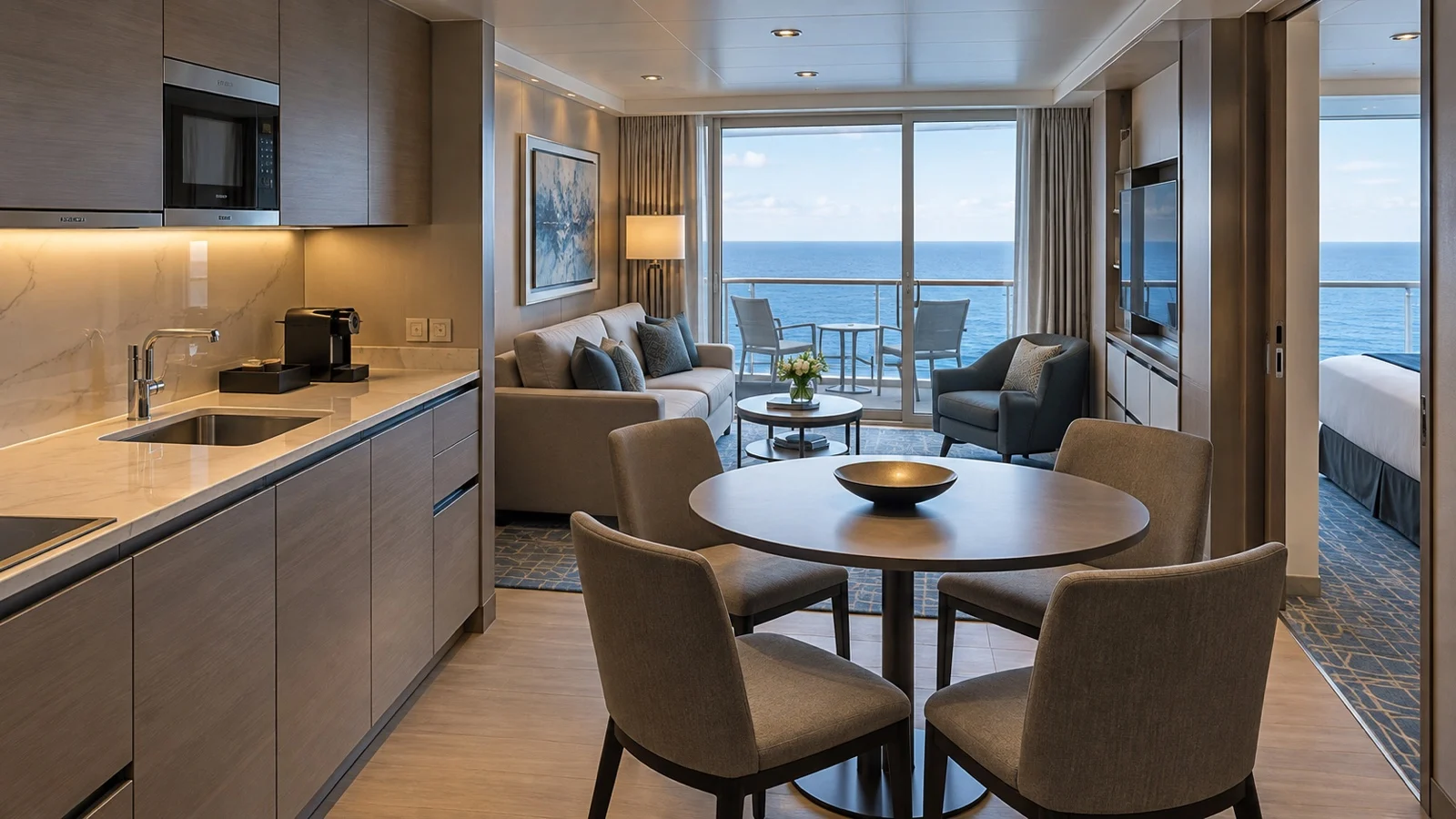
The word “buy” does heavy lifting here, so read the contract for the term. As of September 12, 2026, Villa Vie lists five-year residency from $59,999, permanent residency from $119,999, and its no-monthly-fee Endless Horizons plan from $349,999.
Get a dated quote that separates the occupancy right, monthly or annual fees, port charges, medical costs, and transfer or resale charges. A low headline number is not comparable with a product that prepays future fees.
The World sits at the other end, resident-owned, with limited resales and a net worth requirement it does not publish. Renting is the underrated option, and whatever the label, ask in writing whether your occupancy right survives a sale of the ship.
The monthly fee is the number that decides everything
Purchase prices are easier to find than ongoing fees in this sector. Villa Vie publishes starting prices for several plans, including a no-monthly-fee option, while buyers should request a dated schedule of every recurring charge before signing.
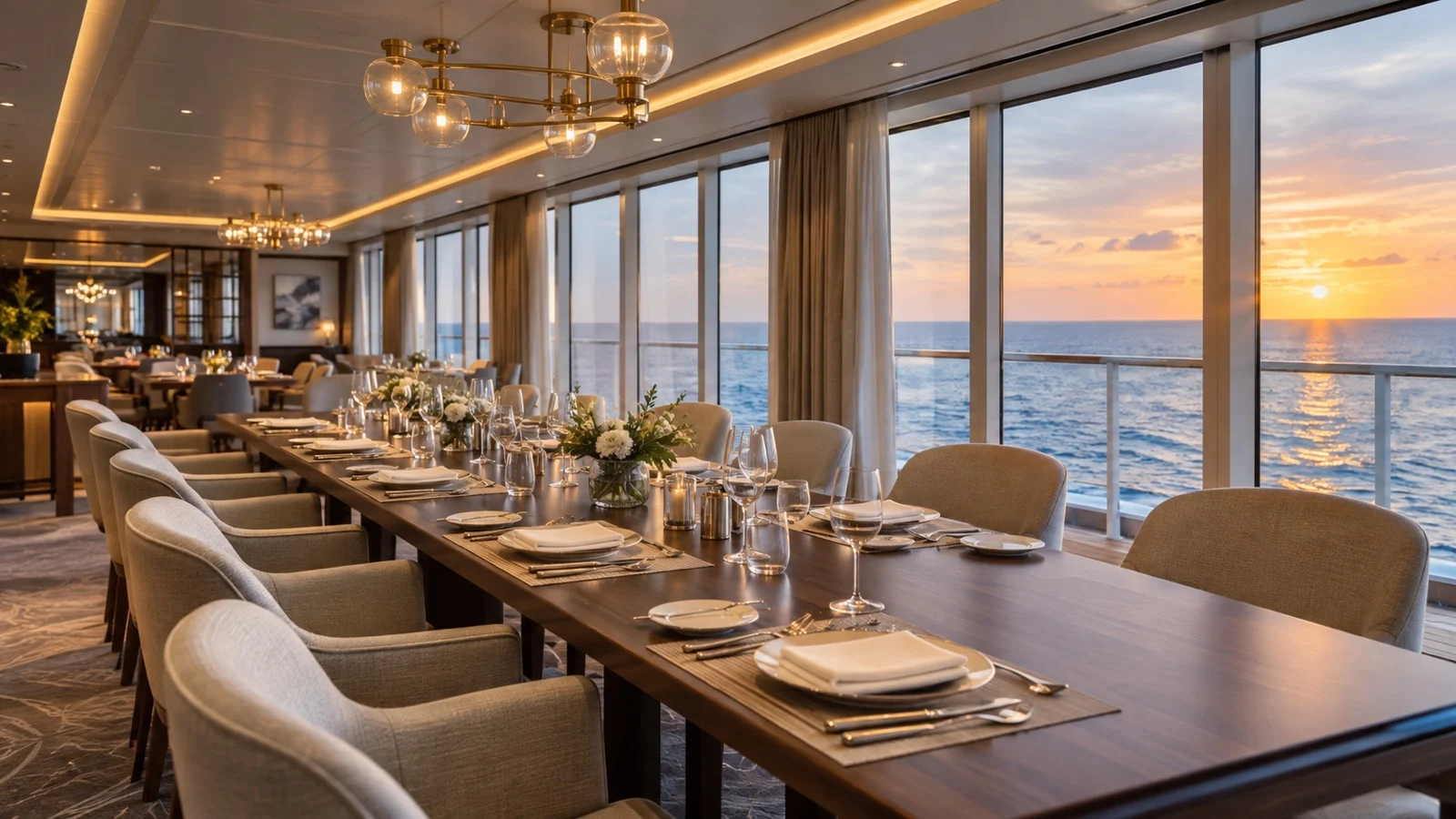
Villa Vie lists what its fee covers: a furnished villa, all meals with complimentary wine and beer, housekeeping and laundry, fitness and spa access, the medical center, and Starlink internet. Excursions, specialty dining and your own health insurance sit outside it.
Then there is escalation. Fuel, crew wages, food and marine insurance all move, and a fee that is comfortable at 60 may not be at 80 on a fixed pension.
Medical care, mail, taxes and the boring machinery

A ship medical center does not replace a hospital, and available services vary by vessel. Villa Vie advertises onboard medical care and complimentary health consultations, so ask for a current written list of staffing, services and fees.
Onboard care is only one part of the plan. The US State Department recommends medical and emergency evacuation insurance and warns that Medicare and Medicaid do not cover medical costs abroad.
Plan for evacuation as well as routine care. A diversion, emergency transport and treatment in a foreign hospital can create substantial costs.
Living at sea does not erase tax obligations. The IRS states that pay for services performed in international waters is not foreign earned income because international waters are not a foreign country.
Domicile, voting, banking and estate rules depend on personal circumstances and jurisdiction. Get qualified cross-border tax and estate advice before signing a long-term residency contract.
Proposed ships and changing plans
This sector has a long list of announced vessels that have not entered service. Storylines continues to market MV Narrative as a future newbuild, so buyers should treat it as a proposed ship until construction, delivery and resident sailings are independently confirmed.
Crescent Seas also shifted from plans involving converted cruise ships to a purpose-built vessel called The Ocean. Its current site presents the concept as a future project, not an operating residential ship.
The practical point is that proposed ships can change design, schedule or financing before delivery. Contract safeguards matter whenever money is committed before residents can board.
Villa Vie Odyssey is now operating, and the company states that it has been at sea since leaving Belfast on October 3, 2024. That live operating history is more useful than a projected launch date.
So verify status yourself before believing a launch date. Look for an IMO number, a live position on a public tracker, and residents posting from aboard.
Questions to ask before signing
Take this list to the sales meeting and write the answers down. Anything not in the contract does not count.
- What is the monthly fee today, and what was it at launch? Ask for the history and any contractual cap on increases. No history means the product is too new to price.
- What is the legal term? Five years, a lifetime, a fixed leasehold, or a license to occupy. These are different assets and they resell at very different prices.
- Where does my money sit before delivery? A regulated trust or escrow account is the difference between a delay and a loss. Ask who the trustee is.
- What happens in drydock? Every ship comes out of the water periodically and residents go ashore. Ask how many weeks, how often, and who pays for the hotel.
- Can I resell, and to whom? Ask whether the operator controls approval, takes a commission, and whether any resident has completed a resale. An untested resale market is an illiquid one.
- What are the medical exclusions and age limits? Ask about mobility requirements and whether residency can be terminated on medical grounds.
- How is mail handled? Ask them to show you the process in writing rather than describe it, including prescription medication crossing borders.
- What happens if the company enters insolvency? Ask whether the ship is mortgaged, who the lender is, and where residents rank. If the answer is vague, treat the purchase as unsecured.
Fun fact: The World is unusual because its residents vote on where it goes, and the ship reports that most of them spend only three to four months aboard each year, with 150 to 200 residents and guests on board at any one time. The World also states that it dry-docks for about a month every two years, which is the single interruption to its rolling circumnavigation.
How to make the decision
Separate the lifestyle question from the investment question, because only one of them is answerable. Treat the purchase price as consumption, not capital, and if losing it entirely would ruin you, the answer is rent.
Pay attention to what gets boring rather than what photographs well. The same faces, the same corridor and the sea state on a long crossing matter more than the itinerary map.
If you are American, note that a foreign-flag ship cannot simply run you between two US ports.
Villa Vie states that its trial voyages must start outside the United States and visit at least two countries, which follows the coastwise passenger rules set out at 19 CFR 4.80a.
A realistic word on accessibility
Accessibility needs can change during a long residency, especially as residents age. Villa Vie lists Odyssey at 24,344 gross tons and 196 meters long, but confirm elevator coverage, door widths and bathroom thresholds in the specific villa.
Going ashore can be the bigger constraint. Tender service, uneven quays and gangway angles can limit access, so review the specific itinerary and assistance policy.
Ask directly what the contract says about changing health or mobility needs. Have a lawyer review any clause covering independent living, personal care, medical disqualification or termination.
When to go, and the weather
A continuous loop chases decent weather, and you cannot opt out of a rough patch. The Atlantic hurricane season runs from 1 June to 30 November according to the National Hurricane Center, peaking around 10 September, so ships usually reposition away from the Caribbean for that window.
The eastern Pacific season is longer, running from 15 May to 30 November. Plan family visits and medical appointments around the crossings rather than the port days.
For a segment, compare the route and season rather than assuming any region will be calm. If motion is a concern, ask about a lower cabin near midship and discuss seasickness prevention with a clinician.
Quick answers
Can you really live on a cruise ship permanently?
Yes, on the small number of ships built or converted for it, and The World has been doing it since 2002.
On a conventional cruise line you can only chain back-to-back bookings, which is a different and less secure arrangement.
How much does a residential cruise ship cabin cost?
There is no useful single number because products mix fixed-term occupancy, lifetime rights, and prepaid-fee plans.
Get a dated all-in quote and have a maritime or property lawyer explain what survives a sale, insolvency, medical disqualification, or ship retirement.
Do you pay tax if you live at sea?
Potentially, and living aboard does not erase citizenship or domicile rules.
US taxpayers should note that work performed in international waters is not treated as work performed in a foreign country for the foreign earned income exclusion.
What happens during drydock?
Everyone goes ashore while the ship is out of the water for hull survey, painting and refit.
The World describes about a month every two years, and your contract decides whether the operator contributes to your hotel.
Can I buy just one segment instead of a cabin?
Yes, and it is the sensible first move.
Villa Vie sells short trial stays and longer runs such as a 70 day Australia and New Zealand segment, which lets you test the ship before committing capital.
The last word
Residential cruising is an operating product on The World and Villa Vie Odyssey, while several other ships remain future projects. Judge each offer by whether the vessel is delivered and carrying residents.
If the appeal is mostly the itinerary rather than the ownership, a world cruise or a couple of long segments gets you most of the experience at a fraction of the risk. My guide to world cruise segment ports covers where the sensible joining points are, and the difference between a transatlantic crossing and a repositioning sailing is worth understanding before you book a long ocean leg.
Repeat calls make independent days especially useful for long-term residents. Our guides to exploring Mediterranean ports independently and choosing a quiet day onboard can help with that choice.
This lifestyle suits a narrow group with the health, budget and flexibility for a long commitment. Renting first gives you a practical test and an easier exit.
How this guide was researched: Unless a first-hand visit is explicitly identified above, this guide is based on independent research using official port, tourism, transit, government, and attraction sources where available. Pricing came from Villa Vie Residences and The World’s own pages, project status from Cruise Industry News, tax treatment from the IRS, coastwise rules from the eCFR, medical guidance from the US State Department, and season dates from the NOAA National Hurricane Center.
Logistics and time-sensitive details were reviewed on September 12, 2026. See our Editorial Policy.
More on this topic: browse every guide on expedition and alternative cruises.