Cruise Ship Submarine and Helicopter Guide: Which Ships Have Them
Cruise ship submersibles and helicopters are real, spectacular, and unusually easy to miss. Small capacity, weather, regional permits, and maintenance can cancel the activity even when the ship carries the equipment.
This guide names the ships that currently market them and explains what to ask before paying. Treat either activity as a bonus, never the foundation of the voyage.
A practical way to choose
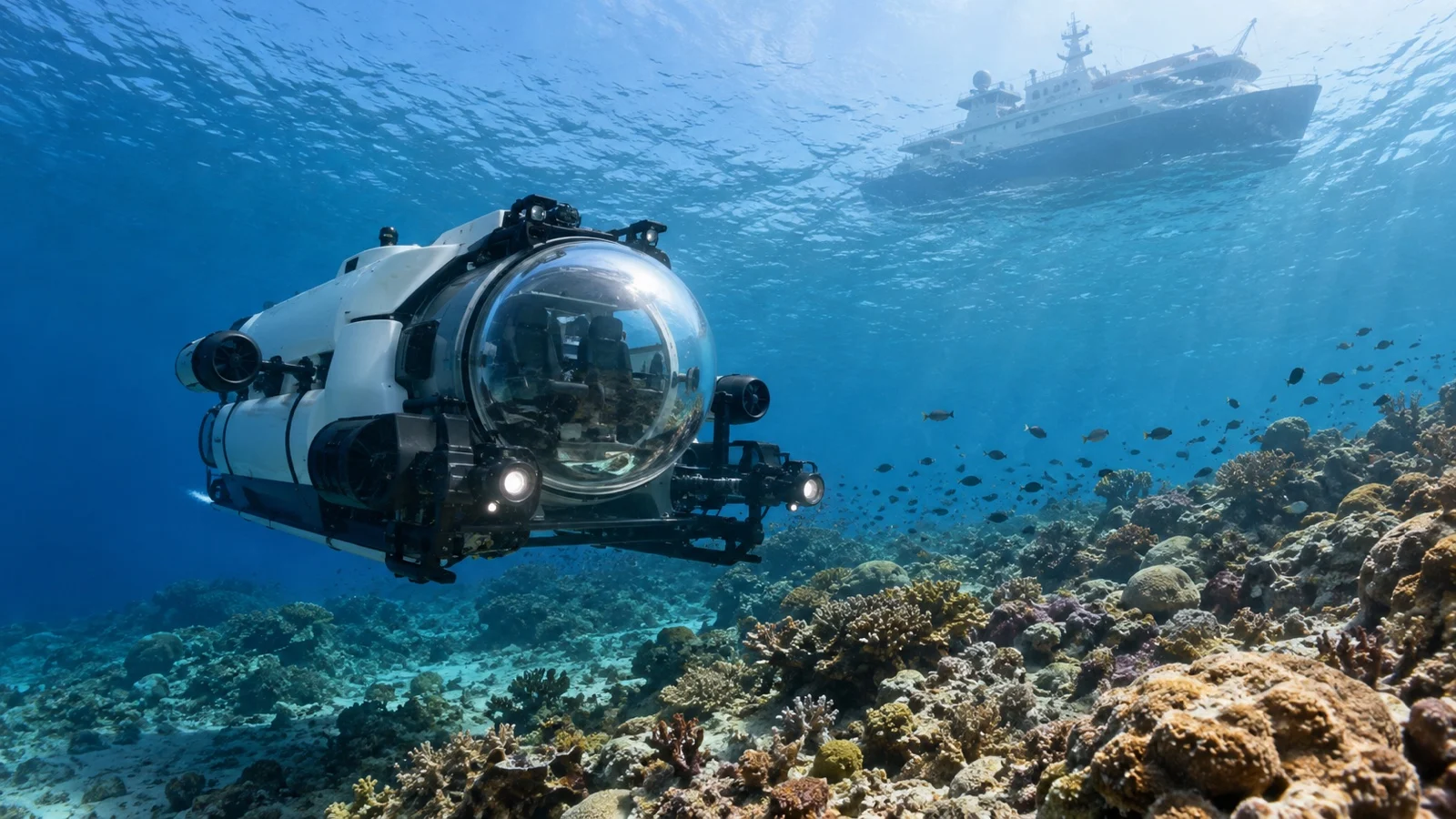
Choose the itinerary first, then treat a submarine dive or helicopter flight as a possible bonus. Weather, permits, maintenance, and limited capacity can keep either activity from operating.
Capacity is limited. A six-guest submersible or helicopter requires repeated safe operating windows to serve many passengers.
Regional permissions matter just as much as the equipment. Protected areas and national regulations can limit or prevent flights and dives on a particular itinerary.
The quick facts
- What a passenger submersible is: a small battery-powered craft with acrylic viewing spheres, launched by the ship’s crane and operated by a trained pilot. It is not a scuba alternative and you stay dry the whole time.
- How many people fit: very few. The Dutch builder U-Boat Worx rates its Cruise Sub 7 at seven occupants in total, which means one pilot and six guests.
- How many people fit in the helicopter: also very few. Quark Expeditions says its ship Ultramarine carries two twin-engine Airbus H145 machines with six window seats per flight.
- What it costs: it varies enormously by operator and by voyage, and most lines do not publish a fixed per person price. Some include a flightseeing rotation in the fare and charge separately for landings or dives, so check with your line and get it in writing.
- Where they cannot go: more places than you would guess. Quark states plainly that Ultramarine’s helicopters do not operate on its Svalbard and Spitsbergen voyages.
- Medical clearance: expect a detailed medical form well before you sail. Quark’s expedition contract requires medical documentation ninety days ahead of departure.
- Weight limits: expect the operator to collect passenger weights and assign seats for aircraft weight and balance.
- Your odds of a turn: never guaranteed. Quark’s contract says no specific activity can be guaranteed on any expedition.
What a cruise ship submarine actually is
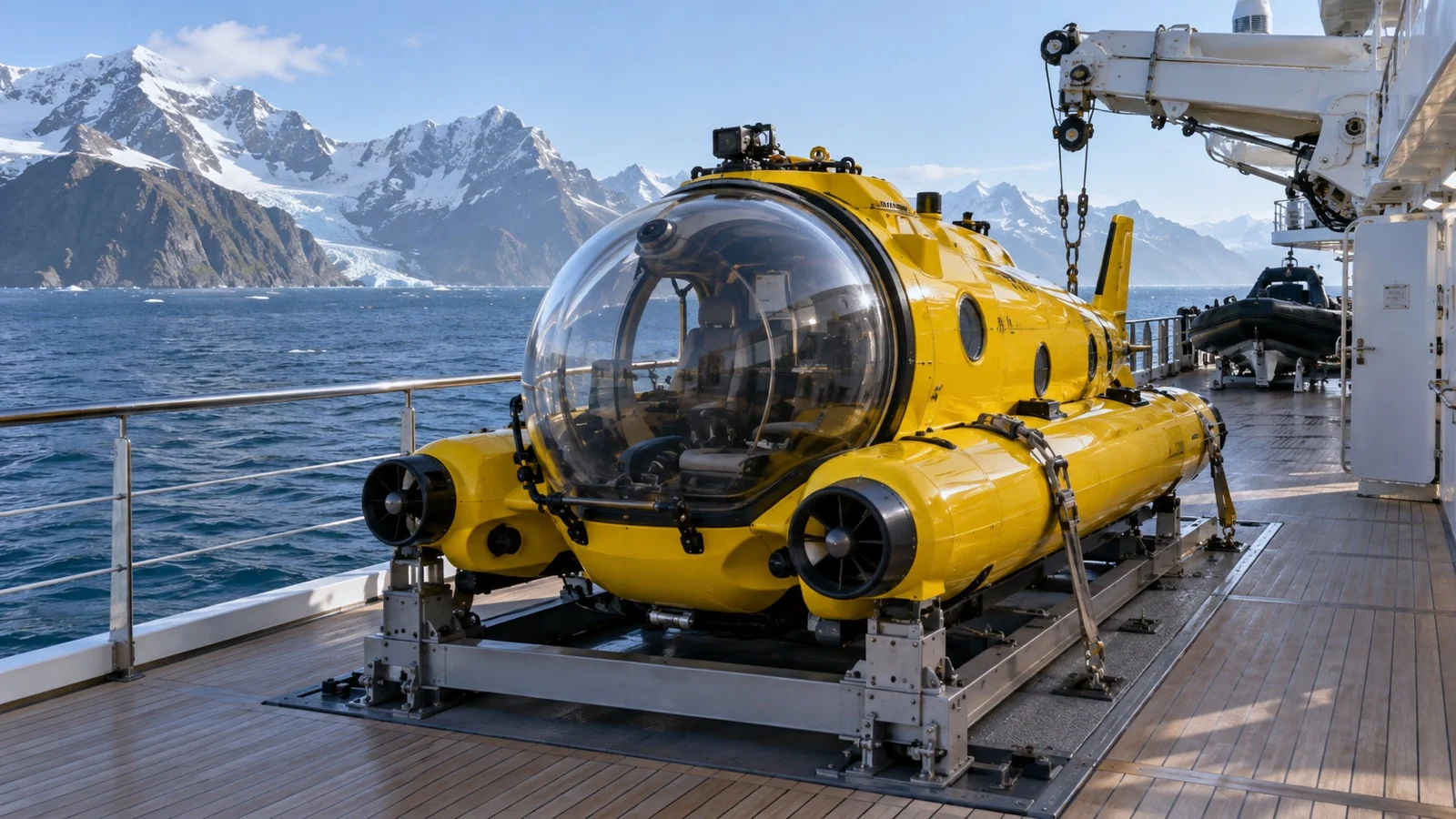
Passenger submersibles are compact observation craft built around large acrylic viewing spheres. They are designed for underwater sightseeing rather than long-distance travel.
U-Boat Worx publishes the numbers for the Cruise Sub 7, and they are worth reading before you get excited. Seven occupants, a maximum depth of about 3,740 feet, and a hull that weighs around 32,000 pounds.
The 1,140-meter version weighs about 32,000 pounds, so launch and recovery require the ship’s crane, trained crew, and suitable sea conditions.
The helicopters, and what they are actually for
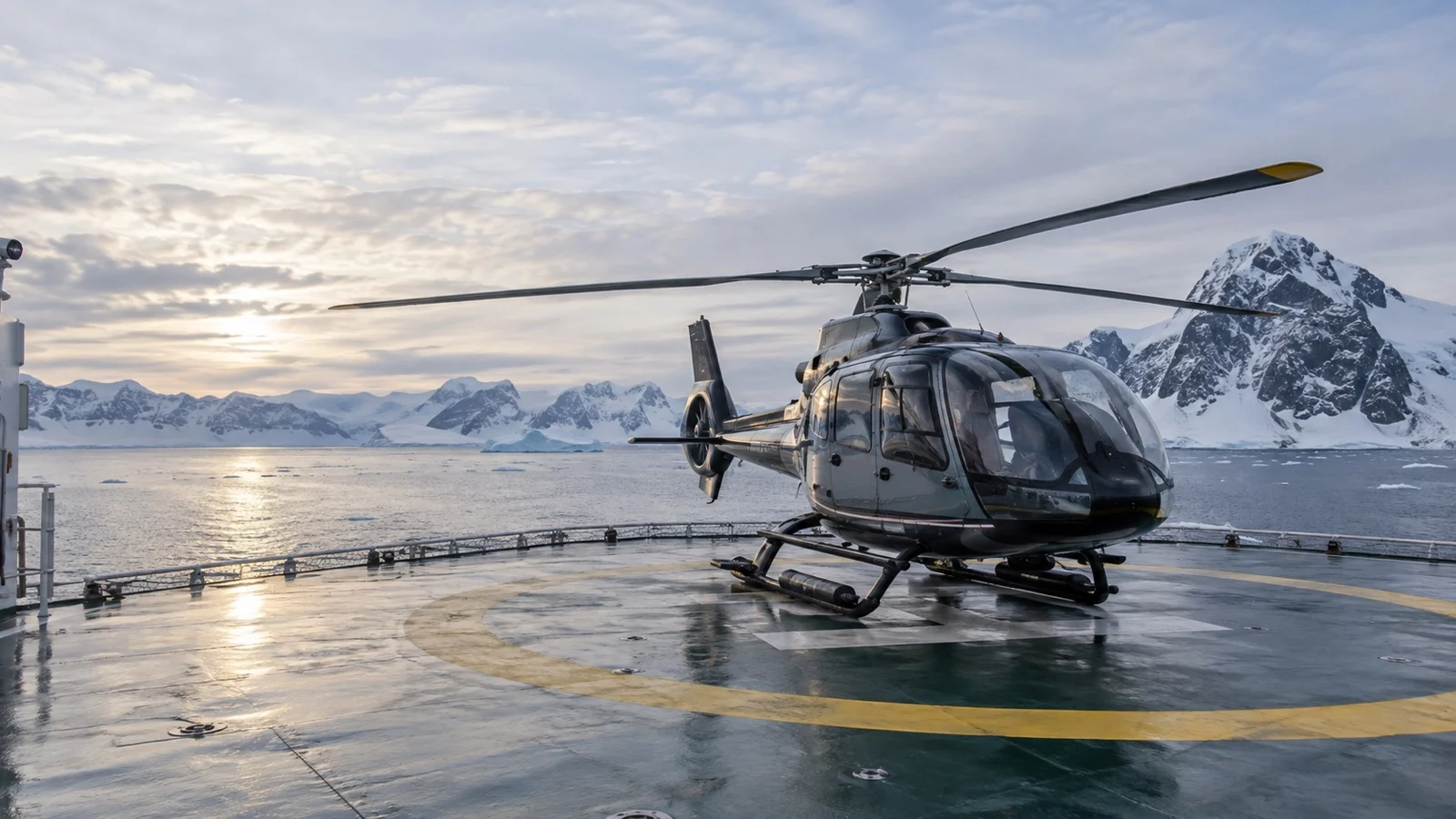
Quark markets its helicopters for flightseeing and heli-landings in places reached by air. Actual activities depend on the voyage, permissions, and conditions.
Quark Expeditions describes its Ultramarine as carrying two twin-engine Airbus H145 helicopters with six window seats per flight. The operator provides six window seats in each aircraft.
A heli-landing includes time ashore at an approved landing site, while flightseeing stays airborne for a scenic circuit. The exact route and duration depend on the day’s plan and conditions.
Multiple helicopter rotations may be possible when conditions cooperate, but participation is not guaranteed. Ask how seats are allocated on the exact voyage.
Helicopter operations follow different weather and safety limits from Zodiac landings. A Zodiac outing may still proceed when an aircraft remains grounded.
Which cruise ships currently carry them
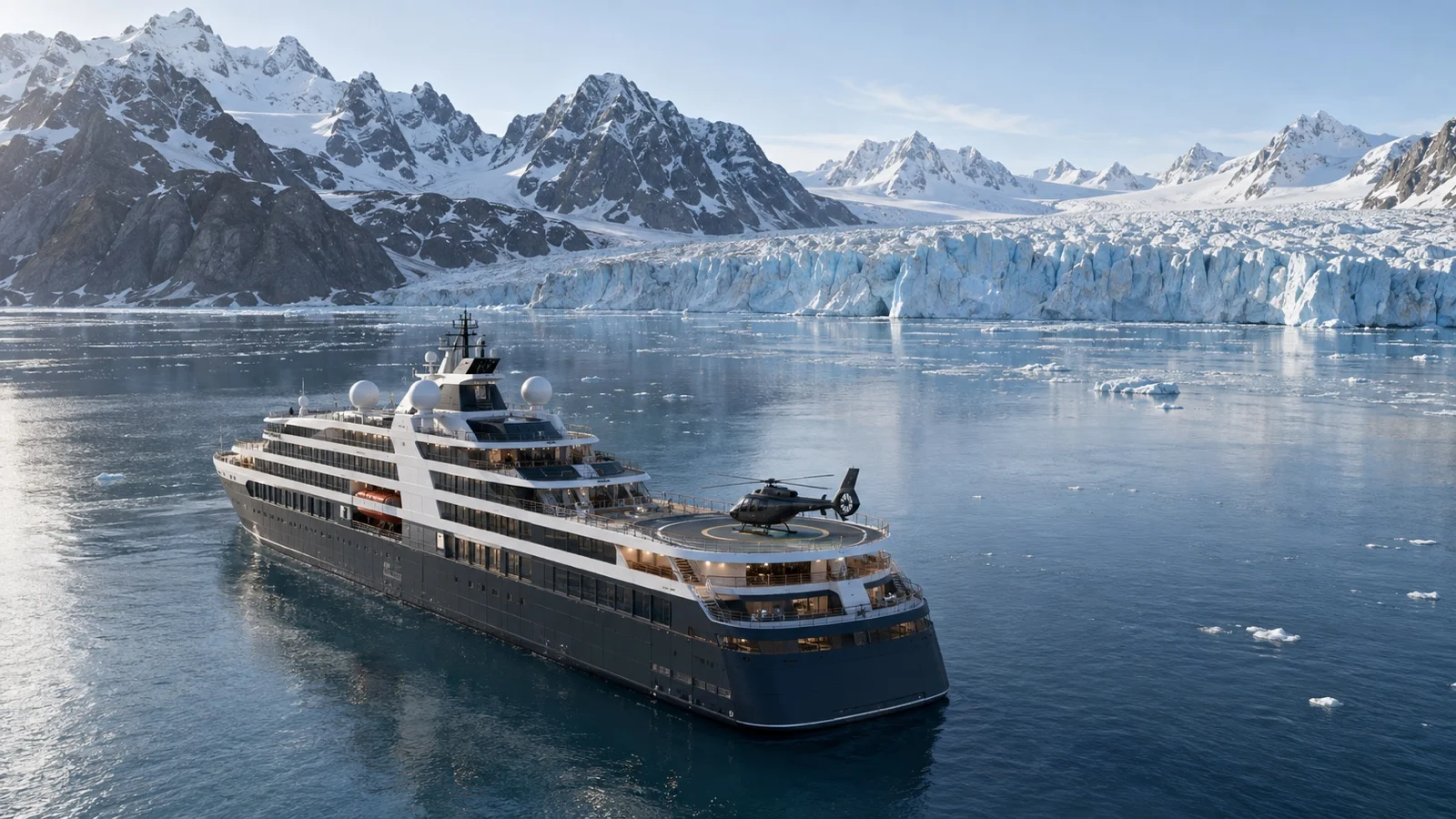
For submersibles, the clearest current short list is Scenic Eclipse and Scenic Eclipse II, Seabourn Venture and Seabourn Pursuit, plus Viking Octantis and Viking Polaris. Equipment, operating regions, and whether dives are offered can change by sailing, so the named ship is only the first check.
- Scenic Eclipse and Scenic Eclipse II: each is marketed with a Scenic Neptune submersible and two helicopters. Flights and dives remain subject to regional permissions, weather, visibility, and the operator’s activity terms.
- Seabourn Venture and Seabourn Pursuit: both expedition ships carry two six-guest submersibles. Availability varies by itinerary, and a ship carrying the craft does not mean every voyage sells dives.
- Viking Octantis and Viking Polaris: Viking’s two expedition ships operate four yellow submersibles between them. Confirm the current excursion list for the exact departure because the ship page alone does not promise a guest dive.
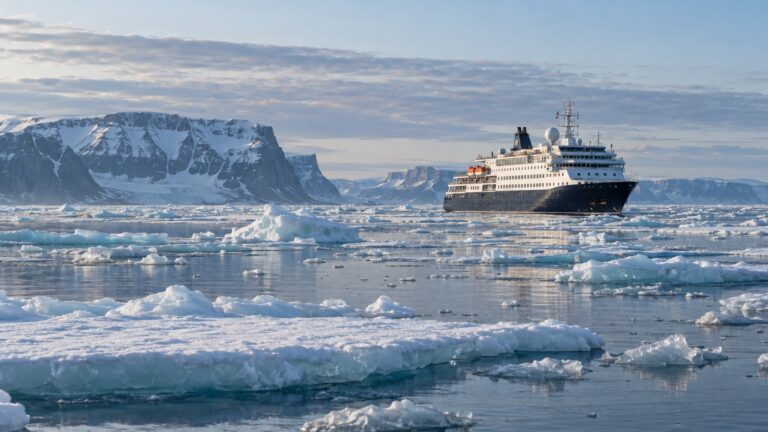
- Ultramarine: Quark’s ship carries two Airbus H145 helicopters with six guest window seats in each aircraft. Quark explicitly excludes helicopter operations on Svalbard and Spitsbergen voyages.
Submersibles and ship-based sightseeing helicopters remain specialty expedition and luxury features, not routine mainstream cruise attractions. Confirm the craft, operating region, allocation method, and cancellation terms for the exact sailing.
The places you simply cannot use them
A ship can carry the equipment without permission to use it in every region. Check the operating rules for the itinerary, not just the vessel specification.
Svalbard is a clear example. Quark states that Ultramarine’s helicopters do not operate on its Svalbard and Spitsbergen voyages.
The Governor of Svalbard separately restricts drones in protected areas, near bird cliffs during nesting season, and within airport zones. Those drone rules do not govern crewed helicopters, so check the rules for the exact aircraft and location.
Protected-area access can also be limited to designated landing sites. Operators must plan activities around current permits and environmental requirements.
Antarctica works on a different mechanism but reaches a similar place. The Antarctic Treaty Secretariat designates the continent a natural reserve devoted to peace and science, and activities are governed through the Environmental Protocol and its annexes rather than through open access.
Many Antarctic tour operators also follow IAATO operating procedures. Wildlife protection, site coordination, weather, and safety can change or cancel planned activities.
Elsewhere, national and local rules apply. Marine protected areas, national parks, and archaeological zones can require permission before a ship launches an aircraft or submersible.
Weather, ice, medicals and your real odds
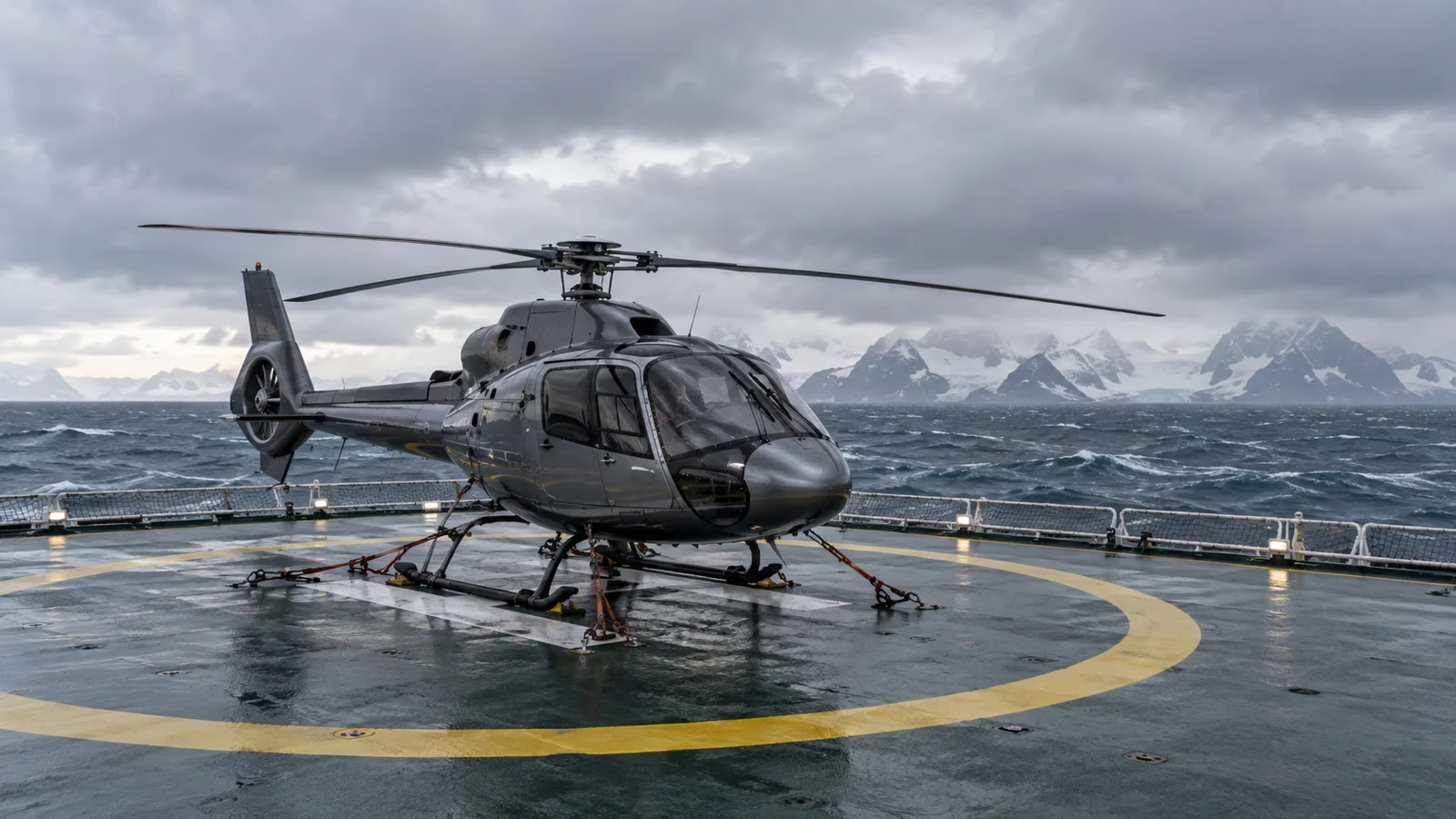
Each craft has its own operating limits. A day suitable for a Zodiac cruise may still be unsuitable for a submersible launch or helicopter flight.
Submersible launch and recovery require suitable sea conditions, even when conditions feel comfortable aboard the ship. The captain and operating team make the final safety call.
Helicopters need acceptable visibility, cloud cover, wind, and landing conditions. Polar fog and flat light can reduce safe operating windows.
Then there is the medical layer. Quark’s expedition contract requires guests to submit medical documentation ninety days before departure, and the operator can decline participation in specific activities on that basis.
Quark’s current expedition contract says specific activities are not guaranteed and that it does not refund unused or canceled helicopter time. Other operators may use different terms, so read the contract for your booking.
Questions to ask before paying
- Is the craft on this specific voyage? Equipment gets landed for maintenance, certification or regional rules. Ask about your sailing date, not the ship in general.
- Is it permitted in these waters? Get the answer for every segment of the itinerary. The Svalbard example shows a ship can carry helicopters it is not going to fly.
- Included or extra? Establish whether a rotation is in the fare or sold as a supplement. A flightseeing loop and a heli-landing are not the same product.
- How are turns allocated? Ballot, booking order, first come at the desk, or by suite category. This determines your odds more than the weather does.
- What are the weight and mobility limits? Ask the specific numbers rather than accepting a reassuring generality. Climbing into a submersible hatch is a genuine physical task.
- Does my insurance cover it? Some policies exclude aviation on nonscheduled aircraft or any submersible activity. Check the exclusions page, not the summary.
Fun fact: U-Boat Worx rates the Cruise Sub 7 at a top speed of 3 knots, or about 3.5 miles per hour.
The builder lists an 18-hour endurance for the 1,140-meter model, although guest excursions are much shorter.
How to decide
If one of these activities matters to you, compare the allocation process and operating schedule before choosing a sailing. Neither option is guaranteed.
Read the cancellation and refund terms before paying a supplement. Choose a voyage you would still enjoy if the activity is canceled.
Zodiac cruises and shore landings usually shape more of the expedition than specialty hardware. Review the rules governing Antarctic landings before booking.
A realistic word on accessibility
Submersible access commonly involves a top hatch and a short ladder. Ask the operator for the exact boarding requirements and cabin layout.
Travelers with limited mobility or concerns about confined spaces should request a written accessibility assessment before booking. Do not assume crew assistance can overcome the craft’s physical entry requirements.
Helicopter boarding requirements vary by aircraft and landing site. Weight and balance rules still apply, and heli-landing sites may have uneven snow or rock without visitor infrastructure.
Complete the medical form accurately and ask the expedition team about activity-specific limits well before departure. Get any important accessibility guidance in writing.
When to go, and the weather
Most expedition schedules concentrate Antarctica voyages in the southern summer and High Arctic voyages in the northern summer. Check the operator’s departure calendar because repositioning and shoulder-season dates vary.
For flying, wind, visibility, cloud cover, and landing conditions matter more than the temperature alone.
High Arctic fog can ground aircraft even when marine outings remain possible.
Seasonal conditions vary by region and year, so no departure month guarantees a better operating window. Choose dates for the destination and wildlife priorities first.
Quick answers
Which cruise ships have submarines?
Current examples include both Scenic Eclipse ships, Seabourn Venture and Pursuit, and Viking Octantis and Polaris.
Confirm the exact departure because equipment can be unavailable and not every itinerary operates dives.
How many people fit in a cruise ship submarine?
Six guests plus a pilot in the widely used U-Boat Worx Cruise Sub 7, which the builder rates at seven occupants.
Limited capacity is why operators need multiple rotations to accommodate guests.
Does a helicopter flight cost extra?
Sometimes a basic flightseeing rotation is in the fare and landings are sold separately, and sometimes everything is a supplement.
Pricing is not standard across operators, so check with your line before you book.
Can I fly a helicopter tour in Svalbard?
Not on Quark’s ships, which state that Ultramarine’s helicopters do not operate on Svalbard and Spitsbergen voyages.
Norwegian protected area rules and airport zones around Longyearbyen and Ny-Alesund are restrictive.
Do I get a refund if the weather cancels my flight?
It depends on the operator’s contract.
Quark’s expedition contract says it does not refund helicopter time not used or canceled flights, regardless of the reason.
The last word
A cruise ship submersible is remarkable equipment, but it is a risky reason to choose a vacation. Limited seats, launch requirements, and weather can prevent a planned dive.
Choose the region first and the ship second. For an Arctic trip, the Svalbard cruise ports guide will shape more of the voyage than specialty hardware.
For many Antarctic Peninsula cruises, the Ushuaia departure guide is useful preparation. The small ship cruise ports overview explains where expedition vessels can operate.
Book a voyage you would still enjoy if the submarine never leaves its cradle or the helicopters stay on deck.
How this guide was researched: Unless a first-hand visit is explicitly identified above, this guide is based on independent research using official port, tourism, transit, government, and attraction sources where available. Submersible and ship inventories were checked against U-Boat Worx, Scenic, Seabourn, and Viking material, with helicopter details and contractual terms from Quark Expeditions’ own ship page and expedition contract, aviation and protected area rules from the Governor of Svalbard, and the Antarctic framework from the Antarctic Treaty Secretariat and IAATO.
Logistics and time-sensitive details were reviewed in September 2026. See our Editorial Policy.
More on this topic: browse every guide on expedition and alternative cruises.