San Cristóbal Island Cruise Guide: Puerto Baquerizo Moreno and Park Rules
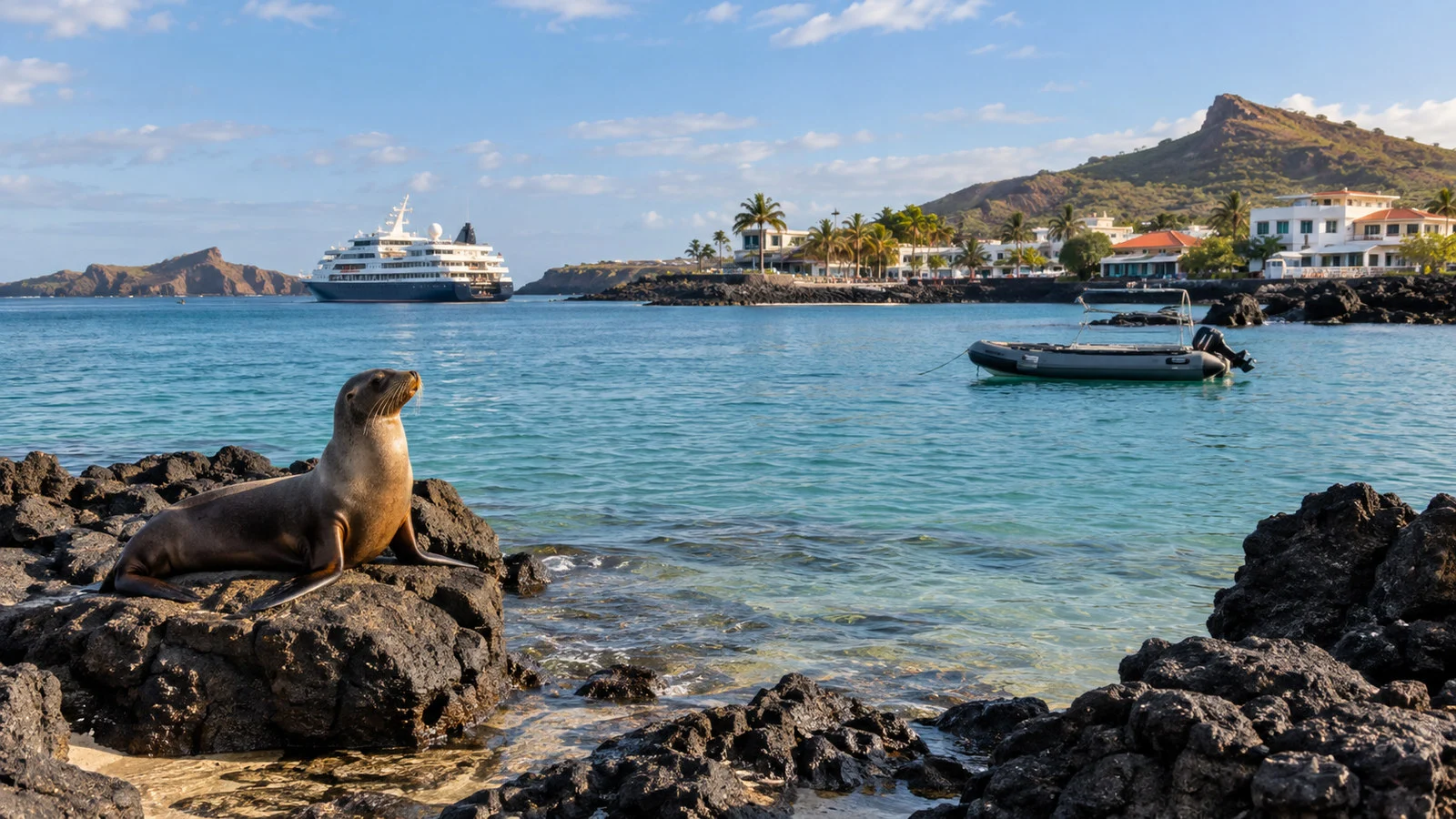
San Cristóbal feels different from the instant your small boat noses toward Puerto Baquerizo Moreno. Sea lions occupy benches and harbor steps with comic confidence, while pelicans work the shallows and low volcanic hills frame Ecuador’s most unusual provincial capital.
This is a living town inside one of the world’s most carefully protected island groups, not a theme park built for cruise passengers. A rewarding visit comes from enjoying the easy waterfront while treating every wildlife encounter, trail, and marine outing as part of a regulated national park.
My quick take
San Cristóbal is one of the Galápagos stops where independent time in town can pair beautifully with a guided nature outing. I would choose one priority beyond Puerto Baquerizo Moreno, leave a generous buffer for the return boat, and resist trying to cover the island from end to end.
First-time visitors often get the most from a ship excursion or licensed local tour to Kicker Rock, the highlands, or a park visitor site. Travelers who prefer a gentler day can walk the waterfront, visit the Interpretation Center, and continue toward Cerro Tijeretas if conditions, mobility, and permitted access align.
Quick Facts
- Arrival point: Puerto Baquerizo Moreno, usually by ship tender, panga, or Zodiac
- Country: Ecuador
- Currency: US dollar
- Language: Spanish, with English common in organized tourism
- Time zone: Galápagos Time, UTC minus 6 year-round
- Best for: Sea lions, coastal walks, snorkeling, volcanic scenery, and interpretation
- Signature outing: A permitted boat excursion toward Kicker Rock, also called León Dormido
- Emergency number: 911
- Key rule: Follow Galápagos National Park instructions and never touch, feed, or crowd wildlife
- Planning priority: Confirm the final return boat and any guide requirement before leaving town
How cruise passengers come ashore
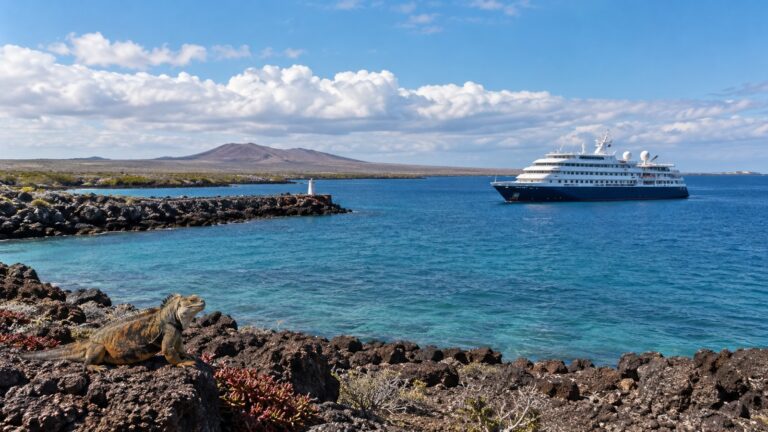
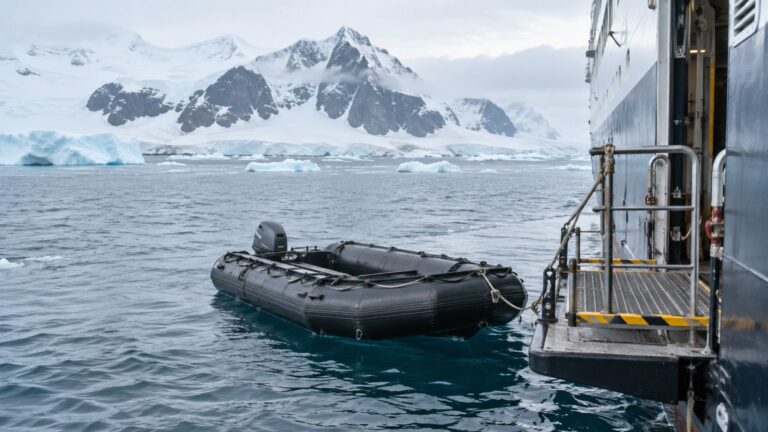
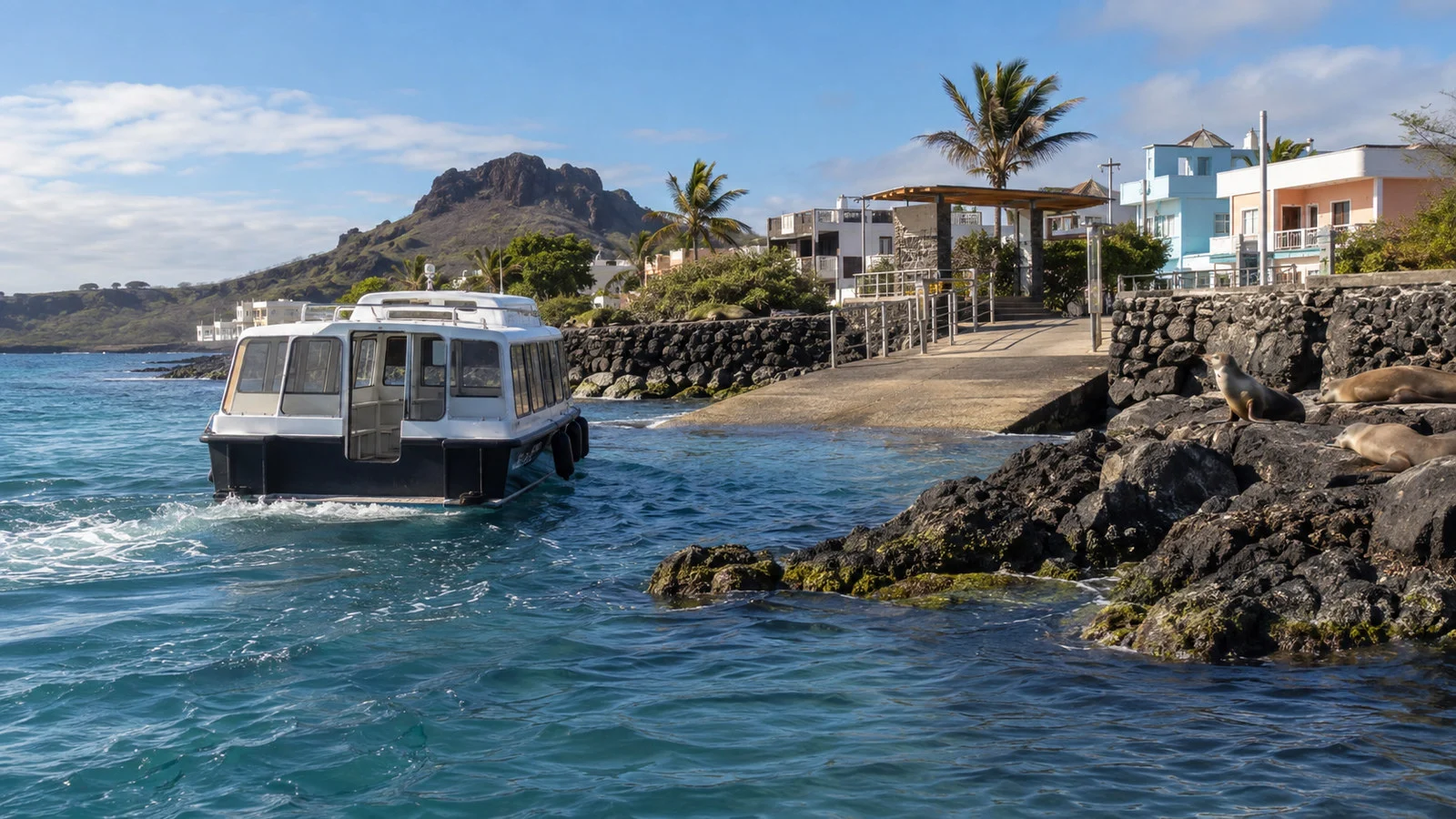
San Cristóbal is commonly an anchorage rather than a conventional walk-off cruise terminal. Passengers transfer in small craft, often called pangas or Zodiacs, and the exact procedure depends on the vessel, sea state, and instructions from the expedition team.
At Puerto Baquerizo Moreno, the town landing is typically a dry transfer onto a pier or floating dock rather than a beach landing. Even so, the boat can move sharply against the landing, and steps, gaps, spray, or a steep angle may be involved.
Keep both hands available, wait for the crew’s signal, and accept the offered grip. A waterproof pouch for your phone and documents is far more useful than a large day bag in a small boat.
Wildlife may be resting on or beside the landing. Give animals the right of way and let crew or park personnel direct you, even when the shortest route appears obvious.
Puerto Baquerizo Moreno on foot
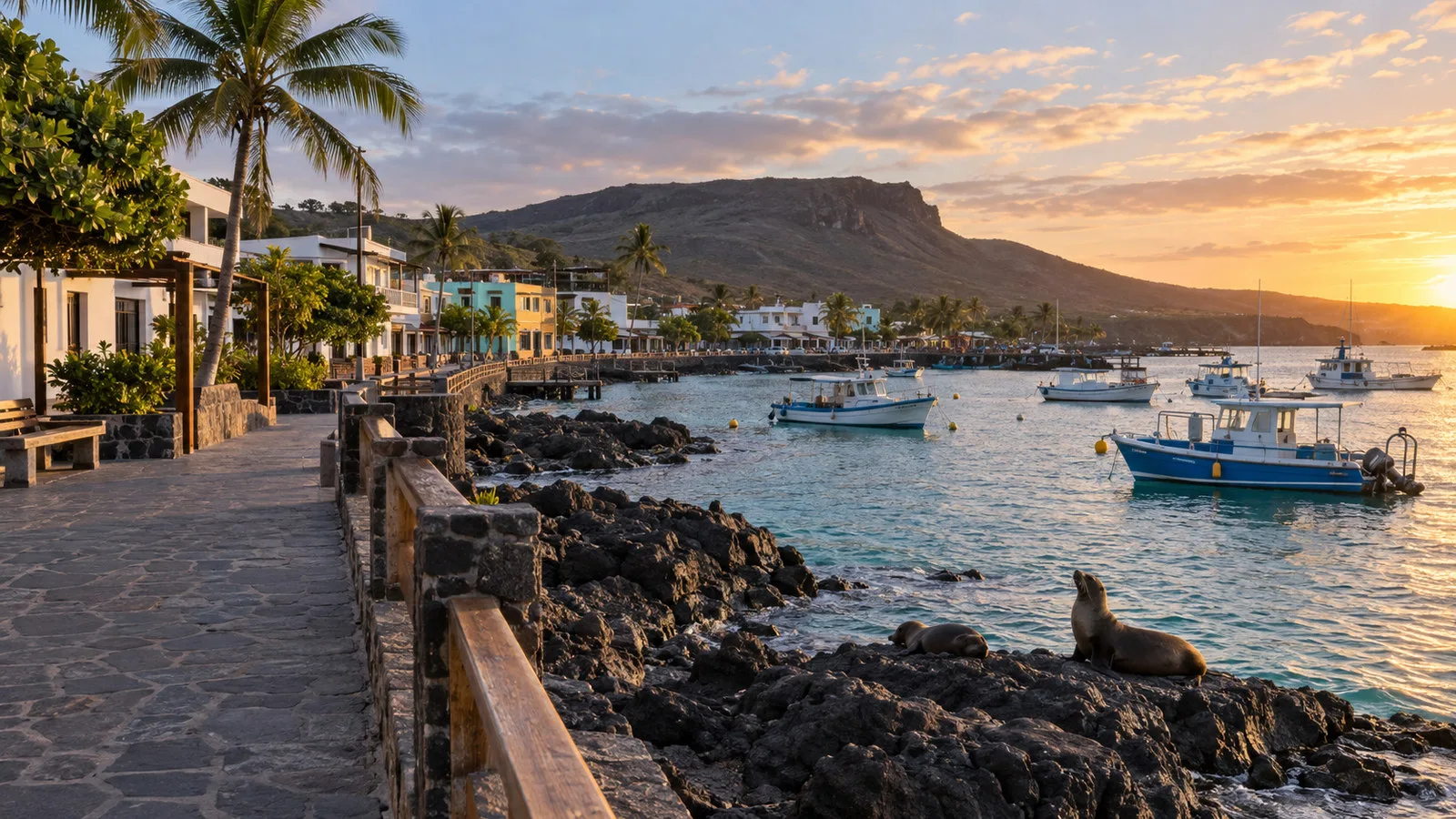
Puerto Baquerizo Moreno is compact, relaxed, and easy to understand once you reach the waterfront. The malecón has cafes, tour offices, small shops, public spaces, and frequent sea lion activity, so an unhurried stroll can be a genuine Galápagos experience.
The waterfront is also an important working area for residents and local boats. Watch for wet paving, ropes, changing water levels, and animals sleeping in places that look designed for people.
A short town visit works well for passengers with limited energy or a narrow tender window. It also gives you flexibility if a marine excursion is canceled because of wind or swell.
Do not treat the town’s sea lions as tame animals. They are wild, surprisingly fast at close range, and protective of their space, especially when pups or large males are nearby.
The Interpretation Center and Cerro Tijeretas
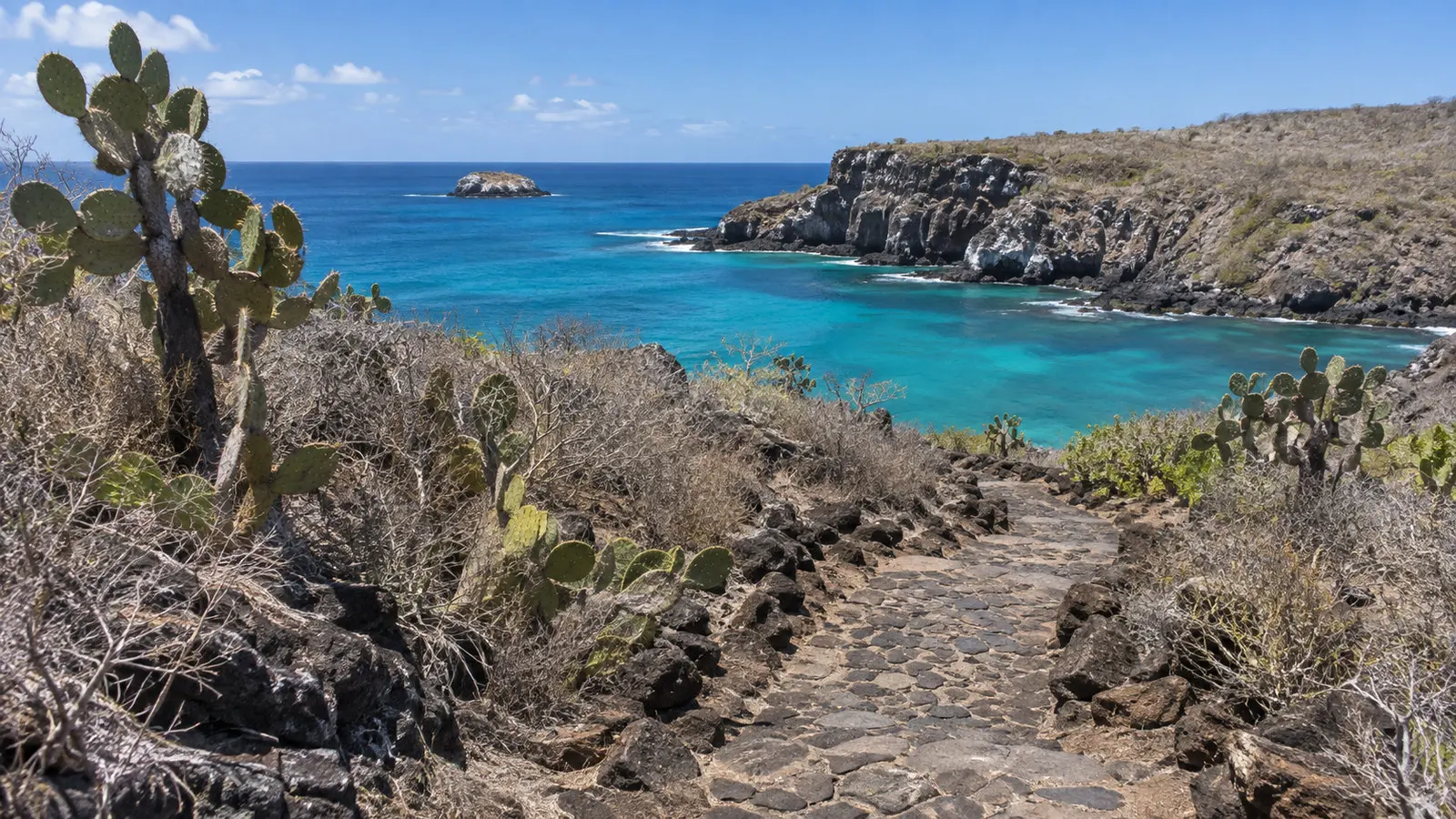
The Interpretation Center is one of the most useful places to begin because it explains the human and natural history of the archipelago. Exhibits help connect geology, settlement, conservation, water scarcity, and introduced species to what you see outside.
From the center, trails lead through dry vegetation toward viewpoints in the Cerro Tijeretas area. The landscape can feel stark at first, but patient walkers may notice finches, mockingbirds, frigatebirds, lava formations, and changing coastal light.
The route is exposed, and Galápagos sun can be intense even when the air feels breezy. Carry water, wear a hat, use reef-conscious sun protection where appropriate, and turn back early enough to avoid rushing.
Access rules, trail conditions, and permitted activities can change. Confirm the day’s instructions with your expedition leader, the park, or local authorities before setting out beyond the clearly open public route.
Is the walk difficult?
The initial approach is manageable for many active visitors, but heat and uneven volcanic surfaces make the outing more demanding than the distance suggests. Viewpoints can involve inclines and steps, so this is not the best place to discover that your footwear lacks grip.
Travelers with knee, balance, or stamina concerns should ask exactly how far the group will walk and whether there is a shorter option. A pleasant waterfront visit is better than a hurried trail followed by anxiety about the return transfer.
Kicker Rock, or León Dormido
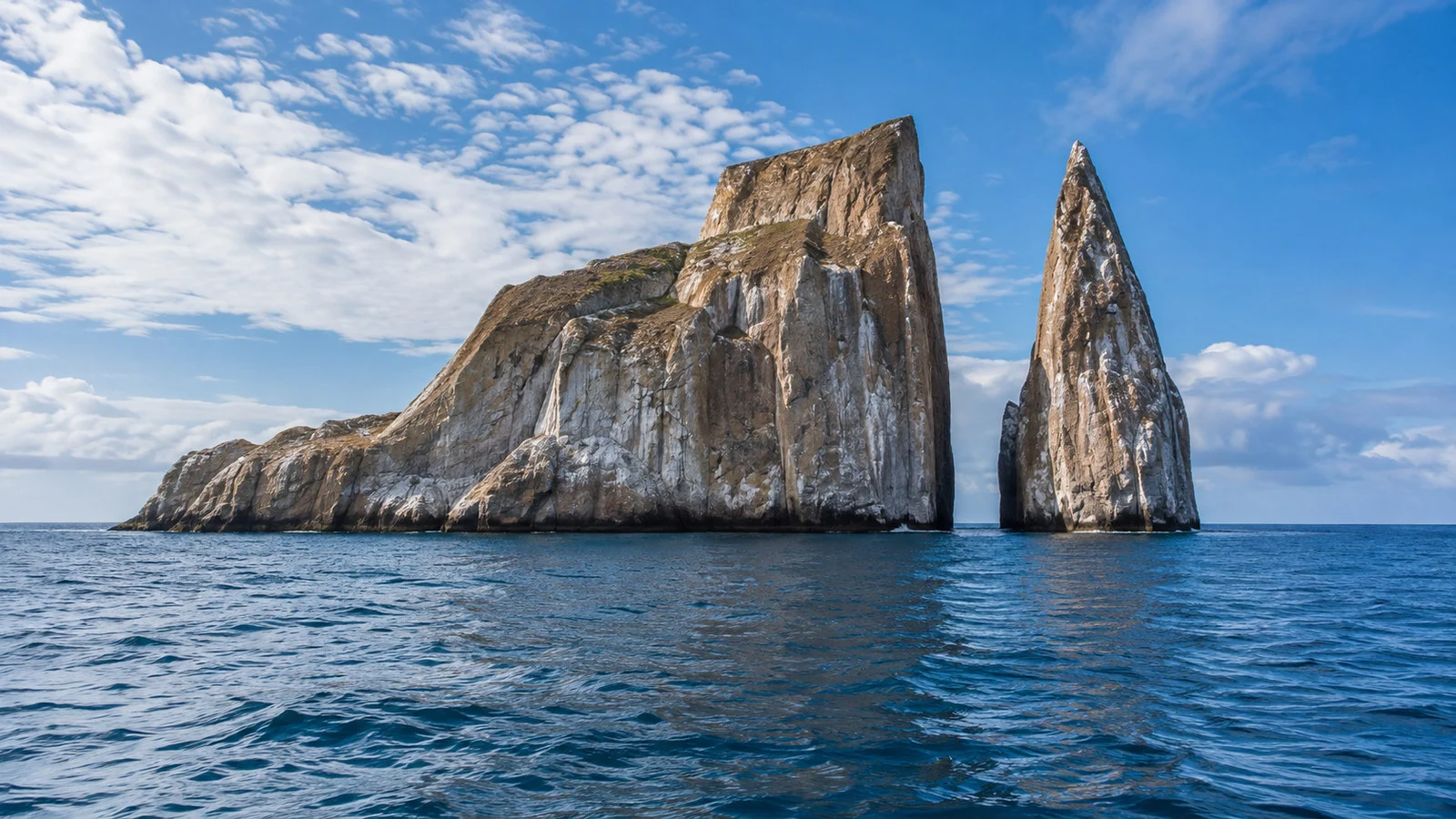
Kicker Rock is the island’s headline marine landmark, a dramatic pair of volcanic rock walls rising from the ocean. Local Spanish usage often calls it León Dormido, and excursions may circle the formation, snorkel nearby, or combine it with another permitted site.
This is a boat outing, not a place you reach on foot from town. Travel time and the experience vary with the operator, vessel, current, visibility, swell, and national park authorization.
Snorkeling can reveal schools of fish, rays, sea turtles, and sometimes sharks, but wildlife is never guaranteed. Strong current, deep water, and a boat pickup can make the activity unsuitable for hesitant swimmers.
Ask whether flotation is provided, how guests reboard, whether a guide enters the water, and what the cancellation standard is. If you are prone to seasickness, take your usual precautions early and choose a seat based on crew advice.
A Kicker Rock trip can consume most of a port call, so independent booking requires careful coordination with the ship’s all-aboard time. On a short call, the ship’s excursion is often worth the reduced timing risk.
La Lobería
La Lobería is a coastal area known for sea lions and rocky shoreline scenery. Reaching it generally requires a vehicle from town followed by walking, and the swimming or snorkeling conditions can be affected by surf and current.
The name can create the impression of a guaranteed close encounter, but responsible viewing means allowing animals to choose the distance. Never position yourself between a mother and pup, block an animal’s route to the sea, or follow one into the water.
Footing can be rough and shade limited. Closed-toe shoes for the approach, water, and a clear pickup plan make the visit more comfortable.
Check whether a naturalist guide is required for the activity and route you intend to use. Regulations differ by visitor site and can change according to conservation needs.
The highlands
San Cristóbal’s interior offers a striking contrast to the dry coast. Depending on season and elevation, the highlands can be cooler, greener, mistier, and surprisingly damp.
Common island tours may include El Junco lagoon, the Galapaguera de Cerro Colorado tortoise center, and Puerto Chino beach. These places are spread out, so they make sense as a coordinated vehicle itinerary rather than a casual extension of a town walk.
El Junco
El Junco sits in an old volcanic crater and is known as a rare freshwater lagoon in the Galápagos. Cloud, mud, wind, and limited visibility are all possible, which is part of the highland character rather than a sign that the day has failed.
Bring a light rain layer and shoes that can handle a wet path. The stop is about landscape and ecology, not dramatic wildlife at arm’s length.
Galapaguera de Cerro Colorado
The Galapaguera supports conservation and interpretation focused on San Cristóbal giant tortoises. Visitors may see tortoises in a managed setting while learning why breeding, habitat protection, and control of introduced species matter.
Stay on the designated route and follow the guide’s directions around animals. A telephoto setting is more respectful than stepping closer for a wide-angle portrait.
Puerto Chino
Puerto Chino is a scenic beach reached from the far side of the island by road and trail. Its distance from Puerto Baquerizo Moreno makes it a poor spontaneous choice for a short cruise call.
A visit should be built into a timed highlands tour with current access confirmation. Beach conditions, wildlife presence, and park controls determine what is possible on the day.
Ship excursion or independent plan?
A ship excursion is the simplest choice for a marine trip, distant highlands circuit, or activity with tightly controlled access. The operator coordinates permits, guides, transport, and the ship’s schedule, while the cruise line can respond if its organized group runs late.
Independent time works best in Puerto Baquerizo Moreno and on routes that are confirmed open without a guide. It can also work for a licensed local tour when the operator understands cruise timing and provides a realistic return margin.
Before paying, repeat your ship name, landing point, all-aboard time, and required return boat time. Ask whether the quoted duration starts at the town pier or at the tour office, since that small distinction can consume your safety buffer.
Do not assume that a taxi driver or storefront seller can override park rules. Verify that the proposed site and activity are permitted and that any required naturalist guide is included.
Wildlife etiquette is not optional
The Galápagos National Park visitor rules protect a delicate ecosystem in which animals often show little fear of people. That lack of fear is not an invitation to touch, feed, pose with, or surround them.
Stay on marked trails, follow ranger and guide instructions, and keep the distance they specify. Do not use flash where prohibited, remove natural objects, introduce food or seeds, or leave any waste behind.
If an animal approaches you, stop and allow it a clear path rather than moving closer. Your best photograph often comes from waiting quietly while the animal resumes its natural behavior.
Biosecurity is part of the same responsibility. Clean dirt and seeds from footwear and gear, comply with baggage inspection or disinfection procedures, and never carry plants, animals, untreated natural material, or restricted food between islands.
Snorkeling and water safety
Galápagos water can be colder and more energetic than tropical marketing photographs suggest. Current, surge, entry method, visibility, and temperature vary by site and season.
Use the flotation offered if it improves your comfort, and be honest about your swimming ability. Enter only after the guide explains the route, signals, buddy plan, and pickup procedure.
A wetsuit can add warmth and buoyancy, but it does not replace swimming skill. If conditions exceed your comfort level, watching from the boat is a sensible conservation-minded choice, not a missed test of courage.
Avoid standing on rocks or the seabed unless the guide identifies a safe exit. Fins and hands can damage organisms that are difficult to see in moving water.
Accessibility and mobility
The main challenge begins with the small-boat transfer, which may require stepping across a moving gap. Cruise lines set their own participation rules, and crew cannot always lift or transfer a passenger safely.
Puerto Baquerizo Moreno has some paved and relatively level areas, but curbs, uneven surfaces, wildlife, heat, and wet harbor edges remain factors. Accessible vehicles and fully step-free routes should be arranged in advance rather than assumed at the pier.
Many nature sites include lava, sand, slopes, or simple trails with limited facilities. Ask for the number and height of steps, walking distance, surface type, shade, restroom availability, and reboarding method before committing.
If you use a mobility aid, discuss its dimensions and storage with the ship before the call. A folding aid may still be restricted by sea conditions or the tender design.
Park fees and arrival formalities
The Galápagos Governing Council publishes the official conservation entry fee schedule. Its current page lists US $200 for international visitors over age 12 and US $100 for international visitors under age 12, with separate rates for other categories.
Different rates apply to Ecuadorian residents and certain regional categories. Fees and procedures can change, so use the park’s current page rather than an old blog post when budgeting.
Cruise passengers should check what their fare or package already includes before paying anything separately. Guests arriving by air may also need a Transit Control Card and must follow current biosecurity procedures, but the process and fee should be confirmed with the cruise company or Galápagos government.
Keep receipts and travel documents accessible but protected from spray. Never hand cash or a passport to an unverified person at the landing.
Money, food, and connectivity
Ecuador uses the US dollar, and small bills are useful for modest purchases. Card acceptance and cash-machine reliability can vary, so do not make a time-sensitive port plan depend on finding cash after arrival.
Choose food and drinks from established businesses and follow any rules about taking food beyond town. Bringing fruit, seeds, or other biological material into protected areas can create a biosecurity problem.
Cellular service may be available in town but should not be treated as dependable across the island or offshore. Download any meeting instructions before leaving the ship and carry the operator’s contact details on paper.
Weather and what to wear
The warmer, wetter period is generally associated with roughly December through May, while the cooler garúa period is generally associated with roughly June through November. Real conditions can shift quickly, and a single day may include strong sun, haze, mist, wind, and spray.
Light layers work better than one heavy garment. Add a brimmed hat, secure sunglasses, sun protection, a refillable water bottle, and shoes suited to the exact landing and trail.
A light waterproof shell protects against panga spray and highland mist. Keep loose hats, straps, and wrappers secured so they do not become marine debris.
Timing your return
The most important time is not the ship’s published departure but the final small boat from shore. Write down that time, the meeting location, and any difference between local time and ship time.
Build extra margin for a vehicle delay, slower trail, wildlife blocking a path, or rougher transfer conditions. Returning early leaves time for one last waterfront look without turning the day into a sprint.
If your plans change, notify the responsible operator or ship contact as soon as possible. Do not rely on a casual promise that an independent boat can deliver you directly to the ship.
How San Cristóbal fits a Galápagos cruise
San Cristóbal combines a real island community with immediate access to protected landscapes and marine life. That mix makes it a useful place to understand both the wonder of the archipelago and the daily work required to safeguard it.
The stop is not about collecting the greatest number of species in a few hours. It is about slowing down enough to notice behavior, habitat, and the boundaries that keep wildlife encounters possible.
If your itinerary includes several Galápagos islands, compare the activities before choosing. A highlands visit here may balance snorkeling elsewhere, while a Kicker Rock outing may be the right choice if other calls focus mainly on walking.
Quick answers
Can I walk into town from the landing?
Once you are delivered to the Puerto Baquerizo Moreno pier, the central waterfront is compact and walkable for many visitors. The transfer from ship to shore is still by small boat on most cruise calls.
Can I visit Kicker Rock independently?
You need an authorized boat outing, and applicable park and guide requirements must be followed. Cruise passengers should use a ship excursion or a reputable licensed operator with ample return time.
Will I definitely see sea lions?
Sea lions are strongly associated with the Puerto Baquerizo Moreno waterfront, but wildlife never follows a schedule. Observe whatever is present without approaching, touching, feeding, or blocking it.
Do I need a guide everywhere outside town?
Guide requirements depend on the visitor site, activity, and current park rules. Confirm the exact route rather than relying on a blanket claim that every place is either open or restricted.
Is San Cristóbal suitable for a relaxed port day?
Yes, especially if you stay near the waterfront and Interpretation Center. The key is to match the outing to the small-boat transfer, heat, surfaces, and your ship’s timetable.
My last word
San Cristóbal rewards curiosity more than speed. Pick one meaningful experience, listen closely to local naturalists, and let the animals set the pace.
A sea lion asleep beside the harbor, a frigatebird turning over Cerro Tijeretas, or the dark walls of Kicker Rock can become the memory of the cruise. The best way to keep that memory honest is to leave every trail, beach, and animal exactly as you found it.
Research note
Conservation rules and fees were checked against the Galápagos National Park and the Galápagos Governing Council’s official arrival information. Visitor access, guide requirements, fees, and biosecurity procedures can change, so confirm current instructions with the park, Galápagos authorities, and your cruise line before travel.
More on this topic: browse every guide on expedition and alternative cruises.