Madrid Cruise Extension Guide: Adding the Capital to a Douro Trip
Madrid is not a cruise port and the Douro does not flow anywhere near it. A Madrid extension is a separate land stay that can add world-class art, royal history, late dinners, and another country to a Portugal-focused river trip.
The idea works beautifully when the transfer is protected and you receive at least two full sightseeing days. It works much less well when a three-night label hides a late arrival, one rushed day, and an early airport departure.
What a Madrid cruise extension actually is
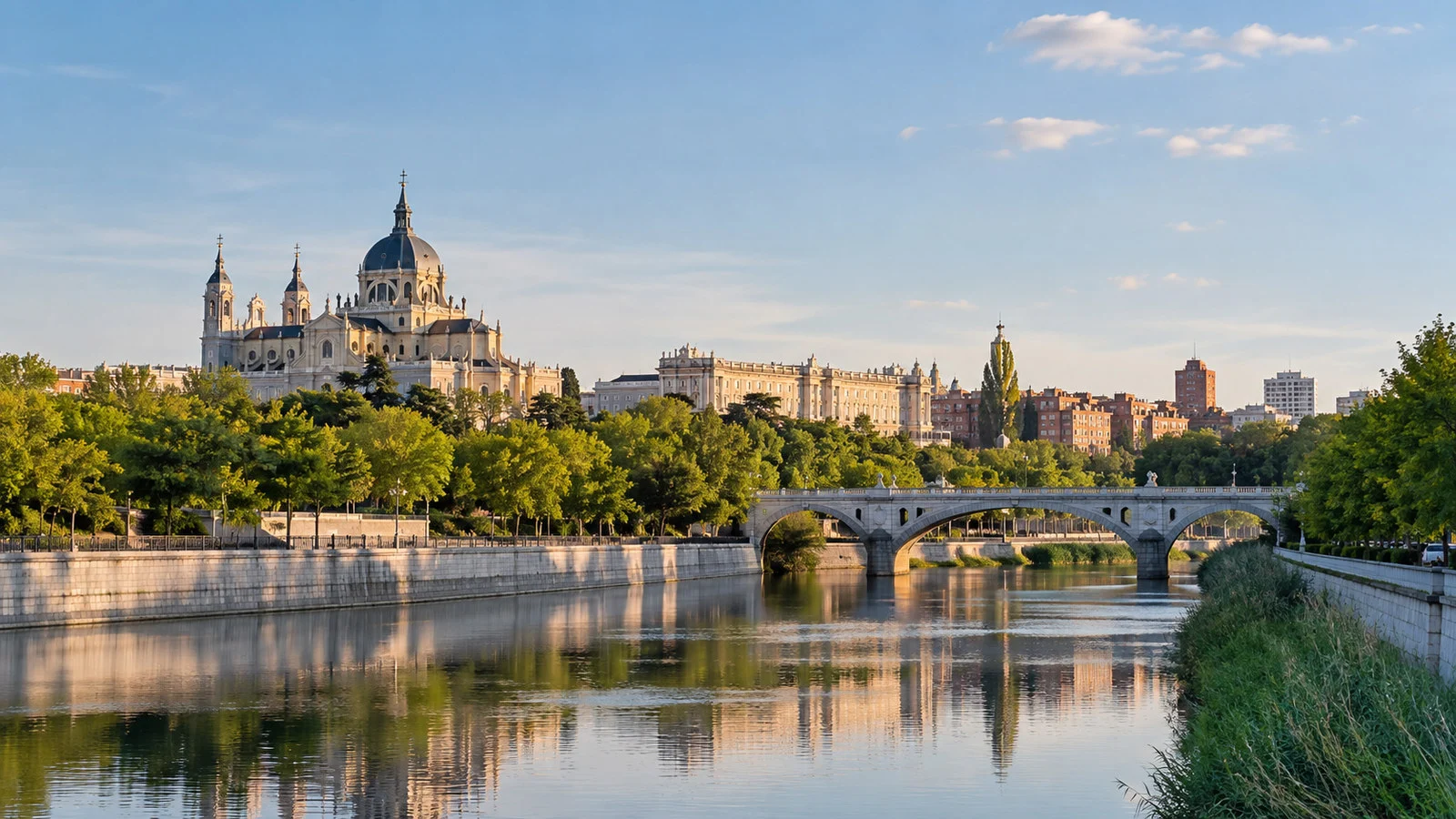
A cruise extension normally combines hotel nights, selected tours, and transportation before or after the sailing. Madrid remains entirely overland, so do not count those hotel nights as river-cruise days or assume they include the same meals and services as the ship.
Some Douro operators offer Madrid as an optional package, while others end in Porto and leave travelers to build the Spanish portion independently. Programs change by year, sailing direction, and departure date, which makes the current day-by-day itinerary more important than a generic brochure.
Salamanca appearing as a cruise excursion does not mean Madrid is automatically included. Salamanca can be reached from the Spanish end of the Douro itinerary, while Madrid requires a separate land journey and hotel stay.
Quick Facts
- Port status: Madrid is an inland extension city, not a cruise port
- Best length: At least three nights with two full sightseeing days
- Top priorities: Prado Museum, Royal Palace, old Madrid, and Retiro Park
- Main airport: Adolfo Suárez Madrid-Barajas Airport
- Currency: Euro, the same currency used in Portugal
- Time difference: Madrid is normally one hour ahead of mainland Portugal
- Best package advantage: Coordinated luggage and the long connection to or from the cruise
- Emergency number: 112
Is Madrid worth adding?
Madrid is worth adding if major museums, palace interiors, energetic neighborhoods, and Spanish food are genuine priorities. The city is not a filler night, and it deserves enough time to feel different from a transfer hub.
I would want two complete days after arrival and before departure. One day can cover the Prado area, while the second can focus on the Royal Palace, Plaza Mayor, Puerta del Sol, and a long evening meal.
Skip the extension if another hotel change will drain your energy or if Madrid does not fit your interests. Extra nights in Porto can create a more relaxed trip and keep you closer to the river-cruise theme.
The decision should be based on usable hours, not the number of nights in the package name. Write out arrival, check-in, tour, free-time, and departure times before deciding whether the price buys enough Madrid.
Package or independent stay
The cruise-line package earns its premium when it handles the awkward transfer, moves luggage, chooses a sensible hotel, and includes tours you already want. It can also reduce stress if a coach delay affects the organized group’s connection.
Independent planning gives you control over flight times, hotel location, room type, museum reservations, and restaurant choices. It may cost less, but every transfer and delay becomes your responsibility.
Ask the operator to identify the exact hotel and room category before payment. Central Madrid covers a large area, and a package hotel can be technically central while still requiring taxis to the sights you care about.
Confirm breakfasts, other meals, guided visits, admission tickets, airport service, luggage handling, gratuities, and cancellation terms. A package that includes only a room and one panoramic tour should be compared with a hotel you select yourself.
Price the independent version for the same dates and include checked luggage, seat selection, airport transport, and the Madrid-to-cruise connection. Door-to-door cost is a fairer comparison than putting a package price beside the cheapest room shown online.
Pre-cruise or post-cruise
A pre-cruise Madrid stay places the more energetic city sightseeing before a week of river travel. It also lets travelers recover from an overnight flight, provided they arrive early enough to create a real delay buffer.
The serious mistake is trying to reach the ship from Madrid on embarkation day through a self-booked tight connection. One flight, baggage, rail, or traffic delay can put the entire cruise at risk.
A post-cruise stay removes that embarkation anxiety and can feel like a lively finish after the Douro. The tradeoff is fatigue, because museums and long city walks come after days of excursions.
My choice would be whichever direction includes the cleanest protected transfer and two full days in Madrid. If both directions are equal, I prefer Madrid after the cruise because a delayed transfer no longer threatens the sailing.
Connecting Madrid with the Douro
Douro cruises generally begin or end in the Porto area and travel east through northern Portugal toward the Spanish border. Madrid sits far beyond the navigable route, so every Madrid extension requires a substantial land or air connection.
Follow the operator’s published transfer if you buy its package. A program may use a coach through Spain, combine touring with the journey, or structure the trip differently by sailing direction.
Independent travelers connecting Madrid and Porto will often find a nonstop flight simpler than indirect rail. A short flight still involves airport travel, check-in, security, baggage collection, and another transfer, so compare total travel time.
Do not route through Lisbon automatically just because it is Portugal’s capital. Lisbon only makes sense when it already belongs in your personal itinerary or offers a clearly better connection.
Stay in Porto the night before embarkation if you have arranged the Madrid connection yourself. That buffer protects the cruise and turns a travel day into a manageable part of the vacation.
Where to stay in Madrid
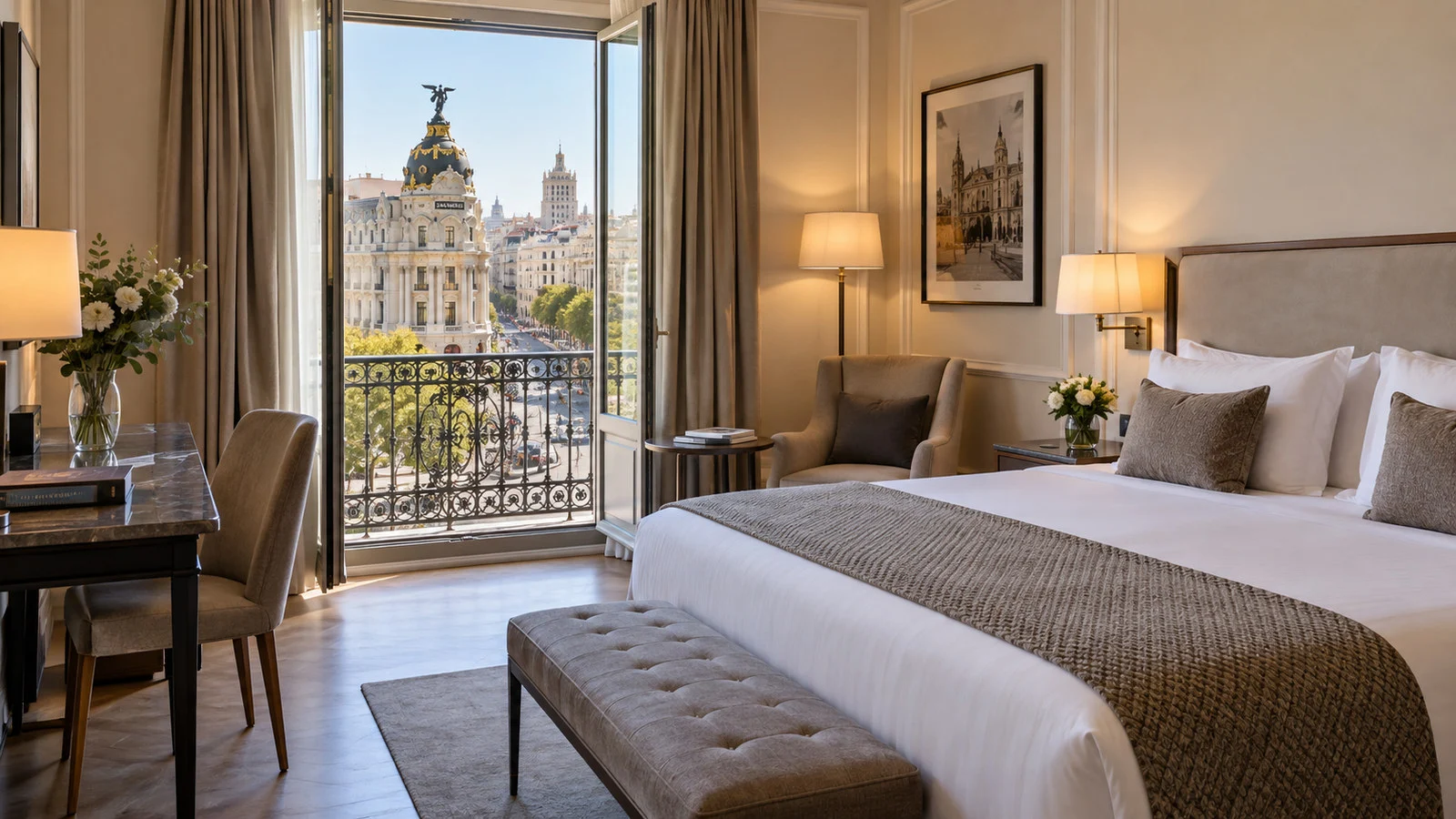
Sol and Gran Via put you close to the old center, evening energy, shops, and many restaurants. These areas are convenient for a short stay but can be noisy, so a room facing an interior courtyard may be worth requesting.
Barrio de las Letras and the Paseo del Arte area work well for the Prado, Thyssen-Bornemisza, and Reina Sofia museums. They also make Retiro Park an easy addition to a museum day.
The Salamanca district feels polished and often quieter at night, but it is not within an effortless walk of every historic sight. It suits travelers who prefer taxis and a calmer hotel base over being in the middle of the old-center crowds.
Check the route from the hotel entrance to the nearest useful transit stop, not merely the straight-line distance. Luggage, broken elevators, cobbles, summer heat, and steep station passages can change what convenient means.
Airport transfers
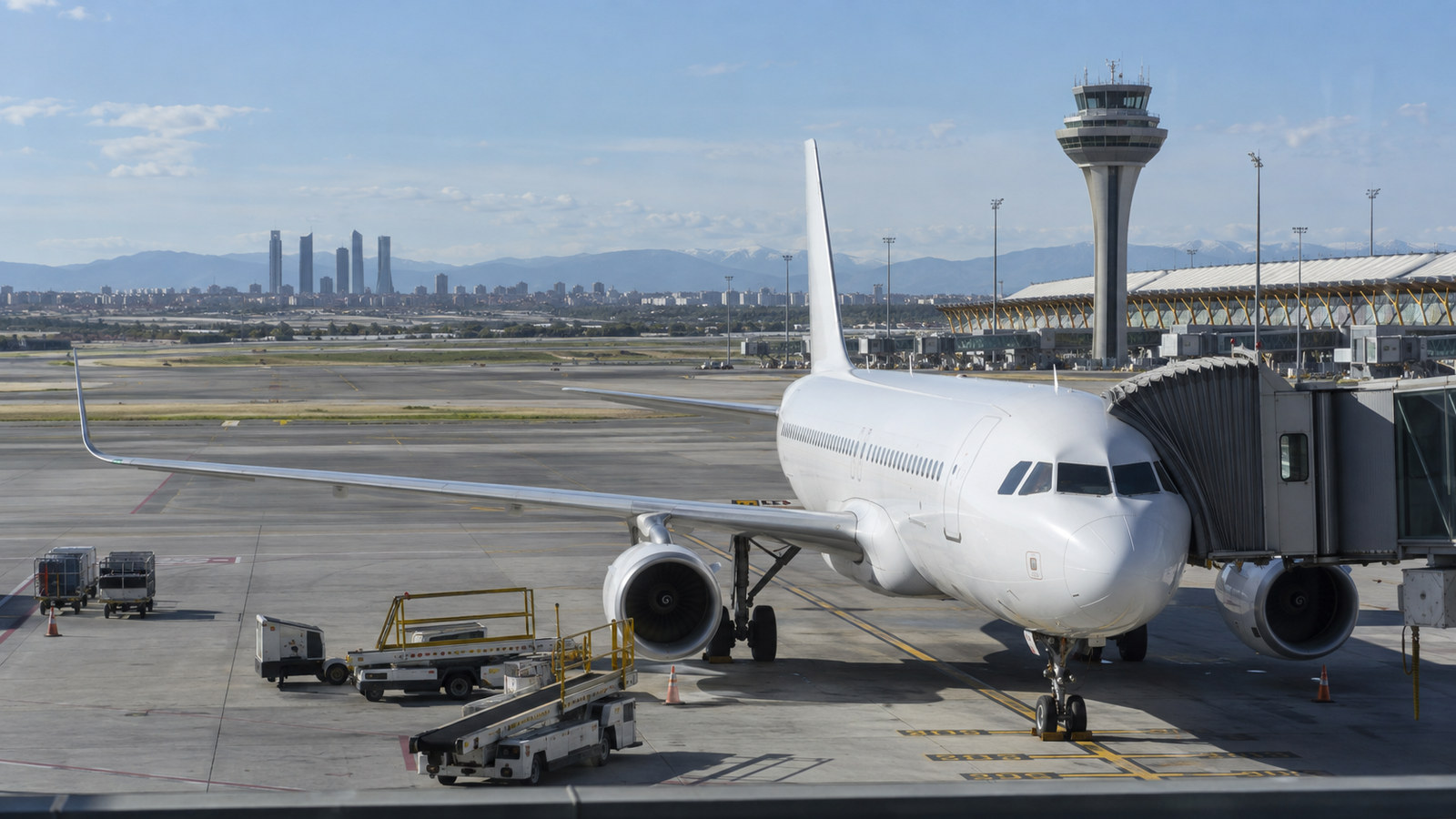
Adolfo Suárez Madrid-Barajas Airport has multiple terminals and can require considerable walking. Confirm your airline’s terminal before choosing a hotel departure time or planning a connection.
Madrid’s official tourism site lists the Airport Express bus as a round-the-clock service with limited holiday operations. It runs from Atocha during daytime hours and from Plaza de Cibeles overnight, with a current one-way fare of 5.10 euros.
The same official source estimates about 30 minutes from Atocha to Terminal 1, then additional time for Terminals 2 and 4. Traffic, road closures, waiting, and hotel-to-stop travel require extra margin beyond that estimate.
Taxi, Metro, commuter rail, private transfer, and the airport bus can all work. The best choice depends on your terminal, luggage, hotel location, arrival hour, and need for elevators.
A private transfer is not automatically faster, but it can simplify arrival after an overnight flight. Get the meeting procedure and contact number in writing before leaving home.
A realistic first day
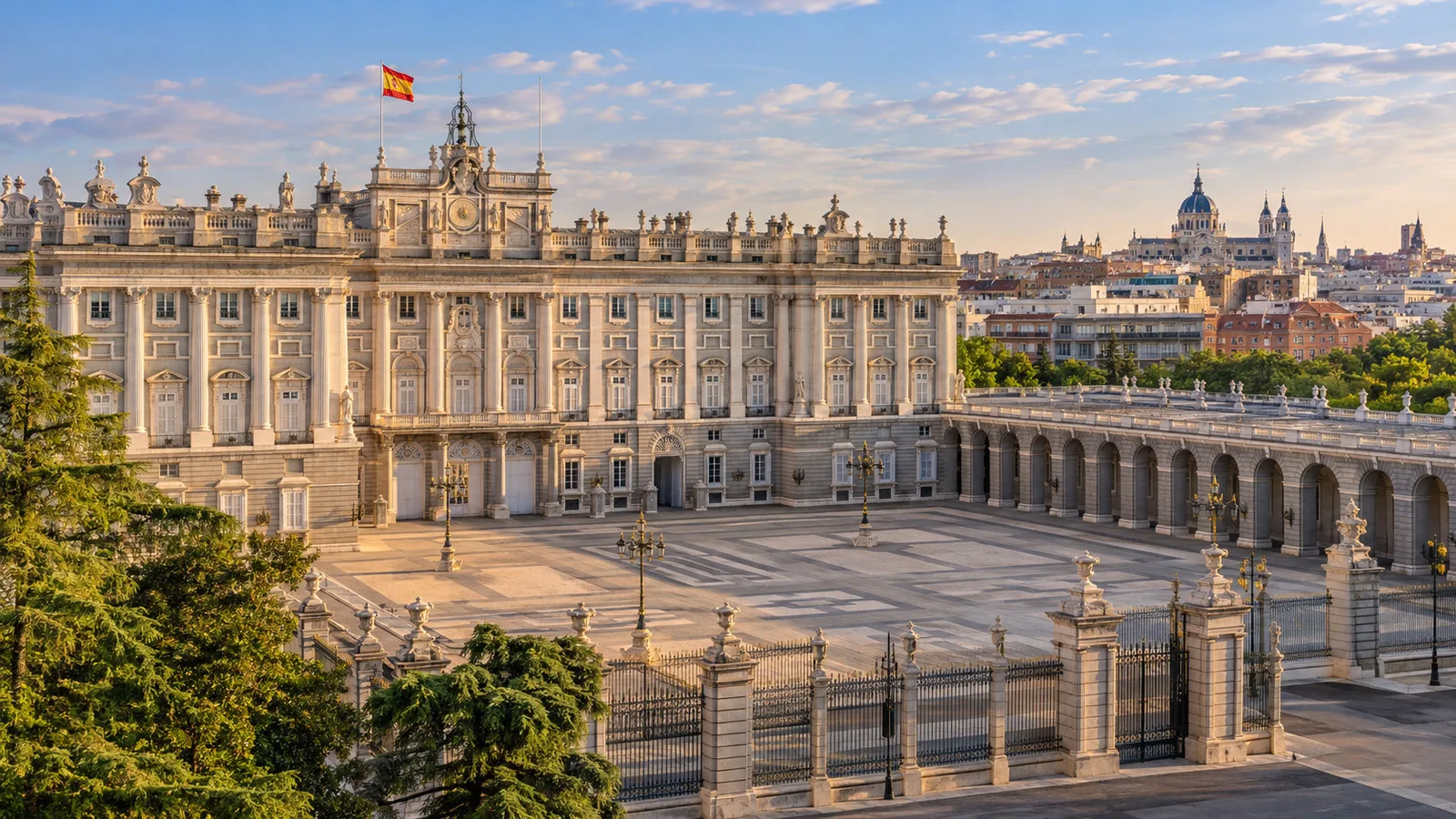
Use your first full morning for the Prado Museum if European painting is a priority. Reserve through the museum’s official visitor page and choose a few artists or galleries instead of attempting to absorb the entire collection.
Timed admission reduces uncertainty but does not eliminate security or entry lines. Arrive with only a small bag and check the current rules shortly before the visit.
After the Prado, have lunch in the surrounding area and walk toward Retiro Park. The park offers space and a change of pace after concentrated museum time, which is exactly what most travelers need.
Leave the evening flexible for Barrio de las Letras, a rooftop view, or dinner near the hotel. Madrid eats late, but you do not need to force yourself into a midnight schedule after a demanding travel week.
A realistic second day
Begin at the Royal Palace and check the official visitor calendar for hours, ticket availability, and closures. State functions can affect access even when a general travel site says the palace should be open.
Continue through the historic center toward Plaza Mayor and Puerta del Sol. This route gives you palace history, grand squares, street life, and plenty of opportunities to stop without crossing the whole city.
Choose one major indoor visit for the afternoon rather than stacking every museum. A slower meal, neighborhood walk, or market stop often adds more to a two-day stay than another hurried ticket.
If you have a third full day, consider the Reina Sofia, Thyssen-Bornemisza, or a focused food day. Toledo is a strong day trip only after Madrid itself has received enough time.
The Prado without museum fatigue
The Prado is not a museum to conquer room by room. Pick a short list, such as Velazquez, Goya, El Greco, Bosch, or selected Italian masters, and let everything else be a discovery rather than an obligation.
Use the museum’s official map and current visitor information. Gallery access, temporary exhibitions, and visitor routes can change, which makes an old must-see sequence unreliable.
Take a seated break before attention collapses. Two engaged hours are more rewarding than four exhausted hours spent looking for the exit.
Royal Palace and old Madrid
The Royal Palace remains an official ceremonial setting as well as a visitor attraction. Rooms, collections, and access may change around state use, so the official calendar should guide your booking.
Security and the scale of the complex add time beyond the ticket slot. Allow room for the palace itself, the surrounding squares, and a pause before continuing into old Madrid.
Plaza Mayor and Puerta del Sol are easy to combine on foot for many visitors, but the route still involves crowds and prolonged standing. Use a taxi for the return if fatigue begins to change the quality of the afternoon.
Food and evening rhythm
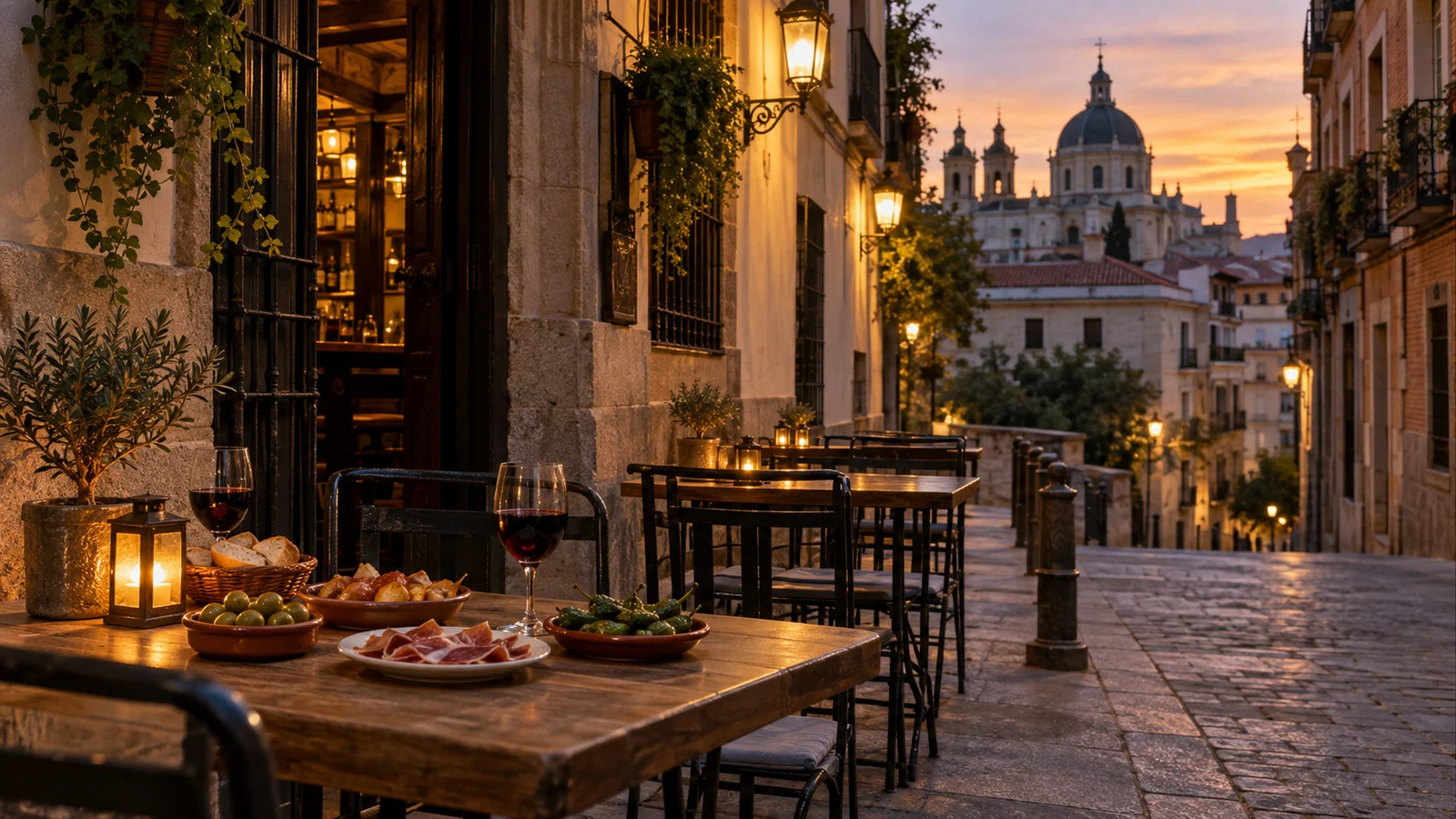
Madrid’s food scene ranges from markets and taverns to ambitious tasting menus. For a short extension, one well-located reservation and one flexible tapas evening are more useful than a list of restaurants scattered across the city.
Mercado de San Miguel is convenient near Plaza Mayor and often crowded. Treat it as one atmospheric stop rather than proof that it is the only place to sample Madrid.
Ask the hotel or guide about typical meal timing and whether a restaurant requires a reservation. A package dinner may be included on one night while every other meal remains on your own.
Keep valuables secure in busy bars, markets, plazas, and transit. A small cross-body bag worn in front is easier to manage than an open tote.
Accessibility and pacing
Madrid’s major attractions publish accessibility information, but a large historic building can still require long interior distances. Contact the Prado and Royal Palace before travel if you need a step-free entrance, wheelchair, companion arrangement, or seating plan.
The Metro is not uniformly step-free across every station and interchange. City buses and taxis can be easier when elevators, luggage, or limited stamina shape the day.
Aena offers airport assistance for passengers with reduced mobility and asks for at least 48 hours of advance notice. Arrange it through the official process and notify the airline so responsibilities are clear.
If a cruise package uses a motorcoach, ask about step height, lift access, restroom stops, storage for mobility devices, and the walking required on guided tours. An accessible hotel room does not make the complete itinerary accessible.
Build one seated break into each half day and use taxis for the longest jumps. Saving energy for the museum or palace you came to see is smarter than proving you can cross Madrid on foot.
Weather and packing
Madrid summers can be intensely hot and dry, especially in the afternoon. Schedule outdoor walking early or late, use museums during peak heat, and carry water and sun protection.
Spring and fall are often easier for long days, though temperatures can swing between morning and afternoon. Winter can feel much colder than Portugal’s coast, so check Madrid rather than packing for the Douro alone.
Comfortable shoes matter because stone paving, museum floors, and long corridors accumulate effort. Bring a light layer for air-conditioned galleries even during hot weather.
Safety and practical habits
Madrid requires normal big-city awareness, particularly in crowded plazas, stations, markets, and Metro cars. Keep phones and wallets secure, avoid hanging a bag on a chair, and separate cards from emergency cash.
Use licensed taxis or established booking services and verify the vehicle before entering. Save the hotel address in Spanish so returning after dinner does not depend on memory.
The emergency number throughout Spain is 112. Store travel-insurance details and the operator’s local contact where you can reach them without an internet connection.
Carry medication in your personal bag during every coach or flight transfer. Luggage can arrive later than you, even when an organized package handles it.
Common extension mistakes
The first mistake is counting nights instead of full days. A late arrival and early departure can leave very little usable time in a package advertised as three nights.
The second is assuming every transfer is included. Verify how you travel between ship, Madrid hotel, and airport, then identify who pays and who handles luggage.
The third is booking timed attractions back to back across the city. Security lines, traffic, fatigue, and a long lunch can make a perfect spreadsheet collapse quickly.
The fourth is packing for Porto and forgetting Madrid’s inland climate. Check both forecasts because the temperature difference can be substantial.
The final mistake is risking embarkation with a same-day independent connection. Protect the cruise first, then use the remaining time to enjoy Madrid.
Who should book the extension
Book it if the Prado and Royal Palace are high on your list, you enjoy evenings in a major city, and the transfer arrangement saves real work. It is especially valuable for a first Spain visit attached to an otherwise Portugal-heavy trip.
Skip it if frequent packing, group touring, or city heat will overshadow the reward. A slower Porto stay, northern Portugal excursion, or extra recovery day may suit the overall vacation better.
Travelers with mobility needs should decide from the exact hotel, coach, and daily walking plan. A custom independent stay can sometimes be easier than following a fixed package schedule.
My verdict
Madrid earns its place when it is treated as a destination, not a decorative add-on. Give it two full days, protect the connection, and keep the sightseeing plan focused.
I would pay more for a package that includes a sensible transfer and a well-located hotel, then preserve free time for the city. I would not pay a premium for vague touring, an airport-edge room, and a rushed schedule.
Compare the final package with an independent version line by line. If the Prado, palace, and Madrid evenings still excite you after the logistics are visible, the extension is worth carrying the suitcase one more time.
Before you book
Confirm the exact hotel, included meals and tickets, transfer origin and destination, luggage handling, airport service, walking expectations, and cancellation terms. Count full sightseeing days and protect the cruise with an overnight buffer whenever you control the connection.
Then book the essential attraction times through official channels and leave the rest loose. Madrid rewards a confident outline far more than an hour-by-hour attempt to see everything.
How this guide was researched: Unless a first-hand visit is explicitly identified above, this guide uses official tourism, airport, museum, palace, transit, cruise, and government sources where available. Logistics and time-sensitive details were reviewed on September 12, 2026; see the Editorial Policy.
More on this topic: browse every guide on expedition and alternative cruises.