Norway’s Zero-Emission Fjord Rules: What Changes for Geirangerfjord Cruise Ships
Norway’s zero-emission rules for the World Heritage fjords are now in their first phase, but they do not amount to a blanket ban on cruise ships. The legal timeline depends on the vessel’s gross tonnage, the protected water it enters, and the compliance method documented by its operator.
For travelers, the practical lesson is simple: check the exact ship and itinerary rather than relying on a fleet-wide sustainability promise. A Geiranger or Flåm call may still change for weather, berth capacity, local operations, or commercial reasons even when the vessel meets the emissions rule.
Quick Facts
- Protected waters: Nærøyfjord, Aurlandsfjord, Geirangerfjord, Sunnylvsfjord, and Tafjord
- First phase: Passenger ships below 10,000 gross tonnage from January 1, 2026
- Second phase: Passenger ships of 10,000 gross tonnage or more from January 1, 2032
- Main standard: Zero direct carbon dioxide and methane emissions in the named waters, subject to the regulation’s detailed provisions
- Biogas: Permitted as an alternative only when the regulatory conditions are met
- Shore power: Required where a suitable, compatible facility is available and the ship can use it
- Flåm: Included because Flåm lies on Aurlandsfjord
- Passenger check: Confirm the vessel, gross tonnage, current port call, and operator’s compliance statement
What Changed on January 1, 2026
The Norwegian Maritime Authority states that zero-emission requirements took effect on January 1, 2026, for passenger ships below 10,000 gross tonnage in the World Heritage fjords. Ships at or above that threshold enter the same requirement on January 1, 2032.
This phased introduction is why headlines can sound contradictory. A smaller excursion vessel may already be regulated, while a large ocean cruise ship has a later compliance date under this specific rule.
Gross tonnage is a measure of a vessel’s enclosed volume rather than its weight. The threshold applies to the individual ship, so passengers need the name and technical details of the vessel scheduled for their sailing.
The later date for large ships does not guarantee that every published call will operate through 2031. Ports and cruise lines can still change schedules because of capacity, weather, local restrictions, infrastructure, water conditions, or broader environmental planning.
The Rule Covers Five Named Fjord Waters
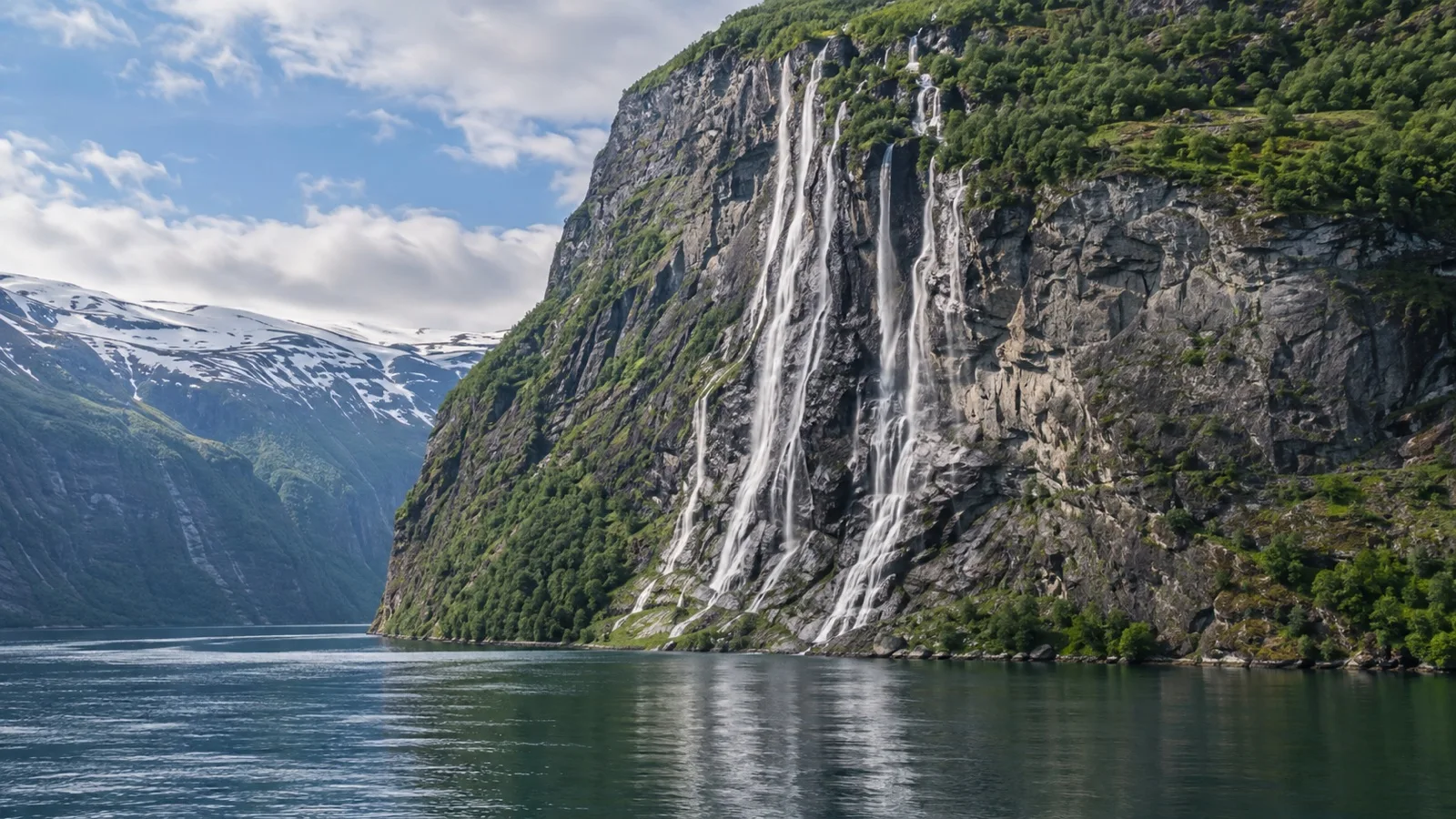
The regulation names Nærøyfjord, Aurlandsfjord, Geirangerfjord, Sunnylvsfjord, and Tafjord. These waters form part of the West Norwegian Fjords World Heritage landscape, and the rule applies when a covered passenger ship operates within them.
This geographic detail matters because casual summaries often mention only Geirangerfjord and Nærøyfjord. Aurlandsfjord includes the route to Flåm, while Sunnylvsfjord and Tafjord are part of the broader protected area around Geiranger.
Other Norwegian fjords are not automatically included in this particular World Heritage regulation. They can still be subject to national environmental rules, port requirements, traffic limits, pilotage, safety decisions, and local measures.
What “Zero Emission” Means Here
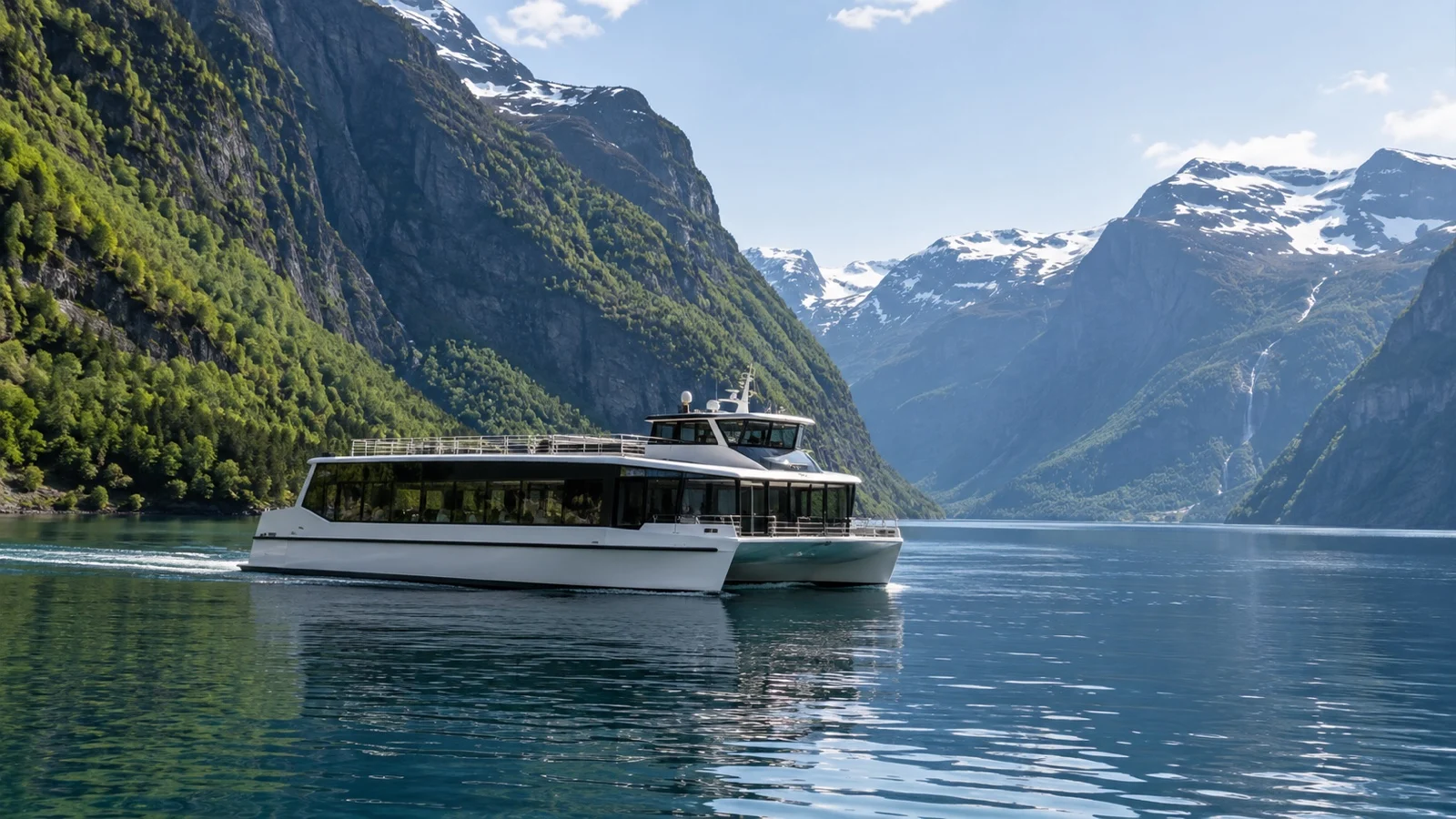
The regulation focuses on direct emissions from the ship in the protected waters. It addresses carbon dioxide and methane and includes technical rules for fuels, ignition, other emissions, documentation, and operation.
A marketing phrase such as “green,” “efficient,” or “lower emission” does not prove compliance. Scrubbers, offsets, and reduced fuel use may serve other environmental goals without meeting a zero direct-emission requirement.
Battery-electric operation is one possible path, but the framework is not simply a list of approved technologies. Operators must show that the vessel’s actual system and fuel pathway meet the legal standard for the voyage.
Biogas Is Allowed, but the Conditions Matter
The Norwegian government and Maritime Authority identify biogas as an alternative fuel route. That permission is conditional, so it should not be described as a general exemption for any ship that purchases a certificate.
The detailed regulation requires qualifying biogas to be handled and documented in prescribed ways, including physical separation before bunkering and limits on when it was bunkered. Quantity, sustainability, greenhouse-gas criteria, and feedstock restrictions also matter.
Remote mass-balance certificates for gas injected somewhere else into a network do not satisfy this pathway. The rule is designed to connect the claimed fuel with the vessel’s actual operation in the fjords.
Shore Power Is Only One Piece
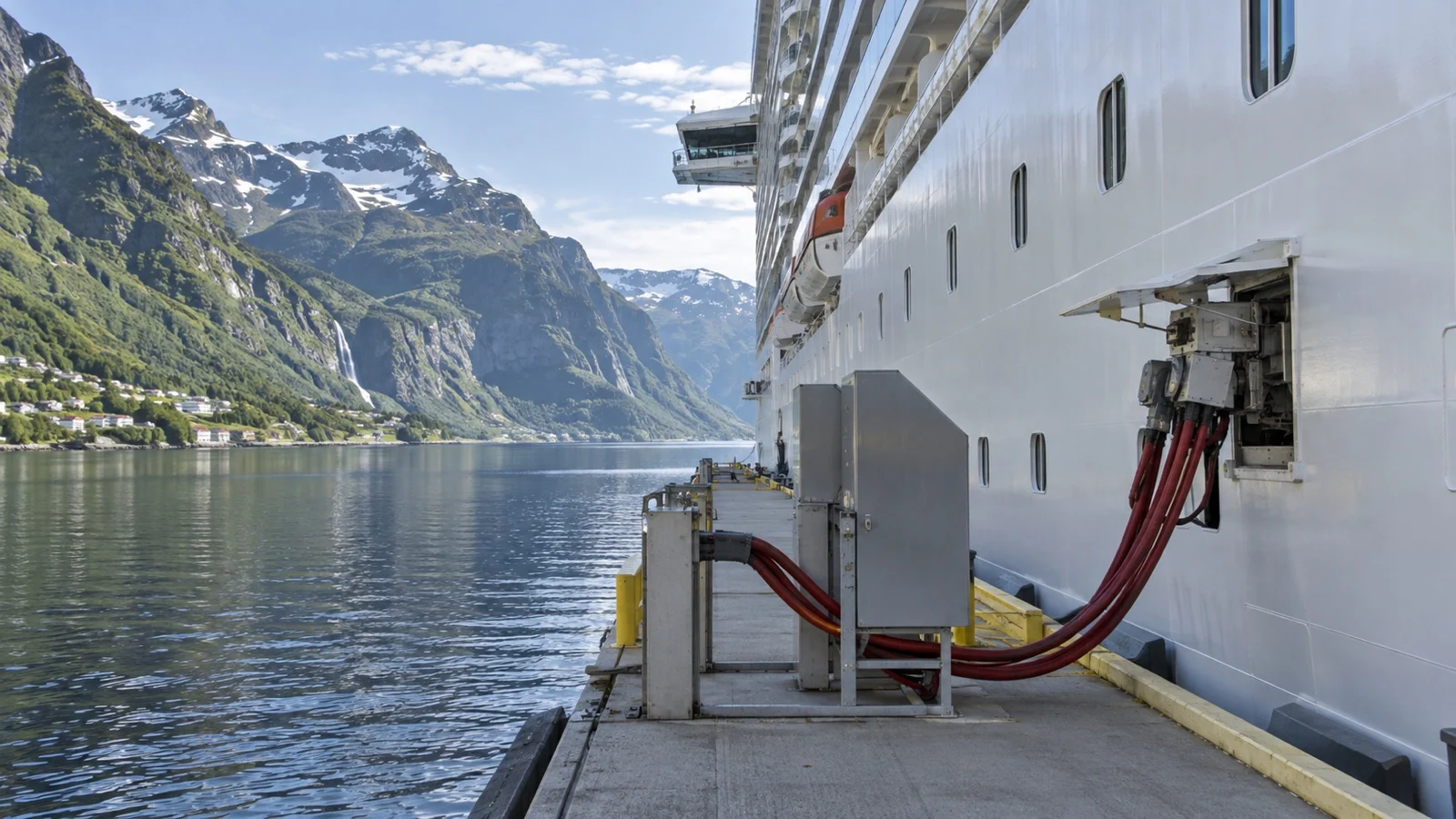
Ships must use shore power where a suitable connection is available, compatible, and usable by the vessel. This reduces the need to run onboard systems while alongside, but it does not address the entire transit through protected water.
A ship connected at the pier still needs a compliant plan for propulsion and onboard energy before and after docking. For passengers, a photograph of a cable is not proof that every part of the fjord operation meets the regulation.
Norway has supported additional shore-power development in Flåm, reflecting the infrastructure needed for the transition. Availability, capacity, connector standards, and ship compatibility can still differ by port and vessel.
The Exemptions Are Narrow
The regulation contains targeted provisions for certain public-service transportation when needed because of road work or emergencies, along with specific county high-speed craft operating under public contracts. These are continuity measures, not a general cruise-tourism exception.
A limited ship-specific route exists for some vessels below 10,000 gross tonnage under defined conditions. Eligibility depends on operational history, inability to comply because shore power is unavailable, compliance with other requirements, and a company plan for reaching the standard.
Any such decision is time-limited and vessel-specific. Passengers should not assume that one approved ship creates a loophole for another operator or for the later large-ship phase.
Protected historic vessels have a separate application route. Age, appearance, or heritage branding alone does not establish that an exemption has been granted.
What This Means for Geiranger
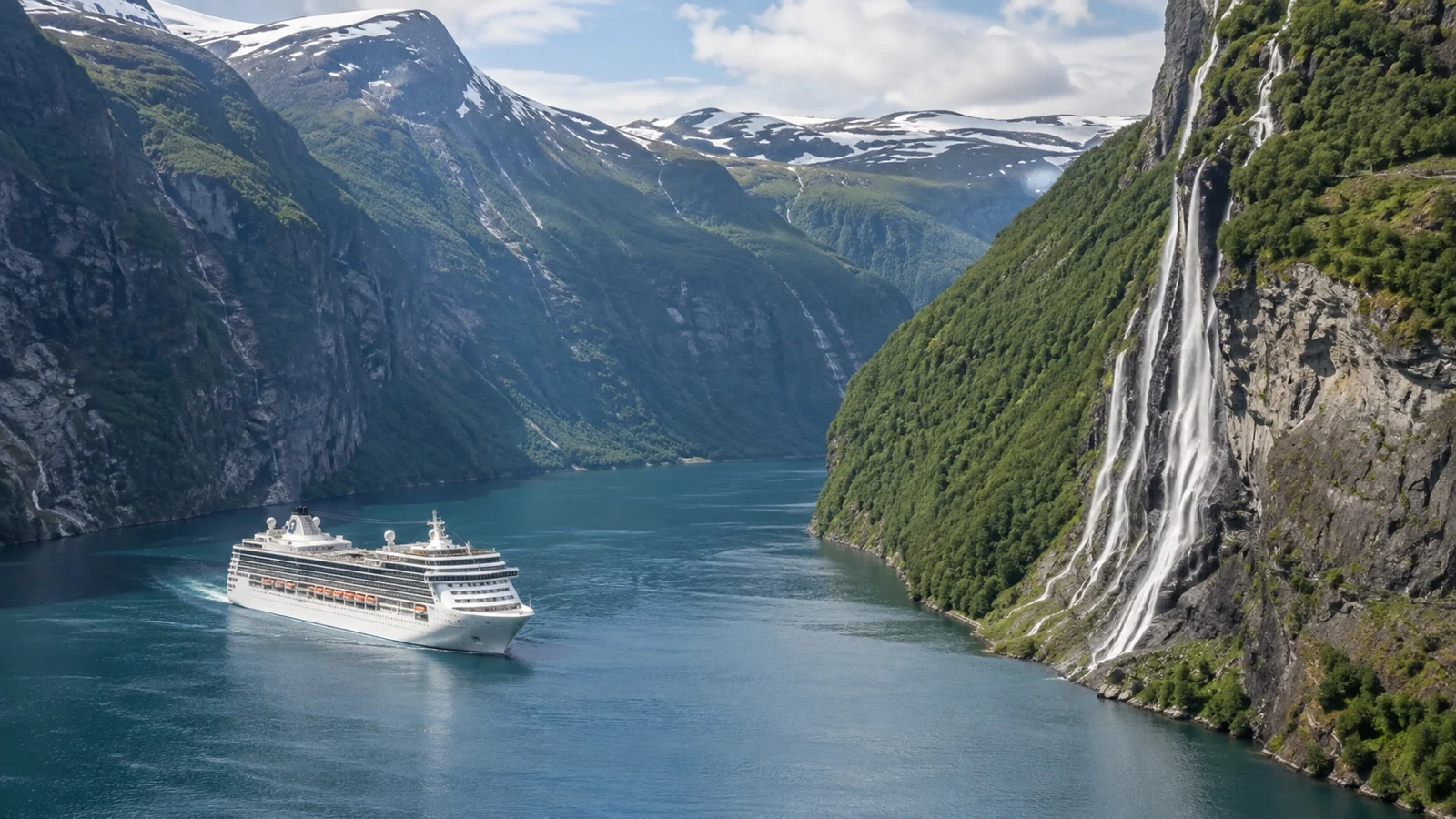
Geirangerfjord is explicitly named, making it the port most often associated with the rule. A passenger ship below 10,000 gross tonnage must already follow the 2026 requirements when operating there, unless a valid provision applies.
A ship of 10,000 gross tonnage or more reaches the zero-emission phase in 2032. Before then, its call can still be affected by port limits, congestion measures, weather, technical issues, company policy, or itinerary planning.
Do not read the later date as a guarantee that large conventional ships will keep the same schedules until New Year’s Eve 2031. The regulation sets a legal deadline, while operators can transition earlier or redeploy ships for many reasons.
What This Means for Flåm and Nærøyfjord
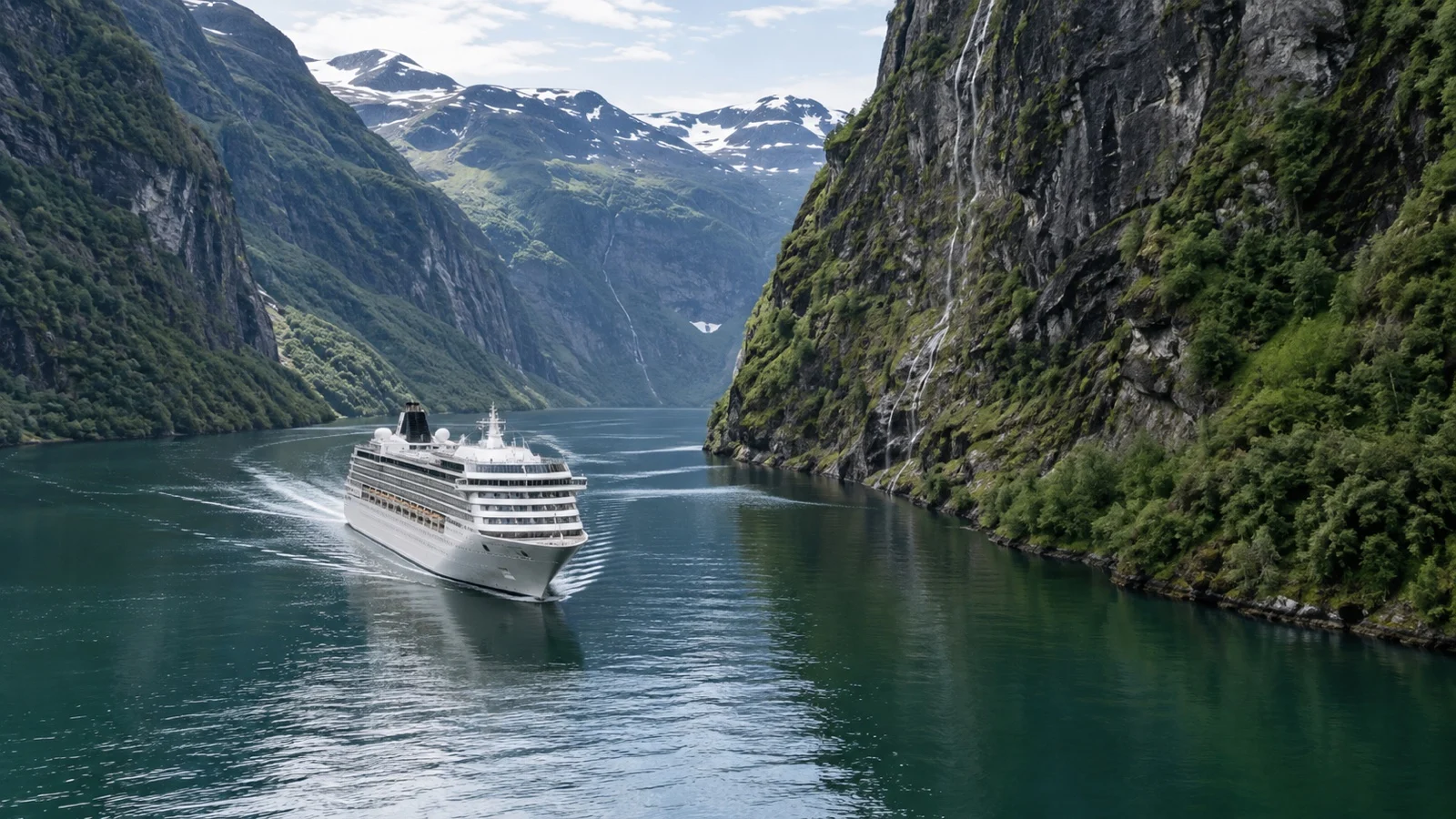
Flåm lies on Aurlandsfjord, which is one of the five named waters. A cruise call there is therefore not outside the rule simply because the port name does not say “World Heritage fjord.”
Excursions toward Nærøyfjord can involve another named protected water and often use a separate sightseeing vessel. The cruise ship and excursion boat may fall on different sides of the 10,000-gross-tonnage threshold and use different compliance pathways.
Check both parts of the day when the fjord cruise is the reason you booked. An operator should be able to identify the actual vessel, current schedule, and basis for operating in the protected area.
How to Evaluate a Cruise Itinerary
Start with the exact ship name and confirm its gross tonnage through the cruise line or an official vessel source. Then identify whether the planned route enters one of the five named waters.
For a smaller ship traveling now, ask the operator what technology, fuel, or approved provision supports that vessel’s operation. A useful answer should be specific to the ship and sailing rather than a description of future fleet targets.
For a large ship traveling before 2032, understand that the phase date does not eliminate ordinary itinerary risk. Book flexible hotels, transportation, and tours if the fjord call is central to an expensive trip.
For travel in 2032 or later, look for a clear operator statement about compliant operation by the named vessel. Do not assume a ship will be grandfathered merely because an itinerary once appeared for sale.
What the Rule Does Not Guarantee
Compliance does not create a right to enter a fjord, receive a berth, anchor, tender, or operate an excursion. Port authorities, pilots, masters, and local operators retain separate safety and operational responsibilities.
A compliant ship can still divert because of wind, fog, congestion, technical problems, rockfall risk, landslide alerts, or a wider itinerary change. Cruise contracts also generally allow ports to change, so read the line’s current terms before paying for nonrefundable arrangements.
The rule also does not promise a quieter, uncrowded destination. Visitor management, road capacity, tender operations, and the number of ships remain separate local questions.
Accessibility and Excursion Planning
Low-emission technology does not determine whether a gangway, tender, bus, railway, or sightseeing vessel is accessible. Ask about the entire transfer chain for the exact call and excursion.
Battery-powered boats may feel quiet and smooth, but boarding gaps, ramps, stairs, toilets, deck access, and mobility-device limits still vary. Get written details from the operator before booking a nonrefundable tour.
Fjord ports often combine steep terrain with changing weather and limited vehicle supply. Reserve accessible transport early and keep an easier waterfront alternative if conditions change.
Weather and Timing
Norwegian fjord weather can change quickly, with cool air, rain, wind, and fog possible even in summer. Pack layers and keep a waterproof outer layer accessible rather than buried in a cabin drawer.
Long summer daylight helps with sightseeing, but it does not extend the ship’s all-aboard time. Independent travelers should leave a generous return margin for boat, rail, road, tender, and gangway delays.
Questions to Ask Before Booking
Ask whether the exact ship is below or above 10,000 gross tonnage, which named waters it enters, and how the operator describes compliance for that sailing. Then confirm whether a separate excursion vessel operates under its own plan.
Request the cancellation policy if a protected-fjord call changes, including what happens to prepaid private tours. A line’s environmental credentials are valuable, but they do not replace a clear answer about the itinerary you are buying.
Final Take
Norway’s World Heritage fjord rule is a phased technical standard, not a one-line cruise ban. Smaller passenger ships entered the regime in 2026, while vessels of 10,000 gross tonnage or more follow in 2032.
Match the ship, date, water, and compliance method before deciding whether a Geiranger or Flåm itinerary works for you. Then keep the rest of the trip flexible, because a legal route to operate is never the same as a guaranteed port call.
How this guide was researched: This guide was checked against the Norwegian Maritime Authority’s adopted regulation, Norway’s Ministry of Climate and Environment, and official World Heritage information on September 13, 2026. Reconfirm the exact vessel, gross tonnage, protected waters, compliance method, shore power, exemptions, itinerary, accessibility, weather, and cancellation terms because regulations and live operations can change.
More on this topic: browse every guide on expedition and alternative cruises.