Norway Fjords or Iceland: Which Northern Itinerary to Book
Norway and Iceland get sold as the same northern vacation, and they are nothing alike. One is a week of sailing into fjords, the other is a week of long coach rides across a volcanic island.
My quick take
Norway is the better cruise and Iceland is the better country. That sounds like a dodge, but it is the honest summary of what a ship can actually deliver in each place.
In Norway the scenery comes to you, which is exactly what ships are good at. In Iceland the scenery is inland and mostly out of range on a port day, so you spend a lot of the week paying to be driven toward it.
The quick facts
- Norway fjords: Bergen, Stavanger, Alesund, Flam and Geiranger, with the sail-in doing most of the work.
- Iceland: Reykjavik and Akureyri for big ships, plus smaller calls that are often tendered.
- Season: Both run roughly May through September, and Iceland’s usable window feels shorter.
- Daylight: Both give you enormous June days, with the Arctic Norway calls adding true midnight sun.
- My pick: Norway, unless you want the landscape badly enough to pay for the coaches.
What a Norway fjords cruise actually is
The standard fjords week runs out of Bergen, Copenhagen, Amsterdam or Southampton and hits some combination of Stavanger, Alesund, Flam, Olden and Geiranger. Bergen is the workhorse start and end point for most of them.
Most of these are quays you walk off, and most of the villages are small enough to finish. Flam is walkable end to end in well under 15 minutes, with the railway station a two minute stroll from the dock.
The big excursion is usually short and close. The Flam Railway is about a two hour round trip and climbs roughly 2,800 feet (863 m) over 12 miles (20 km), which is a very different commitment from a full day in a bus.
What an Iceland cruise actually is
Iceland itineraries are usually round trip from Reykjavik or a one way linking Iceland with the UK, Amsterdam or Greenland. The season broadly runs May to September, with the most reliable weather in the middle of it.
Big ships tie up in two places comfortably. Reykjavik puts you at Skarfabakki, a container quay about 2.5 miles (4 km) from downtown, and Akureyri drops you about a third of a mile from the middle of town.
Everything after that gets harder. The smaller calls in the Westfjords and the east are wind exposed, sometimes tendered, and a long way from the sights people picture when they think of Iceland.
The sail-in is the whole point in Norway
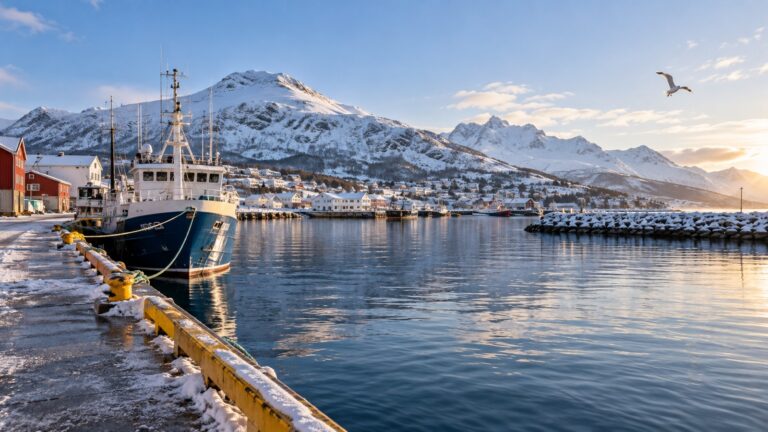
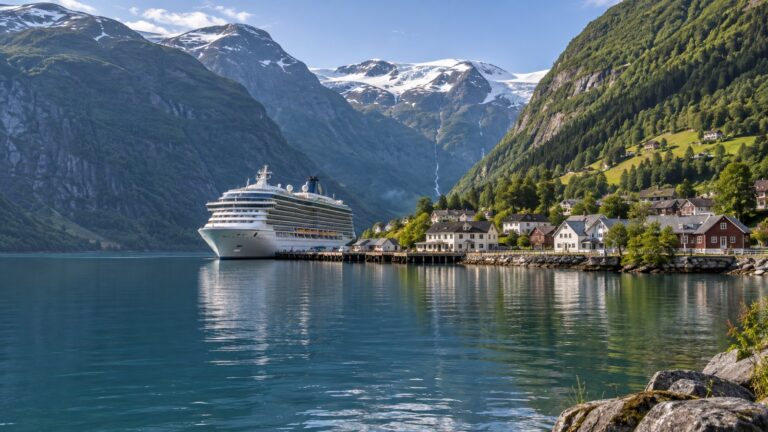
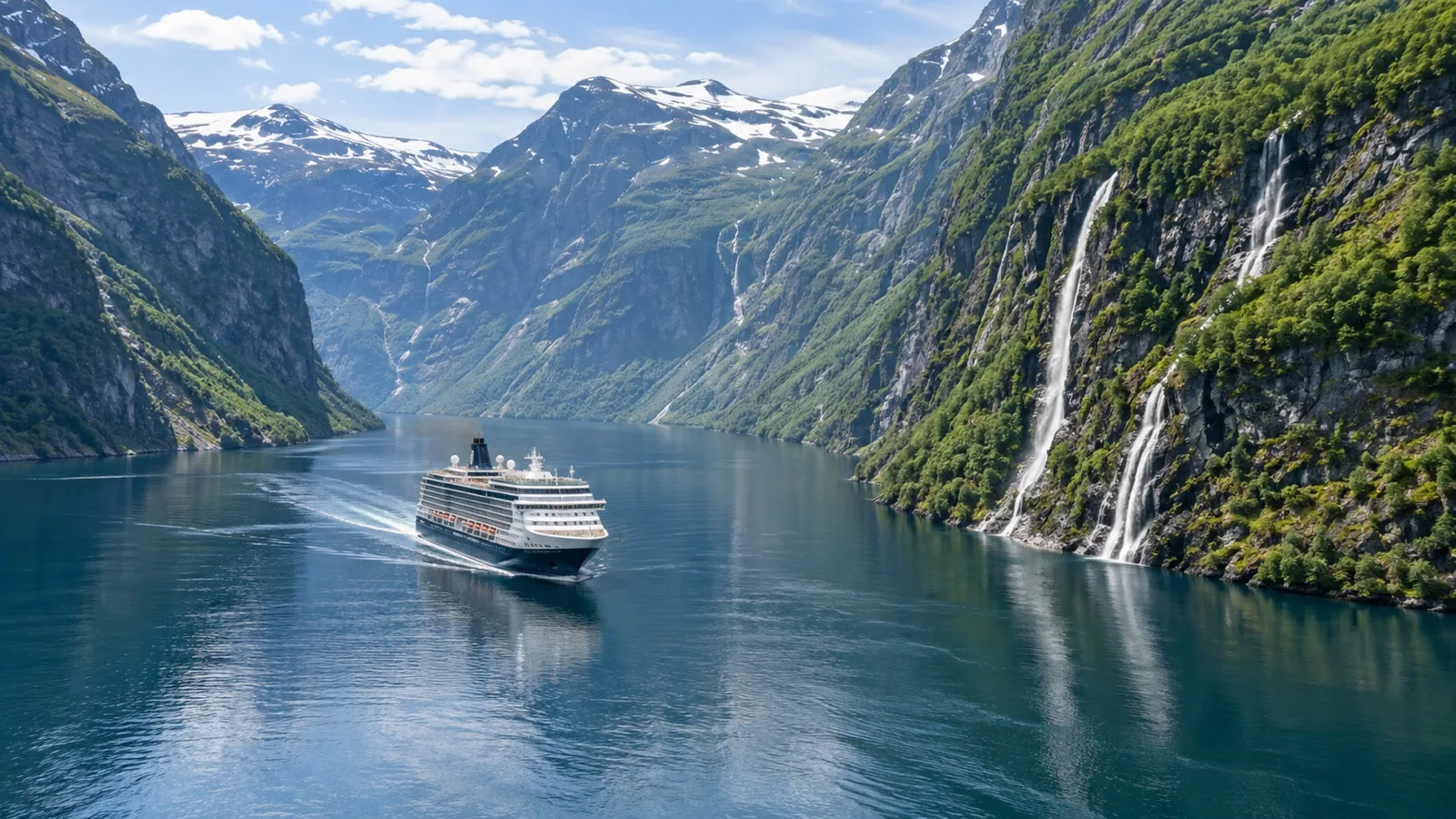
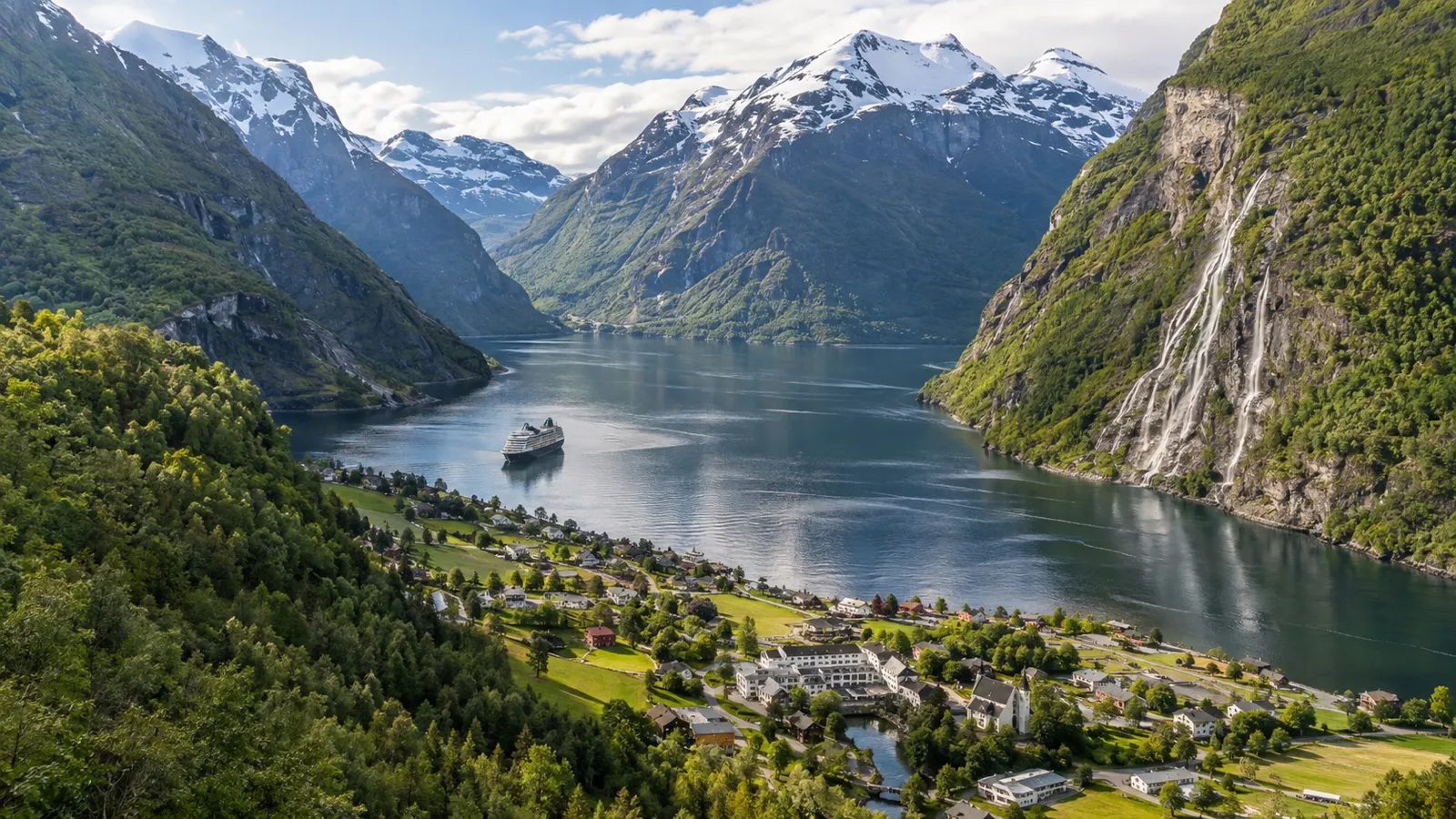
Two of the fjords on a standard itinerary are a protected landscape of exceptional scenic value, and you see the best of them from the ship without booking a thing. Geirangerfjord and Naeroyfjord have rock walls that climb well over 4,000 feet (1,200 m) straight out of the water.
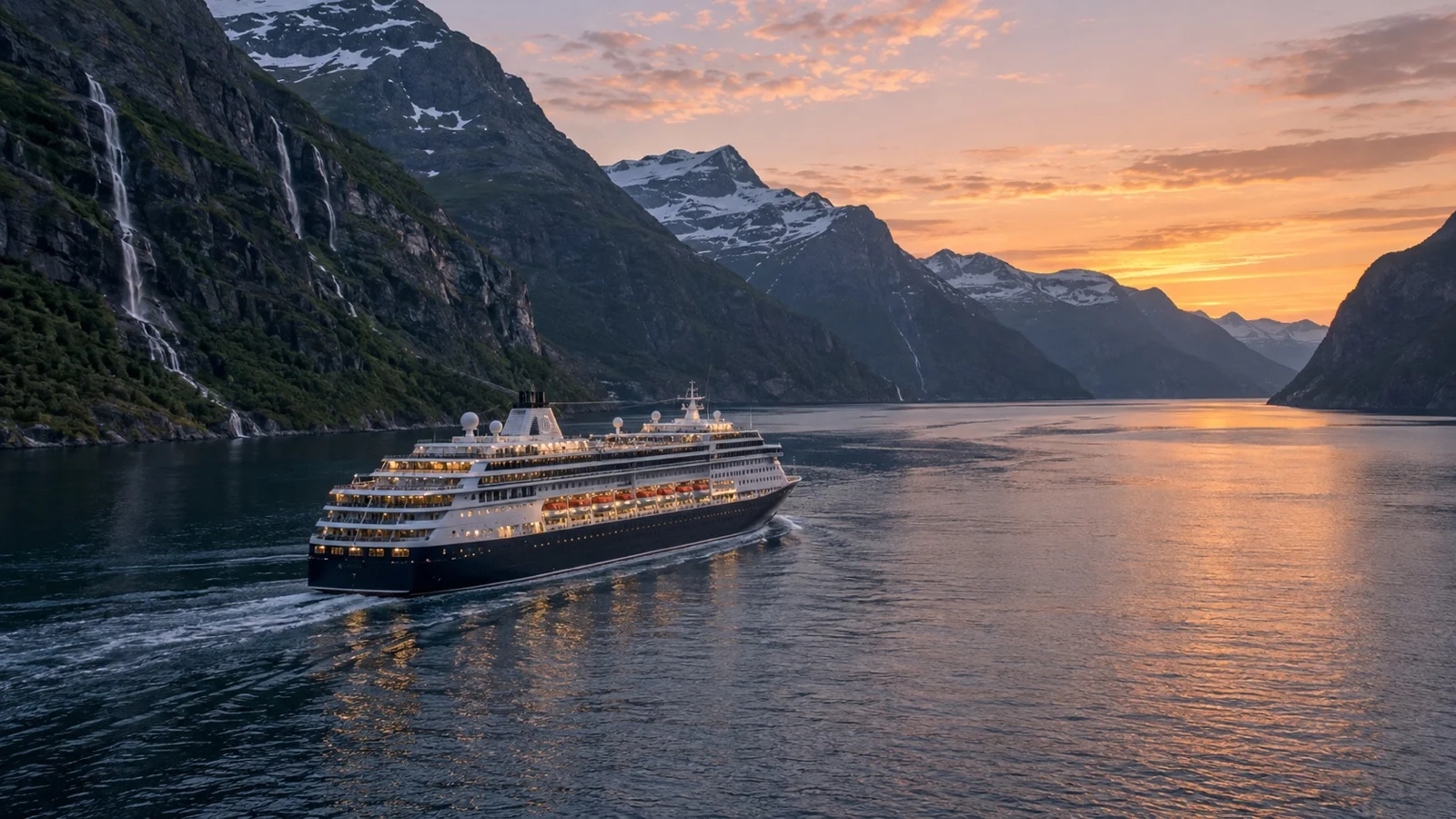
That is the part that makes the Norway product work. You get several hours of world class scenery on a morning where your only job is to find a spot on deck and stay warm.
The approach into Geiranger past the Seven Sisters waterfall is the one people remember, and it happens before anyone has spent a krone. I would take a deck chair and a jacket over almost any excursion on that particular morning.
Iceland has nothing structurally similar. There are pretty approaches into the northern and eastern fjords, but the ship spends most of the week on open ocean, not threading a canyon.
How much of Iceland a big ship actually reaches
This is the question nobody asks before booking, and it is the one that decides whether you come home happy. The famous Iceland is inland and along the south coast, and a cruise ship does not go there.
From Reykjavik, the Golden Circle is the standard answer. The rift valley where the old open air assembly met sits about 30 miles (49 km) east of the city, and the loop out to the geysers and Gullfoss and back eats most of a port day.
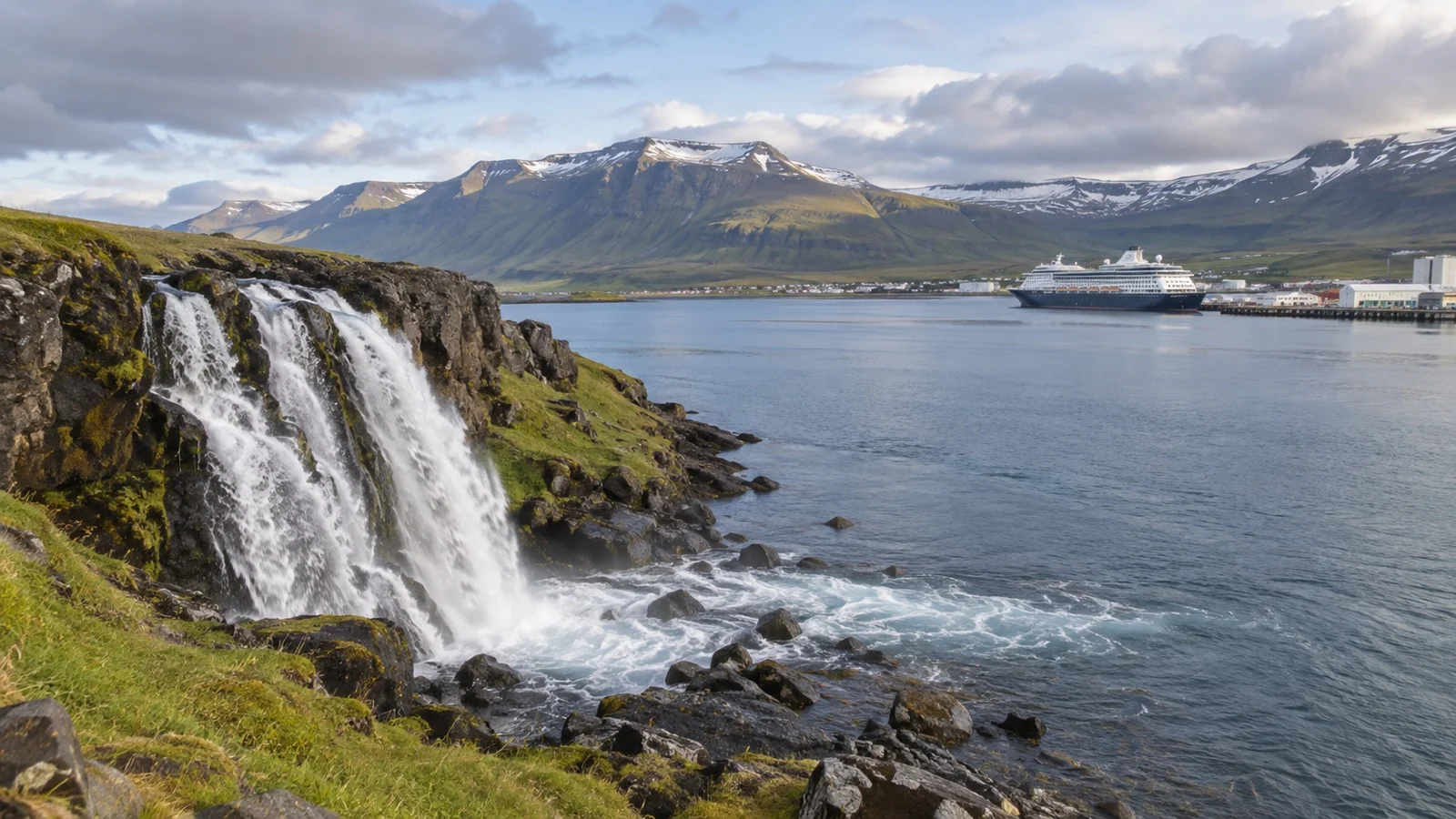
From Akureyri, Godafoss is about 22 miles (35 km) away and very doable, while Lake Myvatn needs the whole window. From Isafjordur, Dynjandi is the better part of two hours each way over a mountain pass.
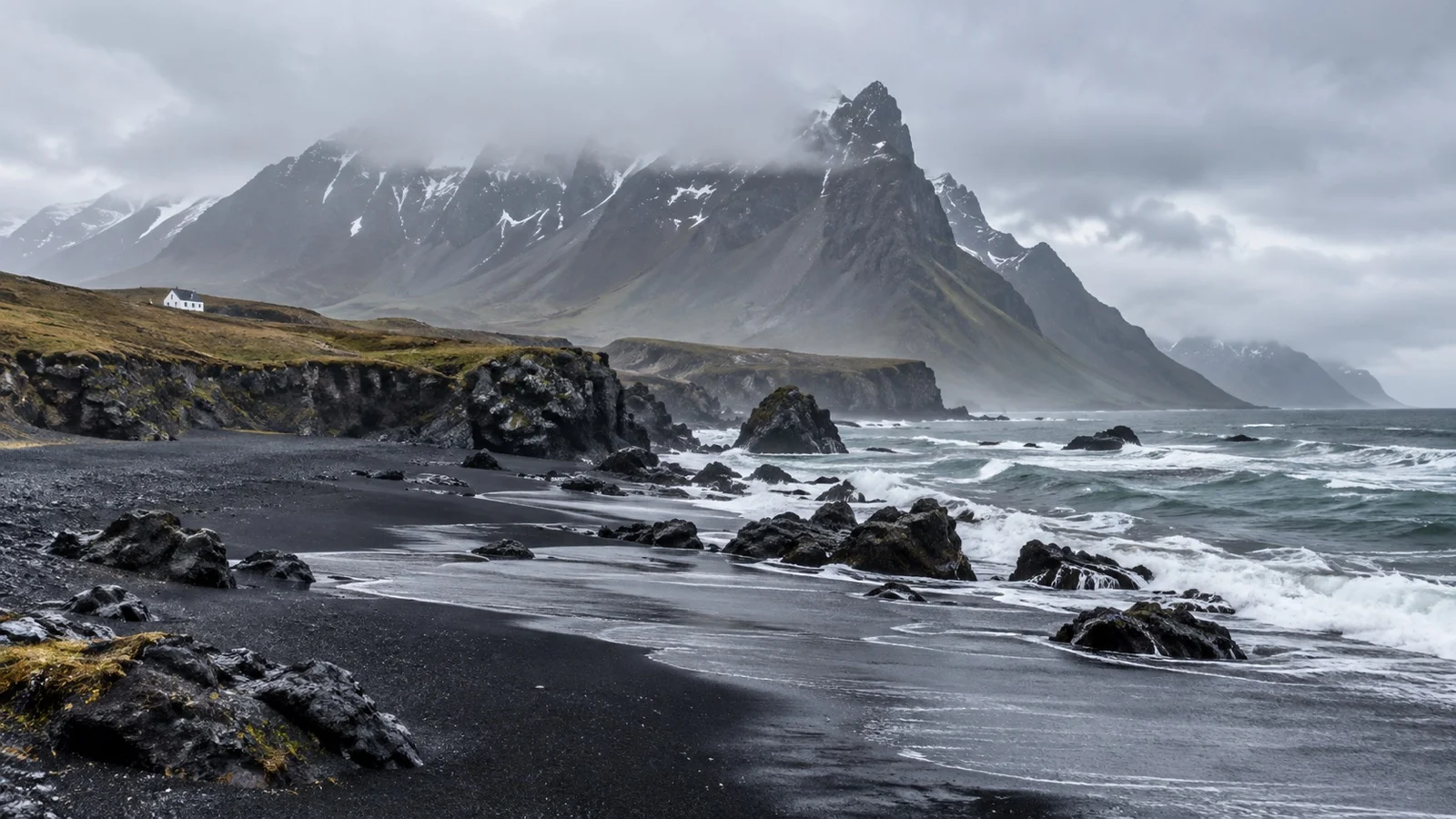
Jokulsarlon, Vik, the black sand beaches and the highland interior are simply not port day material. If those are what you are picturing, you want a rental car and a week on land, not a cabin.
Daylight, season and how short the window really is
Both regions give you absurd amounts of June daylight, which is genuinely part of the appeal. Evenings stay bright long past dinner, and a 9pm sail-away still looks like afternoon.
Norway stretches further at both ends. The fjord season runs May through September, and Arctic calls above the circle add true midnight sun in high summer, which the whole country south of there does not quite deliver.
Iceland’s season is nominally the same length and practically shorter. May and September sailings can be excellent, but they can also hand you a week of horizontal rain that removes the reason you came.
Weather roulette, and which one loses more days
Norwegian fjords are sheltered by definition. The mountains that make the view also block the swell, which is why so many of those berths are dependable in weather that would shut down an open coast.
Iceland sits alone in the North Atlantic with nothing upwind of it. Summer highs in the Westfjords hover around 50 degrees (10 C), and the wind funnels off the mountains with no interest whatsoever in what the forecast said.
I check the national forecast and hazard alerts before an Iceland port day rather than trusting a phone app, and I look at current travel and road conditions before committing to anything with a long drive. Neither takes two minutes and both have changed my plans.
Tenders and the ports most likely to vanish
Norway’s fjord run has essentially one tender port. Geiranger anchors ships out and runs boats about ten minutes to the village, and it gets missed somewhere in the range of 3 to 7 percent of calls.
Iceland spreads that risk across more of the week. Seydisfjordur is tender only, and Isafjordur and Grundarfjordur can go either way depending on your ship, each carrying a similar few percent chance of being skipped.
One tender port in a week is a manageable gamble. Three of them means the odds of losing at least one call are meaningfully higher, and that matters more when each call is the only chance you get at that corner of the island.
What each one costs you ashore
Both countries are expensive, so the fare is not where the difference shows up. It shows up in how many excursions you actually have to buy.
In Norway you can have a good week buying very little. Walk Bergen, walk Alesund, walk Flam, ride one railway, and let the fjord mornings be free entertainment from the rail.
In Iceland the distances force your hand. Almost every headline sight needs a coach or a rental car, and a full day tour in Iceland is one of the pricier port day purchases in cruising.
- Norway, free by default: Fjord sail-ins, walkable villages, town centers within a few minutes of the quay.
- Norway, worth paying for: The Flam Railway, a glacier bus at Olden, a small boat on a side fjord.
- Iceland, free by default: Akureyri town, Reykjavik downtown once you have solved the shuttle, harbor walks.
- Iceland, effectively mandatory: Anything past the town limits, because there is no walking to a waterfall from the pier.
Flights and where these weeks start
Reykjavik is one of the easiest European gateways to reach from the US, with a wide nonstop lineup and a short flight compared with the rest of Europe. That is a real point in Iceland’s favor and it should not be dismissed.
Norway usually costs you a connection. Copenhagen and Amsterdam are easy enough, but a Bergen turnaround almost always means changing planes somewhere, and the fjord ports themselves are hours from any airport you would fly into.
Either way I fly in a day early. A missed connection on a one week cruise with a fixed turnaround port is not a delay, it is a canceled vacation.
Who each itinerary actually suits
Norway suits people who like being on a ship. If your favorite part of a cruise is standing on deck watching land go by, the fjords are built for exactly that and you will be busy from breakfast.
Iceland suits people who want the landscape and accept the transport cost of getting to it. It also suits anyone who has already seen the fjords and wants something stranger, because the geology in Iceland is genuinely unlike anywhere else on a mainstream itinerary.
Mobility matters here too. Norway’s villages are compact and mostly flat near the quay, while Iceland’s good days involve hours seated in a coach with limited stops.
The mistake I see people make with this pair
People book Iceland expecting the cruise to show them Iceland. The ship shows you the coastline and sells you access to a handful of inland sights, which is a smaller slice of the country than the brochure photos suggest.
The reverse mistake is treating Norway as a port heavy week and over booking it. You do not need a tour every day when three of your best hours happen while the ship is moving.
There is also a rule change worth knowing about. Norway has tightened emissions requirements in its World Heritage fjords, and my write up of what the zero emission fjord rules change for Geirangerfjord explains which ships it hits and when.
Which one I would book
Norway, and I would book it in June. The scenery is delivered to your balcony, the ports are walkable, the berths are reliable, and you can have an excellent week while buying one excursion.
Pick a sailing that includes both Geiranger and a Naeroyfjord or Aurlandsfjord call rather than one that stacks town stops. The fjord mornings are the product, and an itinerary with only one of them is a weaker version of the same week.
Book Iceland instead if you have done Norway, if you specifically want volcanic landscape, or if the short flight from the US genuinely changes the math for you. Just go in with your eyes open about how much of the country stays over the horizon.
Quick answers
Is Norway or Iceland better for a cruise?
Norway, because the best scenery happens from the ship and the ports are walkable. Iceland is spectacular but keeps most of its landscape a long drive from the pier.
When is the best month for a Norway fjords cruise?
June and July for maximum daylight and the mildest weather, with late May and early September quieter and still good. The fjord season is broadly May through September.
Can you see the Blue Lagoon on an Iceland cruise?
Sometimes, but it sits well outside Reykjavik and needs pre booking plus a serious chunk of your port day. A closer geothermal bath is the safer choice on a short call.
Do Iceland cruises get canceled ports often?
Individual calls do get missed, mostly at the tender ports when wind or swell picks up. Build your week so no single stop is the whole reason you booked.
Which is more expensive, Norway or Iceland?
Both are pricey countries, but Iceland usually costs more on the day because almost every sight requires a paid tour. Norway lets you fill several days on foot for nothing.
Final word
These two itineraries are sold side by side because they are both cold and both beautiful, and that is where the similarity stops. One is a sailing vacation and the other is a road trip that happens to sleep on a boat.
If you only get to do one, do Norway on a ship and save Iceland for a rental car and a week of your own. That is the version of each country that actually shows you what you came for.
How this guide was researched: Berth locations, tender arrangements, excursion distances and season patterns for Norwegian fjord and Iceland itineraries were checked in October 2026. Ship deployments, tour operating times, port rules and weather patterns change from year to year, so confirm the details for your own sailing before you book. See our Editorial Policy.
More on this topic: browse every guide on choosing a cruise.