Florø Cruise Port Guide: Quay, Kinn Island, and Coastal Town
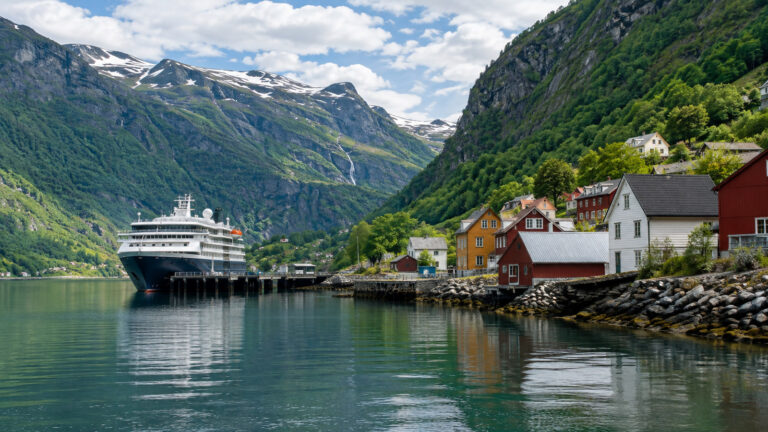
Florø is Norway’s westernmost town and feels like a working coastal community rather than a polished cruise set. Its harbor, herring history, island ferries, and low skyline make the stop quietly interesting, especially if you enjoy places that still belong to the people who live there.
The port is easy, but the best excursion is not. Central Florø is close to the quay, while Kinn Island requires careful boat planning and more time than a quick look at the map suggests.
My quick take
I would split Florø plans into two clear versions. Choose a relaxed town and museum day for a short call, or make Kinn the priority when the timetable and weather give you a generous margin.
Do not judge the port against Geiranger or Flåm because it is offering something different. Florø is about coastal life, local boats, and an archipelago shaped by fishing and weather.
Quick Facts
- Primary quay: Fugleskjærskaien, 6900 Florø, on Florelandet.
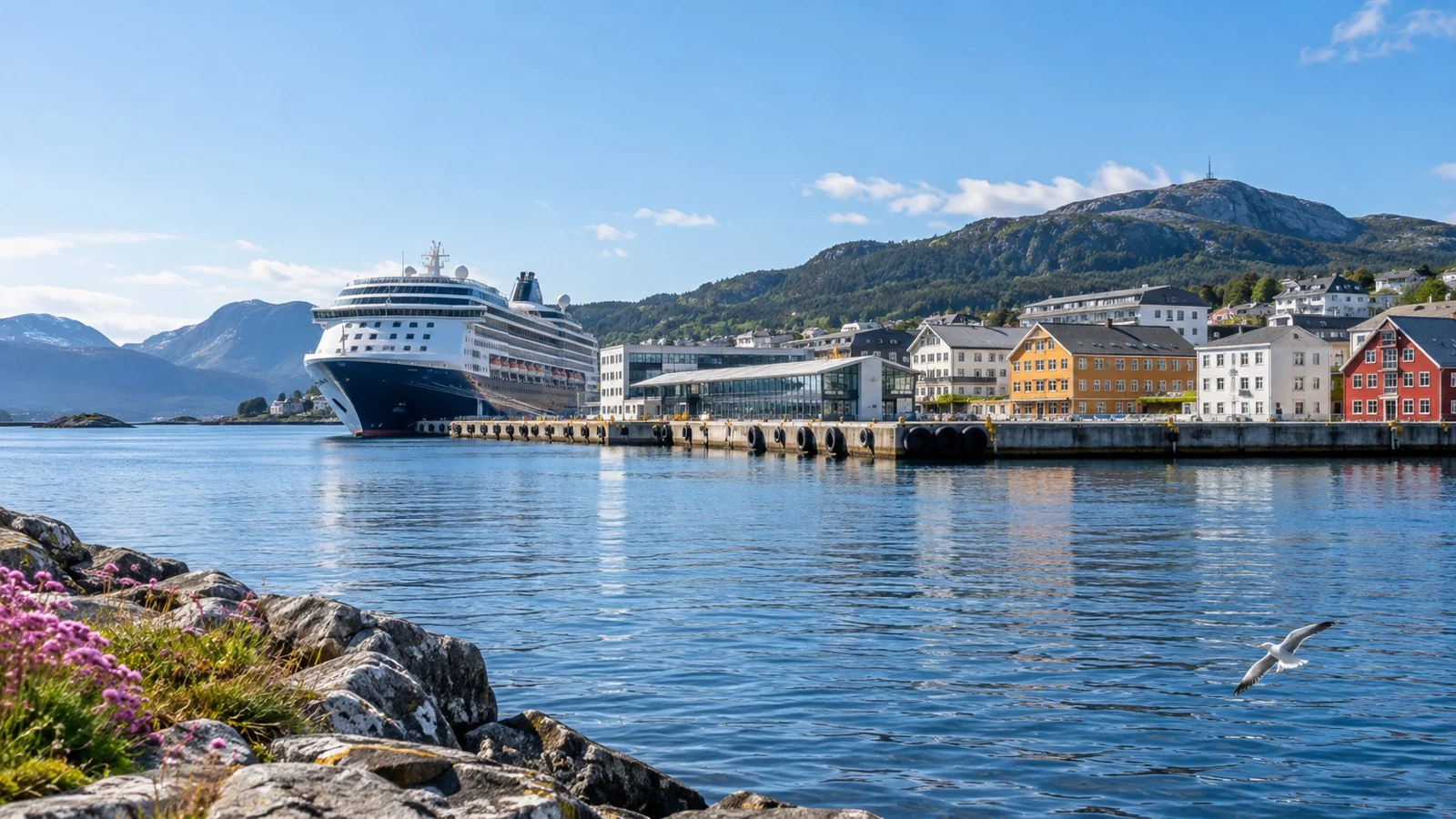
- Arrival: Coastal vessels dock directly, though berth and gangway details remain ship specific.
- Town access: Central Florø is close enough for a straightforward walk from the quay.
- Top local attraction: Kystmuseet i Sogn og Fjordane for boats and coastal history.
- Best longer outing: Kinn Island for the medieval church, coastal scenery, and hiking.
- Currency: Norwegian krone, with cards widely useful.
- Time zone: Central European Time, with summer time observed seasonally.
- Emergency numbers: 112 police, 113 medical, and 110 fire.
Where ships dock in Florø
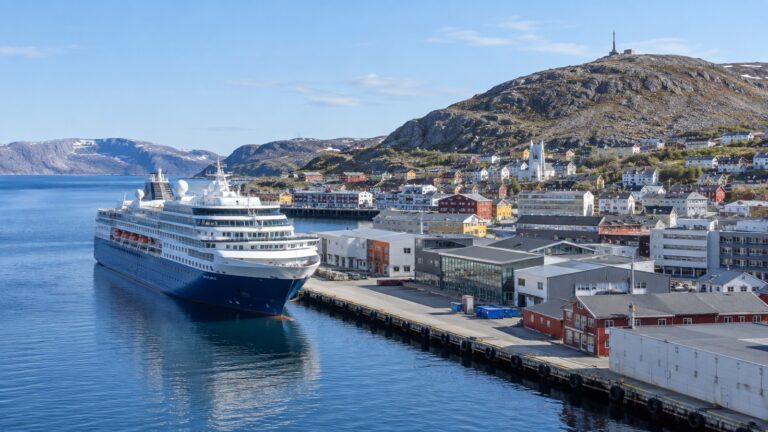
Hurtigruten identifies the Florø port address as Fugleskjærskaien, 6900 Florø. Its official port page says ships dock on Florelandet, one of the two islands across which the town extends.
For vessels using this quay, passengers walk ashore by gangway rather than taking a tender. River level is not the issue here, but tide, weather, berth assignment, and vessel design can still affect the gangway slope.
Check the day’s announcement for the exact exit, security process, and all-aboard time. Coastal route stops can be much shorter than a conventional cruise call, so never infer your available time from another line’s schedule.
Walking into central Florø
Central Florø is close to the working harbor and is the easiest independent plan. You do not need an organized tour simply to see the main streets, waterfront activity, and everyday center.
I would start by orienting myself at the harbor, then walk toward Strandgata and let the weather decide how ambitious to be. Shops, cafés, public art, and glimpses of local boats provide enough texture for an unhurried short call.
The route is relatively compact, but wet surfaces and wind can change how easy it feels. Wear shoes with grip and keep a waterproof layer where you can reach it without unpacking your entire bag.
A town built on herring and the sea
Florø was founded by royal decree in 1860 during a major herring boom. Hurtigruten’s history of the port describes generations shaped by herring salting, shipbuilding, and boat traffic.
The town still feels connected to practical maritime work rather than only to tourism. Modern coastal industry sits beside older fishing traditions, which helps explain the mix of functional harbor spaces and cultural institutions.
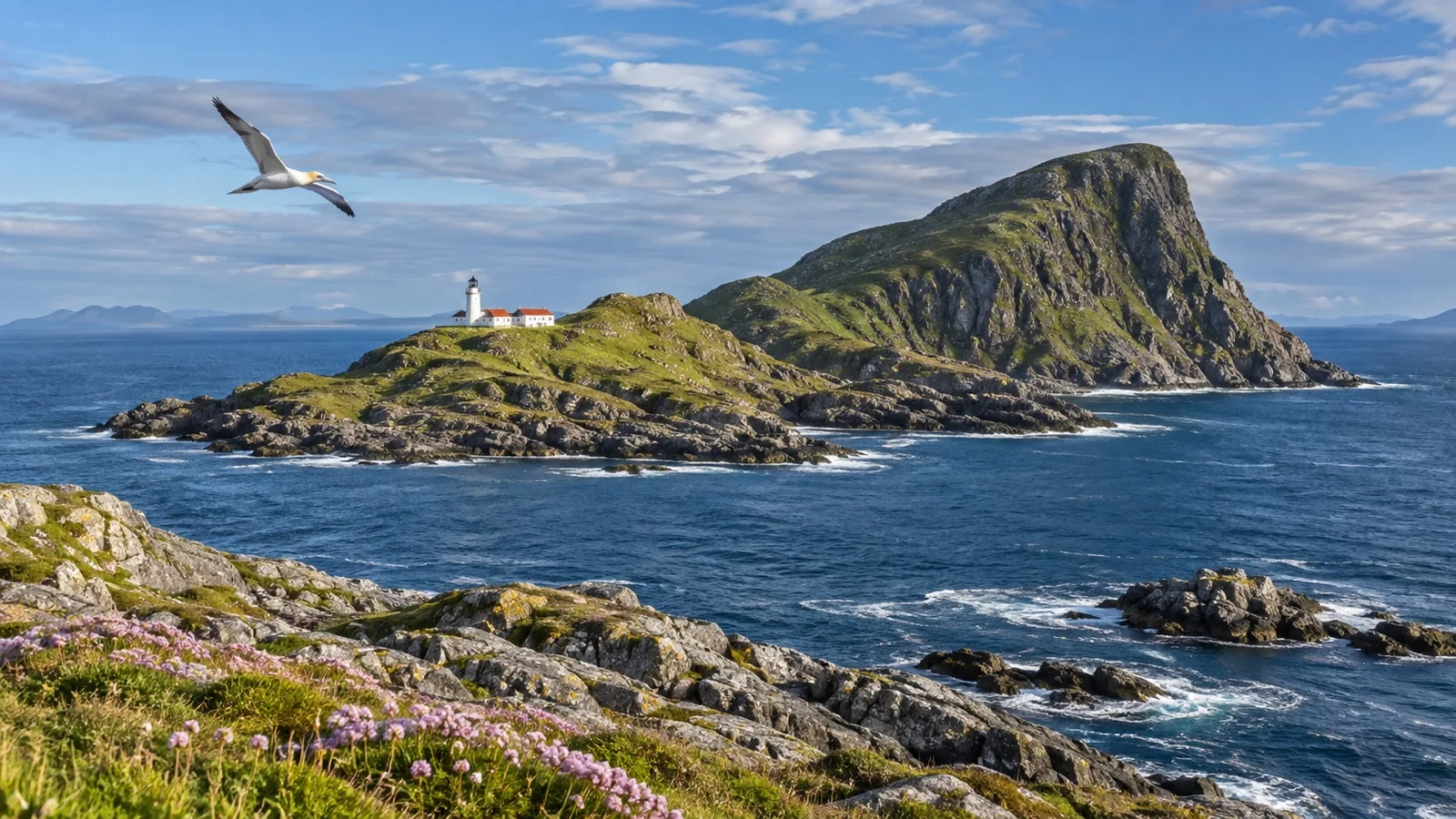
Look west from the sea approach for Stabben Lighthouse, a red topped marker perched on a very small rock. It is a good visual introduction to how navigation and weather define this coast.
Kystmuseet i Sogn og Fjordane
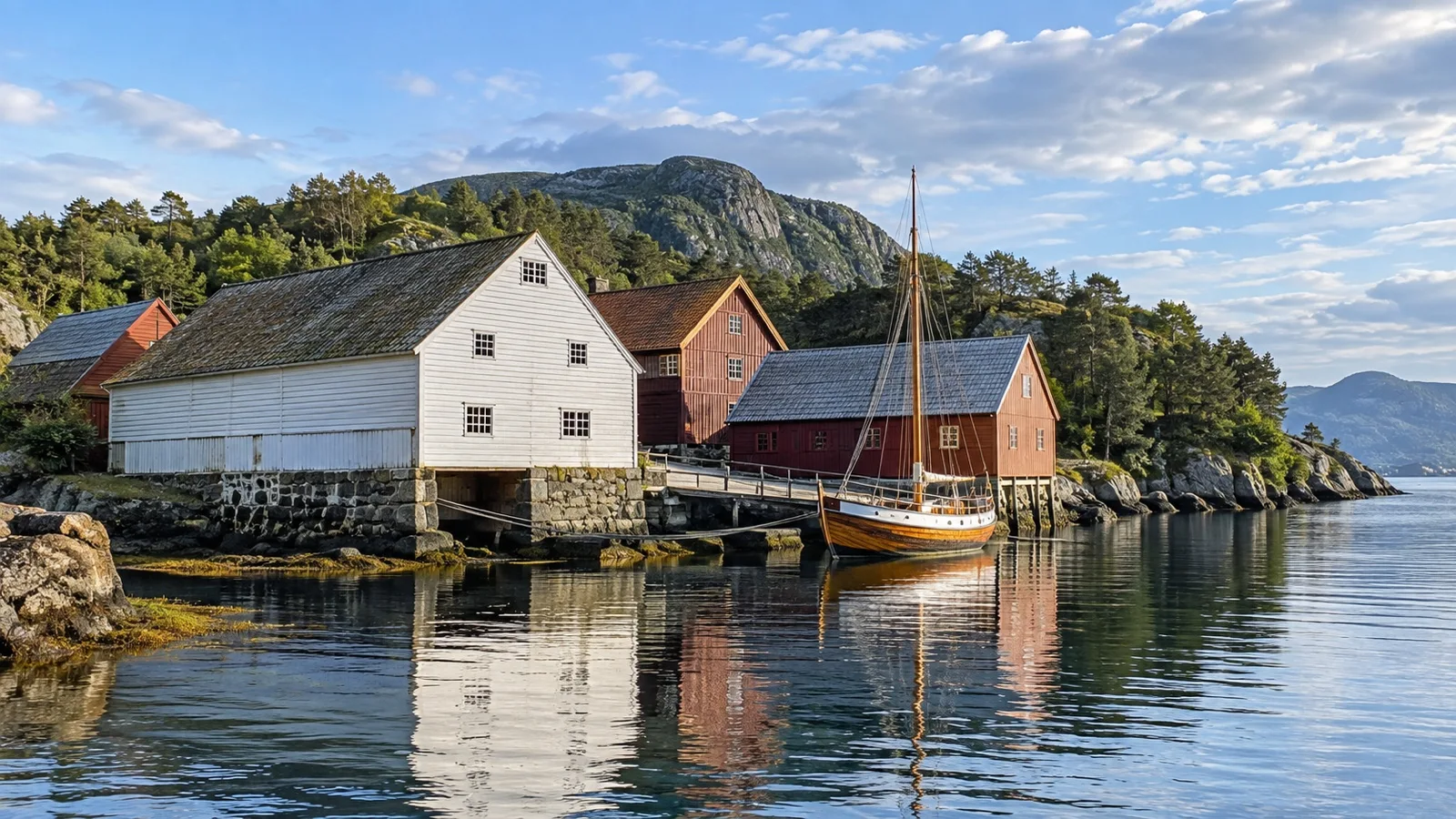
Kystmuseet is the most useful indoor anchor for an independent Florø visit. Its official description focuses on historic local boat types, old maritime buildings, coastal heath, and the working culture of western Norway.
This is the place to connect the herring story with actual vessels and equipment rather than treating it as a paragraph of dates. The outdoor cultural landscape also makes the museum more than a rainy day backup.
Opening days and hours vary by season, and the current schedule is not built around every ship call. Check the official planning page shortly before arrival, then confirm walking time or local transportation with the visitor information service.
If the museum is closed, do not force the plan. A harbor walk, central Florø, and a café can still make a satisfying short visit without turning the day into a transportation puzzle.
Kinn Island
Kinn Island is the standout option when your call is long enough. The green island sits west of Florø and combines a medieval church, an open coastal landscape, and the split rock profile of Kinnaklova.
The official regional tourism page says Kinn played a central role during the great herring fisheries. Today only a small number of permanent residents remain, so visitors need to bring the food, water, and practical supplies they expect to use.
This outing is not a casual extension of a town walk. It depends on a separate scheduled boat, a request stop procedure for the return, weather, and enough margin before the ship departs.
Getting from Florø to Kinn
Fjord Norway directs travelers to use the scheduled boat from Florø terminal to Kinn quay and to verify times through Skyss. The published frequency varies between weekdays, weekends, and summer periods, so a generic daily estimate is not enough for a port call.
Kinn is a request stop for the return journey. Current visitor information says travelers must call to request the boat no later than 15 minutes before it leaves Florø, which is an unusual rule worth understanding before you go.
Check the latest timetable, ticket method, request stop number, and expected arrival back in Florø. If any part of the connection leaves only a thin ship buffer, choose the town plan instead.
A ship excursion can be worth the premium if it coordinates the island boat with the vessel’s schedule. Read the description carefully because a scenic boat ride, church visit, and full island hike are very different outings.
Kinn Church
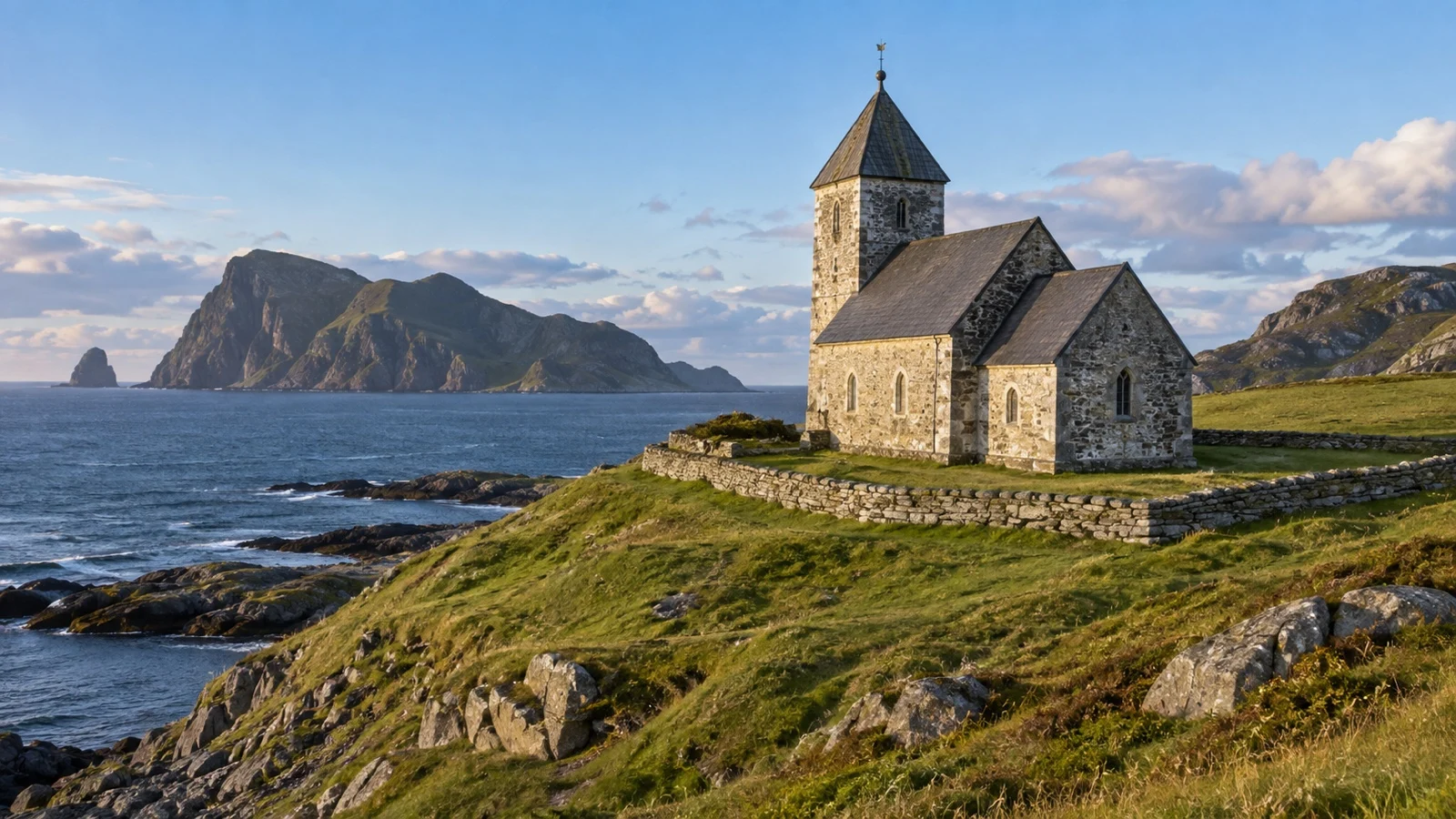
Kinn Church is a Romanesque stone church dating to the twelfth century and is identified as the oldest church in Sunnfjord. Its long association with Saint Sunniva and seafarers gives the building a significance that exceeds its modest scale.
The walk from Kinn quay to the church takes about 20 minutes at a relaxed pace along a one kilometer gravel road. That sounds simple, but wind, rain, mobility, and the need to catch the return boat should still shape the plan.
The church is normally staffed and open to visitors from mid June through the end of August. From September to mid June it is generally closed except by request or for events, so confirm access rather than assuming the interior will be available.
Kinnaklova and island hiking
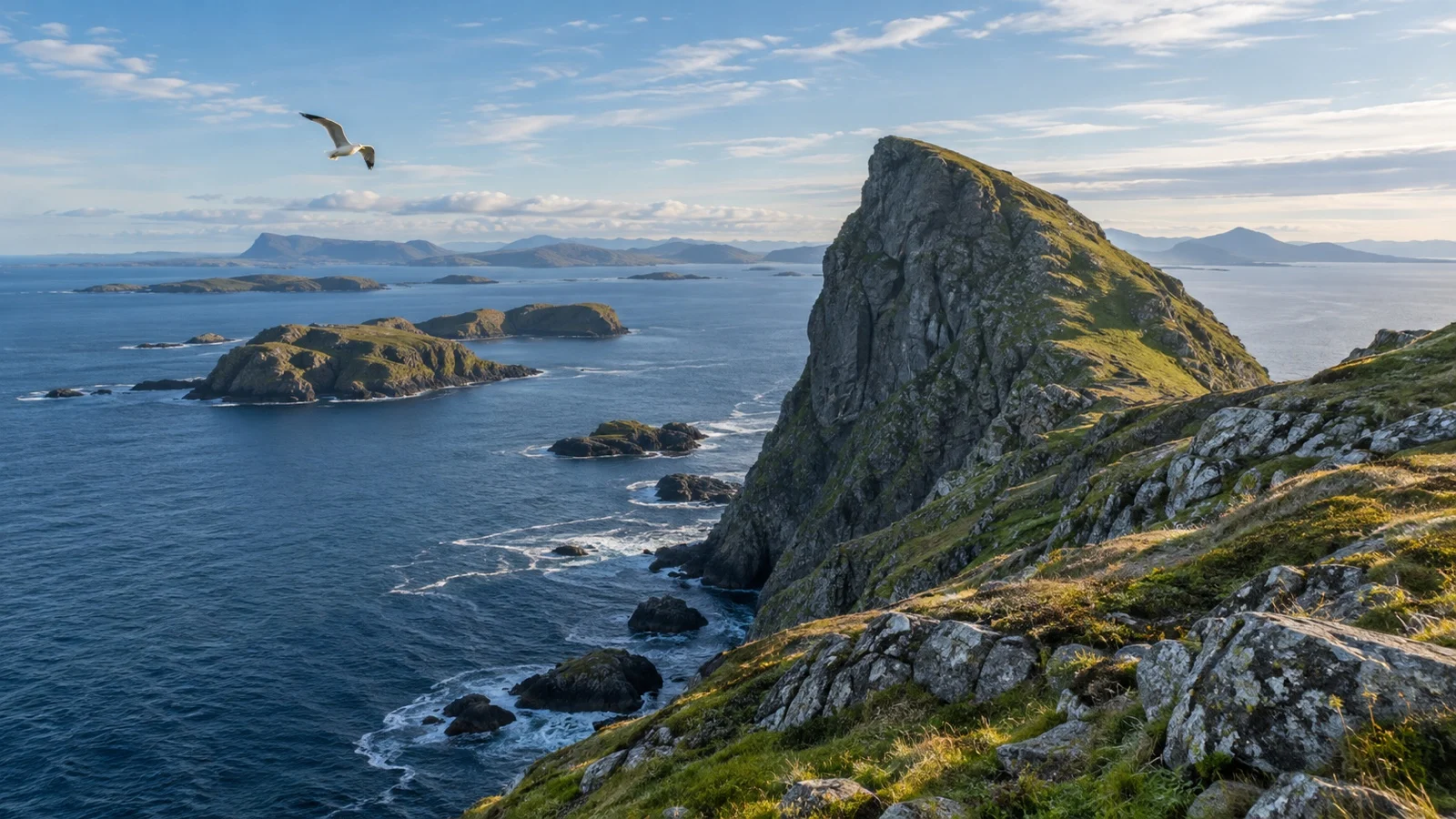
Kinnaklova is the cleft mountain formation behind the church and a historic navigation landmark for sailors. It gives the island its most distinctive silhouette and tempts visitors into adding more walking than the timetable may support.
The marked circuit around Kinn is described as roughly two hours, with steeper ascent and descent around Høgskaret. Additional routes climb toward Inste Stauren or Kinnafjellet and need more time, footwear, and confidence on exposed terrain.
I would not attempt the full circuit during a tight cruise call. The church walk and landscape already provide a strong visit, while an ambitious summit is better saved for an overnight stay.
Carry your own food and drink because the island has no cafés, restaurants, or shops. Toilet availability is tied to the summer host period, and the official page says no toilet facilities are open from September to mid June.
Ausevika rock carvings
Ausevika offers a much older layer of regional history through rock carvings dating back roughly 3,000 years. It sits outside the easy central walking plan, so it works best as part of a confirmed shore excursion or prearranged drive.
Do not try to combine Ausevika, Kinn, the museum, and a relaxed town visit in one ordinary call. Florø rewards a clear priority much more than an overloaded checklist.
Ship excursion or independent day
Central Florø is easy to explore independently, and the museum can be added when its hours line up. No ship tour is needed for a simple waterfront and town day.
Kinn is where organized help becomes more valuable because timing carries real consequences. A coordinated excursion can manage the outbound boat, return request, guiding, and ship deadline in one plan.
Independent travelers can still use the public boat when the schedule fits comfortably. Screenshot the timetable, save the return request number, carry a charged phone, and confirm that your roaming plan works in Norway.
A practical short-call plan
For a brief coastal route stop, stay in Florø. Walk toward the center, look around Strandgata and the harbor, buy coffee if time permits, then return before the gangway deadline.
Do not attempt Kinn merely because it appears close on a map. The separate boat timetable, request stop process, and island walking time make it unsuitable for a very short call.
A practical half-day plan
With several hours, choose either Kystmuseet plus central Florø or a carefully timed Kinn trip. Trying to combine both can turn a pleasant coastal day into a series of nervous connections.
If weather looks unstable, keep the plan on Florelandet. The museum and town are easier to shorten than an island journey after you have committed to the boat.
Accessibility in Florø
Ask the ship about gangway slope, steps, assistance, and the surface immediately beyond the berth. Tidal change and vessel setup can make the same quay feel different from one visit to the next.
Central Florø is the more manageable option for travelers who need a shorter, flatter route. Wet paving, curb transitions, and wind still matter, so choose a loop that can be turned around easily.
The museum’s current accessible route should be confirmed directly before visiting. Historic boats, outdoor buildings, and natural surfaces do not necessarily provide the same access as the main exhibition space.
Accessibility on Kinn
Kinn adds a boat transfer, quay movement, a gravel road, limited facilities, and changing coastal weather. The church walk may suit some travelers with limited stamina, but the island circuit and mountain routes are a different level of commitment.
Ask Skyss or the operator about boarding, vessel steps, mobility device space, assistance, and the Kinn quay before buying a ticket. Do not assume that a scheduled public boat has the same setup as your cruise ship.
If a wheelchair, walker, or balance concern is involved, an organized accessible tour in Florø may be the stronger choice. A successful port day does not require reaching the outer island.
Weather and what to wear
Florø’s position on the exposed western coast means wind and rain belong in the plan year-round. Hurtigruten’s climate information shows cool summers and mild but damp coastal winters rather than extreme inland temperatures.
Dress in breathable layers with a waterproof outer shell. A hat that secures well, shoes with grip, and a small dry bag are especially useful for Kinn.
Weather can change between the sheltered town center and the open island. Check the marine forecast and boat status, not just the general forecast symbol for Florø.
Payments, food, and practical details
Norway uses the Norwegian krone, and cards are the normal choice for many purchases. A working card and mobile payment setup are more useful than carrying a large amount of cash.
Florø has ordinary town services, but hours can be limited during short or early calls. Kinn has no shops or food service, so the two plans require very different preparation.
Download maps and timetables before leaving the ship. Cellular coverage may be useful, yet weather, battery life, and roaming settings are not things I would trust with the entire return plan.
Safety and emergencies
Norway uses 112 for police emergencies, 113 for urgent medical help, and 110 for fire. The Norwegian police confirm that 112 is free and should be used when immediate help is needed.
On Kinn, report an injury or missed connection to the boat operator and ship contact immediately. Distance, weather, and limited island services can make a small problem harder to solve than it would be in town.
Return timing
All aboard time matters everywhere, but Kinn makes the consequence unusually clear. There may not be another boat that gets you back before the ship leaves.
Build a substantial margin between the scheduled Kinn arrival and the ship deadline, then verify the request stop procedure again before departure. If the margin depends on every connection being perfect, it is not a safe cruise plan.
For a town visit, turn back earlier than the minimum walk time suggests. Security, gangway access, and a changed departure announcement can still use the cushion.
How Florø fits a Norway cruise
Florø remains a regular stop on Hurtigruten’s Coastal Express routes, which connect working ports along Norway’s coast. The company currently lists round-trip, northbound, and southbound versions that include the town.
This is not the classic deep fjord day that many first time Norway cruisers picture. It is a coastal town day, with the open sea and outer islands shaping the experience more than waterfalls and cliff walls.
Our Norway Coastal Express ports guide explains the rhythm of these working calls. The guides to Molde and Kristiansund help compare Florø with larger coastal stops farther north.
Quick answers
Do ships dock directly in Florø?
Hurtigruten uses Fugleskjærskaien on Florelandet and passengers go ashore by gangway. Other vessels should confirm their assigned berth and access plan.
Can I walk into town?
Yes, central Florø is close to the working harbor and suits an independent walk. Check the route at the gangway if construction or port operations change the exit.
Is Kinn Island worth it?
Yes, when the boat schedule, weather, and ship time leave a generous return margin. Choose central Florø instead when any connection feels tight.
Will Kinn Church be open?
The usual staffed season runs from mid June through August. Outside that period, interior access generally requires a request or event, so check ahead.
What is the best rainy-day plan?
Use Kystmuseet as the main target if it is open, then keep the town walk flexible. Confirm museum hours because they change by season.
What should I pack for Kinn?
Bring food, water, waterproof layers, grippy shoes, and a charged phone. Save the timetable and return request details before leaving Florø.
The last word
Florø is at its best when you let it be a real coastal town rather than demanding a blockbuster fjord spectacle. Walk the harbor and museum at an easy pace, or commit to Kinn only when the timetable gives you room to enjoy it.
How this guide was researched: Unless a first-hand visit is explicitly identified above, this guide is based on independent research using official port, museum, regional tourism, transport, government, and cruise sources where available. Logistics and time-sensitive details were reviewed on September 12, 2026, under our Editorial Policy.
More on this topic: browse every guide on expedition and alternative cruises.