Risøyhamn Cruise Port Guide: Planning a 15-Minute Stop
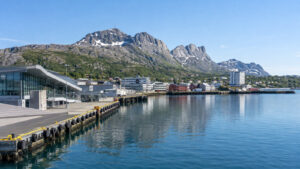
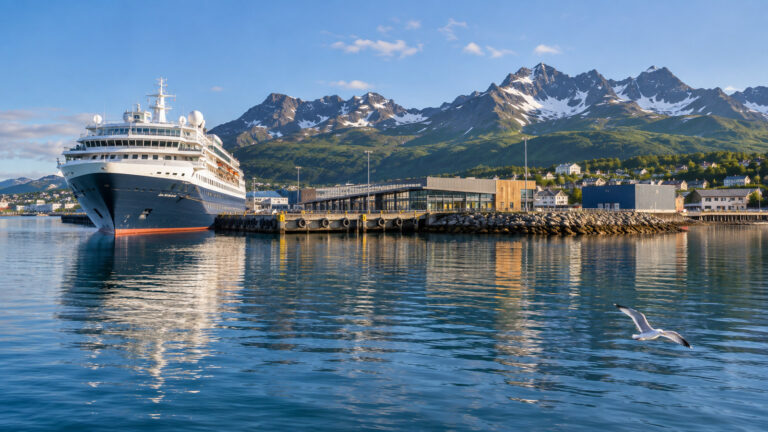
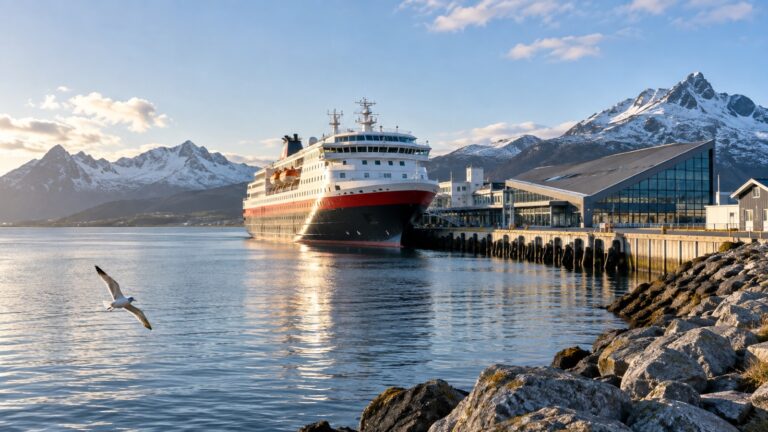
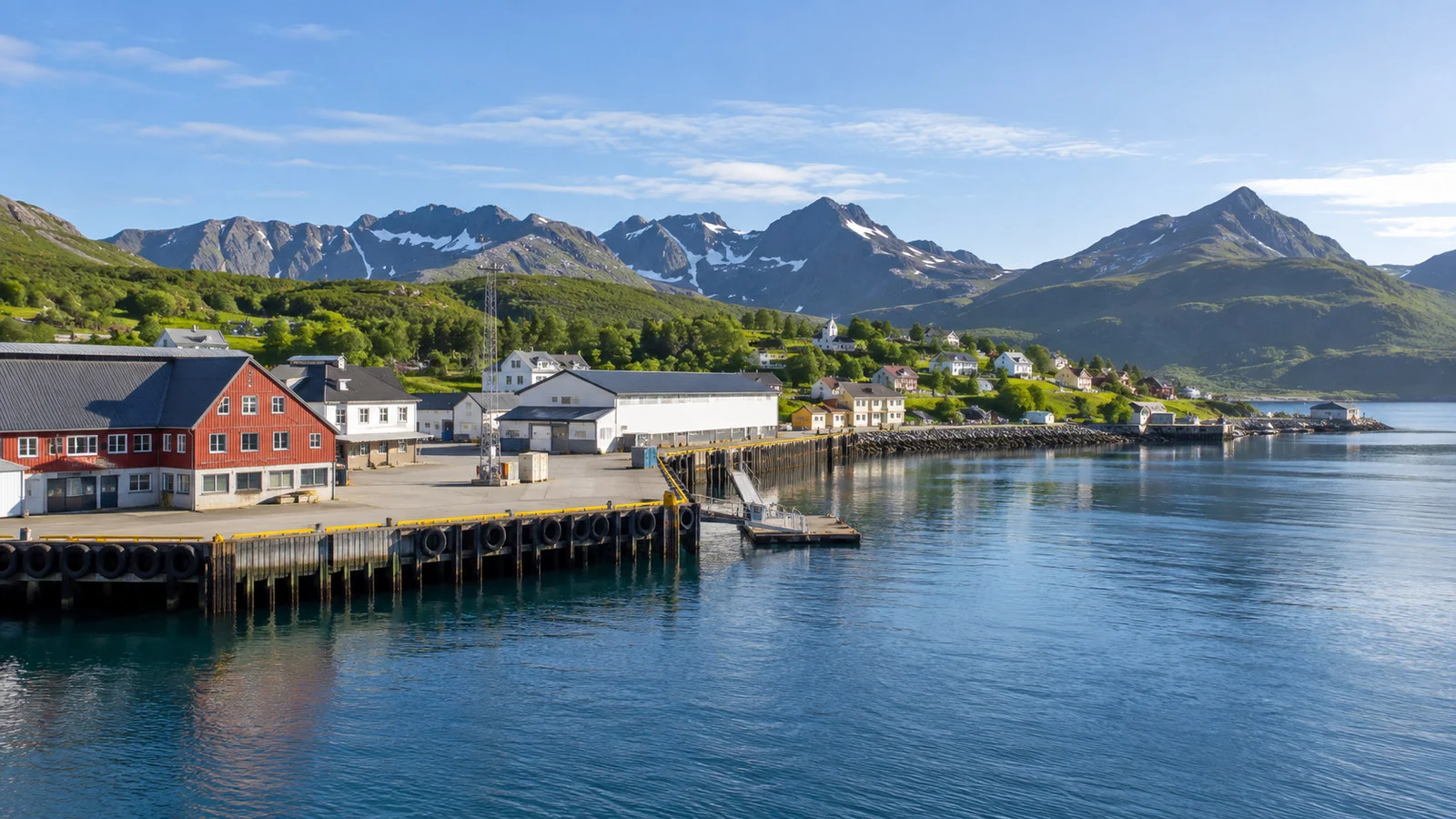
Risøyhamn is the smallest port of call on Hurtigruten’s Coastal Express, and its scale is part of the appeal. The ship pauses beside a quiet village on southern Andøya for about 15 minutes, long enough to observe a working quay but not long enough for a conventional shore visit.
You may be able to step off when the crew opens the gangway, yet the better experience often happens from an open deck. The approach through Risøyrenna, the sweep of Andøy Bridge, and the old trading post by the water tell a richer story than a hurried walk on the pier.
Both Hurtigruten and Havila Voyages currently include Risøyhamn on their coastal schedules. Each operator publishes a 15-minute northbound and southbound call, though exact clock times differ and must be confirmed for your own sailing.
Quick Facts
- Location: Southern Andøya in the Vesterålen archipelago of northern Norway
- Operators: Hurtigruten and Havila Voyages on the Coastal Express route
- Typical duration: About 15 minutes in both directions on current official schedules
- Arrival: Ships come alongside the quay, with no tender transfer
- Shore time: Enough for a brief step near the gangway when allowed, not for an excursion
- Best views: Risøyrenna channel, Andøy Bridge, the trading post, village waterfront, and surrounding water
- Currency: Norwegian krone, although there is normally no reason to spend money during the stop
- Best plan: Be outside before arrival, stay close to the ship, and follow crew timing exactly
What Kind of Port Is Risøyhamn?
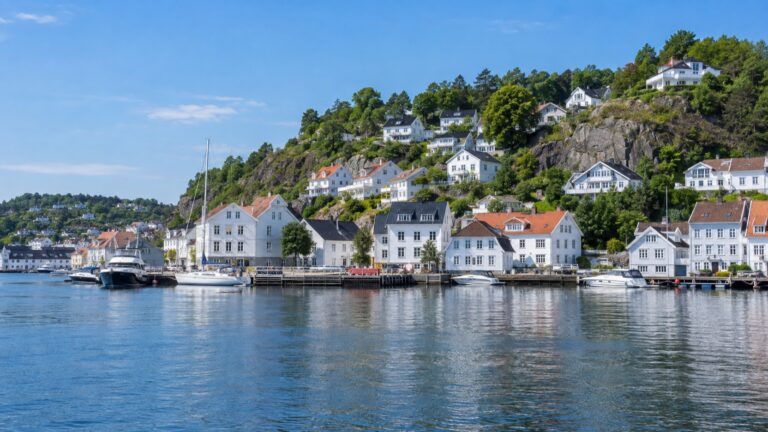
Risøyhamn sits on the southern shore of Andøya, separated from neighboring Hinnøya by the Risøysundet strait. The village is small, with homes, waterfront buildings, road links, and broad views that feel more residential and maritime than touristic.
Hurtigruten calls it the smallest village port on the Coastal Express and describes a community of roughly 200 people. This is a scheduled transportation stop, not a cruise resort built around arriving passengers.
The ship berths directly at the quay, so there is no tender operation or long transfer. That physical simplicity is balanced by an extremely short schedule.
Think of the call as a living piece of the voyage rather than free time ashore. The coordination of ship, gangway, local passengers, and port work is the attraction.
The 15-Minute Reality
Fifteen minutes in port does not always mean 15 minutes available to passengers. The ship must finish its approach, secure lines, position the gangway, complete operations, and close the gangway before departure.
A delayed arrival may shorten the usable time because the vessel has a wider route schedule to maintain. Weather, traffic, and operational needs can also change whether passengers are invited to disembark.
Be ready before the ship reaches the quay if you want photographs or a quick breath of shore air. Searching for a coat after docking can consume the entire stop.
There is no sensible reason to walk out of sight of the gangway. The village and road network deserve a longer stay, but this call cannot provide one.
Northbound and Southbound Timing
Hurtigruten’s current port page lists 15 minutes in Risøyhamn in each direction without asking travelers to treat the stop as an excursion. Havila currently publishes an early northbound call and a late-morning southbound call, both lasting 15 minutes.
The exact experience changes with daylight and season. An early summer call may be bright under the midnight sun, while a winter visit can occur in darkness or blue twilight.
Use the daily program and ship announcements rather than an online timetable saved months earlier. Coastal schedules can change, and your shipboard team has the current operational plan.
If the call falls during sleep or breakfast, missing the gangway is not a serious loss. You can still enjoy the channel and bridge views from deck before or after the ship is alongside.
The Approach Through Risøyrenna
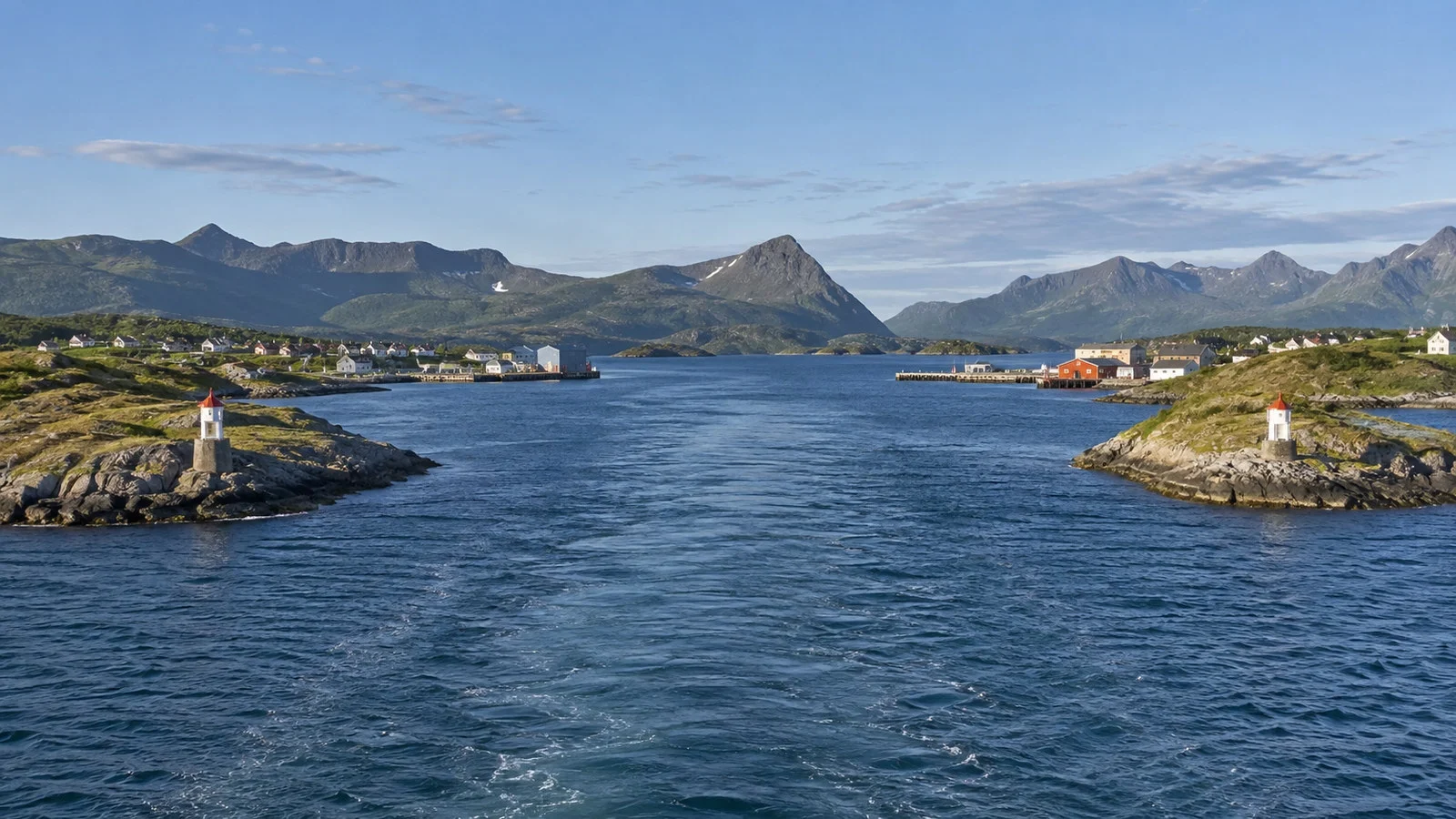
Risøyhamn’s maritime importance is tied to Risøyrenna, the navigable channel through waters that were once too shallow for larger coastal ships. Hurtigruten says Captain Richard With pushed for the project after living in the village and confronting the area’s sandbanks.
The channel opened in 1922 and has been deepened since then. Its creation made the passage safer and helped establish Risøyhamn as a reliable link on the coastal route.
Hurtigruten records a remarkable opening scene with King Haakon VII, the ship DS Finnmarken, and a flotilla of hundreds of boats. That history gives the modern 15-minute call more weight than its quiet quay initially suggests.
Stand outside during the approach if weather allows. Watching the vessel navigate the channel helps you understand why the stop exists and how engineering changed travel along this coast.
Captain Richard With and the Trading Post
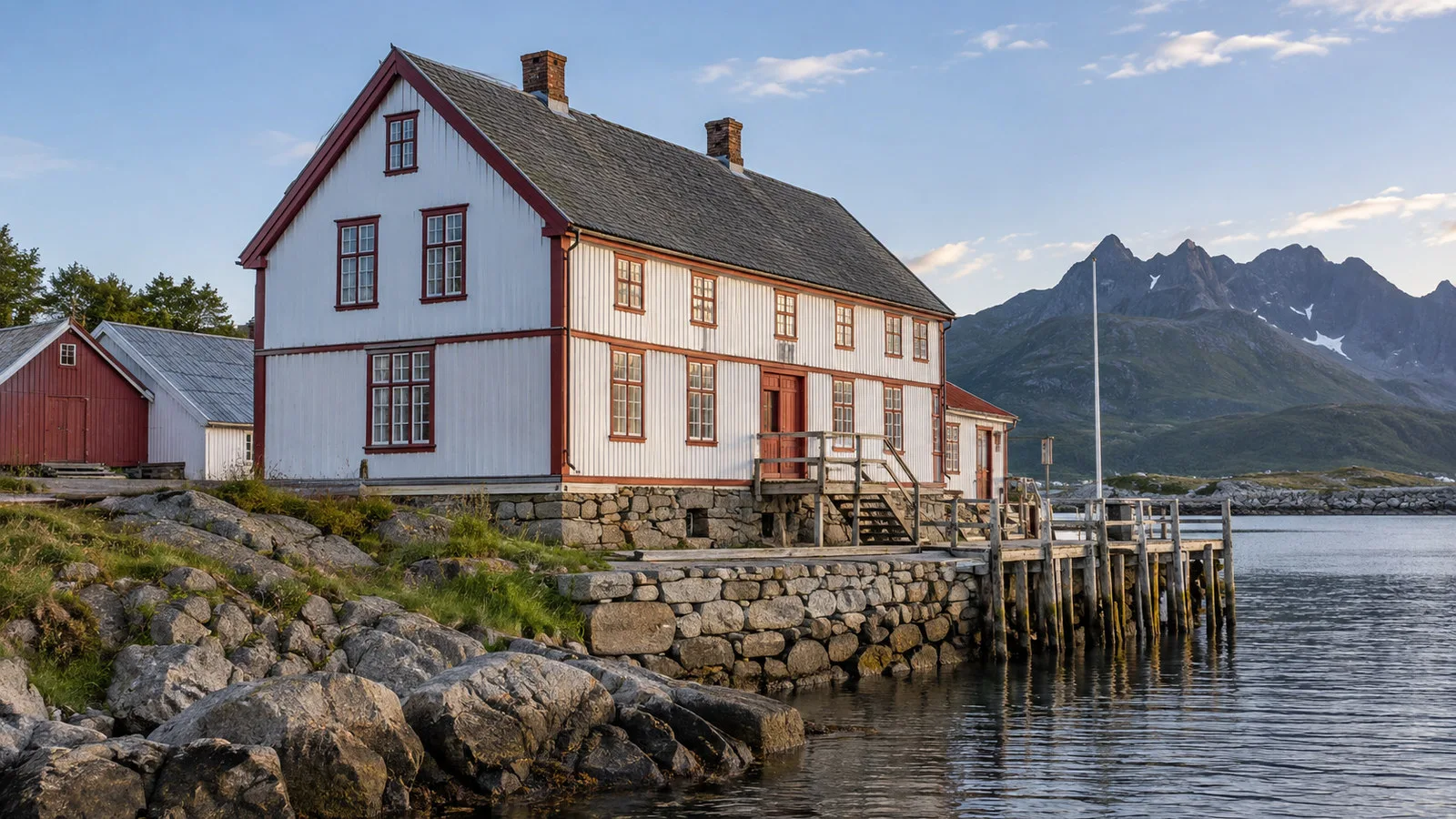
Captain Richard With, closely associated with the founding of Hurtigruten, moved to Risøyhamn and bought the local trading post in 1875. The old building still stands near the water as a visible link between the village and the coastal service.
You do not need to enter a museum to appreciate the connection. Seeing the trading post from the ship while hearing the story of With and Risøyrenna gives the stop a clear historical focus.
The relationship between local commerce and coastal transportation shaped many Norwegian communities. Risøyhamn compresses that history into one small harbor where the scheduled ship still arrives.
Photograph the waterfront in context rather than zooming only on one building. The channel, quay, bridge, ship, and settlement belong to the same story.
Andøy Bridge and the View From Sea
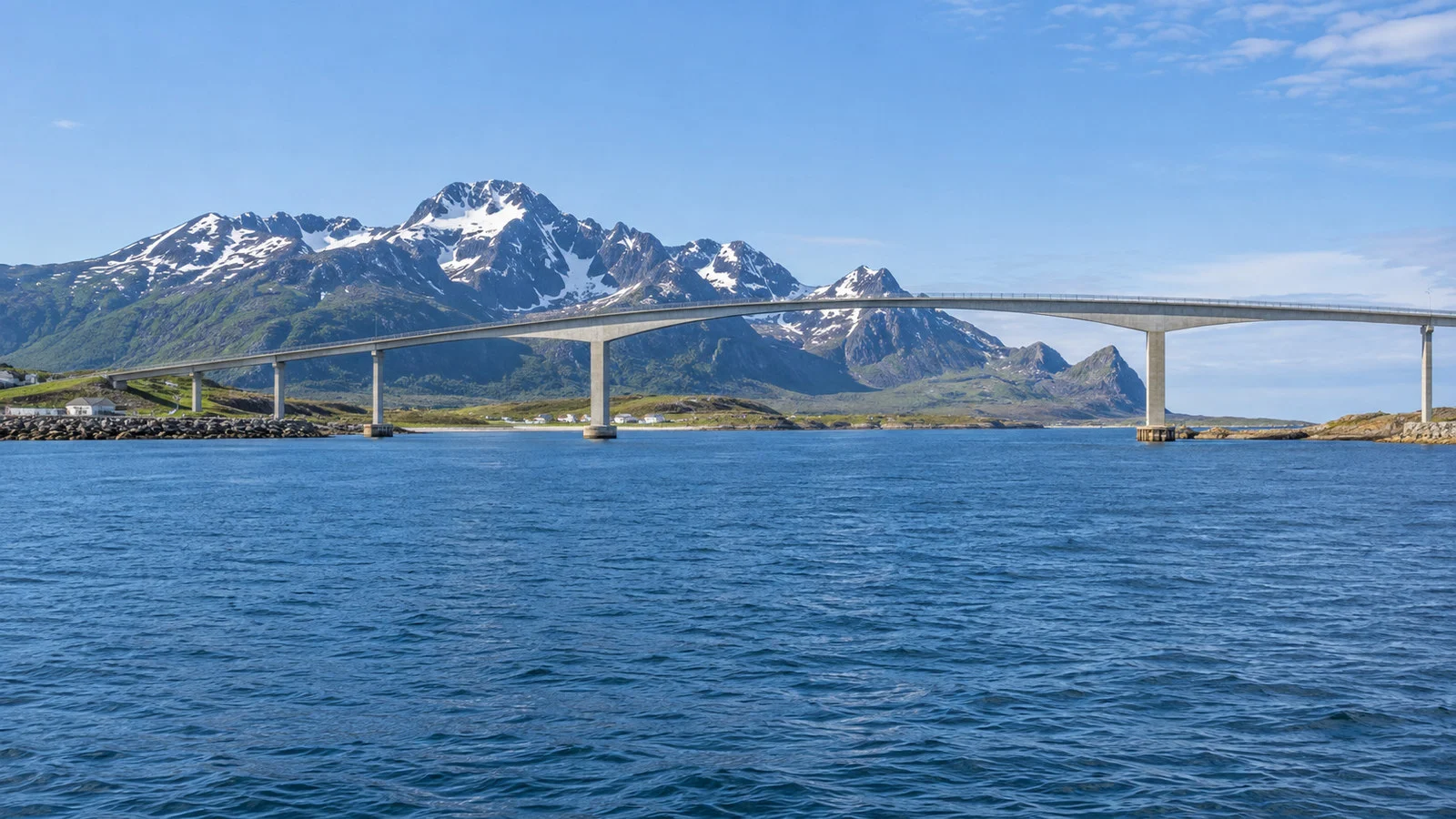
Andøy Bridge links Andøya with Hinnøya and gives Risøyhamn a dramatic piece of infrastructure beside an otherwise low landscape. Hurtigruten lists the bridge at about 750 meters long and recommends watching for its graceful span during the approach.
The best view may come while the ship is moving rather than when it is tied up. Choose an open deck with a broad sightline and remain there through the channel passage.
Low cloud, rain, snow, or changing light can transform the scene within minutes. A wide composition showing weather and water often captures Risøyhamn better than a tightly cropped bridge photo.
Keep camera equipment secured because wind can be stronger on exposed decks. A wrist or neck strap matters more than carrying multiple lenses for such a short sequence.
Can You See Whales Here?
Andøya is one of Norway’s well-known whale-watching regions, and official operator pages highlight sperm whales and other species in the surrounding waters. That regional reputation does not create a guaranteed sighting during 15 minutes at the quay.
Scan from deck before and after the stop, especially when visibility is good and the ship is moving slowly. Binoculars help, but keep expectations grounded because wildlife appears on its own schedule.
A dedicated whale safari operates on a completely different timescale and generally departs from elsewhere on Andøya. It cannot be fitted into a routine Risøyhamn port call.
If whales are a priority, add time on Andøya before or after the Coastal Express voyage. Choose a responsible local operator and allow weather flexibility rather than attaching the plan to this brief stop.
Puffins, Eagles, and Coastal Wildlife
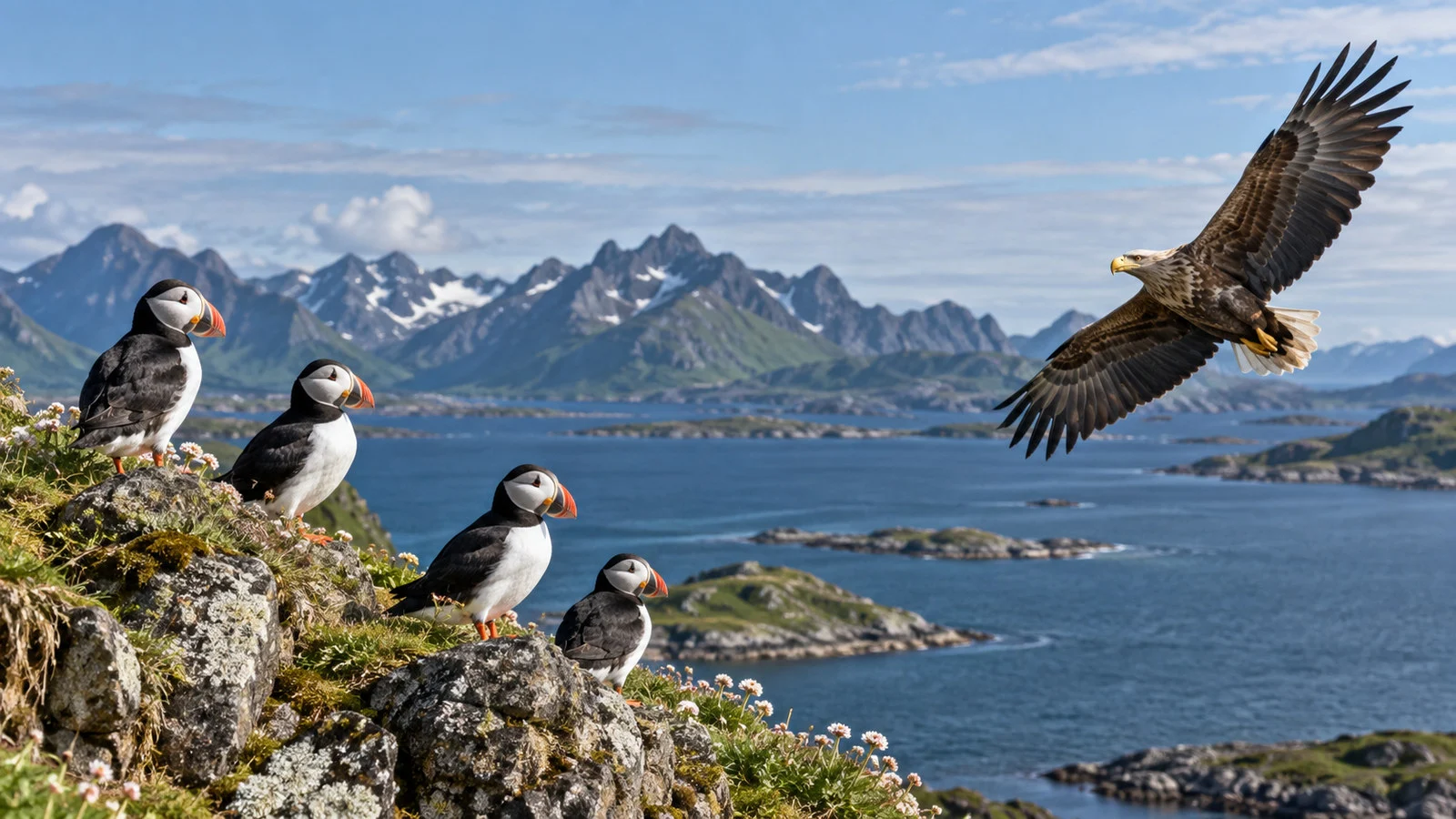
Vesterålen’s waters and islands support rich birdlife, and sea eagles are possible throughout the region. Puffins nest seasonally at offshore colonies, but the Risøyhamn quay is not a dedicated bird-watching site.
Bring binoculars for the voyage as a whole, not just this call. Seabirds in flight, distant eagles, and marine mammals are easier to spot when you spend patient time on deck between ports.
Do not confuse proximity on a map with practical access. Wildlife sites elsewhere on Andøya require transportation, time, and often local guidance.
Use the ship’s naturalist or expedition team when available. They can help identify species and may know what has recently been active along the route.
Why the Wider Andøya Attractions Are Not Shore Options
Andøya offers enough for several days, including beaches, hiking, whale safaris, space history, and one of Norway’s official Scenic Routes. The Norwegian Public Roads Administration describes the route as 58 kilometers along the island’s outer edge between Andenes and Bjørnskinn.
That road follows an exposed landscape between ocean, settlements, and mountains. It is a compelling reason to return by car, but it is impossible to sample meaningfully during the Coastal Express pause.
Andøya Spaceport and related visitor experiences are also farther north. They belong in a planned land itinerary with checked opening hours and transportation.
Knowing these places exist helps frame Risøyhamn as a gateway in theory. In practice, the 15-minute traveler should remain at the quay or aboard.
There Is No Shore Excursion Decision
A standard Risøyhamn call is not long enough for an organized tour. Neither a bus excursion nor a meaningful guided walk can operate within the published window.
Save excursion money and energy for longer calls such as Tromsø, Trondheim, Bergen, or Ålesund. Those ports give you time to travel beyond the immediate gangway area.
Some passengers enjoy stepping onto every quay simply for the experience. That is fine when crew permits, but it is not necessary to appreciate Risøyhamn.
The strongest independent plan is observation. Watch the operation, look for the bridge and trading post, then settle back into the voyage.
Accessibility and Gangway Questions
The ship docks alongside, which removes the difficulty of a tender boat. Gangway angle, width, grip, and assistance still vary with vessel position, tide, weather, and the ship in service.
Ask reception whether the gangway is suitable before attempting to disembark with a wheelchair, walker, or limited balance. The short operating window may make staying aboard the recommended option even when the ramp is technically usable.
Do not assume accessible toilets, shelter, or services are available at the quay. A comfortable open-deck position can deliver the main views without the pressure of getting down and back.
If Risøyhamn is your booked embarkation or disembarkation point, arrange assistance with the operator well ahead of travel. Luggage handling and local arrival transportation require a separate plan.
Weather Above the Arctic Circle
Risøyhamn lies above the Arctic Circle, where seasonal light is dramatic and weather can change quickly. Wind, rain, low cloud, sleet, snow, and bright sun may all shape the view depending on the month.
A waterproof and wind-resistant outer layer is useful even in summer. Closed shoes with grip are important when decks, gangways, or the quay are wet or icy.
Long summer daylight can turn an early call into a beautiful viewing opportunity. Winter brings darkness and blue light, though cloud and precipitation may be more noticeable than stars or aurora.
Dress before arrival so you can use the full approach. For a call this short, preparation matters more than packing extra equipment.
Midnight Sun and Northern Lights
Andøya’s summer light is a major part of the regional experience. Havila notes that the midnight sun remains near the horizon for an extended period, creating soft late-night and early-morning light around the coast.
Northern lights are possible during dark seasons when the sky is clear and solar activity cooperates. Risøyhamn is not a guaranteed aurora stop, and the ship may arrive under cloud or daylight.
Follow any shipboard aurora announcements and spend time on a dark deck between ports. A wider stretch of night sailing gives you better odds than concentrating on the brief time beside the quay.
Keep expectations flexible and enjoy the atmosphere even without a display. Arctic darkness, village lights, and a quiet channel can be memorable in their own right.
What to Wear and Carry
Wear your outer layer, hat, and secure shoes before the ship starts its final approach. Gloves are useful for cold railings and wind, even when you plan to remain aboard.
Carry your ship card if you intend to step off, plus a phone or compact camera secured by a strap. Leave unnecessary bags and loose accessories in the cabin.
Binoculars are worthwhile for the full Vesterålen passage, though not because wildlife is guaranteed at the dock. A compact pair is easier to manage in wind and crowded viewing areas.
You do not need cash for a routine call. There is no practical shopping window, and cards are standard in Norway when purchases arise elsewhere.
Safety at a Working Quay
Remain outside crew work zones and stay clear of mooring lines, vehicles, and cargo handling. A small port can feel informal, but the operational hazards are real.
Wait for the gangway to be declared open and reboard as soon as instructed. Never treat the published departure minute as permission to ignore a crew call.
If you miss the ship, local transportation and accommodation are much harder to arrange than in a large city. The next port may be reachable only through a complicated and expensive combination of road, ferry, or air travel.
Norway uses 110 for fire, 112 for police, and 113 for medical emergencies. Save the ship’s contact separately because schedule questions and nonemergency assistance should go to the operator.
Photography From Deck
Choose a position before docking and stay there through the most scenic part of the approach. Moving between decks at the last minute can leave you facing the wrong side or shooting through glass.
A moderate zoom works well for the bridge, trading post, and waterfront, while a wider view captures the channel and village setting. Avoid changing lenses in spray or strong wind.
Use a faster shutter speed when the ship is moving or the light is low. Check the first frame, then spend more time watching than reviewing images.
Respect local privacy when photographing homes or people on the quay. The village is a community, not an outdoor set arranged for cruise passengers.
How Risøyhamn Fits the Coastal Express
The Coastal Express combines passenger travel, local transportation, working port calls, and scenic cruising. Risøyhamn shows that identity more clearly than a long city stop ever could.
A voyage may include several calls where there is barely time to step ashore, followed by a port with hours available for sightseeing. Reading the sailing plan in advance keeps those categories clear.
Risøyhamn’s place in the route is strengthened by its history with Richard With and Risøyrenna. The call is brief today, but the village helped make regular coastal navigation possible.
Approach it as a chapter in a longer journey. The value comes from connection, landscape, and continuity rather than a list of attractions.
If You Want More Time on Andøya
Add a dedicated land stay if whales, beaches, hiking, birdlife, the Scenic Route, or space activities are important. Andøya cannot be understood from a 15-minute quay pause.
Andenes is the usual base for several northern island experiences, while other villages provide access to beaches and walking routes. Check seasonal businesses, road conditions, and current transportation before committing.
A rental car gives the most freedom on the 58-kilometer Scenic Route, but wind and winter weather deserve respect. Drivers should monitor official traffic information and allow more time than the map suggests.
The Coastal Express can serve as an inspiring introduction, and a later road trip can fill in the details. That separation produces a far better experience than trying to force Andøya into the port call.
Common Risøyhamn Mistakes
The first mistake is treating a scheduled stop as a miniature excursion day. Fifteen minutes is an operational pause, not independent sightseeing time.
The second is reading about whales or the Scenic Route and assuming those attractions begin at the gangway. They require transportation, dedicated hours, and separate planning.
Another mistake is waiting until the ship is tied up to dress for the weather. Be outside before arrival or accept that the view may pass while you prepare.
Finally, do not trust an old online timetable over the daily program. Schedule changes, delays, and operational decisions belong to the current shipboard team.
The Final Take
Risøyhamn is not a port you book the voyage around, but it is more than a name on the timetable. The channel, bridge, trading post, and tiny working quay reveal how maritime history and present-day transport meet on Norway’s coast.
Be ready before the approach, stay close to the ship, and resist the urge to turn 15 minutes into an impossible outing. If Andøya captures your imagination, come back for the longer land visit it deserves.
How this guide was researched: This guide uses current Hurtigruten and Havila Voyages schedules, Norwegian Public Roads Administration route information, and official local safety guidance. Logistics and time-sensitive details were reviewed on September 12, 2026; follow your ship’s daily program and see our Editorial Policy.
More on this topic: browse every guide on expedition and alternative cruises.