Main-Danube Canal Scenic Cruising Guide: Locks, Timing, and What to Watch
The Main-Danube Canal is not one port but a 171-kilometer transit between the Main at Bamberg and the Danube near Kelheim. Its 16 locks carry ships across the European watershed, turning an engineering corridor into one of river cruising’s most unusual sea-day equivalents.
You may spend much of the passage onboard, pass through some sections overnight, or leave for an excursion and rejoin the vessel later. The experience depends on the line’s schedule, lock traffic, maintenance, and the direction of travel.
My quick take
I would keep at least one lock passage free for deck viewing instead of scheduling every hour indoors. Watching a river ship rise or fall inside a narrow concrete chamber explains European river cruising better than any lecture.
The canal scenery itself is subtle, with farmland, industrial areas, embankments, bridges, and towns rather than nonstop castles. The engineering is the attraction, especially near the high lift locks and the summit level.
Do not treat published lock times as firm appointments. The crew often receives updated estimates during the day, so the daily program and announcements matter more than a generic online schedule.
Main-Danube Canal quick facts
- Length: About 171 kilometers, or 106 miles, from Bamberg to Kelheim.
- Locks: 16 between the Main and Danube systems.
- Summit level: About 406 meters above sea level at the European watershed.
- Opened: The modern canal was completed in 1992.
- Passenger experience: A through-transit that may include daylight cruising, overnight sections, port calls, or overland excursions.
- Main disruption risk: Planned maintenance, an unplanned lock problem, traffic, or water conditions on the connecting rivers.
What the canal connects
The canal joins the Main River at Bamberg with the Danube system near Kelheim. In practical cruise terms, it makes continuous itineraries between the Rhine, Main, and Danube possible.
That connection supports long routes between the North Sea drainage basin and the Black Sea drainage basin. It does not mean one ship necessarily sails the entire distance from Rotterdam to the Black Sea, but the linked waterway exists.
The federal Waterways and Shipping Administration manages navigation infrastructure through its regional offices. Follow your cruise line for passenger timing because commercial traffic and lock operations are coordinated at vessel level.
How the 16 locks work
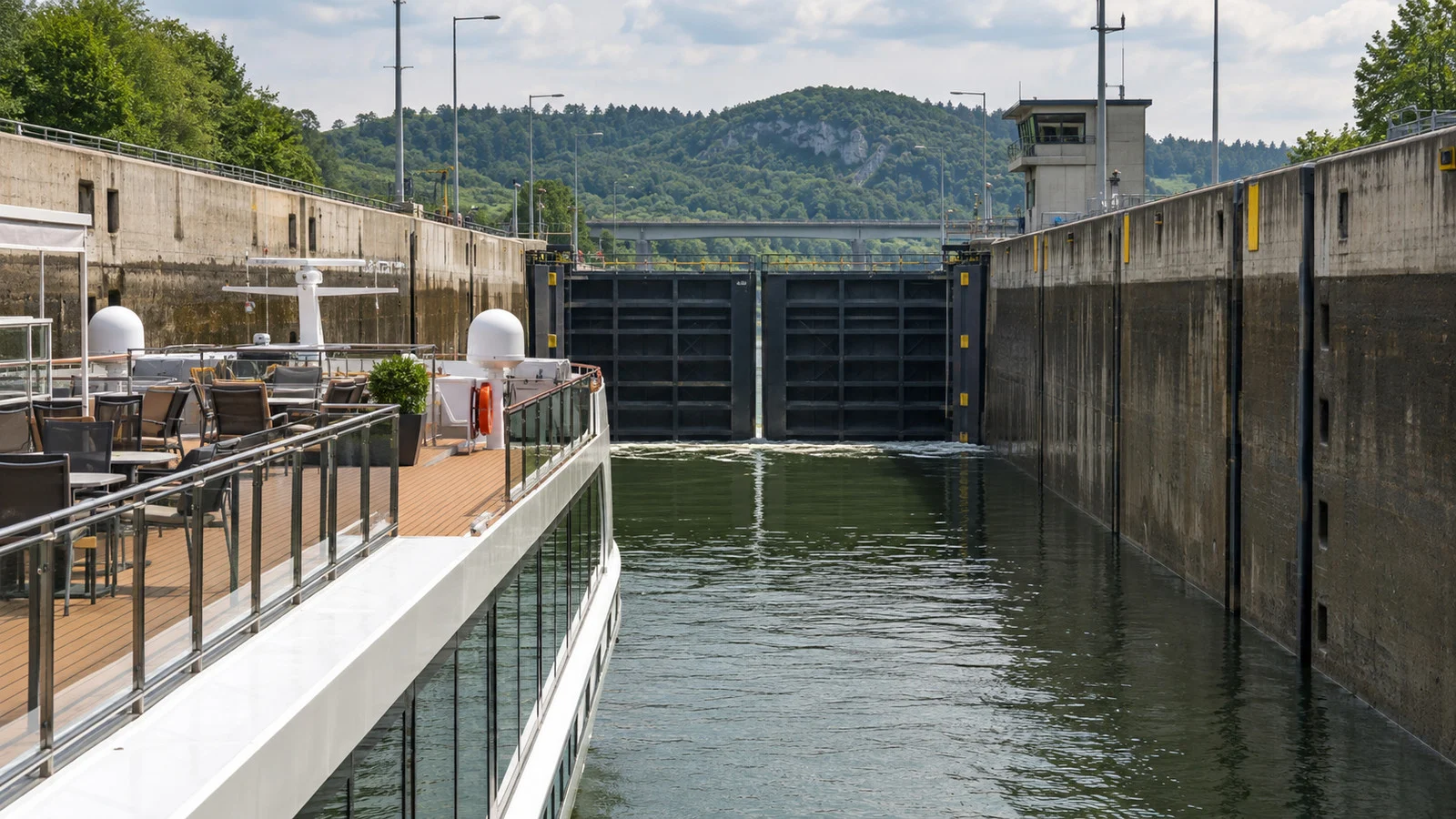
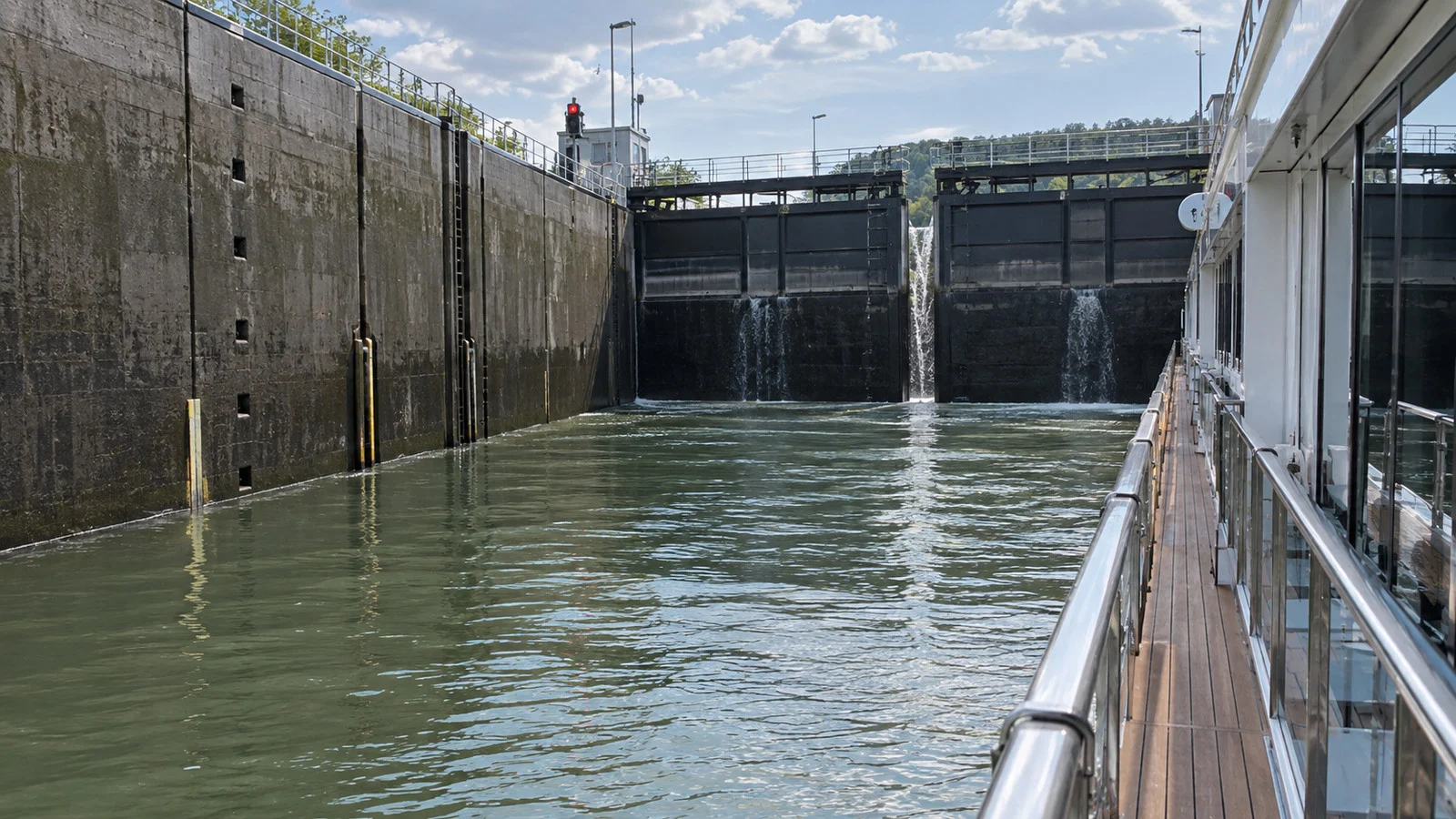
A lock chamber closes around the vessel, then water raises or lowers the ship to the next canal reach. The process can feel slow from a cabin, but the changing relationship between deck, wall, gate, and surrounding land is fascinating from outside.
Several locks have lifts approaching 25 meters, or about 81 feet. They use water-saving design because lifting large vessels across a summit route requires careful water management.
The usable chamber dimensions shape the long, low profile of many European river ships. Sun-deck furniture, railings, and canopies may fold so the vessel can fit beneath bridges as well as inside locks.
Ships can wait before entering when another vessel has priority, the chamber is cycling, or traffic is backed up. A delay does not automatically mean anything is wrong.
Crossing the European watershed
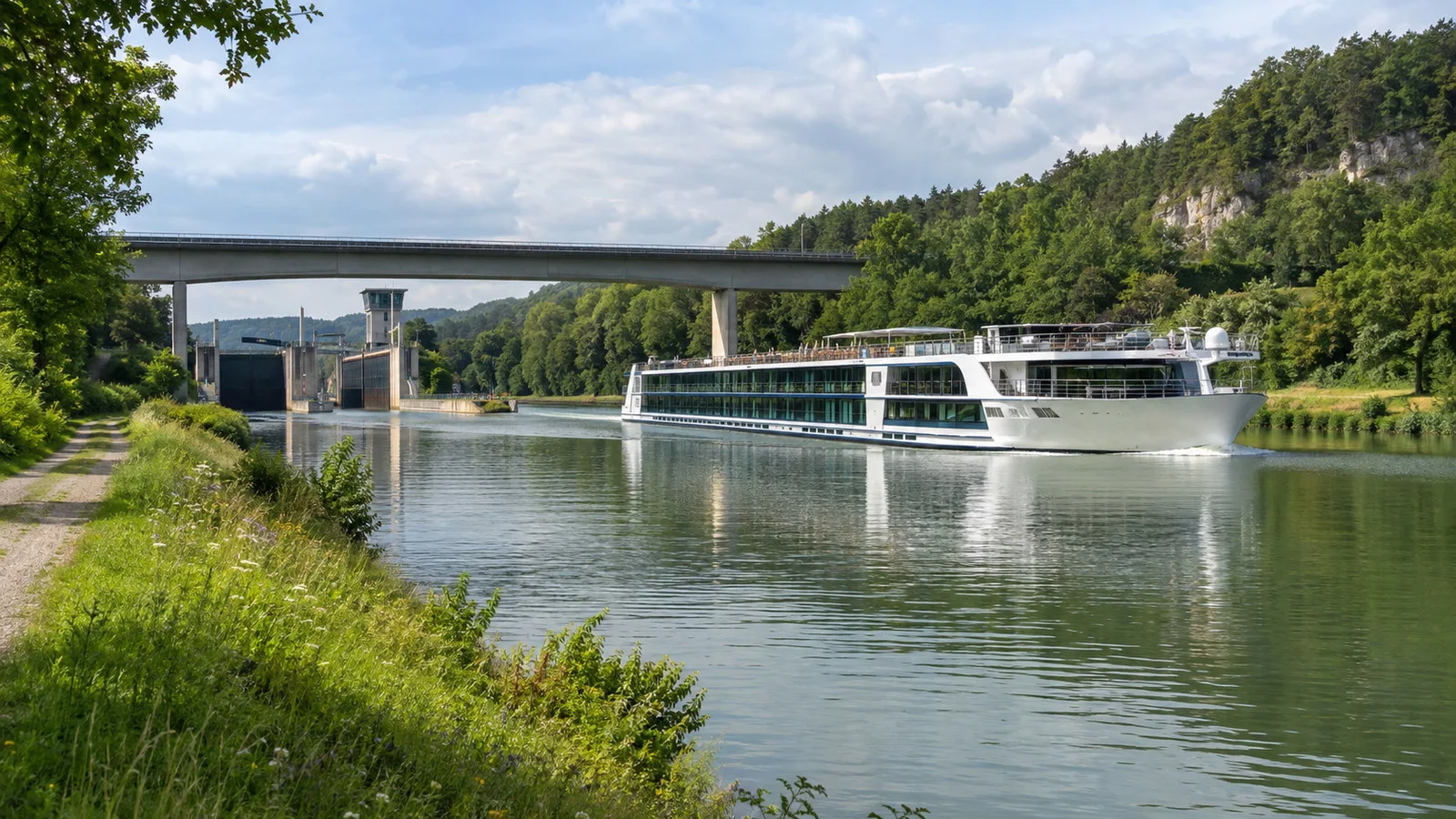
The summit reach crosses the divide between water that ultimately drains toward the Rhine and North Sea and water that flows through the Danube toward the Black Sea. Its elevation is about 406 meters above sea level.
The landscape at the divide is not a dramatic mountain pass. It is a quiet canal reach where the significance is geographic rather than cinematic.
Ask the program director when the ship expects to reach the summit level and whether a marker will be visible. Timing can shift enough that a promised sighting becomes an evening announcement instead.
What you see between Bamberg and Kelheim
The northern portion passes through the Regnitz valley and near places such as Forchheim, Erlangen, Fürth, and Nuremberg. Views mix green banks, transport infrastructure, apartment blocks, industrial land, and the occasional historic skyline.
South of Nuremberg, the canal climbs toward the summit through a quieter landscape. Farmland, woods, lock structures, cycling paths, and low bridges create a slower rhythm.
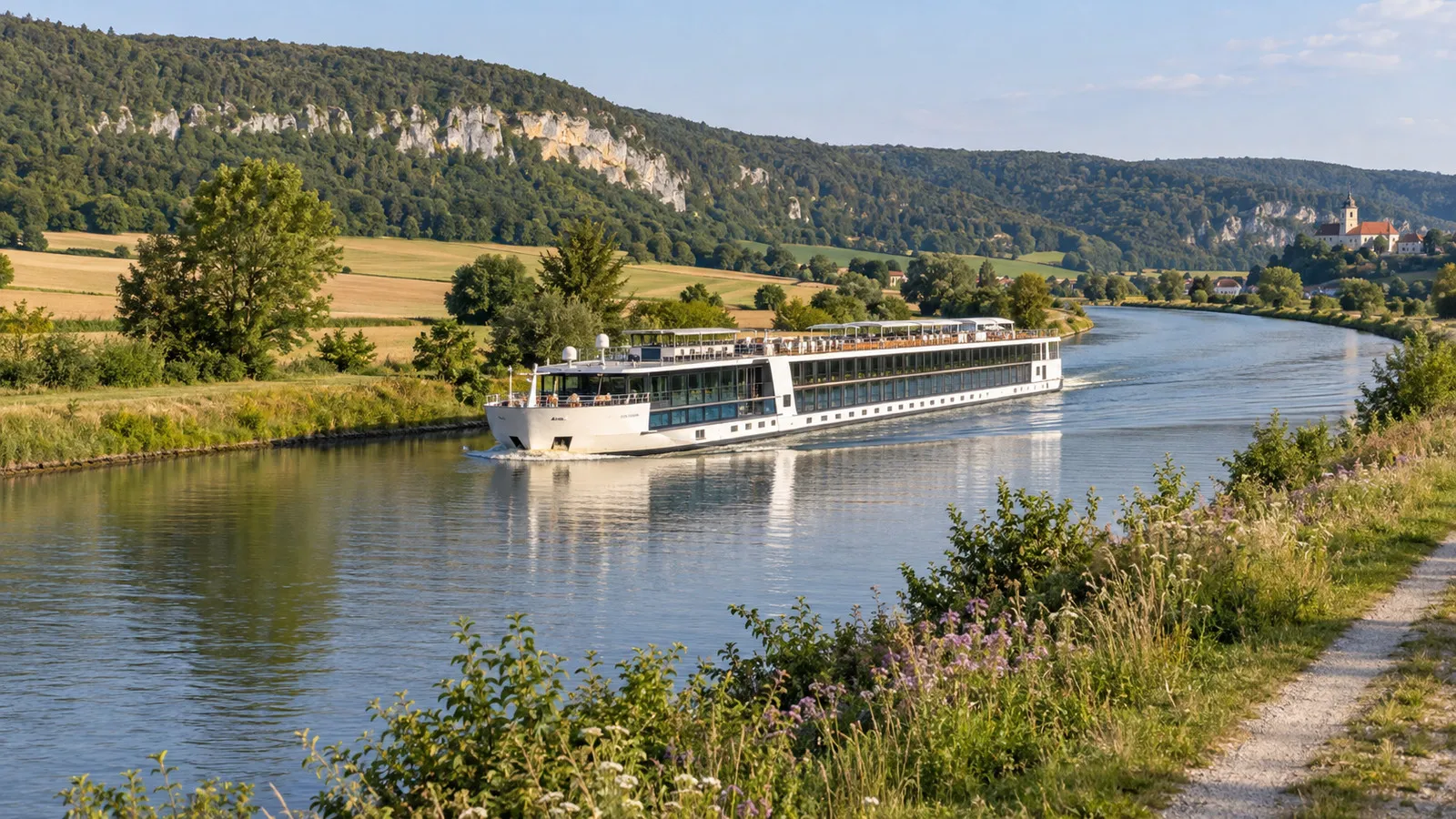
Toward the Danube end, the waterway uses parts of the Altmühl valley before reaching Kelheim. The scenery becomes more rural, but do not confuse the canal transit with a guaranteed cruise through the Danube Gorge.
The exact daylight section depends on direction, season, and operational progress. A northbound passenger may see the same place at a completely different hour from someone sailing southbound.
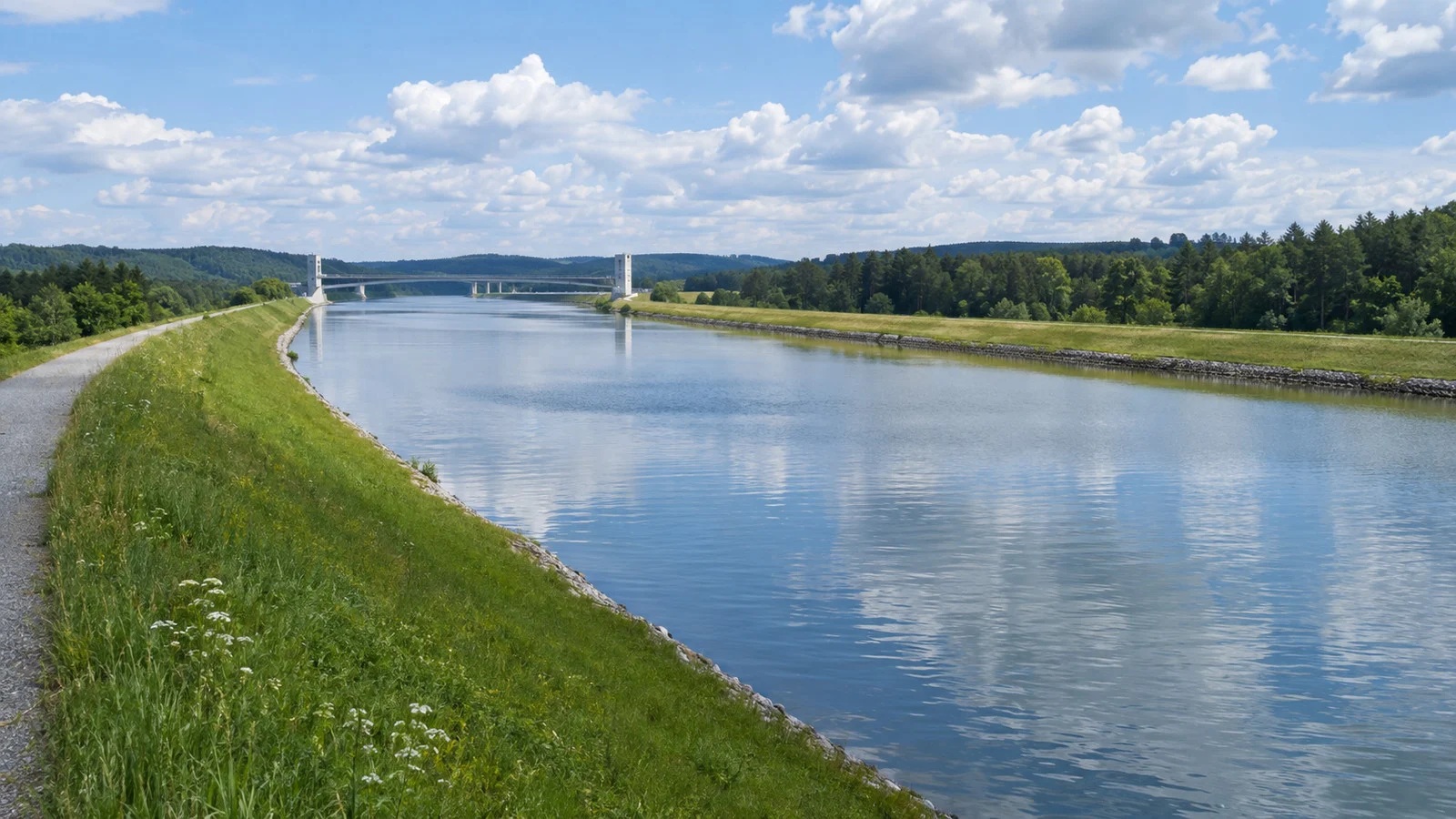
Nuremberg and the canal
Nuremberg’s cruise berths sit on the canal rather than beside the medieval center. This is a proper port call or excursion gateway, not merely a landmark viewed from the ship.
The city center requires transportation from most river berths, and dock assignments can vary. Use the dedicated Nuremberg river cruise port guide for current berth and transfer planning.
When the ship moves through the wider urban and industrial corridor, stay alert for cranes, warehouses, bridges, and distant towers. The contrast is part of the canal’s story as working infrastructure.
Does the ship stop on the canal?
Some itineraries make scheduled calls at canal cities or use a berth to load excursions. Others treat a long section as a pure transit while passengers remain onboard.
Your line may also send guests overland and move the ship through locks without them. The group then rejoins at a downstream berth, saving sightseeing time but missing part of the engineering experience.
Read the day-by-day program rather than assuming canal means no shore access. The schedule can combine navigation, a city visit, and coach movement in ways that are specific to your voyage.
Stay onboard or take an excursion?
Stay onboard if the locks and watershed are a main reason you chose the itinerary. The ship is your viewing platform, and the experience costs no extra energy or money.
Take an excursion when it reaches a place you specifically want to see and the ship is using that period for repetitive or overnight navigation. Weltenburg, Kelheim, Nuremberg, and nearby Bavarian towns may appear in different combinations.
Ask which lock passages or summit section you will miss while ashore. A short coach tour is less appealing if it removes the one daylight high-lift lock you hoped to watch.
Also confirm where and how you rejoin the vessel. The cruise line manages that transfer, but knowing the plan reduces anxiety when the ship is not where you left it.
Best places to watch a lock passage
The open sun deck usually gives the clearest view into the chamber and toward the gates. Availability depends on bridge clearance, weather, and crew instructions, so it may close during part of the canal.
A forward lounge or exterior bow area can be an excellent alternative. Lower-deck windows show the rising wall at close range but provide less context for the full operation.
Do not lean over railings or place hands between the ship and lock wall. Mooring lines, gates, bollards, and narrow clearances are working equipment rather than scenery props.
Keep walkways clear for crew and other passengers. A lock passage lasts long enough that everyone can get a view without defending one rail position.
Accessibility and mobility
The most important accessibility question is whether an outdoor viewing area can be reached without stairs. Some ships have elevator access to most decks but not the sun deck.
Ask the crew about a forward lounge, lower promenade, or large-window seating area that remains accessible. The best alternative depends on the ship’s layout and which bridge-clearance restrictions are active.
Lock watching can involve extended standing, wind, and wet surfaces. Use a stable seat when available and avoid moving between decks during crew operations.
If an overland excursion rejoins the ship later, assess the coach steps and walking route as well as the attraction itself. Staying onboard may be the more enjoyable option when the transfer chain is demanding.
Weather and deck comfort
Canal weather can change from exposed wind to sheltered warmth within a few kilometers. Dress in layers and keep a waterproof jacket close even when the morning begins dry.
Lock walls and outdoor decks can be slippery after rain or condensation. Wear shoes with grip and follow any crew request to move indoors.
Early or late in the season, fog can reduce the view and slow navigation. The result is more often a schedule change than a skipped canal, but the line may adjust later calls.
Sun protection still matters on cool days because passengers often remain outside longer than expected. A secure hat is better than one that can blow into the chamber.
Maintenance and disruption risk
Germany schedules lock maintenance closures on the Main, Main-Danube Canal, and Danube, commonly in spring. Cruise lines plan seasonal operations around published closures, but an itinerary can still change for unexpected repairs.
The official WSA Donau MDK and ELWIS navigation notices are the authoritative operational sources. Passengers should use the cruise line for practical consequences because notices are written for vessel operators.
A closure can require an altered embarkation point, ship swap, hotel stay, coach segment, or canceled call. Read the line’s communication carefully because the waterway problem may be far from the place where passengers notice the change.
Water levels on the Main or Danube approaches can also affect the wider itinerary even though the canal itself is regulated. A normal lock chamber does not guarantee that every connecting river section is navigable for the planned draft.
When will the best part happen?
Some voyages schedule much of the canal in daylight because the locks are part of the experience. Others use overnight hours to protect daytime port calls.
Check the published itinerary before booking if daylight transit is essential, then ask again onboard. Lock traffic and operating delays can shift the vessel several hours from the original estimate.
The daily program may list approximate lock times, and the cruise director may announce the summit crossing. Treat both as working estimates rather than alarms guaranteed to ring on schedule.
If you want photographs, prepare before the ship enters the chamber. Once the vessel is deep between the walls, the light and view can change quickly.
A brief history of the crossing
The idea of linking the Main and Danube watersheds predates the modern canal by centuries. The nineteenth-century Ludwig Canal created an earlier navigable connection but was too small for modern commercial traffic.
Construction of the present waterway stretched across decades, and the full canal opened in 1992. Its dimensions support commercial freight as well as the passenger ships travelers see today.
The project remains debated for its cost, environmental impact, and traffic forecasts. For passengers, that history adds useful context to an infrastructure achievement that can otherwise look deceptively simple.
How it fits a Rhine and Danube cruise
The canal is the hinge between Main River ports and the upper Danube. A typical through itinerary may link Bamberg, Nuremberg, and Regensburg before continuing farther east or west.
This connection lets cruise companies offer longer journeys across central Europe without moving passengers between unrelated waterways. It also makes one lock failure capable of affecting several later days.
Use the Main River cruise ports guide for the western approach and the individual port guides for shore logistics. The canal day itself is best understood as navigation rather than a conventional destination.
Simple ways to enjoy the transit
Keep binoculars, a camera, water, and a light layer near your preferred viewing area. Charge devices beforehand because long video clips and repeated lock photos can drain a battery quickly.
Listen to the cruise director’s commentary, but step away when you want quiet. The slow pace is part of the appeal, and not every kilometer needs narration.
Choose one high-lift lock to watch from start to finish. For the rest, alternate between the deck, lounge, meal, and cabin so the day does not become a concrete-wall marathon.
At night, respect lighting requests near the wheelhouse and exterior areas. Bright screens or flashes can distract the bridge team and spoil other passengers’ view.
Quick answers
How many locks are on the Main-Danube Canal?
There are 16 locks between Bamberg and Kelheim. Several have lifts close to 25 meters.
How long is the canal?
It is about 171 kilometers, or 106 miles, long. Transit time varies with traffic, lock cycles, stops, and the cruise schedule.
Does the ship stop along the way?
It may. Some itineraries include canal-city calls or excursion transfers, while others keep passengers onboard for a through-transit.
Can I watch the locks from outside?
Usually, when the crew keeps an exterior area open. Bridge clearance, weather, and operating needs can close the sun deck temporarily.
Is the summit crossing visually dramatic?
No, the landscape is understated. The significance comes from crossing the continental watershed by boat at about 406 meters above sea level.
Can maintenance change my cruise?
Yes. Planned or unexpected lock work can alter the route, timing, ship, or port calls, so follow cruise-line updates.
The last word
The Main-Danube Canal is not Europe’s prettiest cruising day, but it may be the most revealing. Watch one chamber fill or drain, notice how tightly the ship fits, and the entire river-cruise route starts to make sense.
How this guide was researched: Unless a first-hand visit is explicitly identified above, this guide is based on independent research using official waterway, navigation, tourism, and cruise information where available. Logistics and time-sensitive details were reviewed in September 2026; see our Editorial Policy.
More on this topic: browse every guide on expedition and alternative cruises.