Nuremberg River Cruise Port: Europakai to the Altstadt
Nuremberg is a wonderful river cruise stop with one important catch: the ship does not dock beside the medieval Old Town. Most vessels use Europakai on the Main-Danube Canal, an industrial waterfront several miles south of the sights.
That distance changes how you should plan the day. A cruise shuttle, organized tour, taxi, or carefully mapped public transportation connection is usually the first step, and the final return trip deserves as much attention as the castle and churches.
The quick take
Treat Nuremberg as a transfer port, not a walk-off port. Once you reach the Old Town, the historic core is compact enough to explore on foot, but getting there can take roughly twenty to thirty minutes in normal traffic.
For a first visit, choose the Old Town and Imperial Castle unless twentieth-century history is your main interest. The Documentation Center and former Nazi Party Rally Grounds sit in a different part of the city and need a separate transportation plan.
Nuremberg river cruise port quick facts
- Typical berth: Europakai on the Main-Danube Canal in the commercial harbor
- Distance to Old Town: Several miles, so walking is not practical for most visitors
- Transfer time: Commonly about twenty to thirty minutes, with longer times possible in traffic
- Best transportation: Cruise shuttle or included tour when offered, otherwise taxi or planned public transportation
- Best first visit: Old Town, Hauptmarkt, and the Imperial Castle
- Major alternative: Documentation Center and the former Nazi Party Rally Grounds
- Currency: Euro
- Language: German, with English common at major visitor sites
- Walking conditions: Cobblestones, slopes, and a steady climb to the castle
- Essential rule: Leave a generous buffer for the trip back to Europakai
Where river ships dock
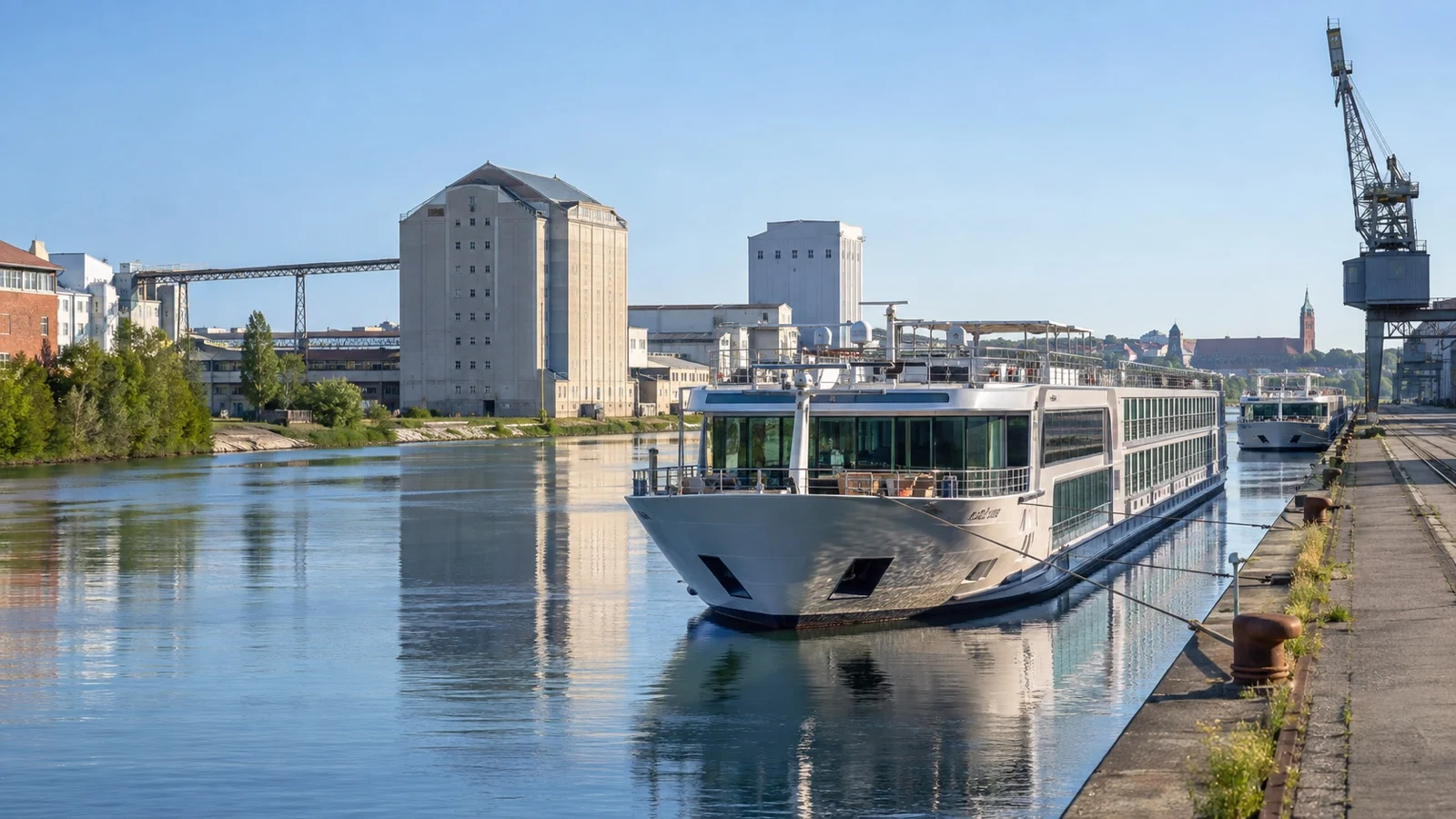
Europakai is a long quay within Nuremberg’s freight and logistics district. The surroundings are functional rather than scenic, with warehouses, working roads, and canal infrastructure instead of cafés or historic streets.
Your exact position can vary along the quay, and several ships may arrive on the same day. Rafting alongside another vessel is possible, which may add interior crossings and extra steps before you reach land.
The harbor setting is not a reason to dislike the call, but it is a reason to listen carefully at the daily briefing. Record the berth name, ship phone number, shuttle meeting place, and final boarding time before leaving.
Why the port is outside the center
Nuremberg is linked to the Danube by the Main-Danube Canal rather than sitting directly on the river. The canal allows vessels to cross the European watershed and connect the Rhine and Main system with the Danube.
That engineering achievement explains the locks, low bridges, and commercial landscape around your arrival. It also explains why a map of the Old Town does not tell you how to get back to the ship.
Getting from Europakai to the Old Town
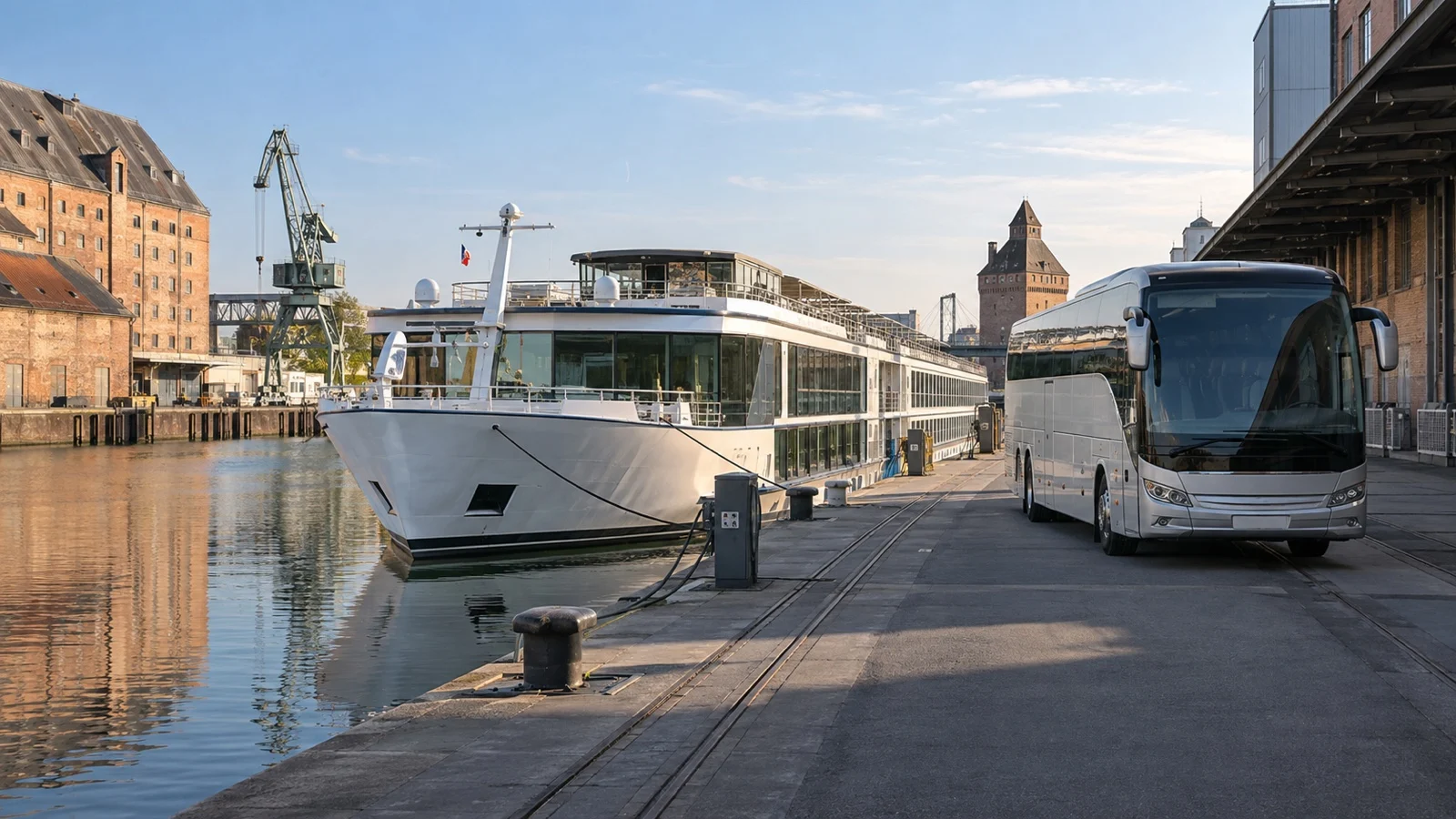
The easiest option is the transportation arranged by your cruise line. Some itineraries include a guided transfer, while others operate a shuttle with fixed pickup times near the historic center.
Ask whether the shuttle is continuous or follows a limited schedule. A bus that returns only twice in the afternoon requires a very different plan from one running every thirty minutes.
A taxi or app-based ride offers flexibility and is often the best independent choice for two or more travelers. Travel time varies with construction and city traffic, so request the ride earlier than your ideal departure time.
Public transportation can work, but the port is not directly served like a central railway station. The best route depends on your exact berth and current service, and it may involve a walk through the harbor plus a bus, tram, or U-Bahn connection.
Use the official VGN journey planner on the day of your visit and enter the exact starting point provided by the ship. Do not rely on a generic online direction to “Nuremberg Port,” which may lead to a different part of the extensive harbor.
Can you walk?
Technically, a determined traveler could cover the distance, but it is a poor use of a limited call. The industrial roads are not an appealing sightseeing route, and the time saved for the Old Town is far more valuable.
Walking is especially unwise on hot days, in rain, or when your ship is scheduled to move. Save your energy for the slopes and cobblestones around the castle.
A first-time Old Town route
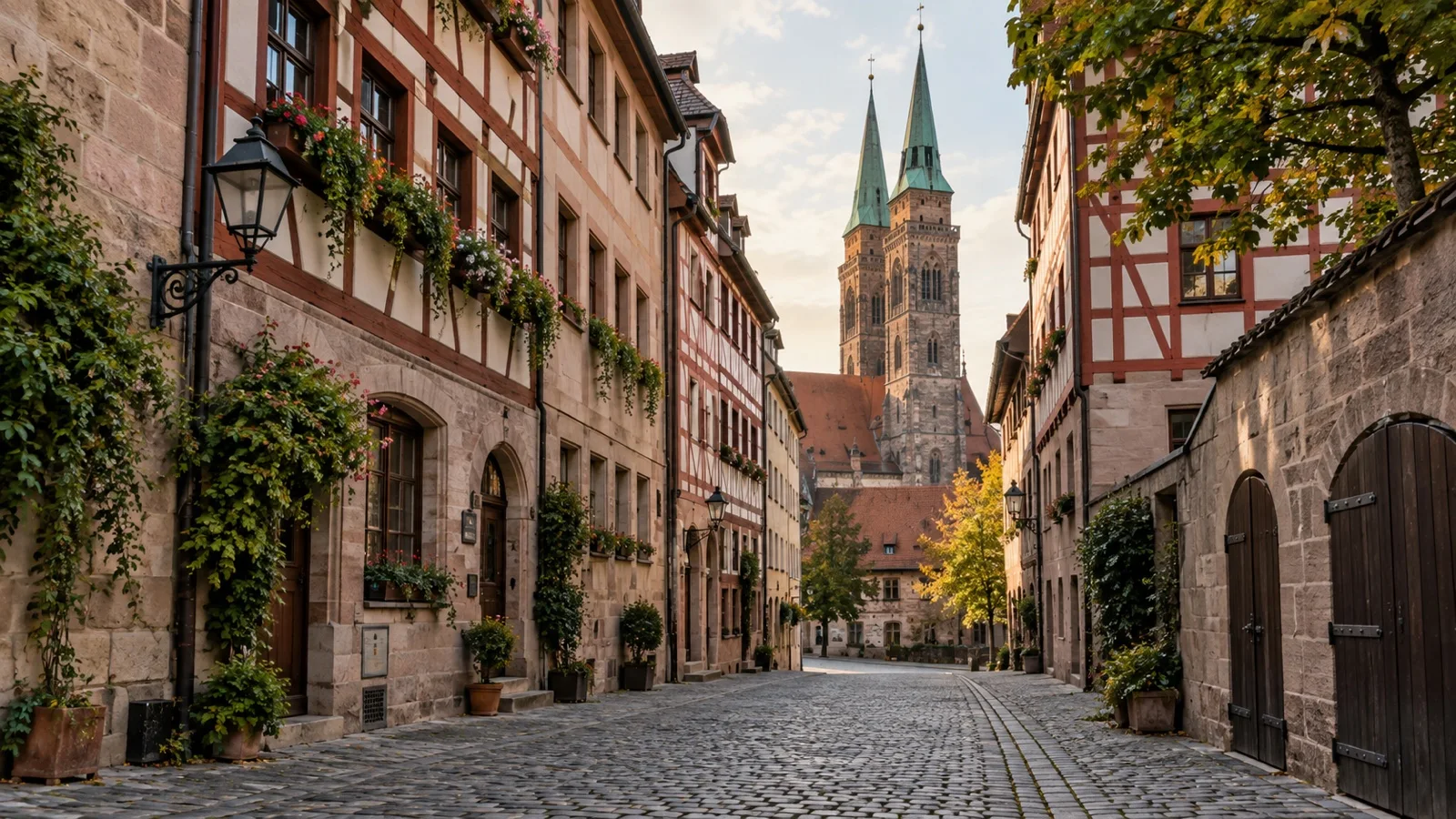
Begin near the southern side of the Old Town around the main railway station or Königstor if that is where your transfer leaves you. Königstrasse leads through the historic center toward Saint Lawrence Church and the Pegnitz River.
Saint Lawrence Church is one of the city’s defining Gothic landmarks. Its twin towers and richly detailed west front make it easy to recognize, while the interior holds important medieval art and soaring stonework.
Continue toward the Pegnitz and the Heilig-Geist-Spital, the historic hospital that stretches over the water. The riverside viewpoints are among the prettiest in central Nuremberg and provide a softer contrast to the monumental castle.
From there, walk to Hauptmarkt, the main market square. The Church of Our Lady faces the square, and the ornate Beautiful Fountain stands nearby with its brightly colored figures.
The daily market and seasonal events can change how the square feels. During Advent, this area becomes the heart of the famous Christkindlesmarkt, drawing large crowds and requiring more time for every crossing.
Climbing toward the castle
From Hauptmarkt, continue past Saint Sebald Church and uphill through the northern Old Town. The grade becomes more noticeable near Tiergärtnertor and the castle approaches.
Albrecht Dürer’s House stands below the castle in a surviving timber-framed building associated with the Renaissance artist. It is a strong indoor choice for art lovers, but adding the museum requires trimming another stop.
The streets around Tiergärtnertorplatz are atmospheric and inviting for a break. Keep the return route in mind because it is easy to linger here longer than expected.
The Imperial Castle
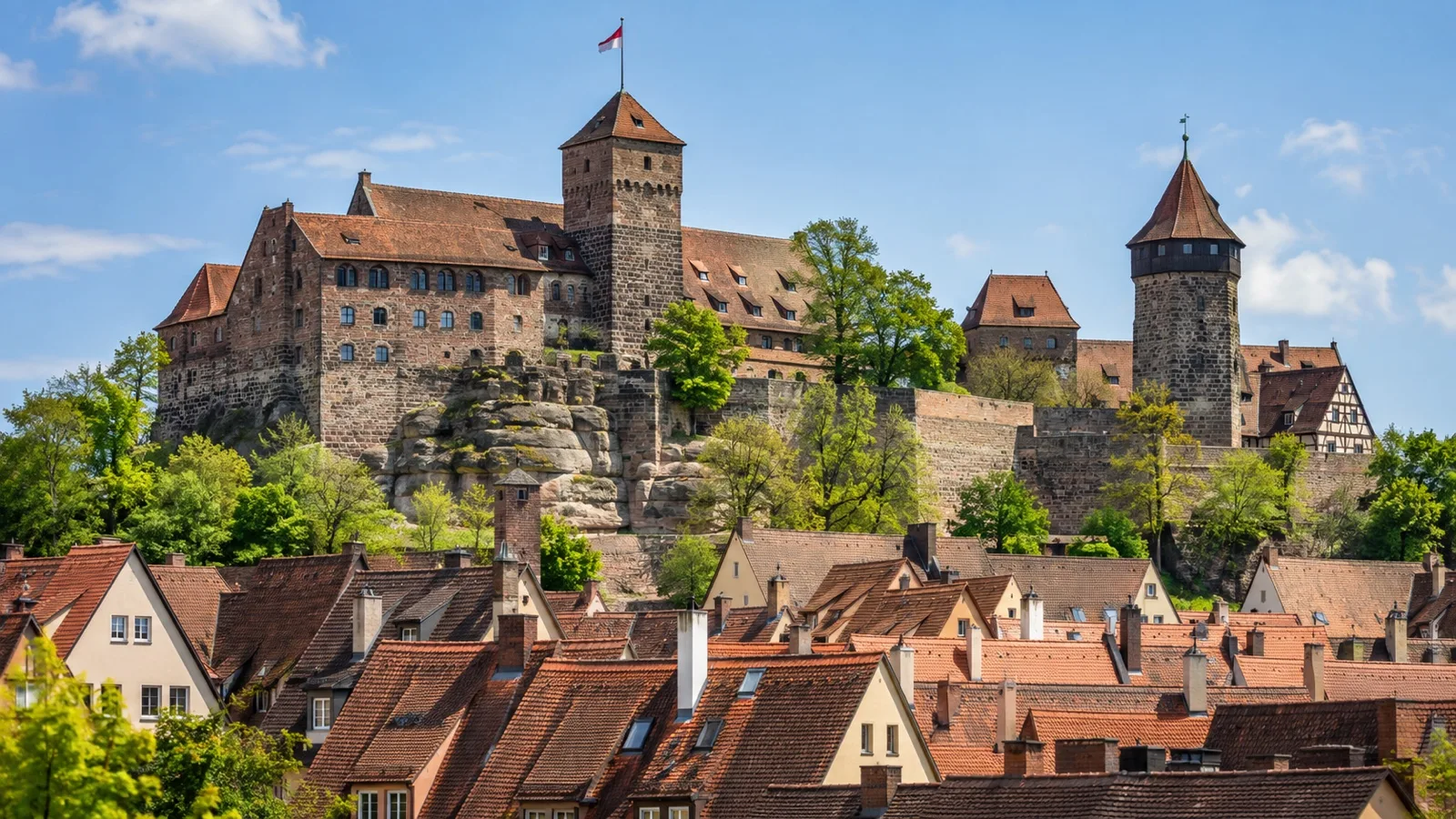
The Imperial Castle rises above the Old Town and has defined Nuremberg’s skyline for centuries. Its courtyards, fortified walls, museum spaces, well, and tower tell the story of a city closely tied to the Holy Roman Empire.
The castle complex is managed by the Bavarian Palace Administration, and opening schedules vary by season. Check the official site close to your visit because individual areas can close for weather, maintenance, or special events.
Even without a long museum visit, the elevated setting is worthwhile for the city view. Travelers with limited time can explore the exterior approaches and courtyards, then descend through the Old Town.
The climb is steady and includes uneven paving. Anyone with reduced mobility should consider a vehicle drop closer to the castle and confirm accessible routes before arrival.
How much castle time to allow
Allow at least an hour for a meaningful visit to the principal interior areas. Add more time if you enjoy armor, imperial history, architectural details, or panoramic photography.
If you have only three hours in the city, a full interior tour may crowd out the churches and market square. In that case, enjoy the setting and viewpoints, then keep moving downhill.
Nuremberg and National Socialism
Nuremberg’s role in the National Socialist period is central to understanding the modern city. The Nazi regime staged enormous party rallies here, and the postwar International Military Tribunal tried leading officials in the city’s Palace of Justice.
The former rally grounds are southeast of the Old Town around the unfinished Congress Hall and Zeppelinfeld. The site is extensive, and distances that look short on a diagram can involve substantial walking.
The Documentation Center’s new permanent exhibition, “Nuremberg and the Nazi Party Rallies,” opened on May 22, 2026. Check current hours, access, and construction conditions through the Museums of the City of Nuremberg before you go.
This is not a light sightseeing stop, and it deserves enough time to engage with the material thoughtfully. If it is your priority, choose it over the castle rather than squeezing it between unrelated attractions.
The Nuremberg Trials
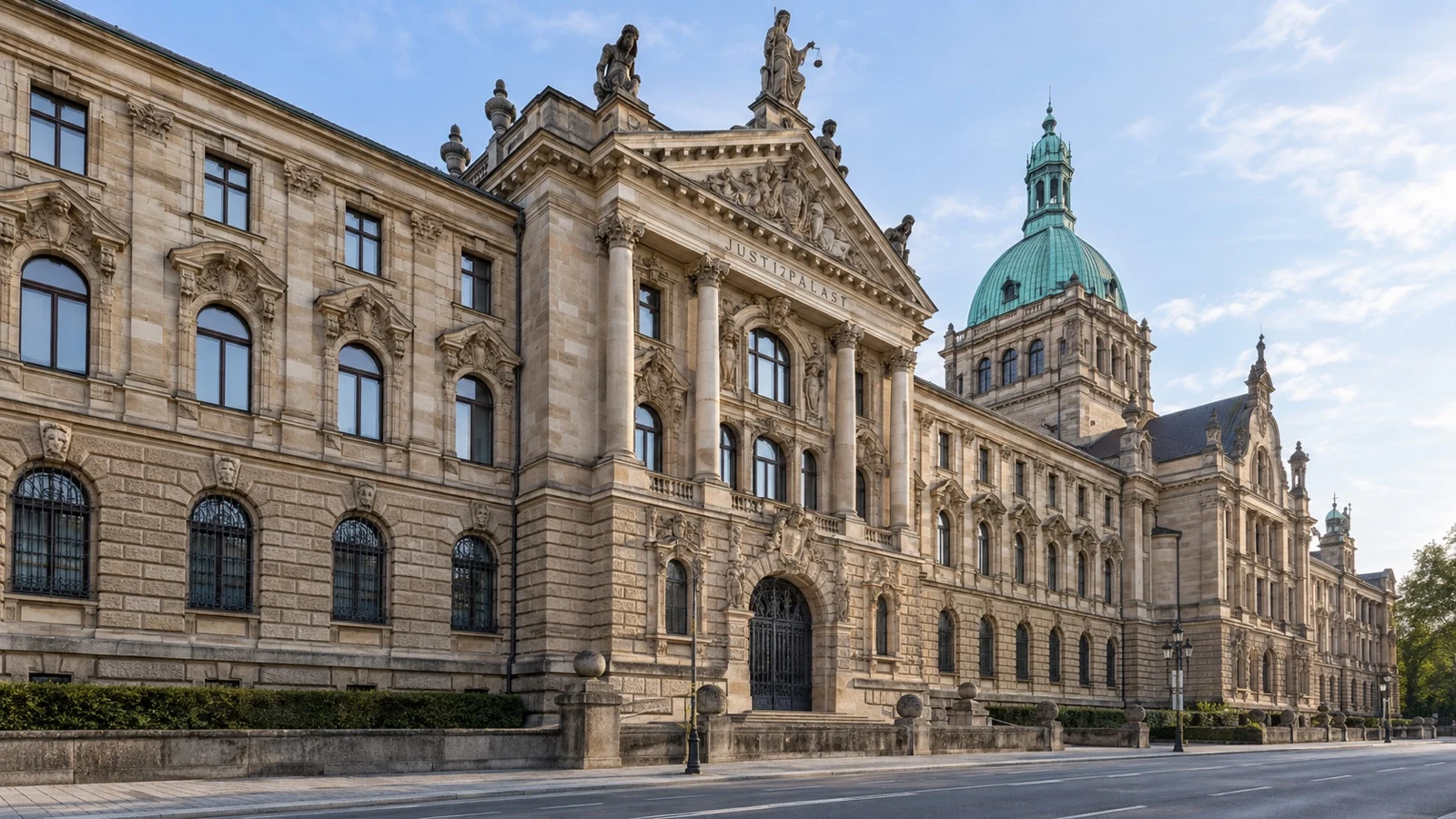
Courtroom 600 at the Palace of Justice is associated with the major Nuremberg Trials and is interpreted through the Memorium Nuremberg Trials. The courtroom can still be used for judicial business, so physical access is not guaranteed every day.
The Palace of Justice lies west of the Old Town, separate from both the rally grounds and Europakai. Visiting all three zones in one short port call creates unnecessary transportation risk.
How to choose your day
Choose the Old Town route if this is your first visit and you want the classic Nuremberg experience. It combines medieval streets, churches, river views, market squares, and the castle within one walkable district.
Choose the Documentation Center and rally grounds if modern history is the reason you booked the itinerary. An organized excursion is useful because the site is spread out and historical interpretation matters.
Choose the Memorium if the trials are your specific interest. Confirm opening status and courtroom access, then plan a direct taxi or public transportation route rather than treating it as a quick detour.
Trying to cover every theme usually means experiencing all of them through a bus window. A focused half-day produces a much stronger sense of the city.
A realistic four-hour independent plan
Use the first thirty minutes for transportation from Europakai to the southern Old Town. Ask to be dropped near Königstor, Saint Lawrence Church, or another landmark that is easy to identify.
Spend the next hour walking Königstrasse, Saint Lawrence Church, the river crossings, and Hauptmarkt. Pause briefly for the Beautiful Fountain and the exterior of the Church of Our Lady.
Use the third hour to climb through the northern Old Town toward Albrecht Dürer’s House and the castle. Decide at the castle entrance whether your remaining time supports an interior ticket.
Begin descending with at least ninety minutes left before your required boarding time. This leaves time for a snack, the ride back, traffic, and any confusion locating the correct ship.
The buffer may feel generous while you are standing in the Old Town. It will feel sensible if a bus is delayed, a road closes, or several vessels are loading at once.
Food worth trying
Nuremberg’s signature food is the small Nürnberger Rostbratwurst, traditionally grilled and served in multiples. A quick version comes tucked into a roll, while restaurants may serve sausages with sauerkraut, potato salad, or horseradish.
Lebkuchen is the city’s famous spiced gingerbread and appears year-round in specialty shops, although it is most strongly associated with the Christmas season. Packages make an easy souvenir that does not consume sightseeing time.
Franconian beer is another local highlight. If you stop for a drink, choose a place close to your planned pickup point and keep the port transfer in view.
Restaurant service can take longer than a counter snack. On a short call, decide whether the meal or an additional sight matters more before sitting down.
Accessibility and practical comfort
The Old Town includes cobblestones, curbs, slopes, and occasional construction detours. The castle district is the most demanding section, while the main market area and parts of Königstrasse are comparatively manageable.
Travelers using wheelchairs or scooters should ask the cruise line about the gangway and shuttle before arrival. Rafting may require crossing another vessel, and not every bus is equipped for every mobility device.
Public restrooms may charge a small fee, so carrying a few euro coins is helpful. Cards are common in shops and museums, but small cash purchases remain useful at markets and kiosks.
Wear supportive shoes and bring a light layer. The harbor can feel exposed, church interiors remain cool, and the castle hill can be windy even on a pleasant day.
Seasonal realities
Summer brings long daylight and busy streets, especially when several tour groups arrive together. Start with your highest-priority sight and do not assume ticket lines will remain short.
Advent transforms the center with the Christkindlesmarkt at Hauptmarkt and related markets nearby. The atmosphere is exceptional, but crowds and security arrangements can slow movement dramatically.
Winter canal itineraries may also face darkness, cold, and changing schedules. Keep your plan compact and verify the last shuttle rather than assuming the summer pattern still applies.
Lock traffic and waterway operations can alter arrival or departure times in any season. The cruise director’s same-day instructions always outrank a plan created before the voyage.
Mistakes to avoid
The biggest mistake is assuming the berth sits near the castle because the itinerary says “Nuremberg.” Europakai and the Old Town are separate locations connected by a real transfer.
Another mistake is leaving the return until the last possible moment. A taxi that cancels or a missed transit connection can quickly consume a narrow margin.
Do not mix the Old Town, rally grounds, and Palace of Justice without a long call and a carefully timed vehicle. Each area can justify a visit, but they do not form one compact walking loop.
Finally, do not trust old admission hours. Castle schedules, courtroom use, museum redevelopment, church services, and special events can all affect access.
Quick answers
Where do river cruises dock in Nuremberg?
Most ships use Europakai on the Main-Danube Canal in the commercial harbor. The exact berth position can vary along the quay.
Is the Old Town walkable from the ship?
It is not a practical walk for most cruise passengers. Plan on a shuttle, tour bus, taxi, or a researched public transportation route.
How long is the transfer?
About twenty to thirty minutes is a sensible working estimate in ordinary conditions. Traffic, construction, and your exact berth can make it longer.
Can I see the castle and rally grounds?
You can on a long call with organized transportation, but most travelers will have a better visit by choosing one theme. The two areas sit apart and require separate travel time.
Is Nuremberg worth visiting independently?
Yes, provided you solve the transfer first and keep a firm return buffer. Once in the Old Town, the major historic sights connect naturally on foot.
The last word
Nuremberg is not the easiest walk-off stop on a river itinerary, but it can be one of the most rewarding. The key is to treat Europakai as a transportation hub and reserve your walking time for the historic center.
Choose a clear theme, confirm the ride back, and leave space for the city’s details rather than chasing every landmark. With that discipline, the industrial arrival quickly gives way to a memorable day of architecture, food, and history.
Planning details were checked against official information from the Nuremberg Convention and Tourist Office, the Bavarian Palace Administration, the Museums of the City of Nuremberg, and the VGN regional transportation network.
No firsthand Nuremberg port visit is claimed. Information was reviewed on September 12, 2026; confirm current berth assignments, transfer schedules, opening hours, fares, and construction conditions before your visit, and see our editorial policy for how we research port guides.