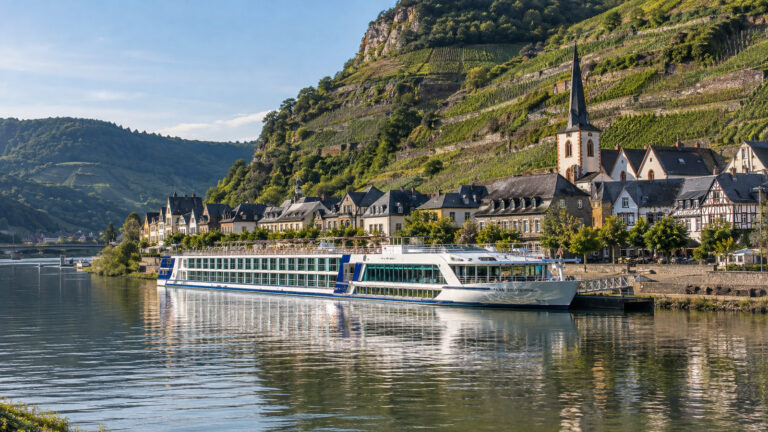
Moselle River Cruise Ports: Cochem, Bernkastel-Kues, Traben-Trarbach and Trier
The Moselle rewards travelers who are willing to let a river take its time. Its tight bends, slate vineyards, compact wine towns, and long lock passages create a quieter rhythm than the Rhine, with far less pressure to chase one blockbuster sight after another.
Cochem and Bernkastel-Kues deliver the storybook scenery, Traben-Trarbach brings Belle Époque architecture and underground wine cellars, and Trier supplies the Roman scale. The trick is knowing which calls are easy walk-offs and which itinerary labels may conceal a bus transfer or a berth outside the center.
Quick take
For a first Moselle cruise, prioritize Cochem, Bernkastel-Kues, Traben-Trarbach, and Trier in that order only if the schedule gives each enough time. Cochem has the unforgettable hilltop castle, Bernkastel has the prettiest center, Traben-Trarbach is the most surprising, and Trier has the deepest history.
Do not automatically buy an excursion in every wine town. Most central Moselle calls are compact enough to explore independently, while castle visits, cellar tours, and any transfer to Trier deserve advance planning.
Quick Facts
- Main cruise region: The German Moselle between Koblenz and Trier, with some itineraries extending toward Luxembourg or France
- Signature ports: Cochem, Bernkastel-Kues, Traben-Trarbach, and Trier
- Typical access: Alongside at town quays, sometimes rafted with other river ships
- Most walkable calls: Cochem, Bernkastel-Kues, and Traben-Trarbach, subject to the assigned landing
- Biggest historic destination: Trier and its UNESCO-listed Roman and religious monuments
- River infrastructure: 28 barrages on the canalized Moselle from Koblenz toward Neuves-Maisons, including 10 in Germany
- Currency: Euro in Germany, Luxembourg, and France
- Planning priority: Confirm the exact berth, rafting arrangement, castle or cellar reservation, and all-aboard time each day
Why the Moselle feels different
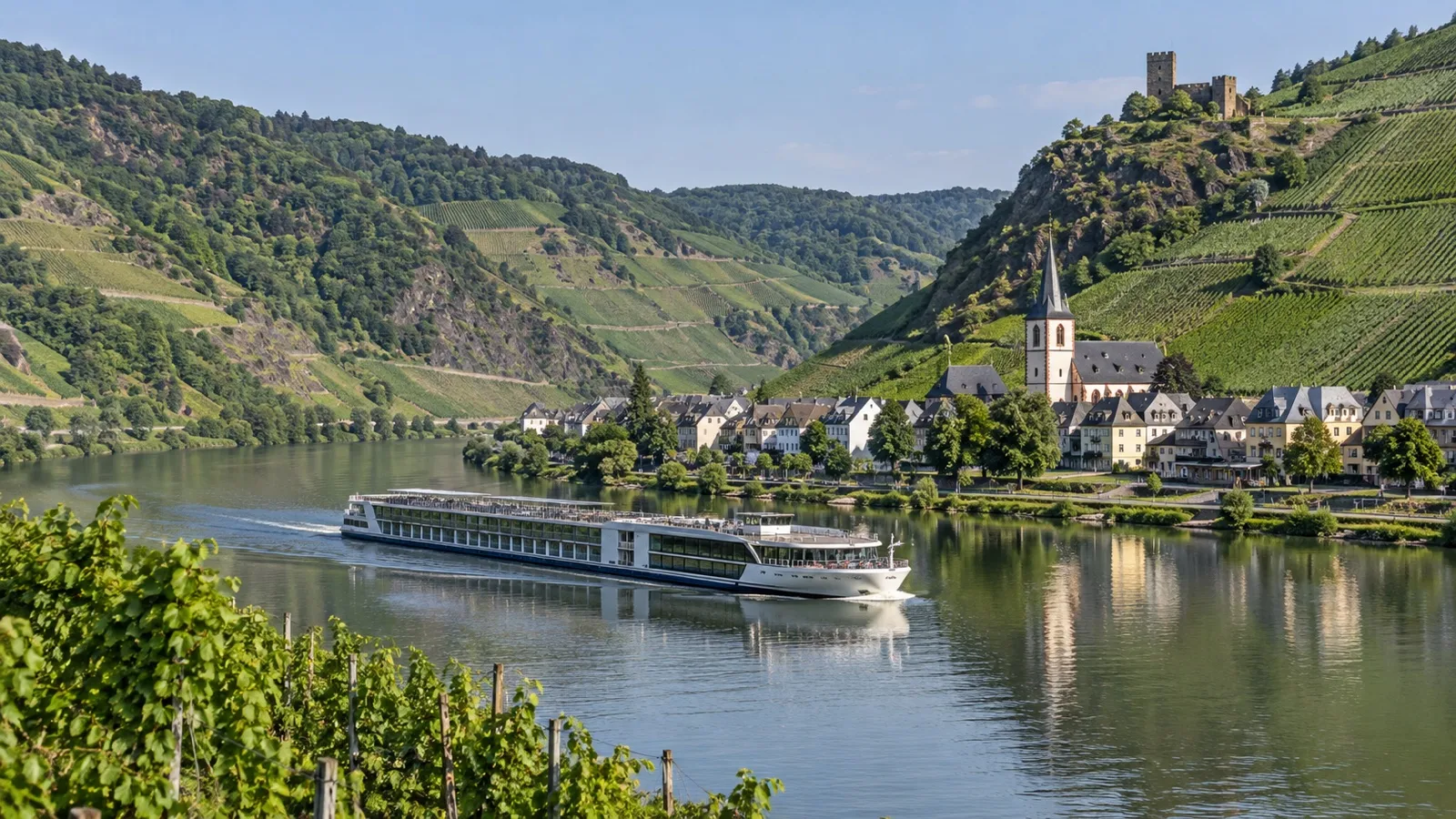
The Moselle twists through a narrower valley than much of the Middle Rhine, and vineyards often rise sharply from the river. Towns appear close together on a map, yet the bends and locks make progress intentionally slow.
That pace is part of the experience, not wasted time. Scenic sailing, lock passages, and long views of working vineyards belong to the itinerary just as much as the hours ashore.
The canalized river
The navigable Moselle is controlled by a chain of barrages and locks across France, Luxembourg, and Germany. The system contains 28 barrages from Koblenz toward Neuves-Maisons, with 10 on the German stretch.
A lock delay can shift arrival times downstream even in good weather. Leave independent reservations flexible when possible and listen for schedule changes from the cruise director.
How Moselle landings work
River ships normally berth alongside at local quays, but the precise landing can change with traffic, water level, construction, and local allocation. The name of the town is not enough to calculate the walk until the crew announces the actual berth.
Popular quays can fill, leading ships to raft side by side. Guests on an outer vessel may need to cross another ship’s lobby, deck, or gangway before reaching shore.
What rafting means for your day
Rafting can reduce privacy when cabin windows face another vessel at close range. It can also add thresholds, slopes, or steps to the route ashore, which matters far more for anyone using a mobility aid.
Ask reception which side will be used, whether another ship must be crossed, and whether your vessel expects to move. Photograph the landing sign and carry the ship’s contact details.
Cochem
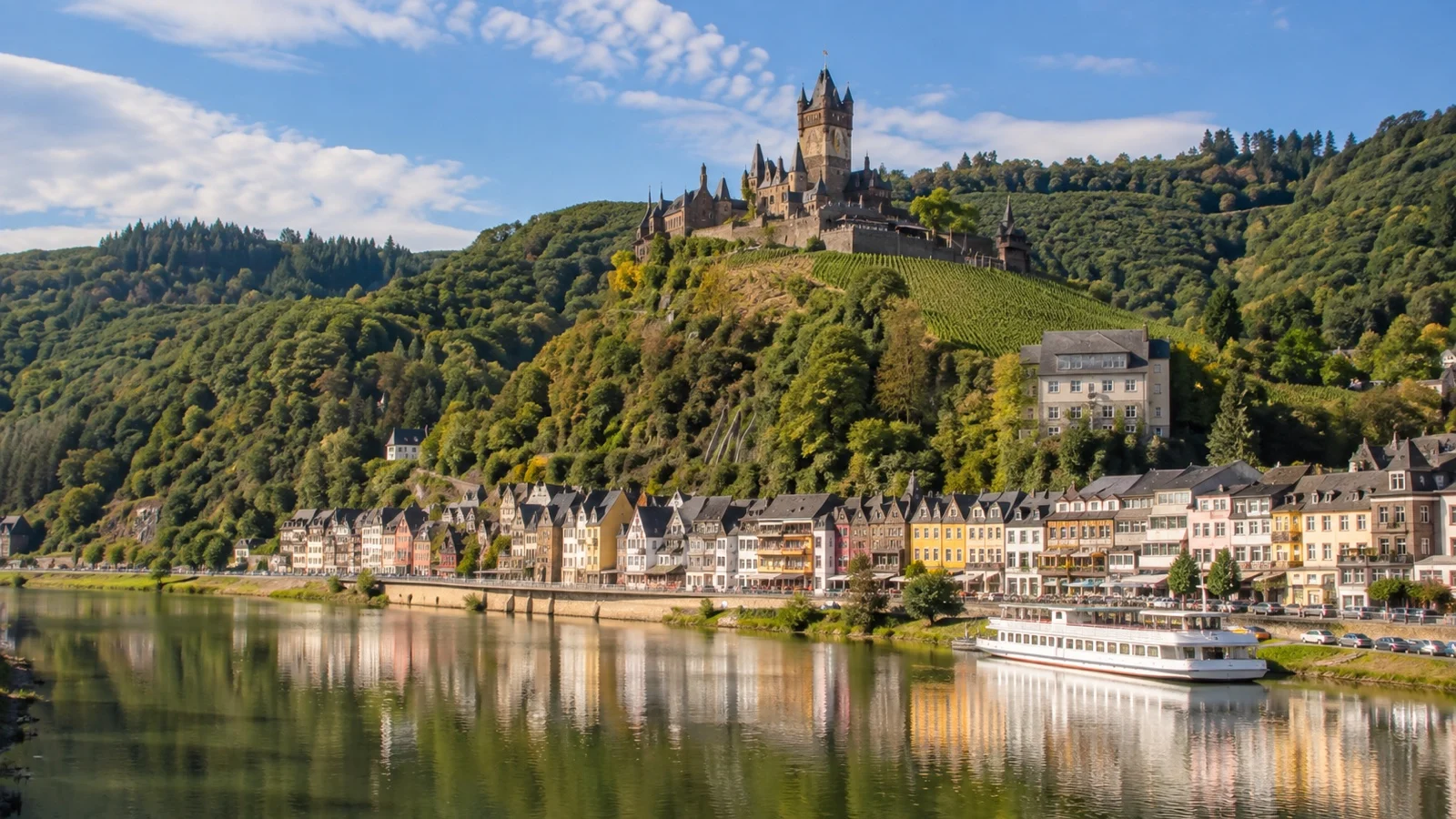
Cochem is the Moselle image most travelers already know, with a colorful riverfront, compact old town, and Reichsburg Castle on a wooded rock above the roofs. The center is easy to explore on foot from many commonly used landings, though the castle climb is a separate effort.
Start with the castle if it is your priority, then wander back through the lanes and market area. The town remains enjoyable later, but a timed tour or uphill shuttle is harder to improvise when several ships arrive together.
Reichsburg Castle
The castle’s official site currently lists daily opening from 9:30 to 17:00, with 17:00 as the start of the final tour. It also states that the castle and courtyards can only be visited as part of a guided tour.
There is no visitor parking at the castle, so the official advice is to use the footpath or shuttle bus. Cruise guests should check the live tour language, ticket, and shuttle details before setting out because seasonal arrangements can change.
The castle is more complicated than it looks
Reichsburg appears medieval from the river, but it was heavily damaged during a war of succession and restored in nineteenth-century neo-Gothic style by Louis Ravené. Knowing that story turns the visit from a generic castle stop into a lesson in German Romanticism and historical reconstruction.
The walk uphill is real, especially in heat or rain. If knees, balance, or stamina are concerns, use transport uphill when available and decide separately whether the descent is comfortable.
A simple Cochem plan
Go straight to the castle tour, return slowly through the old town, and leave time for the waterfront. Add a wine tasting only if it has a clear finish time and does not squeeze the walk back to the ship.
Bernkastel-Kues
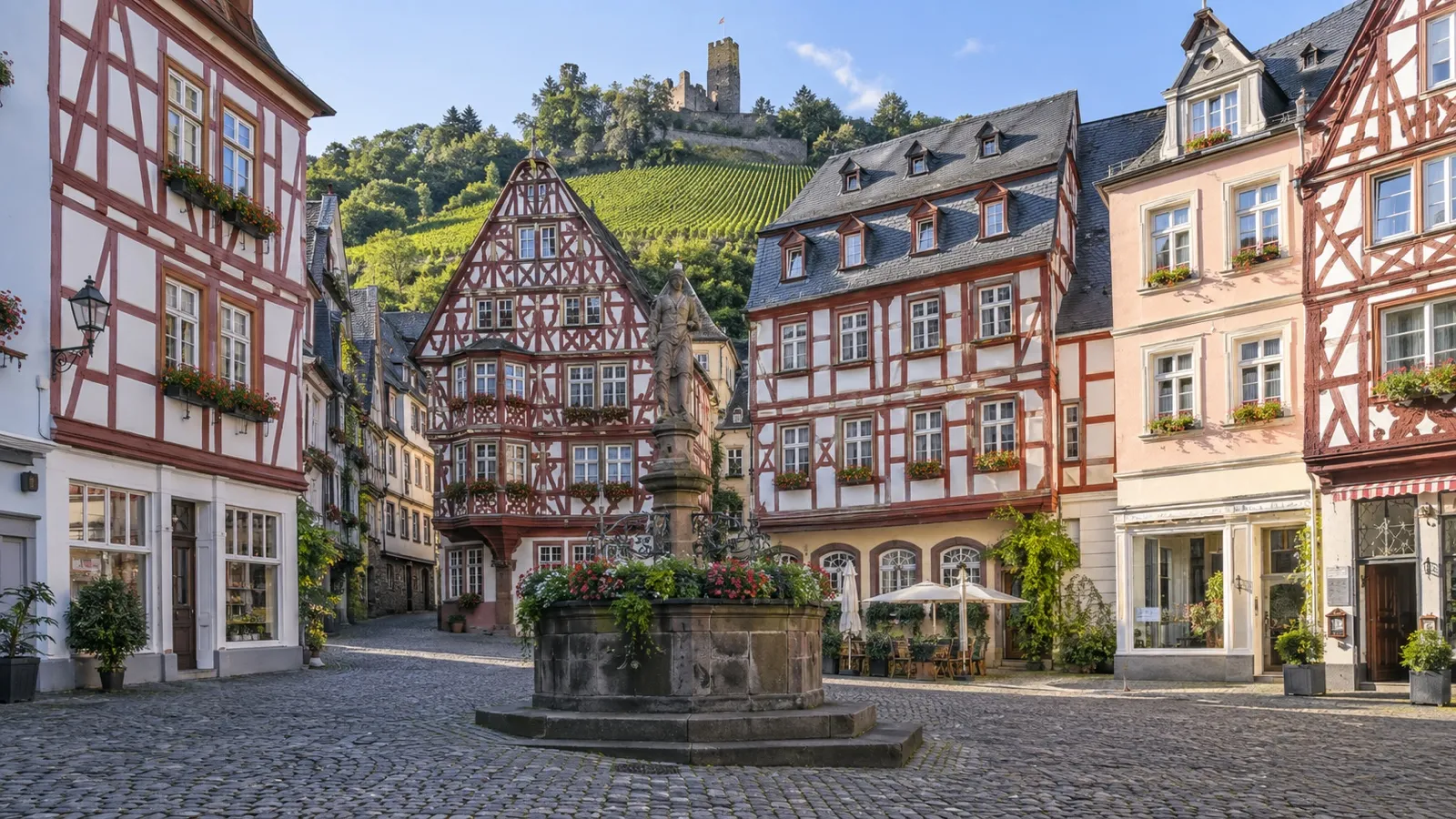
Bernkastel-Kues is split by the river, with the postcard old town on the Bernkastel side and important Cusanus heritage on the Kues side. The bridge makes the two halves easy to combine when your landing and mobility allow.
The medieval market square, half-timbered façades, and narrow lanes reward an unhurried circuit rather than a checklist. Arrive early or return later if you want photographs without the densest tour groups.
The Bernkastel side
Most first-time visitors head for the market square and the pointed Spitzhäuschen nearby. Look beyond the most photographed corner because side streets reveal quieter wine taverns, small courtyards, and better chances to hear daily life.
Landshut Castle stands above town and offers a broader view, but it turns a gentle walk into an uphill outing. Check current access and transport rather than assuming the ruin fits comfortably into a short call.
The Kues side
Kues is associated with Nicholas of Cusa, the fifteenth-century scholar, churchman, and philosopher. The Saint Nicholas Hospital and its collections can require more planning than the open streets across the bridge.
Confirm current visitor arrangements directly if the manuscripts, library, or historical foundation are a priority. This is the kind of small institution where opening patterns matter more than distance from the ship.
A simple Bernkastel-Kues plan
Walk the Bernkastel old town first, cross to Kues if a specific site is open, then return to the quay with time for one local Riesling. The bridge is useful for orientation, but your assigned berth determines which half comes first.
Traben-Trarbach
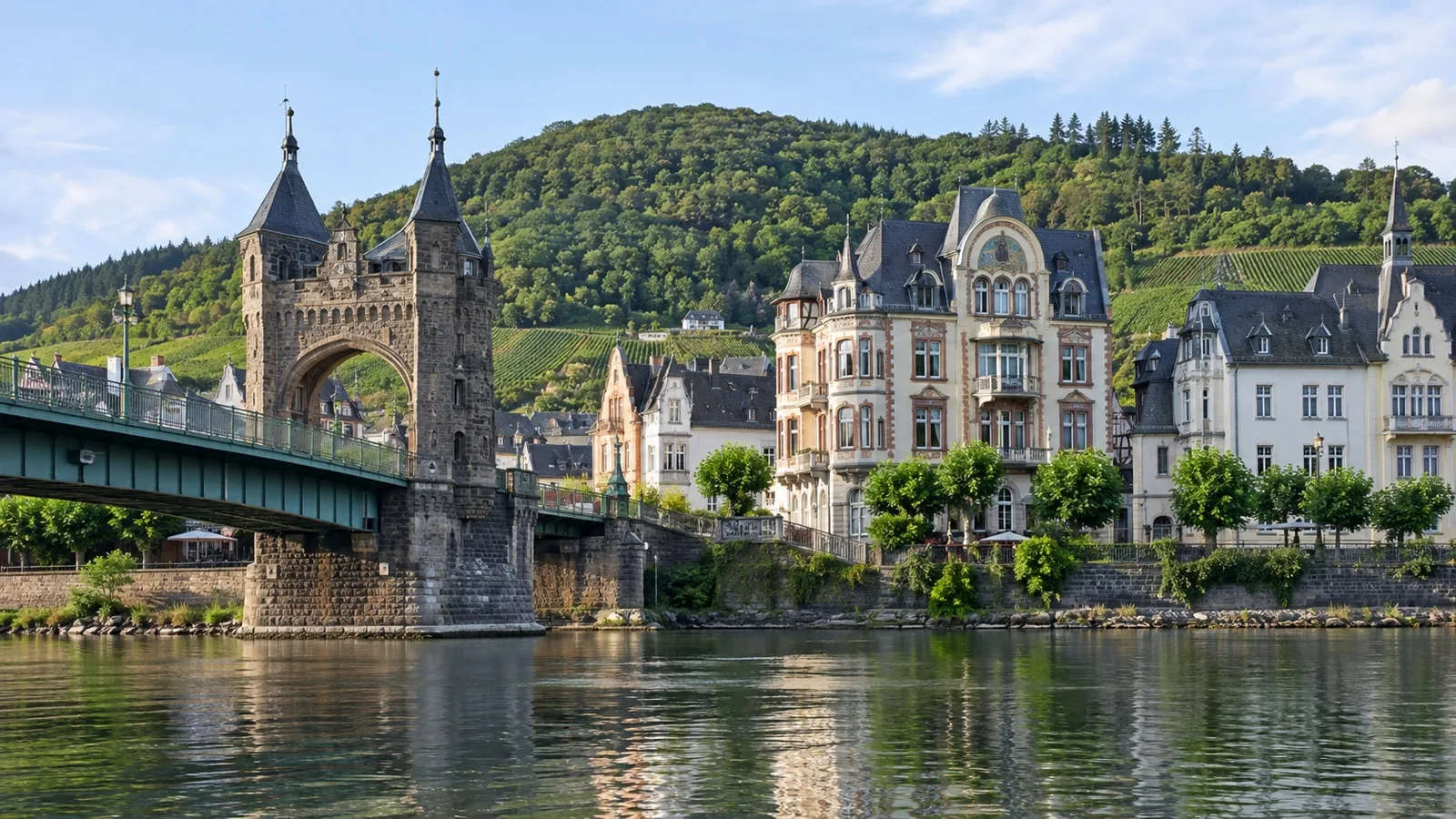
Traben-Trarbach is the port most likely to be underestimated. It lacks Cochem’s single dramatic castle view and Bernkastel’s concentrated medieval square, but it tells a richer story about wine wealth around 1900.
The twin town straddles the Moselle and grew prosperous through the wine trade. Its official tourism site highlights Art Nouveau and Belle Époque buildings, large cellars, the bridge gate, and guided underground experiences.
The architecture above ground
Look for the Brückentor and the villas and commercial buildings created during the town’s prosperous wine-trading period. A guided architecture walk can add context, but an independent circuit is satisfying if you download a current map.
The pleasure is in looking up and comparing details rather than covering distance. Give the town an hour before deciding it is less charming than its half-timbered neighbors.
The wine cellars below ground
Traben-Trarbach’s underground wine cellars are the signature experience because they reveal the infrastructure behind the valley’s former trade. Tours are scheduled experiences, not simply open tunnels where visitors wander at will.
Book through the official tourism channels and confirm the language, duration, meeting point, stairs, temperature, and accessibility. Bring a light layer because underground conditions can feel cool even on a warm afternoon.
Grevenburg and the hills
Grevenburg ruins stand above the Trarbach side and offer a more strenuous alternative to the town walk. The climb consumes time and energy, so pair it with the riverfront rather than with every indoor attraction.
Trier
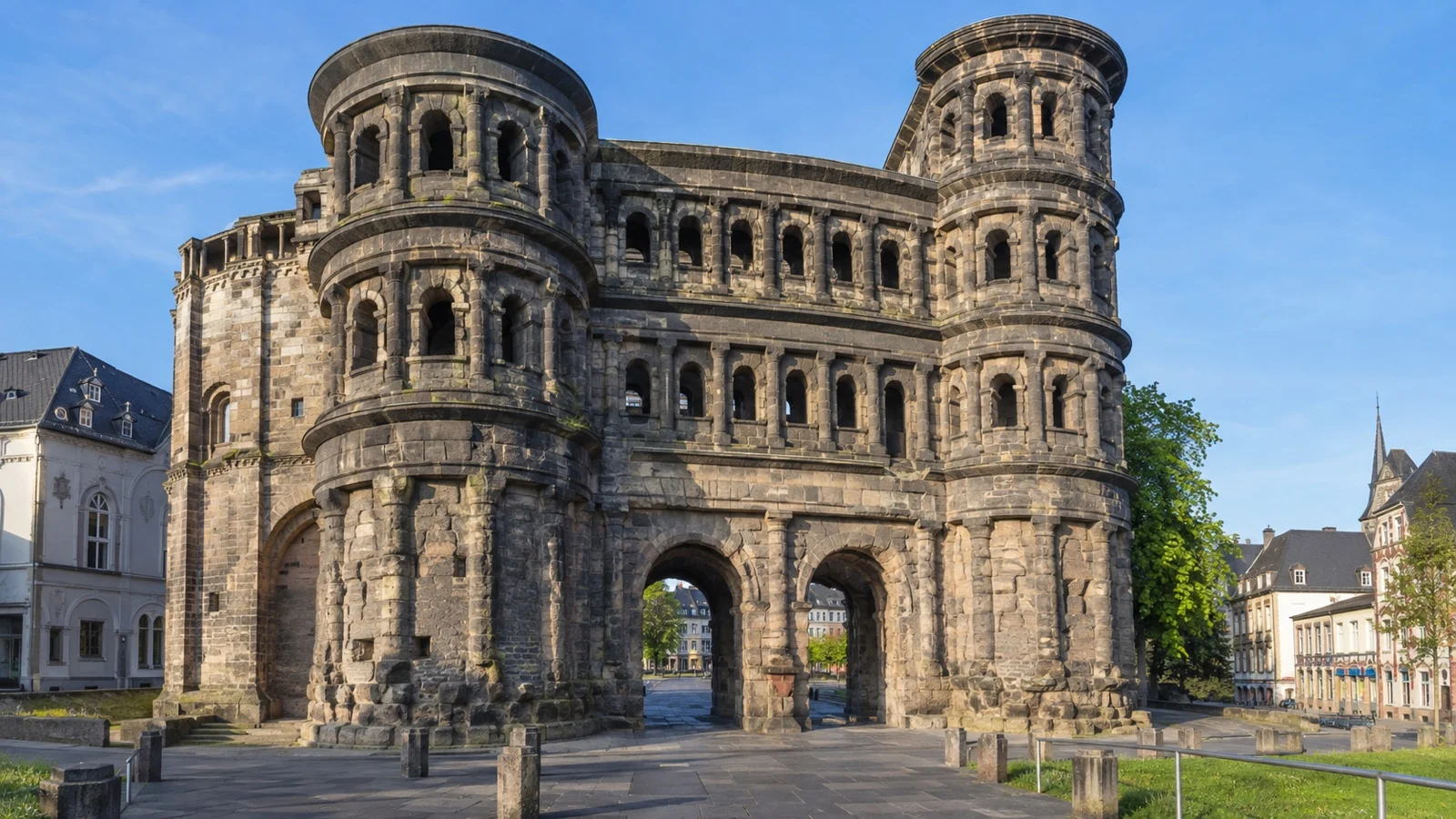
Trier is the historical heavyweight of the Moselle, and it deserves more time than a quick photo stop. Some cruises berth in or near Trier, while others use another landing and transfer guests by coach, so read the daily program rather than inferring access from the itinerary map.
UNESCO describes Trier as a Roman colony that became a major trading center and later one of the capitals of the Tetrarchy. Its surviving monuments, cathedral, and Church of Our Lady form one of Europe’s most concentrated urban heritage groups.
Start with Porta Nigra
The Porta Nigra is the natural orientation point for a first visit and the city’s most recognizable Roman structure. From there, the pedestrian center leads toward Hauptmarkt, Saint Peter’s Cathedral, and the Church of Our Lady.
Those central sights combine well during a limited excursion. The Imperial Baths, amphitheater, Roman bridge, and other components are more spread out, so adding all of them can turn a thoughtful visit into a hurried march.
The UNESCO site is a collection
Trier’s World Heritage status does not refer to one enclosed attraction. It covers Roman monuments along with the cathedral and Church of Our Lady, reflecting the city’s long transition from imperial center to Christian city.
Choose two or three places that connect rather than trying to enter everything. If a guide is included, use the free time to revisit one monument slowly instead of racing to the farthest ruin.
When a coach transfer makes sense
If the ship is berthed outside Trier, the organized transfer may be the most efficient choice because it protects the return logistics. Ask for the driving time, walking distance, free time, and exact meeting point before deciding.
Independent rail or taxi plans can work, but they require a larger margin and a clear understanding of the port gate. A delayed regional trip is not worth missing the ship for one extra Roman site.
Wine and the Moselle landscape
Riesling is central to the Moselle’s identity, and the steep slate vineyards explain both the scenery and the style of many local wines. Sun exposure, slope, soil, and painstaking hand work shape vineyards that would be difficult to farm with ordinary machinery.
A tasting becomes more interesting when you ask where the parcel sits and whether the wine is dry, off-dry, or sweet. German labels contain useful information, but the producer or server can translate the essentials quickly.
Do not overbook tastings
A wine appointment should have a confirmed start and finish time on a port day. Leave room for payment, bottle pickup, and the walk back rather than treating the tasting itself as the only timed element.
If you buy bottles, ask the cruise line about carrying alcohol onboard and your home-country customs allowance. Pack purchases securely because river-cruise transfers can involve coaches, hotels, or ship swaps.
Locks, delays, and the daily rhythm
The Moselle’s lock system makes the waterway navigable and also makes precise arrival times vulnerable to traffic or technical disruption. A river cruise can wait behind freight traffic or encounter reduced operations without the entire itinerary failing.
Use the ship’s daily briefing as the final authority for the next landing. An online itinerary published months earlier cannot reflect today’s lock queue, water level, berth allocation, or maintenance.
What to do during a lock passage
Watch at least one passage from an open deck if the crew permits it. The change in water level, narrow chamber, lines, gates, and surrounding machinery make the river’s engineering visible.
Respect deck closures and crew instructions because clearances can be tight. A railing, camera pole, or hand extended beyond the ship can become dangerous near a wall or lock structure.
Accessibility across the four ports
Lower town centers are often close to the river, but cobbles, slopes, rafting, and gangway angles prevent a blanket claim that the calls are step-free. The exact route ashore can change from one day to the next.
Cochem’s castle is the clearest hill challenge, while Traben-Trarbach’s cellar tours may include stairs and uneven underground surfaces. Trier’s central pedestrian streets can be easier, but a coach transfer introduces lift, storage, and boarding questions.
Ask specific questions
Ask whether the ship’s elevator reaches the disembarkation deck, whether another vessel must be crossed, and whether the excursion vehicle has a lift. For attractions, confirm step-free entrances, elevator routes, accessible toilets, and whether mobility devices are permitted.
No operator can guarantee an inside rafting position months in advance. Discuss essential needs before booking and again with the onboard team before each landing.
Weather and seasons
The Moselle season typically stretches from spring through Christmas-market departures. Spring brings fresh vineyard color, summer brings long evenings and busier quays, autumn brings harvest atmosphere, and winter brings cold, shorter daylight, and festive towns.
The valley can feel warmer than a regional forecast in direct sun, while shaded streets and underground cellars stay cool. Pack layers, rain protection, and shoes that grip on cobbles or damp vineyard paths.
Best timing
September and early October are especially atmospheric because harvest activity makes the wine landscape feel alive. They can also be busy, so reserve high-priority castle or cellar experiences early.
Late spring is a good alternative for walking with fewer peak-season crowds. Water conditions and weather never come with guarantees, so choose dates for the overall experience rather than a promise of perfect navigation.
Four realistic port-day plans
Cochem
Book the castle tour first, choose the footpath or shuttle according to your mobility, and explore the old town on the way back. Keep the waterfront and wine stop flexible.
Bernkastel-Kues
Begin in the Bernkastel old town, cross the bridge for a confirmed Cusanus-related visit, and return with a generous buffer. Skip the hilltop ruin if the call is short or the weather makes paths slippery.
Traben-Trarbach
Reserve an underground cellar tour and build an Art Nouveau walk around it. Add Grevenburg only if you genuinely want the climb and have enough time.
Trier
Follow the ship’s transfer plan, see Porta Nigra, Hauptmarkt, the cathedral, and the Church of Our Lady, then choose one additional Roman site. Do not let the desire to complete the UNESCO list jeopardize the coach meeting time.
Common questions
Which Moselle ports are easiest to explore independently?
Cochem, Bernkastel-Kues, and Traben-Trarbach are usually the simplest because their central sights cluster near town quays. Exact walking time still depends on the assigned berth and rafting.
Do all Moselle cruises dock in Trier?
No. Some reach Trier by ship, while others use a nearby landing and a coach excursion, so check the detailed daily itinerary and ask the operator directly.
Is Reichsburg Castle medieval?
Its origins are medieval, but the castle seen today reflects major nineteenth-century neo-Gothic restoration after earlier destruction. The layered history is one of the best reasons to take the guided tour.
How many locks are on the Moselle?
The canalized river has 28 barrages between Koblenz and the upper navigable route toward Neuves-Maisons, including 10 in Germany. Your itinerary uses only the structures along its actual segment.
Is the Moselle better than the Rhine?
It is more intimate and slower, with smaller towns and a stronger sense of vineyards enclosing the river. The Rhine offers larger cities, busier navigation, and more monumental castle scenery, so the better choice depends on your preferred pace.
Final thoughts
The Moselle is at its best when you stop measuring success by miles covered. Its pleasures are close to the gangway: a castle seen from the river, a tilted timber frame, a cool wine cellar, and a vineyard that seems far too steep to farm.
Plan the fixed pieces early, then leave the rest of each call loose. The river may slow you down with a lock or changed berth, and that slower pace is often what travelers remember most fondly.
Current visitor details were checked on September 13, 2026, against the official Reichsburg Cochem site, the tourism offices for Bernkastel-Kues, Traben-Trarbach, and Trier, plus the UNESCO Trier listing. Berths, rafting, waterway conditions, transfers, accessibility, reservations, and all-aboard time should always be reconfirmed with the cruise line and attraction operators.