Rudesheim River Cruise Port: The Easiest Walk-Off on the Rhine
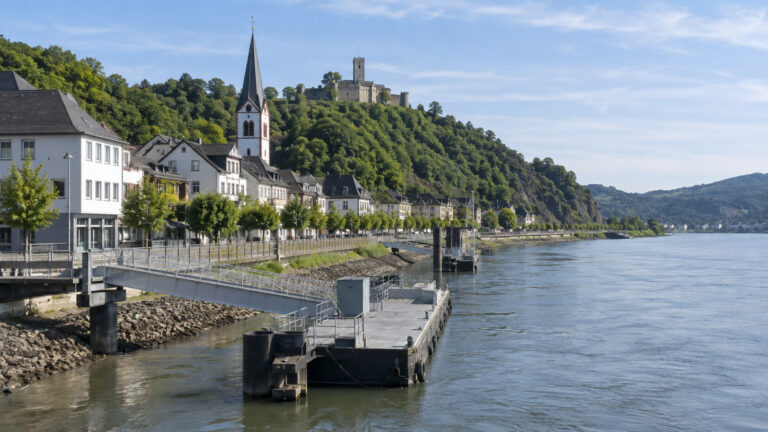
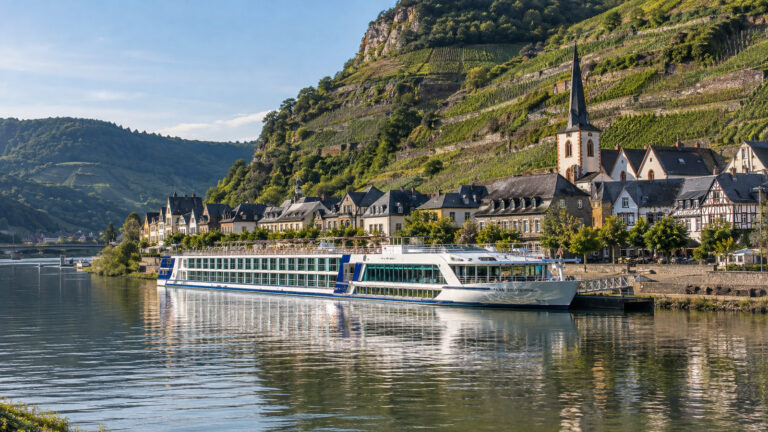
Rüdesheim is one of those Rhine ports where the gangway can feel like a shortcut straight into the good part of town. River ships usually berth along the waterfront, and the old center, wine taverns, cable car, and riverside paths are all close enough to make a short call feel generous.
The town is compact, cheerful, and unapologetically popular. I would come for the easy walk-off access, stay for the vineyard views, and treat famous Drosselgasse as a lively stop rather than the whole story.
My quick take
Rüdesheim works beautifully for travelers who want a low-stress independent day. You can step ashore, wander through the old lanes, ride above the vines, visit the Niederwald Monument, and still return to the ship without spending half the call in transit.
The catch is that river operations are fluid. Your vessel may be tied outside another ship, a landing can change, and the cable car or local boats can pause for weather, water conditions, maintenance, or seasonal schedules.
Quick Facts
- Port type: Rhine river landing, commonly along the waterfront promenade
- Best for: Vineyard views, easy walking, wine culture, and a simple cable car outing
- Town access: Usually walkable from the ship, though the exact berth matters
- Signature sight: The Niederwald Monument above the Rhine
- Most famous lane: Drosselgasse, known for taverns, music, and crowds
- Currency: Euro
- Language: German, with English commonly understood in visitor-facing businesses
- Planning priority: Confirm the gangway deadline and live cable car schedule before setting out
Where river ships dock in Rüdesheim
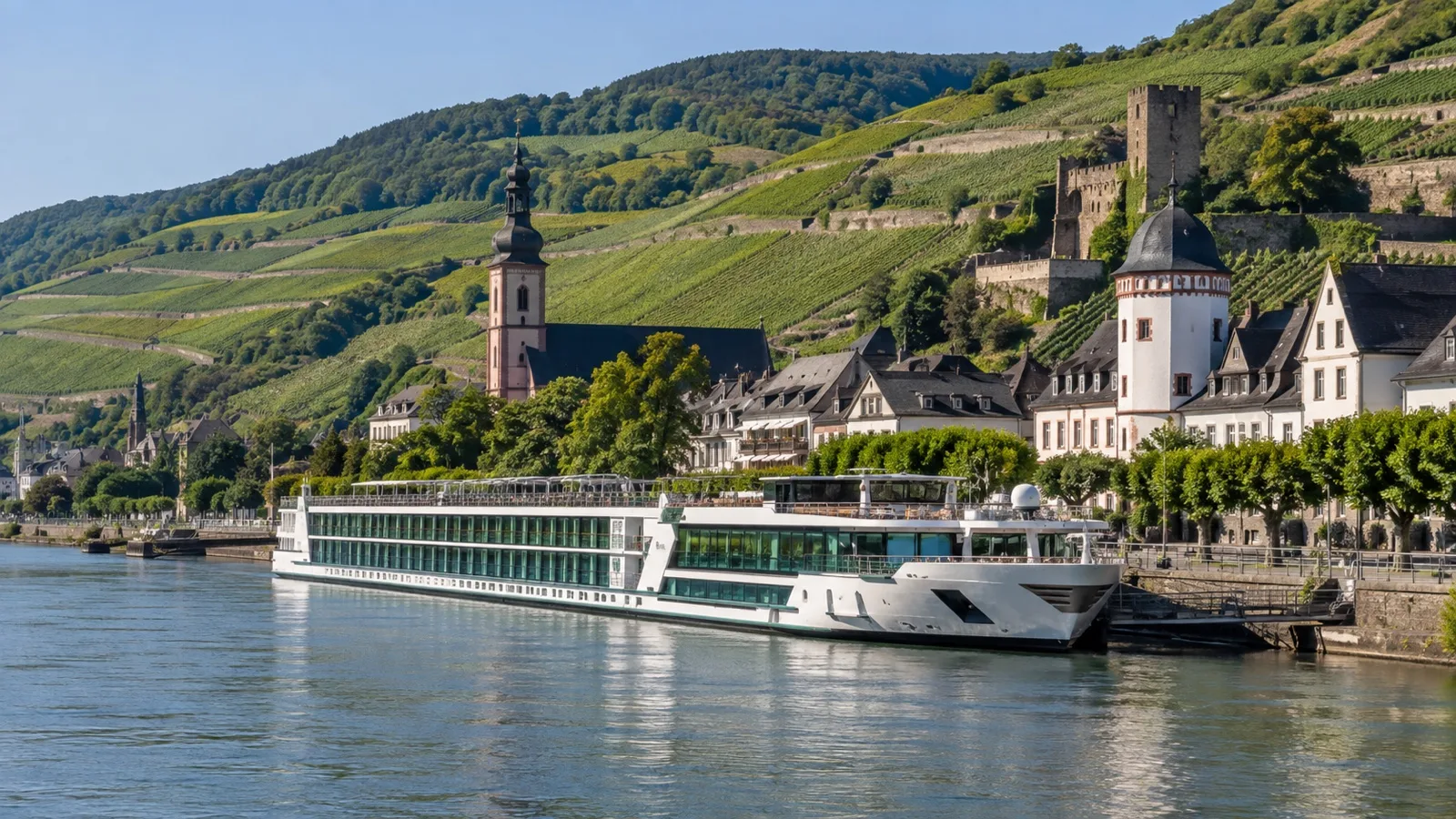
Rüdesheim’s river landings sit close to the town rather than at a distant industrial terminal. That proximity is the port’s greatest gift because most visitors can begin sightseeing on foot almost immediately.
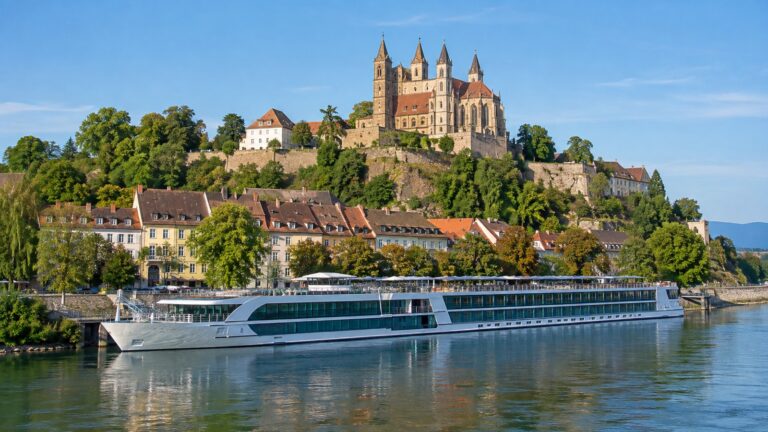
Do not assume that the view from your cabin identifies the side you will use to disembark. Rhine ships frequently raft side by side, so guests may need to cross one or more neighboring vessels before reaching the quay.
Rafting changes the first and last few minutes
Crossing another ship can involve narrow thresholds, short flights of steps, sloped gangways, and passing through another vessel’s lobby or sun deck. Crew members coordinate the route, but it may not suit every mobility need equally well.
Before leaving, photograph the landing sign, note the ship’s name and berth, and ask whether the vessel expects to move during the call. A five-minute conversation at reception can prevent a surprisingly stressful return.
How easy is the walk into town?
For most able walkers, the answer is very easy. The waterfront, lower old town, Drosselgasse, cable car station, restaurants, and shops cluster within a compact area.
The promenade is generally the simplest route, while the old center brings cobbles, uneven paving, and occasional congestion. Once you head toward the vineyards or abbey, the terrain becomes much steeper.
I like to start with the farthest fixed-time activity, usually the cable car or a reserved museum visit, and then wander back toward the ship. That order keeps the end of the day flexible and reduces the temptation to rush.
Drosselgasse, honestly
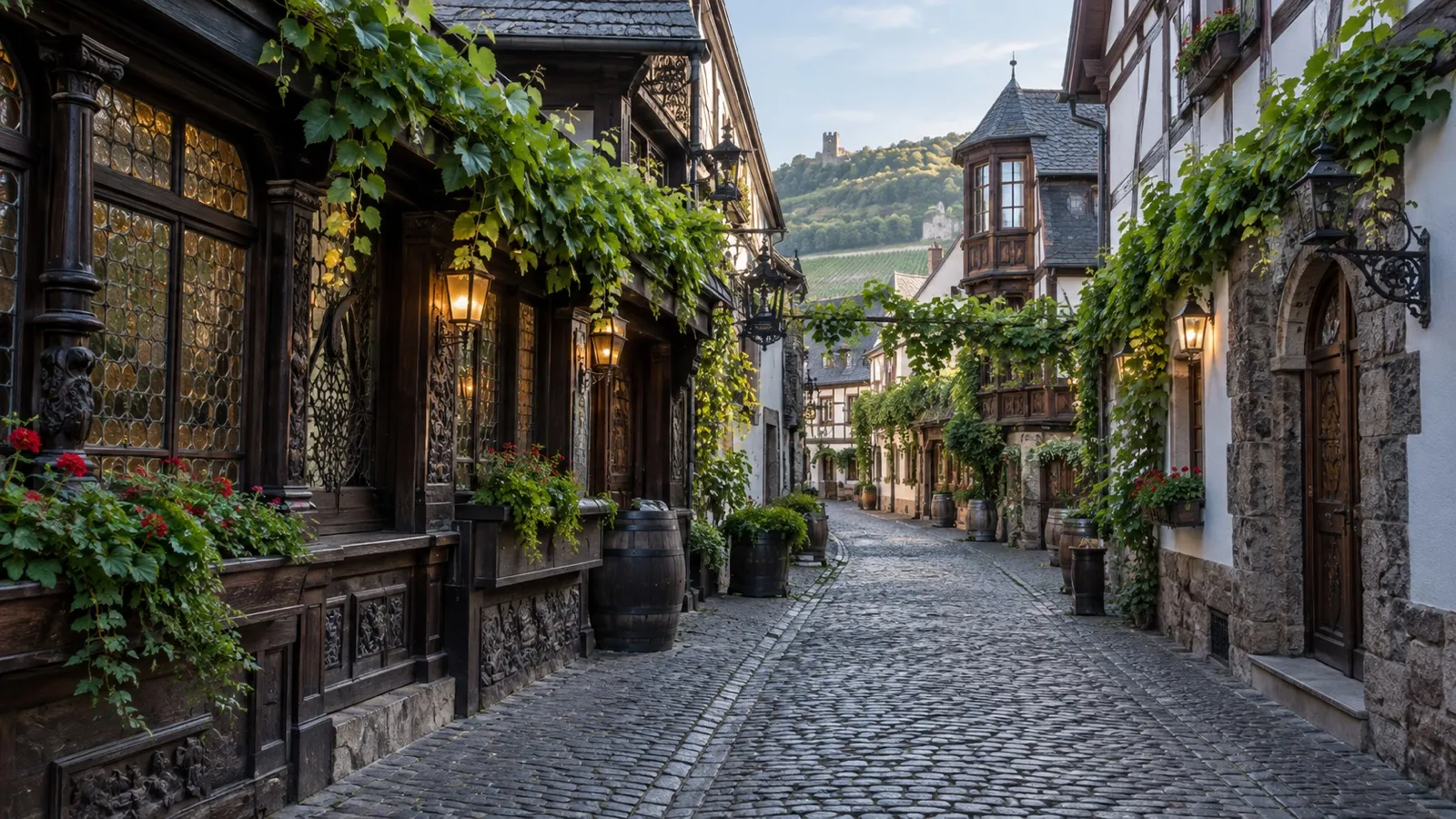
Drosselgasse is Rüdesheim’s celebrity lane, a narrow passage packed with wine taverns, signs, music, and visitors. It is fun in the way a famous, theatrical gathering place can be fun, especially if you arrive before the busiest groups.
It can also feel commercial and crowded. Walk through it, enjoy the atmosphere, then turn into quieter neighboring streets where small courtyards and older façades give the town more breathing room.
If your dream is a peaceful glass of Riesling, do not automatically choose the first open table on the busiest stretch. A terrace a block or two away may offer calmer service and a better chance to notice what is in the glass.
The cable car over the vineyards
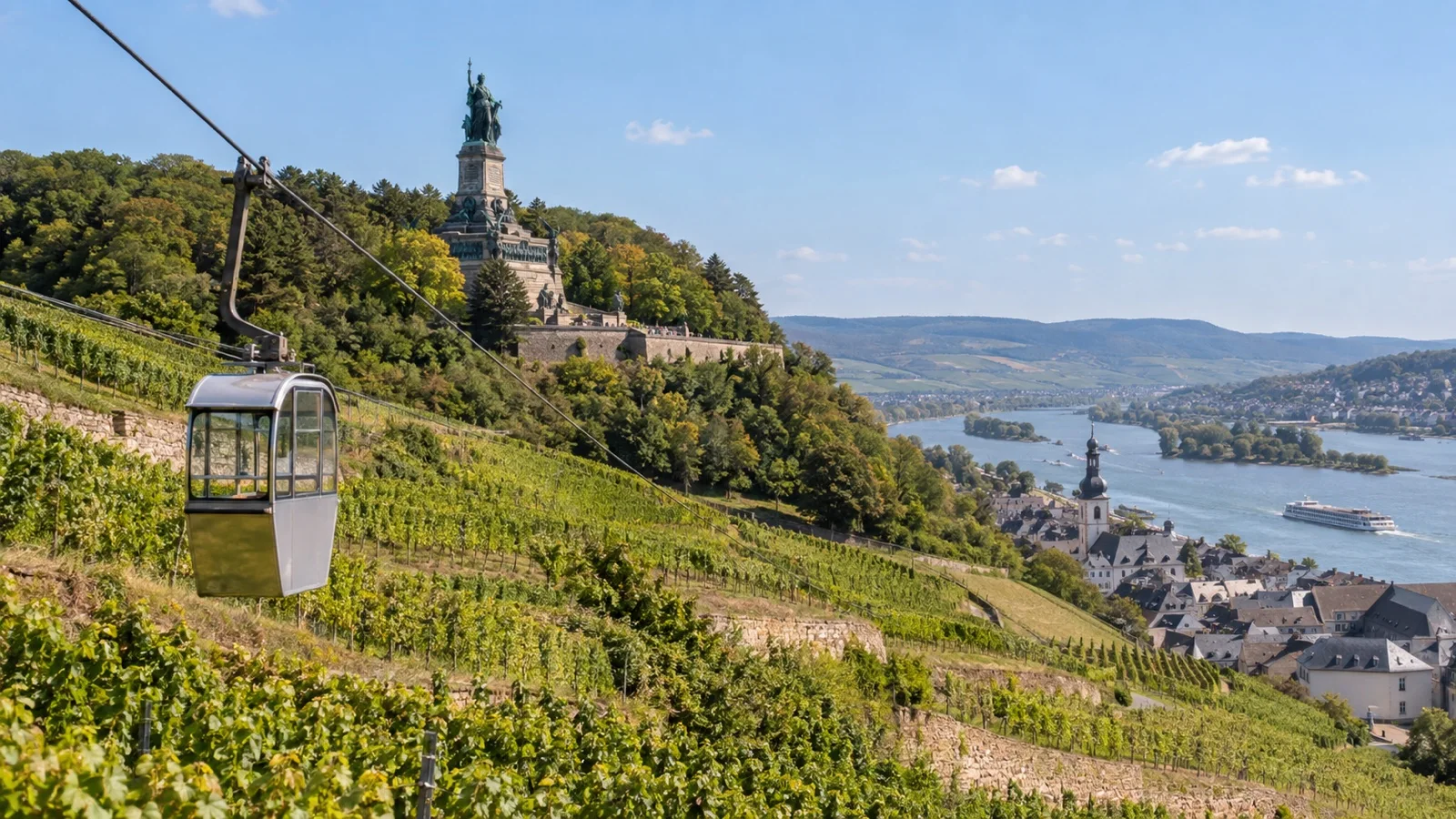
The cable car from town toward the Niederwald landscape is the classic Rüdesheim experience. Small gondolas rise over rows of vines, opening broad views across the Rhine toward Bingen and the hills beyond.
As currently published by the operator, an adult single ride costs €7.50 and an adult return costs €12. The operator also advertises combination routes, but prices and included boat or chairlift segments can change, so check the live page before relying on a particular circuit.
What to know before you queue
The ride is seasonal and weather dependent, and operating dates or hours are not identical throughout the year. On busy cruise days, queues can build quickly at both stations.
The official operator says bicycles cannot be carried. Travelers using wheelchairs or other mobility equipment should contact the operator before the visit because cabin access, station layout, and assistance needs deserve a current answer rather than an assumption.
If the cable car is running smoothly, a round trip is an elegant half-day anchor. If it is closed, Rüdesheim still works well as a town-and-wine call, and the riverfront remains worth a stroll.
The Niederwald Monument
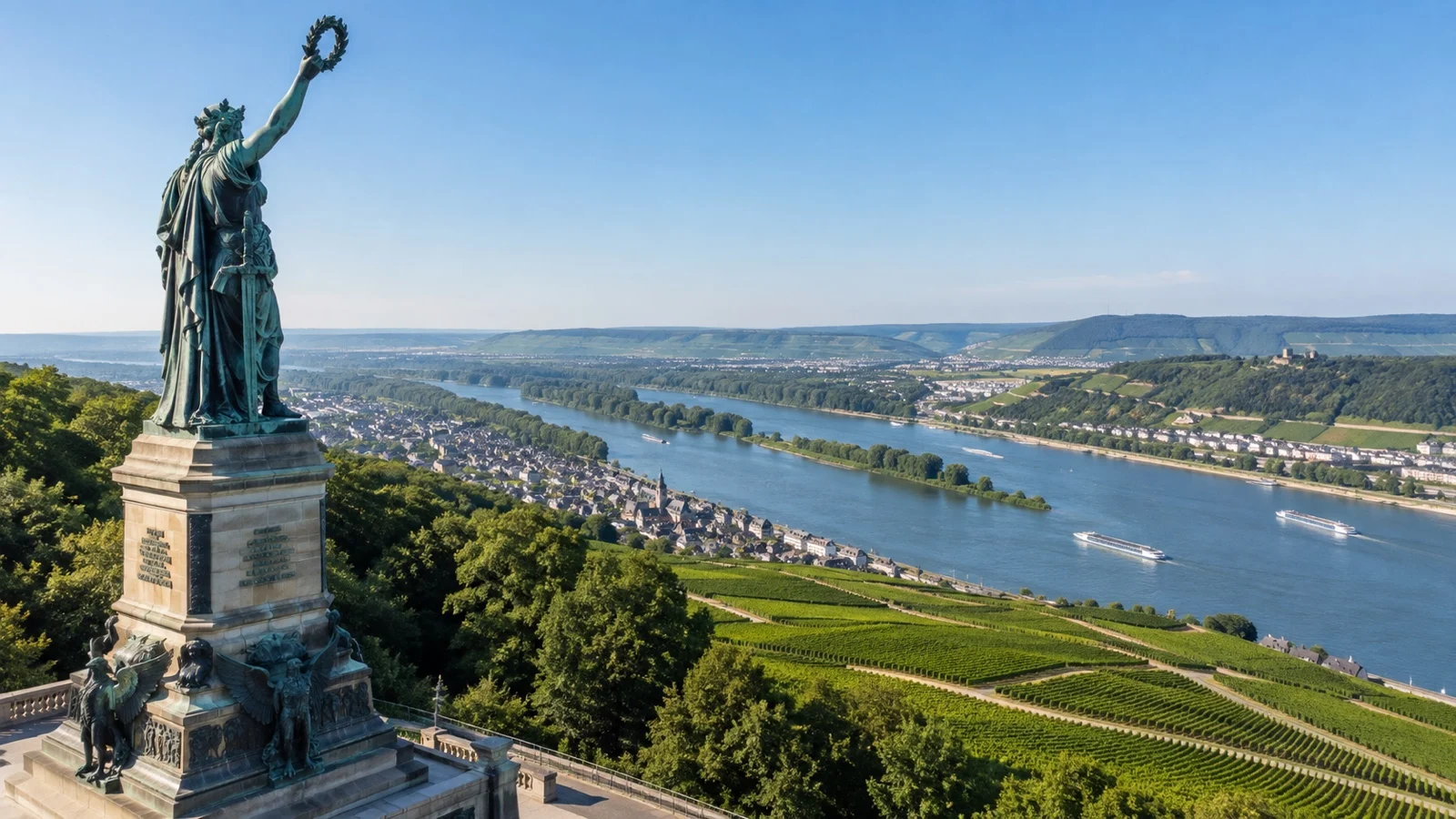
At the upper end of the classic outing stands the Niederwald Monument, a monumental ensemble created to commemorate the founding of the first German nation state after the Franco-Prussian War. The official site places it at the entrance to the UNESCO-listed Upper Middle Rhine Valley.
The monument and surrounding forest are freely accessible, though individual facilities or transport services can keep separate schedules. Give yourself time to look outward as well as upward because the Rhine panorama is the real emotional payoff.
A little context improves the visit
The monument reflects the nationalism and political storytelling of the late nineteenth century. Seeing it as a historical document, not just a viewpoint, makes the scale and symbolism easier to understand.
The Hessen heritage authority offers an official audio-tour app for visitors who want more detail. Downloading information before leaving the ship is sensible if your mobile plan or signal is unreliable.
Should you do the longer Assmannshausen loop?
A longer circuit can combine transport through the Niederwald area with Assmannshausen and a boat segment, depending on the season and which services are operating. It sounds effortless on a brochure, but every connection adds a schedule you need to respect.
I would choose the loop only with a comfortable port call, stable weather, and a generous return margin. For a short call, the simple up-and-back cable car ride gives most of the scenery with far less timing risk.
The Upper Middle Rhine Valley
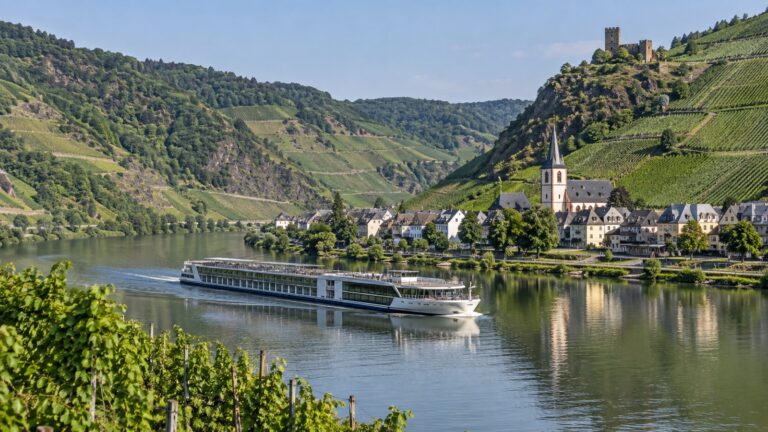
Rüdesheim sits at one end of the UNESCO Upper Middle Rhine Valley, a 65-kilometer cultural landscape stretching toward Koblenz. UNESCO highlights its historic towns, vineyard terraces, transport history, and remarkable concentration of castles and fortresses.
This matters even if you never book an excursion. Many river itineraries pair Rüdesheim with daylight sailing through the gorge, so the most important sightseeing of the day may happen from your own ship after departure.
Do not miss the sailing by accident
Ask the cruise director when the scenic commentary begins and which side is expected to have the strongest early views. Then claim a position with shelter nearby because wind on an open deck can feel sharp even when the town was warm.
The Loreley section is especially dramatic, with a narrow channel, steep rock, rail lines, vineyards, and river traffic sharing a compressed landscape. Conditions on the water determine the actual pace, so treat published passage times as estimates.
Wine in Rüdesheim
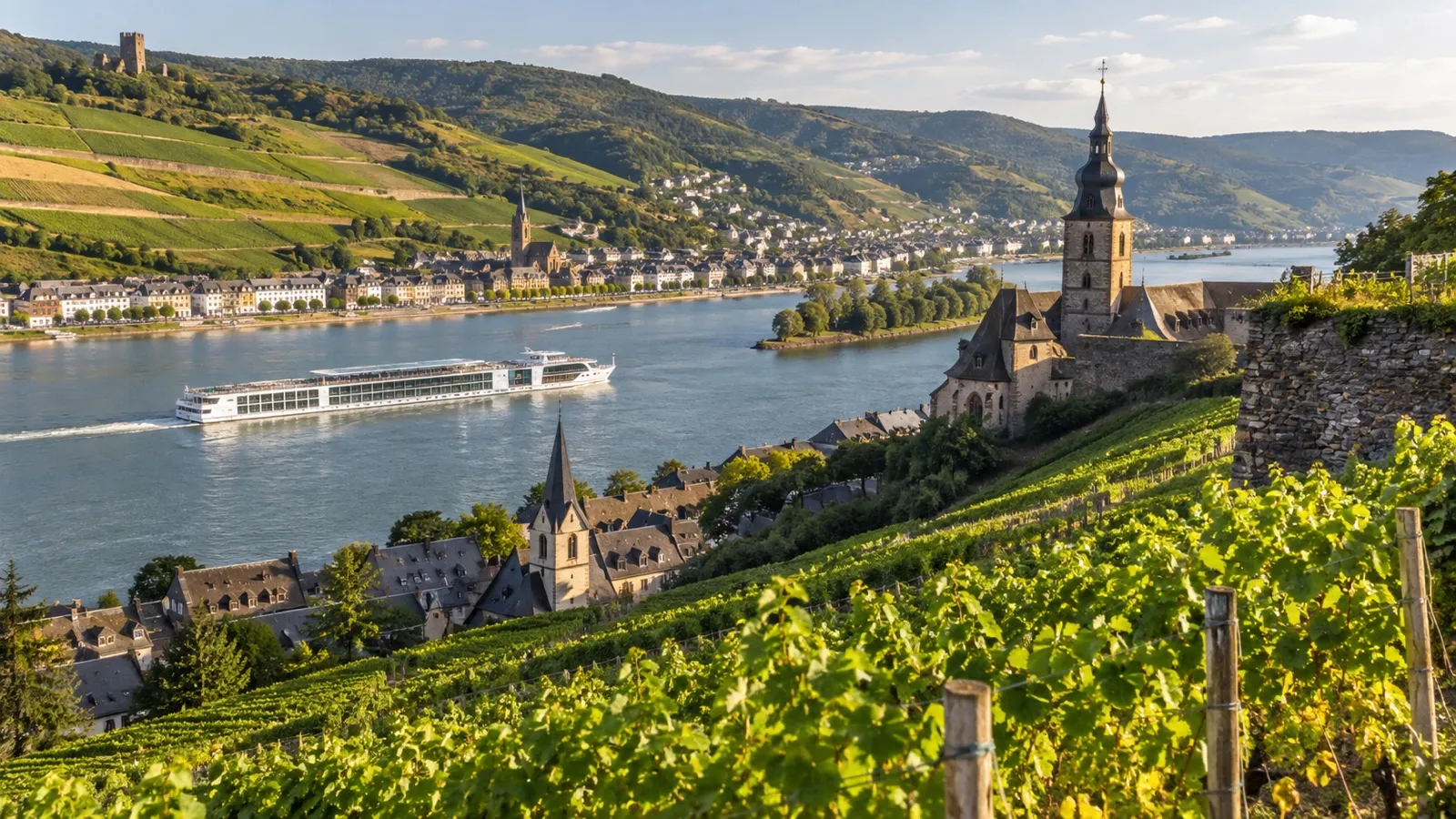
Rüdesheim belongs to the Rheingau, a region strongly associated with Riesling. The steep, sun-facing vineyards above town are not decorative scenery but part of a working wine landscape shaped by soil, slope, river, and generations of labor.
A tasting can be as simple as ordering one local glass and asking where the grapes were grown. If you prefer a cellar visit or structured tasting, reserve ahead because opening patterns vary and private groups can fill small venues.
What I would order
I would ask for a dry local Riesling if I wanted something crisp, or request guidance toward a sweeter style if that is your preference. German labels carry useful detail, but a conversation with the server is often the quickest way to match the wine to your taste.
Rüdesheimer coffee, traditionally prepared with local brandy, is another well-known specialty. It is dessert-like and theatrical, so check the alcohol content before ordering if you plan to keep walking in warm weather.
Siegfried’s Mechanical Music Cabinet
This museum is one of the town’s most distinctive indoor attractions, with self-playing musical instruments and mechanical devices presented in a historic setting. Visits have often been organized as guided experiences, which makes current start times more important than the walking distance.
Check the museum’s official schedule directly and reserve if required. It is an especially useful option in rain, but it is not a place I would try to squeeze into the final minutes before all aboard.
Saint Hildegard Abbey
The Benedictine Abbey of Saint Hildegard stands above the vineyards outside the easiest riverfront walking loop. It remains an active religious community, so visitors should treat it as a living place of worship rather than a themed attraction.
The uphill journey is the deciding factor. Strong walkers may enjoy the climb, while others should arrange a taxi and confirm current access, church hours, shop hours, and any visitor restrictions on the abbey’s official site.
Independent trips by train or ferry
Rüdesheim has rail connections along the Rhine, and Bingen sits directly across the river. Those links make independent exploring possible, but a port day is not the moment to build an itinerary around a tight transfer.
Use the live RMV or Deutsche Bahn journey planner for trains and the relevant operator for boats or ferries. Build in a substantial buffer because service changes, low or high water, events, and missed connections can turn a simple outing into a race.
Bingen or more time in Rüdesheim?
Crossing to Bingen can add a different river perspective, but it is not essential for a satisfying call. On a first visit, I would usually prioritize Rüdesheim, the cable car, and the scenic sailing unless the ship stays unusually long.
Accessibility and mobility planning
The riverfront and lower town can be manageable for many travelers, but the full experience is not step-free by default. Cobblestones, gradients, crowds, rafting, gangway angles, and transport equipment rules all change the practical picture.
Ask the ship about the exact landing and whether another vessel must be crossed. Then contact the cable car, museum, abbey, or tour operator directly for current access details relevant to your equipment and transfer needs.
A companion who can walk easily does not experience the same port as someone using a wheelchair or rollator. Specific answers about doorway width, lift availability, accessible toilets, and boarding assistance are more useful than a general claim that a place is accessible.
Weather, water, and what to wear
The Rhine valley can shift from sun to rain quickly, and the hilltop often feels cooler or windier than the waterfront. Light layers, a compact rain shell, and shoes with reliable grip are more valuable than a dressy outfit.
River levels also influence cruise operations. High or low water may change arrival times, gangway slopes, berths, or the wider itinerary even when the town itself looks perfectly calm.
Three realistic ways to spend the call
A short visit
Walk the promenade, cross the old town, see Drosselgasse, and stop for one coffee or glass of local wine. Keep the route close to the river and allow extra time if the ship is rafted.
A classic half day
Ride the cable car, visit the Niederwald Monument, return to town, and explore the quieter lanes around Drosselgasse. This is the best-balanced plan for a first visit when the lift is operating.
A longer day
Add a reserved museum visit, an abbey outing, a structured tasting, or a carefully timed transport loop. Choose one meaningful extra rather than stacking several connections and watching the clock all afternoon.
Common questions
Can I explore without a shore excursion?
Yes, in most cases Rüdesheim is one of the Rhine’s friendliest independent ports. The main variables are your precise berth, mobility needs, and the operating schedule of anything beyond the lower town.
How much cash should I carry?
Cards are widely useful, but a modest amount of euros can help with small purchases, tips, or businesses that apply minimums. Never rely on a single payment method when a ship departure is involved.
Is Drosselgasse worth it?
Yes, as a quick piece of the experience. It is famous, festive, and photogenic, but Rüdesheim becomes more appealing when you also explore the waterfront, vineyards, and quieter side streets.
What if the cable car is closed?
Stay low and enjoy the old town, river promenade, wine culture, or a properly timed indoor visit. A closure changes the plan, not the value of the port.
How early should I return?
Follow the ship’s stated all-aboard time and aim to be back well before it. Add even more margin if you have crossed the river, used a train, joined a timed visit, or walked far uphill.
My last word
Rüdesheim succeeds because it gives you choices without demanding a complicated plan. You can keep the day almost entirely level and local, or rise over the vineyards for one of the Rhine’s most memorable views.
My ideal visit is simple: cable car early, monument and panorama, a slow walk through town, and plenty of time back aboard for the gorge. The port rewards curiosity, but it rewards good timing even more.
How this guide was researched: This guide was desk-researched on September 12, 2026 using the official Rüdesheim cable car site, the official Niederwald Monument page, the Abbey of Saint Hildegard, live regional transport information, and the UNESCO Upper Middle Rhine Valley listing. It does not claim a personal ship call, berth inspection, cable car ride, or attraction visit.
Confirm port operations, berth assignments, accessibility arrangements, attraction schedules, and all-aboard time with your cruise line and the relevant operator before travel.