Kinderdijk River Cruise Port: The Windmills Start at the Gangway
Kinderdijk can be a true walk-off windmill stop, but some itineraries use Rotterdam or Dordrecht and transfer passengers by road or boat. Confirm the landing before dismissing the included excursion, and check UNESCO-site tickets, seasonal hours, paths, weather, accessibility, and the ship’s return time.
My quick take
If your ship docks at Kinderdijk itself, go independently unless the included tour offers access you cannot buy on your own. The windmill landscape begins within an estimated five-minute walk, the ground is almost aggressively flat, and the official admission ticket already bundles the principal visitor locations.
If your ship docks elsewhere, take the organized transfer unless you have a long call and a reliable water-transport schedule. Improvising the last connection from Dordrecht during a short call is how a postcard turns into a schedule.
The one thing I would not do is photograph the first windmill, declare the mission complete, and return for lunch. Go inside a museum mill, because the cramped rooms and enormous machinery explain why these buildings exist far better than another wide-angle photograph.
The quick facts
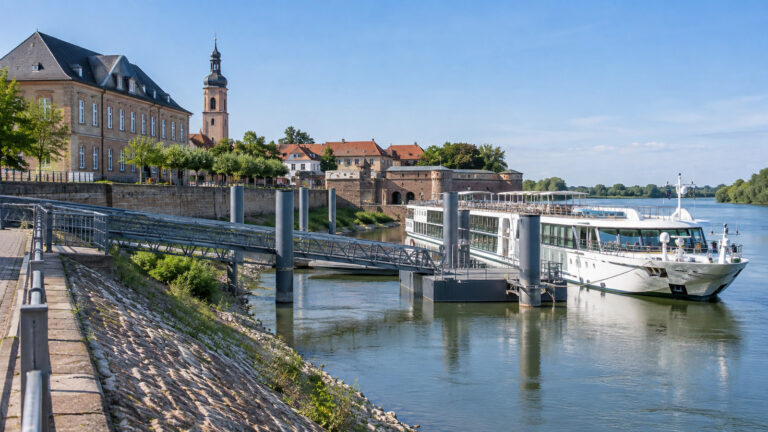
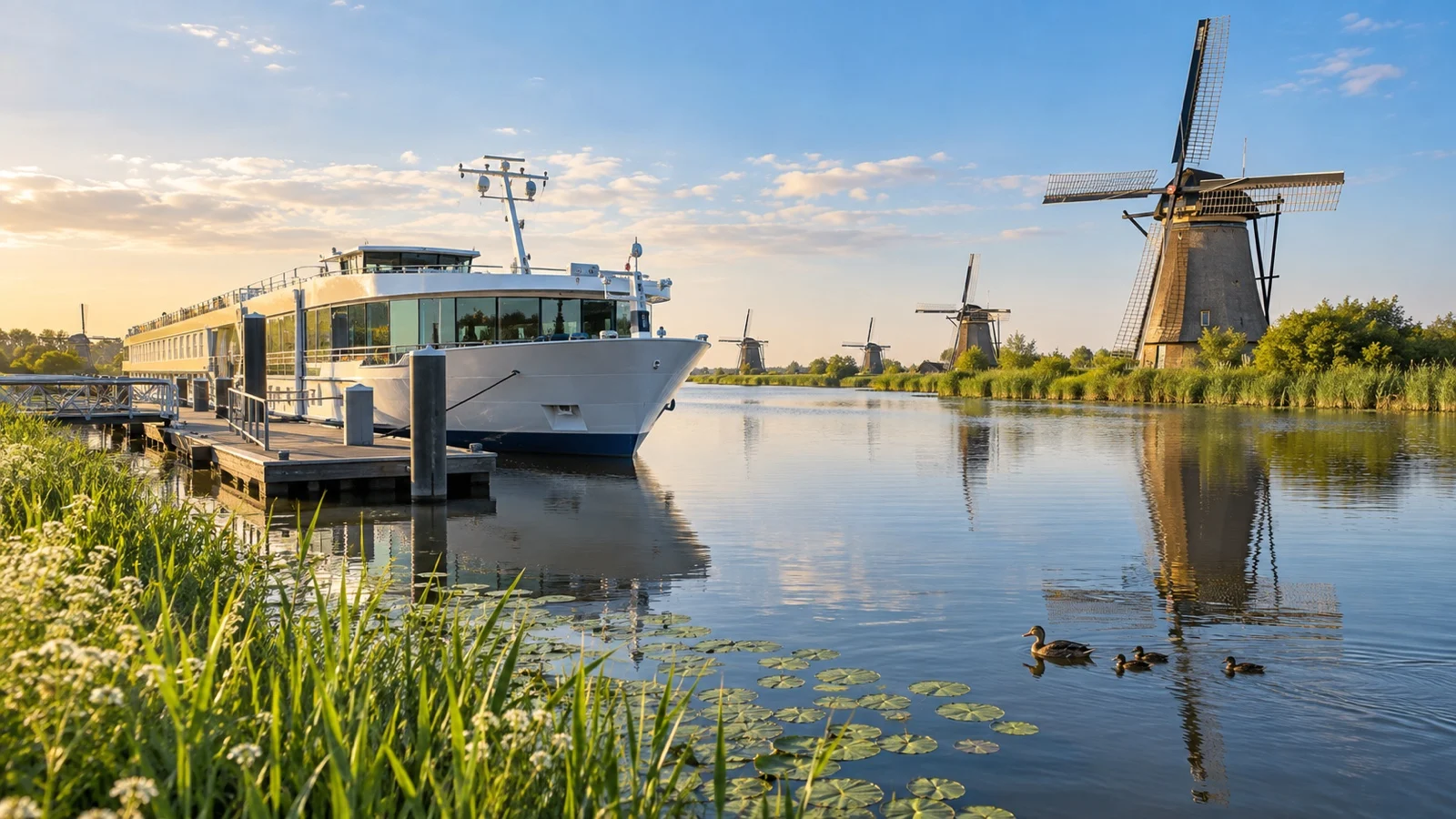
- Where you land: Kinderdijk has two purpose-built river-cruise jetties on the Lek near the entrance zone. Some itineraries use a regional berth and transfer instead.
- How you get ashore: Ships assigned to a local jetty normally use a gangway rather than a tender. There is no cruise terminal, but the World Heritage visitor center is close.
- Into Town: You are there: the cruise jetties sit by Kinderdijk village, an estimated five-minute walk from the World Heritage entrance.
- Currency and Language: The euro and Dutch; English is widely understood at the visitor center, museum mills, and cruise-facing services.
- Getting around: Walk, use the site’s tour boat, or join a cycling excursion. The main paths are flat, but the area covers more ground than it first appears.
- Time Zone: Central European Time, UTC+1, moving to UTC+2 from the last Sunday in March through the last Sunday in October.
- Schedule caution: No trustworthy public missed-call percentage is available; fog, wind, water conditions, berth changes, or wider itinerary disruption can cancel or relocate the call.
No port authority or cruise line publishes a Kinderdijk miss rate. The five-minute walk is a map-based estimate that varies by jetty and gangway.
The Kinderdijk river cruise port is two jetties, not a terminal
A Dutch government planning record identifies two jetties for river-cruise ships and a separate landing for local passenger boats at Kinderdijk. The practical result is pleasantly simple: a ship using the Kinderdijk jetties puts you beside the village and close to the World Heritage entrance rather than in an industrial port.
The cruise jetties are not the little docks inside the protected area. Kinderdijk’s official visitor FAQ says private boats may not use those internal jetties, so the canal boats and your river ship occupy different infrastructure.
Kinderdijk’s annual reporting also records river-cruise guests arriving through Dordrecht and transferring by water. Ask reception for the actual berth and transfer plan the evening before, because “Kinderdijk” beside an excursion time does not prove the ship is beside a windmill.
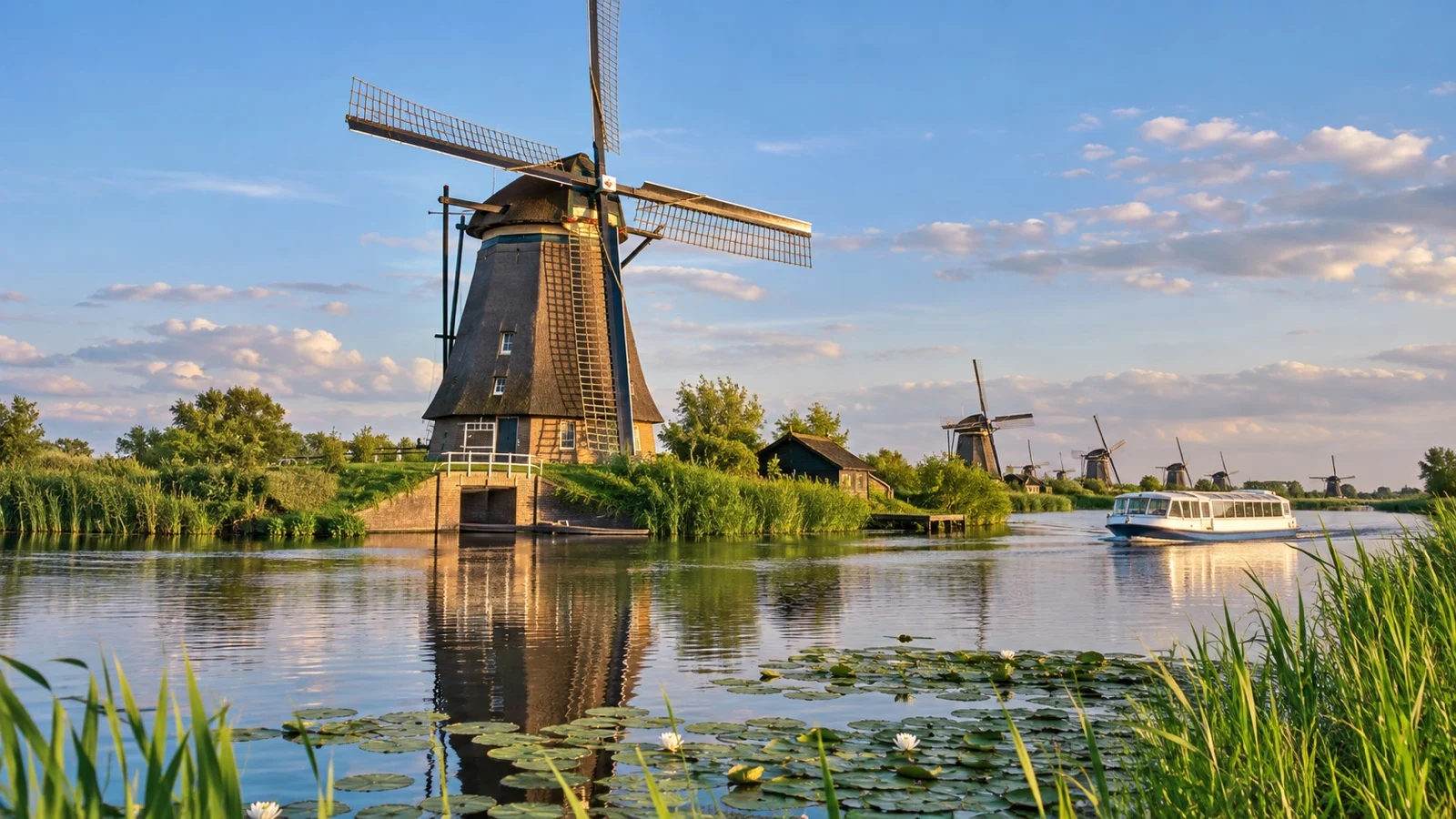
The windmills are the plumbing
Calling Kinderdijk 19 photogenic windmills is like calling a suspension bridge a nice set of cables. The important object is the complete water-management system.
The UNESCO World Heritage listing covers polders, high and low drainage channels, dikes, mill races, pumping stations, sluices, water-board buildings and the 19 mills. UNESCO divides those mills into eight round brick ground-sailers, ten thatched octagonal smock mills and one hollow-post mill.
Drainage began here in the Middle Ages, and the system evolved from ditches and sluices to wind, steam, diesel, electricity and modern pumping. Sixteen surviving mills were built from 1738 to 1740 along Nederwaard and Overwaard.
Modern pumps do the routine heavy work now, but the mills remain in operating condition. Do not assume their sails will turn on command, since sufficient wind, maintenance and safe operation matter more than your camera.
Fun fact: the site’s official history traces organized regional water management to 1277, when Count Floris V compelled local lords to cooperate on the dikes. Dutch consensus is much easier to understand when the alternative is becoming a lake.
What the ticket includes, and whether you need it
You can see the landscape from the approach, but the visitor experiences require admission. The official Kinderdijk ticket page lists the museum mills, site boat, Wisboom Pumping Station, bird theater, film and exhibition as included.
For 2026, the posted ticket-office prices are 21 euros for adults, 9 euros for children ages 4 through 12, and free for ages 0 through 3. Buying online applies a 10 percent discount, but tickets are date-specific and the official terms say purchases cannot be canceled, returned or exchanged.
The published 2026 season runs from March 6 through November 1, from 9:00 in the morning to 5:30 in the afternoon. The official opening-hours page gives November 2 through December as 10:30 in the morning to 4:00 in the afternoon, with Christmas Day closed.
Check what your cruise fare already includes before buying. Many lines sell or include a guided visit, and some have private access or special transport that is not the same product as the standard public ticket.
The stops I’d actually spend time on
Museum Mill Nederwaard
This is the clearest first interior. Its furnished living space sits beside machinery large enough to make “home office” feel inadequate, and it was built for a miller’s family rather than a tour line.
Museum Mill Blokweer
The hollow-post mill dates from 1630 and is the oldest surviving mill at Kinderdijk. It feels different from the orderly brick Nederwaard row, and special cruise-line boat access here can be a genuine advantage.
Wisboom Pumping Station and the film
Use these to connect the old mills to the current system. On a dry day, see one mill first so the machinery in the film already has a shape in your head.
The site boat
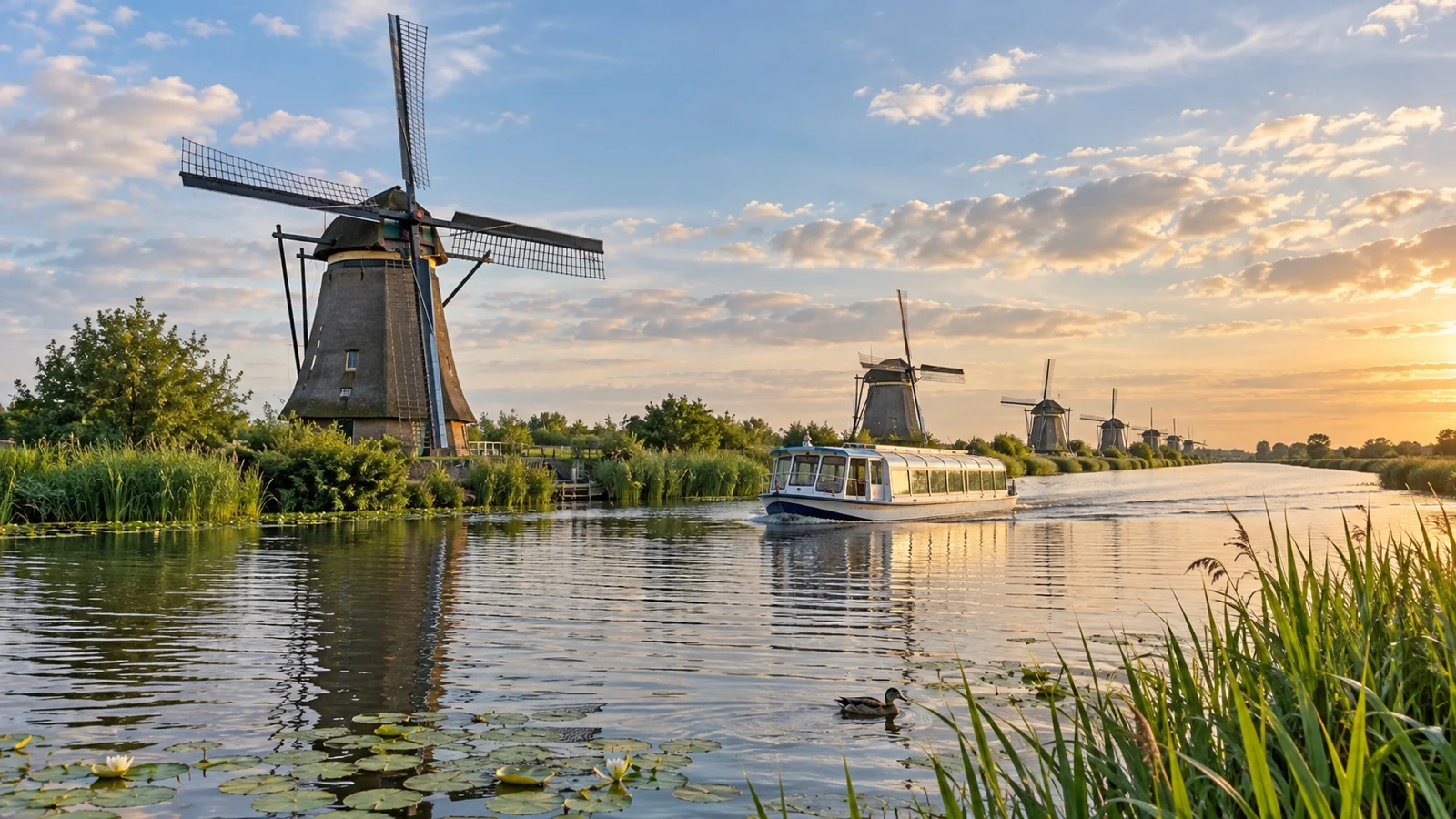
The ticket includes a boat trip, but routes and operating periods can change. Take it if the day’s departure fits your call, since waiting should not consume half a short visit.
The main paths
Walk beyond the entrance until the first crowd thins, because the best photograph is rarely beside the first sign. Kinderdijk does not rent bikes inside the site, though the official FAQ lists businesses near the entrance.
How I’d plan the day
With two usable hours, I would enter one museum mill, walk the main canal path and use the visitor center only for orientation or weather. Skip the boat if its departure does not line up cleanly.
With three to four hours, add Blokweer, Wisboom, the film and a site boat. If the ship includes a walking tour, use free time to linger at one mechanism rather than marching past all 19 mills.
Do not add central Rotterdam to a short call. Use the Rotterdam cruise port guide when your itinerary gives the city its own berth.
For spring itineraries, the broader Tulip Time river cruise ports guide explains how Kinderdijk fits with Keukenhof, Dordrecht and the Belgian calls. Windmills and tulips occupy the same brochure, but they do not require the same planning.
A realistic word on accessibility
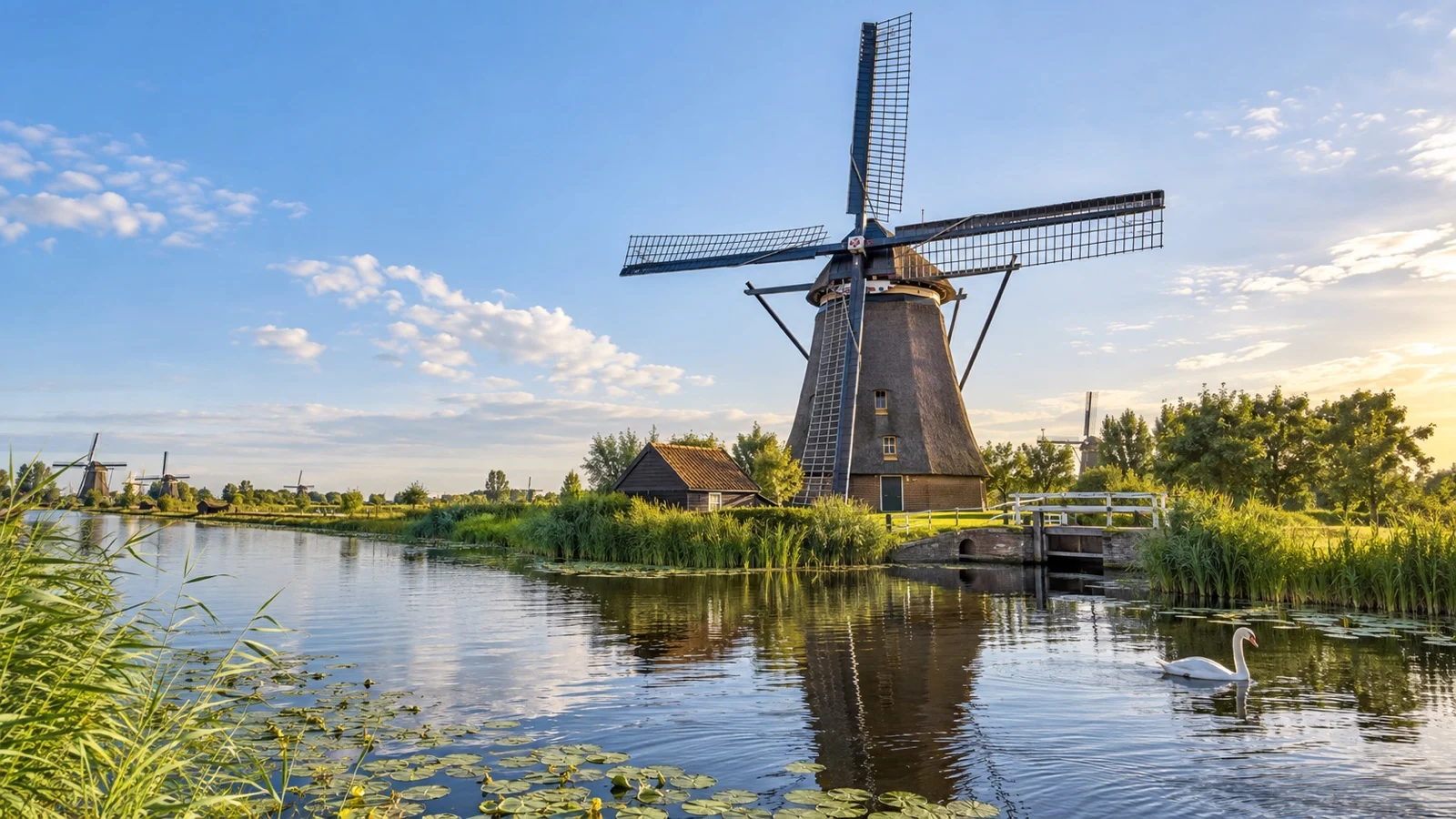
Kinderdijk is unusually manageable at ground level. The official FAQ says wheelchair users can access most of the site, including walking paths, windmill yards, tour boats and almost all visitor locations.
The Visitor Center has two free loan wheelchairs that cannot be reserved, plus accessible restrooms there and at the group entrance.
The museum-mill interiors are the firm exception. Narrow entrances and steep internal stairs make them inaccessible to wheelchair users, and those stairs can also be difficult for anyone with balance, knee or claustrophobia concerns.
The area covers more ground than the flat map suggests. My guide to wheelchair-friendly cruise ports covers river-ship gangways and onboard elevator limits.
When to go, and the weather
Kinderdijk appears on long Rhine itineraries, Dutch and Belgian waterways cruises, and dedicated spring sailings. The precise berth and excursion structure vary by operator and remain subject to itinerary changes.
Spring brings green polders and changeable skies. Summer average highs are roughly 72 Fahrenheit in the nearest relevant KNMI 1991-2020 Rotterdam climate normals.
The weather issue here is exposure, not altitude. A cool wind across open water can turn a pleasant 60 Fahrenheit forecast into a convincing argument for the jacket you left aboard.
Rain falls year-round and shelter is limited. Bring a waterproof layer rather than an umbrella that plans to emigrate to Belgium.
Quick answers
Where do river cruise ships dock in Kinderdijk?
Ships assigned locally to Kinderdijk use one of two river-cruise jetties on the Lek near the village and World Heritage entrance. Some itineraries instead berth in Dordrecht or Rotterdam and bring passengers by organized transfer.
Can I walk from the ship to the Kinderdijk windmills?
Yes, from a Kinderdijk jetty the entrance is an estimated five-minute walk, depending on the assigned berth and gangway position. Confirm that the ship is actually docking at Kinderdijk rather than using a regional transfer port.
Do I need a ticket to see Kinderdijk?
You need a ticket for the museum mills, site boat, Wisboom Pumping Station, bird theater, film, exhibition and other managed visitor locations. Your cruise excursion may already include admission, so check before buying a separate nonrefundable ticket.
Is the included cruise-line tour worth taking?
It is worth taking when it includes a transfer, private mill access, a specialist guide or exclusive boat transport. If the ship docks locally and the tour is only a standard group walk, independent exploration is straightforward.
How long do I need at Kinderdijk?
Two hours covers one museum mill and a useful walk; three to four hours allows both museum mills, the pumping station, film and a boat trip. Less than an hour gives you photographs but not much understanding.
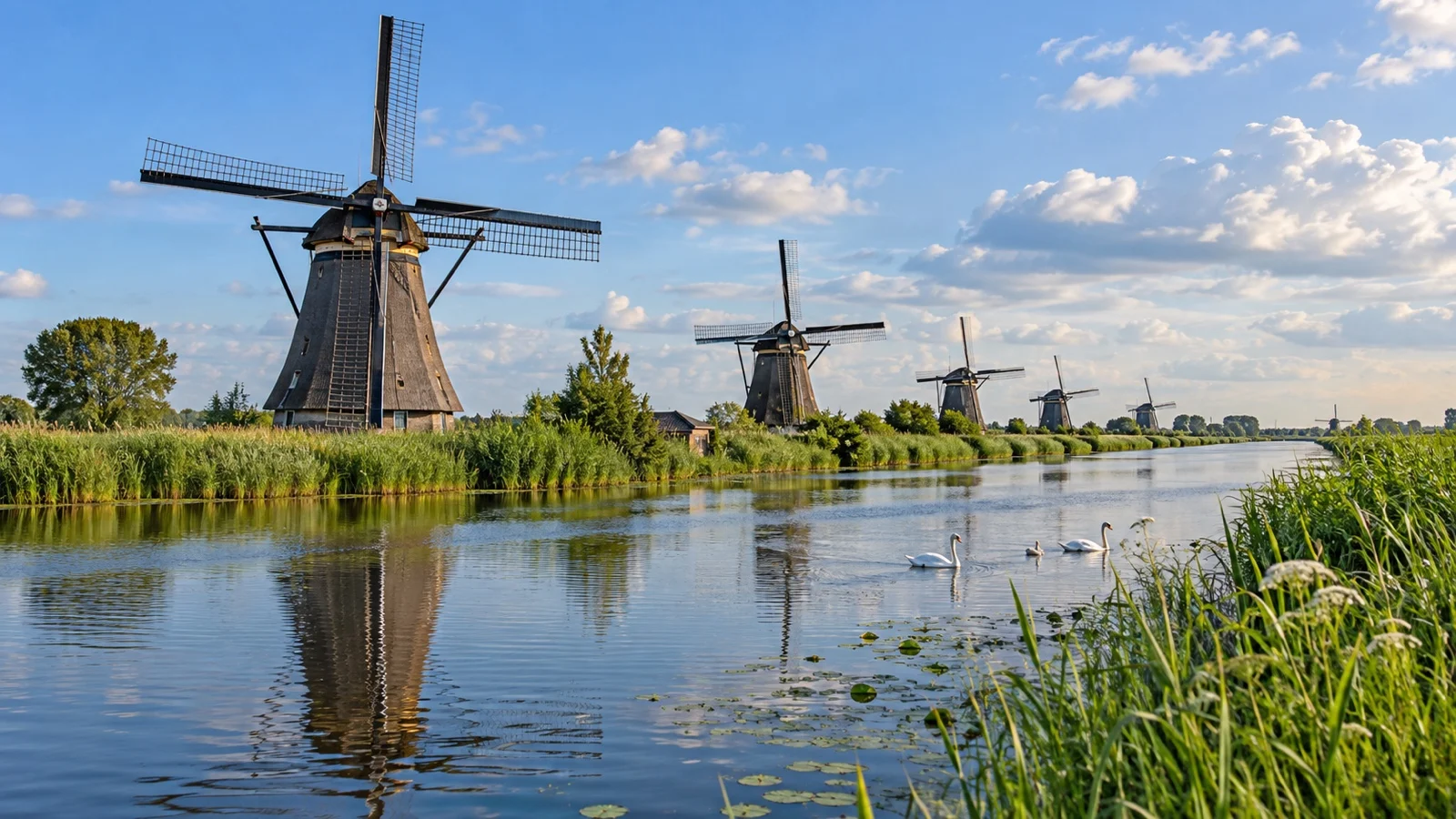
How I would decide whether to buy a Kinderdijk ticket
The official Kinderdijk site explains access and facilities, but the cruise line must confirm whether the ship lands at Kinderdijk or transfers from another city. A Rotterdam or Dordrecht call is not the same walk-off experience even when the excursion name is identical.
Outdoor views and public routes do not necessarily include museum mills, boats, or visitor facilities, so compare the current ticket inclusions and opening hours before deciding. Follow UNESCO landscape rules, stay on permitted paths, and respect working homes and waterways.
Allow at least 45 minutes before all-aboard at the local jetty and substantially more for a transfer back to another port. Wind, rain, rafting, narrow bridges, and historic mill interiors can limit access, so verify ramps, boat boarding, adapted toilets, and surface conditions individually.
The last word
Kinderdijk is a strong argument for river cruising because the port and the point of the visit can be almost the same place. Ask where you berth, then decide whether the organized excursion solves a real problem.
If your cruise begins or ends farther north, Amsterdam has much more complicated moorings. The Netherlands cruise ports overview puts both stops in context with Rotterdam and the country’s ocean ports.
Go inside a mill. From the path, Kinderdijk is a postcard; from the machinery room, it becomes the reason there is dry land under your feet.
How this guide was researched: No firsthand visit is claimed; port infrastructure, heritage details, 2026 visitor information, accessibility, and climate were checked against Dutch government, Kinderdijk, UNESCO, cruise-line, and KNMI sources. Logistics and time-sensitive details were reviewed in September 2026, with estimates explicitly labeled; see our Editorial Policy.